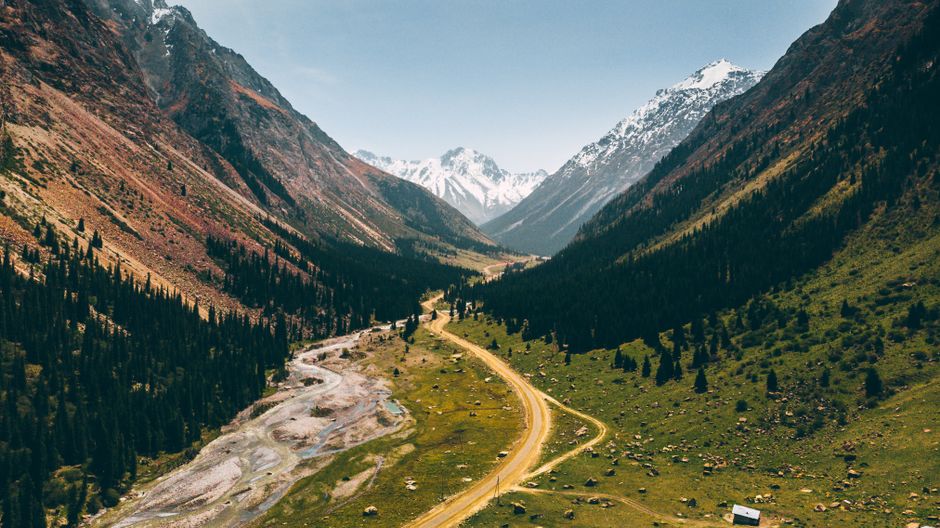
Issyk-Kul, in the northeast of Kyrgyzstan, is one of the largest and deepest mountain lakes in the world: an inland sea of clear blue water about 180 km (110 miles) long and 60 km (37 miles) wide, lying at about 1,600 m (5,250 ft) between two snowy ranges of the Tian Shan. Its name means “warm lake” in Kyrgyz, because its slightly salty water never freezes, even in winter. Around its shores, Kyrgyzstan’s most varied landscapes meet: sandy beaches and Soviet-era resorts on the north shore, centered on Cholpon-Ata; forested valleys, hot springs and glacier lakes behind the town of Karakol in the east; and on the quieter south shore, red-rock canyons such as Skazka, the cliffs of Jeti-Oguz and villages where eagle hunters still train golden eagles. In July and August, the lake is the country’s favorite summer escape, with warm days and water around 20 °C (68 °F) on the north shore; the rest of the year, it is the base for trekking, horse riding and skiing. Most visitors come by road from Bishkek, about four hours to Cholpon-Ata, or fly in summer to the lakeside airport at Tamchy.
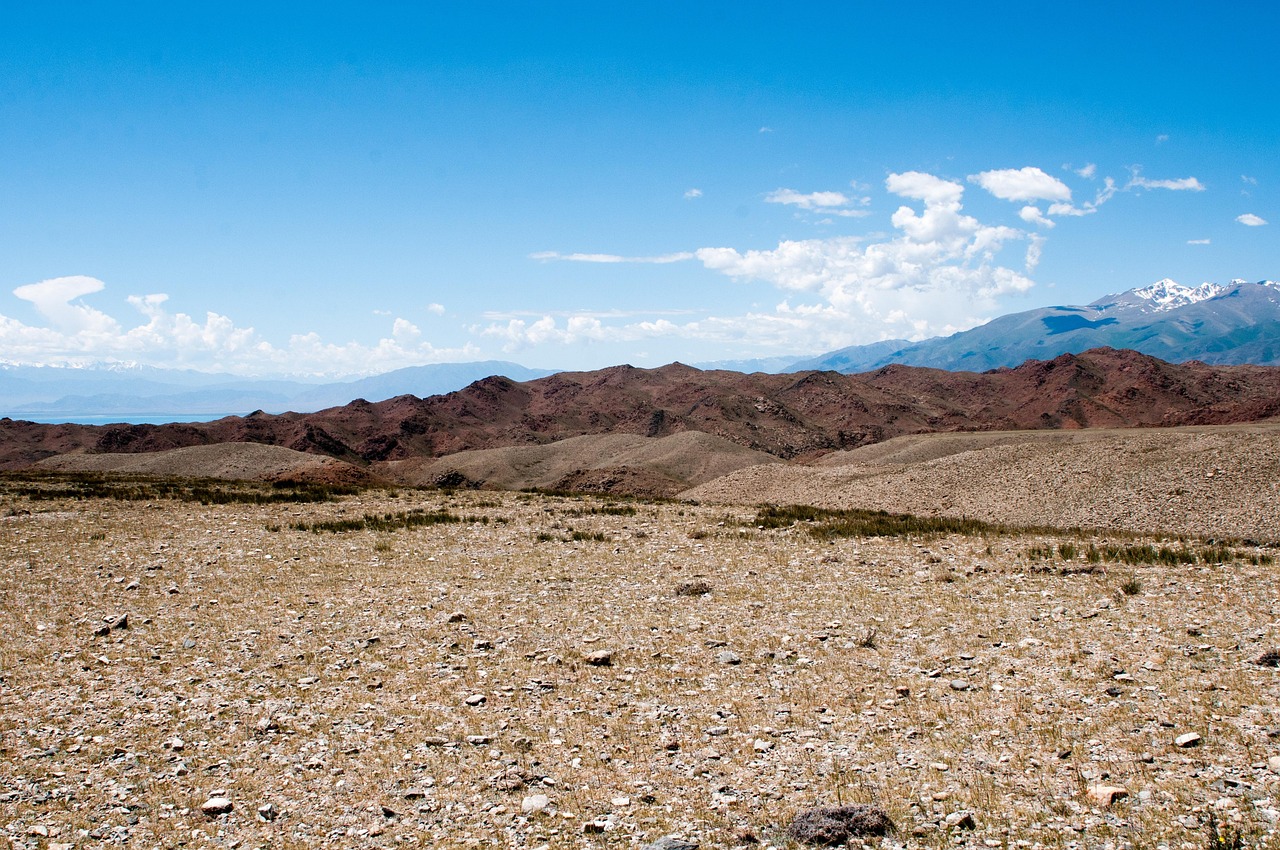
Right now in Issyk-Kul (Cholpon-Ata)
- Wed 10–13°C 50–55°F 2 mm Mostly clear
- Thu 12–15°C 53–58°F Partly cloudy
- Fri 14–15°C 57–59°F Clear
Weather: MET Norway (CC BY 4.0)
Top tours in Issyk-Kul
See all tours for Issyk-Kul →
From local operators, with prices and reviews; you check availability and book on Viator, our partner. We may earn a commission at no extra cost to you. How we earn money
Issyk-Kul at a glance
- Best for: beaches and swimming in summer, trekking to alpine lakes, hot springs, canyons, horse riding, eagle hunting demonstrations and village homestays.
- How long: 4–7 days to circle the lake with a trek from Karakol; 2–3 days for a beach break on the north shore.
- Best time: late June to early September for swimming and trekking; May and late September for quieter hiking; December to March for skiing at Karakol.
- Getting there: by road from Bishkek, about 180 km (110 miles) to Balykchy at the western tip and 250 km (155 miles) to Cholpon-Ata; by seasonal flights to Issyk-Kul International Airport at Tamchy; by the summer train from Bishkek to Balykchy.
- Getting around: shared minibuses along both shores, taxis, rental cars and tours.
- Good to know: the north shore is busy and developed in July and August; the south shore is quieter and more rural.
- Before you go: visa-free stays, registration, money and general safety are in our Kyrgyzstan travel guide.
Access, fees and rules (as of October 2026)
Issyk-Kul and the mountains around it form the Issyk-Kul Biosphere Reserve, and the lake shore is open to all, with free public beaches and paid resort beaches. Several areas around the lake charge entry fees at their gates: the Karakol National Park for the Karakol valley and the trek to Ala-Kul, the Jeti-Oguz area, the Skazka canyon and the Cholpon-Ata petroglyph site. Fees are small, usually a few hundred som for foreign visitors, and are paid in cash. Resort beaches may charge for entry or sunbeds.
Rules to know
Respect the nature reserve: camp only where allowed, take your trash with you, and don’t light fires outside designated places. Drinking alcohol in public places, including on public beaches, is prohibited in Kyrgyzstan and can bring a fine, according to the UK government. Drones must not be flown near military or security sites, and some areas near the eastern end of the lake and the Chinese border are border zones that need permits. If you stay beyond the visa-free period or are from a country that must register, follow the registration rules in our country guide.
The main areas of Issyk-Kul
The lake in brief
Issyk-Kul fills a deep basin between the Kungey Ala-Too to the north and the Teskey Ala-Too to the south, fed by more than a hundred rivers and streams but with no outlet, which is why its water is slightly salty. It covers about 6,200 km² (2,400 sq miles) and reaches a depth of more than 660 m (2,170 ft), making it one of the largest and deepest mountain lakes on Earth. The lake lay on a branch of the Silk Road, and archaeologists have found the remains of medieval settlements under its waters. In the Soviet era, its shores became a holiday coast of sanatoriums and pioneer camps, and its waters a torpedo testing range; today it is a UNESCO biosphere reserve.
The north shore and Cholpon-Ata
The north shore is the lake’s holiday coast, with a string of resort villages, sanatoriums, guesthouses and sandy beaches backed by the Kungey Ala-Too range. Cholpon-Ata, the main town, has the open-air petroglyph museum, a hillside of boulders carved with ibex, hunters and snow leopards from the Bronze Age to the early centuries AD; the Ruh Ordo cultural center, with chapels of different faiths on a lakeside promenade; and boat trips on the lake. Bosteri, just east, has a busy beach with rides and a Ferris wheel, while Tamchy, near the airport, and Chok-Tal have quieter beaches. Inland, the Grigorievka and Semenovka gorges have forests, meadows and yurt camps, good for walks and horse rides.
Karakol and the east
At the eastern end of the lake, Karakol is a relaxed town of wooden Russian houses and the main base for trekking. See the wooden Holy Trinity Cathedral, completed in 1895; the Dungan Mosque, built in 1910 by Chinese Muslim craftsmen in the style of a Chinese temple without metal nails; and the Sunday animal market, held early on Sunday mornings. Nearby, the explorer Nikolai Przhevalsky is buried by a museum on the lakeshore. Karakol is also famous for ashlan-fu, a spicy cold noodle soup of the Dungan community.
Jeti-Oguz and the Karakol valleys
About 25 km (16 miles) southwest of Karakol, Jeti-Oguz (“seven bulls”) is a row of red sandstone cliffs with the split rock known as the Broken Heart, and a valley of meadows and spruce forests leading to the “Valley of Flowers.” The Karakol valley and Altyn-Arashan, with natural hot springs at about 2,600 m (8,500 ft), are reached on foot or by rough 4×4 track.
The south shore
The south shore, below the Teskey Ala-Too range, is drier, quieter and more rural, with small villages, yurt camps and empty beaches. Highlights include the eroded red and orange formations of Skazka (“fairy tale”) canyon near Tosor; the Barskoon valley with its waterfalls and a monument to the cosmonaut Yuri Gagarin, who rested here; the village of Bokonbaevo, where families of eagle hunters (berkutchi) give demonstrations and run felt workshops; and the salty Kara-Kol (“dead lake”) near Ton, where you float as in the Dead Sea.
Balykchy and the west
Balykchy, at the western tip, is a transport hub where the roads around the lake and to Naryn and Song-Kul meet, and the terminus of the summer train from Bishkek. Few travelers stay, but it is the gateway to the lake.
Other stops around the lake
- Ak-Suu hot springs: a sanatorium with hot pools near Karakol.
- Chon-Kemin valley: a green valley northwest of the lake with guesthouses and horse riding, on the way from Bishkek.
- Burana Tower: an 11th-century minaret near Tokmok, on the road from Bishkek; see our Bishkek guide.
Beaches, treks and activities
Swimming and beaches
The swimming season runs from about late June to early September, when the surface water on the north shore warms to around 20 °C (68 °F), rarely more; the south shore and deep water stay cooler. The best sandy beaches are on the north shore around Cholpon-Ata, Bosteri and Chok-Tal, with resort beaches offering sunbeds, cafés and water sports, and quieter wild beaches on the south shore near Tamga and Tosor. There are few lifeguards outside resorts, and the water is cold below the surface.
Treks from Karakol
The classic trek climbs from the Karakol valley to the turquoise glacial lake Ala-Kul, at about 3,530 m (11,580 ft), crosses the Ala-Kul pass at about 3,900 m (12,800 ft) and descends to the hot springs of Altyn-Arashan, usually over three or four days with camping or nights in mountain guesthouses. Shorter walks lead into the Jeti-Oguz and Karakol valleys. Trails are not always marked, weather changes quickly and snow can fall at any time of year at altitude, so hire a guide or go with an agency if you are not experienced. See our hiking guide.
Horse riding, eagles and boats
Community-based tourism offices in Karakol and Bokonbaevo arrange horse rides from a few hours to several days, yurt stays and eagle-hunting demonstrations. Boat trips and water sports run from Cholpon-Ata in summer. See our beaches and boat trips guides.
Skiing
From about December to March, the Karakol ski base, in a forested valley above the town, offers lifts and runs with good powder snow and views of the lake.
Around Issyk-Kul
- Song-Kul: the high lake of summer pastures and yurt camps, about 4–5 hours from Balykchy via Kochkor; best with at least one night.
- Bishkek and Ala-Archa: the capital and its mountain national park, about 4 hours from Cholpon-Ata. See our Bishkek guide.
- Almaty: across the mountains in Kazakhstan, reached by road around the range via Bishkek or, in summer, by seasonal routes via the Karkara valley when the border crossing is open. See our Almaty guide.
- Kochkor: a village known for shyrdak felt carpets and the base for Song-Kul trips.
Getting there
By road
From Bishkek, minibuses and shared taxis leave from the Western (Zapadny) and Eastern (Vostochny) bus stations for Balykchy, Cholpon-Ata and Karakol; the road reaches Balykchy in about 2.5–3 hours, Cholpon-Ata in about 4 hours and Karakol along the north shore in about 6–7 hours. The road along the south shore is quieter and slightly slower. Driving yourself is possible, but take care: drivers overtake aggressively, livestock wander onto the road, and the stretch through the Boom Gorge to Balykchy is busy with trucks.
By air
In summer, Issyk-Kul International Airport at Tamchy, on the north shore about 40 km (25 miles) west of Cholpon-Ata, receives seasonal flights from Bishkek and from Almaty and some Russian and other cities; schedules change each year, so check before you plan. Outside summer, fly to Manas International Airport near Bishkek and continue by road. See our Kyrgyzstan and Almaty guides.
By train
In summer, a seasonal passenger train runs from Bishkek to Balykchy, slower than road transport but scenic, through the Boom Gorge.
Getting around: practical details
Minibuses run frequently along the north shore between Balykchy, Cholpon-Ata and Karakol, and less often along the south shore. Taxis can be hired by the trip or the day, and community-based tourism offices and guesthouses arrange drivers and 4x4s for the valleys. A car with a driver for a loop of the lake is a popular and affordable option. Many trailheads, such as Altyn-Arashan and the upper Karakol valley, are reached only on rough tracks by 4×4 or on foot.
When to go and how long to stay
The lake moderates the climate: summers on the shore are warm rather than hot, and winters milder than in the surrounding mountains, though the high valleys are cold and snowy. Summer, from late June to early September, is the season for swimming and trekking, with warm, sunny days and cool nights; July and August are the busiest months on the north shore. Late spring and late September to early October are pleasant for hiking at lower levels, with autumn colors in the valleys, but many resorts close. Winter is quiet, with skiing at Karakol. Kyrgyzhydromet’s 1991–2020 normals for the Cholpon-Ata station, as submitted to the World Meteorological Organization (WMO), include only average monthly temperatures, shown below; daytime highs in summer are typically about 6–8 °C (11–14 °F) higher than these averages, and nights correspondingly cooler.
| Month | Average temperature at Cholpon-Ata | What to expect |
|---|---|---|
| January | −1.6 °C (29 °F) | Cold; skiing at Karakol; the lake does not freeze |
| February | −0.7 °C (31 °F) | Cold; quiet |
| March | 3.2 °C (38 °F) | Thaw on the shore; snow in the valleys |
| April | 8.3 °C (47 °F) | Cool; spring in the lowlands |
| May | 12.3 °C (54 °F) | Mild; good for lower hikes; resorts mostly closed |
| June | 16.1 °C (61 °F) | Warm; trekking season begins; water still cold |
| July | 18.5 °C (65 °F) | Warmest; beach season peaks |
| August | 18.2 °C (65 °F) | Warm; busy beaches; best trekking |
| September | 15.0 °C (59 °F) | Pleasant; quieter; golden valleys |
| October | 9.5 °C (49 °F) | Cool; autumn colors; first snow up high |
| November | 4.4 °C (40 °F) | Cold and quiet |
| December | 0.5 °C (33 °F) | Cold; ski season starts |
One week around the lake
Day one, Bishkek to Cholpon-Ata, with the petroglyphs and the beach. Day two, along the north shore to Karakol. Days three to five, the trek to Ala-Kul and Altyn-Arashan. Day six, Jeti-Oguz and the south shore, with the eagle hunters in Bokonbaevo and Skazka canyon. Day seven, back to Bishkek or on to Song-Kul.
Two or three days
For a short break, stay on the north shore around Cholpon-Ata, swim, see the petroglyphs and take a day trip into the Grigorievka gorge.
Where to stay
The north shore has the widest choice: large Soviet-era sanatoriums, modern resort hotels with private beaches, guesthouses and apartments around Cholpon-Ata, Bosteri and Tamchy, many open only from June to September. Karakol has guesthouses, hostels and small hotels, the best base for treks, open all year. On the south shore, family homestays and yurt camps in villages such as Bokonbaevo, Tamga and Tosor offer a quieter, simpler stay. In the mountains, there are basic guesthouses and yurt camps at Altyn-Arashan and in the valleys. Book ahead for July and August, when visitors from Kazakhstan and Russia fill the resorts.
What a trip to Issyk-Kul costs
Prices are approximate, for October 2026, converted at about 87.5 som to the US dollar.
| Item | Typical cost |
|---|---|
| Minibus from Bishkek to Cholpon-Ata | 400–600 KGS (about US$4.60–7) |
| Minibus from Bishkek to Karakol | 600–900 KGS (about US$7–10) |
| Entry to the national park or a canyon | 200–700 KGS (about US$2.30–8) |
| Hot springs at Altyn-Arashan | 300–600 KGS (about US$3.40–7) |
| Eagle-hunting demonstration | 1,500–4,000 KGS (about US$17–46) per group |
| Plate of lagman or ashlan-fu | 150–400 KGS (about US$1.70–4.60) |
| Homestay with breakfast and dinner | 2,000–3,500 KGS (about US$23–40) per person |
| Resort hotel double in summer, per night | 5,000–12,000 KGS (about US$57–137) |
Practical tips for Issyk-Kul
- Book summer stays early: north-shore resorts fill in July and August.
- Carry cash: many homestays, park gates and minibuses accept only som, and ATMs are mainly in Cholpon-Ata, Balykchy and Karakol.
- Hire a guide for treks: trails to Ala-Kul are steep and the weather changeable.
- Go early to the canyons: light is best in the morning and late afternoon.
- Use the CBT offices: in Karakol and Bokonbaevo, they arrange homestays, horses, drivers and eagle hunters at fixed prices.
- Bring warm layers: even in summer, evenings by the lake are cool and nights in the mountains cold.
Safety
The lake is generally safe, but the water is cold below the surface and there are few lifeguards outside resorts, so swim near others and don’t swim after drinking. In the mountains, the trek to Ala-Kul crosses a high pass where snow, storms and altitude sickness are possible; go with a guide or experienced companions, carry warm and waterproof clothing, and turn back in bad weather. The mountain rescue service has limited equipment, and mobile coverage is absent in many valleys. On the roads, minibuses and drivers can be fast and roads poorly lit, so avoid traveling at night. Watch for ticks in spring and early summer forests. In an emergency, call 112, or the mountain rescue line on +996 312 651 404.
What to pack for Issyk-Kul
Swimwear, a towel and water shoes for pebbly beaches, sunscreen and a hat for the strong high-altitude sun, warm layers and a waterproof jacket for evenings and the mountains, sturdy hiking boots for treks, a headlamp, insect repellent, and cash in som. Kyrgyzstan uses 220 V, with round two-pin plugs. See our hiking shoes, water shoes, rain jackets and travel adapters guides.
Issyk-Kul travel FAQ
How do I get from Bishkek to Issyk-Kul?
By minibus, shared taxi or car: about 2.5–3 hours to Balykchy, 4 hours to Cholpon-Ata and 6–7 hours to Karakol. In summer, seasonal flights reach Tamchy, and a seasonal train runs to Balykchy.
Can you swim in Issyk-Kul?
Yes, from late June to early September, when the surface water on the north shore warms to around 20 °C (68 °F).
Does Issyk-Kul freeze in winter?
No. The lake is slightly salty and very deep, so it doesn’t freeze, which gives it its name, “warm lake.”
Which is better, the north or south shore?
The north shore has the beaches, resorts and nightlife; the south shore has canyons, eagle hunters, homestays and a quieter, rural feel.
How long is the trek to Ala-Kul?
Usually three to four days from the Karakol valley to Ala-Kul and down to Altyn-Arashan, crossing a pass of about 3,900 m (12,800 ft).
What is the best time to visit Issyk-Kul?
Late June to early September for swimming and trekking; December to March for skiing at Karakol.
Is there an airport at Issyk-Kul?
Yes. Issyk-Kul International Airport at Tamchy, on the north shore, has seasonal flights in summer; otherwise, fly to Bishkek.
Where can I see eagle hunters?
In Bokonbaevo and other villages on the south shore, where families give demonstrations, often arranged through the local CBT office.
Is there an entry fee for Issyk-Kul?
The lake shore itself is free, but Karakol National Park, Jeti-Oguz, Skazka canyon and the petroglyph site charge small entry fees in cash.
How many days do I need at Issyk-Kul?
Four to seven days to circle the lake with a trek from Karakol; two or three days for a beach break on the north shore.
Sources and last review
Researched and last reviewed on 4 October 2026. Visa-free entry and registration: Kyrgyzstan’s official e-visa portal and the UK government’s factual entry page; public drinking, mountain hazards, the mountain rescue number, roads and border-zone photography: the UK government’s factual safety pages; climate normals: Kyrgyzhydromet via the World Meteorological Organization’s 1991–2020 normals for the Cholpon-Ata station (average temperatures only); the exchange rate: the National Bank of the Kyrgyz Republic. The lake’s dimensions, depth and altitude, water temperatures, building dates, the petroglyph dates, entry fees, the seasonal flights and train, journey times and typical prices are general references or estimates, flagged for checking. Prices and rules change, so check locally before you go. For entry rules, money and general safety, see our Kyrgyzstan travel guide.
Plan your trip
Partner links: TravelerCenter may earn a commission if you book, at no extra cost to you.
🇷🇺 Useful Russian phrases for Issyk-Kul
All 38 Russian phrases: restaurant, hotel, emergencies, romance (printable) →