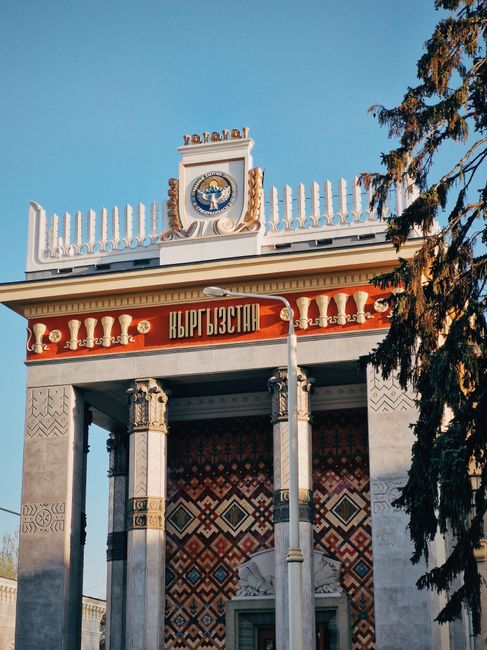
Kyrgyzstan is Central Asia’s mountain kingdom, a small, wild and welcoming country where more than nine-tenths of the land is mountains and the nomadic past is still part of everyday life. The peaks of the Tian Shan and the Pamir Alay cover the country, cut by gorges, alpine lakes and summer pastures dotted with yurts, where herders make kumis from mare’s milk and visitors can stay as guests. The capital, Bishkek, is a leafy, low-key Soviet city with good cafés and the gateway to the Ala-Archa gorge. To the east, Issyk-Kul, one of the largest and deepest mountain lakes on Earth, has beaches on its north shore, the red cliffs and canyons of its south shore and the trekking base of Karakol. In the high interior, Song-Kul lake at more than 3,000 m (9,800 ft) is the classic place for a night in a yurt and a horse ride; in the south, Osh has one of Central Asia’s oldest bazaars and the sacred mountain of Sulaiman-Too. Travel is easy for many visitors, with visa-free entry for citizens of 56 countries, but the rules changed for 2026, mountain roads are slow, and altitude, weather and remoteness need respect.
Right now in Kyrgyzstan
- Wed 6–17°C 43–62°F Mostly clear
- Thu 8–20°C 47–67°F Mostly clear
- Fri 9–18°C 48–64°F Clear
Weather: MET Norway (CC BY 4.0)
Multi-day tours of Kyrgyzstan
Multi-day tours from local operators. You check dates and book on Viator, our partner; we may earn a commission at no extra cost to you. How we earn money
Kyrgyzstan at a glance
The Kyrgyz Republic has a population of about 7 million and covers about 200,000 km² (77,000 sq miles), a little smaller than Nebraska. About 90% of the country lies above 1,500 m (4,900 ft), and its highest point, Jengish Chokusu (Victory Peak), reaches 7,439 m (24,406 ft) on the Chinese border. It borders Kazakhstan, Uzbekistan, Tajikistan and China. The country is divided into seven regions and the cities of Bishkek, the capital, and Osh, the second city. Kyrgyz, a Turkic language, is the state language and Russian an official language, widely spoken in Bishkek and the north; Uzbek is common in the south. Most Kyrgyz are Sunni Muslims, with strong nomadic and pre-Islamic traditions, and the country is secular.
Kyrgyzstan uses UTC+6 all year, with no daylight saving time. Electricity is 220 V, with round two-pin sockets (types C and F). The currency is the Kyrgyz som (KGS).
A short history
The Kyrgyz are thought to have migrated from the Yenisei River in Siberia to the Tian Shan between the 10th and 16th centuries, mixing with Turkic and Mongol peoples, and the epic of Manas, one of the longest epic poems in the world, tells the story of their hero and his descendants. Silk Road towns such as Balasagun, near today’s Burana Tower, and Uzgen flourished in the Karakhanid era. The Kyrgyz tribes came under the Kokand Khanate and then, in the 1860s and 1870s, the Russian Empire. In the Soviet era, the nomads were forced onto collective farms, and Frunze, as Bishkek was then called, became the capital of the Kirghiz SSR. Kyrgyzstan became independent in 1991 and has since seen several changes of government, often driven by protests.
Kyrgyzstan’s regions
- Bishkek and the Chuy Valley: the capital, Ala-Archa National Park, the Burana Tower and the Chon-Kemin valley.
- Issyk-Kul: the great lake, with Cholpon-Ata and the north-shore beaches, Karakol, the south-shore canyons, Jeti-Oguz, Altyn-Arashan and the eagle hunters of Bokonbaevo.
- Naryn and the interior: Song-Kul lake, Kochkor’s felt workshops, the Tash Rabat caravanserai and the road to the Torugart Pass and China.
- The south (Osh and Jalal-Abad): Osh and Sulaiman-Too, the walnut forests of Arslanbob, Sary-Chelek lake and the Alay valley below Lenin Peak.
- Talas: a quiet valley in the northwest, the legendary homeland of Manas.
Regions
Where to go: mountains, lakes and yurts
A classic first trip loops from Bishkek around Issyk-Kul and up to Song-Kul, with a night or two in yurts, before returning to the capital or continuing south to Osh. See our guides:
- Bishkek: the capital, with Ala-Too Square, the Osh Bazaar, Soviet monuments and parks, and Ala-Archa National Park less than an hour away.
- Issyk-Kul: the vast mountain lake, with beaches at Cholpon-Ata, petroglyphs, the Skazka (Fairy Tale) canyon, Jeti-Oguz, Karakol and treks to Altyn-Arashan and Ala-Kul.
Song-Kul, at about 3,016 m (9,895 ft) in the Naryn region, is a high lake surrounded by summer pastures where herders and their families set up yurt camps from about June to early September; it is reached by rough roads from Kochkor or on a horse trek of two to three days. Kochkor, a village on the way, is known for its shyrdak felt carpets and community-based tourism. Farther south, the 15th-century stone caravanserai of Tash Rabat lies in a remote valley near the Chinese border.
In the south, Osh, one of the oldest cities in Central Asia, is dominated by the rocky Sulaiman-Too, a sacred mountain and UNESCO World Heritage Site, and by its huge Jayma Bazaar. From there, travelers head to the walnut forests of Arslanbob, the forested lake of Sary-Chelek, or east to the Alay valley, the base camp of Lenin Peak (7,134 m / 23,406 ft) and the Pamir Highway to Tajikistan.
Osh itself is worth a day or two: climb Sulaiman-Too at sunset for views over the city and the Fergana Valley, visit the museum built into a cave in the mountain, and lose yourself in the Jayma Bazaar, one of the largest and oldest markets in Central Asia, stretching along the Ak-Buura river. The south is warmer, greener and more Uzbek in culture than the north, with excellent plov, samsa and fruit, and the town of Uzgen nearby has a Karakhanid minaret and mausoleums from the 11th and 12th centuries.
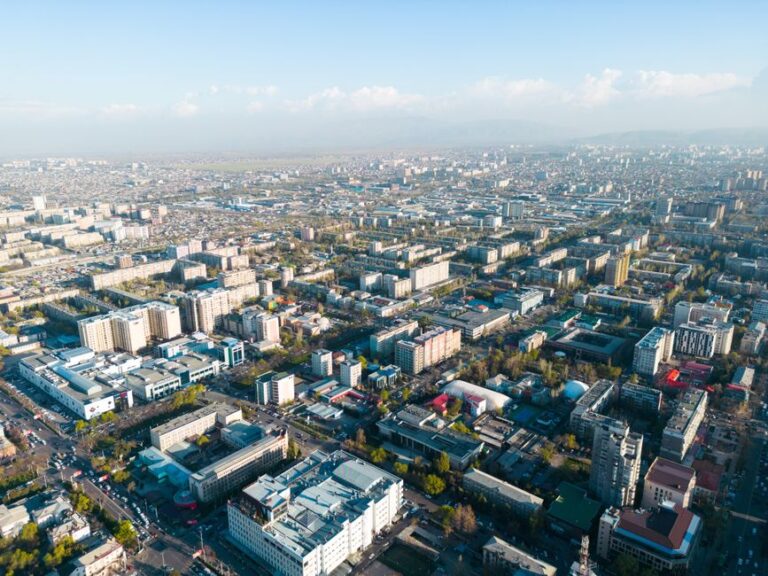
Bishkek Travel Guide
Plan a trip to Bishkek: neighborhoods and where to stay, Ala-Too Square and the changing of the guard, the State Historical Museum, Osh Bazaar,…
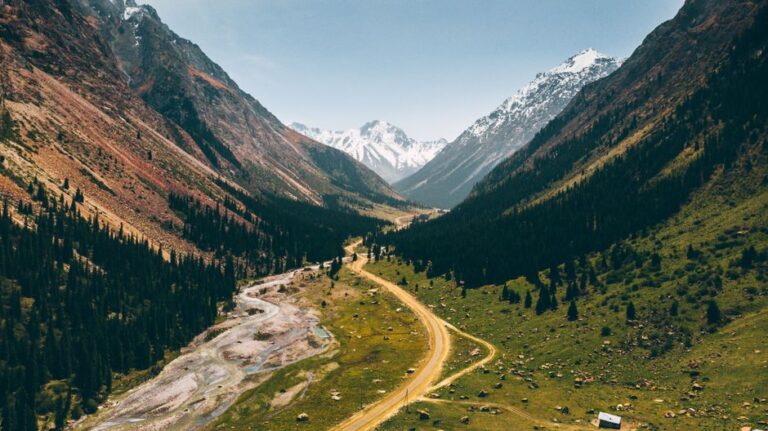
Issyk-Kul Travel Guide
Plan a trip to Issyk-Kul: getting there by road, seasonal flights to Tamchy and the summer train, the north shore and Cholpon-Ata, Karakol, Jeti-Oguz…
Best time to visit Kyrgyzstan
Kyrgyzstan’s climate depends on altitude. Summer, from June to September, is the main season: warm in Bishkek and the valleys, with daytime temperatures of 25–35 °C (77–95 °F), and pleasant at Issyk-Kul, while the high pastures and passes are open, the yurt camps are set up and trekking is at its best. July and August are the peak months, when Issyk-Kul’s beaches fill with visitors from across the region. Late spring (May) and early autumn (late September to early October) are good for the lowlands, with fewer visitors, but nights are cold at altitude and the yurt camps begin to close. Winter, from November to March, is cold, with snow in the mountains, skiing near Bishkek and Karakol, and many high roads closed.
Plan around the road openings: the roads to Song-Kul are usually passable from about late May or June until late September, depending on snow, and some high passes on the way to Tash Rabat, Kel-Suu and the Alay valley open even later. In June, rivers are high with snowmelt, which can make river crossings on treks difficult; by late August and September, water levels drop and the weather is often most stable, making it an excellent time for longer treks.
The table shows the average monthly temperature from the 1991–2020 climate normals of Kyrgyzhydromet, Kyrgyzstan’s hydrometeorological agency, as submitted to the World Meteorological Organization (WMO); Kyrgyzhydromet’s submission contains average temperatures only, so daily highs are higher and nights colder than these figures.
| Area (station) | Altitude | January average | July average | Notes |
|---|---|---|---|---|
| Bishkek | 760 m (2,490 ft) | −2.5 °C (27.5 °F) | 25.5 °C (78 °F) | Hot summers; cold, smoggy winters |
| Issyk-Kul north shore: Cholpon-Ata | 1,610 m (5,280 ft) | −1.6 °C (29 °F) | 18.5 °C (65 °F) | The lake moderates the climate |
| Interior: Naryn | 2,040 m (6,690 ft) | −14.9 °C (5 °F) | 17.8 °C (64 °F) | Very cold winters |
| South: Jalal-Abad | about 760 m (2,490 ft) | −1.1 °C (30 °F) | 26.8 °C (80 °F) | Hot summers, as in Osh |
| High south: Sary-Tash | 3,150 m (10,330 ft) | −15.5 °C (4 °F) | 10.2 °C (50 °F) | On the road to the Pamirs |
Kyrgyzstan month by month
| Month | Weather | Highlights | Crowds and prices |
|---|---|---|---|
| January | Cold; snow in the mountains | Skiing at Karakol and near Bishkek | Low |
| February | Cold | Skiing; winter horse games in some villages | Low |
| March | Thaw in the valleys | Nooruz (March 21), the spring new year | Low |
| April | Mild in the valleys; snow up high | Blossom in the Chuy and Fergana valleys | Low |
| May | Warm in the lowlands | Green valleys; Osh and Arslanbob | Moderate |
| June | Warm; high passes opening | Yurt camps open at Song-Kul; trekking begins | Moderate to high |
| July | Warm to hot; summer storms in the mountains | Peak trekking; Issyk-Kul beach season | High |
| August | Warm | Horse games and festivals; Independence Day (August 31) | High |
| September | Warm days, cold nights | Golden valleys; yurt camps close; apple and walnut harvest | Moderate |
| October | Cool; snow on the passes | Autumn colors around Karakol and Arslanbob | Low |
| November | Cold | Quiet season | Low |
| December | Cold and snowy | Ski season starts | Low |
Festivals and holidays
- Nooruz: the spring new year on March 21, with horse games, music, yurts and sumolok (wheat pudding).
- Kurman Ait and Orozo Ait: Eid al-Adha and Eid al-Fitr, public holidays whose dates move about 11 days earlier each year.
- Independence Day: August 31, with concerts and horse games.
- Horse games and festivals: summer festivals around Issyk-Kul and in the villages feature kok-boru (a team game played on horseback with a goat carcass), eagle hunting, wrestling and felt-making; the World Nomad Games have been held at Issyk-Kul several times.
Altitude, weather and roads
Much of Kyrgyzstan lies at high altitude: Song-Kul is above 3,000 m (9,800 ft), the passes on the main roads exceed 3,000 m, and treks reach 3,500–4,000 m (11,500–13,100 ft) or more. Ascend gradually, drink water, and descend if you develop severe headache, vomiting or confusion. Weather changes fast, with snow possible in summer at altitude; avalanches, mudslides and rockfalls block mountain roads, especially in spring. Many high roads are closed or difficult from October to May.
How long to stay: sample itineraries
- 7 days: Bishkek (1 night), the north shore of Issyk-Kul (1), Karakol (2), the south shore (1) and Song-Kul (1) via Kochkor, back to Bishkek.
- 10–12 days: add a trek from Karakol to Altyn-Arashan or Ala-Kul lake, a horse trek to Song-Kul and Tash Rabat.
- Two weeks or more: add Osh, Arslanbob and Sary-Chelek in the south, or the Alay valley and Lenin Peak base camp, continuing on the Pamir Highway to Tajikistan.
- Combined trips: Bishkek is about four hours by road from Almaty, so Kyrgyzstan combines easily with Kazakhstan; Osh is close to the Fergana Valley in Uzbekistan.
Entry, money and costs
Visas: the 2026 rules (last reviewed October 2026)
According to Kyrgyzstan’s official e-visa portal (evisa.e-gov.kg), citizens of 56 countries, including the United States, the United Kingdom, Canada, Australia, New Zealand, Japan, South Korea, Israel, Switzerland, Norway, the European Union countries, Malaysia, Singapore, Thailand, Vietnam, Mexico, Brazil and Argentina, can visit without a visa for up to 30 days. According to the UK government, the 30 days apply within each 60-day period; after that, you must leave or obtain the appropriate documents. This replaced the earlier 60-day visa-free stay at the start of 2026, following a government resolution of December 31, 2025, as reported in the media, so older guides may be out of date. Citizens of Turkey, Mongolia, Serbia and Ukraine can stay up to 90 days, citizens of Uzbekistan up to 60 days, the Gulf states up to 180 days, and most former Soviet republics without a fixed limit.
Citizens of other countries, including India and China, can apply online for an e-visa through the official portal, which charges a non-refundable fee; allow about five working days after your application is complete, and don’t book flights until it is approved. According to the UK government, your passport must be valid for at least six months after arrival.
Registration
Citizens of the visa-free countries do not need to register for stays within the visa-free period. According to the official e-visa portal, other foreign citizens must register at their place of stay within five working days of entry, unless exempted; according to the UK government, visitors staying longer than 30 days must register online with the State Registration Service within five days of entry.
Customs and rules to know
According to the UK government, it is illegal to bring e-cigarettes, vapes and vaping liquids into Kyrgyzstan or to buy and sell them; customs will confiscate them and may fine you. Drinking alcohol in public is prohibited and can bring a fine. You must carry your passport or a notarized copy at all times. Possession of drugs brings long prison sentences, and police raid bars and clubs. It is illegal to photograph or fly drones near military or security sites, border checkpoints and police stations.
Money and cards
The currency is the som (KGS). On October 5, 2026, the National Bank of the Kyrgyz Republic’s official rate was about 87.5 som to the US dollar. ATMs are common in Bishkek, Osh and Karakol, and cards are widely accepted in cities, where Visa is more reliable than Mastercard and payment by QR code is common. In villages, yurt camps and on the road, carry cash. US dollars are the easiest currency to exchange; old or damaged notes may be refused.
Tipping
Restaurants in Bishkek often add a 10–15% service charge; otherwise, rounding up is appreciated. Tip trekking guides, horsemen, cooks and drivers at the end of a trip.
What a trip costs
Prices are approximate, for October 2026, converted at about 87.5 som to the US dollar.
| Item | Typical cost |
|---|---|
| Plate of lagman or plov in a café | 250–450 KGS (about US$2.90–5.15) |
| Dinner in a mid-range restaurant in Bishkek | 800–1,800 KGS (about US$9–21) per person |
| Taxi across Bishkek by app | 150–400 KGS (about US$1.70–4.60) |
| Shared minibus, Bishkek to Karakol | 600–900 KGS (about US$7–10) |
| Night in a yurt camp with meals | 3,000–5,000 KGS (about US$34–57) per person |
| Horse hire with a guide, per day | 2,500–5,000 KGS (about US$29–57) |
| National park entry | 300–800 KGS (about US$3.40–9) |
| Mid-range hotel double in Bishkek, per night | 4,000–8,000 KGS (about US$46–91) |
A comfortable mid-range trip costs roughly 6,000–10,000 KGS (about US$69–114) per person per day, sharing a double room; backpackers using guesthouses, minibuses and community-based tourism can manage on 2,500–4,000 KGS (about US$29–46).
Getting there and getting around
Airports
The main gateway is Manas International Airport (FRU), about 25 km (16 miles) north of Bishkek, with flights from Istanbul, Dubai, Moscow, Almaty, Tashkent, Seoul and other cities; see our Istanbul and Russia guides. Osh (OSS) has flights from Bishkek and abroad, and in summer, flights reach Issyk-Kul International Airport at Tamchy on the lake’s north shore. Many visitors fly into Almaty, about 4 hours by road from Bishkek; see our Almaty guide.
Shared taxis and minibuses
Shared taxis and minibuses (marshrutkas) are the main transport between towns, leaving from bus stations when full; they are cheap but crowded, and drivers can be fast. The road from Bishkek to Osh, over two passes above 3,000 m (9,800 ft), takes about 10–12 hours; flights take under an hour.
Hiring a driver and tours
Because public transport to Song-Kul, Tash Rabat and the trailheads is limited, many visitors hire a car with a driver or join tours, often through the network of community-based tourism (CBT) offices in Kochkor, Karakol, Naryn and other towns, which arrange homestays, yurt stays, horses and guides.
Trains
Trains play a small role: a seasonal train runs from Bishkek to Balykchy at the western end of Issyk-Kul in summer.
Driving and road safety
Kyrgyz drive on the right. Many roads are poorly lit and maintained, roadworks and damaged roads are rarely signed, livestock wander onto the road, and fuel is scarce in rural areas; winter snow closes mountain roads. Use licensed taxis booked by app or phone rather than flagging cars down, and avoid hitchhikers if you drive.
Land borders
Main crossings lead to Kazakhstan (Korday, near Bishkek), Uzbekistan (Dostlik, near Osh), Tajikistan (Kyzyl-Art on the Pamir Highway, when open) and China (Torugart and Irkeshtam). Crossings can close at short notice, especially on the Tajik border; check before you travel. See our Kazakhstan, Uzbekistan and Tajikistan guides.
National parks and World Heritage Sites
Kyrgyzstan’s UNESCO World Heritage Sites are:
- Sulaiman-Too Sacred Mountain: the rocky peak above Osh, a place of pilgrimage for 1,500 years, inscribed in 2009.
- Silk Roads: the Routes Network of Chang’an–Tianshan Corridor: including the Burana Tower at Balasagun and the ancient towns of Ak-Beshim and Krasnaya Rechka in the Chuy Valley, inscribed in 2014.
- Western Tien-Shan: mountain ecosystems shared with Kazakhstan and Uzbekistan, including the Sary-Chelek reserve, inscribed in 2016.
The country’s national parks, such as Ala-Archa, Karakol and Chon-Kemin, and the Issyk-Kul Biosphere Reserve charge entry fees at their gates. See our hiking guide.
Trekking and horse treks
Kyrgyzstan is one of the best and least crowded trekking destinations in Asia. From Karakol, the classic three- to four-day route climbs through the Karakol valley to the turquoise Ala-Kul lake, at about 3,530 m (11,580 ft), crosses a pass of about 3,900 m (12,800 ft) and descends to the hot springs of Altyn-Arashan. Around Song-Kul, two- to three-day horse treks from Kyzart or Kochkor cross the high pastures between yurt camps. Other favorites include the Kel-Suu lake near the Chinese border, reached by a long 4×4 drive and a hike; the Sary-Chelek reserve; and the approach treks to the base camps of Lenin Peak and Khan Tengri for experienced mountaineers. Some valleys near the Chinese border, including Kel-Suu and Inylchek, lie in border zones that require a permit arranged in advance through a registered agency. For most treks, a local guide or at least a horseman is a good idea: trails are often unmarked, weather changes fast, and there is no mobile signal.
Horses are part of Kyrgyz life, and riding is the natural way to explore the pastures. Community-based tourism offices and tour operators provide sturdy local horses with a horseman, from a few hours to multi-day treks; previous riding experience helps but is not essential on gentle routes.
Winter sports
In winter, the Karakol ski base, in a forested valley above the town, is the country’s best-known resort, with lifts serving runs up to about 3,000 m (9,800 ft) and good powder. Smaller ski areas lie in the valleys south of Bishkek, within an hour of the city. Ski touring and heli-skiing are offered by specialist operators.
Culture, food and everyday etiquette
Food
Kyrgyz food is hearty mountain fare. The national dish is beshbarmak, boiled meat on noodles; others include plov, lagman (hand-pulled noodles, especially good in Karakol in a spicy Dungan version, ashlan-fu), manti dumplings, samsy pastries, kuurdak (fried meat and onions) and boorsok, fried dough eaten with tea, cream and jam. In summer, drink kymyz (fermented mare’s milk), offered in every yurt. Bishkek has good cafés and international restaurants.
Yurts and community tourism
Staying in a yurt at Song-Kul or in the high pastures is the highlight of many trips: the felt tents are warm, with stoves and thick blankets, and meals are shared with the herding family. Facilities are basic, with outdoor toilets. Book through CBT offices or tour operators, and bring a warm sleeping layer, as nights can fall below freezing even in summer. A typical day at Song-Kul starts with tea, bread, butter and jam in the family’s yurt, followed by a horse ride or walk along the shore, a lunch of soup or plov, and an evening of watching the herds come in, with a sky full of stars and no electricity apart from a small solar panel. Many families also milk mares for kymyz in summer and may let you try your hand at it. Away from Song-Kul, you can stay with families in villages around Issyk-Kul, in Kochkor and in the valleys near Naryn through the same CBT network, which sets fixed prices for beds, meals, horses and drivers.
Manas, felt and nomad culture
The Manas epic, recited by storytellers called manaschi, runs to hundreds of thousands of lines and is listed by UNESCO as intangible cultural heritage, along with the Kyrgyz craft of making yurts. You will see Manas everywhere, from statues in Bishkek to the name of the main airport. The other great craft is felt: brightly colored shyrdak carpets, made of stitched felt in mirror-image patterns, and ala-kiyiz, with pressed patterns, are made by women’s cooperatives in Kochkor, Naryn and around Issyk-Kul, and make excellent souvenirs. The white felt hat, the kalpak, is a national symbol, worn by older men and on festive occasions.
A few words of Kyrgyz
Russian is understood almost everywhere, and English by young people in Bishkek and tourism. A few words of Kyrgyz are appreciated: salamatsyzby (hello), rakhmat (thank you), koshtonuz (goodbye), ooba (yes), zhok (no) and kancha? (how much?).
Bazaars and shopping
Bishkek’s Osh Bazaar and Osh’s Jayma Bazaar are the best places to see daily life and to shop for dried fruit, nuts, honey, kurut (dried yogurt balls), spices and Chinese goods. For crafts, look for shyrdak and ala-kiyiz felt carpets, felt slippers and toys, kalpak hats, leather whips and horse gear, and silver jewelry; the best are sold by cooperatives and fair-trade shops in Bishkek, Kochkor and Karakol. Mountain honey and walnuts from Arslanbob are favorite edible souvenirs.
Responsible travel
Use community-based tourism, which keeps income in the villages, stay on trails, carry your trash out of the mountains, and don’t bathe with soap in lakes and rivers. Ask before photographing people and their homes. Choose horse operators who treat their animals well.
Etiquette
Hospitality is sacred: accept tea and bread when offered, sit where you are shown in a yurt, and don’t step over the tablecloth (dastorkon) laid on the floor. Remove your shoes before entering homes and yurts. Men greet with a handshake, often with both hands. Dress modestly in villages and at religious sites, especially in the more conservative south. Avoid taking sides in conversations about politics or ethnic relations.
Safety, health and connectivity
Kyrgyzstan is generally safe and very hospitable. These are the main things to know:
- Mountains: avalanches, landslides, rockfalls and sudden snowstorms are risks, and rescue capacity is limited; trek with a reputable agency or guide, tell someone your route, and carry warm layers. The mountain rescue number is +996 312 651 404.
- Altitude: Song-Kul, the high passes and many treks lie above 3,000 m (9,800 ft); acclimatize gradually and descend if symptoms of altitude sickness appear.
- Roads: road conditions and driving standards are poor in many areas, especially at night and in winter.
- Crime: bag snatching and pickpocketing happen in Bishkek, especially at the Osh Bazaar; use licensed taxis at night and watch out for drink spiking in clubs.
- Border areas: the border with Tajikistan has seen armed clashes in the past; there have been none since a border agreement in 2025, but landmines and unexploded ordnance may remain in the Batken region; follow local instructions.
- Earthquakes and power cuts: tremors are frequent, and power cuts are common in winter.
- Health: drink bottled, boiled or filtered water outside Bishkek; ticks in spring and early summer forests can carry disease; and stray and herding dogs can carry rabies, so keep your distance and seek treatment after any bite. Medical facilities outside Bishkek are basic, so have insurance that covers mountain evacuation.
- Emergencies: call 112, or 101 for fire, 102 for police and 103 for an ambulance.
Mobile coverage is good in towns and along main roads and surprisingly present at some high pastures, but absent in many valleys. SIM cards from Beeline, MegaCom and O! are sold with your passport; Wi-Fi is standard in Bishkek hotels and cafés.
Things to do: yurts, horses, lakes and trails
Sleep in a yurt at Song-Kul, ride horses across summer pastures, hike to the alpine lake of Ala-Kul from Karakol, soak in the hot springs of Altyn-Arashan, swim in Issyk-Kul, explore the Skazka canyon, watch an eagle hunter in Bokonbaevo, climb the Burana Tower, walk among the peaks of Ala-Archa, see the bazaar and sacred mountain of Osh, and drive the Pamir Highway from the Alay valley. See our hiking, beaches and cycling guides. Kyrgyzstan combines naturally with Kazakhstan, Uzbekistan and Tajikistan, and many visitors connect via Turkey.
Kyrgyzstan travel FAQ
Do I need a visa to visit Kyrgyzstan?
Citizens of 56 countries, including the United States, the UK, Canada, Australia, Japan, South Korea and the EU, can visit visa-free for up to 30 days, within each 60-day period. Others can apply for an e-visa online.
Is Kyrgyzstan still visa-free for 60 days?
Not for most Western visitors. Since the start of 2026, the visa-free stay for the 56 countries on the list has been 30 days within each 60-day period; check the official e-visa portal before you travel.
Do I need to register in Kyrgyzstan?
Not if you are from a visa-free country and stay within the visa-free period. Other visitors must register within five working days of entry, unless exempt.
What is the best time to visit Kyrgyzstan?
June to September for trekking, yurt stays and Song-Kul; July and August for Issyk-Kul’s beaches; December to March for skiing.
When can I stay in a yurt at Song-Kul?
From about June to early September, when herding families set up their camps; outside this season, the lake is cold, snowy and hard to reach.
How do I get from Almaty to Bishkek?
By bus, shared taxi or car in about 4 hours via the Korday border crossing, or by a short flight.
How high is Song-Kul?
About 3,016 m (9,895 ft); nights are cold, and some visitors feel the altitude.
What currency is used in Kyrgyzstan?
The Kyrgyz som, about 87.5 to the US dollar in October 2026. Cards work in cities, but carry cash for villages and yurt camps.
Is Kyrgyzstan safe for tourists?
Yes, generally. The main risks are mountain hazards, altitude, road accidents and petty theft in Bishkek.
Are vapes allowed in Kyrgyzstan?
No. Bringing in, buying or selling e-cigarettes and vaping liquids is illegal, and customs will confiscate them.
How many days do I need in Kyrgyzstan?
A week covers Bishkek, Issyk-Kul and Song-Kul; two weeks lets you add treks or the south.
Can I drive the Pamir Highway from Kyrgyzstan?
Yes, from Osh via Sary-Tash and the Kyzyl-Art Pass into Tajikistan, when the border is open; you need a Tajik visa or visa-free eligibility and a GBAO permit.
Can I trek in Kyrgyzstan without a guide?
On well-known routes such as Karakol to Ala-Kul and Altyn-Arashan, experienced hikers do trek independently in summer, but trails are often unmarked and weather changes fast; for remote routes and border zones, a guide and permits are needed.
Sources and last review
Researched and last reviewed on 4 October 2026. The visa-free list of 56 countries, stay lengths by nationality, the e-visa and the five-working-day registration rule: Kyrgyzstan’s official e-visa portal (evisa.e-gov.kg), queried for each country; the 30-days-in-60 rule, passport validity, State Registration Service registration, vapes, public drinking, ID, photography, money, mountain rescue, roads, the Tajik border and earthquakes: the UK government’s factual entry and safety pages; the exchange rate: the National Bank of the Kyrgyz Republic; climate normals: Kyrgyzhydromet via the World Meteorological Organization’s 1991–2020 normals (average temperatures only). The December 2025 government resolution that shortened the visa-free stay is from media reports; the Ministry of Foreign Affairs page was not reachable. Population, area, history, UNESCO inscriptions, altitudes, holidays, journey times, the seasonal train and typical prices are general references or estimates, flagged for checking. Rules and prices change, so check the official sites before you go.
Plan your trip
Partner links: TravelerCenter may earn a commission if you book, at no extra cost to you.
🇷🇺 Useful Russian phrases for Kyrgyzstan
All 38 Russian phrases: restaurant, hotel, emergencies, romance (printable) →