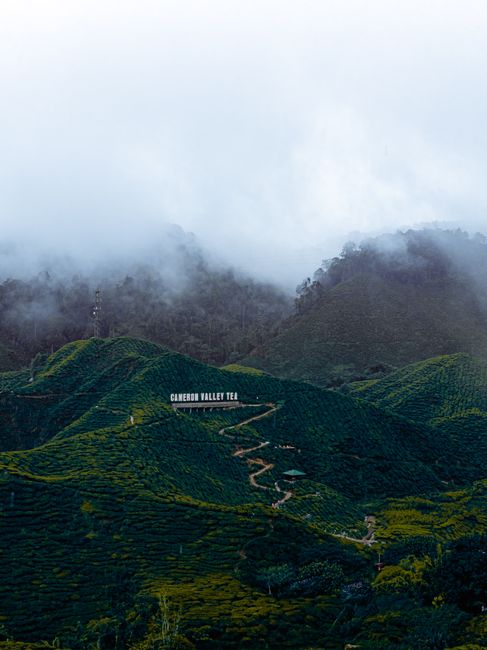
The Cameron Highlands is Malaysia’s largest hill station: a district of rolling tea plantations, misty cloud forest, vegetable terraces and flower farms high on the Titiwangsa Range in the northwest corner of Pahang, about 200 km (125 miles) north of Kuala Lumpur. According to the district council, the area was found in 1885 by William Cameron, a British government surveyor, and later developed as a hill station where colonial officials escaped the heat of the lowlands; mock-Tudor bungalows and a few old hotels survive from that era. Today visitors come for the cool air, the green tea estates of BOH and Cameron Valley, jungle trails and the moss-draped Mossy Forest on Gunung Brinchang, strawberry farms and markets, and scones with a pot of local tea. Traffic jams on weekends and holidays, landslide-prone mountain roads and frequent afternoon rain are part of the experience, so plan your trip for weekdays and mornings.
Right now in Cameron Highlands (Tanah Rata)
- Wed 16–23°C 61–74°F 9 mm Heavy rain
- Thu 16–23°C 61–74°F 4 mm Showers
- Fri 17–21°C 62–69°F 4 mm Rain
Weather: MET Norway (CC BY 4.0)
Top tours in Cameron Highlands
See all tours for Cameron Highlands →
From local operators, with prices and reviews; you check availability and book on Viator, our partner. We may earn a commission at no extra cost to you. How we earn money
The Cameron Highlands at a glance
- Best for: tea plantations, cool weather, gentle hikes and cloud forest, strawberry and flower farms, markets, colonial-era hotels and a break from the heat of the lowlands.
- How long: 2 to 3 nights.
- Best time: any time of year; the drier months are usually January to March and June to August, while October to December and April to May are the wettest. Weekdays are far quieter than weekends and public holidays.
- Getting there: about four hours by bus or car from Kuala Lumpur, two hours from Ipoh, on winding mountain roads; there is no airport or railway.
- Getting around: local buses are limited, so use Grab, taxis, tours or a rental car; the towns of Tanah Rata and Brinchang are walkable.
- Good to know: the roads up the mountain are steep and winding, and heavy rain can cause landslides and closures; avoid driving at night.
- Before you go: the Malaysia Digital Arrival Card (MDAC), visa-free stays, money and general safety are in our Malaysia travel guide.
The towns and valleys: where things are
The district covers about 712 km² (275 sq miles) of mountains and valleys. A single main road runs north to south through the highlands, linking a chain of small towns at different altitudes.
Tanah Rata
The main town and the most popular base, at about 1,440 m (4,720 ft), with a main street of guesthouses, hotels, Indian, Chinese and Malay restaurants, tour agencies and the bus station. Several jungle trails start on the edge of town, and the district council’s offices are here.
Brinchang
About 5 km (3 miles) north and a little higher, Brinchang is a busier town with hotels, a weekend night market and many farms and attractions on its outskirts. It is the jumping-off point for Gunung Brinchang and the Mossy Forest, and for the BOH Sungei Palas tea estate.
Kea Farm, Tringkap and Kuala Terla
North of Brinchang, these farming areas are a patchwork of vegetable greenhouses, flower nurseries and strawberry farms, with the Kea Farm market selling produce and souvenirs along the road.
Ringlet and the south
At the southern entrance to the highlands, Ringlet is a farming town near the Sultan Abu Bakar Lake, at around 1,100 m (3,600 ft). The road south of Ringlet descends toward Tapah, and the BOH Habu tea estate lies nearby.
The tea estates
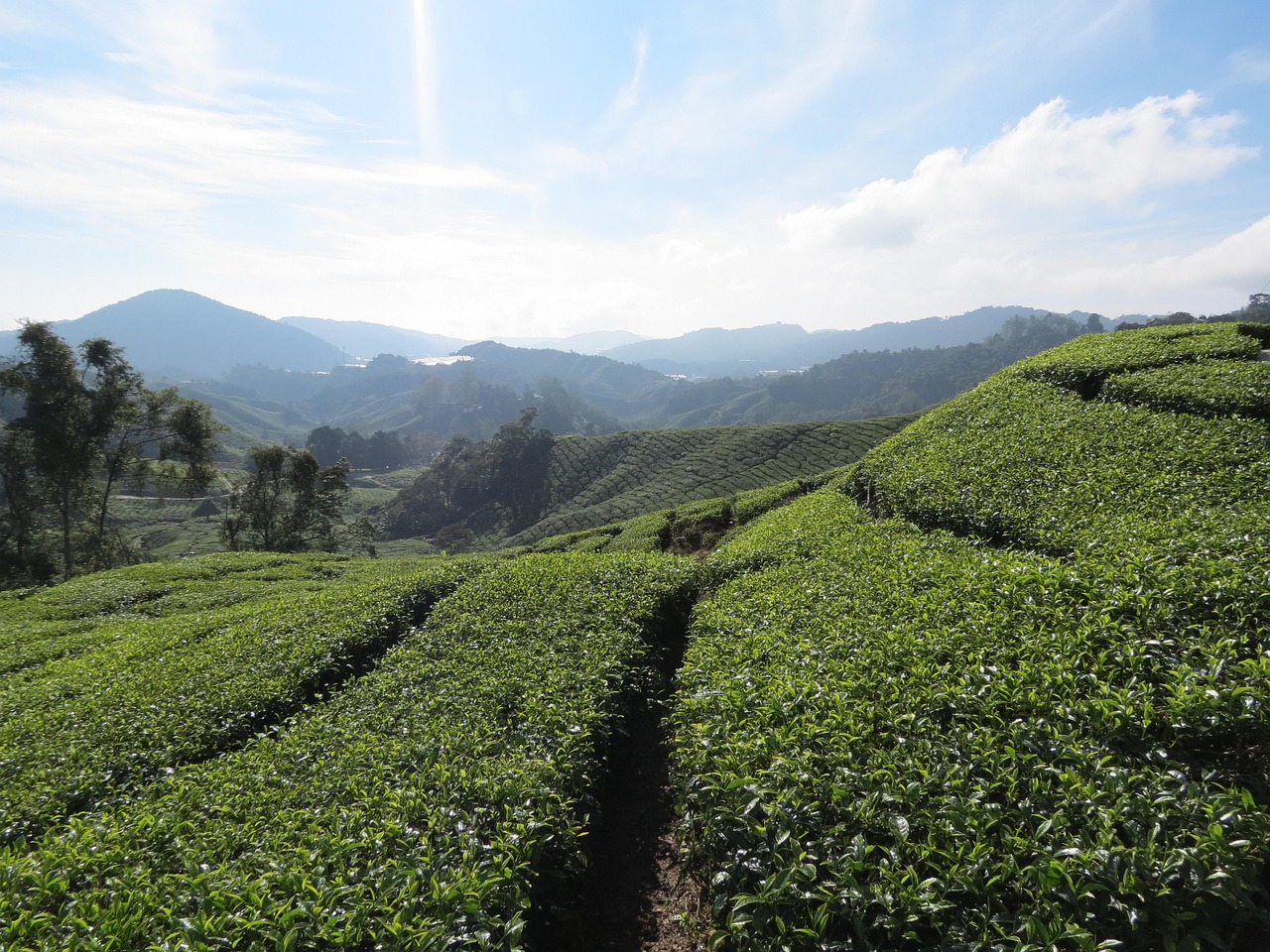
Tea has been grown in the Cameron Highlands since the late 1920s, and the plantations, with their neatly clipped rows of bushes covering entire hillsides, are the region’s signature landscape.
BOH Sungei Palas Tea Garden
The best known estate, north of Brinchang, has a visitor center and café on a terrace overlooking a sweeping valley of tea bushes, with a small exhibition on tea processing and a factory where you can see the leaves being withered, rolled and dried. A narrow road winds up through the plantation; on weekends traffic and parking can be difficult, so go early. The café serves tea and cakes with one of the best views in Malaysia.
Cameron Valley and other estates
Cameron Valley Tea, on the road between Ringlet and Tanah Rata, has a roadside tea house and walks in the plantation, with terraces right by the road, making it easy to visit on the way in or out. The BOH Habu estate near Ringlet is quieter. Most estates are free to enter; you pay for tea, food and any guided tours.
Top things to see in the Cameron Highlands
The Mossy Forest and Gunung Brinchang
On the slopes of Gunung Brinchang, at about 2,000 m (6,560 ft), one of the highest peaks in the area, cloud forest drips with moss, ferns, orchids and pitcher plants, with a boardwalk through the trees. It is one of the most atmospheric places in Malaysia, especially in the mist. Access is along a narrow, steep road from Brinchang that is not suitable for ordinary cars, so most visitors join a tour by four-wheel drive. Access and the boardwalk have been closed or restricted at times for repairs and conservation; check locally, and go only where it is permitted.
Jungle trails
A network of numbered trails crosses the forests around Tanah Rata and Brinchang, from short walks to waterfalls to climbs to summits such as Gunung Jasar and Gunung Beremban. Trails are often muddy and slippery, are not always well marked and are sometimes closed after landslides; check which trails are open at the district council or your guesthouse, go with a guide for the longer routes, tell someone where you are going and be back well before dark. See our hiking guide.
Farms and markets
Strawberry farms let you pick your own fruit (expect high prices); the cactus, rose and lavender gardens around Brinchang and Kea Farm are popular with Malaysian families; and the Brinchang night market, held on weekends and holidays, sells strawberries, corn, sweet potatoes, honey and street food.
Butterfly and bee farms
Small attractions along the main road show off tropical butterflies, insects, reptiles and honey farms; they are popular with families.
More classic sights
- Sam Poh Temple: a Buddhist temple on a hillside near Brinchang with colorful halls and statues.
- Time Tunnel Museum: a quirky collection of memorabilia from the hill station’s past.
- Ye Olde Smokehouse: a mock-Tudor inn from the colonial era, famous for its afternoon tea.
- Sultan Abu Bakar Lake: a reservoir near Ringlet surrounded by forested hills.
- Orang Asli villages: the Semai, one of Malaysia’s indigenous peoples, live in villages around the highlands; visit only with a respectful local guide.
Other things to do in the Cameron Highlands
Food and drink
The cool climate makes steamboat (hot pot), with highland vegetables, seafood and meat cooked at the table, the classic dinner in Tanah Rata and Brinchang. Afternoon tea with scones, strawberry jam and cream is a colonial tradition kept alive in the tea houses and older hotels. Try the strawberry desserts, local corn and the Indian restaurants in Tanah Rata, known for their banana-leaf meals and roti. Local tea, fresh vegetables and honey make good gifts.
Tours
Half-day and full-day tours from Tanah Rata combine the tea estates, the Mossy Forest, a strawberry farm, a butterfly farm and the market; they are the easiest way to see the highlands without a car, and some include guided walks or visits to Orang Asli villages.
Responsible travel in the highlands
The Cameron Highlands is also a working farming district, and its forests protect the water supply for the rivers that flow down to Perak and Pahang. Decades of land clearing for farms and building have left hillsides exposed, and landslides and muddy floods after heavy rain are a recurring problem. You can help by staying on marked trails, taking your litter back to town, buying from farms and shops that sell local produce, choosing guides from the community, including Orang Asli guides, and asking permission before photographing people or entering villages.
Photography and sunrise
Early mornings bring mist in the valleys and soft light on the tea; some tours go to viewpoints such as Gunung Brinchang at dawn. Mornings are also the clearest time before clouds build.
Day trips from the Cameron Highlands
- Ipoh: the capital of Perak, two hours away, with limestone cave temples, colonial streets, murals and famous food such as white coffee and bean sprout chicken.
- Kuala Kangsar: the royal town of Perak, with the Ubudiah Mosque, about 2.5 hours away.
- Lata Iskandar Waterfall: a roadside waterfall on the old road toward Tapah.
- Genting Highlands: another hill resort, closer to Kuala Lumpur; a separate trip. See our Genting Highlands guide.
- Kuala Lumpur and Penang: both about four hours away by road. See our Kuala Lumpur and George Town guides.
Nearby destinations
- Genting Highlands133 km
- George Town (Penang)149 km
- Kuala Lumpur159 km
- Perhentian Islands218 km
- Langkawi265 km
- Malacca City279 km
Getting there and getting around
The roads into the highlands
Three main roads reach the Cameron Highlands, and all of them are steep and winding:
- From Tapah (south): the old road climbs about 60 km (37 miles) through the forest via Ringlet to Tanah Rata, with countless bends; it is the most direct route from Kuala Lumpur and the one many buses use.
- From Simpang Pulai near Ipoh (northwest): a newer, wider road climbs to Kampung Raja at the northern end of the highlands, then continues south through Brinchang to Tanah Rata; it is usually the easiest route from Ipoh and Penang.
- From Gua Musang (east): a road links the highlands with Kelantan through forest and plantations.
Expect slow traffic behind trucks carrying vegetables, and long jams between Brinchang and Kea Farm on weekends and public holidays. Heavy rain, especially in the wetter months, can cause landslides and temporary closures. Drive in daylight, use low gears on descents, and check road conditions before setting out.
By bus
Express buses run from Kuala Lumpur’s Terminal Bersepadu Selatan (TBS) and other city terminals to Tanah Rata in about four hours, and from Ipoh, Penang, Singapore and the east coast. Book ahead for weekends and holidays. There is no railway; the nearest ETS stations are at Tapah Road and Ipoh, with a taxi or bus up the mountain.
Getting around
Local buses between Tanah Rata, Brinchang and Kea Farm are infrequent. Grab and local taxis are available but can be scarce at peak times; tours, rental cars or hired drivers are the most practical way to visit the tea estates and the Mossy Forest. Tanah Rata and Brinchang themselves are easy to walk around.
When to go and how long to stay
Weather for your datesSunrise and sunset
The Cameron Highlands is cool and wet all year, with daytime temperatures typically around 21–24 °C (70–75 °F) and nights around 14–16 °C (57–61 °F), occasionally colder. According to the Malaysian Meteorological Department (MetMalaysia), the highlands are so much cooler than the lowlands that evaporation there is only about 2.5 mm a day, compared with 4 to 5 mm in the lowlands. Rain follows the pattern of the inland and western peninsula, with peaks in October to November and April to May and thunderstorms most frequent in the inter-monsoon periods. The district’s MetMalaysia station is not in the World Meteorological Organization’s 1991–2020 archive, so the table gives typical values rather than official normals.
| Month | Typical day / night | Rain | What to expect |
|---|---|---|---|
| January | 22 °C (72 °F) / 14 °C (57 °F) | Moderate | One of the drier months; cool nights; Chinese New Year crowds in some years |
| February | 23 °C (73 °F) / 14 °C (57 °F) | Lower | Usually the driest month; clear mornings |
| March | 23 °C (74 °F) / 15 °C (59 °F) | Moderate | Pleasant; showers return |
| April | 24 °C (75 °F) / 15 °C (59 °F) | High | Afternoon thunderstorms |
| May | 24 °C (75 °F) / 16 °C (61 °F) | High | Storms; school holidays at the end of the month |
| June | 23 °C (74 °F) / 15 °C (59 °F) | Moderate | Drier; haze possible |
| July | 23 °C (73 °F) / 15 °C (59 °F) | Lower | One of the drier months |
| August | 23 °C (73 °F) / 15 °C (59 °F) | Moderate | Busy National Day weekend |
| September | 23 °C (73 °F) / 15 °C (59 °F) | Moderate to high | Showers increasing |
| October | 22 °C (72 °F) / 15 °C (59 °F) | Very high | Wettest period; landslide risk on roads |
| November | 22 °C (72 °F) / 15 °C (59 °F) | Very high | Wet; quiet midweek |
| December | 22 °C (72 °F) / 14 °C (57 °F) | High | Year-end holidays bring heavy traffic |
Two nights
Day one, arrive by midday, walk a short trail near Tanah Rata and have afternoon tea and steamboat for dinner. Day two, a morning tour to the Mossy Forest and BOH Sungei Palas, then Kea Farm, a strawberry farm and the Brinchang market.
Three nights
Add a longer guided hike to Gunung Jasar or Robinson Falls, Cameron Valley’s tea house, and a half day in Ringlet or at the Sam Poh Temple.
Where to stay in the Cameron Highlands
- Tanah Rata: the widest choice, from backpacker guesthouses to mid-range hotels, near buses and restaurants.
- Brinchang: larger hotels and apartments near the market and the tea estates; busier.
- Colonial-style hotels: a few mock-Tudor hotels and inns between Tanah Rata and Brinchang, with fireplaces and gardens.
- Kea Farm and the northern hills: resort apartments and homestays among the farms, best with a car.
Rooms sell out and prices rise on weekends and during school and public holidays. Foreign guests pay Malaysia’s tourism tax of RM10 per room per night.
What a trip to the Cameron Highlands costs
Money exchange (MYR)Tip calculator
Prices are approximate, for October 2026, converted at about RM4.08 to the US dollar.
| Item | Typical cost |
|---|---|
| Express bus, Kuala Lumpur to Tanah Rata | RM35–50 (about US$9–12) |
| Half-day tour (tea estate, Mossy Forest, farms) | RM50–120 (about US$12–29) |
| Pot of tea and scones | RM15–30 (about US$3.70–7.40) |
| Steamboat dinner, per person | RM30–60 (about US$7.40–15) |
| Strawberry picking, per kilogram | RM40–80 (about US$10–20) |
| Guesthouse double, per night | RM80–180 (about US$20–44) |
| Mid-range hotel double, per night | RM200–400 (about US$49–98) |
| Tourism tax, per room per night | RM10 (about US$2.45) |
Practical tips for the Cameron Highlands
- Travel midweek: weekend and holiday traffic jams can turn a short drive into hours.
- Start early: mornings are clearer for views and photography; rain often arrives in the afternoon.
- Hike with care: check which trails are open, take a guide for longer routes and carry a rain jacket and a light.
- Bring cash: small farms, stalls and some guesthouses accept only cash.
- Book buses ahead: seats sell out on Fridays and Sundays.
Safety
The Cameron Highlands is safe and friendly, but the mountain environment needs respect. Roads are narrow and winding, often foggy, and prone to landslides after heavy rain; avoid driving at night, watch for heavy trucks and check the weather and road reports before you travel, especially from October to December. On jungle trails, people have become lost and injured: stick to open, marked trails, go with a guide on longer routes, carry water, a light and a charged phone, and turn back if the path is unclear or the weather turns. Leeches are common after rain. Nights are cool, so carry warm layers if you are out after dark. In an emergency, call 999.
What to pack for the Cameron Highlands
Packing list for Cameron Highlands
A warm sweater or fleece, a rain jacket, long trousers, walking shoes with good grip for muddy trails, insect and leech repellent, and a small flashlight. Malaysia uses 240 V and British-style three-pin plugs (type G). See our rain jackets and hiking shoes guides.
Cameron Highlands travel FAQ
How do I get to the Cameron Highlands from Kuala Lumpur?
By express bus from TBS in about four hours, or by car via Tapah or via Simpang Pulai near Ipoh. There is no train or airport.
Which road to the Cameron Highlands is best?
The road from Simpang Pulai, near Ipoh, is generally wider and easier; the old road from Tapah is more direct from Kuala Lumpur but very winding. Both can be affected by landslides in heavy rain.
How cold is the Cameron Highlands?
Days are usually around 21–24 °C (70–75 °F) and nights around 14–16 °C (57–61 °F), so bring a sweater.
Is the Mossy Forest open?
Access to the Mossy Forest on Gunung Brinchang has been closed or restricted at times for repairs and conservation. Check locally or with tour operators before you go.
Where is the best place to stay in the Cameron Highlands?
Tanah Rata, for its choice of guesthouses and hotels, restaurants and bus connections.
How many days do I need in the Cameron Highlands?
Two to three nights are enough for the tea estates, the Mossy Forest, a hike and the markets.
Can I visit the BOH tea plantation?
Yes. BOH’s Sungei Palas tea garden near Brinchang has a free-to-enter visitor center, a factory view and a café overlooking the plantation.
What is the best time to visit the Cameron Highlands?
Any time of year, but February, June and July are usually drier, and weekdays are much quieter than weekends and holidays.
Who discovered the Cameron Highlands?
According to the district council, the British government surveyor William Cameron came across the plateau in 1885 during an expedition in the Titiwangsa Range.
Is it safe to hike in the Cameron Highlands?
Yes, on open, marked trails and with care. Check which trails are open, go with a guide on longer routes and be back before dark.
Plan your trip
Partner links: TravelerCenter may earn a commission if you book, at no extra cost to you.
🇲🇾 Useful Malay phrases for Cameron Highlands
All 38 Malay phrases: restaurant, hotel, emergencies, romance (printable) →
Sources · last reviewed 4 October 2026
Researched and last reviewed on 4 October 2026. William Cameron’s 1885 expedition and the hill station’s history: the Cameron Highlands District Council (Majlis Daerah Cameron Highlands); the district’s area: Wikidata; the highlands’ lower evaporation and the peninsula’s rainfall and thunderstorm patterns: the Malaysian Meteorological Department (MetMalaysia); exchange rate: the US Federal Reserve. Temperatures are typical values, not official normals, because the district’s MetMalaysia station is not in the WMO archive. Road routes and conditions, Mossy Forest access, trail information, tea estate details, bus times, the tourism tax rate and typical prices are general references or estimates, flagged for checking. Prices and hours change, so check locally before you go. For entry rules, money and general safety, see our Malaysia travel guide.
Place data: Wikidata (CC0)