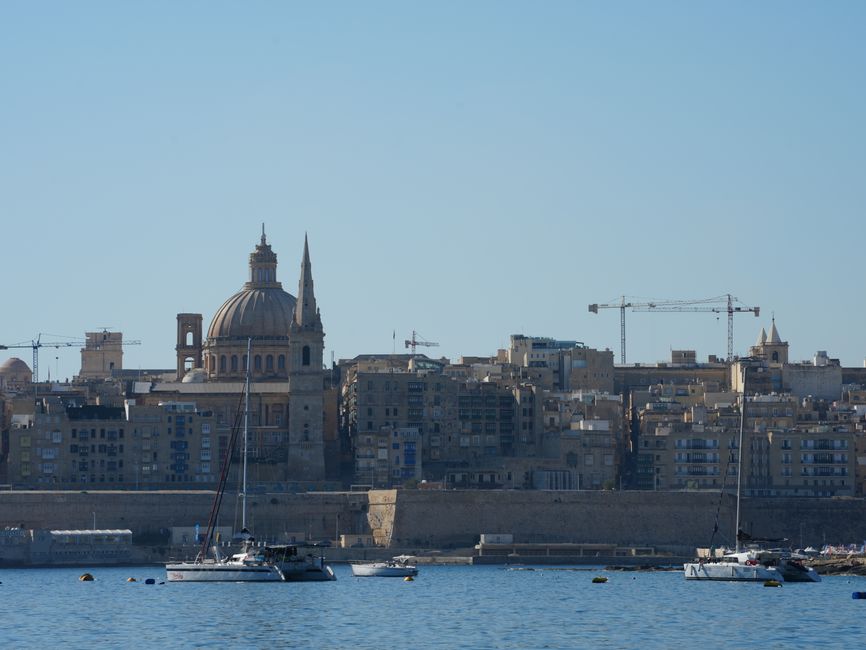
Valletta is Malta’s capital and one of the smallest capitals in Europe: a fortified city of honey-coloured limestone on a narrow peninsula between two deep natural harbours, built by the Knights of St John after they survived the Great Siege of 1565. Its grid of steep, straight streets is lined with Baroque churches, palaces and painted wooden balconies, and the whole city is a UNESCO World Heritage Site. See the gilded St John’s Co-Cathedral and its Caravaggios, watch the noon gun fired over the Grand Harbour, and take the little ferry across to the Three Cities. Valletta is small enough to walk across in 15 minutes, but there is enough here for two or three days, and it makes a fine base for the rest of the island. Come from March to June or September to November, when the streets are warm but not baking.
Right now in Valletta
- Wed 23–28°C 74–82°F Mostly clear
- Thu 23–29°C 74–84°F Partly cloudy
- Fri 24–29°C 75–84°F Partly cloudy
Weather: MET Norway (CC BY 4.0) · Sea temperature: NOAA CoastWatch · Air quality: OpenAQ
Top tours in Valletta
See all tours for Valletta →
From local operators, with prices and reviews; you check availability and book on Viator, our partner. We may earn a commission at no extra cost to you. How we earn money
Valletta at a glance
- Best months: March–June and September–November. Mean temperatures run from about 14 °C in March to 27–28 °C in July and August (1991–2020 averages for Malta International Airport at Luqa, a few kilometres away). Winters are mild, with showers and strong winds.
- Days needed: 1 for the main sights; 2–3 with the Three Cities, the museums and an evening or two; 4 or more as a base for Mdina, the temples and Gozo.
- Getting there: Malta International Airport is about 8 km away; the Airport Direct TD4 bus runs to Valletta every 30 minutes for €3.
- Getting around: on foot (mostly car-free and very compact); ferries to Sliema and the Three Cities; buses to the rest of Malta from the terminus outside City Gate.
- Budget level: hotels are among Malta’s most expensive; food and transport are good value. See our Malta country guide for money, entry rules and costs.
Valletta’s areas and who each one suits
- Central Valletta: Republic Street and Merchants Street, the main shopping and sightseeing spine from City Gate to Fort St Elmo, with the Co-Cathedral and the Grand Master’s Palace. Lively by day, quieter at night.
- The lower streets and Strait Street: once the sailors’ red-light quarter, now full of wine bars and small restaurants. The best area for evenings out.
- Marsamxett side: the north-western streets facing Sliema and Manoel Island, with sunset views and steep stepped lanes down to the water.
- Grand Harbour side: the Upper and Lower Barrakka Gardens and the bastions looking over to the Three Cities; the Valletta Waterfront and cruise terminal lie below in Floriana.
- Floriana: just outside the walls, with gardens, the bus terminus and cheaper hotels. Practical rather than pretty.
- The Three Cities: Birgu (Vittoriosa), Senglea and Cospicua across the Grand Harbour. Quieter, residential and atmospheric, with boutique guesthouses and a marina; five minutes by ferry.
Top things to see in Valletta
St John’s Co-Cathedral
Behind a plain, almost military facade, the Knights’ conventual church, built in the 1570s, has one of the richest Baroque interiors in Europe: carved and gilded stone walls, a vault painted by Mattia Preti, and a floor of around 400 inlaid marble tombstones of knights. In the Oratory hangs Caravaggio’s The Beheading of St John the Baptist (1608), his largest painting and the only one he signed, and nearby is his St Jerome Writing. As of October 2026, an adult ticket is reported at about €15, including an audio guide, and the cathedral is open to visitors from Monday to Saturday, roughly 09:00 to 16:45 with last entry at 16:00; it closes to visitors on Sundays, public holidays and during services. Cover shoulders and knees, and leave stiletto heels at home, as they damage the floor.
The Grand Master’s Palace and the Armoury
The palace of the Grand Masters, later the seat of British governors and now the Office of the President, reopened after a long restoration and is run by Heritage Malta. Walk through the painted corridors and State Rooms and see the Palace Armoury, one of the world’s largest collections of arms and armour still in its original building. Adult tickets cost €12 (youths and seniors €10, children 6–11 €8). The State Rooms close on some days for state functions, including all day on 26 October 2026 (Budget Day) and until 13:30 on several dates in 2026 and 2027, and the Throne Room is closed until further notice; the Armoury stays open.
Upper Barrakka Gardens and the Saluting Battery
These arcaded gardens on the city’s highest bastion have the best view in Malta, straight across the Grand Harbour to the Three Cities. Below them, the Saluting Battery’s cannons are fired daily at 12:00 and 16:00; arrive 15 minutes early, as it draws a crowd. You can watch for free from the gardens, or pay to enter the battery itself (€3 for adults and €1 for children aged 5–15, card payment only, open Monday to Saturday 09:30–17:30). The Barrakka Lift links the gardens with the waterfront and the Three Cities ferry landing below. A short walk away, the smaller Lower Barrakka Gardens and the Siege Bell Memorial look out to the harbour mouth.
Fort St Elmo and the National War Museum
The star-shaped fort at the tip of the peninsula held out for a month against the Ottoman army in 1565 and was bombed in the Second World War. Today it holds the National War Museum, which tells Malta’s military story from the Bronze Age to the Second World War and displays the George Cross awarded to the islands in 1942. Adult tickets cost €10. On days when the In Guardia historical re-enactment is staged, regular visitors are admitted from 12:00. The section on the First World War is closed until further notice.
MUZA, the war rooms and the smaller museums
MUZA, Malta’s national museum of art, in the Auberge d’Italie, shows Maltese and European art from the Middle Ages to today (adults €10). The Lascaris War Rooms, tunnels deep beneath the Upper Barrakka Gardens, were the Allied command centre for the defence of Malta and the invasion of Sicily. Casa Rocca Piccola is a noble family’s palazzo still lived in and shown on guided tours; the Manoel Theatre, from 1731, is one of Europe’s oldest working theatres; and the National Museum of Archaeology (adults €5) displays the Sleeping Lady and other finds from the temples and the Hypogeum. Don’t miss Renzo Piano’s City Gate and Parliament building, or the ruins of the Royal Opera House, bombed in 1942 and now an open-air theatre.
The Three Cities across the Grand Harbour
Birgu (Vittoriosa), Senglea and Cospicua were the Knights’ base before Valletta existed, and they bore the brunt of the Great Siege. Today they are calm, lived-in towns of narrow lanes, washing lines and churches, with a marina full of yachts. In Birgu, visit Fort St Angelo, the Knights’ stronghold at the tip of the peninsula (Heritage Malta, adults €10), the Inquisitor’s Palace and the Malta Maritime Museum, and wander the old collacchio, where the knights lived. In Senglea, the Gardjola Gardens have a famous carved watchtower with eyes and ears facing the harbour.
The quickest way across is the Valletta Ferry Services boat from below the Upper Barrakka Gardens to Cospicua, a few minutes’ ride (adults €3 single or €5 return by day). Or hail a dgħajsa, the traditional painted water taxi, at the landing; agree the price before you set off. The Barrakka Lift saves the climb back up into Valletta.
Swimming near Valletta
Valletta has no sandy beach, but in summer locals swim from the rocks and ladders below the walls on the Marsamxett side and near Fort St Elmo. Sliema’s rocky shore, a few minutes away by ferry, has more space, beach clubs and lidos. For sand, take a bus to Golden Bay, Għajn Tuffieħa or Mellieħa in the north (about an hour), or a boat to Comino. St Peter’s Pool, a natural rock pool near Marsaxlokk, is a popular half-day trip. See our beaches guide and pack water shoes for the rocks.
Boat trips, harbour cruises and day trips
- Harbour cruises: boats from Sliema’s Strand tour both harbours, passing beneath the walls of Valletta and the Three Cities. A good first-day overview.
- Comino and the Blue Lagoon: day boats from Sliema; book the free Blue Lagoon time slot if you plan to go ashore, and go early.
- Gozo: the Gozo Highspeed fast ferry leaves from Valletta’s waterfront and reaches Mġarr in about 45 minutes (about €7.50 one way), so Gozo is an easy day trip from the capital.
- Mdina and Rabat: about 30–40 minutes by bus; the old walled capital, catacombs and the Domvs Romana.
- The Hypogeum and the temples: the Ħal Saflieni Hypogeum in Paola is 15 minutes by bus (book weeks ahead; €35); Ħaġar Qim and Mnajdra are about 45 minutes away on the south coast.
- Marsaxlokk and the Blue Grotto: the fishing village’s Sunday market, then the sea caves by small boat when the sea is calm.
- Sicily: Virtu Ferries’ catamarans run from the Valletta waterfront to Pozzallo in under two hours, with coach links to Catania. See our Sicily guide.
Cruise days, crowds and city life
Only a few thousand people live inside Valletta’s walls, but on busy days tens of thousands visit, many from cruise ships moored at the Valletta Waterfront below the bastions. On days with one or two large ships in port, Republic Street, the Co-Cathedral and the Upper Barrakka Gardens are busiest from mid-morning to mid-afternoon. Visit the Co-Cathedral as soon as it opens, save the gardens for the 16:00 gun or sunset, and spend the middle of the day in the quieter lower streets, MUZA or the Three Cities.
Valletta has become much livelier in the evenings since it was European Capital of Culture in 2018: Strait Street and the steps around Old Theatre Street fill with tables, and there are concerts at the Manoel Theatre and the Pjazza Teatru Rjal. It is still a working city with offices and government ministries, so some cafés close early and Sunday is quiet. Keep noise down late at night: people live above the bars.
Nearby destinations
- St. Julian's3 km
- Gozo28 km
- Catania186 km
- Sicily194 km
- Taormina228 km
- Palermo267 km
- Aeolian Islands291 km
Getting there and getting around
From the airport
Malta International Airport (MLA) at Luqa is about 8 km from Valletta. The Airport Direct TD4 bus runs to Valletta and the Gozo fast ferry terminal every 30 minutes, for €3 (or included in an Explore card). Ordinary bus routes are slower but cheaper. Taxis take about 15–20 minutes in light traffic; buy a fixed-fare ticket at the taxi desk in the arrivals hall or use a ride-hailing app.
Buses and ferries
The bus terminus just outside City Gate is the hub for routes across Malta. Fares are €2.50 a trip in summer and €2 in winter, valid for two hours, payable by contactless card or cash; the Explore card (€21 for 4 days, €27 for 7) is the best value for most visitors. Two short ferry routes start below the walls: to Sliema’s Strand from the Marsamxett side, and to Cospicua in the Three Cities from below the Upper Barrakka Gardens. Both cost €3 single or €5 return by day for adults and run late into the night from June to October.
On foot, by car and by taxi
Inside the walls, walking is the only sensible way to get around, though the streets running down to the harbours are steep and many are stepped. Vehicle access to central Valletta is controlled and charged, and parking is very limited, so leave a hire car in a car park outside the walls, such as in Floriana. Taxis and ride-hailing cars can drop you near City Gate.
Heritage Malta tickets and passes
Heritage Malta runs most state museums and sites, including the Grand Master’s Palace, Fort St Elmo, MUZA, Fort St Angelo, the National Museum of Archaeology and the Hypogeum. The Multisite Pass (€60 for adults, valid 30 days) covers most of them across Malta and Gozo, but not the Hypogeum, which needs its own ticket. Buy online or at any site. St John’s Co-Cathedral, the Saluting Battery, the Lascaris War Rooms and Casa Rocca Piccola are run by other organisations and need separate tickets. All Heritage Malta sites close on 1 January, Good Friday and 24, 25 and 31 December, and last admission is 30 minutes before closing.
When to go and how long to stay
Valletta has hot, dry, very sunny summers and mild, short winters. July and August average about 11–12 hours of sunshine a day and almost no rain, with afternoon highs around 32 °C; the stone streets hold the heat into the evening. Spring and autumn are ideal for walking the city. Winter is mild and quiet, the best time for museums, with festive lights in December and Carnival in February, but bring a jacket for the wind and showers.
| Season | Mean temperature | Days with rain a month | What it’s like |
|---|---|---|---|
| Spring (Mar–May) | 14–20 °C | 2–6 | Warm and bright; ideal for walking; the Fireworks Festival over the Grand Harbour in late April. |
| Summer (Jun–Aug) | 24–28 °C | 0–1 | Hot and humid; busy with cruise passengers; long evenings on Strait Street; swim from the rocks. |
| Autumn (Sep–Nov) | 25 °C falling to 18 °C | 4–9 | Warm sea and fewer crowds; occasional thunderstorms; cultural season begins. |
| Winter (Dec–Feb) | 13–15 °C | 8–10 | Mild, windy and showery; quiet museums; Christmas lights and Carnival. |
Figures are 1991–2020 monthly averages for Malta International Airport at Luqa, a few kilometres from Valletta (mean temperatures over day and night). Afternoon highs reach about 32 °C in August and about 16 °C in January. Malta gets about 580 mm of rain a year, almost all of it from September to March, and about 3,000 hours of sunshine.
2 days in Valletta
Day 1: St John’s Co-Cathedral at opening time, the Grand Master’s Palace and Armoury, the noon gun at the Upper Barrakka Gardens, MUZA in the afternoon and dinner on Strait Street. Day 2: Fort St Elmo and the National War Museum, the Lower Barrakka Gardens, then the ferry to Birgu for Fort St Angelo and a waterfront dinner, returning by dgħajsa at dusk.
4 days with Valletta as a base
Add a morning at the Hypogeum (booked ahead) and Marsaxlokk; a day at Mdina, Rabat and the Dingli Cliffs; and a day trip to Gozo by fast ferry, or an early boat to Comino and the Blue Lagoon.
Where to stay in Valletta
- First visit, no car: a boutique hotel or guesthouse inside the walls, many in restored palazzi; everything is a short walk, and the bus terminus and ferries are close.
- Couples who want the view: rooms on the Grand Harbour or Marsamxett side; ask for a balcony.
- Quiet and atmospheric: a guesthouse in Birgu or Senglea, five minutes from Valletta by ferry.
- Budget and beaches nearby: Sliema or Gżira, across Marsamxett Harbour, with more choice and the ferry into Valletta.
- Practical: Floriana, near the bus terminus and with easy parking.
Malta charges an eco-contribution on licensed accommodation, usually added to your bill by the hotel or host. From 1 July 2026 it is €1.50 per person aged 18 or over per night, up to a maximum of €22.50 per visit, according to the Malta Tourism Authority. Under-18s pay nothing.
Practical tips for Valletta
- Beat the crowds: be at the Co-Cathedral when it opens, and check whether cruise ships are in port.
- Steps and slopes: pack light and use a backpack rather than a wheeled case if you are staying in the lower streets.
- Sundays: the Co-Cathedral is closed to visitors and many shops shut; it’s a good day for the Marsaxlokk market or the Three Cities.
- Book ahead: the Hypogeum, often weeks in advance, and dinner on Strait Street on Fridays and Saturdays.
- Dress: cover shoulders and knees in churches; no stiletto heels in the Co-Cathedral.
- Heat: carry water in summer; the Upper Barrakka Gardens are a shady place to rest.
- Emergencies: call 112.
What to pack for Valletta
Comfortable shoes with good grip for steep, polished limestone streets and stairs; a sun hat, sunglasses and sunscreen; a refillable water bottle; swimwear and water shoes for swimming from the rocks; a light scarf or shirt for churches; and a type G (UK-style) plug adapter. In winter, add a windproof jacket and an umbrella.
Valletta travel FAQ
How much does St John’s Co-Cathedral cost?
As of October 2026, an adult ticket is reported at about €15, including an audio guide and the Caravaggio paintings in the Oratory. Check the cathedral’s own site for current prices and reductions.
When is St John’s Co-Cathedral open?
Usually Monday to Saturday, about 09:00 to 16:45, with last entry at 16:00. It is closed to visitors on Sundays and public holidays.
What time is the noon gun in Valletta?
The Saluting Battery below the Upper Barrakka Gardens fires at 12:00 and 16:00. Watch free from the gardens, or pay €3 (adults) to stand in the battery itself.
How many days do you need in Valletta?
One full day for the main sights, two to add the Three Cities and the museums, and four or more if you use Valletta as a base for the rest of Malta and Gozo.
How do I get from Valletta to the Three Cities?
Take the Valletta Ferry Services boat from below the Upper Barrakka Gardens to Cospicua (a few minutes, €3 single or €5 return by day), or a traditional dgħajsa water taxi. The Barrakka Lift links the gardens with the landing.
How do I get from the airport to Valletta?
The Airport Direct TD4 bus runs every 30 minutes for €3, or take a fixed-fare taxi from the arrivals hall, about 15–20 minutes in light traffic.
Is the Heritage Malta Multisite Pass worth it?
If you plan to visit five or more Heritage Malta sites, such as the Grand Master’s Palace, Fort St Elmo, MUZA, Fort St Angelo and the temples, yes: it costs €60 for adults and lasts 30 days. It does not include the Hypogeum or St John’s Co-Cathedral.
Can you swim in Valletta?
Yes, from the rocks and ladders below the walls in summer, but there is no beach. Sliema’s rocky lidos are a short ferry ride away, and sandy beaches are about an hour north by bus.
Can I visit Gozo on a day trip from Valletta?
Yes. The Gozo Highspeed fast ferry leaves from the Valletta waterfront and takes about 45 minutes to Mġarr. Buses or a tour then take you around the island.
Is Valletta worth visiting in winter?
Yes. Afternoons are usually mild, around 15–17 °C, the museums are quiet and hotels are cheaper. Expect some wind and rain, and pack a jacket.
Can I drive into Valletta?
It’s best not to. Access is controlled and charged, the streets are narrow and steep and parking is scarce. Park outside the walls or come by bus or ferry.
Sources and last review
Researched and last reviewed on 4 October 2026. Museum prices, closures and passes come from Heritage Malta; the noon gun and Saluting Battery from the battery’s official site; the eco-contribution from the Malta Tourism Authority; bus fares and the Airport Direct routes from Malta Public Transport; harbour ferry fares from Valletta Ferry Services. St John’s Co-Cathedral prices and hours, the Gozo fast ferry fare and the climate averages come from secondary sources and are flagged for checking. Prices, timetables and rules change, so check the official sites before you travel.
Plan your trip
Partner links: TravelerCenter may earn a commission if you book, at no extra cost to you.