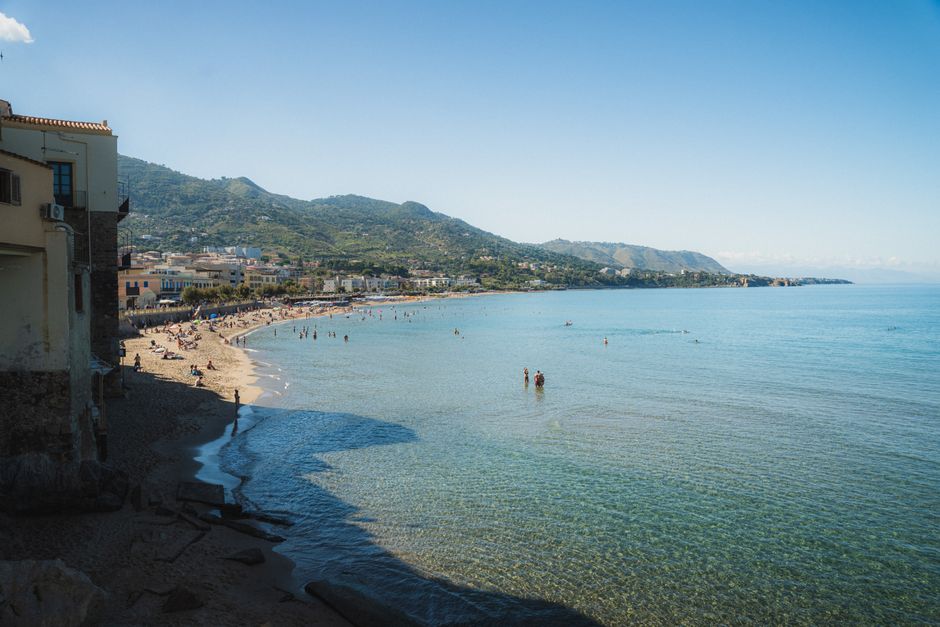
Sicily is the largest island in the Mediterranean and almost a country of its own: Greek temples and theatres, Arab-Norman churches glittering with gold mosaics, baroque towns, Europe’s highest active volcano and a coastline of beaches and fishing villages, all fed by some of the best food in Italy. Palermo is its noisy, magnificent capital; Taormina, Syracuse and Mount Etna are on the east coast; the Valley of the Temples is on the south. Distances are bigger than they look, so plan around two or three bases. The best months are April to June and September to October. Give it at least a week, ideally ten days to two weeks.
Right now in Sicily (Catania)
- Wed 20–28°C 69–82°F 3 mm Rain
- Thu 20–30°C 67–85°F Partly cloudy
- Fri 22–25°C 71–78°F 1 mm Cloudy
Weather: MET Norway (CC BY 4.0) · Sea temperature: NOAA CoastWatch · Rates: ECB
Top tours in Sicily
See all tours for Sicily →
From local operators, with prices and reviews; you check availability and book on Viator, our partner. We may earn a commission at no extra cost to you. How we earn money
Sicily at a glance
- Best months: April–June and September–October. On the coast, average highs run from about 20 °C in April to 31 °C in August, and winters are mild (WMO normals 1991–2020, Messina); the interior is hotter in summer and colder in winter. The sea is warm enough for swimming from June to October.
- Days needed: 7 for one side of the island (Palermo and the west, or Catania, Etna, Taormina and Syracuse); 10–14 for a full loop.
- Getting there: fly into Catania (CTA) or Palermo (PMO); or cross the Strait of Messina by ferry, or take an overnight ferry from Naples or northern Italy.
- Getting around: a car gives you the most freedom; trains and buses link the main cities but are slow for crossing the island.
- Budget level: good value for food and rooms away from Taormina and the summer beach resorts. A tourist tax is added per person per night in most towns. See our Italy guide for money, entry rules and daily costs.
Sicily’s areas and who each one suits
- Palermo and the north-west: the capital’s palaces, markets and street food, Monreale’s mosaics, Cefalù, the beach at Mondello and, further west, the salt pans of Marsala, hilltop Erice, the Zingaro reserve and the Egadi Islands. For culture lovers and food lovers.
- Catania, Etna and Taormina: the east coast under the volcano: lively, baroque Catania, hikes and wineries on Etna’s slopes and the chic hill town of Taormina above the sea. The easiest region for a first visit.
- Syracuse and the south-east: the island of Ortigia, the Greek theatre and the honey-coloured baroque towns of the Val di Noto (Noto, Modica, Ragusa), with sandy beaches nearby. Romantic and walkable.
- Agrigento and the south coast: the Valley of the Temples, the white cliffs of the Scala dei Turchi and quieter seaside towns. A day or two is enough.
- The smaller islands: the volcanic Aeolian Islands to the north (Lipari, Salina, Stromboli, Vulcano), the Egadi to the west, and remote Pantelleria and Lampedusa. For summer, boats and swimming.
Top things to see in Sicily
Prices and hours below come from the official websites of Sicily’s regional archaeological parks, as of October 2026.
Palermo
Palermo’s Arab-Norman monuments, together with the cathedrals of Monreale and Cefalù, are a UNESCO World Heritage Site: see the golden mosaics of the Palatine Chapel inside the Royal Palace (Palazzo dei Normanni), the cathedral, the red domes of San Giovanni degli Eremiti and the baroque crossroads of the Quattro Canti. Catch an opera or a tour at the Teatro Massimo, one of the largest opera houses in Europe. Above all, walk the street markets of Ballarò, the Capo and the Vucciria, and eat as you go: arancine (fried rice balls), panelle (chickpea fritters), sfincione (Palermo’s thick pizza) and a cannolo filled while you wait. In summer, locals head to the beach at Mondello, 20 minutes away. Take a half day for the cathedral of Monreale, on the hill above town, covered inside with some of the finest Byzantine mosaics in the world.
Cefalù
An hour east of Palermo by train, Cefalù packs a Norman cathedral with a glittering mosaic of Christ, a medieval old town and a sandy beach into a small space beneath a huge rock, La Rocca. Climb the rock for the view (start early in summer), then swim off the old harbour. It makes a relaxed base or an easy day trip from Palermo.
Taormina
Taormina hangs on a cliff above the Ionian Sea with Etna smoking behind it. Its Ancient Theatre, built by the Greeks and rebuilt by the Romans, frames that view perfectly and still hosts concerts and films in summer. How to visit: open every day 9:00–19:45, with last entry at 19:00; a ticket is €14, €7 reduced. Then stroll the Corso Umberto, take the cable car down to the beaches of Mazzarò and the little nature reserve of Isola Bella, linked to the shore by a sand bar, and climb (or drive) to the village of Castelmola for sunset. Taormina is busy and pricey in summer, and quieter and lovely in spring and autumn.
Syracuse and Ortigia
Syracuse was one of the greatest cities of the Greek world. Its old centre, the island of Ortigia, is joined to the mainland by bridges: a maze of limestone lanes, the cathedral built around the columns of a Greek temple of Athena, the freshwater Fountain of Arethusa with its papyrus plants, a busy morning market and swimming platforms on the rocks. On the mainland, the Neapolis Archaeological Park holds the huge Greek theatre, the Roman amphitheatre and the cave called the Ear of Dionysius. How to visit: a ticket is €14, €7 reduced; in October 2026 the park is open 8:30–18:15 until 24 October and 8:30–17:15 from 25 October, with the ticket office closing 45 minutes earlier. Every year from about May to early July, classical Greek plays are staged in the theatre. Nearby, the baroque towns of Noto, Modica and Ragusa Ibla make perfect day trips; try Modica’s grainy chocolate.
The Valley of the Temples, Agrigento
On a ridge below modern Agrigento stand some of the best-preserved Greek temples anywhere, including the almost complete Temple of Concordia, with almond and olive trees around them and the sea beyond. It is a UNESCO World Heritage Site. How to visit: a ticket is €14, €7 for EU citizens aged 18–25, free for under-18s; the combined ticket with the Pietro Griffo archaeological museum is €19.20, and with the Kolymbethra garden, a lush citrus garden in a valley inside the park, €20. From 23 July to 31 October 2026 a €3 exhibition supplement is added to all paid tickets. The park opens daily from 8:30 to 20:00 (last entry 19:00), with evening openings until 23:00 on weekdays and midnight on weekends and holidays from 20 June to 20 September. Entry is free on the first Sunday of the month until 19:00. Go early or at sunset: there is little shade.
Protected areas
- Villa Romana del Casale
Monuments
- Cefalù Cathedral
- Valley of the Temples
Other sights
- Teatro Massimo
Peaks and mountains
- Mount Etna
- Stromboli
Archaeological sites
- Selinunte
Mount Etna
Etna is Europe’s highest active volcano, about 3,300 m high (the height changes with eruptions), and a UNESCO World Heritage Site. Its lower slopes are covered in vineyards, orchards and pine woods; higher up are black lava fields, old craters and, often, snow from December to April. Eruptions and lava fountains are frequent and usually not dangerous for visitors kept at a safe distance, but they do close areas at short notice.
How to visit Etna
- South side (Etna Sud): drive or take the daily bus from Catania to the Rifugio Sapienza, at about 1,900 m, where you can walk around the Silvestri craters for free. From there, a cable car climbs to about 2,500 m, and 4×4 vehicles and guided walks go higher.
- North side (Etna Nord): Piano Provenzana, above Linguaglossa, is quieter, with pine forests, guided jeep tours and a small ski area in winter.
- Wine: Etna’s volcanic soils make some of Italy’s most exciting wines, especially around Randazzo, Castiglione di Sicilia and Milo; many wineries offer tastings. See our wine tasting guide.
Summit rules: guides are compulsory
Access to the summit area is regulated by orders of the mayors of the towns around the volcano, published by the Etna Park, and updated as activity changes. In the current orders (for example, Belpasso’s of 10 August 2026), the summit zone covers the summit craters, the upper Valle del Bove and roughly everything above 2,500 m. There, you may only go with authorised alpine or volcanological guides, along set routes, with suitable clothing and safety gear including a helmet; each guide may take at most 10 people in the restricted zone, and groups must keep at least 300 m from the base of an active cone and 50 m from the edge of active lava flows. On days of high activity or civil-protection alerts the guides must stop or cancel excursions. Below that line you may walk the marked trails on your own, but stay on the paths and check the current order before you go. Book a guided summit hike in Nicolosi, at the Rifugio Sapienza or in Linguaglossa. See our hiking guide.
Beaches and islands
Sicily’s best beaches include San Vito Lo Capo and the coves of the Zingaro reserve in the north-west, Mondello near Palermo, Cefalù, the long sandy beaches of the south-east around Marzamemi and the Vendicari reserve, and Isola Bella below Taormina. For crystal water, take a boat to the Egadi Islands (Favignana is a short hydrofoil ride from Trapani) or the Aeolian Islands, reached from Milazzo in about an hour or more; Stromboli’s night eruptions can be watched from the sea. Snorkeling and diving are excellent around the islands and in the marine reserves. See our beaches guide, our boat trips guide, our snorkeling guide and our diving guide.
Sicilian food
Sicilian cooking mixes Greek, Arab, Norman and Spanish influences. Try pasta alla Norma (aubergine, tomato and salted ricotta) in Catania, pasta con le sarde (sardines, wild fennel, raisins and pine nuts) in Palermo, couscous with fish in Trapani, caponata, swordfish and raw red prawns. For breakfast in summer, do as Sicilians do: a granita (almond, lemon, pistachio or coffee) with a soft brioche. Bronte, on Etna’s slopes, is famous for pistachios, and the island’s wines range from Etna reds and whites to Marsala and the sweet Passito of Pantelleria.
Activities and best months
- Beaches and swimmingMayJunJulAugSepVendicari, Isola dei Conigli, San Vito Lo Capo, Scopello, Scala dei Turchi, Mondello, Isola Bella and Sampieri; Mondello's facilities run May–September. · source
- Boat tripsBoat trips around Panarea's islets (Basiluzzo, Dattilo, Lisca Bianca, Bottaro) in the Aeolian Islands. · source
- CyclingMountain biking on Etna, including the Pista Altomontana trail. · source
- HikingGuided trips to Etna's summit craters and Etna Park trails from easy forest walks to high lava routes in every season; Aeolian hikes up Stromboli, Vulcano and Salina. · source
- Scuba divingJunJulAugUstica Marine Protected Area's underwater archaeological trails (10–30 m), plus the Aeolian Islands, Marettimo, Pantelleria and Plemmirio near Syracuse. · source
- SnorkelingJunJulAugThe shallow part of Ustica's Punta Gavazzi trail, Plemmirio near Syracuse, Panarea's underwater fumaroles and San Vito Lo Capo. · source
- Wine tastingMarAprMayJunJulAugSepOctNovThe Etna wine road: the Etna Wine Train from Linguaglossa on Thursdays and Saturdays, March–November, and the Etna Wine Bus from Catania. · source
Nearby destinations
- Palermo81 km
- Catania95 km
- Taormina115 km
- Aeolian Islands128 km
- Gozo174 km
- St. Julian's192 km
- Valletta194 km
Getting there and getting around
Flights
Catania Fontanarossa (CTA) is the busiest airport, best for Etna, Taormina and Syracuse; Palermo Falcone Borsellino (PMO) serves the capital and the west. Both have many flights from mainland Italy and the rest of Europe. Trapani (TPS) and Comiso (CIY) have fewer routes. From Catania airport, buses run to the city, Taormina (about 1 h 15) and Syracuse; from Palermo airport, a train and a shuttle bus reach the city centre in under an hour. Flying into one airport and out of the other saves backtracking.
Ferries from the mainland
- Across the Strait of Messina: car and passenger ferries cross from Villa San Giovanni to Messina around the clock, in about 20–30 minutes, with no need to book; fast passenger boats also link Reggio Calabria and Messina. Some Intercity trains from Rome are loaded onto ferries to cross the strait, and continue to Palermo and Syracuse.
- Overnight ferries: from Naples to Palermo and Catania, and from Salerno, Civitavecchia, Livorno and Genoa to Palermo or Termini Imerese, with cabins and space for cars. Naples–Palermo takes about 10–11 hours.
Car or public transport?
For a loop of the island, the Etna wineries, the baroque towns, the beaches and the interior, rent a car: motorways link Palermo, Catania, Messina and Syracuse, and other roads are slower and sometimes in poor repair. Do not drive into old town centres: Palermo, Catania, Syracuse’s Ortigia, Taormina and many others have limited-traffic zones (ZTL) watched by cameras, and fines follow you home. Park in the car parks at the edge and walk in. Without a car, public transport works well between the main cities:
- Trains (Trenitalia): useful along the coasts: Palermo–Cefalù (about an hour), Catania–Taormina (about 45 minutes, to Taormina-Giardini station below the town), Catania–Syracuse (about 1 h 15) and Palermo–Agrigento (about 2 h). Slow or impractical for crossing the island.
- Buses: usually faster than trains between cities: Palermo–Catania, Catania–Taormina, Catania–Syracuse and Noto, and Palermo or Catania to Agrigento. Several companies run them; check timetables on their websites, as services drop on Sundays.
- Tours: day tours from Catania and Taormina cover Etna, and from Syracuse the Val di Noto.
When to go and how long to stay
Sicily has a hot, dry summer and a mild, wetter winter on the coast. July and August are very hot, especially inland and at the archaeological sites, and the beaches and islands are full with Italian holidaymakers in August. Spring brings wildflowers among the temples and is ideal for walking and Etna; September and October have warm sea and the grape harvest. Winter is quiet and fine for cities and sites, with snow on Etna, though many beach hotels and island boats close. The scirocco, a hot wind from Africa, can bring dusty, very hot days, mostly in spring and summer.
| Season | Average high / low | Rainy days a month | What it’s like |
|---|---|---|---|
| Spring (Mar–May) | 17–23 °C / 11–17 °C | 4–9 | Green, flowery and pleasant; best for temples, towns and Etna; Easter processions. |
| Summer (Jun–Aug) | 28–31 °C / 21–25 °C | 2–3 | Hot and sunny; peak beach and island season; very hot inland. |
| Autumn (Sep–Nov) | 20–28 °C / 15–21 °C | 7–11 | Warm sea and harvest in September and October; storms from late October. |
| Winter (Dec–Feb) | 15–16 °C / 10–11 °C | 10–12 | Mild on the coast, snow on Etna; quiet, and good value in the cities. |
Figures are the WMO 1991–2020 climate normals for the Messina station, on the north-east coast near Taormina (rainy day = at least 1 mm of rain). Messina averages about 2,660 hours of sunshine a year; the west, around Trapani, is drier and slightly sunnier, and the interior is several degrees hotter by day in summer and colder at night in winter.
7 days in Sicily (east)
Fly into Catania. Three nights in Taormina or Catania with a day on Etna, then three or four nights in Syracuse (Ortigia) with a day for Noto, Modica and Ragusa, and a beach afternoon at Vendicari.
7 days in Sicily (west)
Fly into Palermo. Four nights in Palermo with Monreale and Cefalù, then three nights around Trapani for Erice, the salt pans, a boat day to Favignana and the beaches of San Vito Lo Capo.
10–14 days: the loop
Palermo (3 nights), Cefalù on the way east or a night in Agrigento for the Valley of the Temples, Syracuse and the Val di Noto (3 nights), and Taormina with Etna (3 nights), flying into Palermo and out of Catania. Add the Aeolian Islands from Milazzo with more time, or arrive from Naples or the Amalfi Coast by ferry or train.
Where to stay in Sicily
- Culture and food: Palermo’s historic centre, near the Quattro Canti and the markets.
- Romance and views: Taormina, or Ortigia in Syracuse, with the sea at the end of every lane.
- Etna and wine: a country house or agriturismo on the volcano’s slopes, around Nicolosi, Zafferana or Linguaglossa.
- Without a car: Palermo, Catania, Taormina and Syracuse, all linked by trains or buses.
- Beach time: Cefalù, San Vito Lo Capo, the south-east coast or the islands; book July and August early.
A tourist tax (imposta di soggiorno) is added per person per night in most towns, set by each town and type of accommodation.
Practical tips for Sicily
- Allow time: Palermo to Syracuse is about three and a half hours by car; do not try to see the whole island in a week.
- Watch the ZTLs: camera-controlled limited-traffic zones cover most old centres; ask your hotel where to park.
- Sites in the heat: visit temples and theatres early in the morning or at sunset in summer, and use the evening openings at Agrigento.
- Etna: check the current mayors’ orders and the weather; even in summer it can be cold and windy at the top.
- Petty theft: keep valuables out of sight in parked cars and watch your bag in crowded markets and on buses.
- Sunday and August: buses run less on Sundays, and in mid-August (Ferragosto) beaches and ferries are packed.
- Emergencies: call 112.
Weather month by month
Averages from Aeronautica Militare normals 1991–2020, Catania Sigonella · Last reviewed 4 Oct 2026
What to pack for Sicily
Pack light, breathable clothes, a sun hat, sunglasses, high-factor sunscreen and a refillable water bottle for the shadeless temples and the long summer days. Bring comfortable walking shoes for cobbled old towns and Greek ruins, and hiking boots, long trousers and a warm, windproof jacket for Etna, where it can be 20 °C cooler than on the coast. For the beaches and islands, add a swimsuit, water shoes for rocky coves and a snorkel mask. A light scarf or shirt covers shoulders in churches, and a light rain jacket helps from October to March.
What to pack
- City walking shoesQuinta visits and harvest days mean steep terraces, gravel and cellar floors.
- Day packs and anti-theft bagsCarries water, towel and sunscreen down the long stairways to Algarve coves.
- Dry bags and phone pouchesProtects phones and cameras from sand and spray on beaches reached by ferry or steep paths.
- Fleeces and warm layersIt is cooler at sea than on land, especially on morning whale-watching trips.
- HeadlampsLevada routes such as PR1 and PR9 pass through long, dark, wet tunnels.
- Hiking shoes and bootsMadeira's levadas and the Azores' crater rims are wet, rocky and slippery, so grippy shoes matter more than anywhere else in Portugal.
- Quick-dry beach towelsA sand-shedding quick-dry towel packs small for beach days and lido visits.
- Rain jacketsA windproof, waterproof shell keeps you warm on open boats, where wind and spray cool you quickly.
- Reef-friendly sunscreenSummer UV is strong on Portuguese beaches and there is little shade below the cliffs.
- Snorkel masks and finsYour own mask fits better than a rental and makes clear-water coves and lava pools more fun.
- Trekking polesLong stone staircases and steep descents on Madeira's peaks and the Azores' crater rims are easier on the knees with poles.
- Water bottles and hydration packsRiding in the Algarve and Alentejo heat needs more water than you expect.
- Water shoesRocky coves, lava pools and weever fish in shallow sand make water shoes useful.
- WetsuitsOn the west and north coasts the sea stays around 16–18 °C even in summer, so a thin suit helps for long swims.
- Wine bottle travel protectorsPort and Douro wines bought at the quintas travel home safely in checked luggage with padded bottle protectors.
Sicily travel FAQ
How many days do you need in Sicily?
A week for one side of the island, and ten days to two weeks for a loop including Palermo, Agrigento, Syracuse, Etna and Taormina.
Is it better to fly into Palermo or Catania?
Catania for Etna, Taormina and Syracuse; Palermo for the capital, Cefalù and the west. For a full loop, fly into one and out of the other.
Do I need a car in Sicily?
Not for the main cities, which are linked by trains and buses, but a car makes it much easier to reach Etna, the baroque towns, the wineries and the beaches. Avoid driving in old town centres, which have camera-controlled ZTL zones.
Can you climb to the top of Etna on your own?
No. Under the current mayors’ orders, the summit zone, roughly everything above 2,500 m, is open only with authorised alpine or volcanological guides. Below it you can walk marked trails on your own, such as around the Silvestri craters.
How do you get to Sicily from mainland Italy?
By plane to Catania or Palermo, by ferry across the Strait of Messina from Villa San Giovanni (about 20–30 minutes), by overnight ferry from Naples or northern ports, or by Intercity train, which crosses the strait on a ferry.
How much does the Valley of the Temples cost?
€14, or €19.20 with the archaeological museum and €20 with the Kolymbethra garden, as of October 2026, plus a €3 exhibition supplement until 31 October 2026. Under-18s go free, and everyone is free on the first Sunday of the month.
Is Taormina worth visiting?
Yes, for the Ancient Theatre with Etna behind it, the views and the beaches below. It is crowded and expensive in summer; spring and autumn are calmer.
Where is the best base in Sicily?
There is no single base. Use two or three: Palermo for the west, Syracuse (Ortigia) for the south-east and Taormina or Catania for Etna.
What are the best beaches in Sicily?
San Vito Lo Capo and the Zingaro reserve in the north-west, Cefalù and Mondello on the north coast, Vendicari and Marzamemi in the south-east, Isola Bella below Taormina, and the Egadi and Aeolian Islands.
When is the best time to visit Sicily?
April to June and September to October, warm and sunny but not too hot for sightseeing. July and August are best for beaches and islands, but very hot inland.
Is Sicily safe for tourists?
Yes. Take normal precautions against pickpockets in crowded markets and on buses, and never leave bags visible in a parked car.
Sources
- © OpenStreetMap contributors · ODbL · fetched 4 Oct 2026
- Wikidata · CC0 · fetched 4 Oct 2026
Sources and last review
Researched and last reviewed on 3 October 2026. Prices and hours come from the official websites of the Region of Sicily’s archaeological parks (Naxos-Taormina, Syracuse, and the Valley of the Temples via its official ticket office). Etna’s summit rules come from the mayors’ orders published by the Etna Park. Climate figures are the WMO 1991–2020 normals for Messina. Ferry, train and bus times are typical and change by season, so check Trenitalia, the ferry companies and the bus operators, and the latest Etna orders, before you travel.
Plan your trip
Partner links: TravelerCenter may earn a commission if you book, at no extra cost to you.
🇮🇹 Useful Italian phrases for Sicily
All 38 Italian phrases: restaurant, hotel, emergencies, romance (printable) →