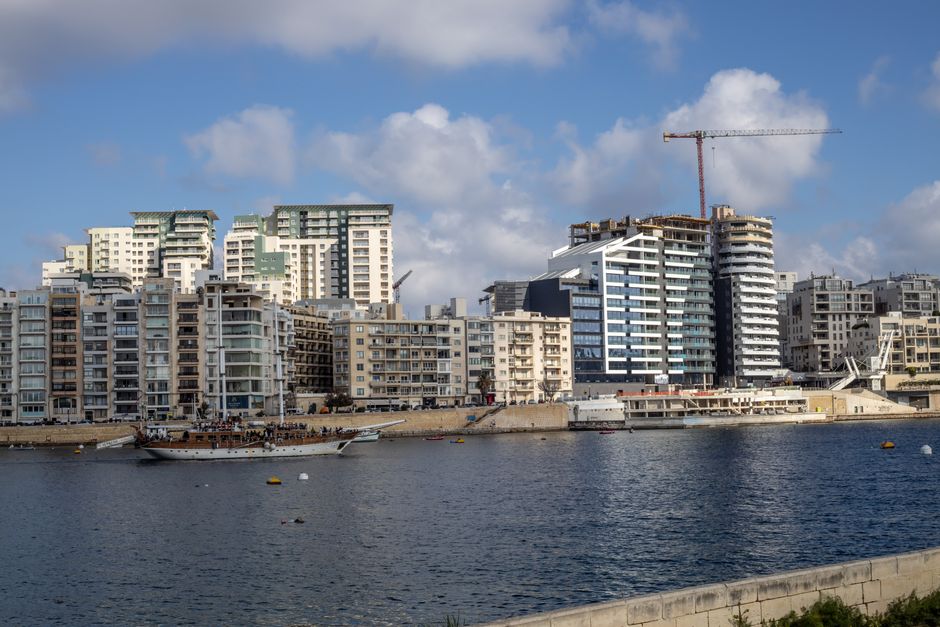
St Julian’s (San Ġiljan in Maltese) is Malta’s liveliest seaside town, a few kilometres north of Valletta, where an old fishing village around Spinola Bay has grown into the islands’ main area for hotels, restaurants and nightlife. Colourful luzzu boats still bob in Spinola Bay below waterfront terraces; Balluta Bay has a neo-Gothic church and Art Nouveau apartment blocks; St George’s Bay has a small sandy beach; and Paceville, on the hill behind, is where Malta goes out at night. Next door, Sliema adds a long seafront promenade with swimming from the rocks and the ferry to Valletta. It is not Malta’s prettiest corner, and building work is everywhere, but it is a convenient, sociable base with good buses and ferries to the rest of the island. Two to four days suit most visitors; spring and autumn are the most comfortable.
Right now in St. Julian's
- Wed 23–28°C 74–82°F Mostly clear
- Thu 23–29°C 74–84°F Partly cloudy
- Fri 24–29°C 75–84°F Partly cloudy
Weather: MET Norway (CC BY 4.0) · Sea temperature: NOAA CoastWatch · Air quality: OpenAQ
Top tours in St. Julian's
See all tours for St. Julian's →
From local operators, with prices and reviews; you check availability and book on Viator, our partner. We may earn a commission at no extra cost to you. How we earn money
St Julian’s at a glance
- Best months: May–June and September–October. Mean temperatures run from about 20 °C in May to 27–28 °C in July and August (1991–2020 averages for Malta International Airport at Luqa). The sea is warm from June to early November.
- Days needed: 1–2 for the bays, the promenade and a night out; 3–5 as a base for Valletta, Mdina, Comino and Gozo.
- Getting there: Airport Direct buses TD2 and TD3 run from Malta International Airport every 30 minutes for €3; a taxi takes about 20–30 minutes.
- Getting around: on foot along the seafront; frequent buses to Valletta; the Sliema ferry across to Valletta; boats from Sliema to Comino.
- Budget level: wide range, from hostels to five-star towers; busy and pricier in summer. See our Malta country guide for money, entry rules and costs.
St Julian’s areas and who each one suits
- Spinola Bay: the old heart of St Julian’s, a horseshoe bay of fishing boats lined with restaurants and cafés. Atmospheric in the evening; good for couples and foodies.
- Balluta Bay: a small bay with a pebble-and-sand beach, the Carmelite church and the Balluta Buildings, with bus links along the seafront. A good, calmer middle ground between Sliema and Paceville.
- Paceville: the nightlife district of bars, clubs, casinos, fast food and big hotels. For young groups and partygoers; noisy until dawn, especially at weekends and in summer.
- St George’s Bay and Pembroke: the sandy beach below Paceville, flanked by large resort hotels, and the quieter residential area of Pembroke with its coastal garigue and wartime batteries. Good for families who still want to be near the action.
- Portomaso and Dragonara: the marina, high-rise tower and five-star hotels around the casino on Dragonara Point. Polished and pricey.
- Sliema (next door): the long seafront of Tower Road and the Strand, with shops, Tigné Point, the Valletta ferry and swimming from the rocks. The most practical base for sightseeing.
Top things to see and do in St Julian’s
Spinola Bay and the old village
Spinola Bay takes its name from the Spinola Palace, built for a Knight of St John in the 17th century, which still stands above the bay. Walk around the water past the brightly painted fishing boats, the little chapel of St Julian’s and the “Love” sculpture, a favourite photo spot, and choose a terrace for dinner at sunset. Early in the morning, before the traffic, the bay still feels like a fishing village.
Balluta Bay
A few minutes’ walk south, Balluta Bay is framed by the neo-Gothic Carmelite church of Our Lady of Mount Carmel and the Balluta Buildings, an elegant Art Nouveau apartment block from the late 1920s, one of the finest in Malta. The small beach and rocks are popular for a swim, and the seafront promenade continues all the way to Sliema and Valletta’s harbour.
The Sliema promenade and Tigné Point
From Balluta, the seafront path runs for several kilometres along Tower Road in Sliema, past rock pools, Victorian-era bathing spots cut into the limestone and old watchtowers, to Tigné Point, with its fort, shopping centre and views across Marsamxett Harbour to Valletta’s skyline. It’s the islands’ favourite evening stroll, the passeggiata. On the harbour side, the Strand is where the Valletta ferry, harbour cruises and boats to Comino leave.
Pembroke’s coast and Dragonara Point
North of St George’s Bay, Pembroke has a rare stretch of open coastline: rocky garigue with wild thyme, coastal paths, Second World War pillboxes and a former British army garrison. It is a pleasant early-morning or sunset walk away from the crowds. On Dragonara Point, the 19th-century Villa Dragonara now houses a casino.
Beaches and swimming
St Julian’s has one real sandy beach, at St George’s Bay, small and very busy in summer, with sunbeds, kiosks and lifeguards in season. Elsewhere you swim from the rocks: at Balluta Bay, along Sliema’s Tower Road, where limestone platforms and ladders lead into deep, clear water, and at the beach clubs and lidos that rent sunbeds on the rocks. For long sandy beaches, take the bus north to Golden Bay, Għajn Tuffieħa or Mellieħa Bay (about 40–60 minutes), or a boat to Comino’s Blue Lagoon. Wear water shoes on the rocks, watch for sea urchins, and stay out of the water when red flags fly or the gregale whips up waves from the north-east. See our beaches guide and our snorkeling guide.
Boat trips and day trips
- Valletta: the Sliema–Valletta ferry from the Strand takes a few minutes and runs from early morning until late at night in summer (adults €3 single, €5 return by day). Buses also run frequently.
- Harbour cruises: boats from the Strand tour the Grand Harbour and Marsamxett Harbour under the walls of Valletta and the Three Cities.
- Comino and the Blue Lagoon: day boats from Sliema, mostly from spring to autumn. If you go ashore at the lagoon, book a free time slot with the Malta Tourism Authority’s online system.
- Gozo: take the ferry to Valletta, then the Gozo Highspeed fast ferry (about 45 minutes to Mġarr), or a bus to Ċirkewwa for the car ferry.
- Mdina and the south: buses run to Mdina and Rabat, the Hypogeum, Marsaxlokk and the Blue Grotto; organised tours save time.
- Diving: dive centres in St Julian’s and Sliema run trips to the wrecks and reefs around the islands. See our diving guide and our boat trips guide.
Paceville at night: what to expect and how to stay safe
Paceville is a compact grid of streets packed with bars, clubs and late-night food, busiest on Friday and Saturday nights and every night in summer, when language-school students and young visitors arrive in large numbers. Many venues have free entry and drink deals, and the music goes on until the early hours. The legal age for buying alcohol in Malta is 17, so crowds are young.
It is generally safe, with a visible police presence at weekends, but fights, pickpocketing and drink spiking do happen. Watch your drink, stick with friends, keep your phone and wallet in a front pocket, and avoid arguments with door staff. Use licensed taxis or ride-hailing apps to get home rather than accepting rides from strangers, and don’t swim after drinking. If you are staying nearby, choose a room away from the main streets or bring earplugs. Emergency number: 112.
Nearby destinations
Getting there and getting around
From the airport
Malta International Airport (MLA) at Luqa is about 12 km away. Two Airport Direct routes serve St Julian’s: TD2 (St Julian’s and Pembroke) and TD3 (Msida, Gżira, Sliema and St Julian’s), each every 30 minutes, for €3 a trip or included in an Explore card. A taxi takes about 20–30 minutes, longer at rush hour; book a fixed fare at the arrivals desk or use an app.
Buses, ferries and taxis
Malta Public Transport buses run frequently along the seafront to Sliema and Valletta and on to the north and the airport. A single fare is €2.50 in summer and €2 in winter, valid for two hours, paid by contactless card or cash; the Explore card (€21 for 4 days, €27 for 7) is the best value for most visitors, and night routes cost €3. The Sliema–Valletta ferry (adults €3 single by day, €3.50 after 19:30) avoids the traffic. Taxis and ride-hailing cars are plentiful, but the coast road is often jammed at rush hour and parking is very hard, so you won’t need a hire car here.
When to go and how long to stay
Summer is peak season: hot, dry and sunny, with the warmest sea, the busiest nightlife and the highest prices. July and August are also when Paceville is at its loudest. May, June, September and October are the sweet spot for swimming without the crush. In winter, St Julian’s stays open, with mild days, cheaper hotels and quieter streets, but the sea is cool and the gregale can send waves over the promenade.
| Season | Mean temperature | Days with rain a month | What it’s like |
|---|---|---|---|
| Spring (Mar–May) | 14–20 °C | 2–6 | Warm and bright; terraces open; sea still cool until June. |
| Summer (Jun–Aug) | 24–28 °C | 0–1 | Hot and humid; packed beach and lidos; Paceville at full volume. |
| Autumn (Sep–Nov) | 25 °C falling to 18 °C | 4–9 | Warmest sea, calmer nights; occasional storms. |
| Winter (Dec–Feb) | 13–15 °C | 8–10 | Mild, windy and quiet; lower prices; rough seas on the promenade. |
Figures are 1991–2020 monthly averages for Malta International Airport at Luqa, about 10 km from St Julian’s (mean temperatures over day and night). Afternoon highs reach about 32 °C in August and about 16 °C in January, and there is almost no rain from June to August.
2 days in St Julian’s
Day 1: an early swim at Balluta or St George’s Bay, the seafront walk to Sliema and Tigné Point, a harbour cruise from the Strand and dinner at Spinola Bay. Day 2: the ferry to Valletta for the Co-Cathedral and the noon gun, back for sunset at Pembroke’s coast, and a night out in Paceville if that’s your scene.
4 days with St Julian’s as a base
Add a day boat to Comino and the Blue Lagoon, and a day in Mdina and Rabat or at the temples and Marsaxlokk. With a fifth day, cross to Gozo.
Where to stay in and around St Julian’s
- Nightlife: Paceville or St George’s Bay, close to the bars and the sandy beach.
- Couples and food lovers: around Spinola Bay or Balluta Bay, with restaurants on the doorstep and quieter nights.
- Families: the resort hotels around St George’s Bay and Pembroke, with pools and lidos.
- Sightseeing: Sliema, near the Valletta ferry and the main bus routes.
- Luxury: Portomaso and Dragonara Point, with sea-view towers and spas.
Malta charges an eco-contribution on licensed accommodation, usually added to your bill. From 1 July 2026 it is €1.50 per person aged 18 or over per night, up to a maximum of €22.50 per visit, according to the Malta Tourism Authority. Under-18s pay nothing.
Practical tips for St Julian’s
- Noise: between nightlife and construction, light sleepers should ask for a quiet room away from Paceville’s main streets.
- Traffic: use the ferry to Valletta and allow extra time for buses at rush hour.
- Swimming: the rocks are slippery and deep; use the ladders and respect the flags.
- Money: cards are accepted almost everywhere; carry a little cash for kiosks and small boats.
- Night safety: watch your drink and go home by licensed taxi or ride-hailing car.
- Emergencies: call 112; Mater Dei Hospital is about 4 km away.
What to pack for St Julian’s
Swimwear, a quick-dry towel, water shoes for the rocky lidos, a snorkel mask, sunscreen, a sun hat and a refillable water bottle. Add an outfit for an evening out, comfortable shoes for the promenade and Valletta’s steep streets, a scarf or shirt for churches, and a type G (UK-style) plug adapter. In winter, a windproof jacket.
St Julian’s travel FAQ
Is it better to stay in St Julian’s or Sliema?
Stay in St Julian’s for nightlife, the sandy beach at St George’s Bay and the restaurants of Spinola Bay; stay in Sliema for easier sightseeing, with the ferry to Valletta and more bus routes. They are next to each other, linked by a seafront walk.
Does St Julian’s have a sandy beach?
Yes, a small one at St George’s Bay. Elsewhere, including Balluta and Sliema, you swim from rocks and lidos. The big sandy beaches are in the north of Malta.
How do I get from the airport to St Julian’s?
Take the Airport Direct TD2 or TD3 bus, each every 30 minutes, for €3, or a taxi, about 20–30 minutes depending on traffic.
How do I get from St Julian’s to Valletta?
By bus along the seafront, or walk or bus to Sliema’s Strand and take the ferry across Marsamxett Harbour (a few minutes; €3 single for adults by day).
Is Paceville safe?
Generally yes, with police on patrol at weekends, but it gets rowdy late at night. Watch your drink and belongings, stay with friends and use licensed taxis or ride-hailing apps.
What is the drinking age in Malta?
17. Bars and clubs may ask for ID, so carry a copy or a photo of it.
Can I get to Comino from St Julian’s?
Yes. Day boats leave from Sliema’s Strand, mostly from spring to autumn. Book a free Blue Lagoon time slot online if you plan to go ashore.
How many days do you need in St Julian’s?
One or two days for the town itself. Most people stay three to five days and use it as a base for Valletta, Comino, Mdina and Gozo.
Is St Julian’s good for families?
Yes, if you stay away from Paceville’s main streets. Resort hotels at St George’s Bay and Pembroke have pools, and the promenade, bays and boat trips suit children.
Sources and last review
Researched and last reviewed on 4 October 2026. Bus fares, cards and Airport Direct routes come from Malta Public Transport; ferry fares and hours from Valletta Ferry Services; the Blue Lagoon booking system and the eco-contribution from the Malta Tourism Authority. The climate averages, the drinking age and some local details come from secondary or general sources and are flagged for checking. Prices, timetables and rules change, so check the official sites before you travel.
Plan your trip
Partner links: TravelerCenter may earn a commission if you book, at no extra cost to you.