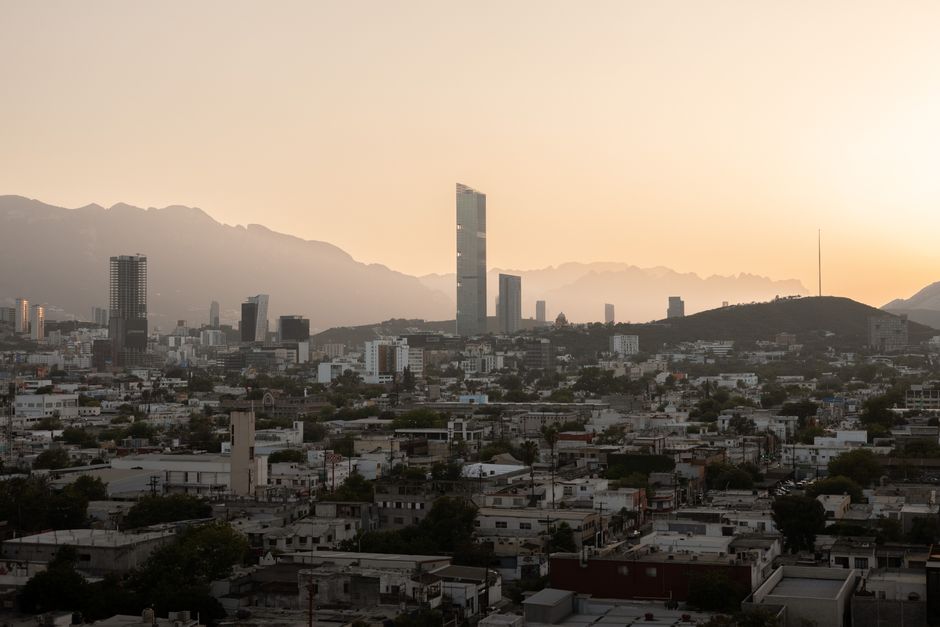
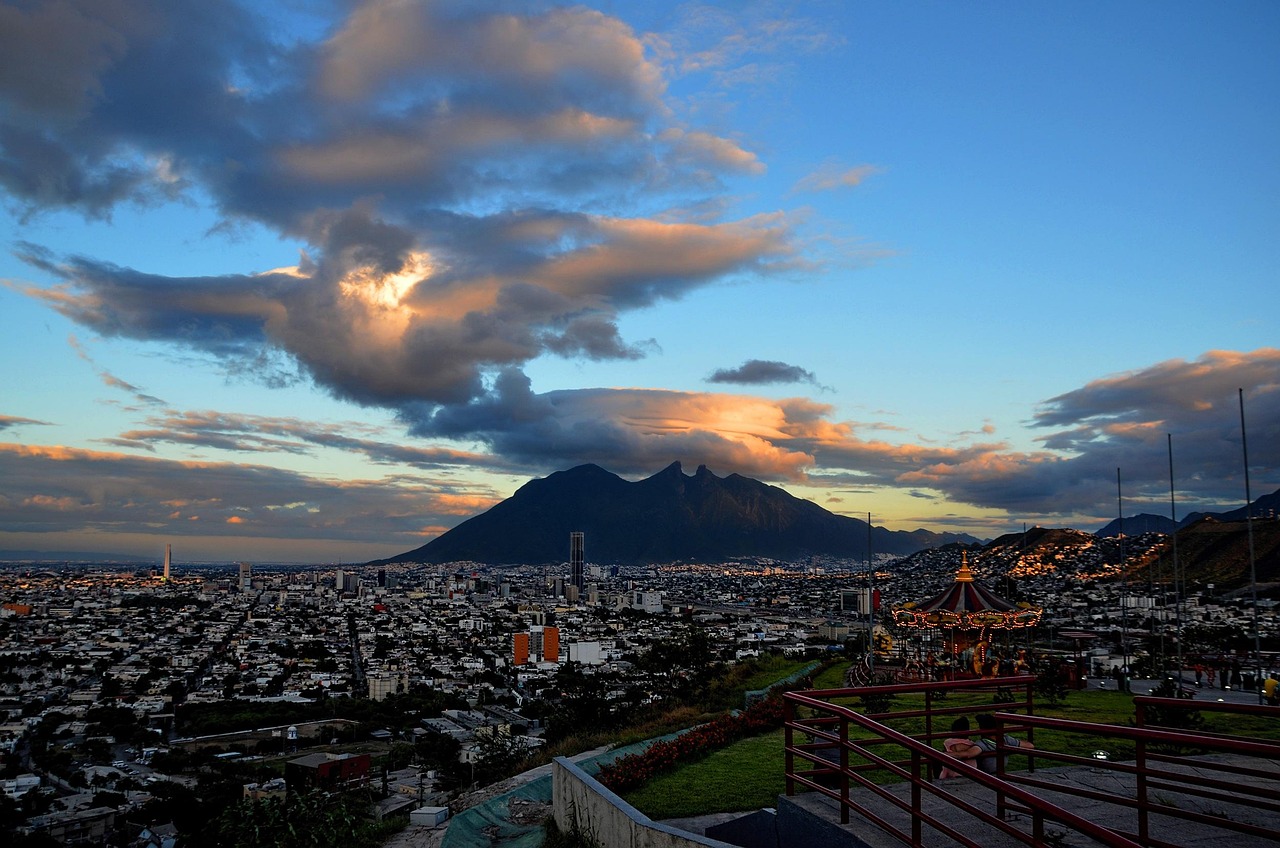
Monterrey, the capital of Nuevo León, is Mexico’s great industrial and business city, set in a valley ringed by the jagged peaks of the Sierra Madre Oriental about 230 km (140 miles) south of the US border at Laredo. Its skyline is framed by the twin humps of the Cerro de la Silla, and its old steelworks have become one of the country’s best urban parks. Visitors come for modern architecture and museums, the riverside Paseo Santa Lucía, the Barrio Antiguo’s bars, carne asada and cabrito, and some of Mexico’s best mountain scenery within an hour of downtown, from the cliffs of La Huasteca to the forests of Chipinque. Spring and fall are the most comfortable seasons; summers are very hot.
Right now in Monterrey
- Tue 21–27°C 70–81°F 3 mm Showers
- Wed 18–27°C 65–80°F 9 mm Heavy showers
- Thu 21–25°C 69–77°F 45 mm Showers
Weather: MET Norway (CC BY 4.0) · Rates: ECB
Top tours in Monterrey
See all tours for Monterrey →
From local operators, with prices and reviews; you check availability and book on Viator, our partner. We may earn a commission at no extra cost to you. How we earn money
Monterrey at a glance
- Best for: city breaks with museums and architecture, food and nightlife, hiking and climbing in the mountains around the city, and business trips.
- How long: 2 days for the center, Fundidora and the museums; 4–5 days to add Chipinque, La Huasteca, the García caves and Santiago.
- Best time: October to April, with highs of 22–29 °C (72–84 °F). June to August is very hot, with highs around 36 °C (96–97 °F); September is the wettest month.
- Getting there: Monterrey International Airport (MTY), north-east of the city, with flights from across Mexico and the United States; first-class buses and toll roads from the US border.
- Getting around: walking downtown, the Metrorrey metro, ride-hailing apps and taxis; a car for mountain day trips.
- Before you go: entry rules, money and general safety are in our Mexico travel guide; for the capital, see our Mexico City guide.
Monterrey’s areas: where things are
The metropolitan area spreads across several municipalities. Downtown (Centro) and the Barrio Antiguo sit on the north bank of the Santa Catarina river; Parque Fundidora lies east of downtown, linked by the Paseo Santa Lucía canal; and the upscale municipality of San Pedro Garza García lies to the south-west, at the foot of the Sierra Madre.
Downtown and the Macroplaza
The Macroplaza is a chain of squares and gardens running from the Palacio de Gobierno to the cathedral and the Palacio Municipal, with the orange laser tower of the Faro del Comercio, the Neptune fountain and the Esplanade of Heroes. Museums, theaters and the city’s main hotels are close by.
Barrio Antiguo
East of the Macroplaza, the old quarter keeps one- and two-story 19th-century houses with thick walls and colorful facades, now home to bars, live-music venues, cafés and galleries. It is quiet by day and busy on weekend nights.
Parque Fundidora and Santa Lucía
The former Fundidora steelworks is now a huge urban park with museums, concert halls and convention centers in restored industrial buildings. The Paseo Santa Lucía, an artificial river with a walkway and boat rides, links the park with the Macroplaza.
San Pedro Garza García
South-west of downtown, San Pedro is one of the wealthiest municipalities in Latin America, with modern towers, shopping centers, the city’s best restaurants and many business hotels. The road up to Chipinque starts here.
Top things to see in Monterrey
Prices and hours below were checked on the official sites in October 2026, unless we say otherwise; check again before you go.
Parque Fundidora and Horno 3
Mexico’s first great steel mill operated here from 1900 until 1986. According to the park’s official site, it covers 144 hectares (356 acres) with 16 historic buildings and opens daily from 6 a.m. to 10 p.m. with free entry. Its highlight is Horno 3, a former blast furnace that the park describes as the only one in the world open to the public, now a museum of steel and science with a viewpoint at the top (separate ticket). Walk, cycle or skate through the park, and look for concerts and festivals in the evenings.
Paseo Santa Lucía
According to Parque Fundidora, the Paseo Santa Lucía is the longest navigable artificial river in Latin America, running 2.5 km (1.6 miles) from the park to the Macroplaza. A landscaped path follows it, with fountains and sculptures, and boats carry visitors along the canal; it is pleasant in the evening when the lights come on.
Museo de Historia Mexicana and Museo del Noreste
On the Plaza 400 Años at the end of the Santa Lucía, these two linked museums tell Mexico’s history from pre-Hispanic times to the 20th century and the history of the north-east, including Texas. According to their official site, they open Tuesday to Saturday, 10 a.m. to 6 p.m., and Sunday, 10 a.m. to 8 p.m. (closed Monday); a joint ticket costs MXN 60 (about US$3.30), and entry is free on Sundays and for children under 12. The nearby Museo del Palacio, in the old government palace, is free.
El Obispado (Museo Regional de Nuevo León)
A late-18th-century bishop’s palace on a hill west of downtown, with a baroque chapel facade and the best views of the city and the Cerro de la Silla. It houses the National Institute of Anthropology and History’s (INAH) regional museum, on the history of Nuevo León, including the battle of Monterrey in 1846. According to INAH, it opens Tuesday to Sunday, 9 a.m. to 6 p.m., and costs MXN 210 (about US$11.50), or MXN 105 for Mexicans and foreign residents, as of 2026.
More to see
- MARCO: the Museum of Contemporary Art of Monterrey, by architect Ricardo Legorreta, on the Macroplaza, with a big dove sculpture by Juan Soriano at the entrance.
- Metropolitan Cathedral: the city’s cathedral on the Macroplaza, begun in the 18th century.
- Basílica de Guadalupe and the Puente de la Unidad: a modern basilica and a striking cable-stayed bridge over the river.
- Cerro de la Silla: the saddle-shaped mountain east of the city, with a steep, full-day hiking trail to its summit for fit hikers.
Museums
- El Obispado (Regional Museum of Nuevo León)
- Museo de Historia Mexicana
- Museo del Noreste
Parks and gardens
- Macroplaza
- Parque Fundidora
Other sights
- Paseo Santa Lucía
Peaks and mountains
- Cerro de la Silla
Activities and best months
- City sightseeingParque Fundidora, the former steelworks, is free to enter 6:00-22:00 over 144 ha with 16 historic buildings and the Horno 3 blast furnace museum, linked to the 2.5 km Paseo Santa Lucía boat canal; the 3 Museos (history, northeast and the Palace museum) open Tuesday to Sunday. · source
- HikingChipinque ecological park on the slopes of the Sierra Madre above Monterrey opens daily 5:30-21:00; it lies in Cumbres de Monterrey National Park, which CONANP lists as open every day (MXN 125 per person per day). · source
Other things to do in Monterrey
Chipinque and Cumbres de Monterrey
Above San Pedro, the Chipinque ecological park is a forest reserve of pine and oak on the slopes of the Sierra Madre, inside the Cumbres de Monterrey National Park, with trails, viewpoints over the city and black bears that you should never feed. According to its official site, it opens daily from 5:30 a.m. to 9 p.m. (last vehicle entry 7 p.m.), and it charges its own entry fee for pedestrians, cyclists and cars. CONANP’s fee for Cumbres de Monterrey National Park is MXN 125 per person per day. See our hiking guide.
Food and nightlife
Monterrey’s signature dishes are carne asada, cooked on backyard grills every weekend, and cabrito (roast kid goat), plus machacado con huevo (dried beef with eggs) for breakfast and flour tortillas, which are the norm in the north. Craft beer and the city’s own big breweries are part of local life. For nightlife, head to the Barrio Antiguo or San Pedro.
Sports
Monterrey is football (soccer) mad, with two top-flight clubs, Rayados and Tigres; the Rayados’ Estadio BBVA, with the Cerro de la Silla as its backdrop, was a venue for the 2026 FIFA World Cup. Baseball is popular too. Tickets for league matches are easy to buy online or at the stadiums.
Day trips from Monterrey
- Parque La Huasteca: a canyon of towering limestone walls in Santa Catarina, about 30 minutes west, for walks, climbing and photography.
- Grutas de García: large caves in the mountains about 45 km (28 miles) north-west, reached by a cable car, with lit galleries of stalactites and fossils.
- Santiago and Cola de Caballo: about 40 km (25 miles) south, the Pueblo Mágico of Santiago has a pretty square and church by the La Boca reservoir, and the nearby Cola de Caballo (Horsetail) waterfall drops 25 meters (82 feet) in the forest.
- Potrero Chico: a world-famous sport-climbing area of limestone walls near Hidalgo, about an hour north.
Getting there and getting around
By air
Monterrey International Airport (MTY), Mariano Escobedo, run by the airport group OMA, lies in Apodaca about 25 km (16 miles) north-east of downtown. It has flights from most Mexican cities and from several US hubs; check which airlines currently fly your route. Authorized airport taxis and ride-hailing apps take about 30–45 minutes to downtown, depending on traffic.
By road from the United States
Toll highways link Monterrey with the border crossings at Nuevo Laredo, Colombia (Nuevo León) and Reynosa, about three hours away. First-class buses run from the border and from across Mexico to the Central de Autobuses north of downtown. If you drive a foreign car beyond the border zone, check the temporary import permit rules on Banjercito’s site.
Getting around Monterrey
Downtown, the Barrio Antiguo, the Santa Lucía and Fundidora are walkable. The Metrorrey metro has lines across the city, with stations at the Macroplaza area and near Fundidora; buy a rechargeable card at the stations. Ride-hailing apps are widely used and cheap; taxis also work. Traffic is heavy at rush hours. For Chipinque, La Huasteca and the other mountain trips, use a car or a tour.
When to go and how long to stay
Monterrey has hot summers and mild winters. The table uses the National Meteorological Service’s (SMN-Conagua) 1991–2020 climate normals for the Monterrey observatory: average daily highs and lows, and days with rain.
| Season | Average high / low | Rainy days per month | What it’s like | Good for |
|---|---|---|---|---|
| Winter (Dec–Feb) | 22–25 °C (72–76 °F) / 10–12 °C (50–53 °F) | 6–7 | Mild and often cloudy; occasional cold fronts bring chilly days | Museums, city walks, hiking |
| Spring (Mar–May) | 28–34 °C (82–92 °F) / 15–21 °C (59–70 °F) | 7–10 | Warm to hot, with some storms in May | Mountains, parks, Fundidora events |
| Summer (Jun–Aug) | 36 °C (96–97 °F) / 23–24 °C (74 °F) | 6–8 | Very hot and humid | Early-morning hikes, air-conditioned museums |
| Fall (Sep–Nov) | 32 °C falling to 24 °C (90 to 76 °F) / 22 °C falling to 14 °C (71 to 57 °F) | 12 in September, 7 in November | September is wet; October and November are pleasant | Everything; a great time for hiking |
The station records about 680 mm (27 in) of rain a year; September is the wettest month, with about 198 mm (8 in), when tropical storms from the Gulf of Mexico can bring heavy rain.
Storms and floods: Monterrey is inland, but the remnants of Atlantic and Gulf hurricanes can bring torrential rain and flash floods, as they did with Hurricane Alex in 2010; according to NOAA’s National Hurricane Center, the Atlantic season runs from June 1 to November 30. When heavy rain is forecast, follow Nuevo León’s civil protection authorities and stay away from riverbeds and canyons.
Weather month by month
Averages from SMN normals 1991–2020, Monterrey · Last reviewed 4 Oct 2026
2 days in Monterrey
Day one, the Macroplaza, the Museo de Historia Mexicana, a boat or walk along the Paseo Santa Lucía to Fundidora and Horno 3, and dinner in the Barrio Antiguo. Day two, El Obispado for the views, then up to Chipinque for an afternoon hike and sunset over the city.
4 to 5 days in Monterrey
Add La Huasteca and the García caves on one day, Santiago and Cola de Caballo on another, MARCO and San Pedro’s restaurants, and a football match if the season allows.
Where to stay in Monterrey and the hotel taxes
- Downtown and Macroplaza: large hotels and mid-range chains near the museums and the Barrio Antiguo; the best base for sightseeing.
- Near Fundidora and Cintermex: convention and business hotels next to the park.
- San Pedro Garza García: upscale business hotels near restaurants and shopping; convenient for Chipinque.
- Near the airport: chain hotels for early flights.
Room rates are often quoted before tax. Nuevo León’s state lodging tax is reported at 3% (the copy of the state finance law we could read is outdated, so we flag this for checking), and federal VAT (IVA) of 16% is added on top. Business hotels are busiest Monday to Thursday and often cheaper at weekends.
Practical tips for Monterrey
- Heat: in summer, plan outdoor sightseeing for early morning and evening, and carry water.
- Payments: cards are widely accepted; carry some pesos for markets, tips and small taquerías.
- Mountains: start hikes early, carry water and a headlamp, and check the weather; flash floods can hit canyons after storms.
- Tipping: 10–15% in restaurants.
- Safety: the downtown, Fundidora and San Pedro areas are busy and well policed. Nuevo León has had organized-crime violence, mostly away from the places visitors go. Use ride-hailing apps or hotel taxis at night, drive by day on toll roads between cities, keep valuables out of sight and don’t buy drugs.
- Emergencies: call 911.
What to pack for Monterrey
Pack light, breathable clothes for the heat, plus a sweater or light jacket for winter evenings and air-conditioned buildings, and smart-casual clothes for San Pedro’s restaurants. Bring good walking shoes or hiking boots for Chipinque and La Huasteca, a hat, sunscreen, a refillable water bottle and a compact umbrella in September. Plugs are the US type.
What to pack
- City walking shoesLisbon and Porto are steep, with polished limestone cobbles that get slippery, so grippy soles matter.
- Day packs and anti-theft bagsA small zipped or anti-theft bag makes crowded trams and viewpoints less stressful.
- Fleeces and warm layersSummits like Pico do Areeiro averaged about 11 °C over 2024, so a fleece is needed even in summer.
- HeadlampsLevada routes such as PR1 and PR9 pass through long, dark, wet tunnels.
- Hiking shoes and bootsMadeira's levadas and the Azores' crater rims are wet, rocky and slippery, so grippy shoes matter more than anywhere else in Portugal.
- Rain jacketsFrom October to April Porto and Lisbon see rain on roughly a third of days.
- Travel adapters and convertersPortugal uses Type C and F sockets at 230 V, so most visitors from outside Europe need an adapter.
- Trekking polesLong stone staircases and steep descents on Madeira's peaks and the Azores' crater rims are easier on the knees with poles.
- Water bottles and hydration packsAlgarve and Alentejo trails are hot and exposed with few refill points.
Monterrey travel FAQ
Is Parque Fundidora free?
Yes. According to the park’s official site, entry is free every day from 6 a.m. to 10 p.m. Some attractions inside, such as Horno 3, charge separately.
How much is the Museo de Historia Mexicana?
MXN 60 (about US$3.30) for a joint ticket with the Museo del Noreste, Tuesday to Saturday; free on Sundays and for children under 12. Closed Mondays.
What are the best day trips from Monterrey?
Parque La Huasteca, the Grutas de García caves, Santiago and the Cola de Caballo waterfall, Chipinque and, for climbers, Potrero Chico.
How far is Monterrey from the US border?
About 230 km (140 miles), roughly three hours by toll road to Nuevo Laredo and Laredo, Texas.
What is the best time to visit Monterrey?
October to April, when highs are about 22–29 °C (72–84 °F). Summer highs average around 36 °C (96–97 °F).
How do I get from Monterrey airport to downtown?
By authorized airport taxi or ride-hailing app, about 30–45 minutes depending on traffic. The airport is about 25 km (16 miles) north-east of downtown.
Can you hike in Monterrey?
Yes. Chipinque, Cumbres de Monterrey National Park, La Huasteca and the Cerro de la Silla all have trails, from easy forest walks to steep full-day climbs.
What food is Monterrey famous for?
Carne asada, cabrito (roast kid goat), machacado con huevo and flour tortillas, plus a strong beer culture.
What taxes are added to Monterrey hotel bills?
16% IVA plus Nuevo León’s state lodging tax, reported at 3%. There is no VISITAX here.
What time zone is Monterrey in?
Central time, UTC−6 all year, the same as Mexico City. Mexico no longer uses daylight saving time outside the US border area.
Sources
- © OpenStreetMap contributors · ODbL · fetched 4 Oct 2026
- Wikidata · CC0 · fetched 4 Oct 2026
Sources and last review
Researched and last reviewed on 4 October 2026. Parque Fundidora and the Paseo Santa Lucía: the park’s official site (Parque Fundidora O.P.D.); Museo de Historia Mexicana hours and fees: the 3 Museos official site; El Obispado: the National Institute of Anthropology and History (INAH); Chipinque hours: the reserve’s official site; Cumbres de Monterrey fee: the National Commission of Natural Protected Areas (CONANP); hurricane season: NOAA’s National Hurricane Center; climate: SMN-Conagua 1991–2020 normals for the Monterrey observatory. The lodging tax rate, distances, airport details, day-trip details and the general safety summary come from secondary sources or general knowledge and are flagged for checking. Prices and timetables change, so check the official sites before you go. For entry rules, money and general safety, see our Mexico travel guide.
Plan your trip
Partner links: TravelerCenter may earn a commission if you book, at no extra cost to you.
🇪🇸 Useful Spanish phrases for Monterrey
All 38 Spanish phrases: restaurant, hotel, emergencies, romance (printable) →