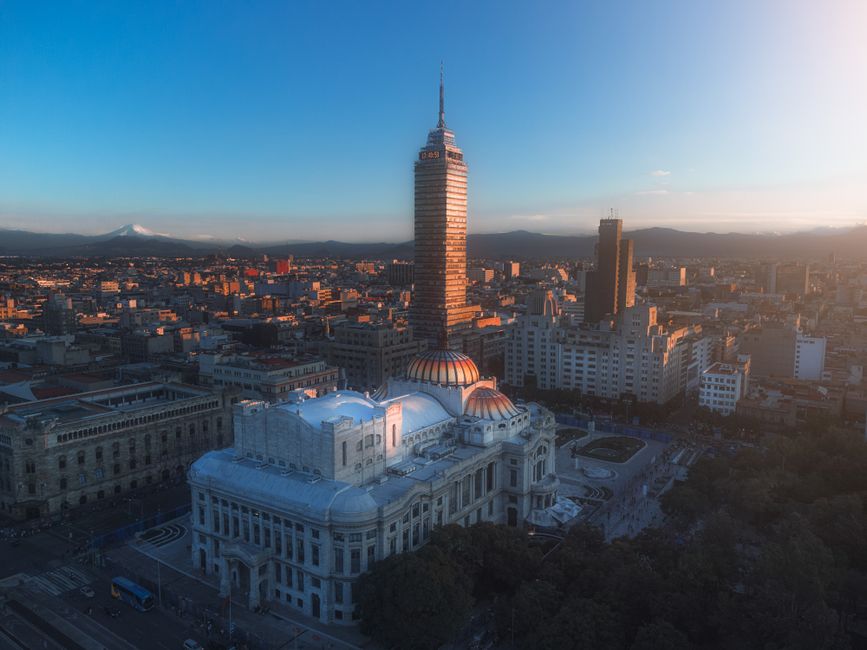
Mexico City is one of the great capitals of the world: a vast, high-altitude metropolis built on the ruins of the Aztec capital Tenochtitlan, with colonial palaces and cathedrals around the Zócalo, the treasures of the National Museum of Anthropology, leafy Chapultepec Park and its castle, Frida Kahlo’s blue house in Coyoacán, the colorful boats of Xochimilco and the pyramids of Teotihuacan an hour away. Add one of the best food scenes on the planet, from street tacos to tasting menus, and the tree-lined cafés of Roma and Condesa. The city sits at about 2,240 meters (7,350 feet), so days are mild all year and nights are cool; the dry season runs from November to April.
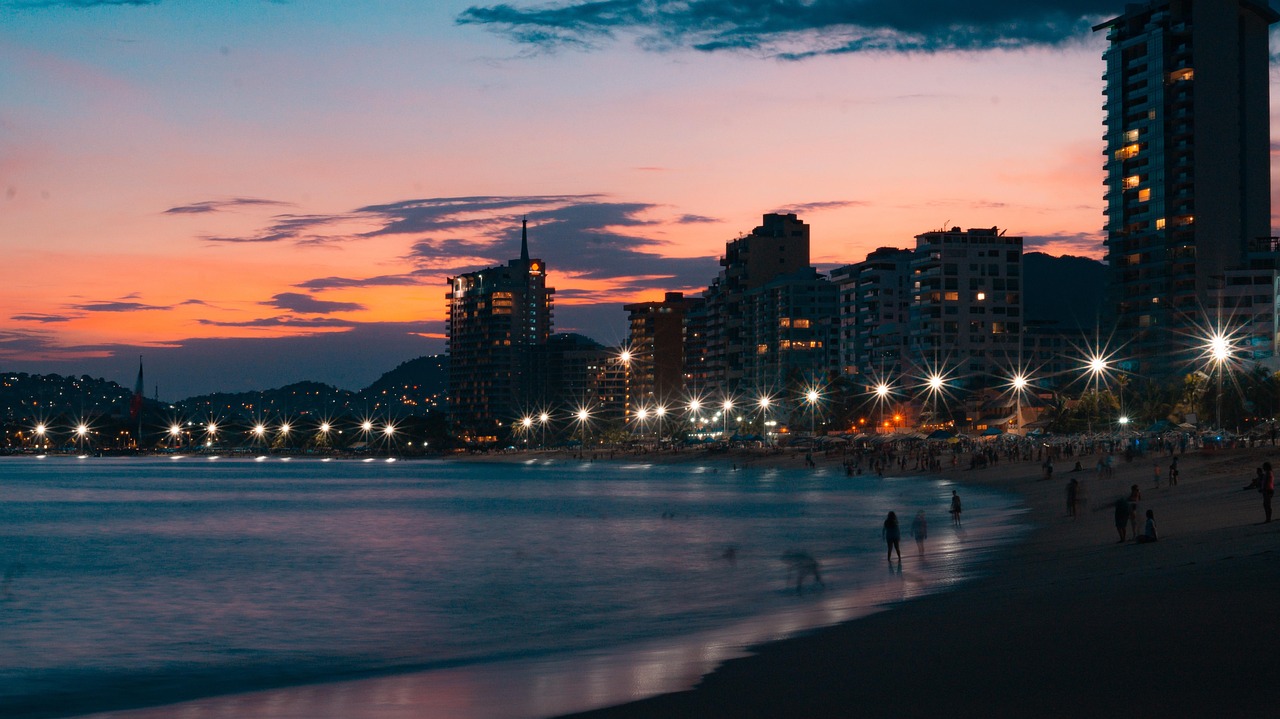
Right now in Mexico City
- Tue 15–22°C 58–72°F 25 mm Heavy rain
- Wed 15–22°C 58–72°F 24 mm Heavy rain
- Thu 15–21°C 59–70°F 15 mm Rain
Weather: MET Norway (CC BY 4.0) · Rates: ECB
Top tours in Mexico City
See all tours for Mexico City →
From local operators, with prices and reviews; you check availability and book on Viator, our partner. We may earn a commission at no extra cost to you. How we earn money
Mexico City at a glance
- Best for: museums and history, Aztec ruins, murals, food and markets, architecture, nightlife and day trips to the pyramids.
- How long: 4 days for the highlights; 6–7 days to add Teotihuacan, Xochimilco and a slower look at the neighborhoods.
- Best time: October to April, the dry, sunny months. Highs are about 22–27 °C (72–82 °F) all year; nights in December and January drop to about 8 °C (47 °F).
- Getting there: Mexico City International Airport (MEX), 5 km (3 miles) east of the center, or Felipe Ángeles International Airport (NLU), about 45 km (28 miles) north, now linked to the city by train.
- Getting around: the Metro costs about MXN 5 (about 30 US cents) a ride and the Metrobús about MXN 6; use the rechargeable Integrated Mobility Card, plus app-based taxis and Ecobici bikes.
- Before you go: entry rules, the immigration fee, money and tipping are in our Mexico travel guide.
Mexico City neighborhoods: where things are
The capital fills a huge valley ringed by volcanoes, but most visitors stay in a belt of neighborhoods from the historic center west along Paseo de la Reforma to Chapultepec Park, with Coyoacán and Xochimilco to the south. Traffic is heavy, so group your sightseeing by area.
Centro Histórico
The historic center, a UNESCO World Heritage Site together with Xochimilco, grew up on top of Tenochtitlan. Around the vast Zócalo stand the Metropolitan Cathedral, the National Palace and the excavated Templo Mayor; west of it, pedestrian Madero Street leads past baroque churches and palaces to the Palacio de Bellas Artes and the Alameda Central park.
Roma and Condesa
These two neighboring districts are the city’s favorite places to stay and eat: Art Deco and early-20th-century houses on tree-lined streets, the oval Parque México and Parque España, cafés, mezcal bars, galleries and many of the best restaurants in the city.
Juárez, Reforma and Polanco
Paseo de la Reforma, the grand avenue lined with modern towers and monuments such as the golden Angel of Independence, runs from the center to Chapultepec. Juárez, beside it, has boutique hotels and the lively Zona Rosa. North of the park, Polanco is the upscale district of luxury shopping, international hotels, fine dining and the Soumaya and Jumex museums.
Coyoacán and San Ángel
In the south, Coyoacán was a separate colonial town before the city swallowed it. Its cobbled streets, plazas, market and the Frida Kahlo Museum make it the most charming area for a day out. Neighboring San Ángel has a Saturday art market, colonial mansions and the studio houses of Diego Rivera and Frida Kahlo.
Xochimilco
Far in the south, Xochimilco is what remains of the lake and canal landscape of the Aztec valley, with chinampas, the floating gardens still farmed today. Weekends are lively with families and mariachis; weekday mornings are calmer.
Top things to see in Mexico City
Prices and hours below were checked on the official sites in October 2026, unless we say otherwise; check again before you go. Museums and archaeological sites run by INAH, Mexico’s National Institute of Anthropology and History, charge foreign visitors twice the price for Mexican nationals and residents, and most are closed on Mondays.
The Zócalo, the Metropolitan Cathedral and the National Palace
The Plaza de la Constitución, known to everyone as the Zócalo, is one of the largest city squares in the world and the stage for concerts, protests and the Independence Day celebrations. The Metropolitan Cathedral, built over almost three centuries from 1573, is free to enter. Along the east side, the National Palace is the seat of the federal government and holds Diego Rivera’s murals on the history of Mexico; access to the murals has been restricted at times in recent years, so check before you go and bring a passport for the security check.
Templo Mayor
Just off the Zócalo, the excavated remains of the Great Temple of Tenochtitlan show the layers of a pyramid rebuilt seven times, with twin shrines to Huitzilopochtli, god of war, and Tlaloc, god of rain. The site museum displays the great carved stone disc of the moon goddess Coyolxauhqui. As of October 2026, entry to the archaeological zone and museum is MXN 210 (about US$11) for foreign visitors and MXN 105 for Mexican nationals and residents, according to INAH; it is open Tuesday to Sunday, 9 a.m.–5 p.m.
The National Museum of Anthropology
In Chapultepec Park, this is Mexico’s greatest museum and one of the best archaeology museums anywhere. Its 22 halls around a courtyard with a giant “umbrella” fountain cover every ancient culture of Mexico, from the Olmec heads to the Maya and the Aztec Sun Stone, with the Indigenous peoples of today upstairs. As of October 2026 admission is MXN 210 (about US$11) for foreign visitors and MXN 105 for nationals and residents; it is open Tuesday to Sunday, 9 a.m.–6 p.m. Allow at least half a day; Sundays are free for Mexicans and residents and very busy.
Chapultepec Park and Chapultepec Castle
Chapultepec, the city’s great green lung, has lakes, a zoo, gardens and several museums. On a hill in the first section stands Chapultepec Castle, once the residence of Emperor Maximilian and Mexican presidents and now the National Museum of History, with period rooms, murals and terraces looking down Paseo de la Reforma. As of October 2026 the castle charges MXN 210 (about US$11) for foreign visitors and MXN 105 for nationals and residents and opens Tuesday to Sunday, 9 a.m.–5 p.m.; it closes every Monday, holidays included. Walk up the hill or take the small park train.
The Frida Kahlo Museum (Casa Azul)
The cobalt-blue house in Coyoacán where Frida Kahlo was born, lived with Diego Rivera and died in 1954 keeps her studio, kitchen, garden, paintings and personal objects. It is the city’s most popular small museum and sells tickets online only: there is no ticket office. As of October 2026 general admission is MXN 320 (about US$17), with lower prices for national residents, students, seniors and children, and the ticket includes a visit to the Diego Rivera Anahuacalli Museum. It opens Tuesday to Sunday, 10 a.m.–6 p.m. (from 11 a.m. on Wednesdays) and is closed on Mondays. Book several days ahead for weekends.
Palacio de Bellas Artes and the Alameda
The white marble Palace of Fine Arts, finished in 1934 with an Art Deco interior, is the city’s main concert hall and a museum with large murals by Rivera, Orozco, Siqueiros and Tamayo. The Ballet Folklórico de México performs traditional dances here on most Wednesday evenings and Sunday mornings. For views over the palace and the Alameda, go up the Torre Latinoamericana.
Xochimilco by trajinera
A ride on a trajinera, a flat-bottomed boat painted in bright colors, along the canals of Xochimilco is a classic outing, especially with a group. Boats are hired by the hour per boat, not per person, at the embarcaderos (Nuevo Nativitas is the largest); prices are posted at each pier, so agree on the time and price before you set off. Food, drinks and mariachis come alongside on other boats. To reach it, take the Metro to Tasqueña and the Tren Ligero light rail to Xochimilco, or an app taxi.
The Basilica of Our Lady of Guadalupe
In the north of the city, the Basilica of Guadalupe is the most visited Catholic shrine in the Americas. The modern round basilica of 1976 displays the cloak bearing the image of the Virgin, next to the old baroque basilica and the chapels on Tepeyac Hill. Entry is free; dress respectfully, as services run all day. Around December 12, the feast day, millions of pilgrims arrive.
Museums
- Chapultepec Castle
- Frida Kahlo Museum
- National Museum of Anthropology
- Palacio de Bellas Artes
Other sights
- Zócalo
Churches and cathedrals
- Mexico City Metropolitan Cathedral
Archaeological sites
- Templo Mayor
Activities and best months
- City sightseeingINAH lists the National Museum of Anthropology as a Category I site (MXN 210 for foreigners); the Frida Kahlo Museum (Casa Azul) sells tickets online only, MXN 320 general, with entry to the Anahuacalli museum included; Teotihuacan is a Category I archaeological zone within a day trip. · source
Other things to do in Mexico City
Food, markets and mezcal
Eating is a highlight of any visit. Try tacos al pastor (spit-roasted pork with pineapple), tlacoyos and quesadillas from street stands, chilaquiles for breakfast and mole in a traditional restaurant. Markets such as San Juan, Coyoacán and the giant La Merced are great for browsing. In the evening, Roma and Condesa have the city’s densest choice of restaurants, cocktail bars and mezcalerías; book the famous tasting-menu restaurants weeks ahead.
Murals, art, wrestling and Sunday rides
Mexico City is the birthplace of the muralist movement. Besides the National Palace and Bellas Artes, see the murals in the Secretaría de Educación Pública building and the Antiguo Colegio de San Ildefonso in the center, and the Museo Mural Diego Rivera by the Alameda. In Polanco, the shimmering Museo Soumaya has free entry and a large collection of Rodin sculptures. On Sundays, Paseo de la Reforma closes to cars for walkers and cyclists. For a loud night out, watch masked wrestlers at Arena México; the Estadio Banorte (the former Estadio Azteca) hosted the opening match of the 2026 FIFA World Cup on June 11, 2026. See our city sightseeing and cycling guides.
Day trips from Mexico City
Teotihuacan: about 50 km (31 miles) northeast of the city, Teotihuacan was one of the largest cities in the ancient world, with the Avenue of the Dead, the Pyramid of the Sun and the Pyramid of the Moon. According to INAH, it opens daily, 8 a.m.–5 p.m. (last entry 4:30 p.m.), and admission is MXN 210 (about US$11) for foreign visitors as of October 2026. Visitors can no longer climb the pyramids: the Pyramid of the Sun has been closed to climbers since 2020, and the Pyramid of the Moon was closed until further notice after a shooting at the site in April 2026, after which security at the entrances was tightened. Buses leave about every half hour from the Terminal del Norte, and the trip takes about an hour; arrive at opening time to beat the heat and the crowds, and bring water, a hat and sunscreen. Puebla and Cholula: about two hours east by bus, with a colorful colonial center, Talavera tiles, mole poblano and a church on top of a huge pyramid base. Taxco: about three hours southwest, a hillside silver-mining town. For longer trips, see our Oaxaca, San Miguel de Allende and Guadalajara guides.
Nearby destinations
- Heroica Puebla de Zaragoza102 km
- San Miguel de Allende242 km
- Acapulco de Juárez288 km
- Guanajuato288 km
Getting there and getting around
From Mexico City International Airport (MEX)
The Benito Juárez International Airport, known as AICM, is inside the city, about 5 km (3 miles) east of the Zócalo. It has two terminals, linked by the free Aerotrén (5 a.m.–11 p.m.; you need your boarding pass) and by a Metrobús shuttle. Check which terminal your airline uses.
- Metrobús Line 4: boards at Terminal 1 (door 7) and Terminal 2 (door 2) and runs to the historic center and Buenavista. According to the airport, it runs Monday to Saturday 4:30 a.m.–midnight and Sundays and holidays 5 a.m.–midnight. The airport fare is higher than the regular one, about MXN 30 (about US$1.60), paid with the Integrated Mobility Card from the machines at the stops.
- Metro: Terminal Aérea station (Line 5) is beside Terminal 1. It is the cheapest option, but trains are crowded and luggage is awkward at rush hour.
- Authorized taxis: buy a fixed-price ticket from the official taxi counters inside the terminal, priced by zone; app-based rides can also pick up at the airport.
- Buses: both terminals have bus stations, open 24 hours, with direct coaches to Puebla, Cuernavaca, Querétaro, Pachuca, Toluca and Córdoba.
From Felipe Ángeles International Airport (NLU)
Felipe Ángeles International Airport (AIFA), about 45 km (28 miles) north of the center, handles a growing number of domestic and some international flights. Since April 26, 2026, the Tren Felipe Ángeles, an extension of the Suburban Train, runs from Buenavista station in the city to the airport, with 12 stations and a trip of about an hour. According to the airport, the introductory fare is MXN 45 (about US$2.50) to or from AIFA, paid with the Integrated Mobility Card, and trains run Monday to Friday 5 a.m.–midnight, Saturdays 6 a.m.–midnight and Sundays and holidays 7 a.m.–midnight. The fare is subject to change, so check before you travel. Mexibús lines, long-distance buses and taxis also serve AIFA.
Long-distance buses
Mexico has an excellent network of comfortable first-class and executive buses. The four main terminals are named after the compass: Norte (for Teotihuacan, Guanajuato, San Miguel de Allende and Guadalajara), TAPO in the east (for Puebla, Oaxaca and the Gulf), Sur (Taxco, Cuernavaca and Acapulco) and Poniente (Toluca and Morelia). Buy tickets on the bus companies’ websites or at the counters.
Metro, Metrobús, cards and bikes
The Metro has 12 lines and is one of the cheapest in the world, at about MXN 5 (about 30 US cents) a ride; the Metrobús rapid buses cost about MXN 6, as of October 2026. Both use the rechargeable Integrated Mobility Card (Tarjeta de Movilidad Integrada), which costs about MXN 15 plus credit, is sold at Metro ticket windows and machines, and also works on the Cablebús cable cars, trolleybuses and the Tren Ligero to Xochimilco. Avoid the Metro at rush hour; the front cars are reserved for women and children. Ecobici, the public bike-share, has hundreds of stations in the central neighborhoods; you sign up and unlock bikes with the app, and as of October 2026 a one-day pass costs about MXN 130 (about US$7), with unlimited rides of up to 45 minutes. Foreign visitors must buy the plans offered for non-residents.
Taxis, apps and driving
For door-to-door rides, use app-based services such as Uber, DiDi or Cabify, or taxis ordered from a sitio (taxi rank) or your hotel, rather than hailing cabs on the street. Driving is not recommended: traffic is dense, parking is hard, and the Hoy No Circula program bans many cars from the roads one weekday each according to their plates. Rent a car only for trips outside the city.
When to go and how long to stay
Mexico City’s altitude gives it a spring-like climate with a dry season (November to April) and a rainy season (June to September), when afternoon thunderstorms are almost daily but mornings are often sunny. The table uses the 1991–2020 climate normals of Mexico’s National Meteorological Service (SMN-Conagua) for the Tacubaya Central observatory: average daily highs and lows, and days with rain.
| Season | Average high / low | Days with rain per month | What it’s like | Good for |
|---|---|---|---|---|
| Winter (Dec–Feb) | 22–24 °C (72–76 °F) / 8–10 °C (47–49 °F) | 1–3 | Dry, sunny days and chilly nights | Sightseeing, museums, Christmas events |
| Spring (Mar–May) | 26–28 °C (79–82 °F) / 11–14 °C (52–57 °F) | 4–11 | The warmest months; hazy, dry air until the rains start in May | Teotihuacan, parks, rooftop terraces |
| Summer (Jun–Aug) | 25–26 °C (76–78 °F) / 13–14 °C (55–57 °F) | 16–22 | Green, with heavy afternoon storms | Mornings outdoors, museums in the afternoon |
| Fall (Sep–Nov) | 23–24 °C (73–75 °F) / 10–13 °C (50–56 °F) | 4–18 | Rains fade in October; clear, fresh days | Day of the Dead, walking, food tours |
The station records about 850 mm (33 inches) of rain a year, almost all from May to October. Hurricanes do not reach the city, but heavy summer storms can flood streets and slow traffic. Mexico City is in an earthquake zone: if the public seismic alarm sounds, leave the building calmly by the stairs. Air quality is usually worst in the dry spring months.
Events worth planning around
- March or April: Holy Week, with the Passion play in Iztapalapa; many residents leave the city.
- September 15–16: Independence Day, with the “Grito” on the Zócalo on the night of the 15th and a military parade on the 16th.
- Late October to November 2: Day of the Dead, with altars (ofrendas) on the Zócalo and in museums, a large parade and candlelit cemeteries; book hotels early.
- December 12: the feast of the Virgin of Guadalupe, with millions of pilgrims at the basilica.
Weather month by month
Averages from SMN normals 1991–2020, Tacubaya · Last reviewed 4 Oct 2026
4 days in Mexico City
Day one: the Zócalo, the cathedral, Templo Mayor and the murals of the center, then Madero Street to Bellas Artes and dinner downtown. Day two: the National Museum of Anthropology in the morning, Chapultepec Castle and the park, then Polanco or Reforma. Day three: Teotihuacan from opening time, back for an evening in Roma or Condesa. Day four: Coyoacán and the Frida Kahlo Museum (booked ahead), lunch at the market, then San Ángel or a trajinera at Xochimilco.
A week in Mexico City
Add the Basilica of Guadalupe, a food tour, lucha libre, the Sunday bike ride on Reforma, Polanco’s museums and a day trip to Puebla or Taxco.
Where to stay in Mexico City and the hotel tax
- Roma and Condesa: the best all-round base, with boutique hotels, apartments, restaurants and leafy streets.
- Centro Histórico: steps from the main sights, with grand old hotels and good value; quiet late at night.
- Juárez and Reforma: central, with business hotels and easy transport along Reforma.
- Polanco: upscale and calm, near Chapultepec and the Anthropology Museum.
- Coyoacán: village feel and guesthouses, but far from the center.
Room rates in Mexico are often quoted before tax, so check the total. Mexico City’s lodging tax, the Impuesto por la Prestación de Servicios de Hospedaje, is 3.5% of the room price at hotels, hostels, motels and timeshares under the city’s Fiscal Code; when the stay is booked and paid through an intermediary or digital platform such as Airbnb, the platform collects it at 5%. Federal VAT (IVA) of 16% is charged on top, so taxes add roughly 20% to the bill, as of October 2026.
Practical tips for Mexico City
- Altitude: at 2,240 meters (7,350 feet), you may feel short of breath or tired for a day or two; drink plenty of water and go easy on alcohol at first.
- Water: do not drink tap water; use bottled or filtered water, which hotels and restaurants provide.
- Money: cards are widely accepted, but carry pesos for markets, street food, tips and the Metro. Use ATMs inside banks or shopping centers.
- Museum days: most museums close on Mondays; INAH sites are free on Sundays for Mexicans and residents only, so they are crowded that day.
- Safety: the main visitor areas are busy and generally fine by day; watch for pickpockets in the Metro, markets and crowds, keep your phone out of sight on the street, use app-based or sitio taxis, and avoid quiet streets late at night. Cartel-related violence in Mexico is concentrated in certain states and rarely affects visitors to the capital’s tourist areas.
- Emergencies: call 911. Plugs and voltage (127 V, types A and B) are the same as in the United States.
What to pack for Mexico City
Pack layers: days are warm in the sun, but mornings and evenings are cool all year, around 8–14 °C (47–57 °F), so bring a sweater or light jacket. From June to September add a compact umbrella or rain jacket for the afternoon storms. Bring comfortable walking shoes, plus sunglasses, a hat and sunscreen for the strong high-altitude sun, especially at shadeless Teotihuacan. A small cross-body bag helps in crowds.
What to pack
- City walking shoesLisbon and Porto are steep, with polished limestone cobbles that get slippery, so grippy soles matter.
- Day packs and anti-theft bagsA small zipped or anti-theft bag makes crowded trams and viewpoints less stressful.
- Rain jacketsFrom October to April Porto and Lisbon see rain on roughly a third of days.
- Travel adapters and convertersPortugal uses Type C and F sockets at 230 V, so most visitors from outside Europe need an adapter.
Mexico City travel FAQ
How much is the National Museum of Anthropology?
As of October 2026, MXN 210 (about US$11) for foreign visitors and MXN 105 for Mexican nationals and residents. It is open Tuesday to Sunday, 9 a.m.–6 p.m.
Can you climb the pyramids at Teotihuacan?
No. As of October 2026, both the Pyramid of the Sun and the Pyramid of the Moon are closed to climbers. You can walk the Avenue of the Dead, the plazas and the museums. Entry costs MXN 210 for foreign visitors.
Do I need to book the Frida Kahlo Museum in advance?
Yes. Tickets are sold online only, with no ticket office, and time slots sell out, especially at weekends. General admission is MXN 320 (about US$17) and includes the Anahuacalli Museum.
How do I get from the airport to the city center?
From MEX, take Metrobús Line 4 from either terminal to the historic center, the Metro from Terminal Aérea, or an authorized taxi with a prepaid ticket from the counters inside. From AIFA, take the Tren Felipe Ángeles to Buenavista (MXN 45 as of October 2026).
How much does the Mexico City Metro cost?
About MXN 5 (about 30 US cents) per ride, with free transfers inside the Metro, as of October 2026. Pay with the Integrated Mobility Card, which also works on the Metrobús.
What taxes are added to hotel bills in Mexico City?
A 3.5% city lodging tax (5% when booked through a platform such as Airbnb) plus 16% IVA, so about 20% in total.
Will the altitude affect me?
Some visitors feel breathless, tired or get headaches on the first day. Drink water, rest and limit alcohol; symptoms usually pass quickly.
When is the best time to visit Mexico City?
October to April, the dry season, with sunny days and cool nights. Late October and early November bring the Day of the Dead.
Is Mexico City safe for tourists?
Millions visit every year without problems. Stick to the busy areas, watch your belongings in crowds and the Metro, use app or sitio taxis and avoid empty streets late at night.
Sources
- © OpenStreetMap contributors · ODbL · fetched 4 Oct 2026
- Wikidata · CC0 · fetched 4 Oct 2026
Sources and last review
Researched and last reviewed on 4 October 2026. Museum and archaeological site prices and hours: INAH (Lugares INAH) for the Templo Mayor, the National Museum of Anthropology, Chapultepec Castle and Teotihuacan; Frida Kahlo Museum: the museum’s site; airport transport: the AICM airport and Felipe Ángeles International Airport; bikes: Ecobici; hotel tax: the Mexico City Fiscal Code (Código Fiscal de la Ciudad de México); climate: SMN-Conagua 1991–2020 normals for Tacubaya. The Metro, Metrobús and mobility card fares, the airport Metrobús fare, the pyramid closures, bus times, event dates and the Ballet Folklórico schedule come from secondary sources and are flagged for checking. Check the official sites before you go. For entry rules, the immigration fee, money and tipping, see our Mexico travel guide.
Plan your trip
Partner links: TravelerCenter may earn a commission if you book, at no extra cost to you.
🇪🇸 Useful Spanish phrases for Mexico City
All 38 Spanish phrases: restaurant, hotel, emergencies, romance (printable) →