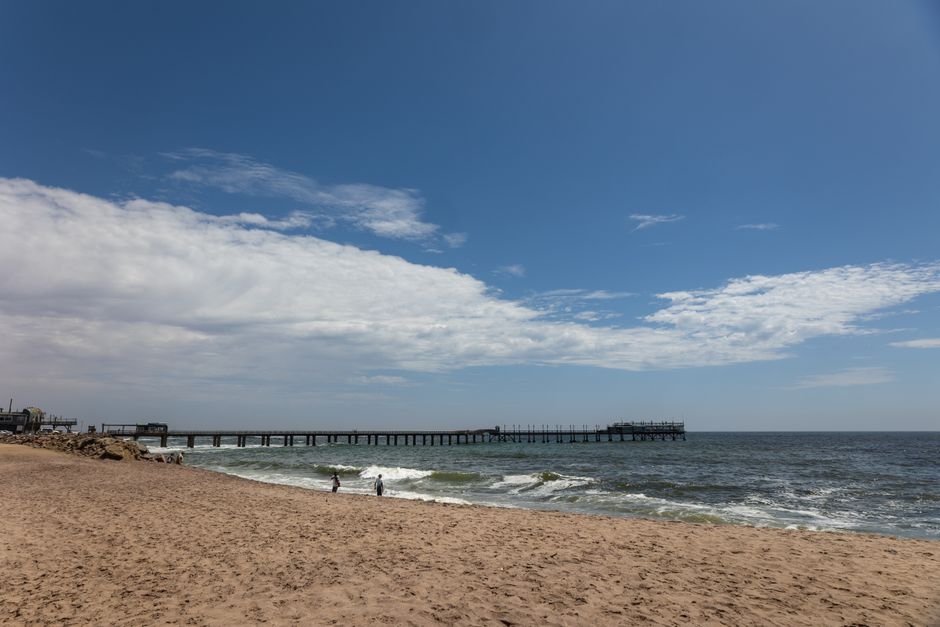
Swakopmund is Namibia’s seaside town and its capital of adventure, wedged between the cold Atlantic Ocean and the dunes of the Namib Desert. After days of driving through the heat of the interior, arriving here feels like entering another world: palm-lined streets, cool sea fog rolling in from the ocean, cafés serving apple strudel and coffee, and colorful German colonial buildings with turrets and gables, a legacy of the town’s founding in the 1890s. Swakopmund is the base for sandboarding and quad-biking in the dunes just outside town, skydiving over the desert, Living Desert tours in search of chameleons and sidewinder snakes, and day trips along the coast. Its neighbor, Walvis Bay, about 35 km (22 miles) south, has a lagoon full of flamingos, boat cruises with seals and dolphins, and 4×4 trips to Sandwich Harbour, where giant dunes drop straight into the sea. North of town, the road runs past shipwrecks and salt pans to the seal colony at Cape Cross and the Skeleton Coast. Swakopmund is pleasant all year, thanks to the cool Benguela Current, though its mornings are often gray and misty, and evenings are chilly even in summer.
Right now in Swakopmund
- Wed 13–18°C 55–64°F Clear
- Thu 13–18°C 55–64°F Mostly clear
- Fri 13–18°C 55–65°F Clear
Weather: MET Norway (CC BY 4.0) · Sea temperature: NOAA CoastWatch
Top tours in Swakopmund
See all tours for Swakopmund →
From local operators, with prices and reviews; you check availability and book on Viator, our partner. We may earn a commission at no extra cost to you. How we earn money
Swakopmund at a glance
- Best months: all year; December to April has more sunny afternoons, and May to August can bring warm, clear “east wind” days. Expect morning fog in any season.
- Time needed: two to three nights for the town, a dune activity and a Walvis Bay cruise or Sandwich Harbour trip.
- Getting there: about 360 km (225 miles) by paved road from Windhoek, or fly to Walvis Bay (WVB), about 40 km (25 miles) away.
- Costs (as of October 2026): visiting the town is free; Sandwich Harbour carries a park fee of N$150 (about US$9) per foreign adult and Cape Cross N$280 (about US$17), under fees in force since April 1, 2026.
- Before you go: visas, money and driving tips are covered in our Namibia travel guide.
Swakopmund areas and who each one suits
The town center and the Mole
The compact center, laid out in a grid between the beach and the desert, is where you’ll find the colonial landmarks, cafés, craft shops and galleries. Highlights include the lighthouse, the Woermannhaus with its lookout tower, the ornate Hohenzollern Building, the old railway station (now a hotel), the State House and the Mole, a sea wall built in the early 1900s that created the town’s sheltered Palm Beach. It suits first-time visitors who want to walk everywhere.
The jetty and the beachfront
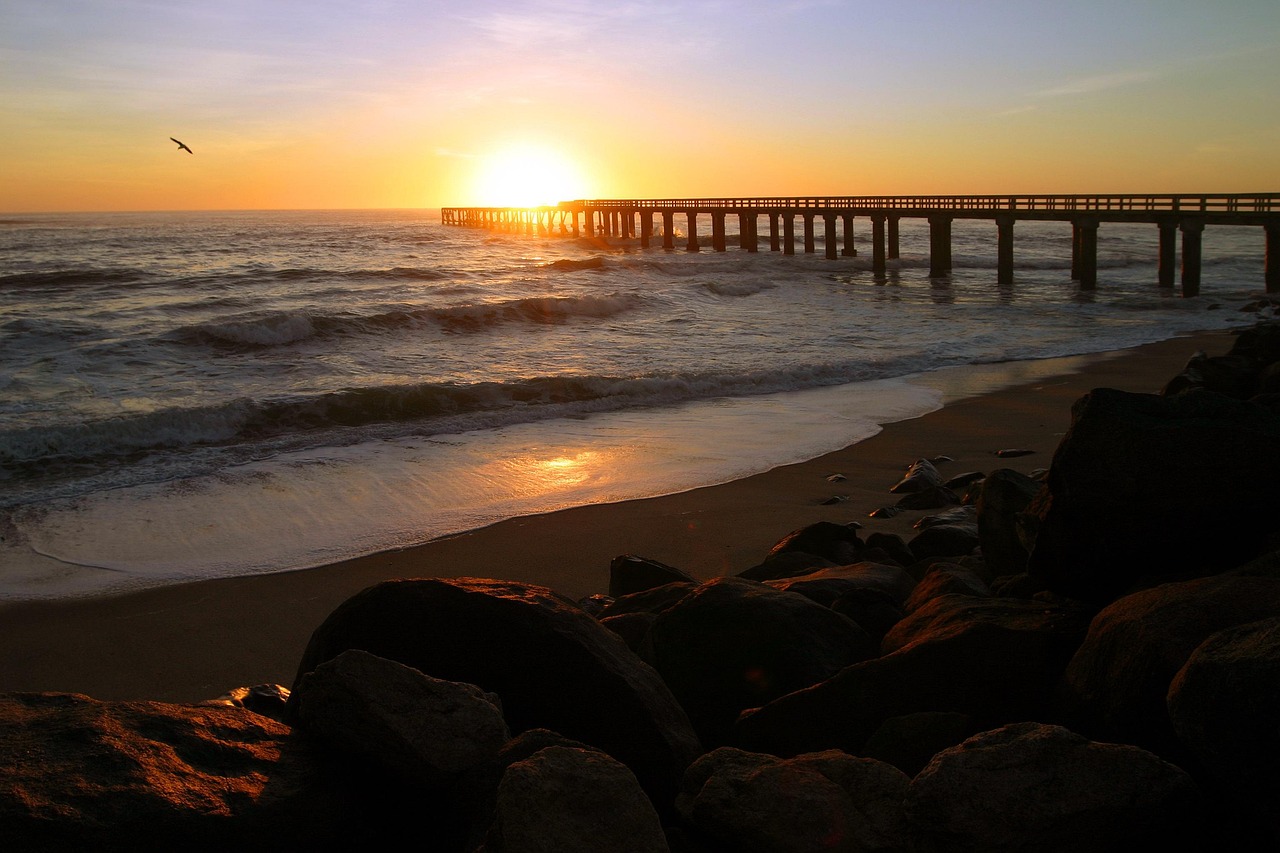
A promenade runs along the beachfront to the historic jetty, with a restaurant at its end, a fine spot for sunset. The National Marine Aquarium and the Swakopmund Museum, with displays on the region’s history, people and natural history, are nearby. Beachfront guesthouses and apartments suit families.
Vineta and the northern suburbs
North of the Swakop River mouth, the quieter residential area of Vineta and the coast toward Mile 4 have guesthouses, self-catering units and long beaches, and the road north to Henties Bay starts here.
The Swakop River and the dunes
South of the town, the dry Swakop riverbed separates Swakopmund from the dune belt, the base for sandboarding, quad-biking and Living Desert tours. Lodges along the riverbed offer more space and desert views.
Walvis Bay
Namibia’s main port, a 30-minute drive south, has the lagoon, the waterfront with cruise departures, oyster farms and seafood restaurants, and the airport. It suits travelers focused on marine life, kayaking and Sandwich Harbour.
Top things to see and do in Swakopmund
Sandboarding and quad-biking
The dunes start right on the edge of town. Lie-down sandboarding races you down the slopes on a sheet of hardboard at surprising speed, while stand-up boarding is like snowboarding on sand. Guided quad-bike trips follow designated routes through the dune belt, part of the Dorob National Park; ride only with licensed operators, who keep to permitted areas to protect the desert.
Living Desert tours
On these morning 4×4 tours, guides track the desert’s “Little Five”: the Namaqua chameleon, the sidewinder (Péringuey’s adder), the shovel-snouted lizard, the palmato gecko with its webbed feet, and the dancing white lady spider, explaining how life survives on fog. They are fascinating and suitable for families.
Walvis Bay cruises and kayaking
Morning catamaran cruises from the Walvis Bay waterfront visit the Cape fur seals at Pelican Point, look for Heaviside’s and bottlenose dolphins, pelicans and, in season, whales, and usually include fresh oysters and sparkling wine. Kayak trips paddle among the seals near Pelican Point. See our boat trips guide.
Walvis Bay lagoon and flamingos
The shallow Walvis Bay lagoon, a Ramsar wetland, is one of southern Africa’s most important coastal wetlands, with thousands of greater and lesser flamingos, pelicans and migrant waders. Walk or drive along the lagoon promenade, especially at high tide, when birds feed close to shore.
Sandwich Harbour
South of Walvis Bay, inside the Namib-Naukluft Park, huge dunes plunge directly into the Atlantic at Sandwich Harbour. Guided 4×4 tours drive along the beach between the waves and the dunes, depending on tides, then climb the dunes for views over the lagoon. Self-driving is only for experienced 4×4 drivers with a permit and local knowledge.
Moon Landscape and the Welwitschia Drive
East of town, the eroded hills of the Swakop River valley form the “Moon Landscape,” and a gravel route leads to the strange Welwitschia mirabilis plants, some estimated to be over a thousand years old. This area is in the Namib-Naukluft Park and requires a permit, available from MEFT or NWR offices in town.
Skydiving and scenic flights
Tandem skydives over the dunes and the ocean, and scenic flights over the Namib to Sossusvlei, leave from Swakopmund’s airfield.
Swakopmund with children and on a budget
Children love sandboarding, the aquarium and the Living Desert tours. On a budget, walk the historic center and the jetty, picnic on Palm Beach, stroll the Walvis Bay lagoon for flamingos for free, and cook in self-catering apartments.
Other things to do in Swakopmund
Food and drink
Swakopmund’s German heritage lives on in its bakeries and cafés, with Black Forest cake, apple strudel and fresh bread, and in its beer halls. The coast is known for seafood: Walvis Bay oysters, kingklip, kabeljou and calamari. Many restaurants also serve game such as oryx and kudu, Namibian beef, and Portuguese-influenced dishes. The jetty restaurant, waterfront spots in Walvis Bay and the town’s cafés are popular.
History and architecture
Swakopmund was founded in the 1890s as the harbor of German South West Africa, because the better natural harbor at Walvis Bay belonged to the British Cape Colony. Landing goods through the surf proved difficult, which explains the Mole and the jetty, and a railway was soon built inland to Windhoek. Many buildings from the early 1900s survive, in styles from half-timbered to art nouveau, and German is still spoken in many shops. A walk through town also passes memorials to the colonial era, whose history, including the war of 1904 to 1908 against the Herero and Nama peoples, is told in the Swakopmund Museum and the Independence Memorial Museum in Windhoek. Local guides lead township tours of Mondesa that introduce today’s diverse community, its food and music.
Henties Bay and the coast to the north
The salt road north passes fishing spots, small holiday settlements and the wreck of the Zeila, a fishing trawler stranded in 2008 and now home to cormorants. Henties Bay, about 75 km (47 miles) north, is a quiet resort known for angling, and the gateway to the road inland to Spitzkoppe and Damaraland.
Shopping and crafts
Craft markets near the lighthouse sell Herero dolls, woodcarvings and jewelry; galleries and shops offer Namibian semi-precious stones, karakul wool rugs and leather goods. The Kristall Galerie displays a giant quartz crystal cluster.
Beaches
Palm Beach, sheltered by the Mole, is the town’s main beach. The water is cold, usually about 13–17 °C (55–63 °F), so swimming is brief; strolling, surf fishing and sunsets are more popular. See our beaches and surfing guides; surfers wear thick wetsuits here.
Day trips from Swakopmund
Cape Cross seal colony
About 120 km (75 miles) north, the Cape Cross Seal Reserve holds one of the largest Cape fur seal colonies in the world, tens of thousands of seals on the rocks, noisy and smelly; pups are born from about November to December. A replica of the stone cross erected by Portuguese navigator Diogo Cão in 1486 stands nearby. The park fee is N$280 per foreign adult.
Spitzkoppe
The granite peaks of Spitzkoppe, about 150 km (95 miles) northeast, rise from the plains like the “Matterhorn of Namibia,” with rock arches, San rock paintings and a community-run campsite. It’s a superb sunset trip or overnight camp.
The Skeleton Coast
North of Henties Bay, the salt road leads to the shipwrecks and windswept beaches of the Skeleton Coast. The Skeleton Coast Park itself begins at the Ugab River gate, far to the north, with fees and set opening hours.
Sossusvlei
Sossusvlei is about five to six hours away by gravel road through the Kuiseb and Gaub passes; many travelers fly there on a scenic flight. See our Sossusvlei guide.
Nearby destinations
Getting there and getting around
By road
From Windhoek, the paved B2 runs via Okahandja and Karibib to Swakopmund, about 360 km (225 miles), roughly four hours. From Sossusvlei, the C14 gravel road via Solitaire reaches Walvis Bay in about five to six hours. From Damaraland and Etosha, routes come via Uis and Henties Bay or Usakos. Shuttle buses link Windhoek, Swakopmund and Walvis Bay daily.
By air
Walvis Bay Airport (WVB), about 40 km (25 miles) southeast of Swakopmund, has flights from Johannesburg, Cape Town and Windhoek. Hotels and shuttle operators offer transfers. Visas on arrival are issued at Walvis Bay airport for eligible nationalities.
Getting around
The town center is walkable. Taxis are inexpensive; ask your hotel to call a reliable one, especially at night. Most activities include hotel pickups. A car is useful for the lagoon, Spitzkoppe and Cape Cross.
When to go and how long to stay
Swakopmund’s climate is shaped by the cold Benguela Current. It is mild and almost rainless all year, with frequent morning fog and a cool sea breeze; daytime temperatures typically stay around the high teens to low 20s °C (mid-60s to low 70s °F) most of the year. From about April to August, hot, dry east winds from the desert (“berg winds”) occasionally push temperatures above 30 °C (86 °F) for a few days. There is no WMO-published climate series for Swakopmund in the World Meteorological Organization’s World Weather Information Service, so the table below describes typical conditions rather than measured averages.
| Month | Typical weather | Sea and fog | Highlights |
|---|---|---|---|
| Jan | Mild; sunny afternoons | Morning fog; sea at its warmest | Busy with Namibian holidaymakers |
| Feb | Mild to warm | Fog clears by midday on many days | Quieter; good for dune activities |
| Mar | Mild | Morning fog common | Flamingos on the Walvis Bay lagoon |
| Apr | Mild; occasional east-wind days | Fog less frequent | Easter holidays; clear desert days |
| May | Cool mornings; some hot berg-wind days | Clear days when the east wind blows | Good visibility for scenic flights |
| Jun | Cool; chilly evenings | Variable fog | Whale sightings possible on cruises |
| Jul | Coolest month | Fog and wind | School holidays; cozy cafés |
| Aug | Cool; windy | Frequent fog | Windy days for land sailing and kitesurfing |
| Sep | Cool to mild | Frequent fog | Spring migrants on the lagoon |
| Oct | Mild; windy | Fog common | Fewer crowds |
| Nov | Mild | Morning fog; sunny afternoons | Seal pups begin at Cape Cross |
| Dec | Mild to warm | Morning fog | Festive season; very busy |
Events worth planning around
The Swakopmund Küska carnival, a German-style festival, takes place in late winter or spring, and the town is busiest during the Namibian school holidays in December and January, when accommodation should be booked well ahead.
How long to stay: 1, 2 and 3 days
- One day: a morning Living Desert tour or sandboarding, lunch in town and a walk to the jetty for sunset.
- Two days: add a Walvis Bay cruise and the lagoon flamingos.
- Three days: add Sandwich Harbour, Cape Cross or a skydive.
Where to stay in Swakopmund
- Town center: historic hotels, guesthouses and boutique hotels within walking distance of the beach and restaurants.
- Beachfront: apartments and guesthouses with sea views, good for families and self-caterers.
- Vineta and the north: quieter guesthouses and self-catering homes.
- Desert-edge lodges: lodges along the Swakop River and the road to Walvis Bay, with dunes on the doorstep.
- Walvis Bay: lagoon-side guesthouses and hotels close to the cruise departures and airport.
Typical costs in Swakopmund
| Item (as of October 2026) | Namibian dollars | About US dollars |
|---|---|---|
| — | — | — |
| Sandwich Harbour park fee, foreign adult, per day (official) | N$150 | $9 |
| Cape Cross park fee, foreign adult, per day (official) | N$280 | $17 |
| Sandboarding trip, half day | about N$700–1,000 | about $42–60 |
| Quad-bike tour, 1–2 hours | about N$700–1,200 | about $42–72 |
| Living Desert tour, half day | about N$900–1,200 | about $54–72 |
| Walvis Bay catamaran cruise, morning | about N$1,200–1,600 | about $72–96 |
| Sandwich Harbour 4×4 tour, day | about N$1,800–2,500 | about $108–150 |
| Mid-range guesthouse, double, per night | about N$1,500–3,000 | about $90–180 |
Park fees are official rates from the Ministry of Environment, Forestry and Tourism (from April 1, 2026); activity and accommodation prices are typical ranges. Conversions use about N$16.60 to US$1.
Safety in Swakopmund
- Sea: the Atlantic here is cold, with strong currents and big waves; swim only briefly at sheltered spots such as Palm Beach, never alone, and keep children close.
- Fog and roads: thick coastal fog reduces visibility on the B2 and the salt road north; slow down and use headlights. The salt roads (C34) are smooth but slippery when damp.
- Gravel roads: on the routes inland, keep to about 80 km/h (50 mph) or less, watch for corrugations and loose gravel, check tire pressure daily and avoid driving at night.
- Desert activities: use licensed operators for quad-biking and sandboarding, wear helmets, follow guides’ routes, and carry water.
- Personal belongings: don’t leave valuables visible in parked cars, use ATMs inside banks or shopping centers, and use a reliable taxi at night.
- Sun: UV is strong even on cool, foggy days; wear sunscreen.
- Malaria: the coast is malaria-free.
- Emergencies: call 10111 for the police. Swakopmund has a private hospital; carry travel insurance.
Practical tips for Swakopmund
- Layers: pack a warm jacket; evenings are cool and foggy even in summer.
- Book ahead for December–January and Easter.
- Permits: get Welwitschia Drive and other park permits from the NWR or MEFT offices in town before you set off.
- Stock up: Swakopmund and Walvis Bay have large supermarkets, outdoor shops and 4×4 services, the last big ones before Damaraland or the Skeleton Coast.
What to pack for Swakopmund
Bring warm layers and a windproof jacket for the fog and evening chill, a sun hat and SPF 50 sunscreen, sunglasses, closed shoes for the dunes (sand gets hot when the sun comes out), a buff or scarf against wind-blown sand, binoculars for the lagoon birds, and a waterproof bag for the boat cruise. See our rain jackets and wetsuits guides.
Swakopmund travel FAQ
What is Swakopmund known for?
Its German colonial architecture, cool seaside climate, and adventure activities in the surrounding Namib dunes, such as sandboarding, quad-biking and skydiving, plus nearby Walvis Bay’s lagoon and marine cruises.
How far is Swakopmund from Windhoek?
About 360 km (225 miles) on the paved B2, roughly four hours by car. Shuttle buses run daily, and Walvis Bay airport has flights from Windhoek.
What is the weather like in Swakopmund?
Mild and dry all year, with frequent morning fog and a cool breeze; days are usually in the high teens to low 20s °C (mid-60s to low 70s °F). Occasional hot east-wind days happen from about April to August.
Can you swim in the sea at Swakopmund?
Briefly, at sheltered spots such as Palm Beach. The Atlantic is cold, usually about 13–17 °C (55–63 °F), with strong currents, so swim with care.
Is Sandwich Harbour worth visiting?
Yes; its dunes plunging into the ocean are spectacular. Go on a guided 4×4 tour from Walvis Bay, as access depends on tides and soft sand. The park fee is N$150 per foreign adult.
How do you get to Swakopmund?
By road from Windhoek on the B2, by shuttle bus, or by flying into Walvis Bay airport, about 40 km (25 miles) away, with flights from Johannesburg, Cape Town and Windhoek.
What is the Living Desert tour?
A guided morning 4×4 trip into the dunes near Swakopmund to find desert creatures such as chameleons, sidewinder snakes, geckos and lizards, with explanations of how they survive on fog.
How far is Cape Cross from Swakopmund?
About 120 km (75 miles) north on the coastal salt road. The seal colony has tens of thousands of Cape fur seals; the park fee is N$280 per foreign adult.
How many days do you need in Swakopmund?
Two to three nights: one day for the dunes and town, one for a Walvis Bay cruise or Sandwich Harbour, and one for Cape Cross or Spitzkoppe.
Is there malaria in Swakopmund?
No. The coast is malaria-free, as is the Namib Desert.
Sources and last review
Researched and last reviewed on 5 October 2026. Park fees for Sandwich Harbour and Cape Cross: the Ministry of Environment, Forestry and Tourism’s revised schedule from April 1, 2026, as published by Namibia Wildlife Resorts; visa-on-arrival ports: the Namibian embassy in Geneva; the Dorob dune-belt consultations: the Ministry of Environment, Forestry and Tourism; the exchange rate: the European Central Bank (the Namibian dollar is pegged to the rand). There is no official WMO-published climate series for Swakopmund; the climate description, sea temperatures, distances, flight details, history, wildlife and activity details, events and typical prices are general references or estimates, flagged for checking. For entry rules and money, see our Namibia travel guide.
Plan your trip
Partner links: TravelerCenter may earn a commission if you book, at no extra cost to you.