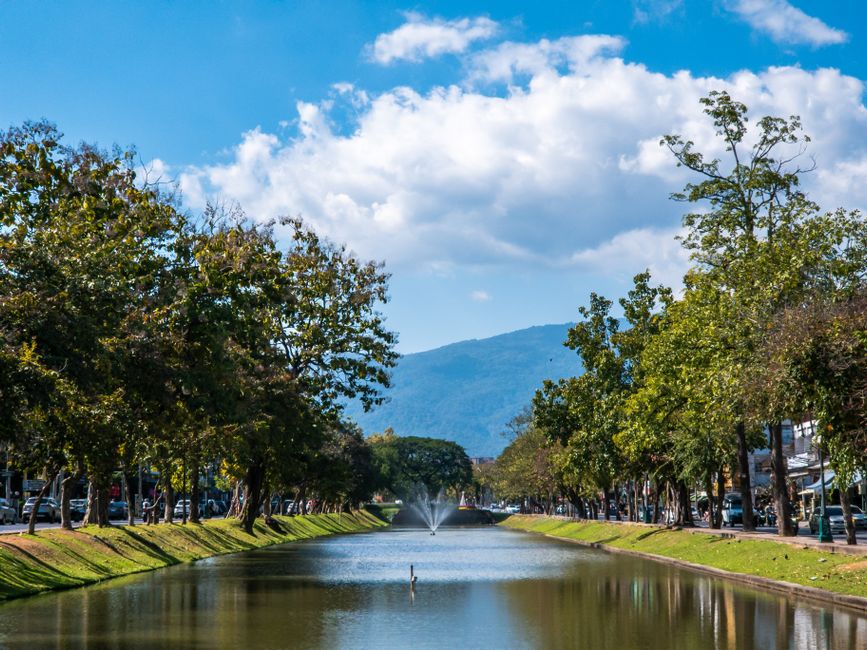
Chiang Mai is the capital of northern Thailand and its cultural heart: a relaxed, green city in a valley ringed by forested mountains, about 700 km (435 miles) north of Bangkok. Founded in 1296 as the capital of the Lanna kingdom, it still has more than a hundred temples inside and around its moated old city, many of them built in the distinctive Lanna style of carved teak and stucco. Come for the temple of Doi Suthep on the mountain above the city, the walking-street markets, the northern food (above all khao soi curry noodles), cooking classes and craft villages, and for trips into the hills: Thailand’s highest peak, Doi Inthanon, elephant sanctuaries, waterfalls and mountain villages. Chiang Mai is also famous for its festivals, especially the lantern festival of Yi Peng and Loy Krathong in November and Songkran in April. The best months are November to February, when the days are warm and dry and the nights cool; March and April are hot and often smoky, and the rainy season runs from May to October.
Right now in Chiang Mai
- Wed22–28°C71–83°F2 mm rain
- Thu22–30°C71–86°F1 mm rain
- Fri22–30°C72–86°F1 mm rain
Top tours in Chiang Mai
See all tours for Chiang Mai →
From local operators, with prices and reviews; you check availability and book on Viator, our partner. We may earn a commission at no extra cost to you. How we earn money
Chiang Mai at a glance
- Best for: temples, Lanna culture and crafts, northern Thai food and cooking classes, markets, nature, trekking and ethical elephant sanctuaries.
- How long: 3–4 days for the city and Doi Suthep; a week to add Doi Inthanon, Chiang Rai or Pai.
- Best time: November to February, with highs of about 29–31 °C (85–87 °F) and lows of 16–20 °C (60–68 °F).
- Getting there: about 1 hour 15 minutes by air from Bangkok to Chiang Mai International Airport (CNX), close to the city; or about 11 to 13 hours by overnight train.
- Getting around: red shared songthaews, Grab and Bolt, tuk-tuks, bicycles and walking in the old city.
- Fees to know: temples are mostly free or charge small fees; Doi Inthanon and other national parks charge foreign visitors an entry fee.
- Before you go: entry rules, the Thailand Digital Arrival Card, money and general safety are in our Thailand travel guide.
Chiang Mai’s areas and where to stay
The old city is a square about 1.6 km (1 mile) on each side, surrounded by a moat and the remains of brick walls and gates. The modern city spreads around it, toward the Ping River in the east and the mountain of Doi Suthep in the west.
The Old City
Inside the moat are the most important temples, Wat Phra Singh and Wat Chedi Luang, quiet lanes, guesthouses, boutique hotels, cafés and massage shops. It is the best base for first-time visitors: walkable, atmospheric and close to the Sunday Walking Street.
Nimmanhaemin (Nimman)
A trendy district west of the old city, near Chiang Mai University, with specialty coffee shops, restaurants, bars, galleries, the One Nimman and Maya malls, and modern hotels and serviced apartments. Popular with young Thais, digital nomads and longer-stay visitors.
The Night Bazaar and the riverside
East of the old city, Chang Klan Road and the Night Bazaar have big hotels, shopping and nightlife; the Ping River further east has riverside restaurants and some of Chiang Mai’s most charming boutique hotels, plus the Warorot Market and Chinatown.
Outside the center
Resorts in the Mae Rim valley and toward Hang Dong and San Kamphaeng offer rice-field views, pools and peace, but you need transport to reach the city.
Top things to see in Chiang Mai
Most temples open from about 6 a.m. to 6 p.m.; dress modestly, with shoulders and knees covered, and take off your shoes before entering the halls. Many temples welcome visitors to “monk chats”, informal conversations with novice monks practicing English.
Wat Phra That Doi Suthep
Chiang Mai’s most sacred temple sits at about 1,050 m (3,450 ft) on the mountain west of the city, reached by a winding road and then a staircase of more than 300 steps flanked by naga serpents (or a funicular). Its golden chedi is said to hold a relic of the Buddha, and on a clear day the terrace views stretch across the city. Go early in the morning for the calm and the light; red songthaews leave from near Chiang Mai University. The road continues to Bhubing Palace, a royal winter residence with gardens, and the Hmong village of Doi Pui. According to the national parks department, the Doi Pui summit and campsite in Doi Suthep–Pui National Park close every year from May 1 to September 30.
Wat Chedi Luang
The ruins of a massive 15th-century chedi, partly destroyed by an earthquake in the 1500s, dominate the old city. It once housed the Emerald Buddha now in Bangkok. Come in the evening, when it is lit, or in the afternoon for a monk chat.
Wat Phra Singh
The old city’s most revered temple, with a beautiful Lanna-style library and the Viharn Lai Kham, a small chapel with fine murals and the Phra Singh Buddha image, which is carried through the streets at Songkran.
Wat Suan Dok and Wat Umong
Wat Suan Dok, west of the old city, has a large whitewashed chedi surrounded by the white tombs of the Chiang Mai royal family, a lovely sight at sunset. Wat Umong, in the forest at the foot of Doi Suthep, is a meditation temple with brick tunnels lined with Buddha images.
The walking streets and markets
The Sunday Walking Street fills Ratchadamnoen Road in the old city with crafts, art and food stalls from late afternoon; the Saturday Walking Street on Wualai Road, the silversmiths’ street south of the old city, is smaller and more local. The Night Bazaar on Chang Klan Road runs every evening, and Warorot Market is the place for northern sausages, chili pastes and dried fruit.
More classic sights
- The Three Kings Monument and the Lanna museums: the city’s founders and a trio of museums on Lanna history and culture in the heart of the old city.
- Wat Sri Suphan: the “Silver Temple” on Wualai Road, covered in hand-hammered silver panels.
- Bo Sang and San Kamphaeng: villages east of the city known for painted paper umbrellas, silk and handicrafts.
- Chiang Mai University and Ang Kaew reservoir: a leafy campus with walking paths and mountain views.
- Wiang Kum Kam: the excavated ruins of an older city, south of Chiang Mai, explored by horse cart or bike.
Churches and cathedrals
- Wat Chedi Luang
- Wat Phra Singh
- Wat Phra That Doi Suthep
- Wat Si Suphan
- Wat Suan Dok
- Wat Umong
Monuments
- Three Kings Monument
- Wiang Kum Kam
Other sights
- Chiang Mai Night Bazaar
Other things to do in Chiang Mai
Food and drink
Northern Thai food is milder and more herbal than the food of central Thailand, and often eaten with sticky rice. Don’t miss khao soi, egg noodles in a rich coconut curry topped with crispy noodles; sai oua, a grilled herb sausage; nam prik noom, a roasted green chili dip with pork crackling; gaeng hang lay, a Burmese-style pork curry; and khan tok, a set dinner of northern dishes served on a low pedestal tray, often with dance shows. Chiang Mai also grows its own coffee in the hills, and Nimman has dozens of specialty cafés.
Cooking classes, massage and crafts
Chiang Mai is the best place in Thailand to learn to cook: half-day and full-day schools in the city and on farms outside it start with a market visit and end with a meal you cooked yourself. Traditional Thai massage schools, meditation retreats, and workshops in pottery, weaving and silver are also popular.
Elephants, trekking and the outdoors
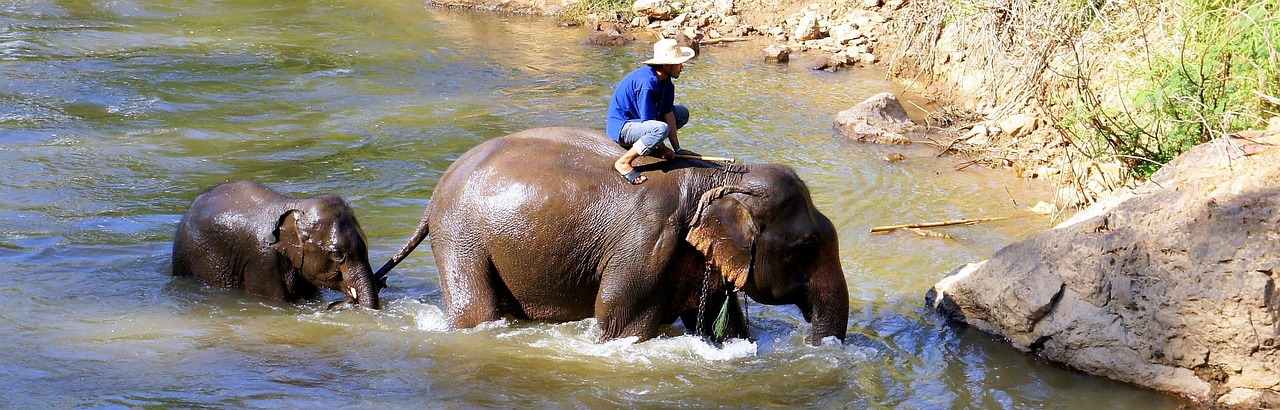
Many elephant camps around Chiang Mai have moved away from riding and shows toward sanctuaries where visitors watch, feed and walk with the animals; choose one that does not offer riding, painting or performances. The hills offer day hikes and multi-day treks to Karen and Hmong villages, mountain biking, zip-lines, white-water rafting in the rainy season and the “Sticky Waterfall” of Bua Thong, whose limestone rocks you can climb barefoot. See our guides to hiking and cycling.
Festivals
Yi Peng and Loy Krathong are celebrated together on the full moon of the 12th lunar month, which falls on November 24, 2026: people float candle-lit krathongs on the Ping River, the old city’s temples and moat glow with lanterns, and there are parades. Releasing sky lanterns is restricted to authorized events and set times because of the fire and aviation risk; large organized lantern releases are ticketed events outside the city. Songkran in mid-April is celebrated longer and harder here than almost anywhere, with water fights around the moat for several days. The Chiang Mai Flower Festival fills the city with floats in early February.
Activities and best months
- HikingJanFebNovDecDoi Suthep-Pui National Park's Doi Pui summit and campsite close from 1 May to 30 September; the cool season in the north runs from November to February.
Day trips from Chiang Mai
- Doi Inthanon National Park: Thailand’s highest point, at 2,565 m (8,415 ft), about 2 hours southwest, with twin royal pagodas, waterfalls such as Wachirathan and cloud forest trails. According to the national parks department, the Kio Mae Pan nature trail closes every year from June 1 to October 31.
- Chiang Rai: the White Temple, the Blue Temple and the Golden Triangle, about 3 hours by road; better with an overnight stay. See our Chiang Rai guide.
- Pai: a mountain valley town about 3 hours northwest on a road famous for its 762 curves; stay at least one night.
- Mae Kampong: a forest village of wooden houses and coffee and tea gardens, about an hour east, with homestays and a waterfall.
- Lamphun: one of Thailand’s oldest towns, with the revered Wat Phra That Hariphunchai, 30 minutes south.
Nearby destinations
- Pai86 km
- Chiang Rai153 km
- Sukhothai216 km
- Inle Lake292 km
Getting there and getting around
By air, train and bus
Chiang Mai International Airport (CNX), run by Airports of Thailand, is only about 4 km (2.5 miles) southwest of the old city, 15 minutes by Grab or taxi. Flights from Bangkok’s Suvarnabhumi and Don Mueang airports take about 1 hour 15 minutes, with many daily departures; there are also flights from Phuket, Krabi, Ko Samui and Hat Yai, and direct flights from several Asian cities. The State Railway of Thailand’s (SRT) overnight sleeper trains from Bangkok’s Krung Thep Aphiwat Central Terminal take about 11 to 13 hours: a comfortable, scenic way to travel if you book a berth in advance. Buses run from Bangkok’s Mo Chit terminal (about 9 to 10 hours) to Chiang Mai’s Arcade bus station, which also has buses to Chiang Rai and Pai.
Around the city
The red songthaew pickup trucks (rot daeng) are shared taxis: flag one down, tell the driver where you are going, and agree the price; short trips in town cost a small flat fare per person. Grab and Bolt are widely used and easy. The old city is best explored on foot or by bicycle. Scooter rental is popular for the hills, but the mountain roads are steep and winding; you need a motorcycle license, an International Driving Permit and a helmet.
When to go and how long to stay
Chiang Mai has three seasons: cool and dry from November to February, hot from March to May, and rainy from about May to October. The table uses the 1991–2020 normals of the Thai Meteorological Department (TMD) for its Chiang Mai station, as submitted to the World Meteorological Organization (WMO): average daily highs and lows, total rain, and days with at least 1 mm of rain.
| Month | Average high / low | Rain (days with 1 mm or more) | What to expect |
|---|---|---|---|
| January | 30 °C (86 °F) / 16 °C (60 °F) | 11 mm (0.4 in), 1 day | Cool mornings, warm sunny days; peak season; chilly on the mountains |
| February | 33 °C (91 °F) / 17 °C (62 °F) | 10 mm (0.4 in), 1 day | Dry and warming; Flower Festival; smoke haze can begin |
| March | 35 °C (96 °F) / 20 °C (68 °F) | 20 mm (0.8 in), 2 days | Hot and often hazy from crop and forest fires |
| April | 37 °C (98 °F) / 23 °C (74 °F) | 54 mm (2.1 in), 5 days | The hottest month; Songkran water festival; haze |
| May | 35 °C (94 °F) / 24 °C (76 °F) | 168 mm (6.6 in), 12 days | Rains begin and clear the air; green again |
| June | 33 °C (92 °F) / 24 °C (76 °F) | 118 mm (4.7 in), 12 days | Showers; lush countryside; low season |
| July | 32 °C (90 °F) / 24 °C (76 °F) | 149 mm (5.9 in), 14 days | Rainy; good for waterfalls and rafting |
| August | 32 °C (89 °F) / 24 °C (75 °F) | 223 mm (8.8 in), 17 days | The wettest month; some mountain trails closed |
| September | 32 °C (90 °F) / 24 °C (75 °F) | 207 mm (8.2 in), 15 days | Wet; occasional river flooding |
| October | 32 °C (89 °F) / 23 °C (73 °F) | 124 mm (4.9 in), 9 days | Rains ease; end of Buddhist Lent |
| November | 31 °C (87 °F) / 20 °C (68 °F) | 41 mm (1.6 in), 3 days | Cool season begins; Yi Peng and Loy Krathong (November 24 in 2026) |
| December | 29 °C (85 °F) / 17 °C (62 °F) | 14 mm (0.6 in), 1 day | Cool and clear; frosts possible on Doi Inthanon; busy over the holidays |
Chiang Mai gets about 1,140 mm (45 in) of rain a year. From about February to April, smoke from agricultural burning and forest fires often blankets the north, and fine-dust (PM2.5) levels can reach unhealthy levels for days at a time; check the air quality index and plan indoor activities if it is bad. In the cool season, nights in the mountains can drop to near freezing.
Weather month by month
3 days in Chiang Mai
Day one, the old city’s temples (Wat Phra Singh, Wat Chedi Luang and the Three Kings Monument) and a khao soi lunch, then the Sunday Walking Street or the Night Bazaar. Day two, a morning cooking class and an afternoon trip up Doi Suthep for sunset. Day three, a day at an ethical elephant sanctuary, or Wat Umong and Wat Suan Dok and an evening in Nimman.
A week or more
Add a day trip to Doi Inthanon, a night in Chiang Rai, and two or three nights in Pai or Mae Kampong.
Where to stay in Chiang Mai
- The Old City: guesthouses and boutique hotels within walking distance of the temples and markets.
- Nimman: modern hotels and apartments among cafés and restaurants.
- Night Bazaar: large hotels, shopping and nightlife.
- The riverside: charming boutique hotels and restaurants on the Ping River.
- Mae Rim and the countryside: resorts and villas with mountain and rice-field views.
Hotels fill up and prices rise sharply for Yi Peng in November, at Christmas and New Year, and at Songkran, so book well ahead for those dates.
What a trip to Chiang Mai costs
Prices are approximate, for October 2026, converted at about 33 baht to the US dollar.
| Item | Typical cost |
|---|---|
| Bowl of khao soi | 60–100 baht (about US$1.80–3) |
| Khan tok dinner with show | 600–1,200 baht (about US$18–36) |
| Shared songthaew ride in town | about 30–50 baht (about US$1–1.50) |
| Half-day cooking class | 900–1,500 baht (about US$27–45) |
| Ethical elephant sanctuary, full day | 2,000–3,500 baht (about US$60–105) |
| One-hour Thai massage | 250–400 baht (about US$7.50–12) |
| Guesthouse double | 600–1,200 baht (about US$18–36) |
| Boutique hotel double | 1,500–4,000 baht (about US$45–120) |
Practical tips for Chiang Mai
- Mornings are best: visit temples and Doi Suthep early, before the heat and the tour buses.
- Layers: pack a warm top from November to February for early mornings and mountain trips.
- Elephants: choose sanctuaries that do not offer riding, bathing as a show, painting or performances.
- Monk etiquette: women should not touch monks or hand them things directly.
- Cannabis and vaping: cannabis flower needs a Thai prescription, and e-cigarettes are illegal in Thailand.
- Help: the Tourist Police (1155) speak English, and the TAT Contact Center (1672) answers tourist questions.
Safety
Chiang Mai is one of Thailand’s safest and most relaxed cities. The main risks are on the roads and in the air.
- Air quality: from about February to April, smoke from fires can push PM2.5 pollution to unhealthy levels; people with asthma or heart conditions should check the air quality index and consider visiting at another time.
- Road safety: mountain roads, including those to Doi Suthep, Doi Inthanon and Pai, are steep and winding; rent a scooter only if you are an experienced rider, wear a helmet, and avoid riding in the rain or after dark.
- Heat: March to May is very hot; drink plenty of water and rest at midday.
- Rain and floods: heavy rain from August to October can cause flash floods and landslides in the hills and flooding along the Ping River; national park trails and waterfalls may close.
- Scams: few, but agree songthaew and tuk-tuk prices before you ride, and book treks and sanctuaries through reputable operators.
- Emergencies: call 1155 for the Tourist Police (English spoken), 191 for the police and 1669 for an ambulance.
What to pack for Chiang Mai
Light clothes and a warm layer for cool mornings and the mountains, long trousers or a long skirt and covered shoulders for temples, comfortable walking shoes, a hat and sunscreen, an umbrella or rain jacket from May to October, and, from February to April, N95 masks for smoky days. Thailand uses 220 V; sockets take both flat two-pin and round two-pin plugs.
What to pack
- Day packs and anti-theft bagsA 20–30 litre pack carries layers, water, a head torch and snacks on full-day levada walks.
- Fleeces and warm layersSummits like Pico do Areeiro averaged about 11 °C over 2024, so a fleece is needed even in summer.
- HeadlampsLevada routes such as PR1 and PR9 pass through long, dark, wet tunnels.
- Hiking shoes and bootsMadeira's levadas and the Azores' crater rims are wet, rocky and slippery, so grippy shoes matter more than anywhere else in Portugal.
- Rain jacketsMountain and island weather changes fast; a real shell beats an umbrella in the wind.
- Trekking polesLong stone staircases and steep descents on Madeira's peaks and the Azores' crater rims are easier on the knees with poles.
- Water bottles and hydration packsAlgarve and Alentejo trails are hot and exposed with few refill points.
Chiang Mai travel FAQ
How many days do I need in Chiang Mai?
Three or four days covers the old city, Doi Suthep, a cooking class and a sanctuary; a week lets you add Doi Inthanon, Chiang Rai or Pai.
When is Yi Peng in 2026?
Yi Peng and Loy Krathong fall on the full moon of the 12th lunar month, November 24, 2026, with celebrations over several days around it.
When is the smoky season in Chiang Mai?
Usually from about February to April, when agricultural burning and forest fires create haze; the rains from May clear the air.
What is the best time to visit Chiang Mai?
November to February, when it is dry, sunny and cool in the mornings.
How do I get from Bangkok to Chiang Mai?
By air in about 1 hour 15 minutes, by overnight sleeper train in about 11 to 13 hours, or by bus in about 9 to 10 hours.
How do I get to Doi Suthep?
By red songthaew from near Chiang Mai University, by Grab, or on a tour; it takes about 30–40 minutes up the mountain road.
What should I eat in Chiang Mai?
Khao soi curry noodles, sai oua sausage, nam prik noom chili dip with sticky rice, and a khan tok dinner.
Are elephant sanctuaries in Chiang Mai ethical?
Some are and some are not. Choose a sanctuary that does not offer riding, shows or painting, and that limits visitor numbers.
Can I use Grab in Chiang Mai?
Yes. Grab and Bolt both operate in Chiang Mai, alongside red songthaews and tuk-tuks.
Is it worth visiting Doi Inthanon?
Yes, for Thailand’s highest peak, cool air, waterfalls and the royal pagodas; it takes a full day from Chiang Mai.
Plan your trip
Partner links: TravelerCenter may earn a commission if you book, at no extra cost to you.
🇹🇭 Useful Thai phrases for Chiang Mai
All 38 Thai phrases: restaurant, hotel, emergencies, romance (printable) →
Sources · last reviewed 4 October 2026
Researched and last reviewed on 4 October 2026. National park closures (Doi Suthep–Pui, Doi Inthanon): the Department of National Parks, Wildlife and Plant Conservation; Doi Inthanon’s height, the road to Pai, cannabis and e-cigarette rules and the Tourist Police: the Tourism Authority of Thailand (TAT); climate normals: the Thai Meteorological Department via the World Meteorological Organization’s 1991–2020 normals; Yi Peng and Loy Krathong date: the 12th-month full moon from the US Naval Observatory; exchange rate: the US Federal Reserve. Journey times, the sky-lantern rules, the smoke season, sight descriptions and typical prices are general references or estimates, flagged for checking. Prices and hours change, so check the official sites before you go. For entry rules, money and general safety, see our Thailand travel guide.
Also: tatnews.org · TMD normals 1991–2020, Chiang Mai (climate)
Data: Weather: MET Norway (CC BY 4.0) · Air quality: OpenAQ · Rates: ECB · Costs: World Bank ICP and price levels · Wikidata (CC0)