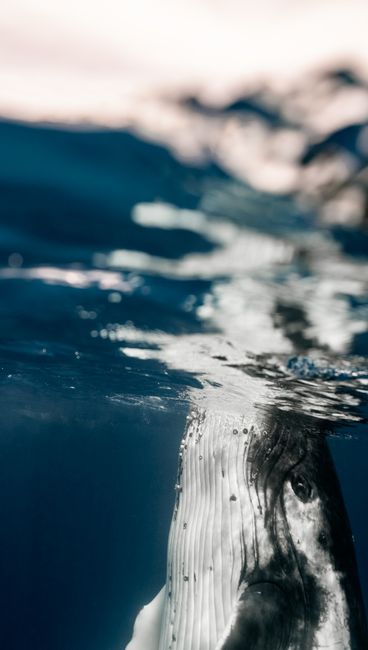
Tonga, the Kingdom of Tonga, is an archipelago of about 170 islands scattered across 800 km (500 miles) of the South Pacific east of Fiji, the only Pacific nation never colonized and still ruled by a king. It is one of the most traditional countries in Polynesia: Sunday is kept as a strict day of rest by law, families gather for umu feasts, men drink kava late into the night, and people dress modestly in woven mats called ta’ovala on formal days. Visitors come for the beaches and reefs, for the slow pace of life, and above all for the humpback whales that arrive from Antarctic waters each southern winter to mate and give birth. From about July to October, Vava’u and Ha’apai are among the very few places in the world where you can legally swim with them, in small groups with licensed guides. About 100,000 people live in Tonga, most on the main island of Tongatapu, home to the capital, Nuku’alofa. Most visitors receive a free 31-day visa on arrival, and the currency is the pa’anga.
Right now in Tonga
- Wed 22–25°C 71–77°F 1 mm Partly cloudy
- Thu 21–25°C 70–76°F 3 mm Showers
- Fri 22–24°C 71–76°F 3 mm Showers
Weather: MET Norway (CC BY 4.0)
Multi-day tours of Tonga
Multi-day tours from local operators. You check dates and book on Viator, our partner; we may earn a commission at no extra cost to you. How we earn money
Tonga at a glance
- Capital: Nuku’alofa, on the north coast of Tongatapu, home to the Royal Palace, Parliament, the main market and most businesses.
- Population and size: about 100,000 people in about 749 km² (289 sq miles) of land, on 36 or so inhabited islands in four main groups.
- Languages: Tongan and English. Mālō e lelei means hello; mālō ‘aupito, thank you very much.
- Currency: the pa’anga (TOP, written T$). In early October 2026, T$1 was worth about US$0.42.
- Time zone: UTC+13 all year, with no daylight saving; Tonga is among the first places on Earth to see each new day.
- Driving: on the left.
- Entry: visitors from most Western countries get a free 31-day visitor visa on arrival, extendable up to six months.
- Sunday: by law a day of rest; shops, most restaurants, tours and domestic flights stop.
- Power: 240 volts with Type I plugs, as in Australia and New Zealand.
Tonga’s island groups
Tongatapu, in the south, is a flat, low coral island with the capital, the international airport, most of the population and the ancient stone monuments of Tonga’s former empire. Just to its southeast, ‘Eua is hilly, with forested national park, cliffs and caves. Ha’apai, in the middle, is a scatter of low, palm-covered islands with empty beaches, lagoons and very few visitors. Vava’u, in the north, is a hilly island group around one of the South Pacific’s best natural harbors, with dozens of islands, protected cruising waters and the town of Neiafu; it is the center of whale swimming and sailing. The remote Niuas, far to the north, see almost no tourists.
Regions
Where to go: Tongatapu, ‘Eua, Ha’apai and Vava’u
Nuku’alofa and Tongatapu
Nuku’alofa is a small, low-rise capital where the white wooden Royal Palace, built in 1867, faces the sea (you view it from outside), and the Centenary Church holds royal services on Sundays. The Talamahu Market sells fruit, vegetables and handicrafts such as tapa cloth and woven baskets. Around the island, the Mapu’a ‘a Vaca blowholes at Houma send up dozens of plumes of spray along the southern reef when the swell is up; the Ha’amonga ‘a Maui, a stone trilithon raised around the year 1200, stands in the east; the terraced royal tombs (langi) at Lapaha recall the power of the Tu’i Tonga kings; and fruit bats, considered sacred and the property of the nobility, hang in the trees at Kolovai. Small resorts on the offshore islands of Pangaimotu, Fafa and Atata are a short boat ride from town. The west coast was damaged by the 2022 Hunga Tonga–Hunga Ha’apai eruption and tsunami, and rebuilding continues.
‘Eua
A short flight or a two- to three-hour ferry ride from Nuku’alofa, ‘Eua is Tonga’s oldest island and its hiking destination. ‘Eua National Park protects rainforest, limestone caves, sinkholes and sea cliffs on the east coast, with lookouts where you can sometimes see humpback whales from land in season. Accommodation is a handful of simple lodges and guesthouses.
Ha’apai
Ha’apai is Tonga at its quietest: dozens of low islands with white beaches, reefs and lagoons, spread across the center of the kingdom. Lifuka is the main island, with the town of Pangai and a small airstrip; nearby Foa and Uoleva have small beach resorts and fales. Whale swimming also takes place here in season, with fewer boats than in Vava’u. Ha’apai lies close to the Hunga Tonga–Hunga Ha’apai volcano and was hit by the 2022 tsunami; check that your accommodation is operating before you book.
Vava’u
Vava’u is the island group most visitors fly north to see. Its main town, Neiafu, sits on the deep, sheltered Port of Refuge harbor, filled with visiting yachts in winter. From here, boats explore more than 50 islands, sea caves such as Swallows’ Cave and Mariner’s Cave, coral reefs and quiet anchorages, and from about July to October whale-swim boats leave every morning except Sunday. Our Vava’u travel guide covers the islands, the whale season and how to choose an operator.
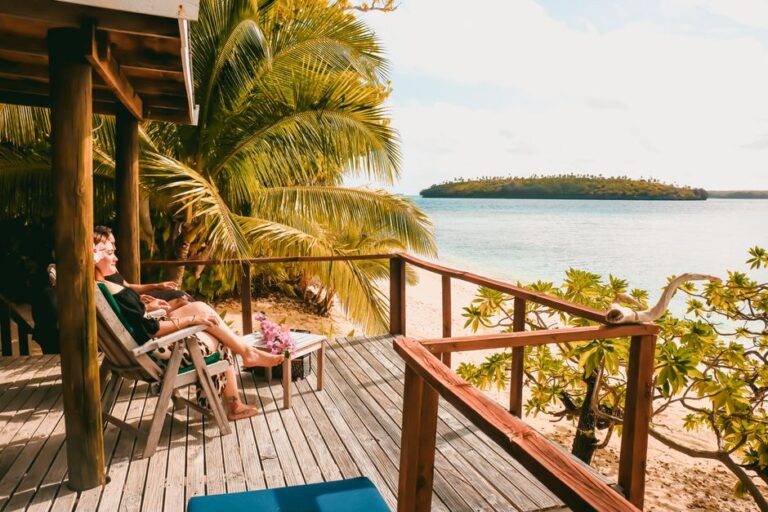
Vava’u Travel Guide
Plan a trip to Vava'u, Tonga: swimming with humpback whales from July to October and the 2013 whale regulations, Neiafu and the Port of…
Swimming with humpback whales in Tonga
Every year, South Pacific humpback whales migrate from their feeding grounds in Antarctica to Tonga’s warm, sheltered waters to mate, give birth and nurse their calves. Operators usually run whale watching and swimming trips from about July to October, with the most mothers and calves in August and September; the exact timing varies each year.
Swimming with whales is regulated by Tonga’s Whale Watching and Swimming Regulations 2013, made under the Whale Watching and Swimming Act, and administered by the Ministry of Tourism, which licenses operators. The key rules are:
- Only licensed whale swimming operators may put swimmers in the water with whales; you cannot swim with whales from a private boat or from shore.
- No more than four clients plus one trained local guide per licensed vessel may be in the water with a pod at one time, and only one licensed vessel may put swimmers in the water with any one pod.
- Swimmers must not approach a whale closer than 5 m (16 feet); boats must not approach closer than 10 m (33 feet) to drop off or pick up swimmers, and whale-watching boats must keep 50 m (165 feet) from a pod with a calf.
- The maximum interaction time with any pod, including a mother and calf, is 90 minutes, after which no vessel may interact with that pod for at least 90 minutes.
- No scuba, jet skis, motorized swimming aids, artificial lights or loud noise around whales; no touching or feeding; and stop if the whales show any sign of disturbance.
- Private boats must stay at least 300 m (about 1,000 feet) from whales, and boats with swimmers in the water fly the alpha flag.
In practice, you spend a day on a small boat with a group of six to eight people, taking turns to slip quietly into the water in groups of four when the skipper and guide judge that the whales are calm. Some days bring long encounters with a resting mother and calf; on others, whales are only seen from the boat. Book a multi-day package to improve your chances, choose a licensed operator with a good record, and be honest about your swimming ability: the water is open ocean, and you should be comfortable in deep water with mask, snorkel, fins and wetsuit. There are no whale trips on Sundays.
Choosing a whale-swim operator
- Check the license: ask to see the operator’s current Ministry of Tourism whale swimming license and the vessel certification.
- Group size: smaller boats with six to eight guests mean more time in the water for each person, since only four people swim at once.
- Guide and briefing: a good operator gives a thorough safety and behavior briefing, assesses everyone’s swimming, and lets whales lead the encounter rather than chasing them.
- Equipment: wetsuits, masks and fins should be included and in good condition; bring your own mask if you have one that fits well.
- Weather and refunds: ask what happens if the trip is canceled for weather or if no whales are found, and whether multi-day packages give a discount.
- Seasickness: the boats spend hours in open water; take tablets before departure if you are prone to it.
Best time to visit Tonga
Tonga has a warm, tropical climate, cooler and drier than Samoa or Fiji. The dry season from May to October, also called winter, brings pleasant days, cool nights and lower humidity, and it coincides with the whale season and the yachting season in Vava’u, so it is the busiest time. The wet season from November to April is hotter and more humid, with about two-thirds of the year’s rain, and it is the tropical cyclone season. According to the Tonga Meteorological Service, on average one or two tropical cyclones affect Tonga each season, most often in February.
| Month | Nuku’alofa high / low | Nuku’alofa rain | Vava’u high / low | Vava’u rain |
|---|---|---|---|---|
| Jan | 30 / 23 °C (85 / 74 °F) | 184 mm (7.3 in) | 30 / 23 °C (86 / 74 °F) | 244 mm (9.6 in) |
| Feb | 30 / 24 °C (86 / 75 °F) | 205 mm (8.1 in) | 30 / 24 °C (87 / 74 °F) | 235 mm (9.2 in) |
| Mar | 30 / 24 °C (86 / 75 °F) | 186 mm (7.3 in) | 30 / 23 °C (87 / 74 °F) | 271 mm (10.7 in) |
| Apr | 29 / 23 °C (84 / 73 °F) | 163 mm (6.4 in) | 29 / 23 °C (85 / 73 °F) | 266 mm (10.5 in) |
| May | 27 / 21 °C (81 / 69 °F) | 115 mm (4.5 in) | 28 / 22 °C (83 / 71 °F) | 173 mm (6.8 in) |
| Jun | 26 / 20 °C (79 / 67 °F) | 89 mm (3.5 in) | 27 / 21 °C (80 / 69 °F) | 140 mm (5.5 in) |
| Jul | 25 / 18 °C (77 / 65 °F) | 101 mm (4.0 in) | 26 / 20 °C (80 / 67 °F) | 94 mm (3.7 in) |
| Aug | 25 / 18 °C (77 / 65 °F) | 113 mm (4.4 in) | 26 / 20 °C (80 / 68 °F) | 80 mm (3.1 in) |
| Sep | 26 / 19 °C (78 / 66 °F) | 111 mm (4.4 in) | 27 / 21 °C (80 / 69 °F) | 146 mm (5.7 in) |
| Oct | 27 / 20 °C (80 / 67 °F) | 86 mm (3.4 in) | 28 / 21 °C (82 / 70 °F) | 142 mm (5.6 in) |
| Nov | 28 / 21 °C (82 / 70 °F) | 85 mm (3.3 in) | 29 / 22 °C (84 / 72 °F) | 142 mm (5.6 in) |
| Dec | 29 / 23 °C (84 / 73 °F) | 147 mm (5.8 in) | 29 / 23 °C (85 / 74 °F) | 244 mm (9.6 in) |
Figures are the Tonga Meteorological Service’s climatological averages for Nuku’alofa and Lupepau’u Airport, Vava’u, based on the 30-year period 1981–2010: mean daily maximum and minimum and total monthly rainfall. Nuku’alofa averages about 1,580 mm (62 in) of rain a year; Vava’u, further north, about 2,180 mm (86 in). The sea is coolest, around 23 to 24 °C (73 to 75 °F), in August and September, so bring a wetsuit for whale swims.
Crowds and prices through the year
July to October is peak season in Vava’u and Ha’apai: whale-swim trips, the best guesthouses and domestic flights book out months ahead, and the harbor at Neiafu fills with yachts. Christmas and New Year bring many Tongans home from New Zealand, Australia and the United States, so flights are full. The quietest, cheapest months are February to April, in the heart of the wet season.
Festivals and events
- Heilala Festival (late June to early July): Nuku’alofa’s biggest celebration, around the king’s birthday on 4 July, with parades, beauty pageants, dance, music and a float procession.
- Sailing regattas (around September): visiting yachts gather in Vava’u for informal races, parties and community events before heading south ahead of the cyclone season.
- Whale season (about July to October): the busiest time of year in Vava’u and Ha’apai.
- Christmas and New Year: church services, choirs and family feasts.
Sundays in Tonga
Tonga’s constitution declares Sunday sacred, and it is still observed strictly. Shops, markets, most restaurants and tour operators close, domestic flights don’t operate, and it is illegal to work or trade except in essential services and tourist accommodation. Resorts serve meals to guests, and visitors are welcome at church, where the singing is extraordinary. Plan Sunday as a rest day, and stock up on cash and snacks on Saturday.
Public holidays
Government offices, banks and most shops close on public holidays, and traffic between the islands is heavy around Christmas and Easter. Tonga’s holidays include New Year’s Day, Good Friday and Easter Monday, Anzac Day (25 April), Emancipation Day (4 June), the king’s birthday (4 July), the Crown Prince’s birthday, Constitution Day (4 November), King Tupou I Day (4 December), Christmas Day and Boxing Day. Dates are confirmed by the government each year, and a holiday that falls on a Sunday is usually moved to the Monday.
Tonga’s history in brief
Lapita seafarers settled Tonga about 3,000 years ago, and by around the 12th century the Tu’i Tonga kings, based at Lapaha on Tongatapu, ruled a maritime empire whose influence reached as far as Samoa and parts of Fiji; the trilithon and the royal tombs date from that era. Dutch navigators passed in 1616 and Abel Tasman landed in 1643; James Cook visited in the 1770s and named the islands the Friendly Islands. In 1845 the warrior chief Tāufa’āhau united the country and became King George Tupou I; he adopted Christianity and gave Tonga its constitution in 1875, one of the oldest still in force. Tonga became a British protected state in 1900 but kept its monarchy and was never formally colonized, and it rejoined the community of independent nations in 1970. Today it is a constitutional monarchy with an elected parliament and King Tupou VI as head of state.
How long to stay: sample itineraries
7 days: Tongatapu and Vava’u
Two nights on Tongatapu (Nuku’alofa, the blowholes, the trilithon and an offshore island), then fly north for five nights in Vava’u with two or three days of whale swimming in season and a day of sailing to the caves and islands.
10 days: whales and empty beaches
Two nights on Tongatapu, three nights on a beach in Ha’apai, then five nights in Vava’u for whales, sailing and kayaking.
2 weeks: the slow version
Add ‘Eua for hiking and cliff-top whale watching, more beach days in Ha’apai and a sailing charter in Vava’u.
Entry, money and costs
Entry: the free visitor visa (as of October 2026)
According to the Tongan government, citizens of a list of countries, including the United States, Canada, the United Kingdom, Australia, New Zealand, Japan and most of Europe, do not need to apply for a visa in advance. They receive a free visitor visa for 31 days on arrival, which can be extended for up to six months; citizens of Schengen member states receive 90 days automatically. You need a passport valid for at least six months, a return or onward ticket, an address in Tonga and enough money for your stay. Travelers from countries not on the list must arrange a letter of authority before traveling. Check the current list with Tonga’s immigration department or a Tongan embassy before you go. You complete arrival and customs cards on the plane.
Customs and biosecurity
Declare all food, plants, seeds and animal products. Tonga’s quarantine officers inspect bags, and fresh fruit and meat are usually confiscated.
Money, cards and tipping
Cash is needed for markets, taxis, buses, small shops and many guesthouses; there are ATMs in Nuku’alofa, Neiafu and Pangai, but not on the smaller islands. Larger hotels, whale operators and some restaurants take cards, often with a surcharge of a few percent. Tipping is not customary, though staff appreciate it for exceptional service, and many visitors give their whale-swim crew something at the end of the trip. A consumption tax is included in most prices.
Typical travel costs
| Item (as of October 2026) | Tongan pa’anga | About US dollars |
|---|---|---|
| Visitor visa on arrival, 31 days | Free | Free |
| Whale swim day trip, Vava’u (in season) | about T$450–600 | about US$190–250 |
| Domestic flight, Tongatapu to Vava’u, one way | about T$250–400 | about US$105–165 |
| Taxi, Fua’amotu Airport to Nuku’alofa | about T$40–60 | about US$17–25 |
| Guesthouse room, per night | about T$80–180 | about US$35–75 |
| Mid-range resort room, per night | about T$300–600 | about US$125–250 |
| Casual meal | about T$20–45 | about US$8–19 |
| Local beer | about T$7–10 | about US$3–4 |
All prices are typical ranges, not official figures, and whale-swim prices vary with the operator and package. Conversions use about US$0.42 to T$1 (National Reserve Bank of Tonga mid rate, 5 October 2026).
Getting there and getting around
Flights
Fua’amotu International Airport (TBU) on Tongatapu is about 21 km (13 miles), or 30 minutes by road, from Nuku’alofa. Most international flights come from Auckland, about three hours away, with others from Sydney, Brisbane and Nadi in Fiji, and connections to Samoa. Travelers from North America usually connect in Auckland, Nadi or via Honolulu and Fiji. Many Auckland flights arrive in the evening; arrange your transfer in advance.
Domestic flights
Lulutai Airlines, the national domestic carrier, flies small planes from Tongatapu to Vava’u, Ha’apai, ‘Eua and the Niuas. The flight to Vava’u takes about an hour and 20 minutes. Schedules are limited and change often, flights don’t operate on Sundays, and baggage allowances are small; book early for the whale season and allow a buffer day before your international flight.
Ferries
Inter-island ferries run from Nuku’alofa to ‘Eua several times a week (about two to three hours) and roughly weekly to Ha’apai and Vava’u, an overnight voyage of about 20 hours that can be rough. They are cheap and an adventure, but schedules are irregular; check at the Nuku’alofa wharf.
Island hopping by sea
Vava’u is one of the South Pacific’s great sailing grounds: a maze of islands within a few hours’ sail of each other, with numbered anchorages, sheltered water and steady trade winds from May to October. Charter companies in Neiafu rent bareboat yachts to qualified sailors and offer skippered trips for everyone else. Ha’apai is more exposed and less charted, and best explored with a local skipper. Between the outer islands, resorts and guesthouses arrange small-boat transfers; ask about the boat, life jackets and the weather before setting off, and avoid open crossings in strong winds.
On the islands
Taxis are available in Nuku’alofa and Neiafu and at airports; agree the fare first. Local buses run on Tongatapu during the day, Monday to Saturday. Rental cars and scooters are available on Tongatapu and Vava’u. Visitors may need a Tongan driving license, issued by the police in Nuku’alofa or Neiafu on presentation of a home license; ask your rental company. Drive on the left and watch for pigs, dogs and children on the roads.
Where to stay
- Nuku’alofa: hotels and guesthouses close to the market, restaurants and government offices.
- Tongatapu’s offshore islands: small island resorts on Pangaimotu, Fafa and Atata, a short boat ride from town.
- ‘Eua: a few lodges near the forest and cliffs.
- Ha’apai: beach fales and small resorts on Lifuka, Foa and Uoleva.
- Vava’u: guesthouses, apartments and small hotels in Neiafu, island resorts and eco-lodges on the outer islands, and yacht charters.
Culture, food and etiquette
Anga fakatonga: the Tongan way
Tonga is a deeply Christian and hierarchical society, with the king, the nobility and the church at its center, and respect, humility and family duty valued above all. Dress modestly: cover shoulders and knees in towns and villages (a long skirt or a tupenu, the Tongan wraparound, works for both men and women), and wear swimwear only at the beach or resort. It is against the law to appear in public without a shirt, for men too. Remove shoes before entering a home, accept food when offered, and ask before photographing people. Public displays of affection are frowned upon. Ta’ovala, finely woven mats tied around the waist, are worn on formal occasions and in government offices.
Kava
Kava, a mildly sedating drink made from the root of the pepper plant, is central to Tongan social life. Men gather in village kava clubs, the kalapu, to drink and sing late into the night, and visitors are often invited to sit in; accept the bowl with both hands and drink it in one go. Formal kava ceremonies mark important occasions.
Food and drink
Try ‘ota ‘ika (raw fish marinated in lime and coconut cream), lu pulu (corned beef and onion wrapped in taro leaves and baked in coconut cream), roast suckling pig from the umu (earth oven) at Sunday feasts, feke (octopus), yams, taro and breadfruit, and faikakai, a sweet dumpling in caramel coconut sauce. Feasts, or kai pola, are laid out on long trays of food. Seafood restaurants and cafés in Nuku’alofa and Neiafu offer international dishes. Drink bottled or boiled water.
Safety, health and connectivity
Safety
Tonga is relaxed and generally safe. The main risks are natural.
- Cyclone season: November to April, with one or two cyclones affecting Tonga in an average season, most often in February. Follow the Tonga Meteorological Service’s warnings; flights and ferries stop during storms.
- Volcanoes, earthquakes and tsunamis: Tonga lies on an active plate boundary. The Hunga Tonga–Hunga Ha’apai eruption of January 2022 caused a tsunami that damaged Tongatapu’s west coast and parts of Ha’apai. If you feel a strong or long earthquake near the coast, move to high ground immediately.
- Reefs and currents: currents through reef passages can be strong; swim inside lagoons, never alone, and ask locally about safe spots. Wear reef shoes and don’t touch coral.
- Whale swims: swim only with a licensed operator, follow the guide’s instructions, and stay well clear of the whales’ tails and fins; ocean conditions can change quickly.
- Roads: drive slowly; animals and pedestrians use the road, and lighting is poor at night.
- Dogs: village dogs can chase walkers and cyclists.
Health
Dengue occurs, so use insect repellent; there is no malaria. Vaiola Hospital in Nuku’alofa and Prince Wellington Ngu Hospital in Neiafu handle emergencies, but serious cases may need evacuation to New Zealand, so get travel insurance that includes medical evacuation. Drink bottled or boiled water.
Connectivity and power
Digicel and U-Call (Tonga Communications Corporation) sell prepaid SIM cards with data in Nuku’alofa and Neiafu. Coverage is good in towns and patchy on outer islands. Power is 240 volts with Type I plugs.
Things to do: whales, sailing, snorkeling and culture
Swim with humpback whales in Vava’u or Ha’apai; sail between Vava’u’s islands on a bareboat or skippered charter; snorkel the reefs and the caves; kayak in Vava’u’s sheltered waters; hike ‘Eua National Park; watch the blowholes on Tongatapu’s south coast; visit the trilithon and royal tombs; join a kava evening; attend a Sunday church service; fish for marlin and tuna; and spend lazy days on Ha’apai’s beaches.
What to pack
A 3 to 5 mm wetsuit or shorty for whale swims, mask, snorkel and fins, reef-safe sunscreen, a hat and sunglasses; modest clothes that cover shoulders and knees, and something smart for church; a light jacket for cool winter evenings; insect repellent; seasickness tablets for boat days; a dry bag; cash in small notes; and a Type I power adapter.
Tonga travel FAQ
Do I need a visa to visit Tonga?
Citizens of the US, Canada, the UK, Australia, New Zealand, most European countries and many others get a free 31-day visitor visa on arrival, extendable up to six months (Schengen citizens get 90 days). You need a passport valid for six months and an onward ticket.
When is the whale season in Tonga?
Humpback whales are in Tongan waters from about July to October, and operators run whale swims in that period. August and September usually have the most mothers and calves.
What are the rules for swimming with whales in Tonga?
Only licensed operators can take you; no more than four swimmers plus a guide may be in the water with a pod at once; stay at least 5 m (16 feet) from the whales; no scuba or touching; and interactions are limited to 90 minutes per pod.
Where is the best place to swim with whales in Tonga?
Vava’u is the main center, with the most operators and sheltered waters. Ha’apai has fewer boats and a quieter feel, and ‘Eua offers whale watching from cliffs and boats.
Can I swim with whales on a Sunday in Tonga?
No. Sunday is a legal day of rest, and whale-swim and tour boats don’t operate.
How do I get from Tongatapu to Vava’u?
Fly with Lulutai Airlines, about an hour and 20 minutes, or take the weekly overnight ferry from Nuku’alofa, about 20 hours via Ha’apai.
What is the best time to visit Tonga?
May to October for dry, mild weather, with July to October for the whales. November to April is hotter, wetter and the cyclone season.
What is the currency in Tonga?
The pa’anga (TOP), worth about US$0.42 in early October 2026. Carry cash for markets, taxis and small businesses; ATMs are in the main towns.
What should I wear in Tonga?
Cover shoulders and knees in towns and villages, and wear swimwear only at the beach or resort. Appearing in public without a shirt is against the law, including for men.
When is cyclone season in Tonga?
From November to April. The Tonga Meteorological Service says one or two cyclones affect Tonga in an average season, most often in February.
Is Tonga safe for tourists?
Generally yes. The main risks are cyclones in the wet season, strong currents at reef passages, ocean conditions on whale swims, tsunamis after strong earthquakes, and animals and poor lighting on roads.
Can I see whales in Tonga without swimming?
Yes. Licensed operators run whale-watching trips from boats, and in season you can often spot humpbacks breaching and blowing from the clifftops of ‘Eua, the beaches of Ha’apai and the coast of Vava’u. Boats must keep their distance, so watching from the deck is calm and safe for non-swimmers and children.
What plug adapter do I need for Tonga?
Type I, the angled flat-pin plug used in Australia and New Zealand; the supply is 240 volts.
Sources and last review
Researched and last reviewed on 5 October 2026. Whale-swimming rules come from Tonga’s Whale Watching and Swimming Regulations 2013 (Attorney General’s Office, 2016 revised edition); visa-on-arrival rules from the Government of Tonga (Embassy of Tonga); the climate tables and cyclone information from the Tonga Meteorological Service (1981–2010 averages); exchange rates from the National Reserve Bank of Tonga; population and area from Wikidata. Whale season timing, domestic flight and ferry details, festival dates, prices for tours, rooms and meals, and some cultural details are general estimates or secondary sources. Prices and rules change, so check official sites before you go.
Plan your trip
Partner links: TravelerCenter may earn a commission if you book, at no extra cost to you.