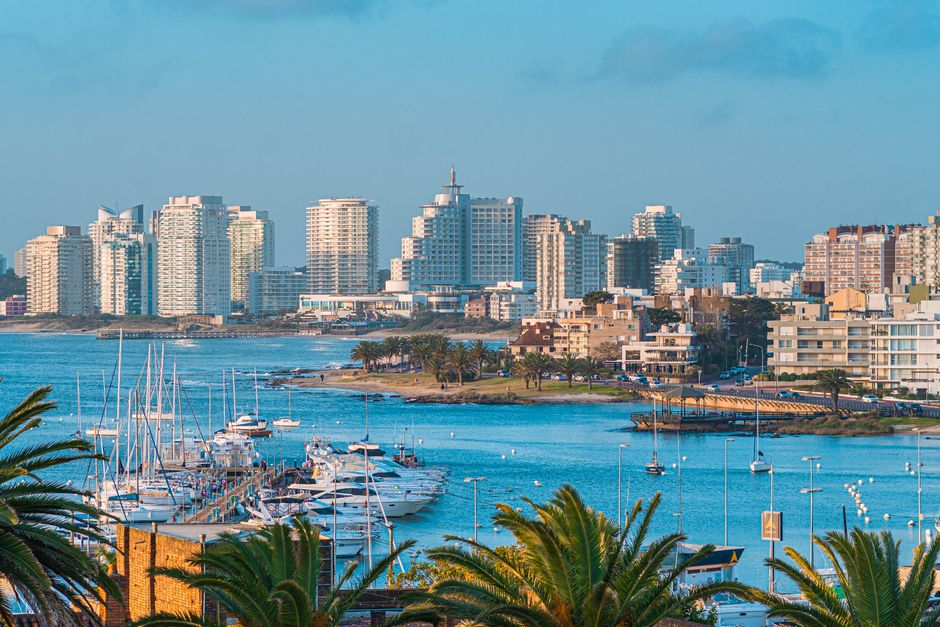
Punta del Este is Uruguay’s most famous beach resort and one of the best known in South America: a narrow peninsula in the department of Maldonado where the calm waters of the Río de la Plata meet the open Atlantic, about two hours east of Montevideo. On one side, the “Mansa” (gentle) beaches face the bay; on the other, the “Brava” (wild) beaches take the ocean swell, and the giant fingers of “La Mano” rise from the sand. In January, the town and the coast around it fill with Argentine, Brazilian and Uruguayan holidaymakers, yachts, beach clubs and late-night parties, and prices soar. The rest of the year it is a calm seaside town of apartment towers, quiet beaches and seafood restaurants. Nearby are Casapueblo, the dazzling white house-museum of artist Carlos Páez Vilaró, the bohemian villages of La Barra and José Ignacio, the sea lions of Isla de Lobos, wineries among the hills, and whales offshore in winter and spring.
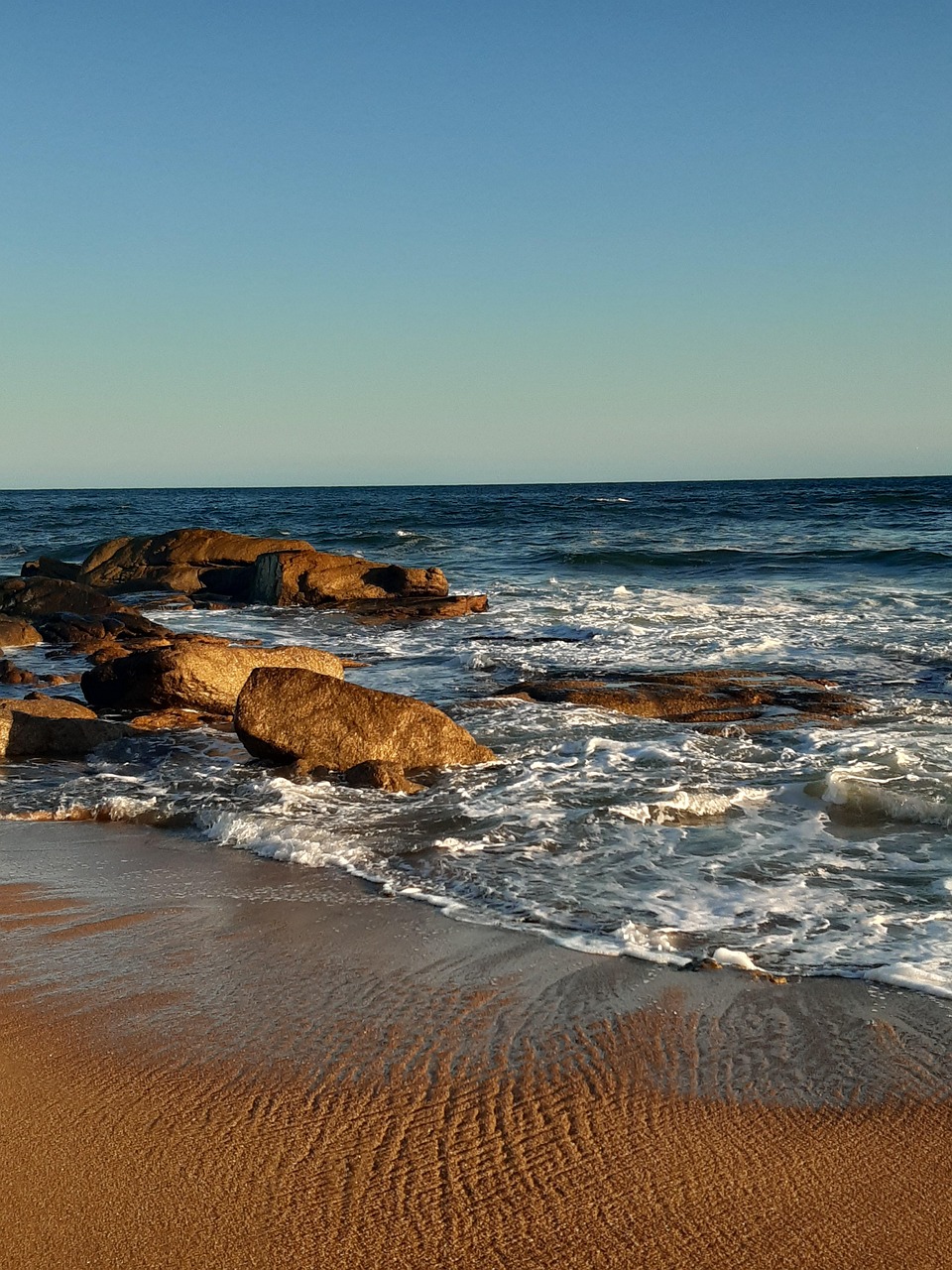
Right now in Punta del Este
- Wed 14–15°C 57–59°F 14 mm Heavy rain
- Thu 14–15°C 57–60°F 2 mm Cloudy
- Fri 14–14°C 57–58°F Cloudy
- Mon 12 Oct Day of the race (Día de la Raza)
Weather: MET Norway (CC BY 4.0) · Sea temperature: NOAA CoastWatch · Holidays: Nager.Date
Top tours in Punta del Este
See all tours for Punta del Este →
From local operators, with prices and reviews; you check availability and book on Viator, our partner. We may earn a commission at no extra cost to you. How we earn money
Punta del Este at a glance
- Best for: beaches and beach clubs, summer nightlife, sunsets at Casapueblo, boat trips to Isla de Lobos, surfing, upscale dining, and a base for José Ignacio and Garzón.
- How long: 2–3 days for the highlights; a week in summer for beach time along the coast.
- Best time: December to March for beach weather, with highs of 26–27 °C (79–81 °F); the peak is late December to mid-January; March is warm and much cheaper.
- Getting there: buses from Montevideo’s Tres Cruces terminal in about 2 hours; Laguna del Sauce airport (PDP), about 20 km (12 miles) west, with seasonal flights; ferry-and-bus tickets from Buenos Aires.
- Money: Uruguayan pesos and US dollars; UYU 1,000 is about US$25. Foreign visitors pay no VAT on hotels.
- Before you go: entry rules, taxes and general safety are in our Uruguay travel guide.
Punta del Este’s areas: where things are
The resort stretches for many kilometers along the coast, from Punta Ballena in the west to José Ignacio in the east, with the peninsula at its center.
The peninsula
The tip of the peninsula holds the old town of Punta del Este, with a grid of streets named by number, the main shopping street Avenida Gorlero, the yacht harbor, the 19th-century lighthouse, the white church of the Candelaria, and many restaurants. The harbor’s sea lions, which lounge by the fish stalls, are a favorite sight.
Playa Mansa and Playa Brava
West of the peninsula, Playa Mansa runs for kilometers along the bay with calm, shallow water and beach clubs, ideal for families and for sunsets. To the east, Playa Brava faces the Atlantic with waves and currents; La Mano sculpture stands on its sand at Parada 1. Beach locations along both are given by “paradas” (numbered stops).
Roosevelt, San Rafael and Pinares
Behind the beaches, leafy residential districts of large houses, gardens and the Hotel San Rafael and Cantegril areas, with quieter accommodation.
La Barra and Manantiales
East of the peninsula, across the famous undulating bridge over the Maldonado stream, La Barra is a bohemian village of galleries, shops, bars and restaurants that becomes the center of summer nightlife; Manantiales, a few kilometers beyond, is known for Bikini Beach and its young crowd.
José Ignacio
About 40 km (25 miles) east, José Ignacio is a small fishing village turned upmarket retreat, with a lighthouse, sandy lanes, design hotels and some of Uruguay’s best restaurants. It’s calmer and more exclusive than Punta del Este.
Top things to see in and around Punta del Este
La Mano (Los Dedos)
The giant concrete fingers emerging from the sand at Playa Brava, made in 1982 by Chilean artist Mario Irarrázabal, have become the symbol of Punta del Este. Go early in the morning or out of season for a photo without crowds.
Casapueblo
On the rocky headland of Punta Ballena, about 15 km (9 miles) west of the peninsula, Casapueblo is the sprawling, Mediterranean-style white building that Uruguayan artist Carlos Páez Vilaró built by hand over decades as his home and studio. Part is a hotel, and part is a museum and gallery of his work. Its terraces are the classic place to watch the sunset over the bay, when a recording of the artist’s poem to the sun is played.
Isla de Lobos
About 8 km (5 miles) off the coast, Isla de Lobos is home to one of the largest colonies of South American sea lions and fur seals in the region, and to one of the tallest lighthouses in South America. Boat trips leave from the harbor and circle the island, often accompanied by sea lions; landing is not allowed. In winter and spring, you may also see southern right whales on the way.
The harbor and the lighthouse
The yacht harbor, full of boats in summer, is where the fishermen clean their catch and sea lions wait for scraps. Nearby, the white lighthouse of Punta del Este, dating from 1860, can be climbed for a view over the peninsula, and the Plaza Artigas hosts a summer crafts fair.
Isla Gorriti
A wooded island in the bay, a short boat ride from the harbor in summer, with quiet beaches and the ruins of 18th-century Spanish fortifications.
La Barra bridge and Laguna Garzón bridge
The double “roller coaster” bridge at La Barra, from the 1960s, is a much-loved landmark; farther east, the circular bridge across Laguna Garzón, designed by Uruguayan architect Rafael Viñoly and opened in 2015, links José Ignacio with the Rocha coast.
More to see
- Arboretum Lussich: a forested park on the hills of Punta Ballena with hundreds of tree species and views over the coast.
- Maldonado: the departmental capital, just inland, with its colonial cathedral and the San Fernando barracks.
- Museo Ralli: a free museum of contemporary Latin American art in Beverly Hills, Punta del Este, usually open in season.
Other things to do
Beaches and beach clubs
Choose Playa Mansa for calm water and sunsets, Playa Brava and Manantiales for waves, and José Ignacio and La Barra for a fashionable scene. Many beaches have paradores (beach clubs) with loungers, umbrellas and restaurants in summer. The Atlantic is cool here, around 20–22 °C (68–72 °F) at the height of summer. See our guide to beaches.
Surfing
El Emir and Playa Brava on the peninsula, and La Barra and Manantiales to the east, have the most consistent waves, with surf schools and board rental in summer. Wear a wetsuit for most of the year. See our guide to surfing.
Wineries and Garzón
The hills inland of José Ignacio are Uruguay’s newest wine region. Bodega Garzón, a large modern winery with tastings and a restaurant, and smaller family wineries offer tours, olive oil tastings and long lunches; the nearby village of Pueblo Garzón has a renowned restaurant and art galleries. See our guide to wine tasting.
Boat trips and whale watching
Besides Isla de Lobos, sailing and fishing trips leave the harbor in summer. From about July to November, southern right whales can be seen from the coast and on boat trips. See our guide to boat trips.
Food and nightlife
Seafood is the specialty: grilled fish, rabas (fried squid), mussels, shrimp and the catch of the day from the harbor, alongside Uruguayan parrilla and chivitos. Top chefs open summer restaurants in La Barra, Manantiales, José Ignacio and Garzón, and reservations are essential in January. Nightlife in high season starts very late, with dinner at 10 or 11 p.m., bars after midnight, and clubs in La Barra and Manantiales until dawn.
Day trips from Punta del Este
- Piriápolis: an old-fashioned seaside town about 40 km (25 miles) west, with a seafront promenade, a grand early-20th-century hotel, and the hills of Cerro San Antonio and Cerro Pan de Azúcar.
- José Ignacio and Laguna Garzón: lunch by the lighthouse, then cross the circular bridge toward the Rocha coast.
- Cabo Polonio and La Pedrera: the wild beaches of Rocha, about 2–2.5 hours north-east; Cabo Polonio is reached only by authorized 4×4 trucks across the dunes.
- Montevideo: the capital, about 2 hours west; see our Montevideo travel guide.
- Garzón wineries: tastings and lunches among the hills, about 45 minutes away.
Nearby destinations
- Montevideo114 km
- Colonia del Sacramento271 km
Getting there and getting around
By bus
Comfortable buses run from Montevideo’s Tres Cruces terminal and from Carrasco airport to the Punta del Este bus terminal, at the base of the peninsula, about every 30 minutes or more often in summer, taking about 2 hours. Book ahead on summer weekends.
By air
Laguna del Sauce International Airport (PDP), about 20 km (12 miles) west of the peninsula, has seasonal flights, mainly from Buenos Aires and São Paulo in summer, with taxis and transfers to town. Montevideo’s Carrasco airport (MVD), about 1 hour 40 minutes away, has far more flights year-round.
From Buenos Aires
Buquebus sells combined ferry-and-bus tickets from Buenos Aires to Punta del Este, and Colonia Express sells a ferry to Colonia plus a connecting bus; according to Colonia Express, this ran daily on its 8:30 a.m. sailing from September 21, 2026, and on Friday evenings. Book well ahead for January.
Getting around
The peninsula is walkable. Local buses run along the coast to Punta Ballena, La Barra, Manantiales and José Ignacio, more frequently in summer. Taxis and ride-hailing apps operate, but a rental car or bike is the easiest way to explore the coast and the wineries; traffic is heavy in January.
When to go and how long to stay
Punta del Este has a mild, breezy maritime climate. Uruguay’s Meteorological Institute (INUMET) publishes no official long-term normals for Punta del Este itself, so the tables use the nearest coastal station with official 1991–2020 normals, Carrasco airport in Montevideo, about 100 km (62 miles) west, as published by the World Meteorological Organization. Sea breezes keep Punta del Este’s beaches a little cooler in summer.
| Season | Average high / low | What it’s like |
|---|---|---|
| Summer (Dec–Feb) | 26–27 °C (79–81 °F) / 16–18 °C (61–64 °F) | Beach season; peak crowds and prices from Christmas to mid-January |
| Fall (Mar–May) | 25 °C falling to 19 °C (77 to 65 °F) / 16 °C falling to 10 °C (62 to 51 °F) | Warm March, then quiet; many beach businesses close after Easter |
| Winter (Jun–Aug) | 15–17 °C (58–62 °F) / 7–8 °C (44–46 °F) | Cool, windy and quiet; whales from July |
| Spring (Sep–Nov) | 18 °C rising to 23 °C (64 to 74 °F) / 9 °C rising to 14 °C (49 to 57 °F) | Mild; whales offshore; the season begins in late November |
Rain falls in every month, about 1,163 mm (46 in) a year at Carrasco. Strong winds and storms can blow in from the south at any time.
Punta del Este month by month
| Month | High / low | Rain | What to expect |
|---|---|---|---|
| January | 27 °C (81 °F) / 18 °C (64 °F) | 93 mm (3.7 in) | Peak season; packed beaches, highest prices, parties every night |
| February | 27 °C (80 °F) / 18 °C (64 °F) | 96 mm (3.8 in) | Still busy and hot; carnival long weekend |
| March | 25 °C (77 °F) / 16 °C (62 °F) | 112 mm (4.4 in) | Warm, calm and much cheaper; the best-value beach month |
| April | 22 °C (71 °F) / 14 °C (56 °F) | 106 mm (4.2 in) | Mild; quiet after Easter week |
| May | 18 °C (65 °F) / 10 °C (51 °F) | 88 mm (3.5 in) | Off-season; many restaurants closed |
| June | 16 °C (60 °F) / 7 °C (45 °F) | 95 mm (3.8 in) | Cool and quiet; winter rates |
| July | 14 °C (58 °F) / 7 °C (44 °F) | 96 mm (3.8 in) | Coldest month; whale season begins |
| August | 16 °C (62 °F) / 8 °C (46 °F) | 93 mm (3.7 in) | Windy and cool; whales near the coast |
| September | 18 °C (64 °F) / 9 °C (49 °F) | 93 mm (3.6 in) | Spring; whales; quiet |
| October | 20 °C (68 °F) / 12 °C (53 °F) | 105 mm (4.1 in) | Mild; whale watching continues |
| November | 23 °C (74 °F) / 14 °C (57 °F) | 92 mm (3.6 in) | Warmer; beach clubs start reopening |
| December | 26 °C (79 °F) / 16 °C (61 °F) | 93 mm (3.6 in) | Season opens; busy from Christmas |
Crowds and prices: the high season runs from Christmas to Carnival, peaking in the first half of January, when hotels often require minimum stays and prices can be several times their winter rates. March and early December are pleasant and much cheaper; from April to November the resort is calm, with many seasonal businesses closed. Uruguay uses UTC−3 all year.
2–3 days in Punta del Este
Day one, the peninsula: La Mano, the harbor and its sea lions, the lighthouse and Avenida Gorlero, and a beach afternoon on Playa Mansa. Day two, a boat trip to Isla de Lobos, then lunch in La Barra and sunset at Casapueblo. Day three, José Ignacio and a winery lunch in Garzón.
A week on the coast
Add Manantiales and its surf, Piriápolis, the Arboretum Lussich, and two nights on the wild Rocha coast at La Pedrera or Cabo Polonio.
Where to stay
- The peninsula: hotels and apartments within walking distance of the harbor, restaurants and both beaches; convenient without a car.
- Playa Mansa and Playa Brava: high-rise hotels and apartments facing the sea, plus large resort hotels.
- La Barra and Manantiales: boutique hotels and rentals close to the nightlife and surf beaches.
- José Ignacio and Garzón: exclusive small hotels, design lodges and estancia-style stays; a car is needed.
- Punta Ballena: Casapueblo’s hotel and others with sunset views over the bay.
Foreign visitors who show an ID document issued abroad pay no VAT (IVA) on hotels in Uruguay, according to the Ministry of Tourism. Summer rentals are often priced in US dollars and for a minimum number of nights.
What a trip to Punta del Este costs
These are our estimates for October 2026 at about UYU 40 per US dollar. In January, accommodation prices can be two to three times higher.
| Item | Typical price |
|---|---|
| Bus Montevideo–Punta del Este, one way | UYU 600–800 (US$15–20) |
| Isla de Lobos boat trip | UYU 2,400–4,000 (US$60–100) |
| Beach lounger and umbrella at a beach club, per day | UYU 1,200–4,000 (US$30–100) |
| Seafood dinner with wine, mid-range | UYU 2,000–3,500 (US$50–90) |
| Chivito at a beach kiosk | UYU 500–800 (US$12–20) |
| Hostel bed, low season / January | UYU 800–1,200 / 1,600–3,000 (US$20–30 / 40–75) |
| Mid-range double room, low season / January | UYU 4,000–6,000 / 10,000–20,000 (US$100–150 / 250–500) |
Practical tips for Punta del Este
- Book early for summer: January accommodation sells out months ahead, and many places require minimum stays.
- Swim safely: Playa Brava and the Atlantic beaches can have strong waves and rip currents; swim only where lifeguards are on duty in season and follow their flags. Playa Mansa is calmer.
- Sun and wind: the sun is strong and the breeze hides it; use high-factor sunscreen.
- VAT benefits: show your foreign ID at hotels, and pay restaurants with a card issued abroad in case the restaurant IVA reduction for non-residents has been renewed for the season.
- Security: theft from cars, houses and beach bags is the main problem in summer; use the hotel safe and don’t leave valuables on the sand.
- Off-season: from April to November many hotels, restaurants and beach clubs close; check before you go.
- Emergencies: 911 for police, ambulance and fire.
What to pack for Punta del Este
Swimwear, a sun hat, sunglasses and high-factor sunscreen; a windbreaker or light sweater for breezy evenings even in summer; smart-casual and party clothes for January nights; a wetsuit for surfing; and a warm coat and rain jacket from May to October (see our guide to rain jackets). Bring a plug adapter for Uruguay’s type C, F, L and I sockets at 220 V.
Punta del Este travel FAQ
How do I get from Montevideo to Punta del Este?
By bus from the Tres Cruces terminal or Carrasco airport, about 2 hours, with frequent departures; or by car on the coastal Interbalnearia highway.
When is the best time to visit Punta del Este?
December to March for the beaches. Late December to mid-January is the busiest and most expensive time; March is warm, calm and cheaper.
What is the difference between Playa Mansa and Playa Brava?
Playa Mansa faces the bay with calm, shallow water and sunsets; Playa Brava faces the Atlantic, with waves, currents and La Mano sculpture.
How do I visit Isla de Lobos?
On a boat trip from Punta del Este’s harbor that circles the island to see the sea lion colony; landing on the island isn’t allowed.
What is Casapueblo?
The white, sculptural house built by Uruguayan artist Carlos Páez Vilaró at Punta Ballena, now a museum, gallery and hotel, famous for its sunsets.
Is Punta del Este expensive?
In January, very; prices can be two to three times those of the rest of the year. Outside the summer, it’s much more affordable.
Can I see whales in Punta del Este?
Yes, southern right whales pass along the coast roughly from July to November, visible from shore and on boat trips.
How far is José Ignacio from Punta del Este?
About 40 km (25 miles) east, roughly 40 minutes by car or a little longer by bus.
Can I get to Punta del Este from Buenos Aires?
Yes, with ferry-and-bus tickets from Buquebus or Colonia Express, or with seasonal flights to Laguna del Sauce airport.
Is the water warm in Punta del Este?
Not very: the Atlantic reaches about 20–22 °C (68–72 °F) in summer. Playa Mansa’s bay water feels warmer and calmer.
Sources and last review
Researched and last reviewed on 4 October 2026. VAT-free lodging and the restaurant IVA reduction for non-residents: the Ministry of Tourism and decrees published in IMPO; ferry and bus connections: Colonia Express and Buquebus; exchange rate: the Central Bank of Uruguay; climate: INUMET’s 1991–2020 normals for the Carrasco station, as published by the World Meteorological Organization. Neighborhood and site descriptions, history and dates, distances, bus and flight details, sea temperatures, whale season, nightlife notes and typical costs come from general references and are flagged for checking; costs are our estimates. Prices and timetables change, so check the official sites before you go. For entry rules, money and general safety, see our Uruguay travel guide.
Plan your trip
Partner links: TravelerCenter may earn a commission if you book, at no extra cost to you.
🇪🇸 Useful Spanish phrases for Punta del Este
All 38 Spanish phrases: restaurant, hotel, emergencies, romance (printable) →