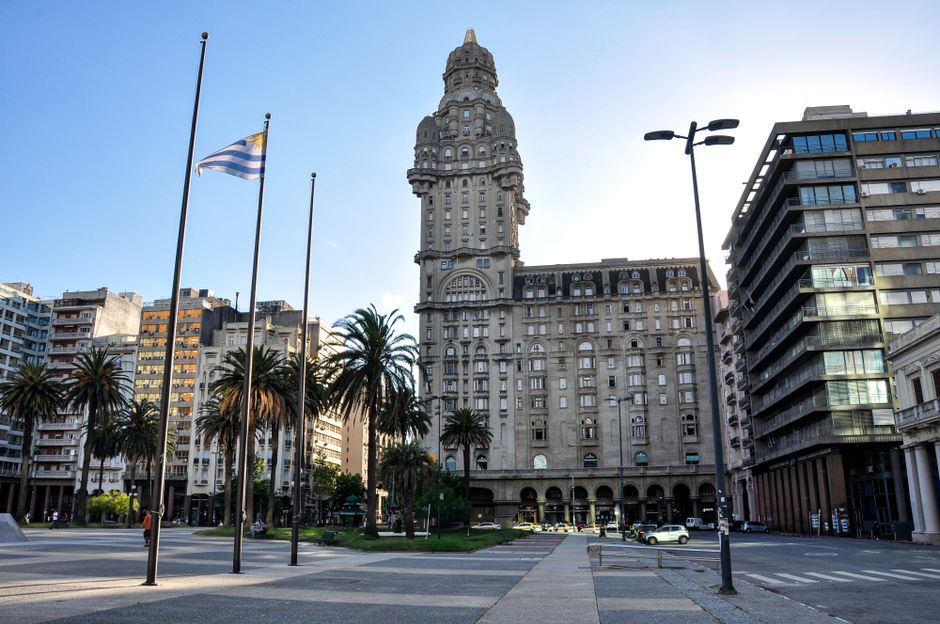
Uruguay is South America’s small, easygoing country on the north bank of the Río de la Plata, squeezed between Argentina and Brazil. In a week you can stroll the Art Deco avenues and riverside Rambla of Montevideo, wander the cobbled lanes of Colonia del Sacramento, a UNESCO-listed colonial town an hour by fast ferry from Buenos Aires, and spend summer days on the Atlantic beaches of Punta del Este, José Ignacio and Rocha. Inland, rolling cattle country, gaucho traditions, estancias, wineries making bold Tannat, and hot springs in the north fill out a longer trip. Uruguayans are relaxed and friendly, mate gourds in hand; the country is known for its stability and liberal laws, and most visitors from the Americas and Europe need no visa. Summer, from December to March, is beach season; spring and fall are mild and quiet; winter is cool and damp but good for cities and hot springs. Foreign visitors pay no VAT on hotels.
Right now in Uruguay
- Tue 12–17°C 53–62°F Cloudy
- Wed 14–16°C 58–61°F 24 mm Heavy rain
- Thu 14–15°C 57–59°F 2 mm Rain
- Mon 12 Oct Day of the race (Día de la Raza)
Weather: MET Norway (CC BY 4.0) · Holidays: Nager.Date
Multi-day tours of Uruguay
Multi-day tours from local operators. You check dates and book on Viator, our partner; we may earn a commission at no extra cost to you. How we earn money
Uruguay at a glance: 19 departments and about 3.5 million people
Uruguay is a republic of 19 departments, with a population of roughly 3.5 million, almost half of whom live in and around Montevideo, the capital. At about 176,000 km² (68,000 square miles), it is the second-smallest country in South America, and nowhere is more than a long day’s drive from anywhere else. The landscape is gentle: low hills, grassland, rivers and lagoons, and about 660 km (410 miles) of coastline along the Río de la Plata and the Atlantic. Spanish is the national language, spoken with the same Rioplatense accent as Buenos Aires (“sh” for “ll” and “y”, and “vos” instead of “tú”), and near the Brazilian border many people also speak Portuguese. English is common in hotels and tourist businesses in Montevideo, Colonia and Punta del Este.
Time: all of Uruguay uses UTC−3 all year, with no daylight saving time, the same as Buenos Aires.
Uruguay’s regions
- Montevideo and Canelones: the capital and its long riverside Rambla, plus the wineries and farmland of Canelones just outside it, where most of Uruguay’s wine is made.
- Colonia and the west: the colonial town of Colonia del Sacramento, the riverside wine area around Carmelo, Swiss-founded Nueva Helvecia, and the Río Uruguay border with Argentina.
- Punta del Este and Maldonado: South America’s most glamorous beach resort, with the chic village of José Ignacio, the old-fashioned seaside town of Piriápolis, and inland vineyards and olive groves around Garzón.
- Rocha: wild Atlantic beaches and laid-back villages such as Cabo Polonio, a car-free fishing village among dunes, La Paloma, Punta del Diablo and the Santa Teresa national park near the Brazilian border.
- The interior: cattle ranches (estancias), gaucho festivals in Tacuarembó, and the forested gorge of Quebrada de los Cuervos.
- The north-west: hot springs at Salto, Daymán and Arapey, along the Río Uruguay.
Where to go: Montevideo, Colonia, Punta del Este and the coast
Most first trips combine Montevideo and Colonia, often as an add-on to Buenos Aires, with Punta del Este and the Rocha coast in summer. Distances are short and buses are good, so it’s easy to see the highlights in a week. See our separate guides below.
Montevideo
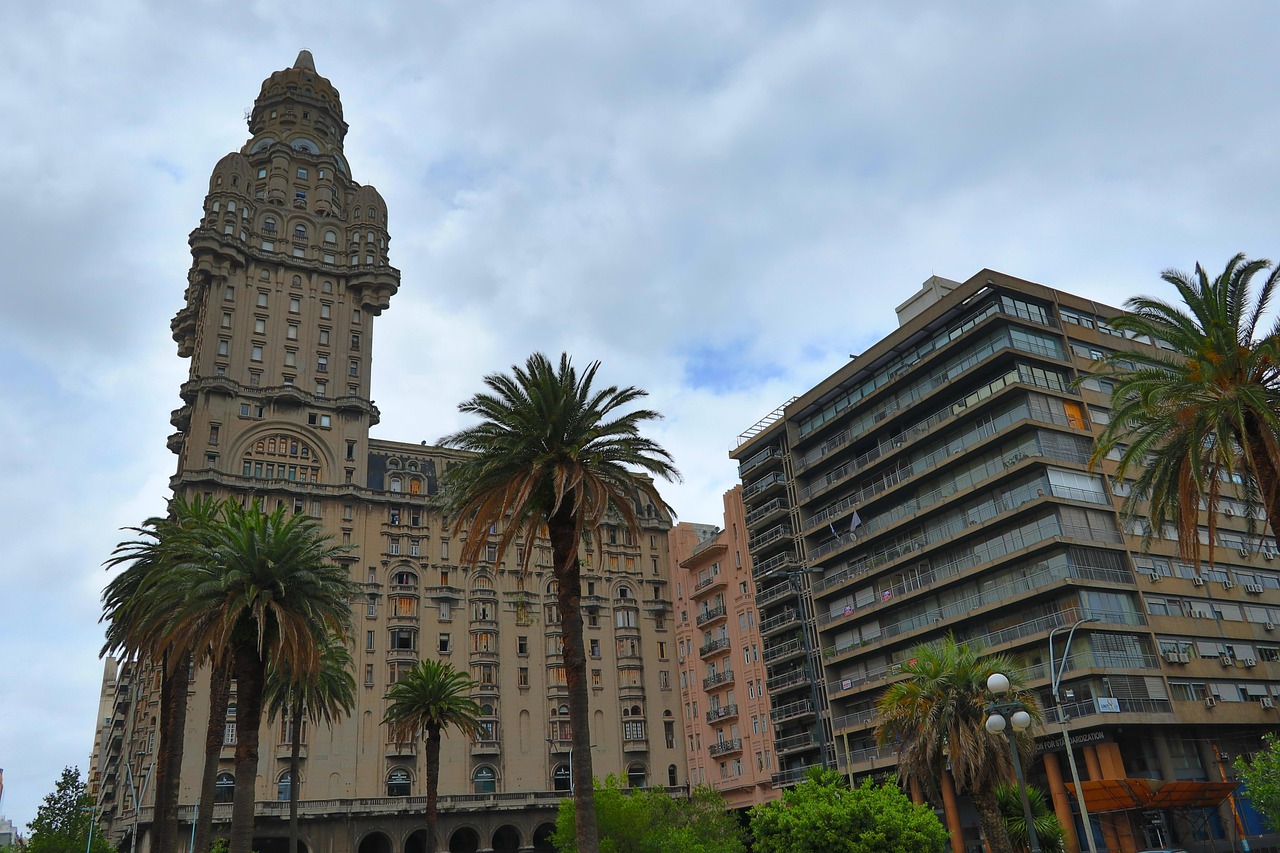
The capital is a relaxed city of about 1.3 million on a peninsula and bay. Walk from the Plaza Independencia and the landmark Palacio Salvo through the Ciudad Vieja (old town) to the Mercado del Puerto for a parrilla lunch, see a show at the Teatro Solís, cycle or stroll the 22-km (14-mile) Rambla along the river past city beaches to Pocitos and Carrasco, and visit the museums of carnival, football and the Andes plane crash. Summer brings the world’s longest carnival and candombe drumming in the streets. See our Montevideo travel guide.
Colonia del Sacramento
Founded by the Portuguese in 1680 opposite Buenos Aires and fought over for a century with Spain, Colonia’s Barrio Histórico, on the UNESCO World Heritage List since 1995, is a peaceful peninsula of cobbled streets, low colonial houses, a lighthouse, ruins and riverside sunsets. It’s an hour or so by fast ferry from Buenos Aires and 2.5 hours by road from Montevideo, and a good base for wineries around Carmelo. See our Colonia del Sacramento travel guide.
Punta del Este
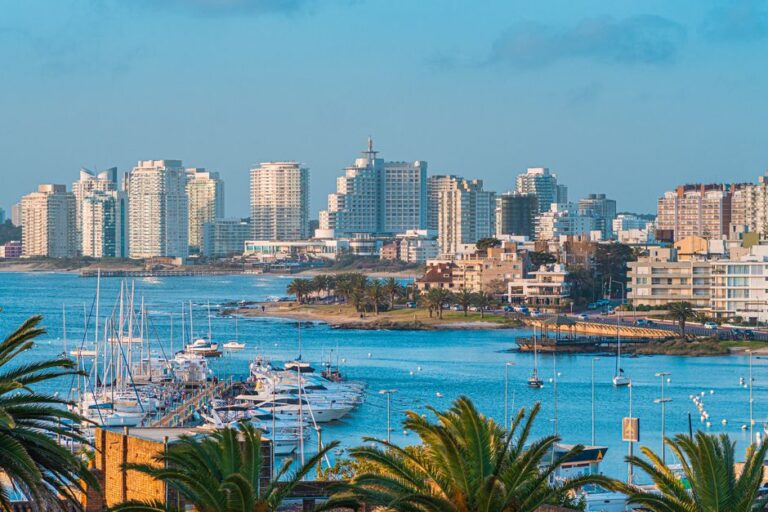
Uruguay’s famous beach resort sits on a narrow peninsula where the Río de la Plata meets the Atlantic, with calm “Mansa” beaches on one side and surf on the “Brava” side, where the giant fingers of “La Mano” sculpture rise from the sand. In January it fills with Argentine and Brazilian holidaymakers, nightlife and glamour; the rest of the year it’s quiet. Nearby are Casapueblo, the white sculptural home of artist Carlos Páez Vilaró, the bohemian beach villages of La Barra and José Ignacio, and boat trips to the sea lion colony of Isla de Lobos. See our Punta del Este travel guide.
Rocha’s wild coast
North-east of Punta del Este, the department of Rocha has some of South America’s least developed coastline: Cabo Polonio, a village of shacks without roads or grid power, reached by 4×4 trucks across the dunes, with a lighthouse and sea lions; La Paloma and La Pedrera for surfing; Punta del Diablo, a former fishing village; and the Santa Teresa national park with its fortress, forest and beaches. In winter and spring, southern right whales come close to shore. We don’t yet have a separate guide.
Piriápolis and the Costa de Oro
Between Montevideo and Punta del Este, the coast is lined with family resorts. The “Costa de Oro” (Gold Coast) of Canelones, with towns such as Atlántida, is where Montevideo families spend the summer. Piriápolis, founded in the 1890s by a businessman who built a grand hotel and a seafront promenade in the style of European spas, has calm beaches, a chairlift up Cerro San Antonio, and the hilltop view from Cerro Pan de Azúcar, crowned by a giant cross. It’s cheaper and more low-key than Punta del Este, and an easy stop on the bus between the two.
Uruguay’s wine country
Uruguay is the fourth-largest wine producer in South America, and its wineries are small, family-run and welcoming. Most lie in Canelones, within 30–60 minutes of Montevideo, where you can visit several in a day and finish with a long lunch among the vines. Around Carmelo, near Colonia, wineries and olive groves line the riverbanks, and in Maldonado, near Garzón, newer estates grow grapes on granite hills close to the Atlantic. Tannat is the signature red, but Albariño, Cabernet Franc and sparkling wines are also excellent.
Estancias: life on a cattle ranch
A night or two on an estancia (a working ranch) is one of the best ways to see the real Uruguay. Many welcome guests for day visits or full board, with horseback riding across the grassland, cattle work with gauchos, wildlife such as rheas and capybaras, and an asado cooked slowly over wood. Some are simple family farms, others restored colonial mansions with pools. They’re spread across the country, many within 2–3 hours of Montevideo; book ahead, and expect to need a car or a transfer.
The interior and hot springs
For gaucho culture, stay at a working estancia, ride horses and eat a slow-cooked asado; Tacuarembó’s Patria Gaucha festival celebrates rural traditions each March. In the north-west, thermal water bubbles up at the hot spring resorts of Daymán, Arapey and Guaviyú, busiest in the cool months. We don’t yet have separate guides to these places.
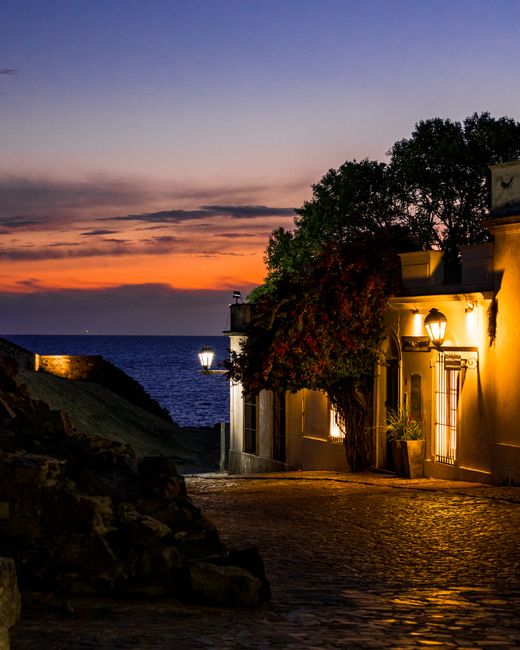
Colonia del Sacramento Travel Guide
Plan a trip to Colonia del Sacramento, Uruguay's UNESCO-listed colonial town: the Barrio Histórico, Portón de Campo, Calle de los Suspiros, the lighthouse and…
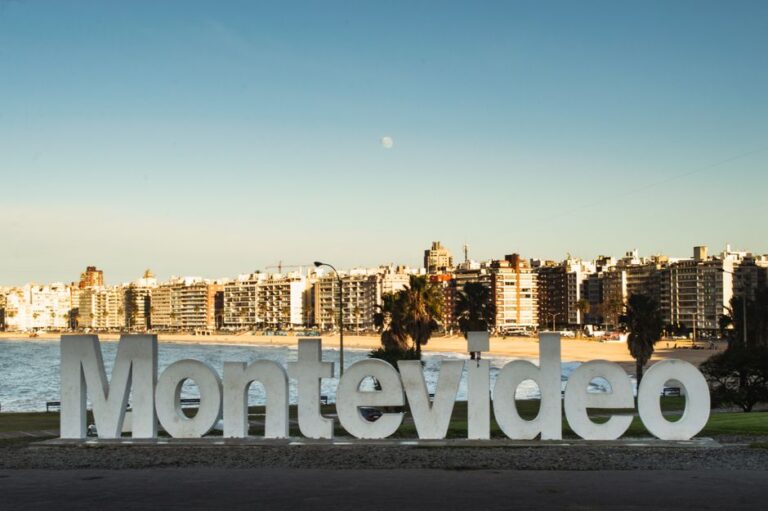
Montevideo Travel Guide
Plan a trip to Montevideo: the Ciudad Vieja, Plaza Independencia and Palacio Salvo, Teatro Solís, parrilla lunch at the Mercado del Puerto, the Rambla…
Punta del Este Travel Guide
Plan a trip to Punta del Este, Uruguay's famous beach resort: Playa Mansa and Playa Brava, La Mano, the harbor and lighthouse, Casapueblo at…
Best time to visit Uruguay
Uruguay has a humid subtropical climate with four clear seasons and rain spread through the year, with no real dry season. Summer (December to March) is warm to hot and the time for beaches; fall (March to May) and spring (September to November) are mild and pleasant; winter (June to August) is cool, damp and windy, with occasional frost inland but no snow. The table shows averages at one official weather station per region, from the 1991–2020 climate normals that Uruguay’s Meteorological Institute (INUMET) submitted to the World Meteorological Organization.
| Region (weather station) | Summer highs (Dec–Feb) | Winter highs (Jun–Aug) | Winter nights | Rain a year |
|---|---|---|---|---|
| Montevideo (Prado) | 26–28 °C (80–82 °F) | 15–17 °C (58–62 °F) | 7–9 °C (45–47 °F) | about 1,143 mm (45 in) |
| Montevideo east and the coast toward Punta del Este (Carrasco airport) | 26–27 °C (79–81 °F) | 15–17 °C (58–62 °F) | 7–8 °C (44–46 °F) | about 1,163 mm (46 in) |
| Colonia (Colonia) | 27–29 °C (81–84 °F) | 15–17 °C (58–62 °F) | 7–9 °C (45–47 °F) | about 1,145 mm (45 in) |
| Rocha coast (Rocha) | 27–28 °C (80–83 °F) | 16–17 °C (60–63 °F) | 6–7 °C (43–45 °F) | about 1,285 mm (51 in) |
| The north-west and hot springs (Salto) | 31–32 °C (87–90 °F) | 18–21 °C (65–69 °F) | 7–8 °C (45–47 °F) | about 1,386 mm (55 in) |
The coast is cooled by sea breezes, and the Atlantic beaches are a few degrees cooler than inland. The sea is cool: the Río de la Plata and the Atlantic off Punta del Este reach only about 20–23 °C (68–73 °F) at the height of summer. The “pampero,” a cold south-westerly wind, can bring sudden storms and temperature drops at any time of year.
Seasons for beaches, carnival, whales and hot springs
- Beach season: from about mid-December to the end of February, peaking in the first half of January, when Punta del Este, José Ignacio and the Rocha villages are full. March is warm, calmer and much cheaper.
- Carnival: Montevideo’s carnival lasts about 40 days from late January into March, the longest in the world by local reckoning, with an opening parade, the Llamadas candombe parades through the Sur and Palermo neighborhoods in February, and murga and comedy contests at the Teatro de Verano.
- Semana de Turismo: Uruguay’s name for Holy Week (March 22–28 in 2027) is a week-long national holiday, with Montevideo’s Criolla del Prado rodeo and many people traveling.
- Whales: southern right whales can be seen from the shore along Maldonado and Rocha, roughly from July to November.
- Hot springs: the thermal resorts of the north-west are most popular from May to September.
- Wine harvest: from about February to April, with harvest festivals in Canelones and Carmelo.
Crowds and prices through the year
- December to February: high season on the coast. Prices in Punta del Este can double or triple in January, and many places require minimum stays; book months ahead. Montevideo is quieter, as many residents go to the beach.
- March to May: warm early fall, Semana de Turismo, wine harvest; good value after Easter.
- June to August: low season on the coast, when many beach businesses close; Montevideo’s cultural season and the hot springs are in full swing.
- September to November: spring, whale watching and a pleasant time for cities and Colonia; the beach towns reopen from November.
Public holidays
Uruguay’s national holidays are set by law, and some move to the nearest Monday. On the main holidays (January 1, May 1, July 18, August 25 and December 25) nearly everything closes; on others many businesses stay open. The next ones, from October 2026:
| Holiday | Date | Good to know |
|---|---|---|
| October 12 holiday (Day of the Americas and Cultural Diversity) | Monday, October 12, 2026 | |
| All Souls’ Day | Monday, November 2, 2026 | |
| Family Day (Christmas) | Friday, December 25, 2026 | Nearly everything closes |
| New Year’s Day | Friday, January 1, 2027 | Nearly everything closes |
| Children’s Day (Epiphany) | Wednesday, January 6, 2027 | |
| Carnival | Monday and Tuesday, February 8–9, 2027 | Busy long weekend |
| Semana de Turismo (Holy Week) | March 22–28, 2027 | A whole week off for many Uruguayans |
| Landing of the 33 Orientals | Monday, April 19, 2027 | |
| Labor Day | Saturday, May 1, 2027 | |
| Constitution Day | Sunday, July 18, 2027 | |
| Independence Day | Wednesday, August 25, 2027 |
How long to stay: sample itineraries
Uruguay is compact, and buses between the main towns take 2–3 hours, so even a short trip covers a lot.
3–4 days: from Buenos Aires to Colonia and Montevideo
Take a ferry from Buenos Aires to Colonia, spend a night in the old town, continue by bus to Montevideo for two nights, and return to Buenos Aires on the direct ferry from Montevideo or via Colonia. See our Buenos Aires travel guide.
One week: the classic loop
Colonia (two nights), Montevideo (two nights) and Punta del Este with José Ignacio (three nights), with a winery visit in Carmelo, Canelones or Garzón on the way.
10–14 days: coast and countryside
Add the Rocha coast, with Cabo Polonio, La Pedrera or Punta del Diablo, a couple of nights on an estancia, and in winter, the hot springs of Salto, which you can combine with a crossing into Argentina toward Iguazú.
Entry, money and costs
Entry: visas and documents (last reviewed October 2026)
Citizens of the United States, Canada, the UK, the European Union, Australia and many other countries can visit Uruguay as tourists without a visa, usually for up to 90 days. Citizens of Argentina, Brazil, Paraguay and other Mercosur countries can enter with their national ID card. Everyone else should check with a Uruguayan consulate before booking. Bring a passport valid for your stay; on the ferries from Buenos Aires, Argentine exit and Uruguayan entry formalities are usually done together at the departure terminal.
Customs rules are typical: declare large amounts of cash, and don’t bring fresh fruit, meat or plants.
Money: the peso, US dollars and cards
The currency is the Uruguayan peso (UYU), written with a “$” sign; prices in US dollars are marked “US$” or “U$S.” On October 2, 2026, the Central Bank of Uruguay’s rate for the US dollar was UYU 40.34, so UYU 1,000 is about US$25.
- US dollars: widely used for big purchases such as hotels, rentals and property, and many ATMs dispense both pesos and dollars. Pay everyday things in pesos.
- Cards: credit and debit cards are accepted almost everywhere, including small cafés and taxis, and contactless payment is common. Paying with a foreign card also unlocks the tax benefits below.
- Cash: useful for buses, markets, tips and small beach kiosks.
- Pay in pesos when a card machine or ATM offers to charge you in your home currency.
Taxes: VAT-free hotels, and the restaurant VAT refund for foreign cards
Uruguay’s value-added tax (IVA) is 22% on most goods and services, but foreign visitors get several breaks. According to the Ministry of Tourism, as of October 2026:
- Hotels and lodging: zero VAT all year. Non-residents who show an identity document issued abroad are billed without IVA for hotels and other accommodation; there is nothing to claim back.
- Restaurants and car rental: under a 2021 decree renewed many times, non-residents paying with a card issued abroad, foreign e-money or a transfer from abroad received a reduction of 9 percentage points of IVA on restaurant, bar and café bills, catering, car rental, holiday rental agency services and winery tours. The latest extension, signed by the Ministry of Economy and Finance on April 29, 2026, ran until September 30, 2026.
- Summer exemption: for the last two summers, decrees removed IVA entirely on these services for non-residents paying the same way, from November 15 to April 30 (2024–25 and 2025–26). At the time of our review, we had not found a decree renewing either benefit for the 2026–27 season, so check whether it has been renewed before you travel; the discount, when it applies, is taken off the bill automatically when you pay with your foreign card.
- Tax-free shopping: visitors can reclaim IVA on goods bought in shops in the Tax Free system when they leave through Carrasco or Laguna del Sauce airports, the ports of Montevideo and Colonia, the Punta del Este cruise terminal, or the main border bridges and the Chuy crossing.
Tipping
- Restaurants: about 10%, not usually included; some restaurants charge a small cover (“cubierto”) for bread.
- Taxis: round up the fare.
- Hotels and guides: a small tip for porters and housekeeping; about 10% for guides.
Typical travel costs
Uruguay is one of the most expensive countries in South America, with prices close to those in southern Europe and much higher in Punta del Este in January. These per-person daily estimates are a planning guide as of October 2026:
| Style | Estimated cost per day | What that looks like |
|---|---|---|
| Budget | about UYU 2,400–3,600 (US$60–90) | Hostel bed, chivito or set lunch, buses |
| Mid-range | about UYU 6,000–10,000 (US$150–250) | Comfortable hotel room shared by two, restaurant meals with wine, a tour or museum most days |
| High-end | about UYU 16,000+ (US$400+) | Boutique hotels, beach resorts in high season, estancia stays and winery lunches |
The figures are our estimates, not official statistics. Hotels in Punta del Este and José Ignacio in January are the biggest extra cost.
Getting there and getting around
By air
- Montevideo–Carrasco (MVD): Uruguay’s main airport, about 20 km (12 miles) east of the center, with flights from Buenos Aires, São Paulo, Santiago, Lima, Panama City, Bogotá, Madrid and Miami, among others. Buses, taxis and transfers run to the city in 30–45 minutes. See our Miami travel guide.
- Punta del Este–Laguna del Sauce (PDP): about 20 km (12 miles) west of Punta del Este, with seasonal flights from Buenos Aires and São Paulo, mostly in summer.
By ferry from Buenos Aires
Fast ferries across the Río de la Plata are the classic way to arrive from Argentina:
- Buquebus: sails from its terminal in Puerto Madero, Buenos Aires, to Colonia and directly to Montevideo, and sells combined boat-and-bus tickets to Punta del Este. Ferries carry cars and bikes free.
- Colonia Express: sails from its terminal in Puerto Madero Sur to Colonia in about 1 hour 15 minutes, with five sailings a day each way in September and October 2026, and sells ferry-and-bus connections to Montevideo (about 3.5 hours in total) and Punta del Este.
- Cacciola: a slower river route from Tigre, north of Buenos Aires, through the Paraná Delta to Carmelo, with bus connections to Montevideo.
Book ahead for summer, long weekends and Semana de Turismo, and compare the ferry-and-bus options, which are often cheaper than the direct Montevideo boat. Bring your passport; immigration for both countries is done at the departure port.
By land
Bridges cross the Río Uruguay from Argentina at Fray Bentos, Paysandú and Salto, and the main crossing from Brazil is at Chuy, on the Atlantic coast. Long-distance buses link Montevideo with Buenos Aires, Porto Alegre and other cities.
Getting around Uruguay
- Buses: comfortable, frequent and inexpensive. Montevideo’s Tres Cruces terminal has departures to every town, including Colonia (about 2.5 hours) and Punta del Este (about 2 hours), and buses also stop at Carrasco airport.
- Driving: roads are generally good and traffic light outside Montevideo. Uruguayans drive on the right; headlights must be on at all times on highways, and the speed limits are strictly enforced. A car is useful for the Rocha coast, wineries and estancias. Highway tolls are paid electronically with a tag on most rental cars.
- Cycling: Colonia and Montevideo’s Rambla are flat and bike-friendly; see our guide to cycling.
- Ride-hailing and taxis: apps operate in Montevideo and Punta del Este; taxis use meters.
Getting around: practical details
Buy long-distance bus tickets at the company windows in Tres Cruces or online, especially for Friday departures and summer weekends, when coastal buses sell out. Seats are numbered, luggage goes underneath with a tag, and most coaches have Wi-Fi and toilets. In Montevideo, city buses are paid with the STM card or in cash to the driver. In summer, extra buses run along the coast between Punta del Este, La Barra, José Ignacio and the Rocha villages, but service drops sharply in winter, so check timetables before relying on them.
Culture, food and everyday etiquette
Uruguay is cattle country, and the asado, beef and sausages grilled slowly over wood embers on a parrilla, is at the center of social life. Try the chivito, Uruguay’s national sandwich of thin steak, ham, cheese, egg and salad; milanesas; empanadas; and endless desserts made with dulce de leche, including alfajores and the chajá cake. Uruguay’s signature wine is Tannat, a powerful red, made mainly in Canelones, Colonia and Maldonado; try “medio y medio” (half sparkling, half white wine) at the Mercado del Puerto, and grappamiel, a honey-flavored spirit. Seafood is good along the coast, especially in Punta del Este and Rocha.
Mate is everywhere: Uruguayans drink more of it per person than anyone else, carrying a gourd and a thermos of hot water through the streets, on the beach and at work. If someone offers to share, it’s a sign of friendship; say “gracias” only when you’ve had enough.
Football is a passion: Uruguay won the first World Cup in 1930, at home in Montevideo, and again in 1950. Candombe, the Afro-Uruguayan drumming of Montevideo’s Sur and Palermo neighborhoods, is on UNESCO’s list of the Intangible Cultural Heritage of Humanity, and the tango “La Cumparsita” was composed in Montevideo. Uruguay is known for its strong democracy, separation of church and state (Christmas is officially “Family Day”) and liberal social laws.
Tap water in Montevideo and other cities is treated and generally safe to drink.
Everyday etiquette
Uruguayans greet friends and new acquaintances with a single kiss on the right cheek, men included among friends. Meals are late: lunch from about 1 p.m., dinner from 9 p.m. or later. Sunday is a quiet family day, when many shops close. People are relaxed, polite and unhurried, and there’s a strong friendly rivalry with Argentina.
Safety, health, accessibility and connectivity
Safety
Uruguay is one of the most stable and relaxed countries in Latin America, and most visits are trouble-free. Crime is mostly opportunistic:
- In Montevideo, watch for pickpockets and bag snatchers in the Ciudad Vieja, the Centro and at the Tres Cruces terminal, and avoid empty streets in the Ciudad Vieja after dark; take a taxi or app ride at night.
- Don’t leave bags or phones unattended on beaches, and leave nothing visible in parked cars.
- Thefts of phones by passing motorbikes happen in cities; keep your phone away at the curb.
On the coast, the Atlantic beaches (the “Brava” side in Punta del Este and most of Rocha) can have strong waves and rip currents: swim where lifeguards are on duty and follow their flags. The sun is strong in summer. In an emergency, call 911 for police, ambulance and fire.
Health and insurance
No vaccines are required to enter Uruguay from most countries. Healthcare in Montevideo is good, with private “mutualista” clinics; buy travel insurance with medical cover. Mosquitoes can carry dengue in hot, wet summers; use repellent.
Accessibility
Montevideo’s Rambla is flat and wide, and many newer hotels and buses are accessible, but sidewalks are often uneven, and Colonia’s cobbled streets are hard going for wheelchairs. Ask in advance.
Connectivity and power
Wi-Fi is everywhere, including free public Wi-Fi in many squares. Antel, Movistar and Claro sell prepaid SIMs and eSIMs; coverage is good across the country. Uruguay uses 220 V, with type C, F, L and I sockets, so most visitors need an adapter that fits both round and angled flat pins, and US devices must handle 220 V; see our guide to travel adapters.
Things to do: beaches, wine, cities and more
- Beaches: Punta del Este’s Mansa and Brava beaches, José Ignacio, La Pedrera, Cabo Polonio and Punta del Diablo, plus Montevideo’s city beaches along the Rambla.
- Surfing: La Barra and El Emir in Punta del Este, and La Paloma and Punta del Diablo in Rocha, with cool water.
- Wine tasting: Tannat in Canelones’ family wineries near Montevideo, Carmelo near Colonia, and the modern estates of Garzón near José Ignacio.
- City sightseeing: Montevideo’s Ciudad Vieja, theaters and markets, and colonial Colonia.
- Boat trips: Isla de Lobos from Punta del Este, the ferries across the Río de la Plata, and the river and delta routes to Carmelo.
- Cycling: Montevideo’s Rambla and Colonia’s quiet streets and coast.
- Hiking: Quebrada de los Cuervos, Cerro Arequita and the dunes of Cabo Polonio.
What to pack
Swimwear, sunscreen, a hat and sunglasses for the summer coast; a windproof jacket and layers for breezy evenings, and a warm coat and rain jacket from May to September (see our guide to rain jackets); comfortable shoes for Colonia’s cobblestones; smart-casual clothes for Punta del Este in January; and a plug adapter for types C, F, L and I.
Uruguay travel FAQ
When is the best time to visit Uruguay?
December to March for beaches; September to November and March to May for cities, wine and Colonia; and June to August for the hot springs and Montevideo’s cultural season.
Do I need a visa to visit Uruguay?
Citizens of the US, Canada, the UK, the EU, Australia and many other countries don’t need a visa for tourist stays, usually up to 90 days. Neighboring countries’ citizens can use their ID card.
Do tourists pay VAT on hotels in Uruguay?
No. According to the Ministry of Tourism, non-residents who show a foreign identity document are billed without IVA for hotels and lodging all year.
Do I get a VAT refund at restaurants in Uruguay?
Non-residents paying with a card issued abroad had a 9-point IVA reduction on restaurant bills until September 30, 2026, and a full exemption in the 2024–25 and 2025–26 summers. Check whether the benefit has been renewed for 2026–27.
What is the exchange rate in Uruguay?
On October 2, 2026, the Central Bank of Uruguay’s rate was UYU 40.34 per US dollar, so UYU 1,000 is about US$25.
Can I use US dollars in Uruguay?
Yes, dollars are widely accepted for larger amounts, such as hotels, and many ATMs dispense them, but pesos are better for everyday purchases.
How do I get from Buenos Aires to Uruguay?
By fast ferry with Buquebus or Colonia Express to Colonia (about 1 hour 15 minutes), directly to Montevideo with Buquebus, or via Tigre to Carmelo with Cacciola; ferry-and-bus tickets reach Montevideo and Punta del Este.
How many days do I need in Uruguay?
Three or four days cover Colonia and Montevideo; a week adds Punta del Este; two weeks let you explore the Rocha coast and the countryside.
Is Uruguay expensive?
Yes, it is one of the most expensive countries in South America, especially Punta del Este in January. The VAT-free hotels for foreigners help.
Is Uruguay safe for tourists?
Most visits are trouble-free. Watch for pickpockets and bag snatching in Montevideo’s Ciudad Vieja and Centro, take taxis at night, and swim only at lifeguarded beaches.
What is Uruguay’s carnival like?
Montevideo’s carnival runs about 40 days from late January, with candombe drumming at the Llamadas parades and murga theater groups on outdoor stages.
What time zone is Uruguay in?
UTC−3 all year, with no daylight saving time, the same as Buenos Aires.
What plug adapter do I need for Uruguay?
Uruguay uses 220 V with type C, F, L and I sockets. A universal adapter is the safest choice, and US devices must handle 220 V.
Sources and last review
Researched and last reviewed on 4 October 2026. VAT-free lodging and the 9-point IVA reduction for non-residents: the Ministry of Tourism (Uruguay Natural) and the Ministry of Economy and Finance’s decree of April 29, 2026; the summer exemptions: Decrees 279/024 and 220/025 in IMPO, Uruguay’s official legal database; tax-free shopping exit points: the Ministry of Tourism; exchange rate: the Central Bank of Uruguay; Colonia Express routes, terminal, sailing times and crossing time: Colonia Express; Buquebus routes and Puerto Madero terminal: Buquebus; climate: the Meteorological Institute’s (INUMET) 1991–2020 normals as published by the World Meteorological Organization. Visa-free stays, customs, population and geography, holidays, carnival, Semana de Turismo dates, whale and hot spring seasons, Cacciola, airports and flights, bus times, culture, safety tips, health, plugs and typical costs come from general references and are flagged for checking; daily costs are our estimates. Prices, tax rules and timetables change, so check the official sites before you go. For trips that combine Uruguay with its neighbors, see our Argentina and Brazil travel guides.
Plan your trip
Partner links: TravelerCenter may earn a commission if you book, at no extra cost to you.
🇪🇸 Useful Spanish phrases for Uruguay
All 38 Spanish phrases: restaurant, hotel, emergencies, romance (printable) →