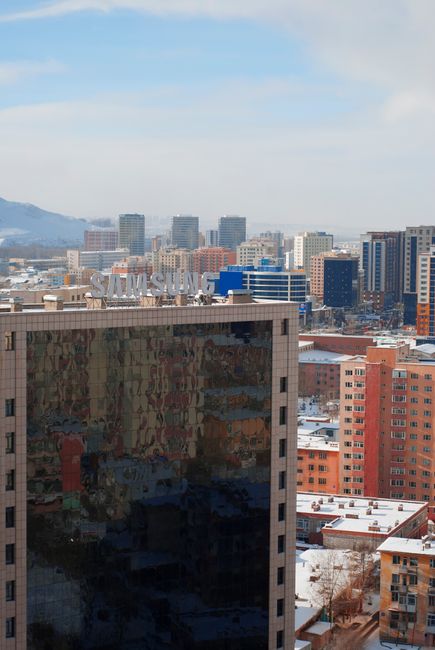
Ulaanbaatar, the capital of Mongolia, is a city of contrasts: glass towers and Soviet apartment blocks, Buddhist monasteries and shopping malls, traffic jams and, on the hillsides around it, the sprawling ger districts where families who left the countryside live in felt tents and wooden houses. Home to almost half of Mongolia’s 3.5 million people, it lies at about 1,350 m (4,430 ft) in the valley of the Tuul River, ringed by mountains, and it is the coldest national capital in the world, with January averages around −21 °C (−6 °F). Most visitors spend a few days here at the start and end of a trip into the countryside. Come for the vast Sükhbaatar Square and the Government Palace, the chanting monks of Gandan Monastery, the new Chinggis Khaan National Museum, the temples of the Choijin Lama and the Winter Palace of the Bogd Khan, the dinosaur skeletons of the Gobi, throat singing and folk shows, cashmere shopping, and the opening of the Naadam festival every July 11. Day trips lead to the granite landscapes of Terelj, the giant Chinggis Khaan Equestrian Statue and the wild horses of Khustai. The best months are June to September.
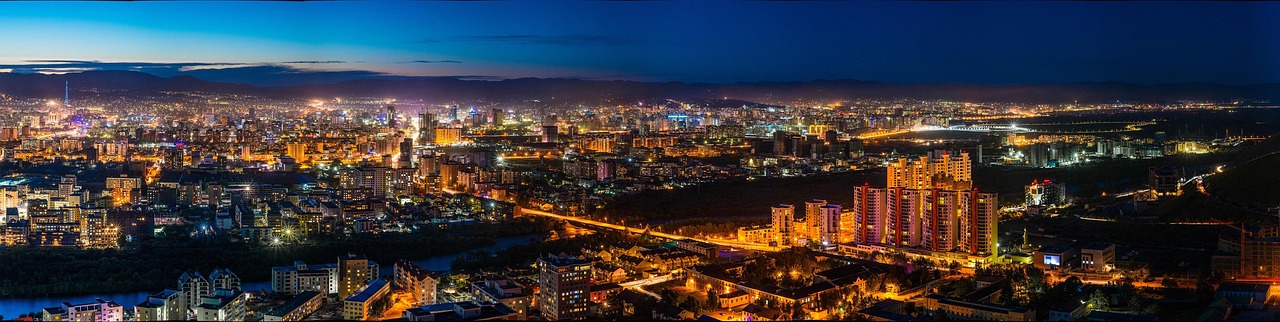
Right now in Ulaanbaatar
- Wed 3–14°C 38–57°F Cloudy
- Thu 2–15°C 36–58°F Clear
- Fri 1–13°C 34–56°F Cloudy
Weather: MET Norway (CC BY 4.0) · Air quality: OpenAQ
Top tours in Ulaanbaatar
See all tours for Ulaanbaatar →
From local operators, with prices and reviews; you check availability and book on Viator, our partner. We may earn a commission at no extra cost to you. How we earn money
Ulaanbaatar at a glance
- Best for: monasteries and museums, Naadam, Mongolian culture and food, cashmere, and the start of countryside trips.
- How long: 2–3 days for the city and a day trip to Terelj.
- Best time: June to September; July for Naadam; November to March is extremely cold, with heavy air pollution.
- Getting there: by air to Chinggis Khaan International Airport, about 50 km (30 miles) south of the city; by the Trans-Mongolian Railway from Russia and China.
- Getting around: on foot in the center; taxis by app; buses; tours for day trips.
- Good to know: traffic is heavy, so allow plenty of time, especially for the airport.
- Before you go: visa-free entry, registration, money and general safety are in our Mongolia travel guide.
Ulaanbaatar’s areas and where to stay
The city stretches about 30 km (19 miles) from east to west along the Tuul valley, with Peace Avenue (Enkh Taivny Örgön Chölöö) as its main east–west axis. The compact center around Sükhbaatar Square has most sights; ger districts climb the hills to the north.
The center: around Sükhbaatar Square
Within walking distance of the square, the center has international and mid-range hotels, guesthouses, museums, restaurants, bars and shops, including the State Department Store on Peace Avenue. It is the best base for a short stay.
West of the center: Gandan and the old town
Around Gandan Monastery, guesthouses and hostels popular with backpackers and tour groups sit in quieter streets, with views of the monastery’s temples.
South: Zaisan and the Tuul River
South of the center, toward the Zaisan Memorial and the Bogd Khan Mountain, newer residential towers, upscale apartments and some hotels offer views and quieter surroundings, about 15–20 minutes from the center by taxi, depending on traffic.
The east
Business hotels and new apartment complexes stretch along Peace Avenue to the east, near shopping malls and the stadium area.
Where to stay in Ulaanbaatar
- Center: hotels and guesthouses within walking distance of the main sights.
- Near Gandan: budget guesthouses and hostels that also arrange tours.
- Zaisan: apartments and hotels near the mountains.
- East: business hotels and serviced apartments.
Hotels fill up and prices rise sharply around Naadam (July 11–15); book months ahead.
Top things to see in Ulaanbaatar
Ulaanbaatar’s story in brief
The city began in 1639 as Örgöö, a mobile monastery camp of gers that moved along the rivers for more than a century before settling here in 1778. Known as Ikh Khüree (“great monastery”) and to foreigners as Urga, it was the seat of the Bogd Khan, the spiritual and later political leader of Mongolia, and a trading town on the caravan route between Russia and China. In 1924, when the Mongolian People’s Republic was founded, it was renamed Ulaanbaatar, “red hero,” after the revolutionary leader Damdin Sükhbaatar. Most monasteries were destroyed in the 1930s, and the Soviet-planned city of apartment blocks grew in their place. Since the 1990s, the population has more than doubled, as herders have moved to the city, especially after harsh winters.
Sükhbaatar Square
The city’s central square, known as Sükhbaatar Square (officially renamed Chinggis Square for some years), is dominated by the Government Palace, whose colonnade frames a huge seated statue of Chinggis Khaan, flanked by his successors Ögedei and Kublai. An equestrian statue of Sükhbaatar stands in the center. The square is surrounded by the Opera House, the Central Cultural Palace, the stock exchange and new towers, and it is the stage for national ceremonies.
Gandan Monastery
Gandan (Gandantegchinlen Monastery), founded in the 19th century, is Mongolia’s largest and most important monastery and one of the few to have survived, partly, the purges of the 1930s. Hundreds of monks study and pray here, and you can watch morning chanting in the main temples. The tall Migjid Janraisig Temple houses a gilded statue of the bodhisattva Avalokiteshvara, about 26 m (85 ft) high, rebuilt in 1996 after the original was taken away in the Soviet era. Walk clockwise, don’t touch sacred objects, and ask before photographing inside; a small fee may be charged for photography.
The Chinggis Khaan National Museum
Opened in 2022 in a large new building near the center, the Chinggis Khaan National Museum tells the story of the peoples of Mongolia from prehistory to the empire of Chinggis Khaan and the Qing era, with archaeological finds, gold, armor, textiles and objects from the Mongol Empire. Allow at least two to three hours.
Choijin Lama Temple Museum
Hidden among towers just south of the square, the Choijin Lama Temple, built between 1904 and 1908 for the brother of the Bogd Khan, is a complex of temples with outstanding Buddhist art, masks used in the tsam dances, and statues by the 17th-century sculptor Zanabazar. It is now a museum.
The Winter Palace of the Bogd Khan
South of the center, the Winter Palace of the Bogd Khan, the last king of Mongolia, who died in 1924, consists of temples with Chinese-style roofs and a two-story Russian-style palace, displaying thrones, robes, gifts from foreign rulers and a ger lined with snow leopard skins.
More classic sights
- Zanabazar Museum of Fine Arts: Buddhist art, including bronze statues by Zanabazar, thangka paintings and appliqué.
- Central Museum of Mongolian Dinosaurs: fossils from the Gobi, including a *Tarbosaurus* skeleton returned to Mongolia after being smuggled abroad.
- Zaisan Memorial: a Soviet-era hilltop memorial with a circular mosaic and panoramic views over the city.
- Naran Tuul Market: the city’s largest open-air market, known as the “Black Market,” for everything from felt boots to ger furniture; watch your belongings.
- The State Department Store: the city’s landmark store, with a floor of cashmere and souvenirs.
Other things to do in Ulaanbaatar
Food and drink
Try Mongolian classics such as buuz (steamed meat dumplings), khuushuur (fried meat pastries), tsuivan (fried noodles), khorkhog (mutton cooked with hot stones) and süütei tsai (salty milk tea) in canteens and restaurants across the city. Ulaanbaatar also has a wide range of Korean, Japanese, Russian, Chinese, Indian and international restaurants, coffee shops and craft beer bars, and good vegetarian places, rare in the countryside.
Music and folk shows
Evening performances by ensembles such as Tumen Ekh feature khöömii (throat singing), the morin khuur (horsehead fiddle), long song, contortionists and tsam mask dances; the Opera House stages opera and ballet. Many bars have live Mongolian rock and folk music.
Shopping
Mongolia is one of the world’s main producers of cashmere; buy sweaters, scarves and blankets at factory shops and the State Department Store. Other good buys include felt slippers and toys, leather goods, Buddhist art, and the morin khuur. Exporting antiques requires a certificate.
Naadam in the capital
During Naadam (July 11–15), the city hosts the national festival: the opening ceremony on July 11 at the National Sports Stadium, wrestling and archery in the stadium and nearby grounds, and horse races at Khui Doloon Khudag, about 40 km (25 miles) west of the city. Tickets for the opening ceremony are sold in advance and often through tour operators. See our city sightseeing guide.
The ger districts
On the hills around the city, the ger districts are home to several hundred thousand people, many of them former herders who moved to the capital after losing their animals in harsh winters. Fenced plots hold gers and small wooden houses, often without running water or sewage, and coal and wood stoves heat them in winter, the main source of the city’s smog. Some local organizations and guides offer respectful visits that explain daily life and community projects; don’t wander in alone to take photos.
Day trips from Ulaanbaatar
- Terelj National Park: granite rock formations such as Turtle Rock, the hilltop Aryabal Meditation Temple, river valleys, ger camps, horse riding and easy hikes, about 70 km (45 miles) east, 1.5–2 hours by road.
- Chinggis Khaan Equestrian Statue: a stainless steel statue about 40 m (131 ft) tall at Tsonjin Boldog, about 55 km (34 miles) east, with a viewing platform in the horse’s head and a small museum; often combined with Terelj.
- Khustai National Park: about 100 km (60 miles) west, where reintroduced takhi (Przewalski’s horses) graze, best seen at dawn or dusk; stay overnight in the park’s ger camp.
- Manzushir Monastery: ruins of a monastery in the forests of the Bogd Khan Uul protected area, about 50 km (30 miles) south.
- Gun-Galuut Nature Reserve: wetlands and steppe about 130 km (80 miles) east, with cranes and wild sheep.
Getting there and getting around
By air
Chinggis Khaan International Airport (UBN), opened in 2021, lies about 50 km (30 miles) south of the city; taxis and airport buses take about an hour, or longer in traffic, so many hotels and tours arrange pickups. Flights arrive from Seoul, Tokyo, Beijing, Hong Kong, Istanbul, Frankfurt, Almaty and other cities; see our South Korea, Japan, Hong Kong and Istanbul guides. Domestic flights leave from the same airport to Dalanzadgad (for the Gobi), Mörön (for Khövsgöl) and Ölgii.
By train
Ulaanbaatar is the main stop on the Trans-Mongolian Railway, with trains to Irkutsk and Moscow in Russia and toward Beijing in China; check current international schedules, which have changed in recent years. See our Russia guide. The railway station is west of the center.
Around town
The center is walkable, but traffic is heavy and crossing wide roads requires care. Use registered taxis or ride-hailing apps such as UBCab rather than unofficial cars, especially at night. City buses are cheap and paid by card. For day trips, hire a car with a driver or join a tour.
When to go and how long to stay
Ulaanbaatar has an extreme continental climate. Summer, from June to August, is warm, with daytime highs of about 22–28 °C (72–82 °F), cool nights and most of the year’s rain in short showers and thunderstorms. Spring (April–May) and autumn (September–October) are short, windy and cool, with frost at night. Winter, from November to March, is extremely cold and dry, with average January temperatures around −21 °C (−6 °F) and nights often below −30 °C (−22 °F); smoke from coal and stove heating in the ger districts makes winter air pollution among the worst of any city in the world. The table uses the 1991–2020 climate normals for the Ulaanbaatar station of Mongolia’s National Agency for Meteorology and Environmental Monitoring, as submitted to the World Meteorological Organization (WMO): average monthly temperature, which combines day and night, and total precipitation.
| Month | Average temperature | Precipitation | What to expect |
|---|---|---|---|
| January | −21.3 °C (−6 °F) | 2 mm (0.1 in) | The coldest month; heavy smog |
| February | −16.2 °C (3 °F) | 3 mm (0.1 in) | Very cold; Tsagaan Sar in some years |
| March | −6.7 °C (20 °F) | 5 mm (0.2 in) | Cold and windy |
| April | 3.0 °C (37 °F) | 8 mm (0.3 in) | Windy; dust; thaw |
| May | 10.3 °C (51 °F) | 22 mm (0.9 in) | Cool; first green |
| June | 16.6 °C (62 °F) | 47 mm (1.9 in) | Warm days; season begins |
| July | 19.0 °C (66 °F) | 75 mm (2.9 in) | The warmest month; Naadam |
| August | 16.6 °C (62 °F) | 65 mm (2.6 in) | Warm; showers |
| September | 10.0 °C (50 °F) | 28 mm (1.1 in) | Clear and crisp; autumn colors |
| October | 0.9 °C (34 °F) | 9 mm (0.3 in) | Cold nights; first snow |
| November | −10.6 °C (13 °F) | 6 mm (0.2 in) | Winter arrives; smog begins |
| December | −19.0 °C (−2 °F) | 4 mm (0.1 in) | Extremely cold; New Year lights |
Ulaanbaatar receives only about 270 mm (11 in) of precipitation a year, most of it in summer.
Two days in Ulaanbaatar
Day one, Gandan Monastery for the morning chanting, the Chinggis Khaan National Museum, and Sükhbaatar Square, with a folk show and a Mongolian dinner in the evening. Day two, the Choijin Lama Temple, the Winter Palace of the Bogd Khan, the Zaisan Memorial at sunset and cashmere shopping.
Three to four days
Add a day trip or an overnight stay in Terelj with the Chinggis Khaan Equestrian Statue, or a night in Khustai to see the wild horses.
What a trip to Ulaanbaatar costs
Prices are approximate, for October 2026, converted at about 3,600 tögrög to the US dollar.
| Item | Typical cost |
|---|---|
| Taxi from the airport | 80,000–120,000 MNT (about US$22–33) |
| Museum entry | 10,000–30,000 MNT (about US$2.80–8.30) |
| Folk show with throat singing | 40,000–60,000 MNT (about US$11–17) |
| Buuz or khuushuur in a canteen | 12,000–20,000 MNT (about US$3.30–5.60) |
| Dinner in a mid-range restaurant | 40,000–80,000 MNT (about US$11–22) per person |
| Day trip to Terelj with driver | 200,000–400,000 MNT (about US$56–110) per vehicle |
| Cashmere sweater | 250,000–700,000 MNT (about US$70–195) |
| Mid-range hotel double, per night | 250,000–500,000 MNT (about US$70–140) |
Practical tips for Ulaanbaatar
- Allow for traffic: journeys across the city and to the airport can take far longer than expected.
- Book Naadam early: hotels, flights and opening-ceremony tickets sell out.
- Use registered taxis: use UBCab or hotel-booked cars, especially at night.
- Check the air in winter: limit outdoor activity on smoggy days; a good mask helps.
- Carry your passport: police do not accept copies.
- Dress for the weather: even in summer, evenings can be cool, and spring winds are strong.
Safety
Ulaanbaatar is generally safe, but take care. Pickpockets operate at the Naran Tuul Market, on buses, at the State Department Store and in crowds, especially during Naadam and Tsagaan Sar, and groups of people sometimes harass pedestrians for money around bars and restaurants. Foreigners have been assaulted and robbed at night, so avoid walking alone late and use registered taxis. Traffic is chaotic, and drivers don’t always stop for pedestrians. In winter, extreme cold and heavy air pollution are health risks: dress in proper winter clothing and limit exposure on bad days, especially if you have breathing problems. Don’t photograph police or soldiers. In an emergency, call 102 for police and 103 for an ambulance.
What to pack for Ulaanbaatar
In summer, layers, a light jacket and rain gear; in winter, a down coat, thermal layers, a hat, gloves, a face covering and insulated boots, plus a good mask for smog. Comfortable shoes, sunscreen and sunglasses for the strong high-altitude sun, a scarf for monasteries, and some cash in tögrög. Mongolia uses 230 V, with round two-pin plugs. See our hiking shoes, rain jackets and travel adapters guides.
Ulaanbaatar travel FAQ
How many days do I need in Ulaanbaatar?
Two to three days for the city, plus a day or night in Terelj.
When is Naadam in Ulaanbaatar?
From July 11 to 15 every year, opening with a ceremony at the National Sports Stadium on July 11; horse races are held outside the city.
How cold is Ulaanbaatar in winter?
Extremely cold: the average January temperature is about −21 °C (−6 °F), and nights often fall below −30 °C (−22 °F).
How far is the airport from Ulaanbaatar?
About 50 km south of the city; allow an hour or more by taxi or airport bus, depending on traffic.
What is the best time to visit Ulaanbaatar?
June to September, when it is warm; July for Naadam.
Can I visit Gandan Monastery?
Yes. Visitors are welcome to watch the morning chanting; walk clockwise and ask before taking photos inside.
How do I get to Terelj National Park?
By car or tour in about 1.5–2 hours, about 70 km east of the city; some buses also run.
Is Ulaanbaatar safe?
Generally yes. Watch for pickpockets in crowded places, use registered taxis at night and take care in traffic.
Is the air pollution bad in Ulaanbaatar?
In winter, yes: from about November to March, smoke from heating makes air quality very poor on many days. Summer air is much cleaner.
Where can I hear throat singing?
At evening folk shows in the city, such as those by the Tumen Ekh ensemble, and in some bars with live traditional music.
Sources and last review
Researched and last reviewed on 4 October 2026. Visa-free entry: Mongolia’s Consular Department; registration, crime, taxis (including UBCab), passports, photography of police and military, road conditions and the police emergency number: the UK government’s factual entry and safety pages; climate normals: the National Agency for Meteorology and Environmental Monitoring via the World Meteorological Organization’s 1991–2020 normals for the Ulaanbaatar station. The exchange rate is from market data (the Bank of Mongolia’s rate page could not be read automatically). Naadam dates follow the national holiday calendar; the city’s history, museum and monument dates, statue sizes, distances, journey times, entry fees and typical prices are general references or estimates, flagged for checking. Prices and rules change, so check locally before you go. For entry rules, money and general safety, see our Mongolia travel guide.
Plan your trip
Partner links: TravelerCenter may earn a commission if you book, at no extra cost to you.
🇲🇳 Useful Mongolian phrases for Ulaanbaatar
All 38 Mongolian phrases: restaurant, hotel, emergencies, romance (printable) →