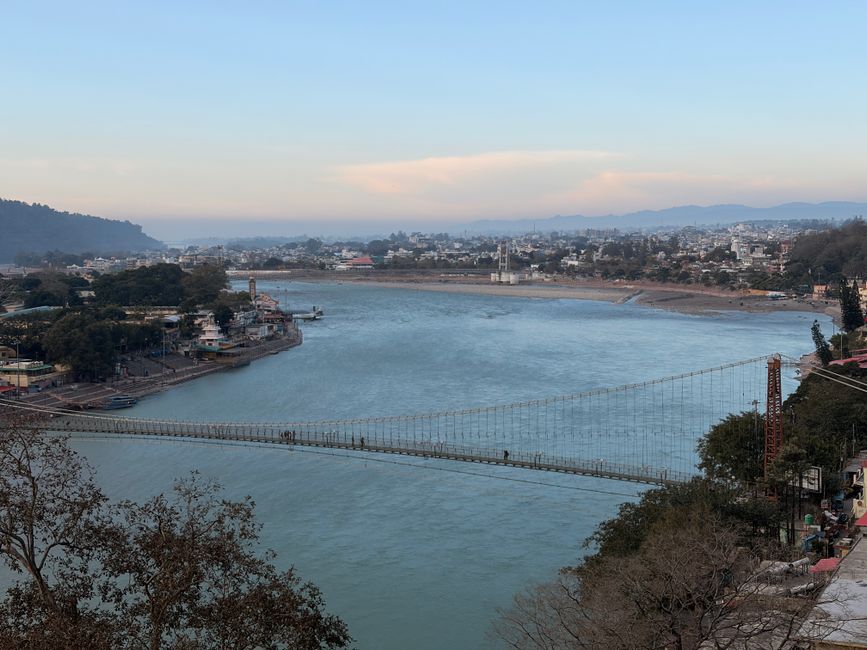
Rishikesh sits where the Ganges, or Ganga, leaves the Himalayan foothills and rushes out toward the plains, about 240 km (150 miles) northeast of Delhi in the state of Uttarakhand. Known as the “Yoga Capital of the World,” it is a town of ashrams, temples and riverside ghats, where pilgrims bathe at dawn, yoga students fill shala halls, and the evening Ganga aarti sets the water glowing with lamps. Its name is often explained as “the sage’s hair,” after the sages who meditated here, and Hindu tradition holds that Lord Rama did penance at Triveni Ghat. In 1968 the Beatles came to study meditation at the ashram of Maharishi Mahesh Yogi, and the town has drawn seekers from around the world ever since. Rishikesh is also India’s best-known center for white-water rafting, with rapids on the Ganga just upstream, plus bungee jumping, ziplines and forest hikes. The town is vegetarian and alcohol-free, and it is the gateway to the Char Dham pilgrimage in the high Himalayas. The best times to visit are from September to November and from February to April; the monsoon, from July to September, swells the river and stops rafting.
Right now in Rishikesh
- Wed 20–26°C 67–79°F 2 mm Light showers
- Thu 20–27°C 67–81°F 1 mm Mostly clear
- Fri 18–23°C 64–73°F 4 mm Showers
Weather: MET Norway (CC BY 4.0)
Top tours in Rishikesh
See all tours for Rishikesh →
From local operators, with prices and reviews; you check availability and book on Viator, our partner. We may earn a commission at no extra cost to you. How we earn money
Rishikesh at a glance
- Best for: yoga and meditation, the Ganga aarti, ashrams and temples, white-water rafting, adventure sports and forest walks.
- How long: 2 or 3 days for the sights and a rafting trip; a week or more for a yoga course.
- Best time: September to November and February to April; rafting runs from September to June.
- Getting there: Jolly Grant Airport (Dehradun), about 21 km (13 miles) away, with domestic flights; trains to Rishikesh and nearby Haridwar; buses and taxis from Delhi, about 6 to 7 hours.
- Getting around: on foot across the suspension bridges and riverside paths; shared and private auto-rickshaws and taxis between areas.
- Good to know: Rishikesh is officially vegetarian and alcohol-free; meat and alcohol are not sold in the town.
- Before you go: the e-Visa, the online e-Arrival card, money, trains and general safety are in our India travel guide.
Rishikesh’s areas and where to stay
Rishikesh stretches for several kilometers along both banks of the Ganga, with distinct areas connected by bridges and riverside paths.
Laxman Jhula and Tapovan
The northern end of town, around the Laxman Jhula suspension bridge and up the hill in Tapovan, is the center of traveler life: yoga schools, cafés with river views, bookshops, rafting agencies and guesthouses of every budget. It is lively and international, and the cafés are full of yoga students.
Ram Jhula and Swarg Ashram
Around the Ram Jhula bridge, the east bank area known as Swarg Ashram is a car-free cluster of large ashrams, including Parmarth Niketan, temples, ghats and simple restaurants. It is quieter and more spiritual in feel, and the evening aarti at Parmarth Niketan takes place here.
Muni ki Reti
On the west bank, between the two bridges, Muni ki Reti has many ashrams, yoga schools and mid-range hotels, with easier road access than the east bank and riverside promenades.
Rishikesh town and Triveni Ghat
The main town to the south, with the bus stand, the old railway station and the bazaars, is busy and less scenic but convenient. Triveni Ghat, the town’s most important bathing ghat, is here.
Riverside camps upstream
Upstream, around Shivpuri and Byasi, beach and forest camps offer tents beside the river, combined with rafting, kayaking and bonfires. They are popular with groups and families.
Top things to see in Rishikesh
The Ganga aarti
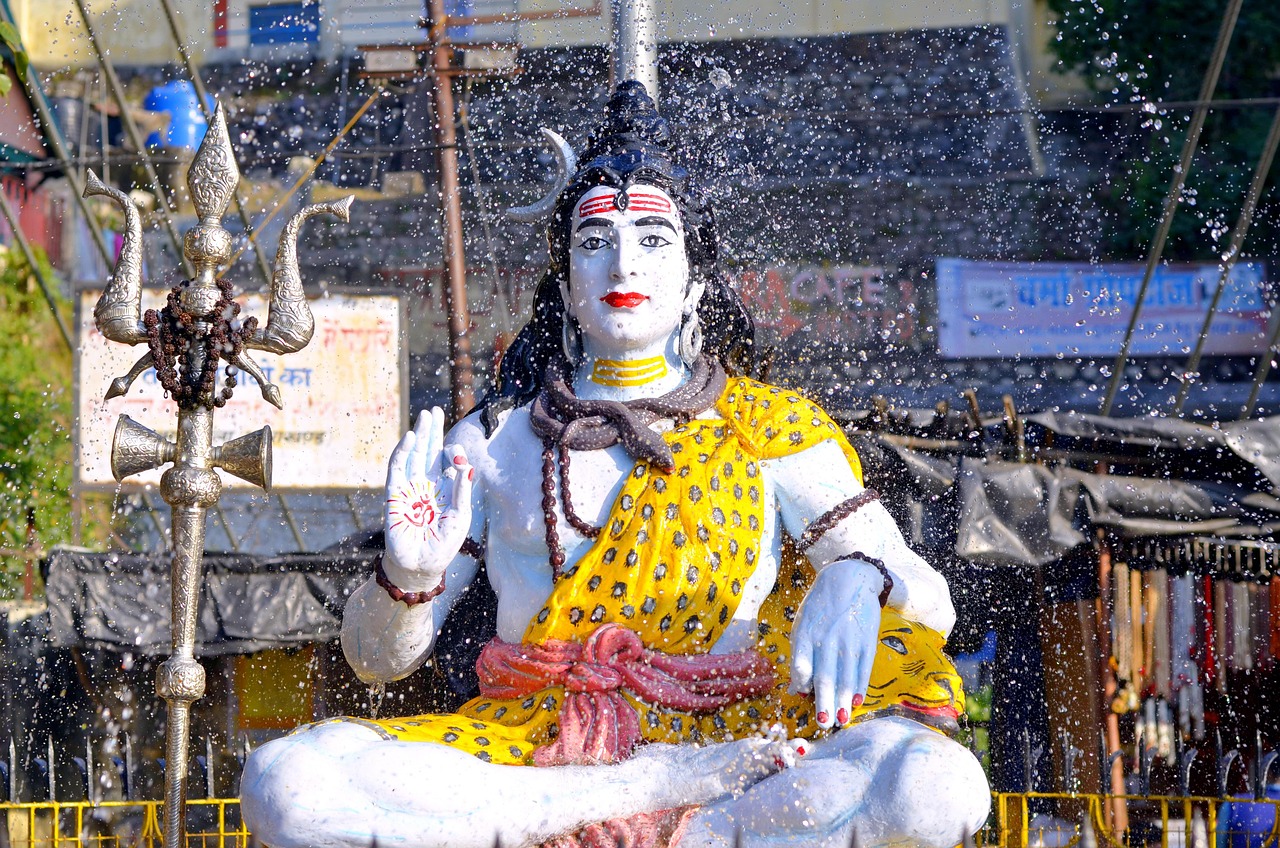
Every evening at dusk, the ghats of Rishikesh come alive with the Ganga aarti, a ceremony of chanting, drums, bells and flaming lamps offered to the river. The best-known aarti is at Parmarth Niketan in Swarg Ashram, where young priests and students sing on the steps facing a large statue of Shiva on the river. The aarti at Triveni Ghat, in the main town, is more local, with pilgrims setting small leaf boats of flowers and candles afloat. Arrive 30 to 45 minutes early for a good spot.
Laxman Jhula and Ram Jhula
The two suspension bridges are Rishikesh’s icons. According to Uttarakhand Tourism, the Laxman Jhula, built in 1939, is 137 m (450 ft) long and 21 m (70 ft) above the river, at the spot where Lakshmana, brother of Rama, is said to have crossed the Ganga on jute ropes. In recent years the old bridge has been closed for safety and a new bridge built alongside; check locally which crossings are open. The Ram Jhula, a little downstream, links Muni ki Reti with Swarg Ashram. The 3 km (2-mile) riverside walk between the two areas, past shops, ashrams and temples, is a classic Rishikesh stroll.
The Beatles Ashram (Chaurasi Kutia)
In a forest patch at the southern end of Swarg Ashram, the former ashram of Maharishi Mahesh Yogi, where the Beatles stayed and learned transcendental meditation in 1968, is now a ruin under the care of the forest department, with meditation cells shaped like domes and walls covered with murals and graffiti of the band. It is a quiet, atmospheric place for a walk; there is an entry fee.
Temples of Rishikesh
- Trayambakeshwar Temple: a 13-story temple tower near Laxman Jhula, dedicated to Shiva, filled with shrines on every floor and views over the river.
- Bharat Mandir: one of the oldest shrines in Rishikesh, near Triveni Ghat, said to have been founded by Adi Shankaracharya, with an image of Vishnu carved from a single black stone.
- Raghunath Temple: an old temple near Triveni Ghat dedicated to Rama.
- Gita Bhawan: a large complex in Swarg Ashram with walls painted with scenes from the Ramayana and the Mahabharata, and a free Ayurvedic dispensary.
Parmarth Niketan and the ashrams
Established in 1942, Parmarth Niketan is one of the largest ashrams in Rishikesh, on the east bank of the Ganga, and hosts an annual international yoga festival. Many ashrams in Swarg Ashram and Muni ki Reti welcome visitors for daily yoga and meditation classes, talks and, in some cases, longer residential stays with simple rooms and vegetarian meals.
Neelkanth Mahadev Temple
About 30 km (19 miles) by road from Rishikesh, or a steep forest hike of 12 km (7 miles) from Ram Jhula, this temple to Shiva stands in a forested valley at about 1,330 m (4,360 ft) and is a major pilgrimage site, especially during the monsoon month of Shravan, when huge crowds of pilgrims arrive.
Other things to do in Rishikesh
White-water rafting
Rafting on the Ganga is Rishikesh’s big adventure. According to Uttarakhand Tourism, the most common stretch is the 11 km (7 miles) from Shivpuri, 19 km (12 miles) upstream, to Laxman Jhula, with rapids of moderate difficulty and a calm float at the end, while longer trips start at Marine Drive or Kaudiyala higher up. The department lists September to June as the rafting season and says there are many certified and authorized operators and instructors. In practice, rafting on the Ganga stops during the monsoon, usually from July to mid-September, when the river is high and fast. Book with an operator licensed by the state, check that everyone gets a helmet and a properly fitted life jacket, and listen to the safety briefing. Kayaking courses and multi-day rafting and camping trips are also offered. See our boat trips guide.
Yoga and meditation
Rishikesh is one of the world’s great places to study yoga. Options range from drop-in classes at ashrams and studios to month-long teacher-training courses with residential stays. Choose a school with clear schedules, qualified teachers and recent reviews; many follow the guidelines of international yoga associations. The International Yoga Festival, held each March at Parmarth Niketan, brings teachers and students from around the world.
Adventure sports
At Mohanchatti, in the hills above the river, a bungee jump of up to 83 m (272 ft), a giant swing and a flying fox are run by private operators. Ziplines cross the Ganga upstream, and rock climbing, rappelling and paragliding are offered from various bases. Use well-established operators and check their safety records and equipment.
Hikes and walks
Popular walks include the trail to the waterfalls above Laxman Jhula, the early-morning drive and climb to Kunjapuri Temple at about 1,650 m (5,410 ft) for a sunrise view of Himalayan peaks, and the forest hike to Neelkanth Mahadev. See our hiking guide.
Food and drink
Rishikesh is entirely vegetarian, and alcohol is not sold. The cafés of Tapovan and Laxman Jhula serve everything from Indian thalis to Israeli, Italian and vegan dishes, smoothie bowls and Ayurvedic meals, while simple dhabas in Swarg Ashram and the main town offer cheap North Indian food: aloo puri for breakfast, chole bhature, kachori, and sweets such as jalebi. Garhwali home cooking, with dishes like kafuli (a spinach curry) and aloo ke gutke (spiced potatoes), appears in a few restaurants. Drink bottled or filtered water.
Day trips from Rishikesh
- Haridwar: one of Hinduism’s seven holy cities, about 25 km (16 miles) south, famous for the evening aarti at Har ki Pauri, which draws huge crowds, especially at festivals and during the Kumbh Mela.
- Rajaji National Park: a tiger and elephant reserve on the edge of the Shivalik hills between Rishikesh and Haridwar, with jeep safaris in the open season (usually mid-November to mid-June).
- Narendra Nagar: the former capital of the princely state of Tehri, at 1,326 m (4,350 ft), about 20 km (12 miles) uphill, with views over the Ganga and the Doon valley.
- Dehradun and Mussoorie: the state capital and the hill station above it, about 45 km (28 miles) and 75 km (47 miles) away.
- Byasi and Shivpuri: riverside villages upstream used as bases for rafting, kayaking and beach camps.
Getting there and getting around
By air
Jolly Grant Airport (DED), near Dehradun and about 21 km (13 miles) from Rishikesh according to Uttarakhand Tourism, has daily domestic flights from Delhi and other cities; taxis take about 40 minutes to an hour. It is not a designated e-Visa entry airport, so international visitors usually arrive in Delhi and connect by air, rail or road.
By train
Rishikesh has two stations: the old Rishikesh station in town and the newer Yog Nagari Rishikesh, which handles more long-distance trains. Many travelers take one of the frequent fast trains from Delhi to Haridwar, including Vande Bharat and Shatabdi services of about 4 to 5 hours, and then a 45-minute taxi.
By road
Rishikesh is about 240 km (150 miles) from Delhi, 6 to 7 hours by car or by bus from Delhi’s Kashmere Gate bus terminal. It lies on the national highway toward Badrinath, so it is the starting point for road trips into the Garhwal Himalayas and the Char Dham.
Around town
Walking is the best way to get around the riverside areas, especially in car-free Swarg Ashram. Shared auto-rickshaws (vikrams) run along fixed routes between the main town, Ram Jhula and Laxman Jhula, and taxis and app cabs are available. The hill roads to Tapovan and Neelkanth are steep and winding.
When to go and how long to stay
Rishikesh sits at about 370 m (1,220 ft) in the foothills, with hot summers, a heavy monsoon and mild, sunny winters. September to November brings clear skies, green hills and the start of the rafting season, and February to April is warm and pleasant. May and June are hot, with highs around 35 °C (96 °F) or more. The monsoon, from July to September, is very wet: rafting stops, the river turns brown and fast, and landslides can block mountain roads beyond town. December and January are cool, with foggy mornings and nights around 7 °C (44 °F). Rishikesh has no long-term international weather station, so the table shows 1991–2020 normals for Dehradun, about 40 km (25 miles) northwest and some 250 m higher, from the India Meteorological Department (IMD), as published by the World Meteorological Organization (WMO); Rishikesh is usually a degree or two warmer. Rainy days are days with at least 2.5 mm of rain.
| Month | Average high / low | Rain (rainy days) | What to expect |
|---|---|---|---|
| January | 20 °C (67 °F) / 7 °C (44 °F) | 44 mm (1.7 in), 3 days | Cool, foggy mornings |
| February | 22 °C (72 °F) / 9 °C (49 °F) | 58 mm (2.3 in), 4 days | Mild; occasional winter rain |
| March | 27 °C (81 °F) / 13 °C (56 °F) | 46 mm (1.8 in), 3 days | Warm and pleasant; yoga festival |
| April | 32 °C (90 °F) / 17 °C (63 °F) | 33 mm (1.3 in), 3 days | Warm and dry; rafting season |
| May | 35 °C (96 °F) / 21 °C (70 °F) | 51 mm (2.0 in), 4 days | Hot; busy with Indian holidaymakers |
| June | 34 °C (93 °F) / 23 °C (74 °F) | 231 mm (9.1 in), 10 days | Hot; pre-monsoon storms; rafting ends |
| July | 31 °C (87 °F) / 24 °C (74 °F) | 622 mm (24.5 in), 20 days | Monsoon; no rafting |
| August | 30 °C (86 °F) / 23 °C (74 °F) | 715 mm (28.1 in), 22 days | Wettest month; landslide risk on hill roads |
| September | 30 °C (86 °F) / 21 °C (70 °F) | 306 mm (12.0 in), 12 days | Rains easing; rafting restarts later in the month |
| October | 29 °C (84 °F) / 16 °C (61 °F) | 38 mm (1.5 in), 2 days | Clear and pleasant; rafting |
| November | 26 °C (78 °F) / 11 °C (53 °F) | 5 mm (0.2 in), under 1 day | Ideal; Diwali in some years |
| December | 22 °C (71 °F) / 8 °C (46 °F) | 13 mm (0.5 in), 1 day | Cool nights, sunny days |
Dehradun gets about 2,160 mm (85 in) of rain a year, two-thirds of it in July and August.
Two days in Rishikesh
Day one: morning yoga class, a walk from Laxman Jhula to Ram Jhula past Trayambakeshwar and Gita Bhawan, the Beatles Ashram in the afternoon, and the evening aarti at Parmarth Niketan. Day two: half-day rafting from Shivpuri, lunch at a café in Tapovan, and sunset at Triveni Ghat.
Four days or more
Add sunrise at Kunjapuri, the hike to Neelkanth Mahadev, a day in Haridwar for the aarti at Har ki Pauri, or a safari in Rajaji National Park, or join a short yoga or meditation retreat.
Where to stay in Rishikesh
- Laxman Jhula and Tapovan: guesthouses, yoga schools and boutique hotels, the liveliest area.
- Swarg Ashram: ashrams and simple guesthouses, peaceful and car-free.
- Muni ki Reti: mid-range hotels and ashrams with road access.
- Riverside camps: tents at Shivpuri and Byasi, best combined with rafting.
- Wellness resorts: luxury spa and Ayurveda retreats in the hills above the river.
Ashram stays usually come with rules: early schedules, no alcohol or smoking, and sometimes set meal times and curfews.
What a trip to Rishikesh costs
Prices are approximate, for October 2026, converted at about 96 rupees (₹) to the US dollar. They are estimates, as no official price lists for rafting or courses could be checked.
| Item | Typical cost |
|---|---|
| Rafting, Shivpuri to Laxman Jhula (16 km including the float) | ₹600–1,500 per person (about US$6–16) |
| Drop-in yoga class | ₹300–800 (about US$3–8) |
| Beatles Ashram entry, foreigners | ₹600–700 (about US$6–7) |
| Bungee jump at Mohanchatti | ₹3,500–5,000 (about US$36–52) |
| Thali at a local dhaba | ₹150–300 (about US$1.60–3) |
| Café meal in Tapovan | ₹400–900 (about US$4–9.40) |
| Taxi from Jolly Grant Airport | ₹1,000–1,800 (about US$10–19) |
| Mid-range hotel double, per night | ₹2,500–7,000 (about US$26–73) |
Practical tips for Rishikesh
- Respect the town’s rules: meat and alcohol are not sold, some places do not serve eggs, and modest dress is expected at ghats and temples.
- Choose rafting operators carefully: use licensed companies with helmets, life jackets and trained guides.
- Swim only where it is safe: the Ganga is cold and fast even when it looks calm.
- Watch the monkeys: they are bold on the bridges and in Swarg Ashram; keep food and sunglasses out of reach.
- Plan around festivals: crowds swell during the Kanwar Yatra in July and the March yoga festival.
Safety
Rishikesh is generally a calm and safe town. The river is the main risk: the Ganga is cold, deep and fast, with strong currents even near the ghats, and visitors drown every year. Bathe only at ghats with chains or railings, never after drinking or at night, and do not swim far from the bank. Rafting is safe with good operators, but always wear a helmet and life jacket, follow your guide’s commands, and do not raft in the monsoon. The state’s rafting season runs from September to June. Monsoon rains from July to September can cause flash floods and landslides on mountain roads toward the Char Dham, so check road conditions before traveling upstream. Adventure sports: choose established operators and check equipment. Scams: be wary of unofficial “gurus” and of yoga courses that ask for large payments in advance without clear details. Monkeys can bite; do not feed them. Women travelers generally find Rishikesh comfortable, though it is wise to avoid isolated riverside paths after dark. In an emergency, call 112.
What to pack for Rishikesh
Loose, modest clothes for yoga and temples, a light shawl, quick-drying clothes and sandals with straps for rafting, a swimsuit to wear under clothes, sunscreen, a warm layer for winter mornings and evenings, and a rain jacket from July to September. India uses 230 V, with round-pin plugs of types C, D and M. See our water shoes, rain jackets and travel adapters guides.
Rishikesh travel FAQ
When is the rafting season in Rishikesh?
Uttarakhand Tourism lists September to June as the best months. Rafting on the Ganga stops during the monsoon, usually from July to mid-September.
Is rafting in Rishikesh safe for beginners?
Yes, the Shivpuri to Laxman Jhula stretch is suitable for beginners with a licensed operator, a helmet and a life jacket. Non-swimmers should tell the guide.
How many days do I need in Rishikesh?
Two or three days for the ghats, temples, aarti and a rafting trip; a week or more for a yoga course.
Where is the best Ganga aarti in Rishikesh?
Parmarth Niketan in Swarg Ashram has the best-known evening aarti; Triveni Ghat has a more local one.
Can I drink alcohol in Rishikesh?
No. Rishikesh is a vegetarian and alcohol-free town, and alcohol is not sold there.
What is the best time to visit Rishikesh?
September to November and February to April, when the weather is pleasant and rafting is running.
How do I get from Delhi to Rishikesh?
By train to Haridwar or Rishikesh, by bus or car in about 6 to 7 hours, or by flight to Jolly Grant Airport near Dehradun.
Can I visit the Beatles Ashram?
Yes. The ruined ashram at the southern end of Swarg Ashram is open to visitors for a fee.
Is it safe to swim in the Ganga at Rishikesh?
Only with great care. The currents are strong and cold; bathe at ghats with chains or railings, and stay close to the bank.
Where should I stay in Rishikesh?
Laxman Jhula and Tapovan for cafés and yoga schools, Swarg Ashram for a quiet ashram atmosphere, and riverside camps for rafting.
Sources and last review
Researched and last reviewed on 4 October 2026. The rafting stretch from Shivpuri to Laxman Jhula, the September to June rafting season and certified operators, the history and size of the Laxman Jhula, the Beatles Ashram, Parmarth Niketan, Bharat Mandir, Gita Bhawan, Triveni Ghat, Narendra Nagar, Byasi, the Mohanchatti bungee jump and the distance to Jolly Grant Airport: Uttarakhand Tourism; the “Yoga Capital of the World,” the town’s name, the Beatles, the Char Dham, the vegetarian and alcohol-free status, the temples and the best seasons: Incredible India (Ministry of Tourism); the list of designated e-Visa airports (which does not include Dehradun): the Bureau of Immigration; climate normals for the Dehradun station: the India Meteorological Department, via the World Meteorological Organization (1991–2020 normals archived by NOAA’s National Centers for Environmental Information); the exchange rate: the Reserve Bank of India (FBIL reference rate). The monsoon rafting closure dates, the status of the Laxman Jhula bridge, train services, distances, festival dates and typical prices are general references or estimates, flagged for checking. Prices and hours change, so check locally before you go. For the e-Visa, money and trains, see our India travel guide.
Plan your trip
Partner links: TravelerCenter may earn a commission if you book, at no extra cost to you.
🇮🇳 Useful Hindi phrases for Rishikesh
All 38 Hindi phrases: restaurant, hotel, emergencies, romance (printable) →