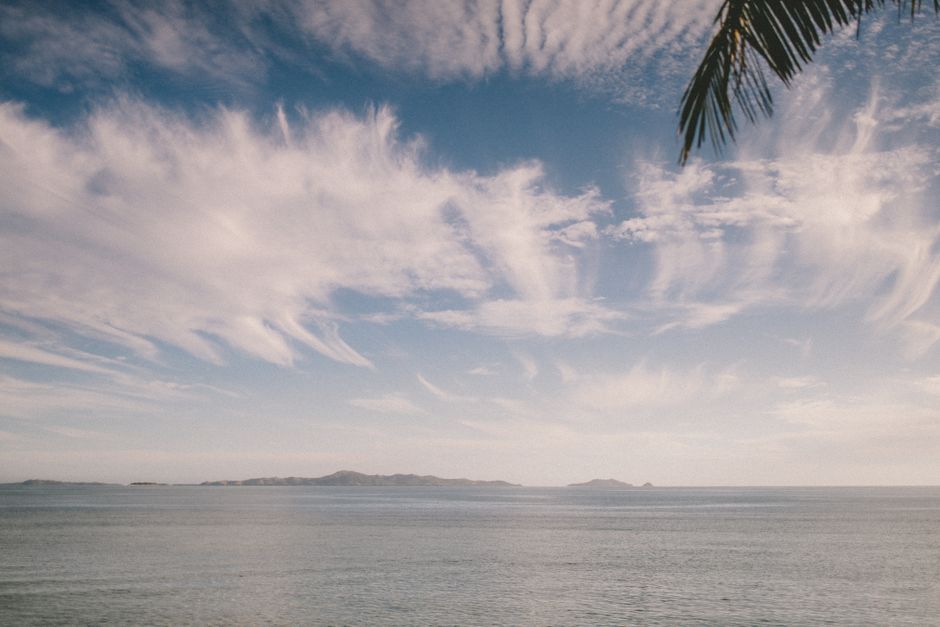
Nadi (pronounced “Nan-dee”) is the front door to Fiji. Almost every international flight lands at Nadi International Airport on the dry western side of Viti Levu, and almost every boat to the Mamanuca and Yasawa islands leaves from Port Denarau, 20 minutes away. Many visitors treat the town as a place to sleep between a long-haul flight and an island resort, but it rewards a day or two: Nadi has the largest Hindu temple in the South Pacific, a busy produce market and handicraft stalls, the orchid-filled Garden of the Sleeping Giant and steaming mud pools in the Sabeto Valley at the foot of the mountains, and Denarau Island’s resorts, golf course and marina restaurants. Nadi is also the most Indo-Fijian town in the country, so curry houses, sari shops and Diwali lights are as much part of the scene as kava and “bula” greetings. It sits in the rain shadow of Viti Levu’s central mountains, with more sunshine and less rain than the east of the island, and the dry season from about May to October is the most comfortable time to visit.
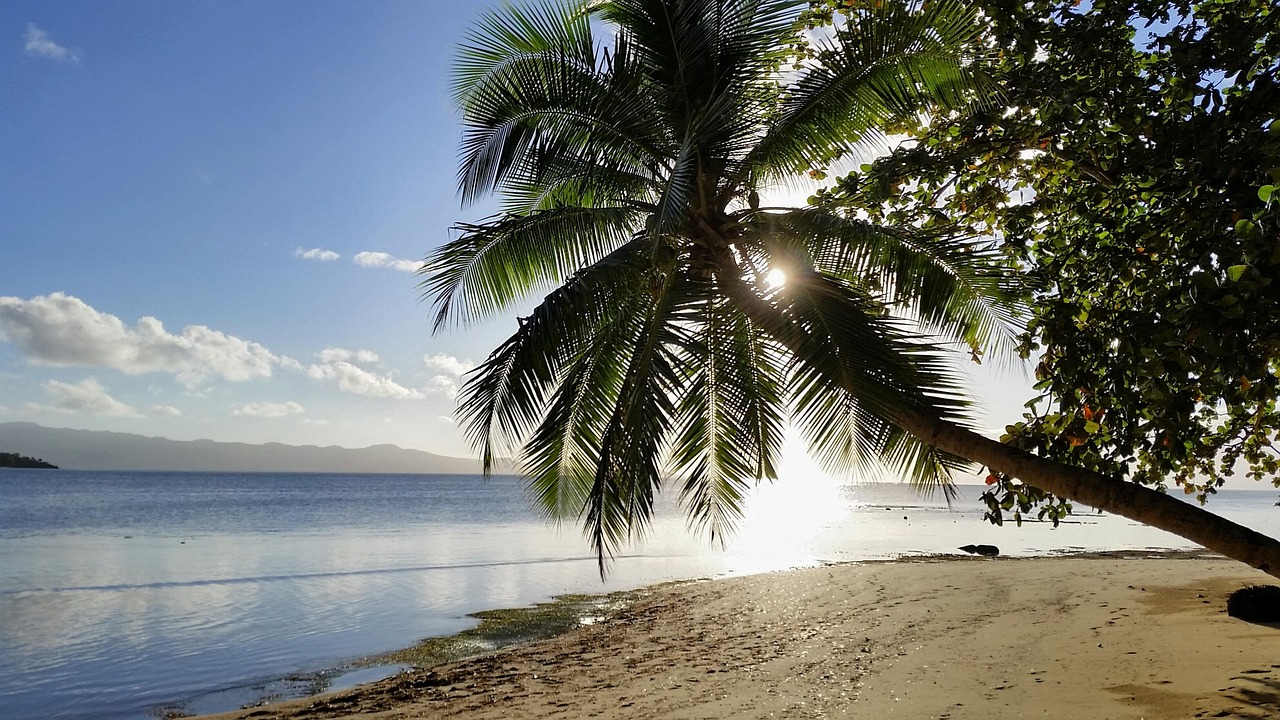
Right now in Nadi
- Wed21–27°C70–81°FMostly clear
- Thu21–27°C69–81°FClear
- Fri20–27°C69–81°F1 mm rain
Top tours in Nadi
See all tours for Nadi →
From local operators, with prices and reviews; you check availability and book on Viator, our partner. We may earn a commission at no extra cost to you. How we earn money
Nadi at a glance
- Best months: May to October, the dry season, with sunny days and cooler nights; July to September is the busiest and most expensive. November to April is hotter and wetter, and the tropical cyclone season.
- Where to stay: Denarau Island for big resorts and quick access to Port Denarau; Wailoaloa Beach for budget hotels and hostels near the airport; Nadi town and the Queens Road for mid-range hotels.
- Getting there: Nadi International Airport (NAN) is about 9 km (6 miles) north of the town center. Fiji Airways flies nonstop from Australia, New Zealand, North America and Asia.
- Time needed: one or two nights before or after the islands; three days to see Nadi, the Sabeto Valley and a day trip to the Mamanucas.
- Costs (as of October 2026): a Port Denarau coach transfer from most Nadi hotels costs FJ$11 per adult; FJ$1 = about US$0.44.
- Before you go: entry rules, money, the departure tax and the arrival card are covered in our Fiji travel guide.
Nadi’s areas and who each one suits
Nadi town
The town center is a long, busy stretch of Queens Road lined with shops, banks, cafés, curry houses and duty-free stores, with the temple at its southern end and the municipal market a block back from the main street. It is noisy and practical rather than pretty, but it is the best place for cheap food, cash machines, SIM cards and supplies before you head to the islands. Local buses and taxis leave from the bus station near the market.
Denarau Island
Denarau, about 7 km (4 miles) west of town across a causeway, is a reclaimed island of large resorts lined along a gray-sand beach, an 18-hole golf course and Port Denarau, the marina from which most island boats, day cruises and sailing trips depart. The marina has restaurants, bars, a supermarket, souvenir shops and tour desks. A hop-on, hop-off resort bus loops around the island. Denarau is the easiest base for families and for anyone catching an early boat, but the beach is better for sunsets than for swimming, since the water is often murky from the nearby river mouth.
Wailoaloa and New Town Beach
Close to the airport, Wailoaloa Beach is Nadi’s budget and backpacker area: a long, quiet beach with hostels, guesthouses, small hotels and a few beach bars. Many island-hopping passes include pickups here. Like Denarau, it is a place for sunsets and walks rather than snorkeling.
The Sabeto Valley, Vuda and Lautoka
North of the airport, the green Sabeto Valley climbs into the Sabeto mountain range, the “Sleeping Giant”. Vuda Point, with its marina, sits on the coast farther north, and Lautoka, Fiji’s second city and sugar port, is about 30 minutes’ drive from Nadi.
Top things to see in Nadi
Sri Siva Subramaniya Swami Temple
At the southern end of the main street, this Dravidian-style Hindu temple, finished in 1994 and built by craftsmen brought from India, is the largest in the Southern Hemisphere and the town’s best-known sight. Its gopuram towers and ceilings are painted with gods and goddesses in vivid pinks, blues and golds. Visitors pay a small entry fee and must dress modestly: cover your shoulders and knees (sarongs are available), remove shoes at the entrance, and don’t bring meat, alcohol or tobacco. Photography is not allowed inside the inner shrines. Visit early in the day, when worshippers make offerings and the light on the towers is soft.
Garden of the Sleeping Giant
In the Sabeto Valley, about 20 minutes’ drive north of town, this garden was started in the 1970s by the actor Raymond Burr to house his orchid collection. Boardwalks and paths wind through lily ponds and rainforest at the foot of the mountains, with hundreds of orchid varieties flowering in shade houses and along the trails. It is a peaceful hour or two, and the entry fee usually includes a fruit juice on the veranda.
The Sabeto mud pools and hot springs
A few minutes from the garden, the Sabeto hot springs are a series of natural pools where you smear yourself with warm, gray mud, let it dry in the sun and then wash it off in thermal pools, followed by a massage if you like. It is cheerful rather than luxurious, popular with families and a classic Nadi rainy-day activity.
Nadi Market
The municipal market is the best place to see everyday Fiji: piles of taro, cassava, eggplant and chilies, pyramids of tropical fruit, bundles of kava root (yaqona) for sevusevu gifts and stalls of spices. The handicraft market near the temple sells carvings, tapa (bark-cloth) and woven mats; bargain gently and avoid “sword sellers” who try to engrave your name on an unwanted souvenir.
Port Denarau
Even if you are not staying on Denarau, the marina is worth a visit in the evening for a sunset drink and dinner overlooking the yachts, and it is where you book day cruises, sailing trips and island transfers.
Viseisei village
Between Nadi and Lautoka, Viseisei is traditionally said to be where the first Fijians landed, and some tours stop here for a village visit and a kava ceremony. Go with a guide or tour so that the visit is arranged with the village.
Other things to do in Nadi
- Island day trips: fast catamarans from Port Denarau visit South Sea Island, Malamala Beach Club (an island beach club with an infinity pool), Cloud 9 (a floating bar and pizzeria on the reef) and resort islands for the day. Day trips run every day, with lunch and drinks included on many.
- Sailing and dinner cruises: half-day and sunset sails around the Mamanucas leave from the marina.
- Golf: Denarau Golf and Racquet Club has an 18-hole course around the resorts.
- Jet-boating: high-speed rides up the Nadi River’s mangroves.
- Skydiving and scenic flights: tandem jumps over Denarau and seaplane or helicopter flights over the Mamanuca reefs.
- Ziplining and hiking: zipline courses in the hills and guided hikes to Mount Batilamu in the Koroyanitu National Heritage Park.
- Cooking classes: learn to make kokoda, lovo and Indo-Fijian curries.
Food and drink
Nadi’s best cheap meals are Indo-Fijian: curry with roti, dhal and chutneys at simple restaurants along the main street, or takeaway from the market area. Try kokoda (raw fish in lime and coconut cream), palusami (taro leaves baked in coconut cream) and a lovo feast at a resort or cultural evening. Port Denarau has the widest choice of restaurants, from seafood and pizza to fine dining. Fiji Bitter and Fiji Gold are the local beers. Tipping is not expected in Fiji.
Nearby destinations
- Mamanuca Islands38 km
- Coral Coast76 km
- Yasawa Islands99 km
Day trips from Nadi
The Mamanuca Islands
The Mamanuca Islands start about 30 minutes off Port Denarau. Day trips to South Sea Island, Malamala Beach Club or a resort island are the easiest way to see Fiji’s famous water if you are staying on the mainland.
The Coral Coast and Natadola
An hour or so south along Queens Road, the Coral Coast has Natadola Beach, the Sigatoka Sand Dunes National Park and the Kula Wild Adventure Park, a wildlife park popular with families.
The Yasawa Islands
The Yasawa Flyer leaves Port Denarau each morning at about 8:45 a.m. A long day on board lets you cruise through the Yasawa Islands and back without going ashore, or you can spend a night or several on the islands.
Lautoka and the Navala highlands
Lautoka, the “Sugar City”, has a lively market and botanical garden. Farther inland, a long drive on rough roads leads to Navala, a highland village of traditional thatched bures; go with a tour, as you need the village’s permission to visit.
Getting there and getting around
By air
Nadi International Airport (NAN) is Fiji’s main international gateway, with Fiji Airways flights from Sydney, Brisbane, Melbourne, Auckland and Christchurch, as well as North America, Asia and other Pacific islands, plus Qantas, Virgin Australia, Air New Zealand and Jetstar. Fiji Link domestic flights also leave from Nadi. The arrivals hall has a 24-hour bank counter, ATMs, car rental desks and mobile phone counters. Fiji’s departure tax is included in your airline ticket.
From the airport
Taxis wait outside arrivals; agree on the fare before setting off, or ask your hotel to arrange a transfer. Many Denarau and Coral Coast resorts send shuttles. If you are heading straight to the Yasawa Islands, South Sea Cruises runs a scheduled coach from the airport at 6:45 a.m. (FJ$11 per adult) or a direct express transfer at 7:15 a.m. (FJ$49) in time for the 8:45 a.m. Yasawa Flyer.
Getting around
- Taxis: plentiful and inexpensive; use licensed cabs with yellow plates, and agree on the fare or check that the meter is running.
- Local buses: cheap, open-sided buses run between the airport, Nadi town, Wailoaloa and Lautoka along Queens Road; express coaches link Nadi with the Coral Coast and Suva.
- Denarau: a hop-on, hop-off bus circulates between the resorts and Port Denarau.
- Coach transfers to Port Denarau: South Sea Cruises charges FJ$11 per adult and FJ$8 per child one way from most Nadi, Wailoaloa and Denarau hotels; book at least 24 hours ahead.
- Rental cars: available at the airport and in town. Drive on the left, slow down near villages and schools, and avoid driving after dark.
When to go and how long to stay
Nadi is warm all year, with daytime highs around 28 to 32 °C (83 to 89 °F). The dry season (May to October) brings sunny days, low humidity and cool nights of about 19 °C (67 °F) in July and August. The wet season (November to April) is hotter and more humid, with heavy afternoon downpours concentrated from January to March; tropical cyclones are possible, and island boats stop when warnings are issued.
| Month | Average high | Average low | Rain | Rain days (≥1 mm) |
|---|---|---|---|---|
| Jan | 31 °C (89 °F) | 23 °C (74 °F) | 365 mm (14.4 in) | 14 |
| Feb | 32 °C (89 °F) | 23 °C (74 °F) | 336 mm (13.2 in) | 15 |
| Mar | 31 °C (88 °F) | 23 °C (74 °F) | 351 mm (13.8 in) | 16 |
| Apr | 31 °C (87 °F) | 23 °C (73 °F) | 188 mm (7.4 in) | 10 |
| May | 30 °C (85 °F) | 21 °C (70 °F) | 92 mm (3.6 in) | 5 |
| Jun | 29 °C (84 °F) | 20 °C (68 °F) | 57 mm (2.2 in) | 4 |
| Jul | 29 °C (83 °F) | 19 °C (67 °F) | 51 mm (2.0 in) | 3 |
| Aug | 29 °C (83 °F) | 19 °C (67 °F) | 65 mm (2.5 in) | 4 |
| Sep | 29 °C (85 °F) | 20 °C (69 °F) | 72 mm (2.8 in) | 5 |
| Oct | 30 °C (86 °F) | 21 °C (70 °F) | 87 mm (3.4 in) | 7 |
| Nov | 31 °C (87 °F) | 22 °C (72 °F) | 127 mm (5.0 in) | 9 |
| Dec | 31 °C (89 °F) | 23 °C (73 °F) | 210 mm (8.3 in) | 12 |
| Year | 30 °C (86 °F) | 22 °C (71 °F) | 1,999 mm (79 in) | 103 |
Figures are the Fiji Meteorological Service’s 1991–2020 normals for Nadi Airport, as submitted to the World Meteorological Organization. Nadi averages about 2,480 hours of sunshine a year, with the sunniest months from July to October.
Events worth planning around
- Diwali (October or November): the festival of lights is a public holiday, and Nadi’s Indo-Fijian homes and the temple glow with lamps and fireworks.
- Fiji Day (10 October): independence day, with celebrations around the country.
- Bula Festival: Nadi’s annual carnival, with rides, food stalls, music and a festival queen; dates vary.
- School holidays in Australia and New Zealand: late June to July, late September to early October and the Christmas period bring families and higher prices.
How long to stay: 1, 2 and 3 days
- One night: arrive, rest by the pool and catch a morning boat to the islands from Port Denarau; or spend your last evening at the marina before an early flight.
- Two days: the temple and market in the morning, the Garden of the Sleeping Giant and the Sabeto mud pools in the afternoon, and a day cruise to South Sea Island or Malamala Beach Club the next day.
- Three days: add a Coral Coast day trip to Natadola and the Sigatoka Sand Dunes, or a zipline and village tour.
Where to stay in Nadi
- Denarau Island: big international resorts and family hotels with pools, kids’ clubs and spas, and walking distance to Port Denarau for boat departures. Best for families and anyone with an early boat.
- Wailoaloa Beach: hostels, guesthouses and small beachfront hotels, five to ten minutes from the airport; best for budget travelers and island-hoppers.
- Nadi town and Queens Road: mid-range hotels and motels, convenient for the airport and shops.
- Near the airport: a few hotels offer day rooms and are handy for late arrivals or early departures.
- The Sabeto Valley and Vuda: a few small lodges and a marina resort for a quieter stay.
Book ahead for July to September and Australian and New Zealand school holidays. Some resorts on Denarau charge resort fees; check what is included.
Typical costs in Nadi
| Item (as of October 2026) | Fijian dollars | About US dollars |
|---|---|---|
| Coach transfer, Nadi hotel to Port Denarau, adult / child one way | FJ$11 / FJ$8 | US$5 / US$4 |
| Express transfer, Nadi Airport to Port Denarau, adult | FJ$49 | US$22 |
| South Sea Island full-day trip, adult / child | FJ$285 / FJ$149 | US$126 / US$66 |
| Malamala Beach Club full-day / half-day pass | FJ$215 / FJ$185 | US$95 / US$82 |
| Taxi, airport to Denarau | about FJ$35–45 | about US$15–20 |
| Curry with roti at a local restaurant | about FJ$15–25 | about US$7–11 |
| Dinner main at Port Denarau | about FJ$40–70 | about US$18–31 |
| Hostel dorm bed at Wailoaloa | about FJ$35–60 | about US$15–27 |
| Resort room on Denarau, per night | about FJ$350–900 | about US$155–400 |
Transfers and day trips are South Sea Cruises’ published prices, valid until 31 March 2027, with a 2.5–3% fee for card payments. Taxi fares, meals and rooms are typical ranges, not official figures. Conversions use the Reserve Bank of Fiji’s rate of US$0.44 to FJ$1 on 5 October 2026.
Safety in Nadi
- Cyclones (November to April): follow Fiji Meteorological Service warnings and your hotel’s instructions; flights and island boats may be canceled, and low-lying areas of Nadi flood in heavy rain.
- Flooding: the Nadi River floods after heavy rain in the wet season; avoid driving through floodwater.
- Sun: UV is strong all year; wear a hat and sunscreen, and drink plenty of water.
- Dengue: mosquito-borne dengue occurs in western Viti Levu, especially in the wet season; use repellent and screens.
- Swimming: Denarau and Wailoaloa beaches are muddy near river mouths; save swimming and snorkeling for the islands or your hotel pool, and watch for currents.
- Petty crime and touts: keep valuables out of sight, use licensed taxis at night and politely decline street “guides” and sword sellers.
- Roads: pedestrians, buses and animals share Queens Road; drive carefully, especially after dark.
- Emergencies: call 911 or 910 for ambulance and fire, 917 for police.
Practical tips for Nadi
- Cash: withdraw Fijian dollars in Nadi or at the airport before heading to the outer islands, where there are no ATMs.
- SIM cards: Vodafone Fiji and Digicel sell tourist SIMs and eSIMs at the airport.
- Dress: beachwear is fine on Denarau, but cover shoulders and knees in town, at the temple and in villages.
- Sunday: many shops close and buses are less frequent.
- Boat days: reconfirm island transfers 24 hours ahead and check in 30 minutes before departure at Port Denarau.
What to pack for Nadi
Light cotton or linen clothes, a sarong or long skirt or trousers for the temple and villages, sandals and walking shoes, swimwear, a hat, sunglasses and reef-safe sunscreen, insect repellent, a light rain jacket from November to April, and a Type I plug adapter, the same as in Australia and New Zealand.
Nadi travel FAQ
How far is Nadi Airport from Denarau?
About 15 km (9 miles), or 20 to 25 minutes by car. Nadi town is about 9 km (6 miles) from the airport.
Is Nadi worth visiting or should I go straight to the islands?
Spend at least a day: the Hindu temple, the market, the Garden of the Sleeping Giant and the Sabeto mud pools are easy to see, and a night in Nadi makes connecting with morning boats much easier.
Where should I stay in Nadi?
Denarau Island for resorts and the marina, Wailoaloa Beach for budget stays near the airport, and Nadi town for mid-range hotels and local restaurants.
How do I get from Nadi to the Mamanuca and Yasawa islands?
By fast catamaran from Port Denarau with South Sea Cruises or the Yasawa Flyer, or by seaplane or helicopter from Nadi Airport.
Can I swim at the beaches in Nadi?
You can, but Denarau and Wailoaloa beaches are often murky from river runoff. For clear water and snorkeling, take a day trip to the Mamanuca Islands.
What should I wear to the Sri Siva Subramaniya Temple?
Cover your shoulders and knees, remove your shoes, and leave food, alcohol and tobacco outside. Sarongs are available at the entrance.
Is there public transport in Nadi?
Yes. Local buses run along Queens Road between the airport, Nadi town and Lautoka, and a resort bus circulates on Denarau. Taxis are plentiful and inexpensive.
What is the best time to visit Nadi?
May to October, the dry season. November to April is hotter and wetter and the tropical cyclone season, but there is still plenty of sunshine between showers.
Do I need cash in Nadi?
Cards work at hotels and larger restaurants, but you need cash for the market, buses, taxis and small shops, and for the outer islands, which have no ATMs.
Is Nadi safe at night?
Generally yes, but take a licensed taxi rather than walking after dark, and keep valuables out of sight in town.
Plan your trip
Partner links: TravelerCenter may earn a commission if you book, at no extra cost to you.
Sources · last reviewed 5 October 2026
Researched and last reviewed on 5 October 2026. Coach and airport transfers to Port Denarau, day-trip prices and boat departure times come from South Sea Cruises and Yasawa Adventures Fiji; the exchange rate from the Reserve Bank of Fiji; emergency numbers from Fiji’s National Disaster Management Office; climate from the Fiji Meteorological Service’s 1991–2020 normals for Nadi Airport, as published by the World Meteorological Organization; coordinates and population from Wikidata. Temple, garden and mud-pool details, taxi fares, meal and room prices, festival dates and distances are general references or estimates and should be checked locally. For entry rules, the arrival card, the departure tax and money, see our Fiji travel guide.
Data: Weather: MET Norway (CC BY 4.0) · Sea temperature: NOAA CoastWatch · Rates: ECB · Costs: World Bank ICP and price levels · Wikidata (CC0)