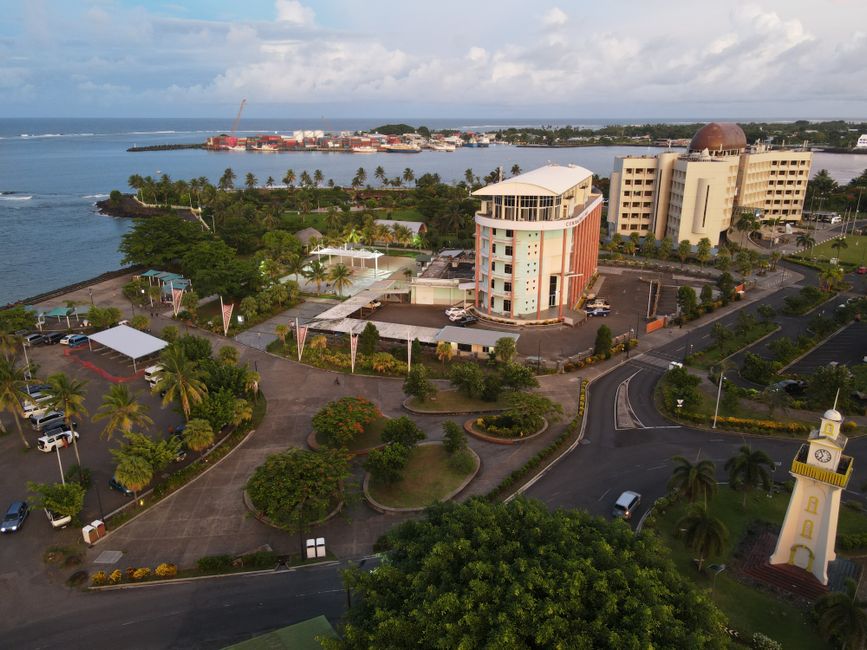
Samoa is a small Polynesian nation of ten islands in the central South Pacific, about halfway between Hawaii and New Zealand and a few hours’ flight from Auckland, Sydney and Brisbane. Almost everyone lives on the two big volcanic islands: Upolu, home to the capital Apia and the international airport, and Savai’i, larger, wilder and quieter, a short ferry ride to the west. The landscape is rainforest-covered mountains, waterfalls, lava fields, blowholes and lagoons ringed by white-sand beaches, and the country’s best-known sight, the To Sua Ocean Trench, is a swimming hole at the bottom of a collapsed lava tube. What makes Samoa different from many Pacific destinations is fa’a Samoa, the Samoan way: life is still organized around extended families, village chiefs and the church, and visitors sleep in open-sided beach fales (traditional huts) run by local families as often as in resorts. About 200,000 people live here. Most visitors get a free 90-day visitor permit on arrival, the currency is the tala, and the dry season from May to October is the most comfortable time to go.
Right now in Samoa
- Wed 24–29°C 75–84°F 1 mm Partly cloudy
- Thu 24–28°C 75–82°F 1 mm Partly cloudy
- Fri 24–29°C 75–83°F Cloudy
- Mon 12 Oct Lotu a Tamaiti
Weather: MET Norway (CC BY 4.0) · Holidays: Nager.Date
Multi-day tours of Samoa
Multi-day tours from local operators. You check dates and book on Viator, our partner; we may earn a commission at no extra cost to you. How we earn money
Samoa at a glance
- Capital: Apia, on the north coast of Upolu. It is the only real town, with the government offices, markets, banks and most restaurants.
- Population and size: about 200,000 people in 2,842 km² (1,097 sq miles). Upolu holds roughly three-quarters of the population; Savai’i is the largest island by area. Only four islands are inhabited: Upolu, Savai’i, Manono and Apolima.
- Languages: Samoan and English. English is widely spoken in Apia and in tourism; a few words of Samoan go a long way: talofa (hello), fa’afetai (thank you), manuia (cheers, good luck).
- Currency: the Samoan tala (WST, written ST$, SAT$ or WS$). In early October 2026, ST$1 was worth about US$0.36.
- Time zone: UTC+13 all year, with no daylight saving. Samoa moved west of the International Date Line in 2011, so it is a day ahead of American Samoa, 130 km (80 miles) away.
- Driving: on the left (since 2009), at low speeds; you need a temporary Samoan driving permit.
- Entry: most visitors receive a free 90-day visitor permit on arrival with a passport valid for six months, an onward ticket and an address in Samoa.
- Power: 230 volts with angled two- or three-pin Type I plugs, as in Australia and New Zealand.
Samoa’s islands
Upolu is where you land, where Apia sits and where most resorts, tours and restaurants are; its south and east coasts have the famous beaches. Savai’i, 15 km (9 miles) west across the Apolima Strait, is one of the largest islands in Polynesia, with a volcanic interior rising to Mount Silisili at about 1,858 m (6,096 feet), lava fields from eruptions in the early 1900s, and slow village life. Between them lie tiny Manono, a car-free island of footpaths and fales, and Apolima, a volcanic crater with a single village inside. Uninhabited islets such as Namu’a and Nu’utele lie off Upolu’s eastern tip. American Samoa, a separate US territory, is a different place with different entry rules.
Where to go: Apia, Upolu’s beaches and Savai’i
Apia
Apia is a low-key harbor town rather than a city. Walk the seawall along Beach Road past the white Immaculate Conception Cathedral and the clock tower, browse Maketi Fou (the main produce market) and the flea market by the bus station, and eat fresh fish and chips by the water. Just inland, the Robert Louis Stevenson Museum at Villa Vailima preserves the plantation house where the Scottish author lived from 1890 until his death in 1894, and a steep trail climbs Mount Vaea to his tomb. Palolo Deep Marine Reserve, a short walk from town, is a reef drop-off you can snorkel straight from the shore. Most travelers spend a night or two in Apia, then head to the coast. Our Upolu travel guide covers the town and the island in detail.
Upolu’s south and east coasts
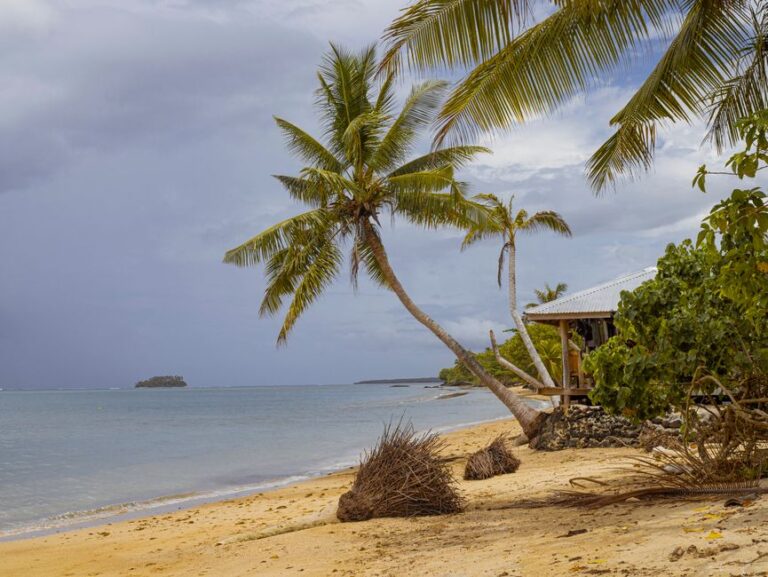
The south coast is the classic Samoa of postcards: long white beaches, turquoise lagoons and beach fales. Lalomanu, at the eastern tip, faces the islet of Nu’utele and is often named one of the best beaches in the South Pacific. Nearby, the To Sua Ocean Trench at Lotofaga is a 30-meter (100-foot) deep sinkhole filled with clear seawater, reached by a long wooden ladder and set in landscaped gardens on a clifftop. Inland, the Le Mafa Pass and the Cross Island Road pass Fuipisia and Sopoaga waterfalls, and O Le Pupu-Pu’e National Park runs from rainforest down to a lava coast with sea arches. On the north coast, the Piula Cave Pool is a freshwater pool in a lava cave beneath a church, and the Papase’ea Sliding Rocks above Apia let you slide down smooth rock chutes into pools.
Manono and Apolima
Manono, off Upolu’s western tip, is reached by a short boat ride from the Manono-uta jetty. There are no cars or dogs, just a path around the island past four villages, beach fales, star mounds and a stone grave said to hold 99 stones. Apolima, inside the crater of an old volcano, needs a family invitation or an arranged visit and a calm sea.
Savai’i
Savai’i rewards a few days of slow travel. Ferries land at Salelologa on the east coast, and a sealed road circles the island. Highlights include the Alofaaga Blowholes at Taga, where waves blast water dozens of meters into the air; the Saleaula lava fields, where lava from Mount Matavanu’s 1905–11 eruptions flowed around a village church that still stands roofless in the rock; Afu Aau Falls, a rainforest waterfall with a deep swimming pool; turtle pools at Satoalepai; and Manase and the north coast beaches, lined with fales. Falealupo, at the western tip, is traditionally believed to be the departure point for souls on their journey to the afterlife.
More to see
- Lake Lanoto’o: a crater lake in Upolu’s highlands, reached on a muddy guided walk through cloud forest.
- Togitogiga Falls: a family swimming spot near the south coast, at the edge of O Le Pupu-Pu’e National Park.
- Aleipata Marine Protected Area: snorkeling off Lalomanu and Namu’a islet.
- Pe’ape’a Cave and Mount Matavanu crater on Savai’i, both visited with local guides.
Upolu Travel Guide
Plan a trip to Upolu, Samoa: Apia's markets and seawall, To Sua Ocean Trench, Lalomanu Beach, Papase'ea Sliding Rocks, Piula Cave Pool, the Robert…
Best time to visit Samoa
Samoa is hot and humid all year, with sea temperatures warm enough for swimming in every month. The seasons are about rain and wind rather than temperature. From May to October southeast trade winds bring drier, slightly cooler and less humid weather, and this is the main travel season, especially June to September when Australian and New Zealand school holidays fall. From November to April the weather is hotter, wetter and stickier, with heavy downpours, and this is also the tropical cyclone season. Most wet-season days still have long sunny spells, and prices are lower.
| Month | Apia high / low | Rain | Days with 1 mm or more |
|---|---|---|---|
| Jan | 31 / 25 °C (87 / 76 °F) | 483 mm (19.0 in) | 20 |
| Feb | 31 / 25 °C (87 / 76 °F) | 406 mm (16.0 in) | 18 |
| Mar | 31 / 25 °C (88 / 76 °F) | 302 mm (11.9 in) | 18 |
| Apr | 31 / 25 °C (88 / 76 °F) | 232 mm (9.1 in) | 14 |
| May | 31 / 24 °C (87 / 75 °F) | 245 mm (9.6 in) | 13 |
| Jun | 30 / 24 °C (86 / 75 °F) | 139 mm (5.5 in) | 10 |
| Jul | 30 / 24 °C (86 / 74 °F) | 133 mm (5.2 in) | 11 |
| Aug | 30 / 23 °C (86 / 74 °F) | 112 mm (4.4 in) | 10 |
| Sep | 30 / 24 °C (86 / 74 °F) | 143 mm (5.6 in) | 12 |
| Oct | 30 / 24 °C (86 / 75 °F) | 221 mm (8.7 in) | 13 |
| Nov | 31 / 24 °C (87 / 76 °F) | 261 mm (10.3 in) | 16 |
| Dec | 31 / 24 °C (87 / 76 °F) | 414 mm (16.3 in) | 18 |
Figures are the official World Meteorological Organization 1991–2020 climate normals for Apia Observatory, supplied by the Samoa Meteorology Division: mean daily maximum and minimum temperature, total rainfall and the number of days with at least 1 mm of rain. Apia gets about 3,090 mm (122 in) of rain a year, on around 173 days. The south and east coasts and the mountains are wetter than Apia; the northwest of Upolu around the airport is a little drier.
Crowds and prices through the year
The busiest periods are late June to early October and the Christmas and New Year holidays, when many Samoans living overseas come home to visit family; flights from New Zealand and Australia fill up and popular beach fales book out. February to April is the quietest time, with the lowest prices and the greatest chance of rain. Resorts discount in the wet season, while family-run fales charge much the same all year.
Festivals and events
- Independence Day (1 June): parades, fautasi (longboat) races and dancing in Apia. Samoa became independent on 1 January 1962 but celebrates in June, in the drier weather.
- Teuila Festival (early September): a week of siva (dance), fire-knife dancing, music, food and a beauty pageant in Apia, named after the red ginger flower.
- White Sunday (second Sunday of October): a day honoring children, who dress in white, lead church services and are served first at family meals; the Monday after is a public holiday.
- Palolo rising (October or November): on one or two nights after the full moon, coral reef worms rise to the surface and villagers scoop them up as a delicacy.
- Christmas and New Year: church choirs, family feasts and many businesses closed for several days.
Sundays in Samoa
Sunday is for church, family and the umu (earth-oven) lunch. Most shops, markets and many attractions close, buses barely run, and swimming or loud activity near villages is frowned on, though resorts carry on as normal. Plan Sundays as a rest day at your accommodation, and get fuel and cash on Saturday. Many villages also hold a short evening prayer time, called sa, when people are asked to stay quiet and not walk or drive through the village.
Public holidays
Government offices, banks and many shops close on public holidays, and the days around Christmas, New Year, Easter and Independence are busy with family travel. Samoa’s holidays include New Year’s Day and the day after, Good Friday, Easter Saturday and Easter Monday, Mother’s Day (a Monday in May), Independence Day (1 June, usually with an extra day), Father’s Day (a Monday in August), White Monday after White Sunday in October, and Christmas and Boxing Day. Exact dates are set each year by the government, so check before booking ferries or car rentals for a holiday weekend.
How long to stay: sample itineraries
Samoa is small and slow, and the pleasure is in staying put on a beach for a few days. One week covers Upolu well; ten days to two weeks lets you add Savai’i at a relaxed pace.
5 days: Upolu
A night in Apia for the market, the seawall and the Robert Louis Stevenson Museum, then three or four nights on the south or east coast, with a day for To Sua Ocean Trench and Lalomanu, a day for waterfalls and the Cross Island Road, and a lazy day of snorkeling and swimming from your fale.
8 days: Upolu and Savai’i
Two nights in Apia or on the north coast, three nights on Upolu’s south coast, then the ferry from Mulifanua to Savai’i for three nights to see the Alofaaga Blowholes, the Saleaula lava fields and Afu Aau Falls, before returning to the airport, about 6 minutes’ drive from the Upolu ferry wharf.
2 weeks: the slow version
Add a night on Manono, more time on Savai’i’s north coast beaches at Manase, a guided walk to Lake Lanoto’o and a few unscheduled days. If you are in Samoa in early September, plan around the Teuila Festival in Apia.
Entry, money and costs
Entry: the free visitor permit (as of October 2026)
Samoa Immigration, part of the Ministry of the Prime Minister and Cabinet, issues foreign visitors a free 90-day visitor permit on arrival; there is no visa to apply for in advance for a holiday. To be granted the permit you need:
- a passport valid for at least six months after your planned departure from Samoa;
- a return or onward ticket, plus any visa you need for your next country;
- your accommodation address in Samoa (hotel or resort, or the village and family name if you stay with friends);
- evidence of enough money to support yourself, typically a recent bank statement.
You fill in an arrival card on the plane. Work is not allowed on a visitor permit, and longer stays need an application to Samoa Immigration in Apia before the permit expires. The Samoa Tourism Authority’s visitor pages still mention a 60-day limit; the 90-day figure here is from Samoa Immigration itself.
Customs and biosecurity
You must declare food, plants, seeds and animal products on arrival, and your bags may be checked by quarantine officers after collection. The duty-free allowance is two liters of alcohol and 200 cigarettes per adult. Firearms, ammunition, drugs and indecent publications are prohibited.
Money, cards and tipping
Cash in tala is still king outside Apia: buses, taxis, markets, village beach and waterfall fees, most fuel stations and many beach fales want cash. Change money at the airport or use the ATMs in Apia, Salelologa and a few larger villages, and carry enough small notes for a few days in the countryside. Resorts, larger hotels, supermarkets and car rental companies take cards, often with a surcharge. Tipping is not part of Samoan culture and is not expected, though a contribution to a village or church fund is welcome. Prices in shops and hotels include value-added goods and services tax.
Customary fees
Most land in Samoa belongs to families and villages, including beaches, waterfalls and swimming holes. Expect to pay a small customary fee, usually a few tala per person or per car, at many beaches and natural sites; it is collected by a family member at a fale by the road, and it pays for the upkeep of the site. Always ask before using a village beach that has no sign.
Typical travel costs
| Item (as of October 2026) | Samoan tala | About US dollars |
|---|---|---|
| Visitor permit on arrival | Free | Free |
| Taxi, Faleolo Airport to Apia | about ST$60–80 | about US$22–29 |
| Local bus, airport to Apia | about ST$5 | about US$1.80 |
| Ferry, Upolu to Savai’i, adult foot passenger, one way | ST$10 | US$3.60 |
| Ferry, car with driver, one way | ST$80–110 | US$29–40 |
| Temporary driving permit, one month | ST$21 (plus any rental company fee) | US$7.60 |
| To Sua Ocean Trench entry, adult | about ST$20 | about US$7 |
| Beach fale with breakfast and dinner, per person | about ST$100–180 | about US$36–65 |
| Mid-range resort room, per night | about ST$350–700 | about US$125–250 |
| Casual meal in Apia | about ST$25–50 | about US$9–18 |
| Local beer | about ST$7–10 | about US$2.50–3.60 |
Taxi, bus, ferry and driving-permit figures are from the Samoa Tourism Authority. The To Sua fee, fale and resort rates, meals and drinks are typical ranges, not official prices. Conversions use about US$0.36 to ST$1 (Central Bank of Samoa indicative rate, 5 October 2026).
Getting there and getting around
Flights
Faleolo International Airport (APW) is on Upolu’s northwest coast, 35 km (22 miles) from Apia. Most travelers fly via Auckland, about 3.5 to 4 hours away, or via Brisbane, Sydney or Nadi in Fiji. There are also flights from Tonga and to American Samoa; small planes to Pago Pago use Fagali’i Airport on the edge of Apia. From North America, the usual route is via Auckland or Nadi, or via Honolulu and American Samoa. Many flights from New Zealand arrive late at night, so book your airport transfer or first night’s room in advance.
From the airport
Hotels and resorts can arrange transfers, and shuttles run to Apia and the main resorts. Taxis wait at the airport; agree the fare before you set off (about ST$60–80 to Apia) and pay in cash. If you land before 5 p.m., a local bus to Apia leaves from the airport’s main entrance for about ST$5.
Ferries to Savai’i
Samoa Shipping Corporation runs daily car and passenger ferries between Mulifanua on Upolu’s west coast, 6 minutes from the airport and about an hour from Apia, and Salelologa on Savai’i. The crossing takes 60 to 90 minutes and passes Manono and Apolima. Foot passengers buy cash tickets at the wharf (ST$10 for adults, ST$5 for children aged 2 to 12, plus ST$20 for the air-conditioned VIP lounge). Vehicle tickets (ST$80–110 each way, driver only) are booked at the company’s office in Apia or through your rental company, and vehicle check-in closes an hour before departure. Ask your rental company first: some only allow their cars on the larger ferry, the Lady Samoa III.
Driving
Renting a car or scooter is the easiest way to explore. All visiting drivers need a temporary Samoan driving permit, issued on presentation of your full home license by most rental companies, the Samoa Tourism information center, Samoa Post or the Land Transport Authority in Apia; it costs ST$21 for one month and can be used for up to 90 days a year. Samoa switched to driving on the left in 2009, so you will still see some left-hand-drive vehicles. The general speed limit is 56 km/h (35 mph), lower in villages, and dogs, pigs, chickens and children often wander onto the road. Street signs are few, so use offline maps. Fuel stations are mainly around Apia and the airport, with very few on Upolu’s south coast; fill up before you leave town and before Sunday, when most stations close.
Buses and taxis
Samoa’s brightly painted wooden buses, many with loud music, run from the Apia bus station to villages around Upolu and around Savai’i from Salelologa. There are no fixed timetables, they stop running in the late afternoon, and they barely run on Sundays, but a ride is cheap and memorable; pay the driver in cash when you get off. Taxis are plentiful in Apia and do not use meters, so agree the price first.
Where to stay
- Beach fales: open-sided huts on stilts on the sand, with woven blinds, a mattress and mosquito net, run by local families. Most include breakfast and dinner and share bathrooms; they are the most Samoan way to stay, especially at Lalomanu, on the south coast, on Manono and on Savai’i.
- Resorts: from small boutique lodges to large family resorts, mainly on Upolu’s south coast, the west coast near the airport and on Savai’i’s east and north coasts.
- Apia hotels and guesthouses: handy for the first or last night, for business, and for the restaurants and nightlife.
- Village homestays: arranged through tour operators or family contacts, the deepest dive into fa’a Samoa.
Culture, food and everyday etiquette
Fa’a Samoa
Samoan society is built around the aiga (extended family) and its matai (chiefs), who manage family land and sit on the village council, the fono. Each village has its own rules, and the church is at the center of community life. Visitors are welcomed warmly, and a few habits show respect: dress modestly away from resorts (cover shoulders and knees in villages and churches; swimwear is for the beach); remove shoes before entering a fale; sit cross-legged and do not stretch your legs out with your feet toward people; do not eat while walking through a village; ask before taking photos of people; and if you are invited to a church service, go, dress up and expect beautiful singing. Traditional tattoo, the tatau, is an important rite, and the full-body male pe’a is still common.
Food and drink
Samoan food is simple and generous. Try oka (raw fish marinated in lime and coconut cream), palusami (young taro leaves baked in coconut cream), taro and breadfruit, sapasui (a Samoan-style chop suey), fresh tuna and reef fish, panipopo (sweet coconut buns), koko Samoa (rich local cocoa, drunk hot) and tropical fruit from the markets. On Sundays families cook an umu, an above-ground oven of hot stones; some resorts and the cultural village in Apia offer an umu experience for visitors. Vailima is the local lager. Avoid tap water unless it has been filtered or boiled.
Safety, health and connectivity
Safety
Samoa is relaxed and welcoming; the main risks are natural, on the water and on the roads.
- Cyclone season: tropical cyclones can affect Samoa from November to April. Follow the Samoa Meteorology Division’s warnings and your accommodation’s instructions, and keep your plans flexible in those months.
- Earthquakes and tsunamis: Samoa sits near the Tonga Trench. A 2009 earthquake caused a tsunami that devastated parts of Upolu’s south and east coasts. If you feel a strong or long earthquake on the coast, move inland or to high ground immediately; many villages have marked evacuation routes.
- Reefs and currents: strong currents run through reef passages, especially at low and outgoing tides; ask locally before swimming or snorkeling, stay inside the lagoon and never swim alone. Most beaches have no lifeguards.
- Coral and marine life: coral cuts infect easily; clean them well. Avoid touching any marine animals, including crown-of-thorns starfish and stonefish; wear reef shoes.
- Waterfalls and To Sua: rocks are slippery, the To Sua ladder is steep, and pools can flood quickly after heavy rain.
- Roads: drive slowly, watch for animals and children, and avoid driving at night outside Apia.
- Dogs: village dogs can be territorial; walk calmly and carry a stick if walking in rural areas.
- Belongings: petty theft happens, especially from open fales and parked cars; use your accommodation’s safe.
Health
Dengue and chikungunya are carried by mosquitoes, so use repellent and sleep under a net; malaria is not present. After a measles outbreak in 2019, Samoan authorities ask all visitors to be up to date with routine vaccinations. Apia has the national hospital and private clinics, but serious cases may need evacuation to New Zealand, so travel insurance that covers medical evacuation is essential. Drink bottled, filtered or boiled water.
Connectivity and power
Digicel and Vodafone sell prepaid SIM cards and data packages in Apia and at the airport; coverage is good around the coast but patchy inland. Wi-Fi in fales can be slow. Power is 230 volts with Type I plugs, the same angled flat pins as Australia and New Zealand.
Things to do: beaches, snorkeling, waterfalls and culture
Swim and snorkel in the lagoons of Lalomanu, Namu’a and Palolo Deep; climb down into To Sua; slide down Papase’ea; dive in the cool, clear Piula Cave Pool; swim under Togitogiga, Sopoaga and Afu Aau falls; watch the Alofaaga Blowholes erupt; walk the Saleaula lava fields; surf the reef breaks of Upolu’s south coast (for experienced surfers, with a guide); kayak to small islets; join a village tour or cultural show with fire-knife dancing; and go deep-sea fishing from Apia. Whales pass through Samoan waters from about July to October, though Samoa does not have a whale-swim industry like Vava’u in Tonga.
Diving, surfing and fishing
Samoa is not a big-name dive destination, which keeps its reefs quiet. Dive shops on Upolu and Savai’i run trips to coral walls, swim-throughs and a few wrecks, with turtles, reef sharks and big schools of fish; visibility is usually best in the dry season. Surfing is for experienced surfers only: the waves break over shallow reef, mostly on the south coasts of Upolu and Savai’i, and the best swells arrive from about May to October. Surf camps provide boat transfers and guides who know the village rules about which breaks may be surfed and when. Game fishing for marlin, tuna and mahi-mahi runs from Apia harbor.
Responsible travel
Ask before swimming, fishing or flying a drone near a village; pay customary fees with a smile; take your rubbish back to town, as villages have limited waste collection; use reef-safe sunscreen; never stand on coral; and buy handicrafts, such as siapo (bark cloth), woven mats and carvings, directly from makers at the markets in Apia and Salelologa.
What to pack
Light, quick-drying clothes, plus a lavalava (sarong) or long skirt, or shorts that cover the knees, and a shirt with sleeves for villages and church; swimwear, reef shoes, a snorkel set, reef-safe sunscreen, a hat and sunglasses; strong insect repellent; a light rain jacket; a headlamp for fales; a dry bag for boat trips; cash in small notes; and a Type I power adapter.
Samoa travel FAQ
Do I need a visa to visit Samoa?
No. Visitors receive a free 90-day visitor permit on arrival, provided they have a passport valid for six months beyond departure, a return or onward ticket, an accommodation address in Samoa and enough funds for their stay. Longer stays need a permit from Samoa Immigration.
What is the best time to visit Samoa?
May to October, the drier, less humid season with steady trade winds. June to September is busiest. November to April is hotter and wetter and is the cyclone season, with lower prices.
Is Samoa the same as American Samoa?
No. Samoa is an independent country; American Samoa, about 130 km (80 miles) east, is a US territory with its own entry rules. Samoa is also a calendar day ahead, as the two are on opposite sides of the International Date Line.
Which island should I stay on: Upolu or Savai’i?
Start on Upolu, where you land and where most sights, restaurants and resorts are. Add Savai’i for at least two or three nights if you want quieter beaches, lava fields and blowholes.
How do I get from Upolu to Savai’i?
Take the Samoa Shipping Corporation ferry from Mulifanua, near the airport, to Salelologa, about 60 to 90 minutes. Foot passengers pay ST$10 in cash at the wharf; cars must be booked in Apia or through your rental company.
Can I drive in Samoa with my license?
Yes, with a temporary Samoan driving permit issued on your full home license by rental companies, Samoa Post or the Land Transport Authority (ST$21 for a month). Drive on the left and keep to 56 km/h (35 mph) or less.
What is a beach fale?
A traditional open-sided hut on the beach, usually on stilts with a thatched or tin roof and woven blinds for privacy. Family-run fales typically include a mattress, mosquito net, breakfast and dinner, with shared bathrooms.
How much does it cost to visit To Sua Ocean Trench?
There is an entry fee paid on site, typically about ST$20 for adults, covering the gardens, the ladder down to the trench and the clifftop. Check the current price on arrival.
Do I need cash in Samoa?
Yes. Buses, taxis, markets, customary fees, ferry foot tickets, many fales and most fuel stations take cash in tala only. Use ATMs in Apia and carry small notes.
What are the rules for Sundays in Samoa?
Sunday is for church and family. Most shops, markets and fuel stations close, buses barely run, and noisy activities near villages are inappropriate. Visitors are welcome at church services if dressed modestly.
When is cyclone season in Samoa?
From November to April. Cyclones do not strike every year, but follow official warnings and keep travel plans flexible during those months.
Is Samoa safe for tourists?
Samoa is generally relaxed and friendly. The main risks are ocean currents at reef passages, coral cuts, slippery waterfall rocks, wandering animals on roads, tsunamis after strong earthquakes and cyclones in the wet season.
What plug adapter do I need for Samoa?
Type I, the angled flat-pin plug used in Australia and New Zealand; the supply is 230 volts.
Sources and last review
Researched and last reviewed on 5 October 2026. Visitor permit rules come from Samoa Immigration (Ministry of the Prime Minister and Cabinet); arrival, customs, taxi, bus, ferry and driving-permit information from the Samoa Tourism Authority; climate from the World Meteorological Organization’s 1991–2020 normals for Apia (Samoa Meteorology Division); exchange rates from the Central Bank of Samoa; population and area from Wikidata. Attraction fees, accommodation and meal prices, festival dates and some cultural details are general estimates or secondary sources. Prices and rules change, so check official sites before you go.
Plugs and power in Samoa
Samoa uses 230 V, 50 Hz and these plugs (left) and wall sockets (right):
All plug types and voltages by country → · Check what you need to pack →
Plan your trip
Partner links: TravelerCenter may earn a commission if you book, at no extra cost to you.