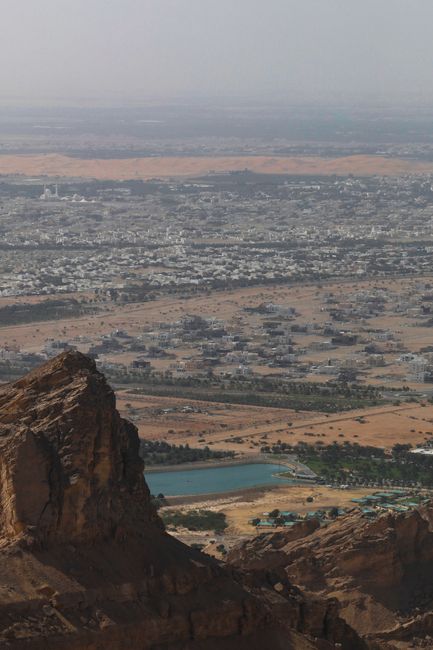
Al Ain, the “garden city” of the United Arab Emirates, lies inland on the border with Oman, about 1.5 hours from both Abu Dhabi and Dubai, and offers a completely different side of the country: shady date-palm oases watered by ancient channels, mud-brick forts, Bronze Age tombs and the bare limestone ridge of Jebel Hafit rising above the desert. It is the birthplace of the UAE’s founding president, Sheikh Zayed bin Sultan Al Nahyan, and part of the emirate of Abu Dhabi. In 2011 its oases and archaeological sites became the UAE’s first UNESCO World Heritage Site, the Cultural Sites of Al Ain (Hafit, Hili, Bidaa Bint Saud and Oases Areas), which show more than 5,000 years of settlement in the desert, from Neolithic tombs to the falaj irrigation systems still in use today. About 770,000 people live in the city, which has low-rise buildings, tree-lined roundabouts and a relaxed pace. Al Ain has an inland desert climate: hotter and drier than the coast in summer, with average highs of 45 °C (113 °F) in July, and pleasantly warm in winter, with cool nights.
Right now in Al Ain
- Wed 29–43°C 85–110°F Mostly clear
- Thu 30–42°C 85–108°F Mostly clear
- Fri 28–41°C 83–105°F Clear
Weather: MET Norway (CC BY 4.0)
Top tours in Al Ain
See all tours for Al Ain →
From local operators, with prices and reviews; you check availability and book on Viator, our partner. We may earn a commission at no extra cost to you. How we earn money
Al Ain at a glance
- Best months: November to March, with days of about 25–31 °C (77–88 °F) and cool nights, sometimes near 10 °C (50 °F) in January. May to September is extremely hot.
- Time needed: a long day trip covers the oasis, a fort and Jebel Hafit; two or three days allow the archaeological parks, the zoo and a desert sunset.
- Getting there: about 160 km (100 miles) by road from Abu Dhabi and about 130 km (80 miles) from Dubai, by car, taxi or intercity bus.
- Costs (as of October 2026): city buses cost AED 2 (about US$0.55) plus 5 fils per kilometer with a Hafilat card; several heritage sites are free or low cost.
- Before you go: visas, the weekend, alcohol and medicine rules are covered in our United Arab Emirates travel guide.
Al Ain areas and who each one suits
City center and the oasis
The compact center wraps around Al Ain Oasis, with the Al Ain Museum, Qasr Al Muwaiji, the souk and the old camel market nearby. Hotels here suit travelers without a car who want to walk to the main heritage sites.
Jebel Hafit
South of the city, the mountain road climbs Jebel Hafit, with a hotel near the summit and the Green Mubazzarah park and hot springs at its foot. Stay here for views, quiet and cooler nights.
Hili and the north
The northern suburbs have the Hili Archaeological Park, Hili Fun City and large malls. Practical for drivers heading to Dubai.
Al Ain Zoo and the south
Around the zoo, resort-style hotels and family attractions make this area popular with families.
Top things to see in Al Ain
Al Ain Oasis
The largest oasis in the city covers about 1,200 hectares (3,000 acres) with around 147,000 date palms of about 100 varieties, watered by falaj, underground and surface channels that carry water from the mountains. Shaded paths lead through working palm groves, with an eco-center explaining date farming and the falaj system. The oasis is open daily from 9 a.m. to 7 p.m. (hours may vary during Eid). Visit early or late in the day, when the light filters through the palms. The UN’s Food and Agriculture Organization also recognizes Al Ain’s oases as a store of plant genetic resources.
Al Jahili Fort
Built in the 1890s as a summer residence for the ruling family and a guard post for the palm groves, this fine mud-brick fort with a round, crenelated tower has an exhibition on the British explorer Wilfred Thesiger, who crossed the Empty Quarter in the 1940s, with his photographs of Bedouin life. Open daily 9 a.m. to 6 p.m.
Qasr Al Muwaiji
The restored fort where Sheikh Khalifa bin Zayed, the second president of the UAE, was born houses an exhibition on the ruling family and Al Ain’s history. Open 9 a.m. to 7 p.m.
Al Ain Museum
The UAE’s oldest museum, founded in 1969, reopened after redevelopment with galleries on the region’s archaeology, from Hafit and Hili tombs to Iron Age falaj villages, and on traditional life. Open daily 9 a.m. to 7 p.m., next to the oasis. (The nearby Al Ain Palace Museum, Sheikh Zayed’s former home, has been closed for renovation since July 2024.)
Jebel Hafit
At about 1,240 m (4,070 feet), Jebel Hafit is the second-highest mountain in the UAE. A smooth, winding road climbs nearly to the summit, with lookouts over the city, the Oman plain and the desert; sunset and evening, when the city lights come on, are the best times. At its foot, Jebel Hafit Desert Park protects some of the 5,000-year-old beehive-shaped stone tombs that gave the Hafit period its name, part of the UNESCO site, with walking trails and seasonal activities.
Hili Archaeological Park
North of the center, this park preserves Bronze Age settlements and the reconstructed Great Hili Tomb, a round tomb about 4,500 years old decorated with carvings of people and animals.
Other things to do in Al Ain
- Al Ain Zoo: a large zoo and safari park focused on Arabian and African wildlife, including Arabian oryx and sand gazelles, with a desert learning center.
- Camel market: one of the last traditional camel markets in the UAE, near Bawadi Mall; it is busiest in the morning. Ask before photographing people, and expect to be offered a tip-for-a-photo.
- Green Mubazzarah: a park at the foot of Jebel Hafit with grassy lawns, hot springs and chalets.
- Bidaa Bint Saud: an archaeological site north of the city with Iron Age falaj and tombs, on an old caravan route.
- Shopping: Al Ain Mall, Bawadi Mall and the date and vegetable souks.
Food and drink
Al Ain is famous for dates, especially during the summer harvest (roughly June to August), when markets fill with fresh khalas, lulu and other varieties. Try Emirati dishes such as harees and machboos, camel-milk products and Arabic coffee, and the city’s many Indian, Pakistani and Lebanese restaurants. Alcohol is served in a few licensed hotels only, to people aged 21 and over.
Day trips from Al Ain
Abu Dhabi
About 1.5 hours west, the capital has the Sheikh Zayed Grand Mosque and the Louvre Abu Dhabi. See our Abu Dhabi guide.
Dubai
About 1.5 hours northwest, with the Burj Khalifa and the old souks. See our Dubai guide.
Hatta and the mountains
Dubai’s mountain enclave of Hatta, with kayaking on a dam lake and bike trails, is about 1.5 hours northeast through the Hajar foothills.
Buraimi (Oman)
Al Ain’s twin town of Buraimi lies across the border in Oman. The two were once open to each other, but crossing now requires passing an official border post with the right visa; check the current rules and car insurance before attempting it.
Nearby destinations
Getting there and getting around
By road and bus
Most visitors arrive by car or taxi from Abu Dhabi (about 160 km or 100 miles) or Dubai (about 130 km or 80 miles), on fast, wide highways. Intercity buses connect Al Ain’s main bus station with Abu Dhabi and Dubai several times a day; intercity fares are not included in the standard city fare system. Al Ain International Airport has very few scheduled passenger flights; international visitors normally fly to Abu Dhabi’s Zayed International or Dubai International. Since early 2026, regional tensions have led to periodic airspace closures across the Gulf, so flights can be delayed, rerouted or canceled at short notice; check your flight with the airline and the airport’s status before you travel.
City buses and the Hafilat card
Abu Dhabi Mobility’s city buses cover Al Ain on the same fare system as Abu Dhabi: pay with a Hafilat smart card, tapping on and off.
| Al Ain city bus fare (as of October 2026) | Price |
|---|---|
| Boarding fee, standard service | AED 2 |
| Each kilometer traveled | 5 fils (AED 0.05) |
| Maximum fare for a trip over 60 km | AED 5 |
| Children aged 10 and under | Free |
Transfers within 60 minutes of tapping off don’t pay a second boarding fee.
Taxis and driving
Taxis are metered and inexpensive, and ride-hailing apps work in the city. A rental car is the easiest way to combine the oasis, Jebel Hafit and the archaeological sites; distances are short, and roads are wide and well signposted. Drive on the right, watch for speed cameras and never drive after drinking any alcohol.
When to go and how long to stay
November to March is the best time: days are warm and dry, with averages of 25–31 °C (77–88 °F), and nights are cool, so bring a sweater. April and October are hot, around 37–38 °C (98–100 °F). May to September is extreme: Al Ain is one of the hottest places in the UAE, with average July highs of 45 °C (113 °F) and extremes of 49 °C (121 °F), though the air is drier than on the coast. Summer is date-harvest season, and some outdoor sites are best visited only in the early morning.
| Month | Average high | Average low | Rain | Highest recorded |
|---|---|---|---|---|
| Jan | 25 °C (76 °F) | 13 °C (55 °F) | 15 mm (0.6 in) | 32 °C (89 °F) |
| Feb | 28 °C (82 °F) | 14 °C (58 °F) | 5 mm (0.2 in) | 37 °C (98 °F) |
| Mar | 31 °C (88 °F) | 17 °C (63 °F) | 18 mm (0.7 in) | 43 °C (109 °F) |
| Apr | 37 °C (98 °F) | 22 °C (71 °F) | 6 mm (0.2 in) | 44 °C (112 °F) |
| May | 42 °C (108 °F) | 26 °C (78 °F) | 1 mm (0 in) | 49 °C (121 °F) |
| Jun | 45 °C (112 °F) | 28 °C (83 °F) | 1 mm (0 in) | 49 °C (120 °F) |
| Jul | 45 °C (113 °F) | 30 °C (86 °F) | 5 mm (0.2 in) | 49 °C (121 °F) |
| Aug | 45 °C (112 °F) | 31 °C (87 °F) | 2 mm (0.1 in) | 49 °C (120 °F) |
| Sep | 42 °C (108 °F) | 28 °C (82 °F) | 1 mm (0 in) | 48 °C (118 °F) |
| Oct | 38 °C (100 °F) | 24 °C (75 °F) | 0 mm (0 in) | 43 °C (110 °F) |
| Nov | 31 °C (89 °F) | 19 °C (66 °F) | 2 mm (0.1 in) | 38 °C (100 °F) |
| Dec | 27 °C (80 °F) | 15 °C (59 °F) | 7 mm (0.3 in) | 35 °C (95 °F) |
| Year | 36 °C (97 °F) | 22 °C (72 °F) | 62 mm (2.4 in) | 49 °C (121 °F) |
Figures are the 1991–2020 climate normals for Al Ain International Airport that the UAE submitted to the World Meteorological Organization (26 years of records); “highest recorded” is the hottest day in each month over that period. Rare summer thunderstorms build over the mountains in the afternoon.
Events worth planning around
- Date harvest (about June to August): fresh dates in the souks and date events in the region.
- UAE National Day (2 December): celebrations across the city.
- Winter cultural programs: heritage activities and guided walks at the oasis and forts in the cooler months.
- Ramadan: in 2027 expected from about 8 February to 9 March; heritage-site hours change, often to 10 a.m. to 10 p.m.
Dates change each year; check with the organizers.
How long to stay: 1, 2 and 3 days
- One day: Al Ain Oasis and the Al Ain Museum, Al Jahili Fort, then sunset on Jebel Hafit.
- Two days: add Qasr Al Muwaiji, the camel market and Hili Archaeological Park.
- Three days: add Al Ain Zoo, Jebel Hafit Desert Park and Green Mubazzarah.
Where to stay in Al Ain
- City center: mid-range hotels near the oasis and museum.
- Jebel Hafit: a mountaintop hotel with views over the city.
- Near the zoo and Green Mubazzarah: resort-style hotels and chalets.
- Hili and the north: business hotels close to the Dubai road.
Al Ain’s hotels are generally cheaper than those in Abu Dhabi and Dubai; bills add VAT, service charges and Abu Dhabi’s municipality and tourism fees.
Typical costs in Al Ain
| Item (as of October 2026) | UAE dirhams | About US dollars |
|---|---|---|
| City bus boarding fee / maximum fare | AED 2 / 5 | $0.55 / $1.35 |
| Taxi across the city | about AED 15–30 | about $4–8 |
| Al Ain Zoo, adult | about AED 30–40 | about $8–11 |
| Casual restaurant meal | about AED 25–60 | about $7–16 |
| Mid-range hotel room, per night in winter | about AED 250–500 | about $70–135 |
Bus fares are official; the rest are typical ranges, not official prices. The dirham is pegged at about AED 3.67 to US$1.
Safety in Al Ain
Al Ain is a safe, quiet city with low crime. The biggest risk is the heat, along with the driving and strict laws.
- Heat: summer highs of 45 °C (113 °F) are normal. Visit outdoor sites in the morning or late afternoon, carry plenty of water and wear a hat and sunscreen; take breaks in shade.
- Desert and mountains: don’t drive off-road without a properly equipped 4×4, a companion vehicle, water and a phone; Jebel Hafit’s road is steep, so watch for speeding cars and cyclists.
- Border: Al Ain borders Oman; only cross at official border posts with the correct visa.
- Dress code and decency: Al Ain is more conservative than Dubai; cover shoulders and knees, and avoid public displays of affection, swearing and rude gestures.
- Alcohol: only in a few licensed hotels, at 21 or over; being drunk in public is an offense, and drink-driving has zero tolerance.
- Ramadan: don’t eat, drink or smoke in public during daylight hours.
- Drugs and medicines: UAE drug laws are severe, and some prescription medicines need approval from the UAE Ministry of Health before travel.
- Photography: ask before photographing people, including at the camel market, and avoid military sites.
- Flight disruptions: since early 2026, regional tensions have led to periodic airspace closures across the Gulf, and flights can be delayed, rerouted or canceled at short notice. Check your flight with the airline and the airport’s status before you travel, and follow instructions from the local authorities, including emergency alerts sent to phones.
- Emergencies: police 999, ambulance 998, fire 997.
Practical tips for Al Ain
- Time zone: Gulf Standard Time (UTC+4) all year.
- Weekend: Saturday and Sunday; many sites close briefly or open late on Friday because of midday prayers.
- Money and plugs: cards are widely accepted; carry cash for the camel market and small shops. Sockets are type G at 230 V.
What to pack for Al Ain
Pack light, loose clothes that cover shoulders and knees, a wide-brimmed hat, sunglasses, high-SPF sunscreen and comfortable shoes for oasis paths and fort steps. In winter, add a warm layer for cool evenings on Jebel Hafit. Carry a refillable water bottle everywhere.
Al Ain travel FAQ
Is Al Ain a UNESCO World Heritage Site?
Yes. The Cultural Sites of Al Ain (Hafit, Hili, Bidaa Bint Saud and Oases Areas) were inscribed in 2011 as the UAE’s first World Heritage Site.
What are Al Ain Oasis’s opening hours?
Daily from 9 a.m. to 7 p.m.; hours may vary during Eid holidays and Ramadan.
How far is Al Ain from Abu Dhabi and Dubai?
About 160 km (100 miles) from Abu Dhabi and 130 km (80 miles) from Dubai, roughly 1.5 hours by road from each.
Can you drive up Jebel Hafit?
Yes. A paved road climbs almost to the summit at about 1,240 m (4,070 feet), with viewpoints along the way; it is best at sunset.
Is the Al Ain Palace Museum open?
It has been closed for renovation since 1 July 2024. The Al Ain Museum next to the oasis is open daily from 9 a.m. to 7 p.m.
What is a falaj?
An ancient irrigation channel that brings groundwater from the mountains to the oases. Al Ain’s falaj system still waters its date palms today.
Can I cross from Al Ain into Oman?
Only through an official border post with the correct visa and car insurance. Buraimi, Al Ain’s twin town, is in Oman.
What is the best time to visit Al Ain?
November to March, when days are warm and nights cool. Summer is extremely hot, with average highs of 45 °C (113 °F).
Is Al Ain good for a day trip?
Yes. From Abu Dhabi or Dubai you can see the oasis, a fort and the museum, then drive up Jebel Hafit for sunset before heading back.
Can you drink alcohol in Al Ain?
Only in a few licensed hotel venues, at 21 or over. There are no bars in the city center outside hotels.
Sources and last review
Researched and last reviewed on 5 October 2026. Opening hours for Al Ain Oasis, Al Jahili Fort, Qasr Al Muwaiji and the Al Ain Museum, the Al Ain Palace Museum’s closure and the Jebel Hafit Desert Park description come from the Department of Culture and Tourism’s Abu Dhabi Culture website; the World Heritage listing from UNESCO; bus fares and the Hafilat card from Abu Dhabi Mobility; laws, medicines, emergency numbers and the factual background on local rules from GOV.UK’s UAE travel information (updated 24 July 2026); climate from the 1991–2020 normals the UAE submitted to the World Meteorological Organization; population from Wikidata. The oasis’s size and palm count, Jebel Hafit’s height, history, the zoo, camel market, border rules, intercity buses, hotel fees, events, Ramadan 2027 dates, distances and typical prices are general references and flagged for checking. For entry rules and money, see our United Arab Emirates travel guide.
Plan your trip
Partner links: TravelerCenter may earn a commission if you book, at no extra cost to you.
🇪🇬 Useful Arabic phrases for Al Ain
All 38 Arabic phrases: restaurant, hotel, emergencies, romance (printable) →