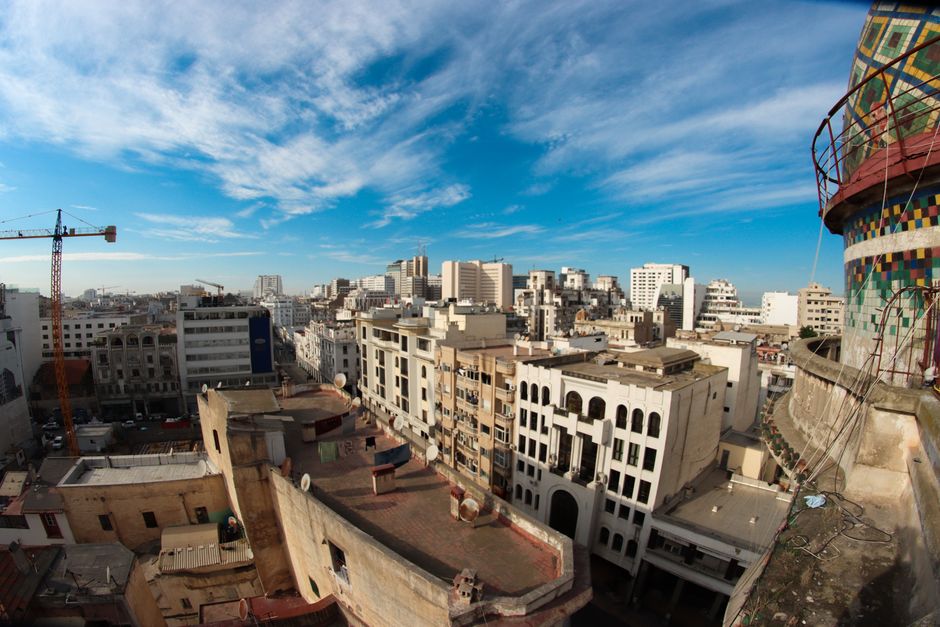
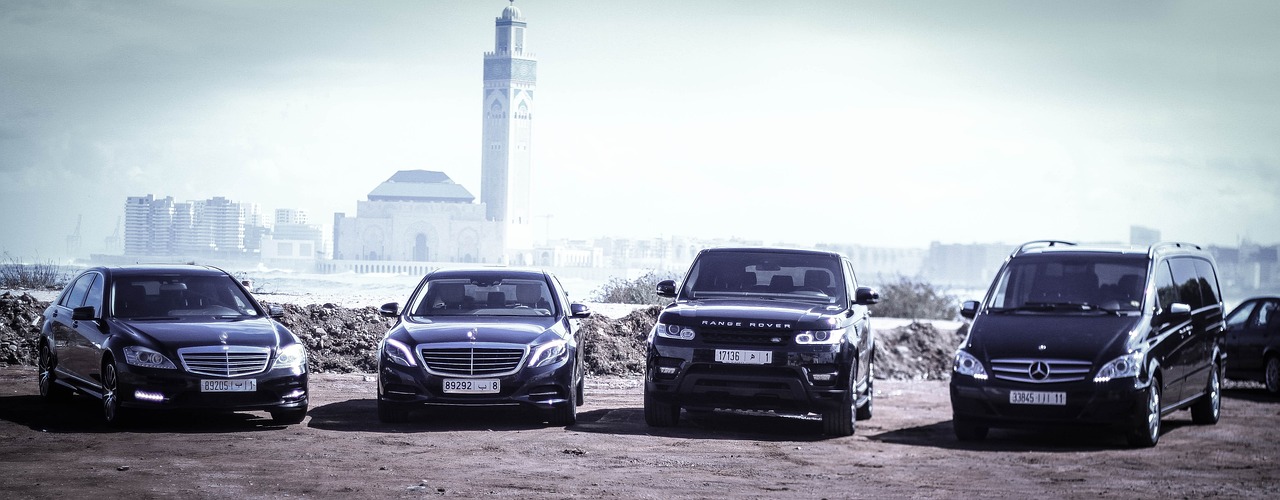
Casablanca, Morocco’s largest city and economic capital, is where most long-haul visitors first land, and it surprises people who expect the black-and-white romance of the 1942 film. This is a modern Atlantic port city of more than three million people, with palm-lined boulevards, a remarkable collection of Art Deco and Moorish-revival buildings from the early 20th century, and a beachfront Corniche of cafés, surf schools and seafood restaurants. Its great landmark is the Hassan II Mosque, built partly over the ocean and completed in 1993, with one of the tallest minarets in the world; it is one of the very few mosques in Morocco that non-Muslims can enter, on official guided tours. Around it you can explore the small old medina, the elegant Habous quarter with its pastry shops and olive sellers, the downtown squares and the Central Market. Casablanca is also the hub of Morocco’s rail network, with the Al Boraq high-speed train to Rabat and Tangier and fast connections to Marrakech, so many visitors spend just a night or two. Give it a day or two and it rewards you with good food, architecture and a glimpse of everyday urban Morocco. The climate is mild all year, thanks to the ocean.
Right now in Casablanca
- Wed21–24°C69–74°FClear
- Thu19–23°C66–73°F1 mm rain
- Fri17–22°C63–71°FMostly clear
Top tours in Casablanca
See all tours for Casablanca →
From local operators, with prices and reviews; you check availability and book on Viator, our partner. We may earn a commission at no extra cost to you. How we earn money
Casablanca at a glance
- Best for: the Hassan II Mosque, Art Deco architecture, the Corniche, seafood, nightlife and an easy start to a Morocco trip.
- How long: 1–2 full days; 3 with day trips to Rabat or El Jadida.
- Best time: April to June and September to October; the climate is mild all year.
- Getting there: fly into Mohammed V International (CMN), or take Al Boraq from Tangier and Rabat or a train from Marrakech and Fez.
- Getting around: the tram, petit taxis and ride-hailing apps; walk downtown and in Habous.
- Good to know: check the Hassan II Mosque tour times in advance, and dress with shoulders and knees covered.
- Before you go: visas, money and general safety are in our Morocco travel guide.
Casablanca’s areas and where to stay
The city stretches for kilometers along the Atlantic. The historic core, around the port, the old medina and the downtown boulevards, is compact; the Corniche and the business districts lie west and south.
Downtown and the old medina
The downtown grid around Place Mohammed V and Boulevard Mohammed V is packed with Art Deco facades, wrought-iron balconies and 1930s cinemas, along with the Central Market and many mid-range hotels. Next to the port, the walled old medina is small and workaday, with simple hotels and a few restored riads near the Hassan II Mosque.
The Corniche and Ain Diab
The Corniche in Ain Diab, west of the mosque, has beach clubs, ocean-view hotels, restaurants, bars and Morocco Mall nearby. It’s the place for sunsets, beach walks and nightlife, and a short taxi ride from downtown.
Gauthier, Maarif and Racine
These leafy residential and shopping districts west of downtown have boutique hotels, apartments, cafés and many of the city’s best restaurants. They’re a good base if you want a quieter, more local feel.
Where to stay in Casablanca
- Downtown: central, near Casa Port station, the markets and the Art Deco streets.
- Near the Hassan II Mosque or the old medina: walking distance to the mosque and the sea.
- Corniche, Ain Diab: ocean views, beaches and nightlife.
- Gauthier and Maarif: boutique hotels, restaurants and cafés.
- Casa Voyageurs or the airport: practical for early trains and flights.
Top things to see in Casablanca
The Hassan II Mosque
Built between 1986 and 1993 on land reclaimed from the Atlantic, the Hassan II Mosque has a minaret about 210 m (690 ft) high and a prayer hall large enough for tens of thousands of worshippers, with a retractable roof, heated floors and the work of thousands of Moroccan craftsmen in carved cedar, marble, plaster, zellige and tadelakt. Non-Muslims can visit the interior only on a guided tour, which covers the prayer hall, the minaret hall and the ablutions hall. According to the Fondation de la Mosquée Hassan II, tours cost MAD 140 (about US$14) for foreign adults, MAD 70 for Moroccans, residents and foreign students, and MAD 30 for children aged 4 to 12; children under 4 enter free. From mid-September to mid-March, tours start Saturday to Thursday at 9, 10 and 11 a.m. and 2 p.m., and on Friday at 9 and 10 a.m. and 2 p.m.; from mid-March to mid-September, a 3 p.m. tour is added, and the schedule changes during Ramadan. Cover shoulders, chest and knees (no shorts or sleeveless tops), and take your shoes with you in the bags provided. Buy tickets at the counter on the esplanade and arrive early. The mosque’s museum has a separate ticket.
Art Deco downtown
Casablanca has one of the world’s richest collections of early 20th-century architecture, built under the French protectorate in a mix of Art Deco, Neo-Moorish and modernist styles. Walk along Boulevard Mohammed V and around Place Mohammed V, with the courthouse, post office and the Wilaya’s clock tower, and look up at the decorated facades of apartment buildings, hotels and the Rialto cinema. The white Sacré-Cœur cathedral, a former church now used as a cultural space, stands in the Arab League Park.
The Habous quarter
Built in the 1930s as a “new medina,” the Habous quarter has arcaded streets, a small mosque, bookshops, olive and spice stalls and some of the city’s most famous Moroccan pastry shops. It’s calmer than the old medinas elsewhere and a good place to shop for crafts and ceramics. The royal palace of Casablanca stands nearby.
The old medina and the port
The old medina behind the port walls is a lived-in neighborhood with cheap stalls, a restored sqala (fortified bastion) and lanes that lead down to the Hassan II Mosque. Near the port, the fish market and simple grills serve the day’s catch.
Museums
- Villa Carl Ficke, Museum of Casablanca’s Memory: a 1930s villa telling the city’s history (MAD 50 for foreign visitors; daily except Tuesday, 10 a.m. to 6 p.m., according to the National Museums Foundation).
- Museum of Photography and Visual Arts: in the old medina, with the same prices and hours.
- Museum of Moroccan Judaism: in the Oasis district, the only museum of its kind in the Arab world.
- Hassan II Mosque Museum: on the history and craftsmanship of the mosque.
The Corniche and the beaches
The Corniche at Ain Diab is the city’s seaside promenade, busiest at sunset and on weekend evenings. The Atlantic is cold and the surf can be strong, so swim only where lifeguards are present, usually in summer; surf schools offer lessons for beginners. At low tide you can walk out to the island shrine of Sidi Abderrahmane. See our beaches and surfing guides.
Other things to do in Casablanca
Food and drink
Casablanca has Morocco’s most varied food scene. Go to the Central Market for oysters, sea urchins and grilled fish cooked to order at the stalls around it; try fish tagines and seafood pastilla in the port restaurants; and eat Moroccan pastries in Habous. Downtown and Gauthier have cafés, international restaurants and bars, and the Corniche has beach clubs. Alcohol is easier to find here than in most Moroccan cities, in licensed bars, hotels and restaurants.
Shopping
Shop for crafts and ceramics in Habous, food and spices in the Central Market, and international brands in Morocco Mall on the Corniche, one of the largest malls in Africa.
The 2030 World Cup
Morocco is co-hosting the 2030 FIFA World Cup with Spain and Portugal. The government’s World Cup stadium list includes the new Grand Stade Hassan II at Benslimane, between Casablanca and Rabat, with a planned gross capacity of 115,000 seats, and the bid proposed it for the opening match and the final. Expect continued construction of roads, rail and stadiums around the city before 2030.
Day trips from Casablanca
- Rabat: the capital, with the Kasbah of the Udayas and the Hassan Tower, less than an hour by train; see our Rabat guide.
- El Jadida: the 16th-century Portuguese city of Mazagan, a UNESCO site with a famous cistern, about 100 km (62 miles) southwest.
- Azemmour: a small medina above the Oum Er-Rbia river, near El Jadida, with street art.
- Mohammedia and Dar Bouazza: beaches and surf spots north and south of the city.
- Marrakech: about 2 hours 40 minutes by train; better as a stay than a day trip; see our Marrakech guide.
Getting there and getting around
By air
Mohammed V International Airport (CMN), about 30 km (19 miles) south of downtown, is Morocco’s main hub and the base of Royal Air Maroc, with flights from Europe, North America, the Middle East and Africa, and domestic links to most Moroccan cities. ONCF trains run from the airport station to Casa Voyageurs and Casa Port in about 35–45 minutes; official taxis wait outside arrivals, with fixed fares to the city.
By train
Casablanca has two main stations. Casa Voyageurs, east of downtown, is the terminus of the Al Boraq high-speed line, which stops at Rabat Agdal and Kenitra on the way to Tangier; according to the Moroccan National Tourist Office, the trip from Casablanca to Tangier takes about 2 hours 10 minutes. Conventional trains from Casa Voyageurs run to Marrakech in about 2 hours 40 minutes and to Fez and Meknes. Casa Port, by the harbor, is closer to downtown and serves the airport and the Rabat–Kenitra line. ONCF is building a high-speed line from Kenitra through Casablanca to Marrakech, with major works in the Casablanca area expected to last until the end of 2027, so some trains may run on adjusted timetables.
Getting around
The tram network links downtown, the train stations, the Corniche, Ain Diab and the suburbs, and is the easiest way to get around; buy a rechargeable card at the machines. Red petit taxis carry up to three passengers and should use the meter; drivers often pick up other passengers on the way. Ride-hailing apps work, but drivers may not be licensed. Traffic is heavy, and parking is hard downtown, so most visitors don’t drive in the city.
When to go and how long to stay
Casablanca has a mild Atlantic climate. Summer is warm but rarely hot, with highs around 26–27 °C (79–81 °F), sea breezes and morning mist. Winter is mild, around 18 °C (64 °F) by day and 9 °C (48 °F) at night, with rain on six or seven days a month from November to March. Spring and autumn are pleasant for walking. The sea is coolest in winter and warmest in August and September. The table uses the 1991–2020 climate normals for the Casablanca-Anfa station of Morocco’s General Directorate of Meteorology (DGM), as published by the World Meteorological Organization (WMO): average daily highs and lows, total precipitation, and days with at least 1 mm of rain.
| Month | Average high / low | Rain (days with 1 mm or more) | What to expect |
|---|---|---|---|
| January | 18 °C (64 °F) / 9 °C (48 °F) | 62 mm (2.4 in), 6 days | Mild and showery |
| February | 18 °C (65 °F) / 10 °C (49 °F) | 50 mm (2.0 in), 6 days | Mild, some rain |
| March | 20 °C (67 °F) / 12 °C (53 °F) | 42 mm (1.7 in), 6 days | Pleasant; spring begins |
| April | 21 °C (69 °F) / 13 °C (56 °F) | 34 mm (1.3 in), 5 days | Pleasant; good for walking |
| May | 23 °C (73 °F) / 16 °C (61 °F) | 14 mm (0.5 in), 2 days | Warm and sunny |
| June | 25 °C (76 °F) / 19 °C (66 °F) | 2 mm (0.1 in), 1 day | Warm; morning mist possible |
| July | 26 °C (79 °F) / 20 °C (69 °F) | 0 mm (under 0.1 in), 0 days | Warm, breezy; busy beaches |
| August | 27 °C (80 °F) / 21 °C (70 °F) | under 1 mm, 0 days | Warmest month; beach season |
| September | 26 °C (79 °F) / 20 °C (67 °F) | 12 mm (0.5 in), 2 days | Warm; quieter beaches |
| October | 24 °C (76 °F) / 17 °C (62 °F) | 45 mm (1.8 in), 5 days | Pleasant; first rains |
| November | 21 °C (70 °F) / 13 °C (55 °F) | 84 mm (3.3 in), 7 days | Mild; one of the wettest months |
| December | 19 °C (66 °F) / 10 °C (51 °F) | 62 mm (2.4 in), 6 days | Mild and wet; festive downtown |
Casablanca receives about 410 mm (16 in) of rain a year, almost none from June to August.
One day in Casablanca
Take the morning tour of the Hassan II Mosque, walk along the ocean to the old medina and lunch on seafood at the Central Market; spend the afternoon among the Art Deco buildings of Boulevard Mohammed V and Place Mohammed V, then take a taxi to the Corniche for sunset.
Two to three days
Add the Habous quarter, the Villa Carl Ficke museum and the Museum of Moroccan Judaism, an evening in Gauthier, and a day trip to Rabat or El Jadida.
What a trip to Casablanca costs
Prices are approximate, for October 2026, converted at about MAD 9.85 to the US dollar (Bank Al-Maghrib reference rate).
| Item | Typical cost |
|---|---|
| Hassan II Mosque guided tour (foreign adult) | MAD 140 (about US$14) |
| Villa Carl Ficke museum (foreign visitor) | MAD 50 (about US$5) |
| Tram ride | MAD 6–8 (about US$0.60–0.80) |
| Petit taxi across downtown | MAD 15–40 (about US$1.50–4) |
| Seafood meal at the Central Market | MAD 100–250 (about US$10–25) |
| Mid-range restaurant dinner | MAD 200–400 (about US$20–41) |
| Mid-range hotel double, per night | MAD 800–1,800 (about US$80–185) |
Practical tips for Casablanca
- Plan the mosque visit: tours run at set times and pause for prayers; Friday has fewer slots.
- Dress for the mosque: shoulders, chest and knees covered; shoes off inside.
- Use the tram: it’s cheap, fast and links the stations with the Corniche.
- Check the train station: Al Boraq leaves from Casa Voyageurs, not Casa Port.
- Carry small notes: for taxis, tips and market stalls.
Safety in Casablanca
Casablanca is a big, busy city, and the usual urban precautions apply. Pickpocketing and bag snatching, sometimes from motorbikes, happen around stations, markets, the old medina and crowded trams, so keep phones and bags out of reach. Be wary of unofficial guides and people who offer help at the stations. Use petit taxis with meters or agree the fare first. At night, stay in busy areas such as the Corniche, Gauthier and Maarif, and take a taxi rather than walking through empty streets. The Atlantic here has strong waves and currents: swim only at supervised beaches in season, follow the flags and lifeguards, and don’t swim alone or after drinking. Traffic is chaotic, so cross roads carefully. In an emergency, call 190 for the police and 150 for an ambulance or fire.
What to pack for Casablanca
Layers for cool mornings and evenings, a light rain jacket from November to March, comfortable walking shoes, clothes that cover shoulders and knees for the mosque, swimwear and sunscreen in summer, and a smart outfit for restaurants and bars. Morocco uses 220 V with two-pin European sockets. See our rain jackets and travel adapters guides.
Casablanca travel FAQ
Can non-Muslims visit the Hassan II Mosque?
Yes, on official guided tours of the prayer hall, minaret hall and ablutions hall. Tours run several times a day except during prayers; dress modestly and remove your shoes.
How much is the Hassan II Mosque tour?
According to the mosque’s foundation, MAD 140 (about US$14) for foreign adults, MAD 70 for foreign students and residents, MAD 30 for children aged 4 to 12, and free for children under 4.
What time are the Hassan II Mosque tours?
From mid-September to mid-March, Saturday to Thursday at 9, 10 and 11 a.m. and 2 p.m., and Friday at 9 and 10 a.m. and 2 p.m.; a 3 p.m. tour is added from mid-March to mid-September. Times change during Ramadan.
Is Casablanca worth visiting?
Yes, for a day or two: the Hassan II Mosque, the Art Deco downtown, Habous and the seafood are highlights, and the city is a convenient start or end to a trip.
How do I get from Casablanca airport to the city?
Take the ONCF airport train to Casa Voyageurs or Casa Port, about 35–45 minutes, or an official taxi from the arrivals hall.
How long is the train from Casablanca to Marrakech?
About 2 hours 40 minutes on ONCF’s conventional trains from Casa Voyageurs. A high-speed line to Marrakech is under construction.
How long is Al Boraq from Casablanca to Tangier?
About 2 hours 10 minutes, with stops at Rabat Agdal and Kenitra. Trains leave from Casa Voyageurs.
Can you swim in Casablanca?
Yes, at the beaches of Ain Diab and nearby resorts, but the Atlantic is cool and the surf can be strong; swim only at supervised beaches.
Is Rick’s Café real?
The film was shot in Hollywood, but a restaurant inspired by it opened in a restored mansion near the old medina in 2004, and it’s a popular dinner stop.
Will Casablanca host the 2030 World Cup?
Morocco co-hosts the 2030 World Cup with Spain and Portugal, and the new Grand Stade Hassan II at Benslimane, near Casablanca, is planned as one of the venues.
Plan your trip
Partner links: TravelerCenter may earn a commission if you book, at no extra cost to you.
🇪🇬 Useful Arabic phrases for Casablanca
All 38 Arabic phrases: restaurant, hotel, emergencies, romance (printable) →
Sources · last reviewed 5 October 2026
Researched and last reviewed on 5 October 2026. Hassan II Mosque tour prices, times and dress rules: the Fondation de la Mosquée Hassan II; Villa Carl Ficke and photography museum prices and hours: the National Museums Foundation; Al Boraq times and stops: the Moroccan National Tourist Office and ONCF; the Kenitra–Marrakech line and Casablanca works: ONCF and the Moroccan government portal; the 2030 World Cup stadium capacity: the Moroccan government’s World Cup stadium page; the UNESCO listing of Mazagan: the UNESCO World Heritage Center; emergency numbers: the UK government’s factual safety pages, used for practical facts only; the exchange rate: Bank Al-Maghrib; climate normals: Morocco’s General Directorate of Meteorology via the World Meteorological Organization’s 1991–2020 normals (Casablanca-Anfa station). The minaret height, construction dates, airport train times, the tram, Rick’s Café and typical prices are general references or estimates, flagged for checking. Prices and rules change, so check locally before you go. For visas, money and general safety, see our Morocco travel guide.
Data: Weather: MET Norway (CC BY 4.0) · Sea temperature: NOAA CoastWatch · Rates: ECB · Costs: World Bank ICP and price levels · Wikidata (CC0)