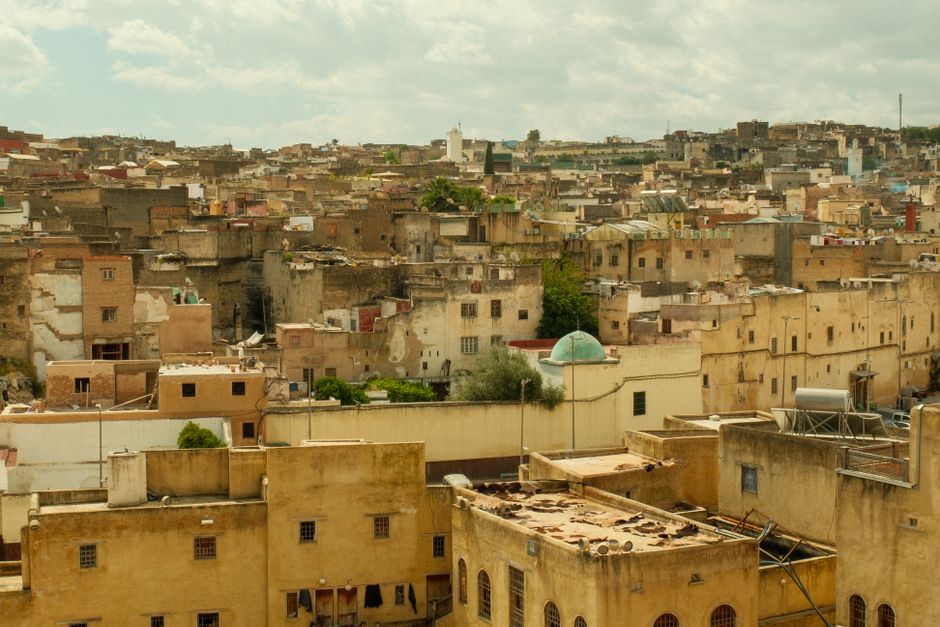
Fez (Fès) is Morocco’s oldest imperial city and its spiritual and craft capital. Founded at the end of the 8th century by the Idrisid dynasty, it grew into one of the great cities of the medieval Islamic world, and its old walled medina, Fes el-Bali, is thought to be the largest car-free urban area in the world: around 9,000 lanes and alleys where donkeys and handcarts still carry goods past mosques, fountains, madrasas and workshops. The Medina of Fez was the first Moroccan site listed by UNESCO, in 1981. Here you can see the Marinid madrasas of Bou Inania and Al-Attarine, glimpse the courtyard of the Al-Qarawiyyin mosque and university, founded in 859, look down on the dye pits of the Chouara tannery, and hear coppersmiths hammering on Seffarine square. Fez is less polished than Marrakech, and many visitors find it more authentic. It is also a base for the Roman ruins of Volubilis, the holy town of Moulay Idriss, the imperial city of Meknes and the cedar forests of the Middle Atlas. The best months are March to May and October to November; summer afternoons are hot.
Right now in Fez
- Wed 17–27°C 62–80°F 3 mm Showers
- Thu 16–27°C 61–81°F 1 mm Partly cloudy
- Fri 15–21°C 59–70°F 9 mm Heavy rain
Weather: MET Norway (CC BY 4.0)
Top tours in Fez
See all tours for Fez →
From local operators, with prices and reviews; you check availability and book on Viator, our partner. We may earn a commission at no extra cost to you. How we earn money
Fez at a glance
- Best for: the medieval medina, madrasas, crafts and tanneries, riads, food and day trips to Volubilis and the Middle Atlas.
- How long: 2 full days for the medina; 3–4 days with Meknes, Volubilis or Ifrane.
- Best time: March to May and October to November; July and August average about 35 °C (95 °F) in the afternoon.
- Getting there: fly into Fes–Saïss (FEZ), or take the train from Rabat, Casablanca, Tangier (changing at Kenitra) or Marrakech.
- Getting around: on foot in the medina, with petit taxis to the gates and the new town.
- Good to know: hire a licensed guide for your first morning; the lanes are a maze, and phone maps are only partly reliable.
- Before you go: visas, money and general safety are in our Morocco travel guide.
Fez’s areas and where to stay
Fez has three parts. Fes el-Bali, the old medina, fills a valley with two banks, the Qarawiyyin and Andalusian quarters. Fes el-Jdid, “New Fez,” was built by the Marinids in the 13th century around the Royal Palace and the Mellah. The Ville Nouvelle, the French-built new town, lies to the southwest with the station, avenues and modern hotels.
Fes el-Bali around Bab Bou Jeloud
The Blue Gate (Bab Bou Jeloud) is the main entrance to the old medina, and the two main streets, Talaa Kebira and Talaa Seghira, run downhill from here to the Qarawiyyin. Riads and guesthouses around the gate and along these streets are the most convenient, with taxis waiting just outside the walls.
Deep in the medina
Restored riads and dars near the Qarawiyyin, the Andalusian quarter and the Batha museum are quieter at night and give you a real sense of living inside the medieval city, but they may be a 10–20 minute walk from the nearest taxi point, uphill on the way back. Ask your riad to meet you at the gate on arrival.
Fes el-Jdid and the Ville Nouvelle
The Ville Nouvelle has large hotels with pools, cafés, restaurants that serve alcohol, and the train station; it’s practical for short stays and late arrivals. Fes el-Jdid, between the two, has simple hotels near the Royal Palace and the Mellah.
Where to stay in Fez
- Riad near Bab Bou Jeloud: easy access, lively streets, rooftop views over the medina.
- Riad deeper in Fes el-Bali: atmosphere and quiet, but more walking.
- Ville Nouvelle hotel: pools, parking and the station nearby.
- Hilltop hotels near Borj Nord: views over the medina and space for a car.
Top things to see in Fez
Bou Inania Madrasa
Built in the 1350s by the Marinid sultan Abu Inan, the Bou Inania Madrasa near the Blue Gate is one of the few religious buildings in Morocco open to non-Muslims. Its courtyard is a masterpiece of carved cedar, stucco and zellige tilework, and unusually it has its own minaret and prayer hall. Entry costs a small fee, about MAD 20 (about US$2); it closes to visitors at prayer times, especially around midday on Fridays.
Al-Qarawiyyin and Al-Attarine Madrasa
Al-Qarawiyyin, founded in 859 by Fatima al-Fihri, is often described as the world’s oldest continuously operating university, and is still a working mosque. Non-Muslims cannot enter, but you can look through the great doors into the courtyard. Next to it, the small Al-Attarine Madrasa, completed by the Marinids in the 1320s, has some of the finest decoration in the city and costs about MAD 20. The Nejjarine fountain and the museum of wooden arts in an old caravanserai are nearby.
The Chouara tannery
At the Chouara tannery, the largest of the medina’s tanneries, hides are soaked and dyed by hand in stone vats much as they were centuries ago. The only views are from the terraces of the leather shops around it; staff will hand you a sprig of mint against the smell and show you the process, hoping you’ll buy a bag or a jacket. Entry is free, a small tip is customary, and you’re under no obligation to buy. Go in the morning, when the dye pits are most colorful.
The souks and Seffarine square
The medina is organized by trade: the henna souk, the carpet and slipper sellers, the cloth merchants of the Kissaria, and Seffarine square, where coppersmiths hammer cauldrons and trays in the shade of a plane tree. Fez is known for blue and white pottery and zellige tiles, which are made in workshops outside the walls, and for embroidery and leather.
The Batha Museum
The Al Batha Museum of Islamic Arts, in a 19th-century summer palace with an Andalusian garden, reopened after restoration and shows Fez ceramics, carved wood, astrolabes and manuscripts. According to the National Museums Foundation, entry costs MAD 60 (about US$6) for foreign visitors, and the museum opens daily except Tuesday, from 10 a.m. to 6 p.m.
Fes el-Jdid, the Royal Palace and the Mellah
The golden brass doors of the Royal Palace (Dar el-Makhzen), set in a wall of zellige and carved cedar, are one of the most photographed sights in Morocco; the palace itself is closed to the public. Beside it, the Mellah, the old Jewish quarter, has houses with wooden balconies facing the street, the restored Ibn Danan synagogue and a large Jewish cemetery.
Borj Nord and the Marinid Tombs
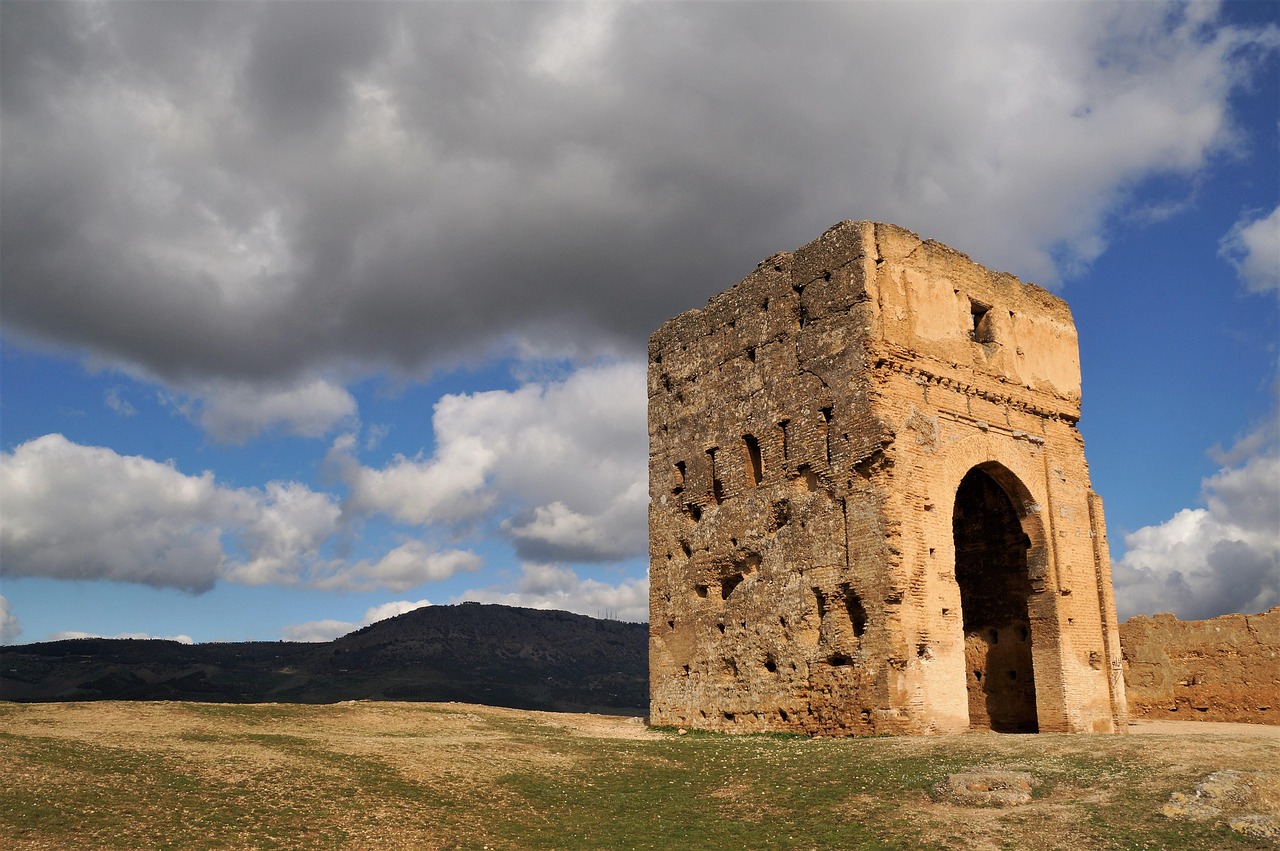
For the classic view over the whole medina, walk or take a taxi up to the ruined Marinid Tombs on the hill to the north, best at sunset when the call to prayer rises from hundreds of minarets. The nearby Borj Nord fortress houses an arms museum.
Other things to do in Fez
Food and drink
Fez is famous for pastilla, a flaky pie of pigeon or chicken with almonds, cinnamon and sugar, and for bissara, a fava-bean soup eaten for breakfast with olive oil and cumin. Try khlii, preserved dried beef cooked into eggs, at a medina snack bar, and sweets such as chebakia and almond briouats. Medina restaurants and riads serve set menus of salads, tagines and couscous; alcohol is easier to find in the Ville Nouvelle. Cooking classes often start with a market tour.
Crafts and workshops
Visit the pottery and zellige workshops in the Ain Nokbi area, where tiles are cut and set by hand, or take a calligraphy, weaving or leatherwork class in a cultural riad. Buy directly from workshops, compare prices before you commit, and keep receipts for shipping.
Hammams and gardens
The medina’s neighborhood hammams are inexpensive and authentic; riads and hotels have private spa hammams. The Jnan Sbil gardens, between Fes el-Bali and Fes el-Jdid, are a shady place to rest, with palms, bamboo and a lake.
Day trips from Fez
- Meknes: the imperial city of Moulay Ismail, about 60 km (37 miles) west and under an hour by train; see our Meknes guide.
- Volubilis and Moulay Idriss: the Roman city and the hilltop holy town, about 1.5 hours by road; often combined with Meknes.
- Ifrane and Azrou: the Alpine-style resort town of Ifrane at about 1,650 m (5,400 ft), and the cedar forest near Azrou with Barbary macaques; about 1–1.5 hours south.
- Sefrou: a small medina and waterfalls, about 30 km (19 miles) south.
- Chefchaouen: the blue town of the Rif, about 4 hours by road; better as an overnight stay; see our Chefchaouen guide.
- The road to the Sahara: Fez is a common start for 3-day trips through the Middle Atlas and the Ziz valley to Merzouga.
Nearby destinations
- Meknes53 km
- Chefchaouen127 km
- Rabat169 km
- Tangier205 km
- Tarifa226 km
- Casablanca247 km
- Marbella275 km
- Costa del Sol275 km
Getting there and getting around
By air
Fes–Saïss Airport (FEZ), about 15 km (9 miles) south of the city, has flights from several European cities and domestic links. Taxis to the medina gates take about 25 minutes; agree the fare first, or book a transfer through your riad.
By train
Fez station is in the Ville Nouvelle. ONCF trains run to Meknes in under an hour, Rabat in about 2.5–3 hours, Casablanca in about 3.5–4 hours, and Marrakech in about 7 hours. For Tangier, take a train to Kenitra and change to the Al Boraq high-speed train, which ONCF connects at Kenitra; the whole journey takes about 3 hours.
By bus and road
CTM and Supratours buses link Fez with Chefchaouen, Tangier, Marrakech and the south. Roads to Ifrane, Azrou and Midelt cross the Middle Atlas, where snow can close passes in winter.
Getting around
Inside Fes el-Bali you walk, and you will get lost; that’s part of the experience. Main streets slope downhill toward the Qarawiyyin, so if you’re lost, walking uphill usually brings you back to a gate. Listen for “balak!” (watch out), the warning that a loaded donkey or cart is coming. Red petit taxis connect the medina gates, Fes el-Jdid and the Ville Nouvelle; insist on the meter.
When to go and how long to stay
Fez lies inland at about 400–600 m (1,300–2,000 ft), so it has hotter summers and colder winters than the coast. Spring and autumn are the most comfortable, with highs of about 20–26 °C (68–79 °F). In summer afternoons average about 35 °C (95 °F), and the medina lanes trap the heat. Winter days are mild, around 16–17 °C (61–63 °F), but nights are cold, about 4 °C (39 °F), and it rains on six or seven days a month, so pick a riad with heating. The table uses the 1991–2020 climate normals for the Fès-Saïss station of Morocco’s General Directorate of Meteorology (DGM), as published by the World Meteorological Organization (WMO): average daily highs and lows, total precipitation, and days with at least 1 mm of rain.
| Month | Average high / low | Rain (days with 1 mm or more) | What to expect |
|---|---|---|---|
| January | 16 °C (61 °F) / 4 °C (39 °F) | 60 mm (2.4 in), 7 days | Cool and damp; cold nights in riads |
| February | 17 °C (63 °F) / 4 °C (40 °F) | 54 mm (2.1 in), 6 days | Cool; almond blossom |
| March | 20 °C (68 °F) / 7 °C (44 °F) | 59 mm (2.3 in), 7 days | Mild, showery; spring begins |
| April | 22 °C (72 °F) / 8 °C (47 °F) | 55 mm (2.2 in), 6 days | Pleasant; green countryside |
| May | 26 °C (80 °F) / 12 °C (53 °F) | 38 mm (1.5 in), 5 days | Warm and sunny; very good |
| June | 31 °C (88 °F) / 15 °C (59 °F) | 11 mm (0.4 in), 2 days | Hot afternoons |
| July | 35 °C (95 °F) / 18 °C (64 °F) | 1 mm (under 0.1 in), 0 days | Very hot; sightsee early |
| August | 35 °C (95 °F) / 18 °C (65 °F) | 5 mm (0.2 in), 1 day | Very hot; quieter medina |
| September | 30 °C (87 °F) / 16 °C (60 °F) | 22 mm (0.9 in), 2 days | Hot early, then pleasant |
| October | 26 °C (79 °F) / 13 °C (55 °F) | 54 mm (2.1 in), 5 days | Warm days; excellent |
| November | 20 °C (68 °F) / 8 °C (47 °F) | 66 mm (2.6 in), 6 days | Mild with some rain |
| December | 17 °C (63 °F) / 5 °C (41 °F) | 62 mm (2.4 in), 6 days | Cool and damp; bring warm layers |
Fez receives about 490 mm (19 in) of rain a year, almost all between October and May.
Events worth planning around
The Fes Festival of World Sacred Music brings Sufi, gospel and classical musicians to palace courtyards each year, usually in late spring. During Ramadan, expected to begin in early February 2027, the medina is quiet by day and busy after the evening meal.
Two days in Fez
Day one, the medina with a licensed guide: Bab Bou Jeloud, the Bou Inania Madrasa, Talaa Kebira, the Nejjarine fountain, the Al-Attarine Madrasa, the doors of the Qarawiyyin, Seffarine square and the Chouara tannery; sunset at the Marinid Tombs. Day two, the Batha Museum and Jnan Sbil gardens, the Royal Palace doors and the Mellah, a pottery workshop, and a hammam.
Three to four days
Add a day trip to Volubilis, Moulay Idriss and Meknes, and another to Ifrane and the Azrou cedar forest, or continue to Chefchaouen.
What a trip to Fez costs
Prices are approximate, for October 2026, converted at about MAD 9.85 to the US dollar (Bank Al-Maghrib reference rate).
| Item | Typical cost |
|---|---|
| Bou Inania or Al-Attarine Madrasa | about MAD 20 (about US$2) |
| Batha Museum (foreign visitor) | MAD 60 (about US$6) |
| Licensed medina guide, half day | MAD 300–500 (about US$30–50) |
| Bissara breakfast or medina snack | MAD 10–40 (about US$1–4) |
| Riad dinner | MAD 150–350 (about US$15–36) |
| Petit taxi across town | MAD 15–40 (about US$1.50–4) |
| Mid-range riad double, per night | MAD 700–1,600 (about US$70–160) |
Practical tips for Fez
- Hire a licensed guide first: a half day with an official guide shows you the layout; after that, explore alone.
- Save your riad’s location: and its phone number, and note the nearest gate.
- Learn the gates: Bab Bou Jeloud, Bab Guissa, Bab R’cif and Bab Ftouh are the main taxi points.
- Carry small notes: for madrasa tickets, tannery tips and snacks.
- Watch for Friday closures: many shops and madrasas close around midday prayers.
Safety in Fez
Fez is generally safe, but the medina has many unofficial guides who approach visitors near the Blue Gate and in the lanes, offering directions or a “shortcut” to the tannery and then asking for money or steering you into shops. Say no politely and firmly, and if you want help, ask your riad to book a licensed guide with an official badge. Some will tell you a lane is closed or that it’s a special “Berber market day”; ignore it. Keep valuables close in crowded souks, and agree taxi fares before the ride if the driver won’t use the meter. The lanes are poorly lit late at night, so stick to main streets or ask your riad to walk you back. In winter, the Middle Atlas roads to Ifrane, Azrou and Midelt can be closed by snow, and fog and ice make night driving risky. Summer heat can pass 40 °C (104 °F), so carry water. In an emergency, call 190 for the police and 150 for an ambulance or fire.
What to pack for Fez
Comfortable shoes with grip for steep, slippery lanes, light clothes that cover shoulders and knees, a scarf, a warm sweater and rain jacket for winter, a sun hat for summer, a small zipped daypack, offline maps, and cash in small notes. Morocco uses 220 V with two-pin European sockets. See our hiking shoes, rain jackets and travel adapters guides.
Fez travel FAQ
How many days do I need in Fez?
Two full days for the medina; three or four to add Volubilis, Meknes or the Middle Atlas.
Do I need a guide in the Fez medina?
Not required, but a licensed guide for your first half day helps you understand the layout and avoid unofficial guides. Book through your riad and check the official badge.
Can non-Muslims visit Al-Qarawiyyin?
No, the mosque is closed to non-Muslims, but you can look into the courtyard from the doors. The Bou Inania and Al-Attarine madrasas are open to visitors.
How much does it cost to visit the Chouara tannery?
Entry is free through the leather shops around it; a small tip is customary, and there’s no obligation to buy.
How much is the Batha Museum?
MAD 60 (about US$6) for foreign visitors, according to the National Museums Foundation; it is closed on Tuesdays.
How do I get from Fez to Chefchaouen?
By CTM bus or private transfer, in about 4 hours. There’s no train to Chefchaouen.
Is Fez safe for tourists?
Yes, for most visitors; the main issues are unofficial guides, getting lost and pickpocketing in crowds. Use licensed guides and keep to main lanes at night.
How do I get from Fez to Marrakech?
By direct train in about 7 hours, by bus, or with a short domestic flight. Many travelers break the trip in Rabat or Casablanca, or go via the desert over three days.
What is the best time to visit Fez?
March to May and October to November. Summer afternoons average about 35 °C (95 °F), and winter nights are cold.
Can I take the high-speed train from Fez?
Not directly. Take a conventional train to Kenitra and change to Al Boraq for Tangier, or stay on the conventional train to Rabat and Casablanca.
Sources and last review
Researched and last reviewed on 5 October 2026. The UNESCO listing: the UNESCO World Heritage Center; the Batha Museum price and hours: the National Museums Foundation; Al Boraq connections at Kenitra: ONCF; emergency numbers: the UK government’s factual safety pages, used for practical facts only; the exchange rate: Bank Al-Maghrib; climate normals: Morocco’s General Directorate of Meteorology via the World Meteorological Organization’s 1991–2020 normals (Fès-Saïss station). Madrasa prices, the founding dates, the number of lanes, train and road times, the festival and Ramadan dates and typical prices are general references or estimates, flagged for checking. Prices and rules change, so check locally before you go. For visas, money and general safety, see our Morocco travel guide.
Plan your trip
Partner links: TravelerCenter may earn a commission if you book, at no extra cost to you.
🇪🇬 Useful Arabic phrases for Fez
All 38 Arabic phrases: restaurant, hotel, emergencies, romance (printable) →