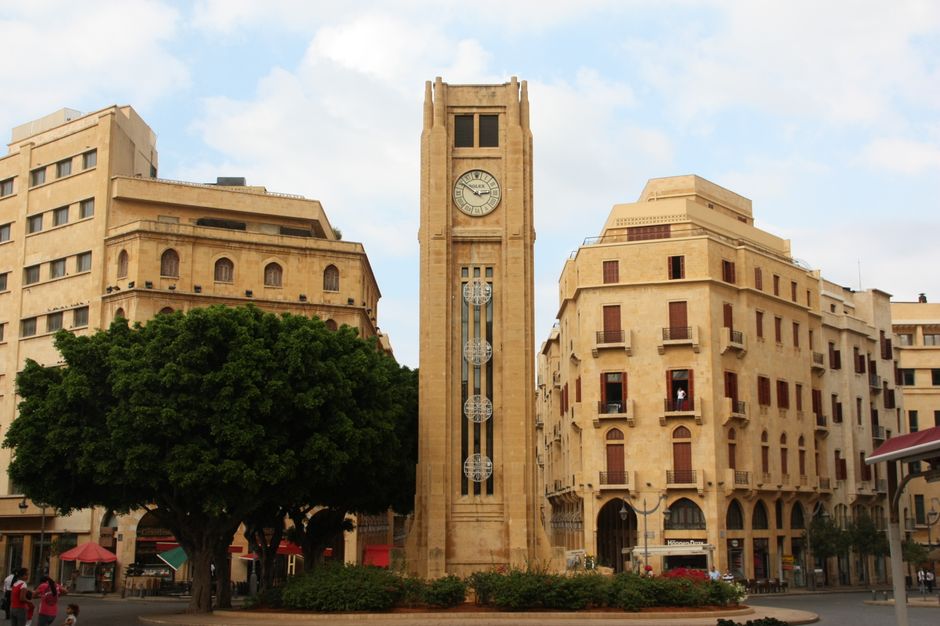
Lebanon is a small country on the eastern shore of the Mediterranean that fits an astonishing amount into a short drive: a lively capital on the sea, some of the oldest continuously inhabited towns in the world, Roman temples on a colossal scale, cedar forests and monasteries in deep mountain valleys, wineries in the Beqaa Valley and, in winter, ski slopes less than two hours from the beach. Most visitors start in Beirut, with its seafront Corniche, the National Museum, the cafés of Gemmayzeh and Mar Mikhael and one of the best restaurant scenes in the region, then head 40 km (25 miles) up the coast to Byblos (Jbeil), a harbor town with a Crusader castle and ruins that span some 7,000 years. Lebanon has seven UNESCO World Heritage sites, including Baalbek, Anjar, Tyre and the Qadisha Valley with the Cedars of God. Arabic is the official language, and French and English are widely spoken. Citizens of the United States, Canada, the UK, the European Union, Australia and many other countries receive a free one-month visa on arrival, according to Lebanon’s General Security. The best months are April to June and September to November. A week covers Beirut, Byblos and the highlights within reach.
Right now in Lebanon
- Wed21–25°C69–77°F1 mm rain
- Thu21–27°C70–81°FClear
- Fri24–27°C76–80°FClear
Multi-day tours of Lebanon
Multi-day tours from local operators. You check dates and book on Viator, our partner; we may earn a commission at no extra cost to you. How we earn money
Lebanon at a glance
Lebanon covers about 10,450 km² (4,036 sq miles), smaller than Connecticut, and stretches roughly 225 km (140 miles) along the Mediterranean. Two parallel mountain ranges run the length of the country: Mount Lebanon, rising steeply from the coast to more than 3,000 m (9,800 ft) at Qurnat as Sawda’, the highest point, and the drier Anti-Lebanon range to the east. Between them lies the Beqaa Valley, a high, fertile plain of vineyards and farmland. Because the mountains are so close to the sea, you can swim in the morning and be in snow or cedar forest by lunch for much of the spring.
Arabic is the official language, and the spoken Lebanese dialect is understood across the Arab world. French and English are widely used in business, education, hotels and restaurants, and many Lebanese switch between all three in a single sentence. Lebanon is home to a mix of Christian and Muslim communities, and churches, mosques and monasteries often stand side by side. The country uses Eastern European Time (UTC+2) in winter and UTC+3 in summer, with daylight saving time from late March to late October. Sockets are a mix of the European two-pin (type C), the older round three-pin (type D) and the British three-pin (type G), at 220 V, so bring a universal adapter.
Lebanon’s regions
- Beirut: the capital and its own governorate, on a headland in the middle of the coast, with the international airport on its southern edge.
- Mount Lebanon and Keserwan-Jbeil: the coast and mountains north and east of Beirut, with Jounieh Bay, Harissa, the Jeita Grotto, Byblos, the ski resorts of Faraya and Mzaar and, to the south, the Chouf mountains with Beiteddine Palace, Deir el Qamar and the Shouf cedar reserve.
- The North: the old port town of Batroun, the city of Tripoli with its medieval souks and Crusader-era citadel, and inland, the Qadisha Valley, Bsharri and the Cedars of God.
- The Beqaa Valley: the Roman temples of Baalbek, the Umayyad town of Anjar, the riverside town of Zahle and the country’s best-known wineries.
- The South: the coastal cities of Sidon (Saida), with its Sea Castle and old souks, and Tyre (Sour), with its Roman ruins and sandy beaches.
Where to go: the capital, the coast and the mountains
Lebanon is compact enough that most visitors base themselves in Beirut and make day trips, adding a night or two in the mountains or up the coast. See our guides:
- Beirut: the seafront Corniche and the Pigeon Rocks of Raouché, the National Museum, the Sursock Museum, Downtown’s mosques, cathedrals and Roman baths, the bars and galleries of Gemmayzeh and Mar Mikhael, and some of the best food in the Middle East.
- Byblos (Jbeil): a small harbor town with a 12th-century Crusader castle, an archaeological site layered with Phoenician temples, a Roman theater and royal tombs, an old souk, beaches and a summer music festival.
Other highlights include the Jeita Grotto, a spectacular limestone cave system in the hills above the coast; Harissa, where a bronze statue of Our Lady of Lebanon looks down over Jounieh Bay; the Roman temple complex of Baalbek; the ruined Umayyad city of Anjar; the monasteries of the Qadisha Valley and the ancient Cedars of God; the 19th-century palace of Beiteddine; and the coastal towns of Batroun, Tripoli, Sidon and Tyre.
Beirut Travel Guide
Plan a trip to Beirut: neighborhoods from Gemmayzeh and Mar Mikhael to Achrafieh, Hamra and Raouché, the National Museum, the Corniche and Pigeon Rocks,…
Byblos Travel Guide
Plan a trip to Byblos (Jbeil): the Crusader castle and archaeological site, the Temple of the Obelisks, the Roman theater and royal tombs, the…
Beyond Beirut and Byblos
Lebanon’s World Heritage sites
UNESCO lists seven World Heritage sites in Lebanon: Anjar, Baalbek, Byblos and Tyre (all inscribed in 1984); Ouadi Qadisha (the Holy Valley) and the Forest of the Cedars of God (1998); the Rachid Karami International Fair in Tripoli, a modernist exhibition ground designed by the Brazilian architect Oscar Niemeyer (2023); and the Mount Amel Castles (2026). Eight more sites, including the historic centers of Batroun, Sidon and Tripoli and the Temple of Eshmun near Sidon, are on Lebanon’s tentative list.
Jeita Grotto and Harissa
About 20 km (12 miles) north of Beirut, the Jeita Grotto is two connected limestone caves carved by the Nahr al-Kalb river: an upper gallery that you walk through, among enormous stalactites and stalagmites, and a lower cave visited by small boat when water levels allow. Photography is not allowed inside. The grotto’s official accounts give its hours as Tuesday to Sunday, 9 a.m. to 5 p.m. Nearby, a cable car (the téléphérique) climbs from the seafront at Jounieh to Harissa, where the shrine of Our Lady of Lebanon and a modern basilica overlook the bay, one of the best views on the coast.
Baalbek and the Beqaa Valley
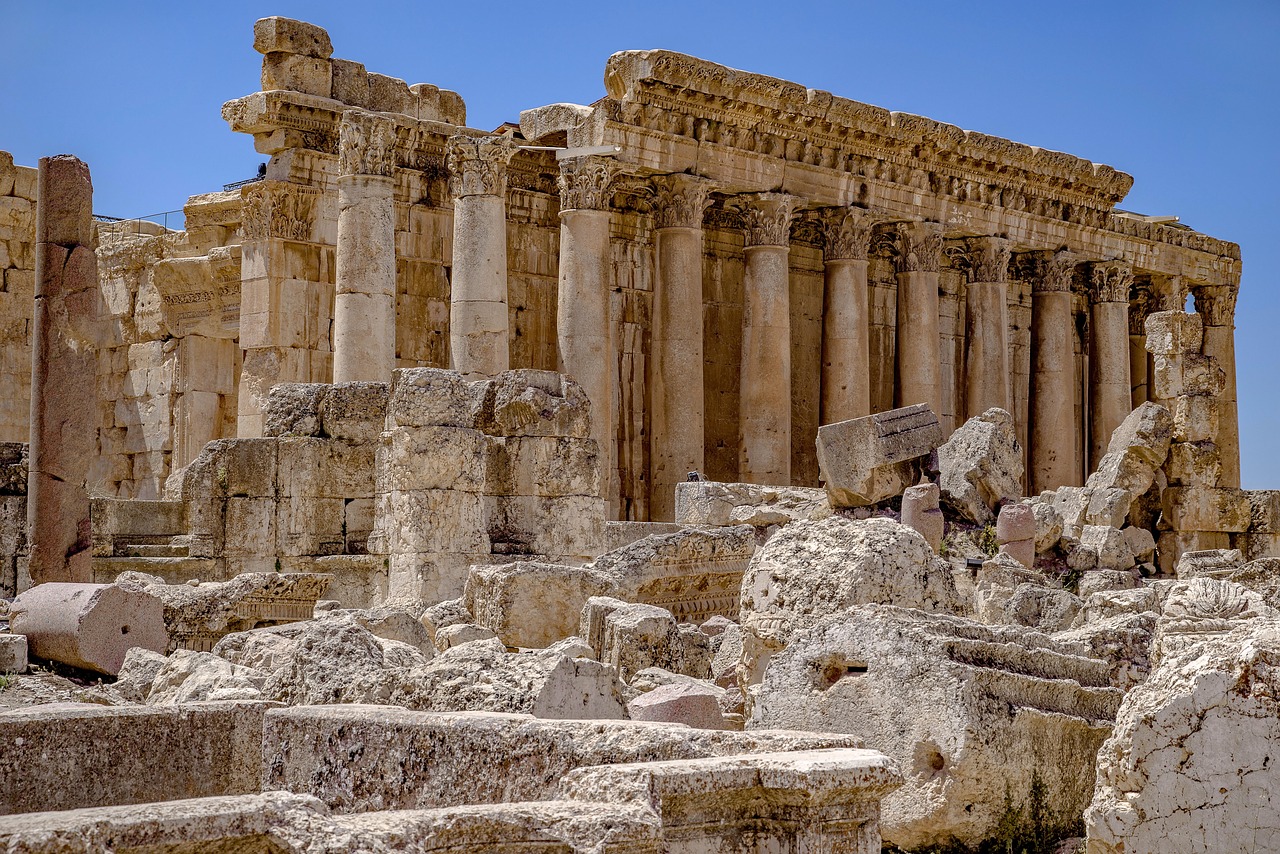
The temples of Baalbek, the Roman city of Heliopolis, are among the largest and best preserved in the Roman world: six columns of the Temple of Jupiter still stand about 20 m (65 ft) high, the Temple of Bacchus is almost complete, and in a quarry nearby lie some of the largest stone blocks ever cut. In summer, the Baalbek International Festival stages concerts among the ruins. On the way, the Umayyad city of Anjar, built in the early 8th century on a grid of colonnaded streets, is a rare example of early Islamic town planning. The Beqaa is also Lebanon’s wine country: Château Ksara, with its Roman-era caves, and other estates around Zahle and the west Beqaa welcome visitors for tastings. Baalbek is about 85 km (53 miles) from Beirut, roughly two hours by road over the mountains.
The Qadisha Valley and the Cedars
The Qadisha Valley, the Holy Valley, is a deep gorge in the north where monks and hermits have lived in caves and rock-cut monasteries since the early centuries of Christianity; footpaths link the monastery of Qannoubine, Deir Mar Elisha and other chapels. Above it, at about 2,000 m (6,600 ft), the small grove of the Cedars of God near Bsharri protects some of the oldest surviving cedars of Lebanon, the tree on the national flag. Bsharri is also the birthplace of the poet and painter Kahlil Gibran, whose museum is in a former monastery above the town. The drive from Beirut takes about two and a half to three hours.
Batroun and Tripoli
North of Byblos, Batroun is a small, lively seaside town with a Phoenician sea wall, old stone churches, beach bars and fresh lemonade, popular on summer weekends. Further north, Tripoli, Lebanon’s second city, has one of the largest Mamluk-era old towns in the region, with covered souks, hammams, khans (merchant inns), the Great Mosque and the hilltop Citadel of Raymond de Saint-Gilles, and it is famous for its sweets, especially halawet el jibn and knefeh.
The Chouf: Beiteddine and Deir el Qamar
In the Chouf mountains southeast of Beirut, the 19th-century Beiteddine Palace is a showpiece of Lebanese architecture, with courtyards, fountains, painted ceilings and a collection of Byzantine mosaics; in summer it hosts the Beiteddine Art Festival. Below it, the village of Deir el Qamar has a beautifully preserved square of stone mansions, a mosque and churches. Further south, the Shouf Biosphere Reserve protects large cedar forests with marked walking trails.
Sidon and Tyre
Along the southern coast, Sidon (Saida) has a 13th-century Crusader Sea Castle on an islet linked by a causeway, a maze of old souks, a soap museum in a historic factory and the Khan el-Franj, a 17th-century merchant inn. Tyre (Sour), one of the great Phoenician cities, has extensive Roman remains, including a colonnaded street by the sea and one of the largest Roman hippodromes known, and long sandy public beaches.
Best time to visit Lebanon
Lebanon has a Mediterranean climate, with hot, dry summers and mild, wet winters on the coast, and much colder conditions in the mountains. Spring, from April to June, is the best all-round season: warm days, green hills, wildflowers, comfortable hiking, and snow still on the high peaks into May. Autumn, from September to November, brings warm sea water, the grape harvest in the Beqaa and pleasant sightseeing weather, with the first rains usually in October. Summer, from June to September, is hot and humid on the coast, with highs commonly around 30 °C (86 °F) in Beirut, but it is the season of beach clubs, open-air festivals and cool mountain villages. Winter, from December to March, brings most of the year’s rain to the coast and snow to the mountains, where the ski season usually runs from about December to April.
Almost all of Lebanon’s rain falls between October and April. The table shows average monthly rainfall at Beirut airport published by Lebanon’s meteorological service on the World Meteorological Organization’s (WMO) World Weather Information Service, about 825 mm (32 in) a year in total; the mountains receive more, much of it as snow, and the Beqaa Valley less.
Lebanon month by month
| Month | Rain at Beirut airport | Weather | Highlights |
|---|---|---|---|
| January | 191 mm (7.5 in) | Wettest month; mild on the coast, snow in the mountains | Skiing at Mzaar, Faraya and the Cedars |
| February | 133 mm (5.3 in) | Cool and wet; sunny spells | Peak ski season; quiet sightseeing |
| March | 111 mm (4.4 in) | Showers easing; warming up | Spring skiing; almond blossom |
| April | 46 mm (1.8 in) | Warm, green and fresh | Wildflowers; hiking; Easter |
| May | 15 mm (0.6 in) | Warm and mostly dry | Ideal for sightseeing and the mountains |
| June | 2 mm (0.1 in) | Hot and sunny on the coast | Beach season begins; festivals start |
| July | under 1 mm | Hot and humid on the coast | Baalbek, Byblos and Beiteddine festivals |
| August | under 1 mm | Hottest month | Beaches and cool mountain villages |
| September | 2 mm (0.1 in) | Hot, easing late in the month | Warm sea; grape harvest begins |
| October | 60 mm (2.4 in) | Warm; first rains | Wine harvest in the Beqaa; hiking |
| November | 101 mm (4.0 in) | Mild; rain returns | Autumn colors; quiet sites |
| December | 164 mm (6.4 in) | Cool and wet; snow on the peaks | Christmas lights; ski season opens |
Festivals worth planning around
- Baalbek International Festival: in summer, usually July and August, with concerts, opera and dance in the Roman temples; one of the oldest festivals in the Middle East.
- Byblos International Festival: summer concerts on the seafront by the old town, with Lebanese and international artists.
- Beiteddine Art Festival: summer evenings of music and performance in the palace courtyards in the Chouf.
- Christmas and Easter: both the Western and Eastern church calendars are observed, with decorated streets in Beirut, Byblos and Jounieh in December.
- Ramadan and Eid: during the month of fasting, which moves about 11 days earlier each year, restaurants come alive after sunset with iftar meals; Eid al-Fitr and Eid al-Adha are public holidays.
Festival programs and dates are announced each spring; tickets for the biggest concerts sell out, so book early.
How long to stay: sample itineraries
- 3–4 days: Beirut (3 nights), with a day trip to the Jeita Grotto, Harissa and Byblos.
- One week: Beirut (3 nights), Byblos (1) with Batroun, the Qadisha Valley and the Cedars (1), and Beirut again (2) with day trips to Baalbek and Anjar and to Beiteddine and Deir el Qamar.
- 10 days: add Tripoli, a night in a Beqaa winery or guesthouse, and a day on the southern coast at Sidon and Tyre.
- Two weeks or more: walk sections of the Lebanon Mountain Trail, ski in winter, or spend more time in mountain villages such as Douma, Ehden and Bsharri.
Entry, money and costs
Visas
According to Lebanon’s General Security, the agency in charge of entry, citizens of a long list of countries, including the United States, Canada, the United Kingdom, Ireland, most EU countries, Switzerland, Norway, Australia, New Zealand, Japan, South Korea, China, Brazil, Mexico and Argentina, receive a free one-month visa on arrival, extendable to three months. Visitors must give General Security their address in Lebanon and report any change of address. Citizens of the Gulf Cooperation Council countries receive a free six-month stay on arrival and Jordanians a free three-month stay. Citizens of other countries have different rules, which may include a return ticket, a hotel booking and proof of funds, or a visa issued in advance by a Lebanese embassy; check General Security’s current list before you travel, as it is updated from time to time.
Money and cards
The currency is the Lebanese pound (LBP), also called the lira. The US dollar is used alongside it: hotels, restaurants, tour operators, taxis and many shops quote prices in dollars, and you can usually pay in either currency, often receiving change in a mix of both. The Banque du Liban’s official rate has been LBP 89,500 to the US dollar since 2024, and prices on this site are given in US dollars. Bring clean, undamaged US dollar notes in small denominations, as torn or old notes may be refused. Cards are accepted at most hotels, larger restaurants and shopping malls, but cash is still the norm in small shops, cafés, taxis and in the countryside. Check with your bank about using ATMs in Lebanon before you go.
Tipping
Tipping is customary. In restaurants, leave about 10% if no service charge appears on the bill; round up taxi fares; and tip guides and drivers at the end of a tour.
What a trip costs
Prices are approximate, for October 2026, in US dollars. Airport taxi fares are those published by Beirut airport. Entry fees to archaeological sites and museums are set by the authorities and have changed several times in recent years, so check them on arrival.
| Item | Typical cost |
|---|---|
| Licensed airport taxi to Beirut | US$18 |
| Licensed airport taxi to Byblos (Jbeil) | US$43 |
| Manakish (flatbread) with za’atar from a bakery | US$1–3 |
| Shawarma sandwich | US$4–8 |
| Mezze dinner for two in a mid-range restaurant, without wine | US$40–80 |
| Glass of Lebanese wine in a bar | US$6–10 |
| Full-day private car and driver | US$100–180 |
| Mid-range hotel double in Beirut, per night | US$90–180 |
| Luxury hotel double in Beirut, per night | US$250 and up |
A comfortable trip with a mid-range hotel, restaurant meals, a few taxis and site fees costs roughly US$120–200 per person per day for two people sharing; with a private driver for day trips, budget more.
Getting there and getting around
Airport and flights
Almost all visitors arrive at Beirut–Rafic Hariri International Airport (BEY), Lebanon’s only international airport, on the coast about 9 km (6 miles) south of central Beirut. It is the hub of the national airline, Middle East Airlines (MEA), with flights to Europe, the Gulf, Africa and the region, and is also served by other Middle Eastern and European airlines. Licensed taxis, marked “Airport Taxi,” wait beside the arrivals hall; the airport publishes fixed fares, including US$18 to Beirut and US$43 to Byblos (Jbeil). Several car rental companies have desks at the airport. For departures, the airport asks passengers to arrive at least three hours before their flight; flight information is available on 150 from any Lebanese phone.
Getting around
Lebanon has no passenger trains. Getting around is by road, and distances are short but traffic is heavy, especially along the coastal highway north of Beirut at rush hour and on summer weekends.
- Taxis and ride-hailing: the easiest way to get around Beirut and to nearby sights; ride-hailing apps operate in Beirut and on the coast, and taxis can be booked by phone through your hotel. With a street taxi, agree the fare before you get in.
- Service taxis: shared taxis, marked with red license plates, that pick up and drop off passengers along set routes for a low fare. Say “service” to share, or “taxi” to hire the whole car.
- Buses and minivans: cheap and frequent along the coast. Buses and vans for Byblos, Batroun and Tripoli leave from the Charles Helou station area by the port in Beirut, and those for the south leave from the Cola junction. They stop on request.
- Car with driver: the most popular choice for day trips to Baalbek, the Qadisha Valley, the Cedars and the Chouf, and easily arranged through hotels and tour operators.
- Self-drive: possible with a rental car, but driving is fast and assertive, lanes are loosely followed and signposting is patchy; mountain roads are narrow and winding, and snow can close high passes in winter.
As a rough guide to driving times from Beirut without heavy traffic: the Jeita Grotto takes about 30 minutes, Byblos 45 minutes to an hour, Batroun about an hour, Beiteddine about an hour, Sidon about 45 minutes, Tripoli about 1.5 hours, Baalbek about 2 hours, the Cedars about 2.5 to 3 hours and Tyre about 1.5 hours.
Mountains, trails and the coast
For a small country, Lebanon has a remarkable range of outdoor activities. The Lebanon Mountain Trail runs the length of the country, from the far north to the south, through villages, cedar forests and valleys, and is divided into day-long sections with guesthouses along the way. Popular hikes include the Qadisha Valley, the Shouf cedar reserve, the Baatara Gorge waterfall, which drops through three natural rock bridges near Tannourine, and the Chouwen lake and river near Jeita. In winter, the ski resorts of Mzaar Kfardebian, Faraya, Laqlouq and the Cedars are less than two hours from Beirut. On the coast, swimming is mostly from beach clubs and resorts, which charge an entry fee, and from public beaches in Tyre, Batroun and elsewhere; diving and boat trips run from Byblos, Batroun and Jounieh. See our hiking, beaches, wine tasting and boat trips guides.
Culture, food and everyday etiquette
Food
Lebanese food is one of the great cuisines of the Mediterranean, and eating is a central part of any visit. A meal starts with mezze, many small dishes shared across the table: hummus, moutabal (smoky eggplant dip), tabbouleh (a parsley salad with bulgur, tomato and lemon), fattoush (salad with toasted bread and sumac), stuffed vine leaves, labneh, falafel and fried kibbeh, followed by grilled meats, fish or kibbeh nayyeh, the raw lamb dish of the mountains. For breakfast, Lebanese eat manakish, flatbreads topped with za’atar and olive oil or cheese, from neighborhood bakeries; for a quick lunch, shawarma or falafel wraps. Desserts include knefeh, warm cheese pastry with syrup, and baklava. The national spirit is arak, an aniseed drink mixed with water and ice, and Lebanon has a long winemaking tradition, centered on the Beqaa Valley.
Hospitality and etiquette
Lebanese hospitality is famous, and visitors are often offered coffee, fruit or a meal. Beirut is relaxed and fashionable, but dress modestly when visiting mosques, churches and monasteries, covering shoulders and knees; women should bring a scarf to cover their hair in mosques. Remove your shoes where asked. During Ramadan, avoid eating, drinking or smoking in public during the day in predominantly Muslim neighborhoods out of courtesy. Ask before photographing people, and do not photograph military sites, checkpoints or soldiers. Greetings matter: a handshake is common, and “marhaba” (hello) or the French “bonjour” are both used.
Shopping and crafts
Look for olive-oil soap from Tripoli and Sidon, embroidered textiles, copperware, Lebanese wine and arak, za’atar and spices, and handmade jewelry and design pieces from Beirut’s independent boutiques. The Saturday farmers’ market Souk el Tayeb in Beirut is a good place to taste regional produce.
Health, safety and connectivity
Practical points for a smooth trip:
- Traffic: the main everyday risk. Cross roads with care, as drivers do not always stop at crossings, and wear a seat belt.
- Heat and sun: summers are hot and humid on the coast; carry water and sunscreen, and visit Baalbek and other open sites early in the day.
- Electricity: hotels, restaurants and most buildings use backup generators, and short power switchovers are normal; a power bank is useful.
- Water: drink bottled water, which is sold everywhere.
- Health: Beirut has well-equipped private hospitals, but care is paid for upfront; have travel insurance that covers medical treatment.
- Emergencies: call 112 for the police (Internal Security Forces) and 140 for a Lebanese Red Cross ambulance, free from any phone.
Lebanon’s two mobile operators, alfa and touch, sell prepaid SIM cards in their shops with your passport; many visitors now use an eSIM instead. Hotels, cafés and restaurants usually have Wi-Fi, and Beirut airport offers an hour of free Wi-Fi.
Things to do: ruins, food, wine, mountains and the sea
Walk Beirut’s Corniche at sunset to the Pigeon Rocks; spend a morning in the National Museum; eat your way through a long mezze lunch; float through the Jeita Grotto and ride the cable car to Harissa; explore the castle and souk of Byblos; stand under the columns of Baalbek; taste wine in the Beqaa; hike in the Qadisha Valley or among the cedars of the Shouf; ski at Mzaar in winter; and dance at a summer festival among Roman ruins. See our city sightseeing, hiking and wine tasting guides, and our hiking shoes and travel adapters guides.
Lebanon travel FAQ
Do I need a visa for Lebanon?
Citizens of the United States, Canada, the UK, most EU countries, Australia, New Zealand, Japan and many other countries receive a free one-month visa on arrival, extendable to three months, according to Lebanon’s General Security. Other nationalities should check General Security’s list before traveling.
What currency is used in Lebanon?
The Lebanese pound (LBP), alongside the US dollar, which is widely used for prices and payments. The Banque du Liban’s official rate is LBP 89,500 to the dollar. Bring clean US dollar notes in small denominations.
What is the best time to visit Lebanon?
April to June and September to November, for warm, mostly dry weather that suits both sightseeing and hiking. Summer is best for beaches and festivals, and winter for skiing.
How many days do I need in Lebanon?
Three or four days for Beirut, Byblos and the Jeita Grotto; a week to add Baalbek, the Qadisha Valley and the Chouf; ten days or more to include Tripoli and the southern coast.
How do I get from Beirut airport to the city?
By licensed airport taxi from the stand beside the arrivals hall; the airport’s published fare to Beirut is US$18. Ride-hailing apps and hotel transfers are other options.
How far is Byblos from Beirut?
About 40 km (25 miles) north along the coast, 45 minutes to an hour by car without heavy traffic. See our Byblos guide.
Can you ski and swim on the same day in Lebanon?
In early spring, yes: the ski slopes of Mzaar and Faraya are about an hour and a half from the coast, and the sea is warm enough for a brave swim by late April or May.
What languages are spoken in Lebanon?
Arabic is the official language; French and English are widely spoken, especially in Beirut, hotels, restaurants and tourist sites.
What are the emergency numbers in Lebanon?
112 for the police (Internal Security Forces) and 140 for a Lebanese Red Cross ambulance.
What plugs are used in Lebanon?
A mix of European two-pin (type C), round three-pin (type D) and British three-pin (type G) sockets, at 220 V. A universal adapter is the safest choice.
Can I combine Lebanon with Jordan or Cyprus?
Yes, by air: Beirut has short flights to Amman and Larnaca. See our Jordan and Cyprus travel guides.
What is the time difference in Lebanon?
Lebanon is on UTC+2 in winter and UTC+3 in summer, with daylight saving time from late March to late October.
Plugs and power in Lebanon
Lebanon uses 220 V, 50 Hz and these plugs (left) and wall sockets (right):
Mixed sockets; a universal adapter is the safe bet.
All plug types and voltages by country → · Check what you need to pack →
Plan your trip
Partner links: TravelerCenter may earn a commission if you book, at no extra cost to you.
🇪🇬 Useful Arabic phrases for Lebanon
All 38 Arabic phrases: restaurant, hotel, emergencies, romance (printable) →
Sources · last reviewed 5 October 2026
Researched and last reviewed on 5 October 2026. Visa on arrival, the countries it covers and the address rule: Lebanon’s General Security (general-security.gov.lb); airport taxi fares, taxi stand, car rental, the three-hour check-in advice, the 150 flight information line and free Wi-Fi: Beirut–Rafic Hariri International Airport (beirutairport.gov.lb); World Heritage sites and tentative list: UNESCO World Heritage Centre; rainfall at Beirut airport: Lebanon’s meteorological service, via the World Meteorological Organization’s World Weather Information Service; emergency numbers: the Internal Security Forces (112) and the Lebanese Red Cross (140); official exchange rate: Banque du Liban; time zone: the IANA time zone database; area and coordinates: Wikidata. Temperatures, geography, history, festival timing, sight descriptions, Jeita Grotto hours, transport, plugs, mobile operators, travel times, prices and daily budgets are general references or estimates, flagged for checking. Rules, fares and fees change, so check the official sites before you go.
Data: Weather: MET Norway (CC BY 4.0) · Air quality: OpenAQ · Rates: ECB · Wikidata (CC0)