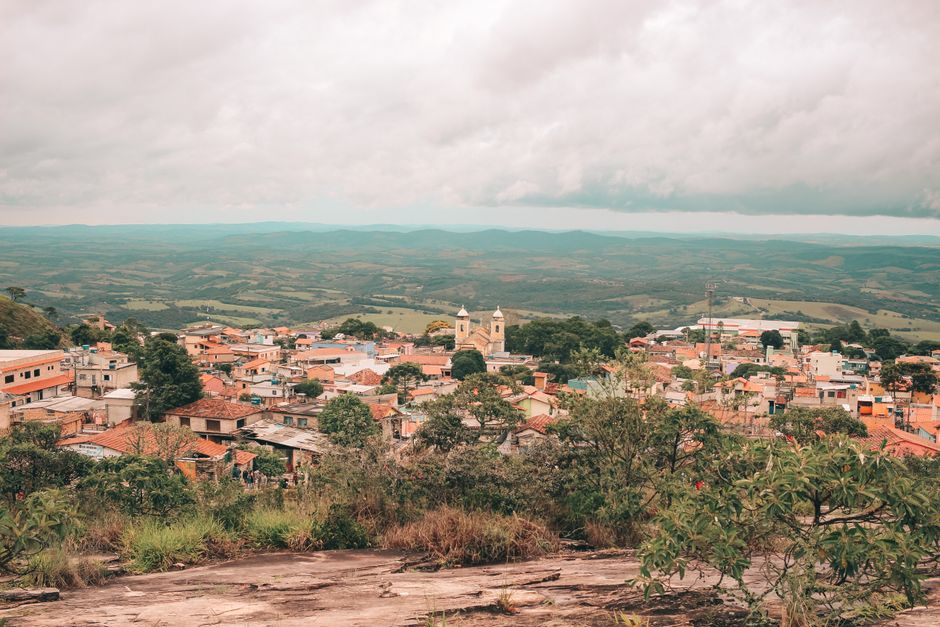
São Tomé and Príncipe is Africa’s second-smallest country, two volcanic islands in the Gulf of Guinea, off the coast of Gabon, where the equator runs across a tiny islet at the southern tip and the rainforest climbs from the beaches to cloud-wrapped peaks. It is one of the quietest and least-visited countries in the world, and that is its charm: empty golden beaches lined with coconut palms, old Portuguese cocoa plantations called roças slowly being reclaimed by the jungle, sea turtles nesting on the sand, waterfalls and volcanic spires such as the Pico Cão Grande, and some of the finest cocoa and chocolate anywhere. Almost every visitor arrives in São Tomé, the small, relaxed capital on the larger island, with its pastel colonial buildings, seafront avenue and 16th-century fort; many then fly on to Príncipe, the smaller, wilder island, which UNESCO lists as a biosphere reserve. Portuguese is the official language. According to the US State Department and the UK government, holders of US and British passports can visit for up to 15 days without a visa; other nationalities, and longer stays, apply online through the Migration and Borders Service. The best time to visit is the drier gravana season, from about June to September. Give it a week, or ten days to include Príncipe.
Right now in São Tomé and Príncipe
- Sat26–28°C78–82°F4 mm rain
- Sun26–27°C78–80°F16 mm rain
- Mon26–28°C79–82°F5 mm rain
Weather, sun and air quality here are for one point near the centre of São Tomé and Príncipe, not the whole country; conditions elsewhere can differ. Readings refresh through the day.
São Tomé and Príncipe: quick answers
- Best time to visit São Tomé and Príncipe
- The islands have a hot, humid equatorial climate, with warm weather all year and temperatures that change little from month to month on the coast; the highlands are noticeably cooler and often cloudy. What changes is the rain. More
- Places to visit in São Tomé and Príncipe
- São Tomé city, The roças: cocoa and coffee plantations, The south: Pico Cão Grande, beaches and the equator, The north coast and the highlands, Príncipe. More
- Things to do in São Tomé and Príncipe
- Beaches, hiking, diving and wildlife. More
- Entry rules for São Tomé and Príncipe
- Rules change, so check the Migration and Borders Service before you travel. More
São Tomé and Príncipe at a glance
The country covers about 1,000 km² (386 sq miles), slightly smaller than Hong Kong, almost all of it on two islands about 150 km (90 miles) apart. São Tomé, the larger island, is roughly 50 km (30 miles) long and rises to the Pico de São Tomé, at a little over 2,000 m (6,600 ft); Príncipe, to the northeast, is much smaller, older and more eroded, with steep forested ridges dropping straight into the sea. Both are the tops of extinct volcanoes on a chain that runs from Mount Cameroon out into the Atlantic, and both are covered in dense rainforest protected in the Obô Natural Park. The islands are famous among naturalists for their endemic birds, plants, frogs and butterflies, which evolved in isolation; the dobra banknotes carry pictures of the islands’ butterflies. The southern tip of São Tomé, the islet of Ilhéu das Rolas, sits right on the equator.
The islands were uninhabited when Portuguese navigators arrived in the late 15th century. Sugar and later coffee and cocoa plantations, worked by enslaved and contract laborers brought from the African mainland, shaped the islands’ history, and in the early 20th century São Tomé was one of the world’s biggest cocoa producers. The country became independent in 1975. Today the culture is a mix of African and Portuguese: Portuguese is the official language, and many people also speak creoles such as Forro on São Tomé and Lung’ie on Príncipe. Most people are Catholic, and saints’ days and local festivals fill the calendar. The pace of life is gentle; the national motto, more or less, is leve-leve, “easy, easy.”
Time zone: São Tomé and Príncipe uses UTC+0 all year, with no daylight saving time, the same as London in winter and Ghana.
The regions
- São Tomé city and the north: the capital, on Ana Chaves Bay in the district of Água Grande, the airport, the beaches around Lagoa Azul and the old plantation of Agostinho Neto.
- The central highlands: the cool, misty interior above the capital, with the coffee plantation of Monte Café, the São Nicolau waterfall, the botanical garden at Bom Sucesso and trails into the Obô Natural Park toward the Pico de São Tomé.
- The east and south coast: the road south past fishing villages, the blowhole at Boca do Inferno, the roça of São João dos Angolares, the Pico Cão Grande, turtle beaches such as Jalé, and the boat crossing to Ilhéu das Rolas.
- Príncipe: the autonomous region of the small island, with the little capital Santo António, the Roça Sundy, Banana Beach and long stretches of untouched forest.
Videos of São Tomé and Príncipe
Hand-picked travel videos from YouTube creators to help you picture the trip. They play from YouTube; the facts in this guide come from our own research.
Where to go: the capital, the roças, the rainforest and Príncipe
São Tomé island is small enough to explore from a base in the capital, with a night or two on the south coast. Príncipe needs at least two or three nights of its own.
São Tomé city
The capital is a small, easygoing town of pastel colonial buildings, fishing boats and mango trees along the curve of Ana Chaves Bay. Walk the seafront Avenida 12 de Julho, see the pale-blue Fort of São Sebastião, built in the 16th century and now home to the National Museum, visit the Cathedral of Our Lady of Grace, wander the busy municipal market, and taste the islands’ famous chocolate. Our São Tomé city guide has the details.
The roças: cocoa and coffee plantations
The great plantation estates, the roças, are São Tomé’s signature sight: each was a self-contained world with a grand manor house, a hospital, workers’ quarters, drying sheds and sometimes its own railway. Some are crumbling ruins, some are still lived in by former workers’ families, and a few have become guesthouses and restaurants. Agostinho Neto, north of the capital, has a vast colonial hospital at the top of a long avenue; Monte Café, in the hills, has a small coffee museum; and São João dos Angolares, on the east coast, is known for its restaurant and art. On Príncipe, Roça Sundy is where, in 1919, an expedition led by the astronomer Arthur Eddington photographed a total solar eclipse to test Einstein’s theory of general relativity.
The south: Pico Cão Grande, beaches and the equator
The road south along the east coast passes through fishing villages and banana groves to the spectacular Pico Cão Grande, a needle of volcanic rock that rises about 300 m (1,000 ft) out of the rainforest, one of the most striking sights in Africa. Beyond it lie the beaches of the far south, including Praia Jalé, where sea turtles nest, and the small fishing town of Porto Alegre, from where boats cross to Ilhéu das Rolas, where a monument marks the line of the equator.
The north coast and the highlands
North and west of the capital, Lagoa Azul is a clear blue cove good for snorkeling, framed by baobab trees, and the coast beyond leads to the beaches and fishing villages around Neves and Santa Catarina. Inland, the road climbs into the cool highlands past Monte Café to the São Nicolau waterfall and the Bom Sucesso botanical garden, the gateway to the Obô Natural Park and to the hike up the Pico de São Tomé.
Príncipe
Príncipe is the smaller, quieter and even greener of the two islands, with only one small town, Santo António, and a few thousand inhabitants. UNESCO lists the whole island, its surrounding islets and the Tinhosas islands as the Island of Príncipe Biosphere Reserve. Most of the island is forest, rising to rocky volcanic peaks in the south, and its coast has some of the most beautiful beaches in the Gulf of Guinea, including the much-photographed Banana Beach (Praia Banana). Visitors come for hiking, birdwatching, snorkeling, diving, turtle watching and sport fishing, and to stay in its small eco-lodges and restored plantations. Príncipe is reached by a short flight from São Tomé.
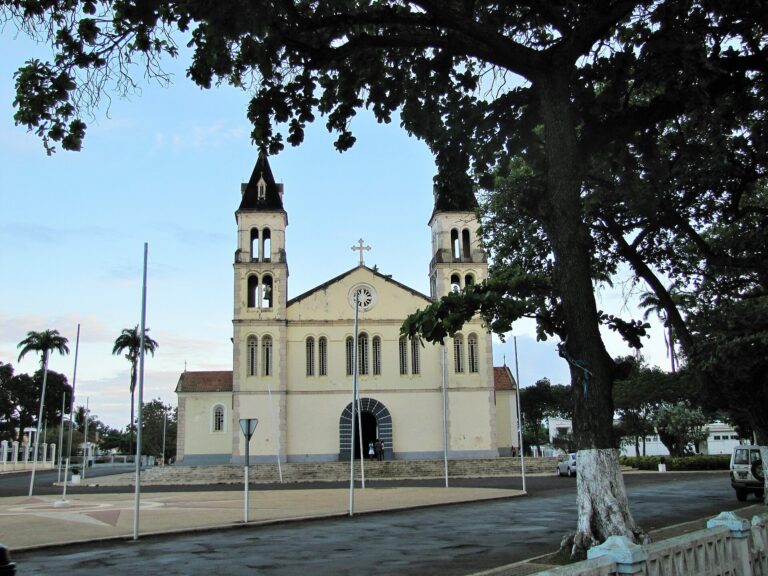
São Tomé Travel Guide
Plan a trip to São Tomé city: the bayfront Avenida 12 de Julho, the Fort of São Sebastião and National Museum, the cathedral, the…
Best time to visit São Tomé and Príncipe
The islands have a hot, humid equatorial climate, with warm weather all year and temperatures that change little from month to month on the coast; the highlands are noticeably cooler and often cloudy. What changes is the rain. The main dry season, the gravana, runs from about June to September, with cooler, breezier days, little rain and hazier skies; it is the most popular time to visit and the best for hiking and road trips. A shorter, drier spell, the gravanito, usually comes around December and January. The rest of the year is the rainy season, with heavy tropical showers, especially from about October to November and March to May, and more rain in the south and west of São Tomé island than around the capital in the northeast.
São Tomé and Príncipe’s National Institute of Meteorology (INM) gives the normal August rainfall at its São Tomé station as under 6 mm, with a normal monthly mean temperature of about 24.5 °C (76 °F). The US State Department notes that secondary roads can be impassable without a four-wheel-drive vehicle in the rainy season, so leave extra time if you visit between November and April.
| Season | Months | Weather | Good for |
|---|---|---|---|
| Gravana (main dry season) | June to September | Drier, breezier and a little cooler; often overcast | Hiking, road trips, sightseeing, whale watching |
| Early rains | October to November | Heavy showers, very green | Quiet roças, turtle nesting begins on some beaches |
| Gravanito (short dry spell) | December to January | Drier spells between showers | Beaches, Christmas and New Year |
| Main rains | February to May | Hot, humid, frequent downpours | Lush forests and waterfalls; fewer visitors |
Wildlife seasons and festivals
- Sea turtles: several species nest on the islands’ beaches; the nesting season is roughly from October or November to February or March, with hatchlings toward the end of it. Local conservation projects run night walks on some beaches.
- Whales: humpback whales pass the islands in the dry season, roughly from July to October, and can sometimes be seen from boats.
- Birds: the endemic birds can be seen all year, but the drier months are easiest for walking in the forest.
- Festivals: each town has its patron saint’s day. Independence Day is on 12 July. The tchiloli, a centuries-old open-air drama based on a medieval European tale, and the masked danço-congo are performed at festivals on São Tomé, and Príncipe celebrates the Auto de Floripes in August.
How long to stay: sample itineraries
- 5 days: three nights in São Tomé city with day trips to the roças of Agostinho Neto and Monte Café, Lagoa Azul and the São Nicolau waterfall, then two nights on the south coast for Pico Cão Grande, the southern beaches and Ilhéu das Rolas.
- One week: the five days above, plus a guided hike in the Obô Natural Park, or two extra nights on the south coast for beaches and turtle watching in season.
- 10 days: a week on São Tomé and three or four nights on Príncipe, for Banana Beach, the Roça Sundy, forest hikes and snorkeling.
- Two weeks: slow down, stay in plantation guesthouses, climb the Pico de São Tomé and add more time on Príncipe.
Entry, money and costs
Visas and entry (last reviewed November 2026)
- Visa-free for short stays: according to the US State Department, holders of a valid US passport do not need a visa for visits of up to 15 days, and the UK government says British citizens can visit for tourism for up to 15 days without a visa.
- Entry fee: the UK government says visitors pay a 20-euro entry fee on arrival, which can also be paid in US dollars or local currency.
- Everyone else, and longer stays: apply online through the e-VisaST system of the Migration and Borders Service (smf.st). According to the service, you upload a PDF scan of a passport valid for at least three months beyond the end of your planned stay, a round-trip ticket and your accommodation details, and receive an answer within seven working days. Payment is made at the border, where you may be asked to show means of support of 100 euros per day.
- Yellow fever: the US State Department lists proof of yellow fever vaccination as an entry requirement, so carry your certificate.
Rules change, so check the Migration and Borders Service before you travel.
The dobra, cash and cards
The currency is the dobra (STN, Db). Its value is fixed to the euro: the Central Bank of São Tomé and Príncipe’s official rate has been 24.5 dobras to the euro in every month of its published series from 2019 to 2026, and in July 2026 it averaged about 21.6 dobras to the US dollar. The current notes, introduced in 2018, show the islands’ endemic butterflies. Bring euros, which are the easiest currency to exchange, and some cash for your whole stay: credit cards are not widely accepted, there are only a few ATMs, and according to the US State Department most accept only cards from local banks. Many hotels and tour operators quote and accept payment in euros. Change money at banks or your hotel.
Tipping
Tipping is not expected, but it is appreciated: rounding up the bill or leaving about 5–10% in restaurants for good service, a small tip for guides and drivers at the end of a tour, and something for hotel staff are all welcome.
Language and a few useful words
Portuguese is the official language, and English is not widely spoken outside the larger hotels, according to the US State Department. A few words go a long way: bom dia (good morning), boa tarde (good afternoon), obrigado or obrigada (thank you, said by a man or a woman), por favor (please), quanto custa? (how much is it?) and, of course, leve-leve (take it easy). French is understood by some people.
What a trip costs
São Tomé and Príncipe is not a budget destination: most goods are imported, accommodation is limited, and the best lodges, especially on Príncipe, are expensive. These estimates, per person per day, are a planning guide as of November 2026:
| Style | Estimated cost per day | What that looks like |
|---|---|---|
| Budget | about €50–80 | Simple guesthouse or homestay, local restaurants, shared taxis and some walking |
| Mid-range | about €120–200 | Comfortable hotel or plantation guesthouse shared by two, restaurant meals, a car and driver or guide for day trips |
| High-end | about €350+ | Eco-lodges and beach resorts on São Tomé and Príncipe, private guides, boat trips and the flight to Príncipe |
The figures are our estimates, not official statistics. Allow for the 20-euro entry fee and for the flight to Príncipe if you go.
Getting there and getting around
Arrival airport
Almost every visitor arrives at São Tomé International Airport (TMS), on the edge of the capital, a few minutes by taxi from the center. The main routes are to Lisbon, with direct flights from Portugal, and to Luanda, Accra and other West and Central African cities. Flights are not daily on every route, so plan your dates around them. Many hotels arrange airport pickups.
Flights and boats to Príncipe
Small planes fly between São Tomé and Príncipe’s airport, near Santo António, in about 35 to 45 minutes; there are usually one or two flights a day, but schedules change, so book ahead and confirm before you travel. Cargo boats also sail between the islands, but they are slow and irregular and not suited to most visitors.
Taxis, motorbike taxis and minibuses
According to the UK government, taxis and motorbike taxis, called motoqueiros, are the only forms of public transport, and it is common for passengers to share taxis. Shared yellow taxis and minibuses run from the capital’s market area along the main roads to towns such as Neves and Santana; they are cheap but slow and fill up before they leave. Agree on the fare before you get in. For day trips to the roças, the south and the highlands, most visitors hire a car with a driver or join a guided tour, arranged through their hotel or a local agency.
Driving
You can rent a car in the capital, ideally a four-wheel drive. Drive on the right, and carry your national license and an International Driving Permit. Many roads are in poor condition and unlit outside the capital, animals and pedestrians walk on them, and landslides after heavy rain can block them, according to the UK government; the US State Department adds that police run radar speed checks and that fuel supplies can be irregular. Avoid driving outside towns after dark, and fill up when you can.
Health, safety and connectivity
Practical points for a smooth trip:
- Health: medical facilities are limited, and serious cases are evacuated abroad, so take travel insurance that covers medical treatment and evacuation, and bring any medicines you need.
- Mosquitoes: use repellent, cover up at dusk and sleep under a net or in a screened room; ask a travel health clinic about malaria prevention before you go.
- Water: drink bottled or filtered water.
- Sun and sea: the equatorial sun is strong even on cloudy days, and some beaches have strong currents; ask locally before swimming.
- Belongings: keep valuables in your hotel safe and do not leave them on the beach.
- Photography: photographing government buildings, including the Presidential Palace, is forbidden, according to the US State Department. Ask before photographing people.
- Emergencies: according to the UK government, call 113 or 222 22 22 for the police, 222 22 22 for an ambulance and 112 for the fire service.
Mobile coverage is good in and around the capital and patchy in the interior and the far south; local SIM cards are sold in town with your passport, and most hotels have Wi-Fi, which can be slow. Sockets are mostly the European two-pin type (C and F), at 220 V; see our travel adapters guide.
Food, chocolate and culture
Food and drink
Santomean food is simple, fresh and generous, built on fish, bananas, breadfruit, cassava and palm oil. The national dish is calulú, a slow-cooked stew of smoked fish or chicken with leaves and herbs, served with rice or banana; try also grilled fish with fried breadfruit or banana, izaquente (a breadfruit-seed stew), and tropical fruit such as jackfruit, papaya and safou. Palm wine (vinho de palma) is tapped from the trees and drunk fresh, and the islands’ coffee and cocoa are among the best anywhere: several small producers make bean-to-bar chocolate in São Tomé, and roças offer tours that follow the bean from tree to bar.
Culture and etiquette
Santomeans are warm and relaxed; greetings matter, so say bom dia before asking for anything. Dress is casual, but cover up away from the beach and in churches. Many roças are still people’s homes, so ask before walking through them or taking photos, and consider buying a drink or a guided tour, which helps the communities that live there. Music and dance are everywhere at weekends and festivals.
Things to do: beaches, hiking, diving and wildlife
- Beaches: Praia dos Tamarindos and the coves of the north coast near the capital, the beaches of the far south and Ilhéu das Rolas, and Banana Beach and its neighbors on Príncipe. See our beaches guide.
- Hiking: guided trails in the Obô Natural Park, to the São Nicolau waterfall, Lagoa Amélia (a forested crater) and the Pico de São Tomé, and through Príncipe’s forests. See our hiking guide.
- Snorkeling and diving: clear water at Lagoa Azul and Ilhéu das Rolas, and some of the best diving in the Gulf of Guinea around Príncipe. See our snorkeling guide and our diving guide.
- Boat trips: to Ilhéu das Rolas, along Príncipe’s coast and, in the dry season, to look for whales and dolphins. See our boat trips guide.
- Wildlife: turtle watching on nesting beaches in season, and birdwatching for the islands’ endemic species with a local guide.
- Plantation and chocolate tours: roças, coffee and cocoa farms, and chocolate workshops in the capital.
What to pack
Pack light, quick-drying clothes, a rain jacket for tropical showers, hiking shoes with good grip for muddy forest trails, water shoes for rocky coves, insect repellent, high-factor sunscreen, a hat, a flashlight for turtle walks and power cuts, and enough euros in cash for your stay. Bring a universal adapter, any medicines you need and your yellow fever certificate.
São Tomé and Príncipe travel FAQ
Do I need a visa for São Tomé and Príncipe?
Not for short visits on a US or British passport: the US State Department and the UK government say holders can stay up to 15 days without a visa. Other nationalities, and anyone staying longer, apply online through the e-VisaST system at smf.st, with an answer within seven working days.
Is there an entry fee?
Yes. The UK government says visitors pay a 20-euro entry fee on arrival, payable in euros, US dollars or dobras.
What currency is used in São Tomé and Príncipe?
The dobra (STN), fixed at 24.5 dobras to the euro. Euros are widely accepted in hotels and are the easiest currency to exchange. Bring cash, because cards and ATMs are of limited use.
When is the best time to visit São Tomé and Príncipe?
The gravana dry season, from about June to September, is the most popular time, with less rain and pleasant temperatures. December and January also have drier spells, and the turtle nesting season runs from about November to March.
How many days do I need?
Five days for the capital, the roças and the south of São Tomé island; a week to ten days to add hiking and Príncipe.
How do I get to Príncipe?
By a short flight from São Tomé, about 35 to 45 minutes, usually once or twice a day. Book ahead, because the planes are small.
What language is spoken in São Tomé and Príncipe?
Portuguese is the official language, and many people also speak a local creole. English is not widely spoken outside the bigger hotels.
Where is the equator in São Tomé and Príncipe?
It crosses Ilhéu das Rolas, a small island off the southern tip of São Tomé, where a monument marks the line. Boats cross from Porto Alegre.
Can I combine São Tomé and Príncipe with other countries?
Yes, by air: flights connect São Tomé with Lisbon and with several West and Central African cities. To pair it with another island nation in the Atlantic, see our Cabo Verde travel guide, or our Portugal travel guide if you are flying via Lisbon.
What are the emergency numbers?
According to the UK government: police 113 or 222 22 22, ambulance 222 22 22, fire 112.
What plugs are used in São Tomé and Príncipe?
Mostly European two-pin sockets (types C and F), at 220 V.
Plugs and power in São Tomé and Príncipe
São Tomé and Príncipe uses 220 V, 50 Hz and these plugs (left) and wall sockets (right):
European two-pin sockets.
All plug types and voltages by country → · Check what you need to pack →
Plan your trip
Partner links: TravelerCenter may earn a commission if you book, at no extra cost to you.
🇵🇹 Useful Portuguese phrases for São Tomé and Príncipe
All 38 Portuguese phrases: restaurant, hotel, emergencies, romance (printable) →
Before you go: guidebooks and travel gear
Affiliate links: we may earn a commission at no extra cost to you. As an Amazon Associate we earn from qualifying purchases. We pick items for the place, not for the commission. How we earn money
Sources · last reviewed 10 November 2026
Researched and last reviewed on 10 November 2026. Visa-free stays: the US State Department’s country information (updated 27 October 2025) and the UK government’s entry requirements for São Tomé and Príncipe (updated 10 December 2025), which is also the source for the entry fee, public transport, road conditions and emergency numbers; online visas, passport validity, documents, processing time and means of support: São Tomé and Príncipe’s Migration and Borders Service (smf.st); exchange rates: the Central Bank of São Tomé and Príncipe (bcstp.st); August rainfall and temperature normals: the National Institute of Meteorology (inm.st); the Island of Príncipe Biosphere Reserve: UNESCO; time zone: the IANA time zone database; area and coordinates: Wikidata. History, geography, sight descriptions, seasons, wildlife timing, festivals, flights, plugs, tipping and costs are general references or estimates, flagged for checking. Rules, fares and fees change, so check the official sites before you go.
Data: Weather: MET Norway (CC BY 4.0) · Rates: ECB · Wikidata (CC0)