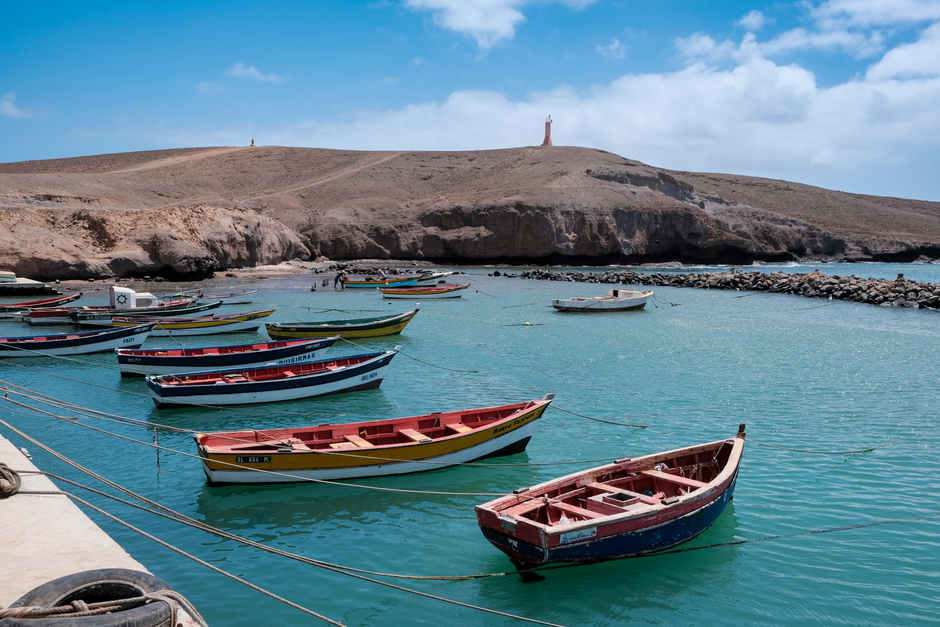
Cabo Verde is a chain of ten volcanic islands in the Atlantic Ocean, about 570 km (350 miles) off the coast of Senegal, and one of the easiest and most rewarding places in Africa for a winter-sun trip. The islands could hardly be more different from one another. Sal and Boa Vista are flat, sandy and windy, with long white beaches, turquoise water, all-inclusive resorts and some of the best kitesurfing and windsurfing in the Atlantic. Santo Antão is a wall of green mountains and terraced valleys made for hiking, Fogo is one huge volcano with vineyards growing in its crater, São Vicente has the lively port city of Mindelo, the home of morna music and a famous carnival, and Santiago holds the capital, Praia, and Cidade Velha, the first European colonial town in the tropics and the country’s only UNESCO World Heritage Site. The climate is warm and dry most of the year, with very little rain outside August to October, and the islands are only about four to six hours by air from much of Europe. Cabo Verde is calm, welcoming and proud of its Creole culture, and it has been certified malaria-free by the World Health Organization. Before you fly, there’s one important formality: most visitors must pre-register online through the EASE platform and pay the airport security tax (TSA) before arrival, and citizens of a long list of countries now need a visa from an embassy in advance.
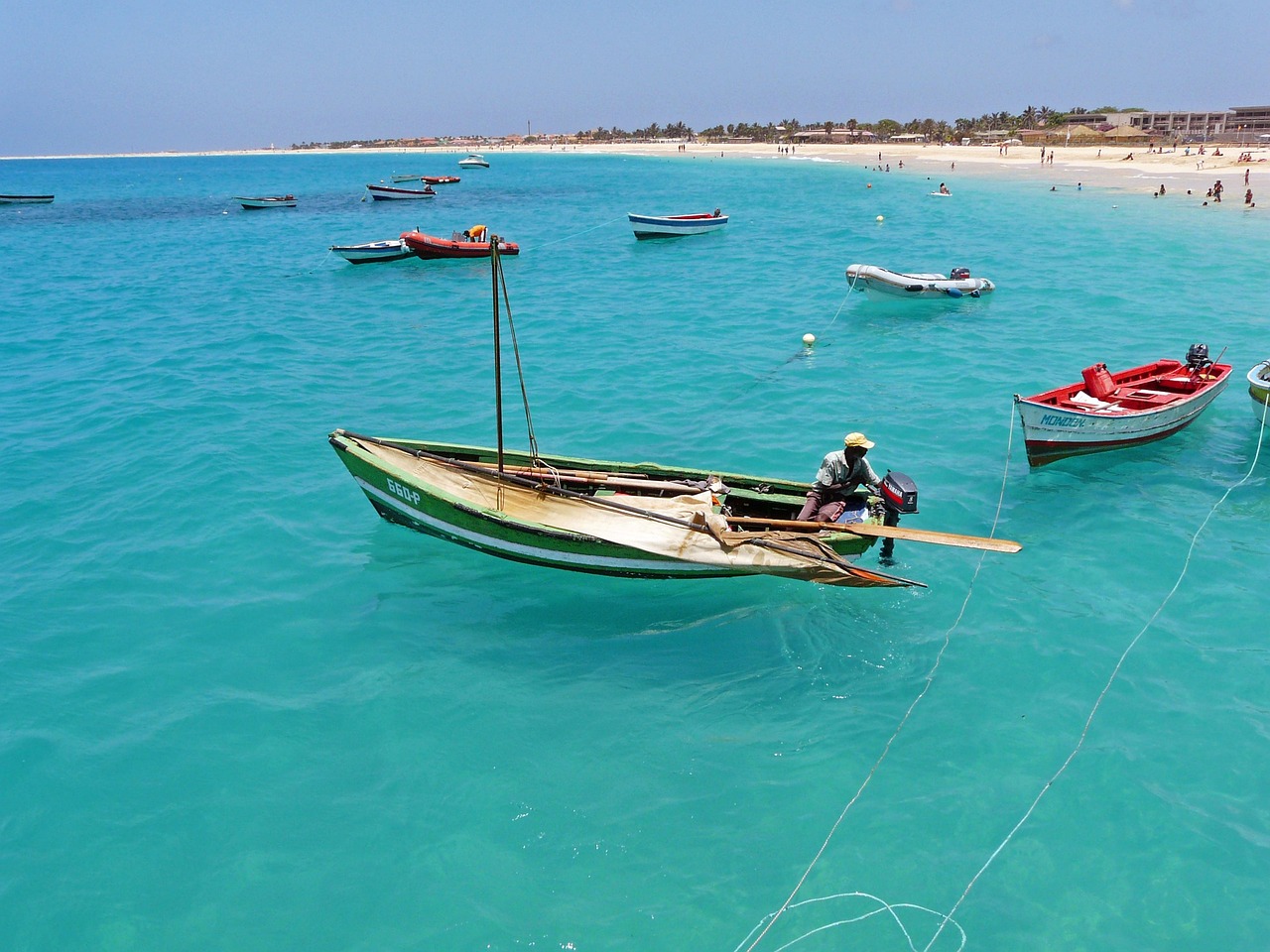
Right now in Cabo Verde
- Wed 24–30°C 76–85°F 1 mm Partly cloudy
- Thu 24–29°C 75–84°F 13 mm Heavy showers
- Fri 25–28°C 76–82°F 10 mm Rain
Weather: MET Norway (CC BY 4.0)
Multi-day tours of Cabo Verde
Multi-day tours from local operators. You check dates and book on Viator, our partner; we may earn a commission at no extra cost to you. How we earn money
Cabo Verde at a glance
Cabo Verde’s ten islands cover only about 4,030 km² (1,560 square miles), roughly the size of Rhode Island and Delaware combined, scattered across about 300 km (190 miles) of ocean. Nine are inhabited. The northern group, the Barlavento (windward) islands, includes Santo Antão, São Vicente, the uninhabited Santa Luzia, São Nicolau, Sal and Boa Vista; the southern Sotavento (leeward) group includes Maio, Santiago, Fogo and Brava. The highest point is Pico do Fogo, an active volcano of 2,829 m (9,281 ft) that last erupted in 2014 and 2015. About half a million people live on the islands, and an even larger Cabo Verdean diaspora lives in the United States (especially New England), Portugal, France and the Netherlands.
The official language is Portuguese, but everyday life runs in Kriolu (Cape Verdean Creole), which varies from island to island. English and some French, Italian and German are spoken in the resorts of Sal and Boa Vista. Most people are Roman Catholic. The country uses Cape Verde Time (UTC−1) all year, with no daylight saving time, so it’s one hour behind London in winter and two in summer. Electricity is 220 V, with European two-pin sockets. The country officially asks to be called Cabo Verde in every language, though you’ll still see “Cape Verde” on many maps and airline sites.
A short history
The islands were uninhabited when Portuguese navigators arrived around 1460. Ribeira Grande on Santiago, now Cidade Velha, became the first colonial settlement in the tropics and a hub of the Atlantic slave trade, and the islands’ Creole people and culture grew out of that mixed African and Portuguese heritage. Droughts and famines pushed many Cabo Verdeans to emigrate, including to the whaling ports of New England in the 19th century. Cabo Verde became independent from Portugal on July 5, 1975, and has since become one of Africa’s most stable democracies, with tourism, fishing and money sent home by the diaspora as the mainstays of the economy.
The islands for travelers
- Sal: the main beach island, with Santa Maria’s resorts, the Pedra de Lume salt crater, kitesurf beaches and the busiest international airport.
- Boa Vista: long empty beaches, dunes, loggerhead turtles and big all-inclusive resorts near Sal Rei.
- Santiago: the capital Praia, Cidade Velha, the Serra Malagueta mountains and Tarrafal beach.
- São Vicente: the port city of Mindelo, music, carnival and the gateway to Santo Antão.
- Santo Antão: the best hiking in the country, on cobbled trails through green valleys and over mountain ridges.
- Fogo: the volcano, Chã das Caldeiras village, local wine and coffee, and the pastel town of São Filipe.
- Maio, São Nicolau and Brava: quiet, little-visited islands for travelers with time.
Where to go: beach islands, mountains and Creole towns
Most first-time visitors choose a beach holiday on Sal or Boa Vista, often on an all-inclusive package, and some add a day or two on another island. Travelers who want more than sand usually combine São Vicente and Santo Antão (music and hiking), or Santiago and Fogo (history and the volcano). With domestic flights and ferries, two or three islands fit comfortably into ten days to two weeks. See our guides to these places:
- Sal: Santa Maria’s pier and beach, kitesurfing at Kite Beach, the Pedra de Lume salt lake and lemon sharks at Shark Bay.
- Boa Vista: Santa Mónica and Chaves beaches, the Viana desert, the Santa Maria shipwreck and turtle nesting in summer.
Santiago: Praia and Cidade Velha
Santiago is the largest and most African of the islands. Praia, the capital, has a small historic center on the Plateau, markets and beaches, and most visitors use it as a base for Cidade Velha, about 15 km (9 miles) west, a UNESCO World Heritage Site since 2009 with the ruins of a cathedral, a 16th-century fortress above the sea, the Rua Banana lane of stone houses and the pillory in the main square. Inland, Serra Malagueta offers mountain walks, and Tarrafal in the north has a sheltered sandy bay.
São Vicente and Mindelo
Mindelo, on a deep natural harbor, is Cabo Verde’s cultural capital: colonial pastel buildings, a fish market, music bars and restaurants, and the country’s biggest Carnival in February. Live morna and coladeira music, made world-famous by the singer Cesária Évora, is easy to find most evenings. The island’s beaches at Baía das Gatas and São Pedro are windswept, and Monte Verde has views over the island.
Santo Antão
A short ferry ride from Mindelo, Santo Antão is the most dramatic island, with deep green valleys such as Paul and Ribeira Grande, villages clinging to ridges, sugarcane fields and cobbled paths linking them. Classic walks include the trail from the Cova crater down into the Paul valley and the coastal path from Ponta do Sol to Fontainhas and Cruzinha. The island has no working airport, so you arrive by sea.
Fogo and Brava
Fogo is a near-perfect volcanic cone. The village of Chã das Caldeiras sits inside the old crater, where locals grow grapes and make wine on fresh lava; from there guided climbs go up Pico do Fogo. The island’s capital, São Filipe, has colonial houses and a black-sand beach. Tiny Brava, the greenest island, is reached by boat from Fogo.
Maio and São Nicolau
Maio is flat and quiet, with long beaches close to Santiago, and São Nicolau has mountain walks around Monte Gordo and the old town of Ribeira Brava. Both suit independent travelers looking for peace.
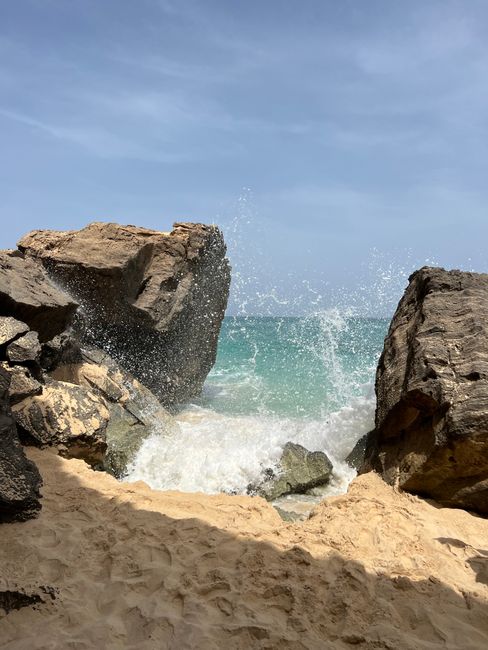
Boa Vista Travel Guide
Plan a trip to Boa Vista, Cabo Verde: Santa Mónica and Chaves beaches, the Viana desert, the Santa Maria shipwreck, Sal Rei, Rabil and…
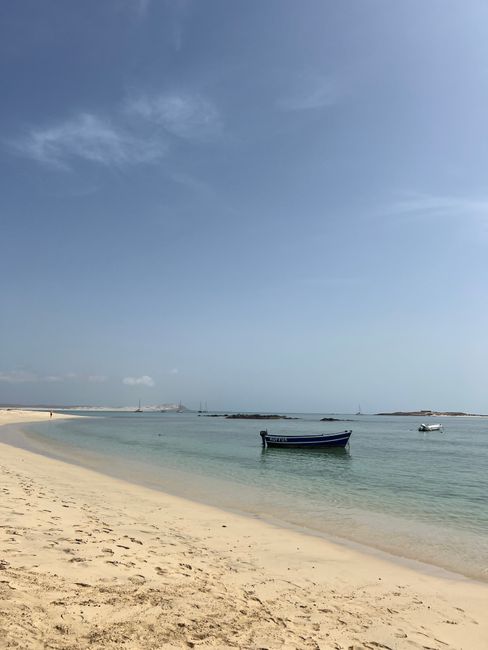
Sal Travel Guide
Plan a trip to Sal, Cabo Verde: Santa Maria beach and pier, Pedra de Lume salt crater, Shark Bay, Buracona and the Blue Eye,…
Best time to visit Cabo Verde
Cabo Verde is a year-round destination. It’s warm all year, with daily highs of about 25 °C (77 °F) in winter and 30 °C (86 °F) in late summer and autumn, and it’s dry for most of the year. The dry season runs roughly from November to July, with steady northeast trade winds, which are great for kitesurfing and windsurfing from about November to May and keep the heat pleasant. Between December and February, dust from the Sahara can bring a dry haze, known locally as bruma seca, which sometimes disrupts flights, especially on Boa Vista. The short rainy season runs from about August to October, when the air is hotter and more humid and occasional heavy downpours can cause flooding and landslides on the mountainous islands. Even then, rain falls on only a few days a month on Sal and Boa Vista. The sea is coolest in February, around 21 °C (70 °F), and warmest in September, around 25 °C (77 °F), according to Portugal’s foreign ministry. The table shows average daily highs and lows and annual rainfall from Cabo Verde’s National Institute of Meteorology and Geophysics (INMG), as published by the World Meteorological Organization (WMO) in its 1991–2020 climate normals.
| Island (INMG station) | January high / low | September high / low | Rain a year |
|---|---|---|---|
| Sal and Boa Vista (Sal airport) | 25 °C (77 °F) / 19 °C (67 °F) | 30 °C (86 °F) / 25 °C (77 °F) | about 75 mm (3 in), 7 days |
| Santiago (Praia) | 27 °C (80 °F) / 20 °C (68 °F) | 31 °C (87 °F) / 24 °C (76 °F) | about 180 mm (7 in), 12 days |
| São Vicente (Mindelo) | 24 °C (76 °F) / 20 °C (69 °F) | 30 °C (85 °F) / 25 °C (78 °F) | not published in the normals |
Cabo Verde month by month
| Month | Weather | Highlights | Crowds and prices |
|---|---|---|---|
| January | Warm, dry and windy; dust haze possible | Kitesurf and windsurf season | High season in the resorts |
| February | Coolest sea; windy; dust haze possible | Carnival in Mindelo and other towns; humpback whales arrive | High; book carnival early |
| March | Dry, breezy and sunny | Whale watching off Boa Vista and Sal | High around Easter |
| April | Dry and pleasant | Good hiking on Santo Antão and Fogo | Busy at Easter, then moderate |
| May | Dry; winds ease | Quiet beaches; good diving visibility | Shoulder season |
| June | Warmer and still dry | Turtle nesting season begins on Boa Vista and Sal | Moderate |
| July | Hot, more humid; rains may start late | Turtle nesting; Independence Day (July 5) | Busy with summer holidays and the diaspora |
| August | Hot and humid; first rains | Turtle nesting and first hatchlings; Baía das Gatas music festival | Busy in August |
| September | Hottest and wettest month | Hatchlings; warmest sea | Low season, lower prices |
| October | Hot; rains ease | Hatchlings; calm seas | Low to moderate |
| November | Warm and dry; trade winds return | Kitesurf season starts | Rising |
| December | Warm and dry | Festive season; dust haze possible | Very busy over Christmas and New Year |
Turtles and whales
Cabo Verde is one of the world’s most important nesting areas for loggerhead turtles, especially on the beaches of Boa Vista, with smaller numbers on Sal and Maio. Females come ashore at night from about June to October, and hatchlings emerge from about August to November. All sea turtles are protected, so join an authorized guided turtle walk rather than looking for nests on your own, keep away from lights, and never touch turtles or hatchlings. From about February to May, humpback whales gather off Boa Vista and Sal to breed, and boat trips go out to look for them.
Public holidays
National holidays include New Year’s Day, National Heroes’ Day (January 20), Carnival Tuesday, Good Friday, Labor Day (May 1), Independence Day (July 5), Assumption Day (August 15), All Saints’ Day (November 1), Immaculate Conception (December 8) and Christmas. Each island and municipality also has its own saint’s day festival, with music, processions and sometimes horse races.
How long to stay: sample itineraries
- 1 week: a beach week on Sal or Boa Vista, with a day trip to the other island or a turtle or whale excursion in season.
- 10 days: Sal (4 nights), then fly to São Vicente for Mindelo (2 nights) and take the ferry to Santo Antão for hiking (3 nights).
- 2 weeks: Santiago (Praia and Cidade Velha, 3 nights), Fogo (3 nights), then São Vicente and Santo Antão (5 nights), ending with a few beach days on Sal.
- Combine with West Africa: Praia has flights to Dakar; see our Senegal travel guide and Gambia travel guide.
Entry, money and costs
Visas, EASE pre-registration and the TSA (last reviewed October 2026)
Citizens of the European Union, the UK, the United States, Canada and many other countries don’t need a visa for tourist stays of up to 30 days. The UK government says British visitors can stay up to 30 days without a visa, and Portugal’s foreign ministry says the same for Portuguese and other European travelers. Everyone traveling on that basis must pre-register online through EASE (Efficient Automatic and Safe Entry) at ease.gov.cv, the official platform, ideally at least five days before arrival, and pay the airport security tax (Taxa de Segurança Aeroportuária, or TSA) of CVE 3,400, about €30.83 (about US$35). The form asks for your passport details, dates of arrival and departure, arrival flight number and where you’ll stay; a tour operator can register you instead. Keep the confirmation to show on arrival. Children under 2 and passengers in transit are exempt from the pre-registration and the tax. According to the UK government, from July 1, 2026, travelers who arrive without completing the pre-registration, or who can’t show proof of it, pay double the TSA at the border. For stays of more than 30 days, you need a visa.
Rules tightened in 2026. Cabo Verde’s EASE portal states that from January 1, 2026, citizens of 91 listed countries must obtain an entry visa (and, if they change planes in Cabo Verde, a transit visa) from a Cabo Verdean embassy or consulate before travel, or they will be refused entry. The list includes, among others, Algeria, Egypt, Ethiopia, Mexico, Colombia, Chile, Peru, Indonesia, the Philippines, Vietnam, Tunisia, Tanzania, Uganda, Zambia and Zimbabwe. Holders of a valid residence permit from an EU country, the UK, Switzerland, Brazil, Canada or the United States are exempt from this requirement. If your passport is from a country on the list, contact the nearest Cabo Verdean embassy well before you book.
Your passport should be valid for at least six months after arrival, according to the UK government. Children under 18 traveling alone, or with an adult who isn’t their parent or legal guardian, need a letter of authorization in Portuguese from a parent or guardian, with a certified signature.
Health requirements
Cabo Verde asks for a yellow fever vaccination certificate only from travelers aged one year and over arriving from a country with a risk of yellow fever, according to the US CDC, which doesn’t recommend the vaccine for Cabo Verde itself. In January 2024, the World Health Organization certified Cabo Verde as malaria-free. Dengue does occur: the authorities have raised the alert level on Santiago, Fogo and Brava, and Portugal’s foreign ministry recommends insect repellent, especially on Santiago, Fogo and Maio.
Money and cards
The currency is the Cape Verdean escudo (CVE), written with the sign “$” after the number, so 1.000$00 means 1,000 escudos. It’s pegged to the euro at CVE 110.265 to €1, which works out at about CVE 98 to the US dollar in October 2026, and euros are widely accepted in tourist areas, though change is often given in escudos. ATMs are common in towns on the main islands and accept foreign Visa cards; cards are taken in larger hotels, restaurants and supermarkets, but carry cash for taxis, aluguer minibuses, markets and small islands. Escudos can’t easily be exchanged outside the country, so spend or change them before you leave.
Taxes and tipping
Prices in shops include VAT, and many hotels add a tourist tax per night, collected locally. Tipping isn’t compulsory, but about 10% is appreciated in restaurants where service isn’t included, and guides and drivers welcome a tip.
What a trip costs
Prices are approximate, for October 2026, converted at about CVE 98 to the US dollar (the fixed euro rate of CVE 110.265 and the European Central Bank’s dollar rate).
| Item | Typical cost |
|---|---|
| Airport security tax (TSA), paid online with EASE | CVE 3,400 (about US$35) |
| Cachupa or fish lunch in a local restaurant | CVE 600–1,200 (about US$6–12) |
| Mid-range restaurant dinner | CVE 2,000–3,500 (about US$20–36) |
| Glass of grogue or a local beer | CVE 150–350 (about US$1.50–3.60) |
| Aluguer (shared minibus) ride on one island | CVE 100–500 (about US$1–5) |
| Domestic flight between islands, one way | about CVE 8,000–16,000 (about US$80–165) |
| Mid-range hotel double, per night | CVE 8,000–18,000 (about US$80–185) |
A comfortable independent trip costs about US$100–180 per person per day, including mid-range rooms, meals and local transport; all-inclusive packages to Sal and Boa Vista often work out cheaper for a pure beach holiday.
Getting there and getting around
International flights
Cabo Verde has four international airports, according to Portugal’s foreign ministry: Amílcar Cabral on Sal (SID), Aristides Pereira on Boa Vista (BVC), Nelson Mandela in Praia (RAI) on Santiago, and Cesária Évora on São Vicente (VXE). Sal and Boa Vista receive most charter and holiday flights from the UK, Ireland, Germany, the Netherlands, Belgium, France, Italy, Scandinavia and Portugal, and Lisbon has scheduled flights to all four airports; see our Lisbon travel guide. Praia also has links to West Africa, and there are seasonal or regular flights to Boston and Brazil. From the Canary Islands, there are occasional flights to Sal and Praia; see our Gran Canaria and Tenerife guides.
Between the islands
Domestic flights link Sal, Boa Vista, Santiago, São Vicente, Fogo, São Nicolau and Maio, mostly with small turboprop aircraft, and connections often route via Praia or Sal. Schedules change often and delays are common, so leave a buffer day before your international flight home. Inter-island ferries link nearby islands, notably the daily crossing between Mindelo and Porto Novo on Santo Antão, about an hour, and the routes between Santiago, Fogo and Brava. Sea conditions can be rough, and crossings to Fogo and Brava are often disrupted, so follow local advice and check before you travel. There are no ferries suitable for a day trip between Sal and Boa Vista on most days; most visitors fly or join an organized excursion.
On the islands
On each island, shared minibuses called aluguers (or hiaces) run between towns from early morning, leaving when full. Taxis are easy to find on Sal, Boa Vista, Santiago and São Vicente; on Sal and Boa Vista, authorized taxis are blue and yellow, so use those or ask your hotel to call one, and agree the fare first. You can rent a car, scooter or quad bike on most islands; Cabo Verde drives on the right, many roads are cobbled, and crash helmets are compulsory on scooters and quads. Quad-bike accidents are a common cause of injury, and travel insurance often excludes them, so check your policy.
Culture, food and everyday etiquette
Food and drink
Cabo Verdean food is simple and hearty. The national dish is cachupa, a slow-cooked stew of corn, beans, vegetables and fish or meat; leftover cachupa is fried for breakfast with an egg and sausage (cachupa guisada). Fresh fish is excellent everywhere, especially tuna, wahoo and grouper, and lobster and octopus are local treats. Try pastel com diabo dentro (fried pastries filled with fish), goat’s cheese from the mountains, and fruit such as papaya and mango. The local spirit is grogue, distilled from sugarcane on Santo Antão and Santiago, and pontche is grogue sweetened with molasses. Fogo produces red and white wines grown in volcanic soil, as well as coffee, and Strela is the local beer.
Music and festivals
Music is central to life. Morna, the slow, melancholy song form made famous by Cesária Évora, was added to UNESCO’s list of Intangible Cultural Heritage in 2019, and you’ll also hear coladeira, the drum-driven batuque and the accordion-based funaná of Santiago. Mindelo’s Carnival in February is the biggest party of the year, and the Baía das Gatas music festival on São Vicente takes place in August.
Etiquette
- Greetings: a handshake or two kisses on the cheek among friends; “bom dia” (good morning) and “obrigado/obrigada” (thank you) are appreciated.
- Pace: “no stress” is the island motto; service can be slow, so relax.
- Dress: beachwear is fine at resorts and on beaches, but cover up in towns, churches and villages.
- Photos: ask before photographing people, especially in markets and fishing ports.
- Environment: take litter home from beaches, and don’t buy turtle shell or coral products.
Safety, health and connectivity
Cabo Verde is one of the safest countries in West Africa for travelers, and most visits are trouble-free. The main issues are practical: the sea, petty crime in towns, roads and limited medical care on some islands.
- Sea currents: tides and currents around the islands are very strong and waves can have a powerful undertow, even on calm-looking beaches. Swim only where lifeguards are on duty, and follow the flags: red means don’t go in, yellow means paddle but don’t swim, and green means safe to swim.
- Petty crime: pickpocketing, bag snatching and muggings occur, particularly in Praia and on Sal and Boa Vista, and passports are a favorite target. Use the hotel safe, don’t carry valuables to the beach, avoid isolated beaches and unlit areas after dark, and keep doors and windows locked.
- Roads and quad bikes: wear a helmet on scooters and quads, check the vehicle before renting, and drive carefully on cobbled mountain roads.
- Heat and sun: the sun is strong even when the wind makes it feel cool; use high-factor sunscreen and drink plenty of water.
- Dust and flights: dust haze from December to February can delay flights; keep some flexibility in your plans.
- Rainy season: heavy rain from mid-August to mid-October can cause floods and landslides on Santo Antão, Santiago, Fogo and Brava, so check conditions before hiking.
- Volcano and altitude: on Fogo, climb Pico do Fogo with a local guide and take care at altitude; seismic activity occasionally affects Fogo and Brava.
- Health: dengue occurs, so use repellent; drink bottled water, and take care with food hygiene, as cases of stomach infections have been reported among returning travelers. Medical facilities are basic, especially on Boa Vista, and the main hospitals are in Praia and Mindelo, so travel insurance with medical evacuation is essential.
- Bags: never agree to carry luggage or parcels for anyone at the airport.
- Emergencies: call 132 for the police, 131 for the fire service and 130 for an ambulance.
Connectivity: buy a prepaid SIM card from CV Movel or Unitel T+ with your passport, or use an eSIM; coverage is good in towns and resorts, and most hotels have Wi-Fi.
Things to do: beaches, kitesurfing, hiking and diving
- Beaches: Santa Maria on Sal, Santa Mónica and Chaves on Boa Vista, Tarrafal on Santiago. See our beaches guide.
- Kitesurfing and windsurfing: world-class conditions on Sal and Boa Vista from November to May. See our surfing guide.
- Hiking: Santo Antão’s valleys, Pico do Fogo and Serra Malagueta. See our hiking guide.
- Diving and snorkeling: reefs, caves and wrecks off Sal and Boa Vista. See our diving and snorkeling guides.
- Boat trips: whale watching from February to May, fishing trips and coastal cruises. See our boat trips guide.
- Culture: Cidade Velha, Mindelo’s music bars and festivals. See our city sightseeing guide.
- Wine and grogue: cellar visits in Chã das Caldeiras on Fogo and grogue distilleries on Santo Antão.
What to pack for Cabo Verde
Light summer clothes, a windbreaker or light sweater for windy evenings and boat trips, swimwear, a sun hat, sunglasses and high-factor sunscreen, water shoes for rocky coves, sturdy hiking shoes and a warm layer for Santo Antão and Fogo, a light rain jacket from August to October, insect repellent, a reusable water bottle, clothes that cover shoulders and knees for towns and churches, and a European two-pin plug adapter. Print or save your EASE confirmation and keep a copy of your passport separately. See our water shoes, hiking shoes, rain jackets and travel adapters guides.
Cabo Verde travel FAQ
Do I need a visa for Cabo Verde?
Citizens of the EU, the UK, the US, Canada and many other countries can visit for up to 30 days without a visa, but must pre-register on ease.gov.cv and pay the airport security tax. Since January 1, 2026, citizens of 91 listed countries need a visa from an embassy before travel.
What is the EASE pre-registration?
EASE is Cabo Verde’s official online entry platform, at ease.gov.cv. You enter your passport, flight and accommodation details and pay the airport security tax, ideally at least five days before arrival, and show the confirmation at the border.
How much is the Cabo Verde airport tax (TSA)?
CVE 3,400, about €30.83 or US$35, paid online during EASE pre-registration. Children under 2 are exempt. According to the UK government, travelers who arrive without pre-registering pay double at the border from July 1, 2026.
Is Cabo Verde the same as Cape Verde?
Yes. Cape Verde is the older English name; the government asks for Cabo Verde to be used in all languages.
What is the best time to visit Cabo Verde?
November to June for dry, sunny weather and trade winds; November to May for kitesurfing; February to May for whales; and June to October for turtles. August to October is hotter and more humid, with occasional heavy rain.
Which Cabo Verde island is best?
Sal and Boa Vista for beaches and resorts, Santo Antão for hiking, Fogo for the volcano, São Vicente for music and nightlife, and Santiago for history and African culture.
Is there malaria in Cabo Verde?
No. The World Health Organization certified Cabo Verde as malaria-free in January 2024. Dengue does occur on some islands, so use insect repellent.
Do I need a yellow fever vaccine for Cabo Verde?
Only if you arrive from a country with yellow fever risk, in which case a certificate is required for travelers aged one and over, according to the US CDC.
Can I pay in euros in Cabo Verde?
Often, yes, in tourist areas, but the currency is the escudo (CVE), pegged at CVE 110.265 to the euro, and you’ll get change in escudos. Carry escudos for taxis, minibuses and small shops.
Is the sea safe for swimming in Cabo Verde?
Currents and undertows can be strong. Swim only at beaches with lifeguards, follow the red, yellow and green flags, and take care on unsupervised stretches.
How do I travel between the islands?
By domestic flights between the islands with airports, and by ferry on routes such as Mindelo to Santo Antão and Santiago to Fogo and Brava. Schedules change, so allow a buffer day before your flight home.
Is Cabo Verde safe for tourists?
Most visits are trouble-free. Take normal precautions against petty crime in Praia and the resort towns, use authorized taxis, wear a helmet on scooters and quads, and respect the sea.
How many days do I need in Cabo Verde?
A week is enough for one beach island; allow 10 days to two weeks to combine two or three islands, such as Sal, São Vicente and Santo Antão.
Sources and last review
Researched and last reviewed on 5 October 2026. EASE pre-registration and the 2026 visa list: Cabo Verde’s official EASE portal (ease.gov.cv) and its list of countries whose citizens need a visa from January 1, 2026; the 30-day visa exemption, five-day pre-registration, TSA amount and exemptions, flights to the four international airports, safety, dengue alert and emergency numbers: Portugal’s Ministry of Foreign Affairs (Portal das Comunidades, updated February 13, 2026); the double TSA from July 1, 2026, passport validity, children’s authorization letters, beach flags, taxis, dust haze, rainy season, roads, medical care and emergency numbers: the UK government’s factual entry and safety pages, used for practical facts only; yellow fever: the US CDC; malaria-free status: the World Health Organization; the euro peg: Portugal’s foreign ministry and the European Central Bank; climate averages: Cabo Verde’s National Institute of Meteorology and Geophysics via the World Meteorological Organization’s 1991–2020 normals; Cidade Velha: the UNESCO World Heritage Center. Area, population, history, holidays, sea-life seasons, visa exemption for US and Canadian citizens, domestic transport and typical prices are general references or estimates, flagged for checking. Rules and prices change, so check the official sites before you go.
Plan your trip
Partner links: TravelerCenter may earn a commission if you book, at no extra cost to you.
🇵🇹 Useful Portuguese phrases for Cabo Verde
All 38 Portuguese phrases: restaurant, hotel, emergencies, romance (printable) →