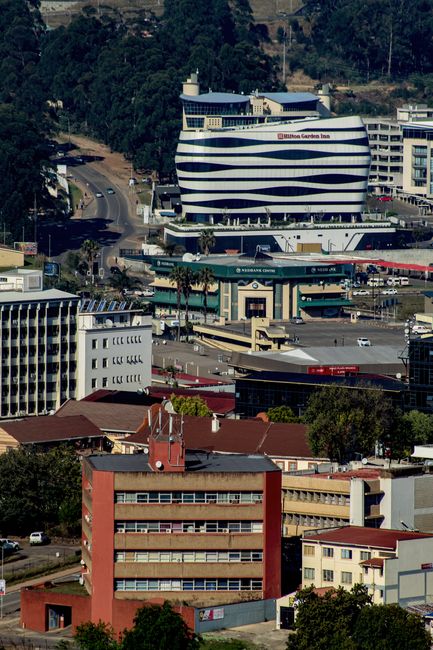
Eswatini, known until 2018 as Swaziland, is a small, green kingdom tucked between South Africa and Mozambique, and one of the most rewarding short trips in southern Africa. In a country about the size of New Jersey or Wales, you can go from misty highland forests and granite domes to warm bushveld full of rhino, elephant and lion in a couple of hours’ drive. Swazi culture is lived, not staged: the monarchy is at the center of national life, and the great annual ceremonies of Umhlanga (the Reed Dance) and Incwala draw tens of thousands of people in traditional dress. Most visitors base themselves in the Ezulwini Valley, the country’s tourism hub between the capital, Mbabane, and the royal town of Lobamba, for Mlilwane Wildlife Sanctuary, Mantenga Cultural Village and the craft shops of Malkerns. Beyond, Hlane Royal National Park and Mkhaya Game Reserve offer safaris, Malolotja Nature Reserve has some of the region’s best hiking, and Sibebe Rock is a giant granite dome above Mbabane. Visitors from the US, Canada, the UK, Australia and most EU countries can stay 30 days without a visa, according to the Eswatini Tourism Authority, and the lilangeni is fixed to the South African rand. The dry winter, from May to September, is the best time for wildlife; summer is green, hot and wet. Give it three to five days.
Right now in Eswatini
- Sat19–27°C66–80°F10 mm rain
- Sun19–28°C67–82°F5 mm rain
- Mon19–22°C67–71°F8 mm rain
Weather, sun and air quality here are for one point near the centre of Eswatini, not the whole country; conditions elsewhere can differ. Readings refresh through the day.
Eswatini: quick answers
- Best time to visit Eswatini
- Eswatini has a summer-rainfall climate that varies a lot with altitude. More
- Things to do in Eswatini
- Wildlife, culture and adventure. More
- Entry rules for Eswatini
- Eswatini’s visa portal (evisa.gov.sz), run by the Ministry of Home Affairs, explains that nationalities not on the list of countries requiring visas don’t need to apply. More
- Is Eswatini safe?
- Connectivity: MTN and Eswatini Mobile sell SIM cards in towns, and most hotels have Wi-Fi, though it can be slow. Sockets are the South African three-round-pin type M, at 230 V, according to the tourism authority and the US Department of Commerce; see our travel adapters guide. More
Eswatini at a glance
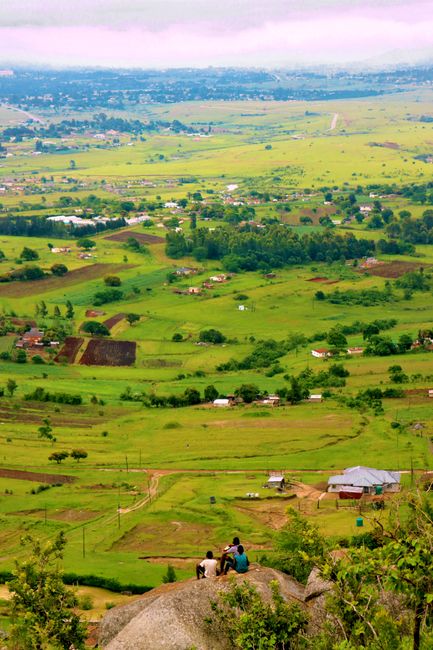
Eswatini covers about 17,360 km² (6,700 sq miles) and is one of Africa’s smallest countries. Even so, it packs in four distinct landscapes from west to east. The Highveld, along the border with South Africa’s Mpumalanga, is high, cool and often misty, with pine plantations, granite hills and the capital, Mbabane. The Middleveld, a band of fertile valleys and farmland at around 600–800 m, holds the Ezulwini and Malkerns valleys, the royal town of Lobamba and the busy commercial city of Manzini. The hot, dry Lowveld is bush and sugar country, with the big game parks of Hlane and Mkhaya. In the far east, the Lubombo Mountains rise along the border with Mozambique. About 1.1 million people live in Eswatini; they are the Swazi (emaSwati), and their language is siSwati.
siSwati and English are the official languages, and English is spoken in hotels, shops and offices. Eswatini is a kingdom led by King Mswati III together with the Queen Mother, and the royal family’s ceremonies and residences are part of everyday life around Lobamba. Mbabane is the administrative capital, and Lobamba is the royal and legislative capital, with Parliament and the National Museum. The time zone is UTC+2 all year, the same as South Africa, with no daylight saving time. Driving is on the left.
Eswatini’s regions for travelers
- Central Eswatini: the Ezulwini Valley, Lobamba, Mlilwane Wildlife Sanctuary and Mantenga, the craft and music venues of Malkerns, Mbabane and Sibebe Rock, and Manzini, the “cultural heartland,” as the Eswatini Tourism Authority calls it.
- The northwest highlands: Malolotja Nature Reserve, the ancient Ngwenya Mine and Ngwenya Glass near the Oshoek border, the forestry town of Pigg’s Peak, the Nsangwini rock art and the old mining village of Bulembu.
- The northeast: Hlane Royal National Park, the reserves of the Lubombo Conservancy, Shewula’s community camp in the Lubombo Mountains, and the sugar estates around Simunye.
- The southeast: Mkhaya Game Reserve, the Great Usutu River and Big Bend, and Royal Jozini near the Lavumisa–Golela border.
- The southwest: quiet farmland and forests around Nhlangano and the Mahamba Gorge.
Regions
Videos of Eswatini
Hand-picked travel videos from YouTube creators to help you picture the trip. They play from YouTube; the facts in this guide come from our own research.
Where to go: valley, bushveld and highlands
The Ezulwini Valley makes the easiest base, with most sights within an hour’s drive. A classic trip adds a night or two in Hlane or Mkhaya for safari, and a night in the highlands at Malolotja. Our guide to the valley:
- Ezulwini Valley: Mlilwane Wildlife Sanctuary, Mantenga Nature Reserve and Cultural Village, Lobamba’s National Museum and royal sites, and the crafts of Malkerns. Our Ezulwini Valley guide has fees and details.
Ezulwini Valley Travel Guide
Plan a visit to the Ezulwini Valley: Mlilwane Wildlife Sanctuary fees and activities from Big Game Parks, Mantenga Nature Reserve and Cultural Village, Lobamba's…
Multi-day tours of Eswatini
Multi-day tours from local operators. You check dates and book on Viator, our partner; we may earn a commission at no extra cost to you. How we earn money
Beyond the Ezulwini Valley
Hlane Royal National Park
In the northeastern Lowveld, Hlane is the country’s largest national park, a former royal hunting ground of open bushveld and old hardwood trees. The Eswatini Tourism Authority names it one of the most popular parks in the country, with guided game drives for lion, elephant and white rhino. Big Game Parks, which runs it, charges a conservation fee of R95 per person per day, and day visitors are allowed from 06:00 to 18:00. Guided sunrise and sunset game drives cost R545 per person and rhino drives R390, according to Big Game Parks, and there are rustic camps without electricity at Ndlovu, where rhino come to the waterhole.
Mkhaya Game Reserve
Mkhaya, in the southeast, is a private reserve dedicated to rhino conservation, and one of the best places in southern Africa to see both black and white rhino, often on foot with a ranger. Visits are by arrangement only, mostly as overnight stays at its open-sided Stone Camp; children under 10 aren’t allowed, according to Big Game Parks.
Malolotja Nature Reserve and Ngwenya
In the northwest highlands, Malolotja is a wild reserve of grassland, gorges, waterfalls and forest, with long hiking trails and a treetop canopy tour. Within it lies the Ngwenya Mine, which the Eswatini Tourism Authority describes as the oldest mine in the world, worked for iron-rich red ochre tens of thousands of years ago. Just outside, Ngwenya Glass makes animal figures and glassware from recycled glass; you can watch the glass-blowers at work.
Mbabane and Sibebe Rock
The capital, Mbabane, is a hilly highland town with markets, shopping centers and hotels. Just outside it, Sibebe Rock is a huge bare granite dome rising above Pine Valley, which the Eswatini Tourism Authority calls the world’s largest granite dome, with guided hikes to the top.
Malkerns and Manzini
The Malkerns Valley, between Ezulwini and Manzini, is pineapple and craft country, with Swazi Candles, the Malandela’s complex and the House on Fire arts venue, home of the MTN Bushfire festival. Manzini is the country’s busiest city, with a large, lively market.
Pigg’s Peak, Bulembu and Nsangwini
The road north from Mbabane winds through forests to Pigg’s Peak, with views and craft shops. A rough road leads to Bulembu, a former asbestos-mining village being revived as a community, and the Nsangwini rock shelter has San paintings that the Eswatini Tourism Authority dates to up to 4,000 years ago.
The Lubombo Mountains and Shewula
Along the Mozambique border, the Lubombo Mountains shelter rare plants and quiet reserves. Shewula Mountain Camp, run by the local community, offers simple huts, guided village walks and views across the whole country.
Best time to visit Eswatini
Eswatini has a summer-rainfall climate that varies a lot with altitude. According to the Eswatini Tourism Authority, the dry season runs from mid-April to mid-October, with sunny days and chilly nights, and the rainy season from late October to March, with thunderstorms and heat, especially in the Lowveld, where temperatures can reach 40 °C (104 °F). Mbabane in the Highveld is cooler and much wetter, and often misty in summer. The table shows the official 1961–1990 averages from the Eswatini Meteorological Service, as published by the World Meteorological Organization.
| Area (weather station) | January high / low | July high / low | October high / low | Rain a year |
|---|---|---|---|---|
| Highveld (Mbabane, about 1,240 m) | 25 °C (77 °F) / 15 °C (59 °F) | 20 °C (68 °F) / 5 °C (40 °F) | 23 °C (73 °F) / 11 °C (52 °F) | about 1,440 mm (57 in), mostly October to March |
| Middleveld (Manzini) | 29 °C (83 °F) / 19 °C (65 °F) | 23 °C (73 °F) / 9 °C (48 °F) | 26 °C (78 °F) / 15 °C (59 °F) | about 925 mm (36 in), mostly October to March |
The Ezulwini Valley lies between the two in altitude and climate. For safaris, the dry winter months from May to September are best, as the bush thins and animals gather at water. For greenery, waterfalls and birds, visit in summer, but expect afternoon storms and fog on highland roads. Spring and autumn are lovely for hiking.
Eswatini month by month
| Month | Weather | Highlights |
|---|---|---|
| January | Hot and wet | Lush Ezulwini; Mantenga and Mlilwane |
| February | Hot; storms | Marula Festival at Hlane, celebrating the marula fruit harvest |
| March | Warm; rains easing | Highland hikes at Malolotja; Ngwenya Mine |
| April | Mild; drying out | Crafts tours around Malkerns; Easter holidays |
| May | Dry; cool nights | MTN Bushfire festival at House on Fire |
| June | Dry; cold nights | Gentler white-water rafting on the Usutu River |
| July | Coolest month | Hiking events on Sibebe Rock; good game viewing |
| August | Dry; windy | Umhlanga (Reed Dance) at Lobamba; Luju Food and Lifestyle Festival |
| September | Warming; dry | Rhino tracking on foot at Mkhaya; Independence Day (September 6) |
| October | Hot; first storms | Hlane before the summer heat |
| November | Hot; rainy | Community visits at Shewula |
| December | Hot; wet | Incwala ceremony (December–January) |
This calendar follows the Eswatini Tourism Authority’s month-by-month guide.
Umhlanga, Incwala and other festivals
Umhlanga, the Reed Dance, is held at the royal residence at Ludzidzini in Lobamba, usually in late August or early September. Tens of thousands of young women and girls in beadwork and bright sashes bring reeds to the Queen Mother and dance before the King. Incwala, the sacred “first fruits” ceremony, takes place over several weeks around December and January. The exact dates of both are set each year by the royal household and announced only shortly before; the Eswatini Tourism Authority lists them as “to be confirmed.” Visitors are welcome to watch the main public days, but photography rules are strict at some stages, so follow the instructions of officials. Modern events include the MTN Bushfire performing-arts festival every May at House on Fire in Malkerns and the Luju food festival in August.
Public holidays
The Eswatini Tourism Authority lists these public holidays for 2026: New Year’s Day (January 1), Good Friday (April 3), Easter Monday (April 6), King’s Birthday (April 19), Flag Day (April 25), Labour Day (May 1), Ascension Day (May 14), King Sobhuza’s Birthday (July 22), the Umhlanga Reed Dance day (date announced each year), Independence (Somhlolo) Day (September 6), Christmas Day (December 25), Boxing Day (December 26) and Incwala (December or January). If a holiday falls on a weekend, the next Monday is a holiday.
How long to stay: sample itineraries
- 2–3 days: the Ezulwini Valley, with Mlilwane, Mantenga, Lobamba and Malkerns, plus Sibebe Rock or Ngwenya on the way in or out.
- 5 days: Ezulwini (2 nights), Malolotja (1 night) and Hlane or Mkhaya (2 nights), leaving toward Kruger or Mozambique.
- 7 days: Malolotja and Ngwenya (1 night), Ezulwini (2 nights), Hlane (2 nights), and Mkhaya or Shewula (2 nights).
- Combining countries: Eswatini sits between Kruger National Park, about an hour from the Matsamo/Jeppe’s Reef crossing, and the KwaZulu-Natal coast near Durban, so it slots neatly into a road trip from Johannesburg. Maputo is about an hour from the Lomahasha and Goba crossings; see our Mozambique guide. Lesotho, the other mountain kingdom inside South Africa, is a good pairing too; see our Lesotho guide.
Entry, money and costs
Entry and visas (last reviewed November 2026)
Eswatini’s visa portal (evisa.gov.sz), run by the Ministry of Home Affairs, explains that nationalities not on the list of countries requiring visas don’t need to apply. The Eswatini Tourism Authority’s list of countries that don’t need a visa includes the United States, Canada, the United Kingdom, Ireland, Australia, New Zealand, Japan, South Korea, Switzerland, Norway, South Africa and most EU countries, among others. The US, UK and Canadian governments confirm visa-free visits of up to 30 days for their citizens.
- Length of stay: up to 30 days; you can apply to the Ministry of Home Affairs for a 30-day extension, and stays longer than 60 days need a temporary residence permit, according to the UK government and the Eswatini Tourism Authority.
- If you need a visa: apply online through the Eswatini eVisa portal or at an Eswatini embassy or high commission before you travel. The Eswatini Tourism Authority notes that visas can’t yet be obtained on arrival at border posts.
- Passports: the UK government asks for at least three months’ validity after arrival and two blank pages, plus two more if you’re also going to South Africa; the Government of Canada asks for six months beyond your departure date and two blank pages, the safer rule. Check that your entry stamp shows the right date.
- Health: you need a yellow fever vaccination certificate only if you come from a country with yellow fever transmission risk, and you may be asked health questions on arrival.
Driving in by car
If your vehicle isn’t registered in Eswatini, you complete a customs declaration at the border and pay a road toll: E150 for a car or light vehicle and E80 for a motorcycle, according to the Eswatini Revenue Authority’s fees in force from October 1, 2025, as published by the Eswatini Tourism Authority, and confirmed by the UK government. South African rand are accepted. Carry the receipt in the vehicle, along with your license, passport, the vehicle’s registration papers and, for a rental car, the rental company’s letter of permission.
Money and cards
The currency is the lilangeni (plural emalangeni, SZL, written E), fixed one to one to the South African rand. Rand are accepted everywhere, and the Eswatini Tourism Authority notes that emalangeni are hard to change outside the country, so use them up or change them back before you leave. Using the European Central Bank’s reference rates for November 10, 2026, US$1 was worth about 16.40 rand (or emalangeni), the rate used on this page. Visa, Mastercard and American Express are widely accepted in hotels, restaurants and shops, but the tourism authority notes they often can’t be used for fuel, so carry cash. Big Game Parks, which runs Mlilwane, Hlane and Mkhaya, has been cashless since July 1, 2026, taking only Visa, Mastercard or MTN MoMo payments.
Tipping
The Eswatini Tourism Authority suggests about 10% of a restaurant bill and about E5 per suitcase for porters, and tips are appreciated by fuel-station attendants. On safari, tip your guide or ranger at the end of a drive or walk.
What a trip costs
Official fees are noted; other prices are our estimates for November 2026, at about R16.40 to the US dollar.
| Item | Typical cost |
|---|---|
| Conservation fee at Mlilwane or Hlane, per person per day (Big Game Parks) | R95 (about US$6) |
| Guided sunrise or sunset game drive at Hlane (Big Game Parks) | R545 (about US$33) per person |
| Guided horse ride, 1 hour, at Mlilwane (Big Game Parks) | R430 (about US$26) per person |
| Coffee in a café | E30–45 (about US$2–3) |
| Main course in a mid-range restaurant | E120–250 (about US$7–15) |
| Rental car, per day (picked up in South Africa) | R500–900 (about US$30–55) |
| Mid-range lodge or hotel, double, per night | E1,200–2,800 (about US$75–170) |
A budget trip with rest camps and self-catering costs about US$60–100 per person per day; a mid-range trip with lodges, safaris and a rental car about US$150–250.
Getting there and getting around
By air
King Mswati III International Airport (SHO), in the east of the country, is Eswatini’s international airport. The Eswatini Tourism Authority says Airlink flies to Johannesburg several times a day, and Eswatini Air serves Johannesburg, Cape Town and Harare; Eswatini Air also runs a free shuttle bus for its passengers to Manzini, Matsapha, Ezulwini and Mbabane. Many travelers instead fly into Johannesburg and drive, or take a scheduled minibus transfer, which takes about five hours, from about R750 one way, according to the tourism authority.
By road: border crossings
Eswatini has 11 border posts with South Africa and two with Mozambique. The Eswatini Tourism Authority lists these opening hours:
| Border post (Eswatini / neighbor) | Opening hours |
|---|---|
| Ngwenya / Oshoek (for Mbabane and Johannesburg) | 24 hours |
| Matsamo / Jeppe’s Reef (for Kruger) | 07:00–20:00 |
| Mahamba (for the southwest) | 07:00–22:00 |
| Lavumisa / Golela (for KwaZulu-Natal) | 07:00–22:00 |
| Mananga (for the northeast) | 07:00–18:00 |
| Lomahasha / Namaacha (Mozambique) | 07:00–00:00 |
| Mhlumeni / Goba (Mozambique) | 06:00–00:00 |
| Sandlane / Nerston, Sicunusa / Houtkop, Nsalitshe / Onverwacht | 08:00–18:00 |
| Bulembu / Josefsdal, Gege / Bothashoop, Lundzi / Waverley | 08:00–16:00 |
Oshoek is the main crossing from Johannesburg, about three and a half hours away, according to Big Game Parks. Plan to cross in daylight and check hours before holidays, when they are sometimes extended.
Getting around
Eswatini is small, so most sights are within easy reach of each other, and the Eswatini Tourism Authority recommends self-drive as the best way to explore. You need your driving license, or an international license in English. Main roads, including the highway from Mbabane through Ezulwini to Manzini, are paved; many minor roads are gravel. Livestock often wander onto roads, and fog is common in the Highveld, so drive carefully and in daylight. Fuel stations are found in all main towns and at most borders. For taxis, the tourism authority points to the Leap Taxi app; buses and kombi (minibus) taxis run between towns but have no published timetables. Local tour operators run day tours and safaris and can arrange transfers.
Culture, food and everyday etiquette
Swazi culture
Traditional dress, beadwork and the red-and-black emahiya cloth are worn at ceremonies and often day to day. The Mantenga Cultural Village in the Ezulwini Valley reconstructs a traditional homestead from around the 1850s, with dance displays, and many community projects welcome visitors for homestead stays and village walks. Swazi crafts are excellent: candles, glass, weaving, grass baskets, soapstone carving and batik, mostly made by community-based businesses that you can visit.
Food and drink
Meals center on pap (maize porridge) with stews of beef, chicken or beans, grilled meat, and seasonal fruit such as pineapples from Malkerns and, in late summer, marula. Try sishwala (a thick porridge), roasted mealies (corn) from roadside stalls and emasi (sour milk). Lodges and restaurants in Ezulwini, Mbabane and Malkerns serve international food. The tourism authority notes that liquor isn’t sold in retail shops on Sundays.
Etiquette
- Greetings: “Sawubona” (hello) and “Ngiyabonga” (thank you) are always appreciated; “Yebo” means yes.
- Photos: most Swazis don’t mind being photographed, but ask first, as the tourism authority advises; don’t photograph royal residences, the police or the military, and follow the rules at ceremonies.
- Respect for the monarchy: the King and Queen Mother are deeply respected; speak politely about the royal family.
- Dress: casual and modest; for safari, natural colors.
Safety, health and connectivity
- Malaria: the Eswatini Tourism Authority says anti-malarial tablets are only needed for the eastern side of the country, the Lowveld and Lubombo Mountains, including Hlane, Mkhaya and the Lubombo reserves, and that the country is close to becoming malaria-free. Ask a travel-health professional about prevention.
- Wildlife: in game parks, stay in your vehicle unless a guide or ranger says it’s safe, and keep a respectful distance from rhino, elephant and hippo.
- Roads: watch for animals, pedestrians and slow trucks on hills, and for fog in the highlands; avoid driving at night.
- Health care: basic health care is available; serious cases usually go to South Africa, so take travel insurance that covers medical evacuation. HIV rates are high, so take the usual precautions.
- Water: stick to bottled or filtered water outside the main hotels.
- Emergencies: police 999, ambulance 977.
Connectivity: MTN and Eswatini Mobile sell SIM cards in towns, and most hotels have Wi-Fi, though it can be slow. Sockets are the South African three-round-pin type M, at 230 V, according to the tourism authority and the US Department of Commerce; see our travel adapters guide.
Things to do: wildlife, culture and adventure
- Safaris: game drives at Hlane, rhino walks at Mkhaya, and self-drive, cycling and horseback safaris at Mlilwane.
- Culture: Mantenga Cultural Village, the National Museum at Lobamba, Umhlanga and Incwala, and homestead visits.
- Hiking: Malolotja’s trails, Sibebe Rock, Sheba’s Breasts and Execution Rock above Ezulwini, and the Mahamba Gorge. See our hiking guide.
- Mountain biking: trails at Mlilwane and races around the country. See our cycling guide.
- Adventure: white-water rafting on the Great Usutu River and the canopy tour at Malolotja.
- Crafts and music: Swazi Candles, Ngwenya Glass, Malandela’s and live music at House on Fire.
What to pack for Eswatini
Bring light clothes for the Lowveld and a warm layer for Highveld evenings and winter nights, a rain jacket for summer storms, good hiking shoes for Malolotja and Sibebe, neutral colors for safari, binoculars, a sun hat, sunscreen and insect repellent, a card for Big Game Parks payments, some rand or emalangeni for fuel and markets, and an adapter for type M sockets.
Eswatini travel FAQ
Do I need a visa for Eswatini?
Not if you’re from the US, Canada, the UK, Ireland, Australia, New Zealand, Japan, South Africa or most EU countries, among others, for stays of up to 30 days. Other nationalities can apply through the Eswatini eVisa portal or at an Eswatini embassy before travel.
What currency is used in Eswatini?
The lilangeni (emalangeni), fixed at par with the South African rand. Rand are accepted everywhere, about R16.40 to the US dollar in November 2026.
When is the Umhlanga Reed Dance?
Usually in late August or early September, at Ludzidzini in Lobamba. The exact dates are announced by the royal household each year, often only shortly before.
What is the best time to visit Eswatini?
May to September for wildlife and dry weather; October to April for green landscapes, with storms and heat in the Lowveld.
How many days do I need in Eswatini?
Two or three days for the Ezulwini Valley and its sights; five to seven to add Hlane or Mkhaya and Malolotja.
Can I see the Big Five in Eswatini?
Yes, across several parks: Hlane has lion, elephant and rhino, and Mkhaya is known for black and white rhino; leopard and buffalo are harder to see. Mlilwane has no big predators, so you can walk and cycle there.
Is there malaria in Eswatini?
Only in the east. The Eswatini Tourism Authority says anti-malarial tablets are needed only for the Lowveld and Lubombo Mountains, which include Hlane and Mkhaya, not for Ezulwini or the Highveld. Ask a travel-health professional before you go.
How do I get from Johannesburg to Eswatini?
Drive about three and a half hours to the Oshoek/Ngwenya crossing, open 24 hours; take a scheduled minibus transfer of about five hours; or fly to King Mswati III International Airport.
Can I combine Eswatini with Kruger National Park?
Yes. The Matsamo/Jeppe’s Reef crossing (07:00–20:00) is about an hour from Kruger’s southern gates, so many travelers spend a few days in Eswatini before or after Kruger.
What are the emergency numbers in Eswatini?
Police 999 and ambulance 977.
What plugs are used in Eswatini?
The South African type M, with three large round pins, at 230 V.
What is the time difference in Eswatini?
Eswatini is on UTC+2 all year, the same as South Africa, with no daylight saving time.
Plugs and power in Eswatini
Eswatini uses 230 V, 50 Hz and these plugs (left) and wall sockets (right):
Type M is standard (US Department of Commerce, Eswatini Tourism Authority); the tourism authority says sockets also take type N.
All plug types and voltages by country → · Check what you need to pack →
Plan your trip
Partner links: TravelerCenter may earn a commission if you book, at no extra cost to you.
Before you go: guidebooks and travel gear
Affiliate links: we may earn a commission at no extra cost to you. As an Amazon Associate we earn from qualifying purchases. We pick items for the place, not for the commission. How we earn money
Sources
Researched and last reviewed on November 10, 2026. Visa rules: Eswatini’s Ministry of Home Affairs eVisa portal (evisa.gov.sz), the Eswatini Tourism Authority’s visa guide, GOV.UK entry requirements, the US Department of Commerce and the Government of Canada; road toll, border hours, flights, transfers, regions, festivals, the month-by-month guide, public holidays, currency and cards, tipping, plugs, mobile networks, malaria and Sunday liquor rules: Eswatini Tourism Authority (thekingdomofeswatini.com); conservation fees, activity prices, payment rules and age limits: Big Game Parks (biggameparks.org); emergency numbers and health care: GOV.UK; plugs: also the US Department of Commerce; exchange rate: European Central Bank; climate: Eswatini Meteorological Service, via the World Meteorological Organization; area, capitals and coordinates: Wikidata; time zone: IANA time zone database. Population, geography, history, Mkhaya’s camp, food, travel times and prices other than official fees are general references or our estimates, flagged for checking. Rules, fees and ceremony dates change, so check the official sites before you go.
Data: Weather: MET Norway (CC BY 4.0) · Rates: ECB · Wikidata (CC0)