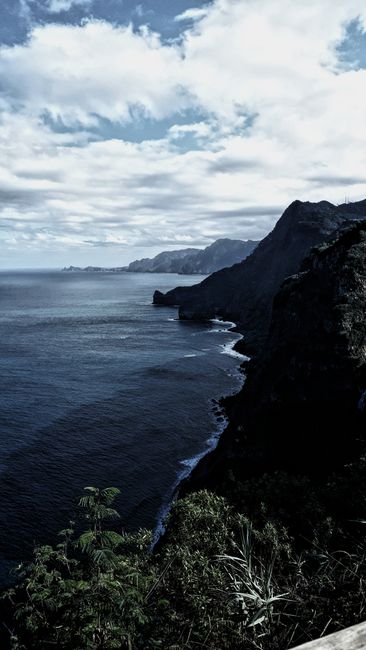
Madeira is a steep, green Atlantic island where you can walk along old water channels through laurel forest in the morning and swim in volcanic rock pools in the afternoon. Base yourself in Funchal, rent a car or join tours, and book the official hiking trails online before you go. Funchal is mild all year; the mountains are cooler, wetter and change fast. Give it a week.
Right now in Madeira (Funchal)
- Wed 16–24°C 60–75°F 4 mm Showers
- Thu 17–23°C 63–73°F 7 mm Showers
- Fri 18–21°C 64–69°F 7 mm Showers
Weather: MET Norway (CC BY 4.0) · Sea temperature: NOAA CoastWatch · Air quality: OpenAQ · Rates: ECB
Top tours in Madeira
See all tours for Madeira →
From local operators, with prices and reviews; you check availability and book on Viator, our partner. We may earn a commission at no extra cost to you. How we earn money
Madeira at a glance
- What it is: the main island of the Madeira archipelago, an autonomous region of Portugal, with little Porto Santo 71 km away by ferry. The capital is Funchal, on the sunny south coast.
- Best for: levada and ridge walks, sea views, whale and dolphin trips, gardens, food and Madeira wine. Not a classic sand-beach island: for that, take the ferry to Porto Santo.
- Highest points: Pico Ruivo (1,862 m) and Pico do Areeiro (1,818 m), joined by the PR1 ridge trail.
- Climate: Funchal averages daytime highs of about 20 °C in winter and 27 °C in August (IPMA 1991–2020 normals).
- Trail fees: most official PR trails must be booked and paid on the regional SIMplifica portal: €4.50 per trail, €10.50 for the full PR1 ridge walk (as of October 2026).
- Airport: Madeira Airport (FNC), east of Funchal. Strong winds sometimes divert or cancel flights.
- Entry, money, time zone and general safety: the same as mainland Portugal; see our Portugal travel guide.
The island’s areas and who each one suits
Madeira is small but slow to cross: a spine of mountains runs east to west, and the weather changes from one side to the other.
Funchal
The capital climbs from the harbour up an amphitheatre of hills: the painted doors of the Old Town (Zona Velha), the Mercado dos Lavradores market, the cable car to Monte and the wine lodges. Best for first-timers, travellers without a car and anyone who wants restaurants on the doorstep.
South coast: Câmara de Lobos, Ribeira Brava, Ponta do Sol and Calheta
Câmara de Lobos is a fishing harbour of colourful boats and the home of poncha, with the Cabo Girão sea cliff above. Further west, Ponta do Sol and Calheta are the sunniest corner, with a sandy beach and marina at Calheta. Good for couples and families who want calm, sunsets and quick access to the western levadas.
The west: Porto Moniz and the Paul da Serra plateau
Porto Moniz, at the north-west tip, has natural swimming pools in black lava rock. Above it, the Paul da Serra plateau and Rabaçal valley start the 25 Fontes and Risco levadas, near the misty old laurels of Fanal. A full day trip from Funchal, or a quiet base for hikers.
The north: Santana, São Vicente and Seixal
The north is wilder, greener and wetter. Santana has triangular thatched houses and is the gateway to Caldeirão Verde and Pico Ruivo; São Vicente has lava caves; Seixal has a black-sand beach and natural pools. Best for walkers and slow travellers who don’t mind clouds.
The mountains: Pico do Areeiro and Pico Ruivo
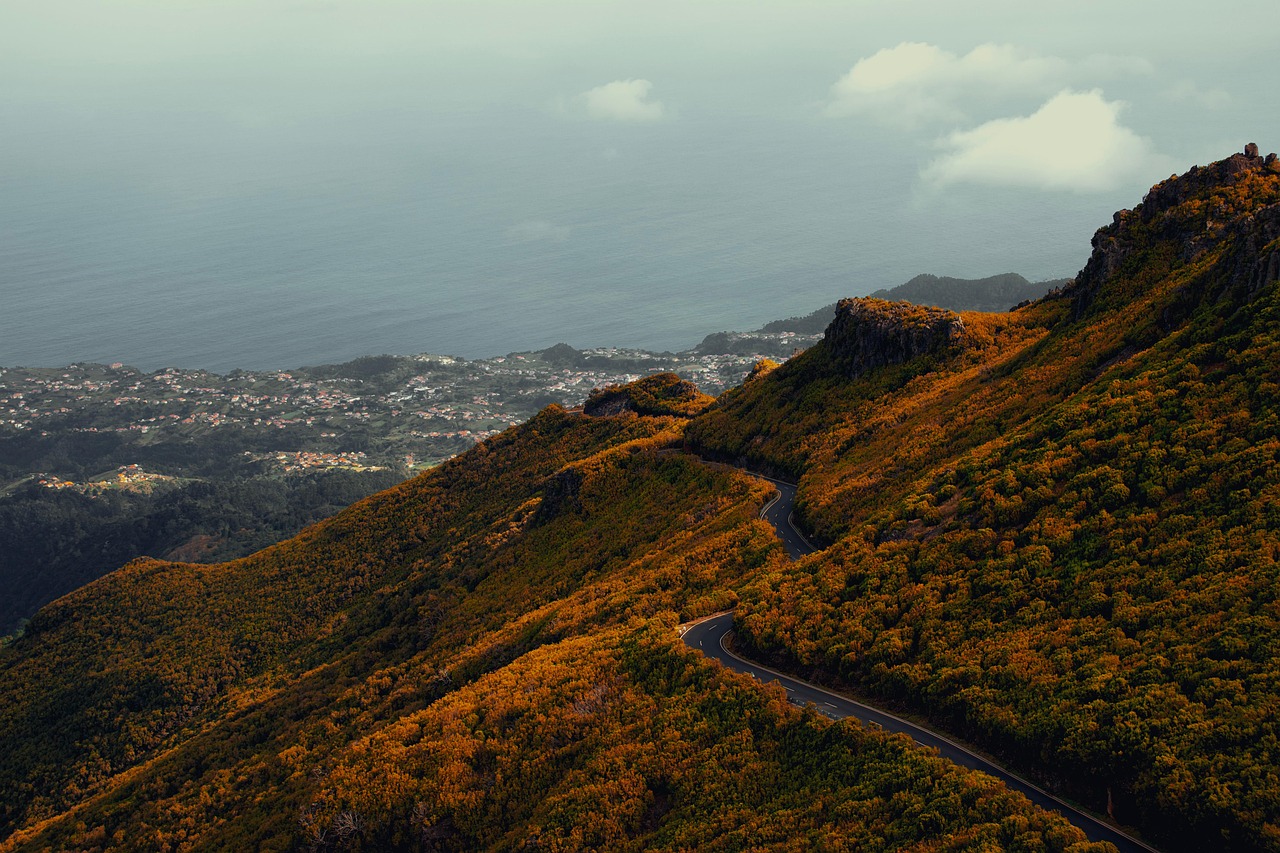
A road climbs to Pico do Areeiro, where people gather for sunrise above the clouds; from here PR1 follows the jagged ridge to Pico Ruivo. For fit hikers and early risers; it is far colder than Funchal.
Ponta de São Lourenço and Machico
The dry eastern tip is a nature reserve of red and ochre cliffs with sea on both sides, walked on PR8. Machico nearby has a sheltered sandy bay. A good half-day near the airport.
Porto Santo
Madeira’s flat, dry sister island has a sandy beach Visit Madeira describes as nine kilometres long. Come on a ferry day trip, or stay a few nights for a beach finish after hiking.
Top things to see in Madeira
- Pico do Areeiro at sunrise: drive or take a tour up before dawn and watch the light spill over the clouds and the ridge towards Pico Ruivo.
- Funchal cable car and Monte: a ride from the Old Town to Monte, its church and tropical gardens. Adults pay €16 one way or €22 return; children 7–14 pay half and under-7s ride free; it runs 8:45–17:45 every day except Christmas Day (as of October 2026).
- Monte toboggan ride: two carreiros in straw hats steer a wicker sledge down the steep streets towards Livramento. A sledge costs €30 for one person, €40 for two or €60 for three; rides run Monday to Saturday, 9:00–18:00, tickets on the spot and same day only, and may stop early in bad weather (as of October 2026).
- Cabo Girão: a glass-floored viewing platform on one of the highest sea cliffs in Europe, above terraced fields. Entry costs €5 for non-resident adults since 1 January 2026; children up to 12 are free, and tickets can be bought on site or on SIMplifica.
- Porto Moniz natural pools: swimming in lava-rock pools with lifeguards. Entry is €3 per person over 3; open all year, 9:00–17:00 in winter and 9:00–19:00 in summer (as of October 2026).
- Laurissilva forest: the laurel forest that covers the island’s northern slopes is a UNESCO World Heritage Site (inscribed in 1999). Walk into it on the Caldeirão Verde, Balcões or Fanal trails.
Protected areas
- Cabo Girão
- Laurisilva of Madeira
- Madeira Natural Park
Peaks and mountains
- Pico do Areeiro
- Pico Ruivo
Parks and gardens
- Madeira Botanical Garden
Museums
- CR7 Museum
Nature
Beaches
Viewpoints
Levada and mountain walks
Levadas are irrigation channels carrying water from the rainy north to farms in the south; the paths beside them make gentle, mostly level walks, sometimes through tunnels. Veredas are older, often steeper footpaths. Official routes are numbered PR and mostly managed by IFCN, the regional forestry and nature conservation institute.
Trail fees and booking (as of October 2026)
Since 1 January 2026, IFCN’s classified trails use a fee and booking system (Portaria 801/2025, amended by Portaria 48/2026):
- Book online only, on the SIMplifica portal (simplifica.madeira.gov.pt), up to the same day if slots are free. IFCN does not sell tickets at its offices.
- You book an entry time slot, with about 15 minutes’ tolerance; full slots close automatically.
- Prices for visitors over 12: €4.50 per trail; €10.50 for the full PR1 Vereda do Areeiro (which also covers PR1.1, PR1.2 and PR1.3); €4.50 for PR1 only as far as the Pedra Rija viewpoint. Several trails in a day cost €9, in 3 days €22.50 and in 7 days €52.50 (PR1 not included). The portal applies the cheapest rate, but you still book each trail.
- Free, but still book: children aged 12 and under, Madeira residents, and people with a disability of 60% or more plus one companion.
- Show your digital ticket when rangers ask; walking without paying is an offence.
- No refunds for your own changes (rain, illness, a missed flight). Only an official closure gives a refund or new date, claimed by email to IFCN within 10 working days.
- Not covered: unclassified levadas and council-run trails such as PR3 and PR4 (Funchal council).
Licensed tour operators with an IFCN agreement pay a lower rate and book for you; on a guided walk, check whether the fee is included.
The best-known routes
Distances are from IFCN’s trail list; “panel time” is printed on IFCN’s trailhead panels. “Each way” means you return the same way.
| Trail | Start | Distance and time | Level | Why go |
|---|---|---|---|---|
| PR1 Vereda do Areeiro | Pico do Areeiro | 6.1 km to Pico Ruivo, then 2.8 km down PR1.2 to Achada do Teixeira; a long half-day | Hard: steep steps, exposure, tunnels | The classic ridge walk between the two highest peaks |
| PR1.2 Vereda do Pico Ruivo | Achada do Teixeira | 2.8 km each way; panel time 1 h 30 | Moderate, steady climb | The easiest way to stand on the island’s summit |
| PR6 Levada das 25 Fontes | Rabaçal (ER105) | 4.3 km each way; panel time 3 h | Easy to moderate | A cascade of springs into a green pool |
| PR6.1 Levada do Risco | Rabaçal (ER105) | 3 km each way; panel time 2 h | Easy | A tall waterfall; easy to combine with PR6 |
| PR8 Vereda da Ponta de São Lourenço | Baía d’Abra | 4 km each way; panel time 2 h 30 | Moderate; no shade, windy | Cliffs and sea on both sides |
| PR9 Levada do Caldeirão Verde | Queimadas forest park (Santana) | 8.7 km each way to Caldeirão do Inferno; panel time 6 h 30 | Moderate; narrow sections and tunnels | Deep laurel forest and a waterfall-fed lagoon |
| PR11 Vereda dos Balcões | Ribeiro Frio | 1.5 km each way; panel time 1 h 30 | Easy | A big valley view with little effort; good with kids |
PR1 in 2026: rebuilt and open daily since 26 June 2026, one way only from Pico do Areeiro to Pico Ruivo, so book a pickup at Achada do Teixeira. IFCN’s status page (2 October 2026) shows the route via the tunnels in use and the eastern branch via Pico das Torres closed; out-and-back walking is allowed only as far as the Pedra Rija viewpoint. Early slots from 07:00 suit sunrise walkers.
PR6 is one-way too: out along the levada, back on a separate bypass path.
Closures and safety
Trails close after storms, rockfalls and fires. On 2 October 2026 IFCN listed PR7, PR20, PR27 and PR28 as closed and PR1.3, PR4, PR12 and PR17 as partly open. Check IFCN’s “Classified Walking Trails” page on the morning you walk.
- Weather first: IFCN advises against walking in heavy rain, strong wind, hail or snow.
- Don’t walk alone; tell someone your route and return time, carry water, food and a charged phone, and finish before dark.
- Tunnels: PR1, PR9 and many levadas pass through dark, wet tunnels; bring a head torch each.
- Edges: levada paths can be narrow and unfenced above long drops; stay on the path and turn back if it is blocked.
- Fire risk: in dry months check the fire-risk level before you set out; no fires or cigarettes on trails.
- Emergencies: call 112.
Activities and best months
- Boat tripsJanFebMarAprMayJunJulAugSepOctNovDecWhale and dolphin watching runs all year (common, spotted and bottlenose dolphins, sperm and Bryde's whales); trips also go to the Desertas Islands. · source
- HikingClassified trails such as PR1 Vereda do Areeiro (Pico do Areeiro to Pico Ruivo, 6.1 km one way, about 3 h, moderate). Since 1 January 2026 the classified trails need an online reservation and a fee. · source
Other things to do in Madeira
Whale and dolphin watching
Trips run all year from Funchal, Machico, Calheta and Caniçal. Visit Madeira lists the most frequent sightings as common, spotted and bottlenose dolphins, sperm whales, short-finned pilot whales and Bryde’s whales. Choose a licensed operator that keeps its distance; a catamaran is steadier for families, a fast boat covers more sea.
Swimming in natural pools and the sea
Most of Madeira’s shore is rock and pebbles, so locals swim from lidos (seafront pools with ladders and sunbeds) and natural lava pools: Porto Moniz is the best known, with Seixal and others along the coasts. The sea stays mild: IPMA’s readings at Funchal’s Pontinha pier averaged 21.4 °C over 2024, from 19.3 °C in March and April to 23.6 °C in August. Swim shoes help on rocks, and check the flags: Atlantic swells can be strong.
Canyoning and other adventures
The steep, wet valleys of the north and centre are made for canyoning: abseiling down waterfalls and jumping into pools. Go with a certified guide who supplies the gear, and expect cancellations after heavy rain. Paragliding, coasteering and diving are also on offer.
Eating and drinking
Try espetada, beef rubbed with garlic and bay leaf and grilled on bay-wood skewers hung over the table; bolo do caco, a flat sweet-potato bread served warm with garlic butter; grilled limpets (lapas) with lemon; black scabbardfish (espada), often with banana; and fried maize cubes (milho frito). Poncha is the island’s drink: sugar-cane spirit (aguardente) shaken with honey and lemon, strong and sweet, best tasted in Câmara de Lobos or a village bar. Finish with passion fruit, custard apple or local bananas from the market.
Madeira wine
Madeira is a fortified wine that is deliberately heated and aged, which makes it almost indestructible once opened. Styles run from dry to rich: Sercial, Verdelho, Boal and Malvasia (Malmsey) are the classic grape names. Book a tasting in one of Funchal’s historic wine lodges, or come for the Wine Festival, which Visit Madeira lists from 22 August to 12 September 2027, with harvest events in the vineyards and celebrations in Funchal.
Getting there and getting around
Flying in
Madeira Airport (FNC), at Santa Cruz east of Funchal, has direct flights from Lisbon, Porto and many European cities. It has published wind limits: when wind exceeds them, planes hold, divert (often to Porto Santo, Lisbon or the Canaries) or are cancelled, as happened on several days in 2026. On windy days check your airline’s app and ANA’s Madeira Airport flight board, keep a buffer day before connections or cruises, and consider insurance that covers delays.
From the airport
The Aerobus runs through central Funchal to Praia Formosa (about 50 minutes), leaving the airport every 30–60 minutes from 08:30 to 22:00, as of October 2026. A pre-bought Aerobus ticket on a Giro card costs €5.55 (child €2.75). Taxis wait outside arrivals.
Buses
Madeira’s bus companies now run as one network, SIGA, with new line numbers phased in since March 2026 (timetables on siga.madeira.gov.pt). Tickets bought on board are cash only: €2.05 within Funchal and €2.65 between towns. Visitors can load a rechargeable Giro card (€0.50) with a “Regional Turístico” pass for unlimited travel: €13.75 for 1 day, €23.00 for 3 days or €36.00 for 7 days (fares from 1 April 2026). Buses to trailheads are infrequent, so check return times.
Renting a car
A car gives you sunrise at Pico do Areeiro and the trailheads on your own schedule. The VR1 expressway links the south coast quickly; off it, roads are steep, narrow and full of hairpins. Pick a car with enough power for the hills, use low gears going down, expect mountain fog, and plan a taxi back to the car after one-way trails such as PR1. If you would rather not drive, guided walks and day tours with hotel pickup cover the main sights.
The ferry to Porto Santo
Porto Santo Line’s ferry Lobo Marinho sails from Funchal to Porto Santo in about 2 hours 15 minutes. On most days in October 2026 it leaves Funchal at 08:00 and returns at 18:00 or 19:00, which allows a day trip; there are no sailings from 15 to 22 October 2026. A same-day return (“One Day Cruise”) costs from €58.90 per adult in tourist class from October to March and €72.02 from April to September, plus the monthly fuel surcharge (2026 fares). Check in 30 minutes before departure. You can also fly.
When to go and how long to stay
Madeira is a year-round island with many microclimates: the south coast is sunniest, the north catches the clouds, and the mountains are much cooler. The table uses IPMA’s 1991–2020 normals for Funchal (average daily high and low, days with at least 1 mm of rain).
| Season | Funchal high / low | Rainy days a month | What it’s like | Good for |
|---|---|---|---|---|
| Winter (Dec–Feb) | 20–21 °C / 14–16 °C | 5.5–8.6 | Mild days, the wettest months; cold on the peaks | Sun-seeking breaks, Christmas lights and New Year fireworks, Carnival |
| Spring (Mar–May) | 21–22 °C / 14–16 °C | 3.3–5.8 | Flowers everywhere, drying trails, cool sea | Hiking, gardens, the Flower Festival |
| Summer (Jun–Aug) | 24–27 °C / 18–21 °C | 0.3–1.0 | Driest and busiest; warmest sea | Swimming, Porto Santo, Atlantic Festival, early-morning hikes |
| Autumn (Sep–Nov) | 23–27 °C / 17–20 °C | 3.1–7.3 | Warm sea into October, rain returning in November | Hiking, swimming, wine harvest, Nature Festival |
Up in the mountains: IPMA has no 1991–2020 normal for the peaks, but Madeira’s regional statistics office reports that Pico do Areeiro had an average temperature of 11.4 °C over 2024 and of just 6.1 °C in March 2024, with an all-time low of −3.9 °C (February 2015). Dress for real cold at sunrise, often with wind and cloud. Porto Santo is drier than Funchal (382 mm of rain a year against 574 mm) and a little cooler, with August highs around 26 °C.
Events worth planning around
- Nature Festival: guided outdoor activities across the archipelago, 6–11 October 2026.
- Christmas and New Year: lights and markets in Funchal from 1 December 2026 to 10 January 2027, with an eight-minute New Year fireworks show around Funchal’s bay; book early.
- Carnival: parades across the island, 3–14 February 2027.
- Flower Festival: flower carpets, a Wall of Hope and allegorical parades in Funchal, 29 April to 30 May 2027 (2028: 4 to 28 May).
- Atlantic Festival: music, shows and fireworks on Saturday nights in June; Visit Madeira lists 4–27 June 2027.
- Wine Festival: 22 August to 12 September 2027.
How long to stay: 4-day and 7-day plans
4 days: Day 1, Funchal: Old Town, market, cable car and toboggan, wine tasting. Day 2, sunrise at Pico do Areeiro and PR1 to Pico Ruivo, then Santana. Day 3, west: Cabo Girão, 25 Fontes and Risco, a swim at Porto Moniz. Day 4, whale watching, then PR8 at Ponta de São Lourenço on the way to the airport.
7 days: slow the 4-day plan down and add Caldeirão Verde, the Balcões walk, the north coast (São Vicente and Seixal), canyoning or an afternoon in Calheta, and a day on Porto Santo. Keep one flexible day: if the mountains are in cloud, swap a hike for the coast.
Weather month by month
Averages from IPMA normals 1991–2020, Funchal · Last reviewed 3 Oct 2026
Where to stay in Madeira
- Funchal, Lido and hotel zone: sea-view hotels and seafront pools west of the centre; easiest without a car.
- Funchal, centre and Old Town: guesthouses and apartments near restaurants and the cable car; lively at night.
- Caniço and Garajau: quieter, east of Funchal, near the airport and the Garajau marine reserve.
- Câmara de Lobos: a local fishing-town feel just west of Funchal, handy for both the city and the west.
- Calheta, Ponta do Sol and Jardim do Mar: the sunny south-west, close to the Rabaçal trails; you will want a car.
- North coast (Santana, São Vicente, Porto Moniz): rural guesthouses for walkers; cooler and cloudier.
- Porto Santo: beach stays for a slow end to the trip.
Funchal charges a municipal tourist tax of €2 per person per night (up to 7 nights) for non-residents over 12, collected by your accommodation, as of October 2026. Funchal council has proposed raising it to €4 from January 2027; the proposal was still under public consultation in October 2026.
Practical tips
- Dress in layers. You can leave Funchal in a T-shirt and reach a cold, windy summit an hour later.
- Watch the sky, not the forecast for Funchal. Clouds build in the mountains during the day; walk early, and have a plan B on the other side of the island.
- Book popular trails a few days ahead in high season, once the weather looks settled: fees are not refunded for your own changes.
- Drive calmly. Give way on narrow bends, use your horn on blind hairpins where locals do, and never park in passing places.
- Carry some cash for buses, village cafés and the toboggan.
- Respect the sea: swim at lidos and lifeguarded pools, and stay off rocks when waves are big.
What to pack for Madeira
- Hiking boots or trail shoes with good grip for wet stone, mud and steep steps.
- A waterproof jacket and a warm mid-layer (fleece or light down) for the peaks, even in summer.
- A head torch (and spare batteries) for levada tunnels.
- Swim shoes for rocky beaches and lava pools, plus a quick-dry towel.
- A small daypack with a water bottle, snacks, sun cream, hat and sunglasses.
- Walking poles if you have weak knees: PR1 and many veredas have long staircases.
- Seasickness tablets for whale watching or the Porto Santo ferry, if you need them.
- Your phone, with offline maps and your SIMplifica tickets saved, as signal drops in valleys and tunnels.
What to pack
- Day packs and anti-theft bagsA 20–30 litre pack carries layers, water, a head torch and snacks on full-day levada walks.
- Dry bags and phone pouchesSpray soaks phones and cameras on open boats to the Algarve caves and on whale-watching trips.
- Fleeces and warm layersIt is cooler at sea than on land, especially on morning whale-watching trips.
- HeadlampsLevada routes such as PR1 and PR9 pass through long, dark, wet tunnels.
- Hiking shoes and bootsMadeira's levadas and the Azores' crater rims are wet, rocky and slippery, so grippy shoes matter more than anywhere else in Portugal.
- Rain jacketsA windproof, waterproof shell keeps you warm on open boats, where wind and spray cool you quickly.
- Reef-friendly sunscreenSun reflects off the water on cruises and cave tours.
- Trekking polesLong stone staircases and steep descents on Madeira's peaks and the Azores' crater rims are easier on the knees with poles.
- Water bottles and hydration packsAlgarve and Alentejo trails are hot and exposed with few refill points.
- Water shoesKayak and small-boat trips to the Algarve grottoes land on rock and wet sand.
Madeira travel FAQ
Do I need to pay to walk the levadas in Madeira?
On the classified PR trails run by IFCN, yes: visitors over 12 pay €4.50 per trail, or €10.50 for the full PR1, booked online on SIMplifica (as of October 2026). Unclassified levadas and council-run trails have no IFCN fee.
Can I buy trail tickets at the trailhead?
No. IFCN says bookings are made only online through SIMplifica, including for people who walk free. Same-day bookings work if slots are left, so you can book in the car park if you have signal, but it is safer to book ahead.
Is the PR1 from Pico do Areeiro to Pico Ruivo open?
Yes: it has been open daily since 26 June 2026, one way from Pico do Areeiro to Pico Ruivo, via the tunnels; the eastern branch via Pico das Torres stays closed. Book a time slot (€10.50) and arrange transport from Achada do Teixeira. Check IFCN’s status page on the day.
What happens to my trail booking if it rains?
If you decide not to go, the fee is lost. You get a refund or new date only if IFCN officially closes or restricts the trail that day; email IFCN within 10 working days with your tickets and invoice.
Which levada walk is best for beginners?
PR11 Vereda dos Balcões, 1.5 km each way from Ribeiro Frio to a big valley viewpoint, and PR6.1 Levada do Risco, 3 km each way to a waterfall, are both easy and good with children.
Do I need a head torch for Madeira’s levadas?
Yes, for any route with tunnels, including PR1 and PR9 Caldeirão Verde. Some tunnels are long, low and wet, and a phone torch drains your battery when you need it for tickets and maps.
Do flights to Madeira get cancelled because of wind?
Sometimes. Madeira Airport has published wind limits, and on windy days flights are held, diverted to Porto Santo, Lisbon or the Canaries, or cancelled. Most days run normally, but keep a buffer day before important connections and check your airline’s app.
Do I need a car in Madeira?
Not for Funchal, but a car makes trailheads, sunrise at Pico do Areeiro and the west much easier. Without one, use SIGA buses for towns, and taxis or tours for the mountains.
Does Madeira have sandy beaches?
Only a few: Calheta and Machico have man-made golden-sand beaches and Seixal has black sand. For a long natural sandy beach, take the ferry or a short flight to Porto Santo.
Is Porto Santo worth a day trip?
Yes, on a calm day. The ferry takes about 2 hours 15 minutes each way, leaving Funchal in the morning and returning in the evening, which gives you most of the day on the beach. Two or three nights there are even better.
Sources
- © OpenStreetMap contributors · ODbL · fetched 3 Oct 2026
- Wikidata · CC0 · fetched 3 Oct 2026
Sources and last review
Researched and last reviewed on 3 October 2026. Trail fees, rules and status: IFCN and Portarias 801/2025 and 48/2026; climate: IPMA 1991–2020 normals; mountain and sea temperatures: Madeira’s statistics office (DREM) from IPMA data; buses: Horários do Funchal and SIGA; ferry: Porto Santo Line; cable car, toboggan, Porto Moniz pools and Funchal tourist tax: their operators and councils; events: Visit Madeira and Events Madeira. Prices, timetables and trail status change often, so check the official links before you travel. For entry rules, money and general safety, see our Portugal travel guide.
Plan your trip
Partner links: TravelerCenter may earn a commission if you book, at no extra cost to you.
🇵🇹 Useful Portuguese phrases for Madeira
All 38 Portuguese phrases: restaurant, hotel, emergencies, romance (printable) →
Traveler centers in Madeira
Tourist information offices, visitor centers and travel agencies in Madeira, from OpenStreetMap.
- Travel agency
DG Travel
- Travel agency
EPIC Madeira
- Travel agency
Madeira Island Tours
- Travel agency
MTG Travel Agency
- Tourist information office
Regional Directorate of Tourism
- Travel agency
Rota dos Cetáceos