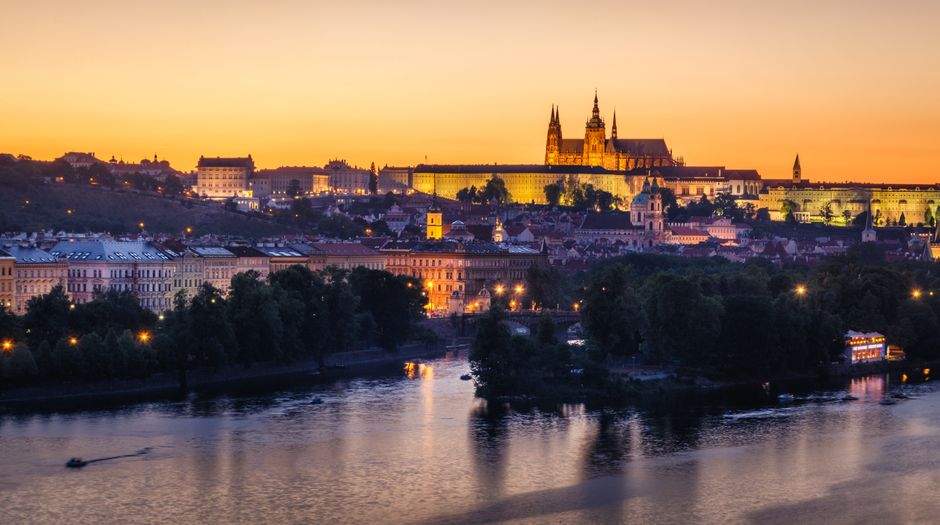
Prague is the city of a hundred spires: a thousand years of architecture, from Romanesque cellars and Gothic towers to baroque palaces, Art Nouveau cafés and cubist houses, laid out along the Vltava river and almost untouched by the Second World War. You come to cross the statue-lined Charles Bridge at dawn, watch the Astronomical Clock strike the hour, climb to Prague Castle and St Vitus Cathedral, walk through the old Jewish Quarter and end the day in a wood-panelled pub over a perfectly poured Czech lager. It is also a city of rules for visitors: night-time pub crawls are banned in the centre, drinking in the street is prohibited in many places, and a few traps await the unwary, from money changers to ham sold by the gram. Give it three days for the main sights, four or five to add Vyšehrad, the neighbourhoods and a day trip to Kutná Hora or Terezín.
Right now in Prague
- Wed 9–20°C 47–67°F Mostly clear
- Thu 9–19°C 47–66°F 4 mm Cloudy
- Fri 7–14°C 45–57°F Partly cloudy
Weather: MET Norway (CC BY 4.0) · Rates: ECB
Top tours in Prague
See all tours for Prague →
From local operators, with prices and reviews; you check availability and book on Viator, our partner. We may earn a commission at no extra cost to you. How we earn money
Prague at a glance
- Best for: historic architecture, castles and churches, Jewish heritage, classical music, beer and pub culture, Christmas markets.
- How long: 3 days for the castle, Charles Bridge, the Old Town and the Jewish Quarter; 4–5 days to add Vyšehrad, Petřín, the neighbourhoods and a day trip.
- Best time: May, June and September; late November to early January for the Christmas markets. Midsummer weekends are very crowded.
- Getting in: Václav Havel Airport is 17 km west of the centre, linked by the Airport Express (AE) bus to the main station (200 Kč as of October 2026) and by trolleybus 59 to metro line A. Direct trains run from Berlin, Dresden, Vienna, Munich, Budapest and Kraków.
- Getting around: on foot and by tram and metro. As of October 2026, a 24-hour public transport ticket costs 140 Kč in the PID Lítačka app, and the Prague Castle main ticket 450 Kč.
- Before you go: entry rules, money, holidays and trains are in our Czech Republic travel guide.
Prague, area by area
The Vltava divides the centre. On the right (east) bank lie the Old Town, the Jewish Quarter and the New Town; on the left bank, Malá Strana (the Lesser Town) climbs to the castle district of Hradčany. All five historic towns together form the UNESCO-listed Historic Centre of Prague, and everything in it is walkable.
Staré Město (Old Town)
The medieval heart: the Old Town Square with the Town Hall and Astronomical Clock, the twin-towered Týn Church and the baroque St Nicholas Church, and a tangle of lanes leading to Charles Bridge. It is beautiful and very crowded, with the city’s highest prices. Best for: first visits and sightseeing on foot.
Josefov (the Jewish Quarter)
Inside the Old Town, the former Jewish ghetto was largely rebuilt around 1900 with grand apartment blocks along Pařížská street, but six synagogues, the Jewish Town Hall and the Old Jewish Cemetery survive. Best for: history and the Jewish Museum.
Malá Strana (the Lesser Town)
Below the castle, across Charles Bridge, a quarter of baroque palaces, gardens, embassies and the green dome of St Nicholas Church, with Kampa island, the Lennon Wall and the Petřín hill beside it. Best for: romantic walks and quieter evenings.
Hradčany and the castle
The castle district on the hill holds Prague Castle, St Vitus Cathedral, the Loreta pilgrimage church and the Strahov Monastery with its library, plus the city’s best views. Best for: the big sights; it empties after dark.
Nové Město (New Town)
Founded by Emperor Charles IV in 1348, the “new” town is the commercial centre, with the long boulevard of Wenceslas Square, the National Museum, the Municipal House, the riverside National Theatre and the Dancing House. Best for: hotels, shopping and transport connections.
Vinohrady, Žižkov, Letná and Holešovice
Beyond the centre, leafy Vinohrady has elegant apartment blocks, cafés and wine bars; Žižkov, with its TV tower, is famous for its pubs; Letná has a park with a beer garden and a view over the bridges; and Holešovice has galleries, the DOX contemporary art centre and the market hall. Best for: local life, good-value food and longer stays.
Top things to see in Prague
Prices and hours below were checked on official sites in October 2026. They change, so check before you go.
Prague Castle
Founded in the 9th century, Prague Castle is the seat of Czech kings and presidents and, by Guinness records, the largest ancient castle complex in the world: a walled town of courtyards, palaces, churches and gardens. The grounds are free to walk around from 6:00 to 22:00. The historic buildings need a ticket.
Tickets. As of October 2026, the main circuit ticket costs 450 Kč for adults, 300 Kč reduced (children aged 6 to 16, students up to 26 and over-65s) and 950 Kč for families. It covers the four main sights: St Vitus Cathedral, the Old Royal Palace with its vast Vladislav Hall, the Romanesque St George’s Basilica and Golden Lane, a row of tiny houses built into the castle walls (Franz Kafka worked at number 22). The ticket is valid for two days, and you can enter each building once. The historic buildings open daily 9:00–17:00 from April to October and 9:00–16:00 from November to March, and close on 24 December. St Vitus Cathedral opens only at about noon on Sundays because of morning services.
The Great South Tower. The cathedral’s main tower, with more than 280 steps to the top and the country’s largest bell, needs a separate ticket: as of October 2026, 200 Kč for adults, 150 Kč reduced and 500 Kč for families. It opens 10:00–18:00 from April to October and 10:00–17:00 from November to March, with last entry 30 minutes before closing, and closes in bad weather.
Changing of the guard. Guards change every hour from 9:00 to 18:00 at the main gates, and the full ceremony, with a fanfare and the handing over of the flag, takes place at noon in the First Courtyard. Arrive 20 minutes early to see it. Expect security checks at the entrances, and avoid big bags.
Tips. Come at opening time or late in the afternoon; tour groups peak from about 10:00 to 15:00. The quickest way up is tram 22 or 23 to Pražský hrad or Pohořelec, then walk down through the castle and the Old Castle Steps to Malá Strana.
Charles Bridge
Built from 1357 under Charles IV, the stone bridge was for centuries the only crossing of the Vltava. Thirty baroque statues line its parapets, most of them now copies; the bronze St John of Nepomuk, thrown from the bridge in 1393, is the one people touch for luck. By day it is a crush of painters, musicians and crowds, so go at sunrise or late at night.
The Old Town Bridge Tower, a Gothic masterpiece at the Old Town end, has 138 steps to a gallery with one of the best views in the city. As of October 2026 it cost 250 Kč for adults, 170 Kč reduced, 200 Kč for ages 16–26 and 500 Kč for families, with half price in the first hour after opening. It opens until 20:30 in summer and 18:00 in winter.
The Old Town Square and the Astronomical Clock
The square is the city’s stage: the Gothic Týn Church, the baroque St Nicholas Church, the Jan Hus memorial and the Old Town Hall with its Astronomical Clock (Orloj), installed in 1410 and the oldest still working in the world. Every hour from 8:00 to 23:00, the twelve Apostles parade past two windows above the dial while a skeleton rings a bell. The show lasts less than a minute, and the crowd is famously bigger than the spectacle; for a better view, watch from the tower.
The Old Town Hall. As of October 2026, entry to the tower and the hall cost 350 Kč for adults, 230 Kč reduced, 280 Kč for ages 16–26 and 750 Kč for families, again with half price in the first hour after opening. Guided circuits of the chapel, the historic halls and the Romanesque underground cost extra. The hall opens 9:00–20:00 from April to December and 10:00–19:00 from January to March. A lift reaches the tower gallery.
The Jewish Museum and Josefov
Prague’s Jewish community is one of the oldest in Europe, and its quarter is one of the best preserved. The Jewish Museum in Prague manages the Maisel, Pinkas, Klausen and Spanish synagogues, the Ceremonial Hall and the Old Jewish Cemetery, where about 12,000 tombstones lean over each other in layers. The walls of the Pinkas Synagogue are covered with the names of almost 80,000 Jews from Bohemia and Moravia murdered in the Holocaust, and upstairs are drawings by children from the Terezín ghetto. The Spanish Synagogue has a dazzling Moorish-style interior.
As of October 2026, the ticket for all the museum’s sites costs 600 Kč for adults, 400 Kč for students under 26 and 200 Kč for children; children up to 6 go free. It is valid for three opening days. The museum is closed on Saturdays and Jewish holidays; from 18 October to 31 December 2026 it opens 9:00–16:30 (on 24 December 9:00–14:00), and 9:00–18:00 or 19:00 in spring and summer. The Old-New Synagogue, the oldest active synagogue in Europe (13th century), belongs to the Jewish community of Prague and needs a separate ticket. Men should cover their heads in the synagogues; paper kippahs are provided.
Malá Strana, the Lennon Wall and Kampa
Walk from Charles Bridge to Malá Strana Square and the baroque Church of St Nicholas, then wander to the Lennon Wall, a constantly repainted graffiti wall that became a symbol of free expression under communism, and the riverside park on Kampa island. The Wallenstein Garden, with its peacocks and grotto wall, is free from April to October.
Petřín and the funicular
The wooded Petřín hill, above Malá Strana, has gardens, an orchard, a mirror maze and the Petřín Lookout Tower, a mini Eiffel Tower of 1891 with 299 steps (as of October 2026, 250 Kč for adults, plus a lift for an extra charge). The Petřín funicular from Újezd reopened on 22 September 2026 after two years of rebuilding, with new cabins: a single ride costs 100 Kč (90 Kč in the app), and 24-hour and 72-hour public transport tickets are valid.
Vyšehrad
South of the centre, the rock of Vyšehrad is Prague’s legendary first seat, now a peaceful park with ramparts, the neo-Gothic Church of Sts Peter and Paul and the cemetery where Dvořák, Smetana and Mucha are buried. The grounds are free and have fine views up the river; underground tours of the casemates, where the original statues from Charles Bridge are stored, cost 330 Kč on the spot as of October 2026.
More museums and sights
- National Museum: the grand building at the top of Wenceslas Square and its modern annexe (360 Kč for both, as of October 2026; children under 15 free with an adult).
- Strahov Monastery Library: two magnificent baroque and classical library halls, viewed from the doorway (220 Kč; daily 9:00–17:00).
- Municipal House: Prague’s Art Nouveau showpiece, with a café, a restaurant and guided tours (320 Kč) of its Smetana Hall and rooms decorated by Alfons Mucha.
- Wenceslas Square: the long boulevard where crowds gathered during the Velvet Revolution of 1989.
- The Dancing House: Frank Gehry and Vlado Milunić’s 1990s “Fred and Ginger” building by the river, with a rooftop bar.
Historic centres
- Old Town Square
Other sights
- Charles Bridge
- Prague Astronomical Clock
Museums
- National Museum in Prague
Castles and forts
- Prague Castle
Monuments
- St. Vitus Cathedral
- Vyšehrad
Things to do in Prague
Drink beer the Czech way
Prague has old beer halls such as U Fleků, which has brewed its own dark lager since 1499, cosy local pubs, microbreweries and the beer garden in Letná Park, with a view over the bridges. Order “jedno pivo” (one beer); a half-litre of Czech lager in a local pub still costs far less than in the Old Town. The waiter marks each beer on a slip of paper on your table.
Concerts and theatre
Prague is a city of music. The Rudolfinum and the Municipal House host the Czech Philharmonic and the Prague Symphony Orchestra; the National Theatre and the State Opera stage opera and ballet; and churches across the Old Town hold short classical concerts every evening. Black-light theatre is a Prague speciality. Book on the venues’ own websites rather than from people handing out flyers.
River cruises and paddle boats
Boats leave from the embankments near Charles Bridge and Čechův most for hour-long cruises, dinner cruises and trips to the zoo at Troja. In summer you can rent a paddle boat on Slovanský island. See our boat trips guide.
Christmas in Prague
From 28 November 2026 to 6 January 2027, Christmas markets fill the Old Town Square, with a giant tree lit on the opening evening, and Wenceslas Square, open daily 10:00–22:00. Smaller, more local markets set up on Náměstí Míru in Vinohrady and at Prague Castle. Try mulled wine (svařák), honey wine (medovina) and roast chestnuts. See our city sightseeing guide.
Pub crawls, drinking and the rules for visitors
Prague has tightened its rules to keep the centre liveable for the people who live there. Since November 2024, organised pub crawls are banned between 22:00 and 6:00 in the city, after years of complaints about stag parties. The city also bans drinking alcohol in public in the city centre and in many other places, including near schools, playgrounds and stations; police can fine you on the spot. Night quiet starts at 22:00, and the city’s tourism board warns that disturbing the peace can cost about €400. Other rules from the city’s “Enjoy Respect Prague” campaign: don’t buy tours from people on the street (it is illegal), don’t attach padlocks or graffiti to bridges, don’t cycle on pavements, and don’t walk around churches during services.
Scams and tourist traps to avoid
- Money exchange: the most common trap. Use a bank ATM; when the machine or card terminal offers to charge you in your own currency, choose koruna. If you use an exchange office, ask how many koruna you will get before you hand over money. By law, you can cancel an exchange within three hours at the same office for amounts up to €1,000, so keep the receipt. Never change money on the street.
- Fake police: plain-clothes “officers” who ask to see your wallet or check your notes are thieves. Real police don’t do this.
- Taxis: hail-and-ride taxis in tourist areas overcharge. Use Bolt, Uber or Liftago, or call a dispatch company. Official maximum fares in 2026 are 60 Kč to start, 36 Kč per km and 7 Kč per minute of waiting; insist on a receipt.
- Old Town Square ham and sausages: roast ham is sold by weight, per 100 g, and vendors may cut a huge piece; ask for 100 g and the price first.
- Restaurants: check menus for cover charges and prices per 100 g of fish or meat, send back bread and nibbles you didn’t order, and check the bill. Eat a few streets away from the main squares.
- Pickpockets: busy trams (especially the 22 to the castle), the metro, Charles Bridge, the Astronomical Clock crowd and the castle.
Day trips from Prague
- Kutná Hora: about an hour by train, a UNESCO-listed silver-mining town with the Gothic Cathedral of St Barbara and the Sedlec Ossuary, decorated with the bones of tens of thousands of people. Book a timed ticket for the ossuary online.
- Terezín: the 18th-century fortress town that the Nazis turned into a ghetto and transit camp. The Terezín Memorial covers the Small Fortress prison and the Ghetto Museum (310 Kč for all sites as of October 2026, valid four days). About an hour by bus.
- Karlštejn Castle: Charles IV’s Gothic castle on a wooded hill, 40 minutes by train, with a 20-minute walk up.
- Bohemian Switzerland: sandstone arches and gorges, about 1 hour 30 minutes by train to Děčín, then bus; better with a night.
- Karlovy Vary: the grand spa town, about 2 hours by bus.
- Dresden: Baroque Saxony’s capital, about 2 hours 15 minutes by direct train.
Nearby destinations
- Bohemian Switzerland84 km
- Saxon Switzerland92 km
- Karlovy Vary111 km
- Dresden117 km
- Český Krumlov142 km
- Brno186 km
- Leipzig200 km
- Wachau205 km
Getting to Prague
By air. Václav Havel Airport Prague (PRG) is 17 km west of the centre. The Airport Express (AE) bus runs to the main railway station (Hlavní nádraží) in about 40 minutes, every 20–30 minutes by day and hourly at night; as of October 2026 it costs 200 Kč for adults and 100 Kč for children aged 6 to 15, bought from the driver by card or at the airport information desks (ordinary public transport tickets are not valid). The cheaper option is trolleybus 59 to Nádraží Veleslavín on metro line A, every few minutes, with a standard 90-minute ticket (46 Kč in the app). Taxis and ride-hailing cars wait outside the terminals.
By train. Most international and long-distance trains use Praha hlavní nádraží (the main station), on metro line C. Direct trains run from Dresden (about 2 hours 15 minutes), Berlin (about 4 hours 15 minutes), Vienna (about 4 hours), Brno (about 2 hours 30 minutes), Kraków (about 6 hours) and Budapest. Buy on cd.cz, regiojet.com or leoexpress.com.
By bus. FlixBus and RegioJet coaches arrive at Florenc bus station, on metro lines B and C.
By car. Motorways need an e-vignette (see our Czech Republic guide). Don’t drive in the centre; use park-and-ride car parks at metro stations on the edge of the city.
Getting around Prague
Prague’s public transport (PID) is excellent: three metro lines, a dense tram network and buses, running from about 5:00 to midnight, with night trams after that. Tickets are valid on all of them and on the Petřín funicular and some river ferries.
| Ticket | In the PID Lítačka app | Paper ticket |
|---|---|---|
| 30 minutes | 36 Kč | 39 Kč |
| 90 minutes | 46 Kč | 50 Kč |
| 24 hours | 140 Kč | 150 Kč |
| 72 hours | 340 Kč | 350 Kč |
These are the fares in force since 1 January 2026. Buy paper tickets at machines in metro stations and at some stops, or at newsagents, and validate them in the yellow machine the first time you board a tram or bus or enter the metro. App tickets become valid one minute after you activate them, so buy before you board. Trams and buses also have on-board machines that take contactless cards. There are no barriers, but inspectors check often: the fine is 1,200 Kč on the spot. Children under 15 travel free.
Tram 22 is a scenic ride past the National Theatre and up to the castle, and tram 23 is a heritage line of historic trams. Use taxi apps rather than street taxis.
When to go and how long to stay
Prague has a central European climate: cold winters around freezing, warm summers and relatively little rain for its latitude. The table uses the Czech Hydrometeorological Institute’s 1991–2020 averages for the Klementinum station in the Old Town.
| Season | Average high | Average low | Rain per month | What it’s like |
|---|---|---|---|---|
| Winter (Dec–Feb) | 4–6 °C | about 0 °C | 16–23 mm | Cold, often grey and foggy, sometimes snowy; Christmas markets and fewer crowds after New Year |
| Spring (Mar–May) | 10 °C rising to 21 °C | 3 °C rising to 11 °C | 25–58 mm | Blossom in the Petřín orchards, Easter markets, the Prague Spring music festival from 12 May |
| Summer (Jun–Aug) | 24–27 °C | 15–17 °C | 62–69 mm | Warm to hot, thunderstorms, beer gardens and very busy streets |
| Autumn (Sep–Nov) | 20 °C falling to 9 °C | 12 °C falling to 4 °C | 26–34 mm | Golden parks and comfortable sightseeing in September and October, damp November |
Summer heatwaves above 30 °C are increasingly common, and the stone streets hold the heat. In winter the days are short, with darkness by about 16:00 in December.
Prague in 3 days
Day 1: Prague Castle at opening time, Golden Lane and St Vitus, then down through Malá Strana to Charles Bridge and the Lennon Wall. Day 2: the Old Town Square and the Astronomical Clock, the Old Town Hall tower, the Jewish Museum and the Old-New Synagogue, and a concert in the evening. Day 3: Vyšehrad, the riverside, the New Town and Wenceslas Square, the Municipal House, then sunset at Letná beer garden.
Prague in 5 days
Add a day trip to Kutná Hora or Terezín, and a slow day for Petřín and the funicular, Strahov, Vinohrady’s cafés and a river cruise.
Weather month by month
Averages from ČHMÚ normals 1991–2020, Praha-Libuš · Last reviewed 4 Oct 2026
Where to stay in Prague
- Old Town: central and atmospheric, but noisy and pricey; check that your room isn’t above a bar.
- Malá Strana: romantic, quieter at night, close to the castle and Charles Bridge.
- New Town: the widest choice of hotels at all prices, near metro stations and within walking distance of the Old Town.
- Vinohrady and Žižkov: residential, with good restaurants and bars, 10 minutes from the centre by tram or metro; good value.
- Holešovice and Karlín: modern hotels and apartments in fashionable former industrial districts.
Prague charges an accommodation fee of 50 Kč per person per night, added to the bill. Book early for Christmas, New Year, Easter and summer weekends.
Practical tips for Prague
- Start early: Charles Bridge, the castle and the Old Town Square are calmest before 9:00.
- Use the app: PID Lítačka tickets are cheaper than paper; activate them before boarding.
- Pay in koruna: decline currency conversion at ATMs and card terminals, and avoid street exchange offers.
- Saturdays: the Jewish Museum is closed on Saturdays and Jewish holidays.
- Sundays: St Vitus Cathedral opens only around noon.
- Respect the rules: no drinking in the street in the centre, no organised pub crawls after 22:00, and keep the noise down at night.
What to pack for Prague
Comfortable shoes with good soles are essential for steep, slippery cobbles and the castle steps. Bring layers and a compact umbrella for spring and autumn, light clothes and a hat for hot summer days, and a warm coat, hat, gloves and boots for the Christmas markets. A small daypack is better than a big bag at the castle security checks. Pack a type E/F plug adapter and a refillable water bottle; tap water is safe.
Prague travel FAQ
How much does Prague Castle cost?
As of October 2026, the main circuit ticket covering St Vitus Cathedral, the Old Royal Palace, St George’s Basilica and Golden Lane costs 450 Kč for adults, 300 Kč reduced and 950 Kč for families, valid for two days. The castle courtyards and gardens are free, and the Great South Tower costs 200 Kč extra.
What time is the changing of the guard at Prague Castle?
Guards change every hour from 9:00 to 18:00 at the castle gates, and the ceremonial change with a fanfare and flag takes place at noon in the First Courtyard.
When does the Prague Astronomical Clock strike?
Every hour from 8:00 to 23:00, with the procession of the Apostles above the dial. It lasts less than a minute; the Old Town Hall tower (350 Kč as of October 2026) gives a view of the square.
Is the Jewish Museum in Prague open on Saturdays?
No. It is closed on Saturdays and Jewish holidays. As of October 2026, the ticket for all its synagogues and the Old Jewish Cemetery costs 600 Kč for adults and is valid for three opening days; the Old-New Synagogue needs a separate ticket.
How do I get from Prague Airport to the city centre?
Take the Airport Express (AE) bus to the main station (about 40 minutes; 200 Kč as of October 2026), or trolleybus 59 to the metro at Nádraží Veleslavín with a normal public transport ticket. Use a taxi app or an official airport taxi rather than accepting offers in the arrivals hall.
How much is a public transport ticket in Prague?
Since January 2026, a 30-minute ticket costs 36 Kč in the PID Lítačka app (39 Kč on paper), a 90-minute ticket 46 Kč, a 24-hour ticket 140 Kč and a 72-hour ticket 340 Kč in the app. Validate paper tickets when you first board.
Are pub crawls banned in Prague?
Organised night-time pub crawls have been banned in Prague between 22:00 and 6:00 since November 2024. Drinking in public is also banned in the centre and many other places.
What are the most common scams in Prague?
Bad-rate money exchanges, street money changers, fake police checking your cash, overcharging taxis, and ham or fish sold by weight at inflated prices. Use bank ATMs, pay in koruna, use taxi apps and check prices before you order.
Is the Petřín funicular open?
Yes. It reopened on 22 September 2026 with new cabins after two years of rebuilding. A single ride costs 100 Kč (90 Kč in the app), and 24-hour and 72-hour public transport tickets are valid.
How many days do you need in Prague?
Three days cover the castle, Charles Bridge, the Old Town and the Jewish Quarter. With four or five, add Vyšehrad, Petřín, the neighbourhoods and a day trip to Kutná Hora or Terezín.
When are the Prague Christmas markets in 2026?
The main markets on the Old Town Square and Wenceslas Square run from 28 November 2026 to 6 January 2027, daily 10:00–22:00, with shorter hours on 24 December and over New Year.
Can I pay in euros in Prague?
Sometimes, but at bad rates, with change in koruna. Pay by card in koruna or carry some koruna from a bank ATM.
Sources
- © OpenStreetMap contributors · ODbL · fetched 4 Oct 2026
- Wikidata · CC0 · fetched 4 Oct 2026
Sources and last review
Researched and last reviewed on 4 October 2026. Prague Castle tickets, hours, the Great South Tower and the changing of the guard: Prague City Tourism (prague.eu) and Prague Castle Administration (hrad.cz); Old Town Hall, Astronomical Clock, Old Town Bridge Tower and Petřín Tower: Prague City Tourism; the Jewish Museum: jewishmuseum.cz; public transport fares, fines and the Petřín funicular: PID (pid.cz); the Airport Express: DPP (dpp.cz); taxi maximum fares and the visitor rules: Prague City Tourism; currency exchange rights: the Czech National Bank; Vyšehrad, the National Museum, Strahov, the Municipal House and the Terezín Memorial: their own websites; climate: Czech Hydrometeorological Institute 1991–2020 averages for Prague-Klementinum, via secondary sources. Christmas market dates, the accommodation fee, pub-crawl details, Sunday cathedral hours and some train times come partly from secondary sources and are flagged for checking. Prices, timetables and rules change, so check the official links before you go. For entry rules, money and getting around the country, see our Czech Republic travel guide; for the next stop, our Český Krumlov guide.
Plan your trip
Partner links: TravelerCenter may earn a commission if you book, at no extra cost to you.
🇨🇿 Useful Czech phrases for Prague
All 38 Czech phrases: restaurant, hotel, emergencies, romance (printable) →