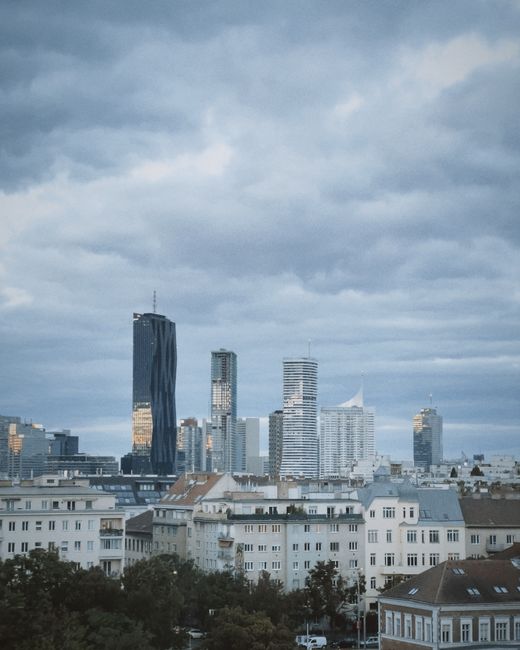
Vienna was the capital of the Habsburg empire for more than six centuries, and it still lives like one: grand palaces and museums along the Ringstrasse, opera and concerts every night of the season, coffee houses where a single coffee buys you a marble table for the afternoon, and wine taverns among the vineyards inside the city limits. You come for Schönbrunn and the Hofburg, Klimt’s The Kiss at the Belvedere, the old masters of the Kunsthistorisches Museum, St Stephen’s Cathedral and a standing-room ticket at the State Opera, and you stay for the cake, the parks, the Danube and a city that works beautifully. Give it three full days for the highlights, four or five to add a concert, the Prater, a Heuriger evening and a day trip to the Wachau.
Right now in Vienna
- Wed 11–25°C 53–76°F Mostly clear
- Thu 13–25°C 55–77°F 10 mm Cloudy
- Fri 11–16°C 53–60°F Mostly clear
Weather: MET Norway (CC BY 4.0) · Air quality: OpenAQ · Rates: ECB
Top tours in Vienna
See all tours for Vienna →
From local operators, with prices and reviews; you check availability and book on Viator, our partner. We may earn a commission at no extra cost to you. How we earn money
Vienna at a glance
- Best for: imperial palaces, art museums, classical music and opera, coffee-house culture, Christmas markets, wine taverns and a safe, easy city break.
- How long: 3 days for Schönbrunn, the Hofburg, the Belvedere, St Stephen’s and a museum or two; 4–5 days to add concerts, the Prater, the Vienna Woods and a day in the Wachau.
- Best time: April to June and September to October for parks and terraces; mid-November to Christmas for the markets; September to June for the opera season.
- Getting in: Vienna Airport is about 20 km east of the centre. As of October 2026, the airport railway is closed for rebuilding and the City Airport Train runs as a coach to Wien Mitte in about 21 minutes.
- Getting around: on foot in the centre, and by metro, tram and bus. As of October 2026, a single ticket costs €3.20 and a 24-hour ticket €10.20; the 48- and 72-hour tickets were scrapped in January 2026.
- Before you go: entry rules, money, tipping and driving are in our Austria travel guide.
Vienna, district by district
Vienna is divided into 23 numbered districts (Bezirke) spiralling out from the old town; addresses and postcodes carry the number, so 1010 is the 1st district and 1070 the 7th. The old town sits inside the Ringstrasse, the grand boulevard laid out in the 1860s on the line of the old city walls; the Danube flows past to the north-east.
Innere Stadt (1st district)
The historic centre: St Stephen’s Cathedral, the pedestrian streets of Graben and Kärntner Strasse, the Hofburg palace, the State Opera, baroque churches, medieval lanes and the most famous coffee houses. Everything is walkable, and the Ringstrasse around it is lined with the Parliament, the City Hall, the University, the Burgtheater and the great museums. Best for: first visits, short stays and evenings at the opera.
Neubau, Spittelberg and the MuseumsQuartier (7th)
Just outside the Ring behind the museums, the MuseumsQuartier fills the old imperial stables with the Leopold Museum, the mumok modern art museum and courtyards where people sit out on summer evenings. Beyond it, the Biedermeier lanes of Spittelberg and the streets of Neubau are full of independent shops, cafés and bars, with Mariahilfer Strasse, Vienna’s longest shopping street, along one side. Best for: design hotels, food and nightlife.
Wieden, the Naschmarkt and Landstrasse (3rd–6th)
South of the Opera, Karlsplatz and the baroque Karlskirche lead to the Naschmarkt, a long open-air food market with a Saturday flea market. To the east, Landstrasse has the Belvedere palaces, the colourful Hundertwasser House, the Stadtpark and Wien Mitte, where the airport coach arrives. Best for: food lovers, good-value central stays and airport connections.
Leopoldstadt and the Prater (2nd)
Across the Danube Canal, the old Jewish quarter is now one of the city’s most fashionable areas, around the Karmelitermarkt. It leads to the Prater, a huge park with the Giant Ferris Wheel, an amusement park and a long chestnut avenue, and on to the Danube and the Danube Island. Best for: families, parks and a local feel.
Hietzing, Döbling and the vineyards
In the west, Hietzing (13th) surrounds Schönbrunn Palace with villas and garden cafés. In the north, Döbling (19th) climbs into the vineyards of Grinzing, Nussdorf and Sievering, with Heurigen wine taverns and walks up to the Kahlenberg for views over the city. Best for: green, quiet stays and wine evenings.
Top things to see in Vienna
Prices and hours below were checked on the official sites in October 2026. Many big sights now use timed entry, so book ahead, especially at weekends and in summer and Advent. They change, so check before you go.
Schönbrunn Palace and gardens
The Habsburgs’ summer palace, with 1,441 rooms, was transformed by Empress Maria Theresa in the 18th century; Mozart played here aged six, Emperor Franz Joseph was born and died here, and Empress Elisabeth (“Sisi”) lived in its apartments. Together with its baroque gardens it is a UNESCO World Heritage Site. The palace rooms are visited on a fixed-time ticket with an audio guide; the vast gardens, with their fountains, Roman ruin and the Neptune Fountain, are free to walk around. Climb up to the Gloriette on the hill for the classic view back over the palace and the city.
Tickets. As of October 2026, the old Imperial and Grand Tour tickets have been replaced. The Palace Ticket, covering all the state rooms on the main floor in about 75 minutes, costs €42 for adults and €30 for children aged 6 to 18; the shorter State Apartments ticket (about 40 minutes) costs €30 and €20. In the summer season (27 March to 2 November 2026), the Classic Pass (€49) adds the Privy Garden, the Orangery Garden, the Maze and the Gloriette terrace, and the Classic Pass Plus (€81) adds the zoo and the Palm House. Every palace ticket has a fixed entry time, and the only official online shop is imperialtickets.com; summer slots sell out days ahead. The palace opens daily 8:30–17:30 and the gardens 6:30–19:00.
Schönbrunn Zoo, founded in 1752 in the palace park, is the oldest zoo in the world still operating. As of October 2026, entry costs €29 for adults and €17 for ages 6 to 18; it opens daily at 9:00 and closes at 17:30 in October (16:30 in the winter months).
The Hofburg: Sisi Museum, Imperial Apartments and the Treasury
The Hofburg was the Habsburgs’ winter palace and seat of power for more than 600 years, a city within the city of courtyards, wings and churches; today it houses the Austrian president’s offices, several museums and the Spanish Riding School. The Imperial Apartments and Sisi Museum show the rooms of Franz Joseph and Elisabeth and the myth of the beautiful, restless empress, with her gowns, her travel kit and her fitness equipment. As of October 2026, a timed ticket costs €20 for adults and €12 for ages 6 to 18 (€25 with a guided tour), and it opens daily 9:00–17:30. From 6 October to 18 November 2026 the museum section is being refurbished while the living quarters stay open, and the Silver Collection has been closed since 2023. The Sisi Pass (€60, valid a year) combines the Hofburg apartments, a Schönbrunn palace tour and the Furniture Museum.
The Imperial Treasury (Kaiserliche Schatzkammer) holds the crown of the Holy Roman Empire, the Austrian imperial crown and the Habsburg jewels. As of October 2026 it costs €16 online or €18 on site, it is free for under-19s and closed on Tuesdays, and since April 2026 it is visited by timed slot only. At the Spanish Riding School, the white Lipizzaner horses perform classical dressage in the baroque Winter Riding School: performances start from €26 and the morning exercise, a cheaper way to watch training to music, from €17.
The Belvedere and Klimt’s The Kiss
Two baroque palaces built for Prince Eugene of Savoy face each other across terraced gardens. The Upper Belvedere holds the world’s largest collection of Gustav Klimt’s paintings, including The Kiss, alongside Schiele, Kokoschka and French Impressionists; the Lower Belvedere hosts exhibitions. As of October 2026, the Upper Belvedere costs €23 (€19 for over-65s and students under 26; free for under-19s), the Lower €20, and a combined ticket for both €32. Both need a time slot. The Upper Belvedere opens daily 9:00–18:00. Arrive at opening to see The Kiss without a crowd.
St Stephen’s Cathedral
Vienna’s Gothic cathedral, the Stephansdom, dominates the centre with its 136 m south tower and a roof of glazed tiles in a zigzag pattern with the double-headed eagle. The front of the nave is free; to go further, as of October 2026 each part costs €8 for adults: the main nave with an audio guide, the 343 steps up the south tower, the lift up the north tower to the Pummerin bell, and a guided tour of the catacombs, where Habsburg organs are kept in urns. The all-inclusive ticket, at €29 for adults, covers all of them plus the Dom Museum and is valid a year. Tourist visits run Monday to Saturday 9:00–11:30 and 13:00–16:30, and Sundays 13:00–16:30, except during services. Cover shoulders and knees.
The Kunsthistorisches Museum and the Albertina
The Kunsthistorisches Museum (KHM), the Habsburgs’ picture gallery in a palatial building on the Ring, has one of the world’s great collections of old masters: the largest group of paintings by Pieter Bruegel the Elder, plus Vermeer, Rembrandt, Titian, Velázquez and Raphael, as well as Egyptian and Greek antiquities and the Kunstkammer of curiosities. Have coffee under the dome. As of October 2026 it costs €22 online or €24 at the door (free for under-19s), opens Tuesday to Sunday 10:00–18:00 and until 21:00 on Thursdays, closes on Mondays, and has used timed slots since September 2026.
The Albertina, a palace on the old city bastion behind the Opera, has state rooms, Dürer’s famous Young Hare (shown only occasionally), and a strong collection from Monet to Picasso. As of October 2026 it costs €20.90, opens daily 10:00–18:00 and until 21:00 on Wednesdays and Fridays. In the MuseumsQuartier, the Leopold Museum has the largest collection of Egon Schiele (€19; closed on Tuesdays).
The Prater and the Giant Ferris Wheel
The Prater was the emperors’ hunting ground until Joseph II opened it to the public in 1766. Its Wurstelprater amusement park is free to enter, with rides paid separately, and the Giant Ferris Wheel (Riesenrad), turning since 1897 and about 65 m high, gives slow, gentle views from its wooden cabins; it starred in the film The Third Man. It opens all year, until late in the evening, and is included in the Vienna PASS. The Hauptallee, a 4.5 km chestnut avenue, is great for walking, running and cycling.
Monuments
- Schönbrunn Palace
- St. Stephen's Cathedral
- Vienna State Opera
Museums
- Albertina
- Kunsthistorisches Museum
Palaces
- Hofburg Palace
Parks and gardens
- Belvedere
Things to do in Vienna
See an opera from standing room
The Vienna State Opera stages around 50 operas and ballets a season, almost every night from September to June (the house closes in July and August). Seats can cost hundreds of euros, but standing-room places are a Vienna tradition: for the 2026/27 season they cost €18 in the stalls (parterre), €15 in the gallery and €13 on the balcony. They go on sale online at 10:00 on the day of the performance (up to two per account), and a further allocation is sold at the standing-room box office 80 minutes before the curtain. Tie a scarf to the rail to keep your place. The Opera Ball, the highlight of the ball season, is on Thursday 4 February 2027. The Musikverein, home of the Vienna Philharmonic, and the Konzerthaus have concerts most nights, and the Vienna Boys’ Choir sings Sunday Mass at the Hofburg chapel during the school year.
Spend an afternoon in a coffee house
Viennese coffee-house culture, with its marble tables, bentwood chairs, newspapers and waiters in black, is on Austria’s national inventory of UNESCO intangible cultural heritage. Order a Melange; it comes with a glass of water, and nobody will hurry you. Café Central and Café Sacher are the famous names, with queues to match; Café Sperl, Hawelka, Landtmann, Prückel and the confectioner Demel are just as atmospheric. Try the apple strudel or a Sachertorte.
Drink new wine at a Heuriger
Vienna is the only world capital with significant vineyards inside its limits. In Grinzing, Nussdorf, Neustift am Walde and Stammersdorf, family wine taverns (Heurigen) serve their own Grüner Veltliner and the local field blend, Gemischter Satz, with a buffet of cold meats, cheeses and spreads, often in a garden under the vines. Look for a bunch of pine branches over the door, meaning “open”. Combine it with a walk on the Vienna Wine Hiking Trail or up to the Kahlenberg. See our wine tasting guide.
Swim, cycle and relax by the Danube
The Danube Island (Donauinsel), a 21 km strip of parkland between the Danube and the New Danube, has free swimming spots, cycle paths and bars; the Alte Donau, an old arm of the river, has lidos and boat hire. In late June, the Danube Island Festival is one of Europe’s biggest free open-air festivals. River cruises leave from Schwedenplatz and the Reichsbrücke. See our cycling guide and boat trips guide.
Christmas markets 2026
Vienna’s biggest market, the Wiener Christkindlmarkt on the Rathausplatz in front of the City Hall, runs from 13 November to 26 December 2026, daily 10:00–22:00 (until 18:30 on 24 December), with an ice rink from 13 November to 6 January 2027. Smaller, more atmospheric markets usually open from mid- to late November on the Spittelberg, at Karlsplatz (with crafts and organic food), at Am Hof, in front of the Belvedere and at Schönbrunn Palace; check wien.info for the 2026 dates. On 31 December, the Silvesterpfad turns the old town into a New Year’s Eve party trail, and the Wiener Eistraum ice rink returns to the Rathausplatz from 22 January to 7 March 2027.
Activities and best months
- Boat tripsThe Vienna Tourist Board suggests seeing the Danube from DDSG Blue Danube excursion ships, the fast Twin City Liner to Bratislava (March to October), the national park boat into the Donau-Auen and boat picnics or kayaks on the Old Danube. DDSG's City Cruise on the Danube Canal runs several times a day past the Urania observatory, Hundertwasser's Spittelau plant and the canal's graffiti; in early October 2026 low water changed some timetables. · source
- City sightseeingThe Austrian National Tourist Office lists the Habsburg sights first: Schönbrunn Palace and its park (a UNESCO World Heritage Site), St. Stephen's Cathedral, the Hofburg and the State Opera, plus the MuseumsQuartier. The Prater with its giant Ferris wheel and Schönbrunn Zoo, founded in 1752 and the oldest zoo in the world, are the family favourites. · source
- CyclingVienna has 1,742 km of cycle paths, routes and lanes, and the tourist board recommends exploring by bike or on a guided bike tour. Visitors without a bike can use WienMobil bike sharing or rent one, for example on the Danube Island. · source
- Wine tastingVienna is the only major European city with serious wine production: about 600 hectares of vineyards in a semicircle along the Vienna Woods, around 80% white wine, and the field blend Wiener Gemischter Satz has DAC status. More than 100 Heurigen (wine taverns, a right dating to a 1784 decree of Joseph II) serve the new wine; a bunch of pine branches and the 'Ausg'steckt' sign show they are open. Grinzing, Nussdorf and Bisamberg are in the north, Mauer and Oberlaa in the south. · source
Day trips from Vienna
The Wachau, about an hour away by train, is the classic day out: Melk Abbey, a river boat to Dürnstein and wine in Krems or Spitz; see our Wachau guide. Bratislava, the Slovak capital, is about an hour by train or about 75 minutes by the Twin City Liner catamaran along the Danube. The Vienna Woods (Wienerwald) offer easy hikes, the Cistercian abbey of Heiligenkreuz and the Seegrotte underground lake. Lake Neusiedl is an hour south-east, for cycling, birds and red wine. Graz is about 2 hours 35 minutes by train, and Salzburg about 2 hours 30 minutes, better for an overnight stay.
Nearby destinations
- Bratislava55 km
- Wachau72 km
- Brno111 km
- Graz145 km
- Český Krumlov166 km
- Hévíz169 km
- Lake Balaton182 km
- Banská Štiavnica188 km
Getting to Vienna
From the airport. Vienna Airport (VIE) is in Schwechat, about 20 km east of the centre. Until about 31 October 2027 the airport railway line is closed for rebuilding, so plan carefully. As of October 2026:
- City Airport Train (CAT): now runs as a premium coach, non-stop to Wien Mitte in about 21 minutes, every 12 minutes from 7:00 to 19:00 and every 15 minutes otherwise, from about 6:10 to 23:37 from the airport. It costs €14.90 one way or €24.90 return, with a discount online; under-15s travel free.
- S-Bahn S7: runs only between the airport and Wien St. Marx during the works. City transport tickets don’t cover the airport section, so buy a ticket for the whole trip.
- Vienna Airport Bus: coaches run to several points in the city, with new routes from Karlsplatz and Praterstern since September 2026.
- Taxi: about 25–35 minutes to the centre; agree a fixed-price airport taxi in advance for the best rate.
By train. International and long-distance trains arrive at Wien Hauptbahnhof, the main station, on the U1 metro: Railjets from Salzburg (about 2 hours 30 minutes), Innsbruck, Graz, Munich, Prague, Budapest and Venice, and Nightjet sleepers from across Europe. WESTbahn trains from Salzburg use Westbahnhof.
By car. You need a vignette for the motorways (see our Austria guide). Vienna is a city-wide short-stay parking zone on weekdays, so leave the car at a park-and-ride at the end of a metro line.
Getting around Vienna
Wiener Linien runs five metro lines (U-Bahn), more than 25 tram lines and a dense bus network, with night buses on weekends and nights before holidays, and the metro running all night on Fridays and Saturdays. One ticket covers them all within the city. Prices changed on 1 January 2026; as of October 2026:
- Single ticket: €3.20 (€3.40 if bought on board), valid for one journey with changes. Children under 6 travel free, and under-15s ride free on Sundays, public holidays and during Vienna school holidays.
- 24-hour ticket: €10.20 (€9.70 digital). The 48- and 72-hour tickets no longer exist.
- 7-day ticket: €28.90 on paper, or €25.20 as a digital ticket, valid from the day you choose.
- Vienna City Card: unlimited public transport plus discounts at sights, shops and restaurants: €19 for 24 hours, €31 for 48 hours, €37 for 72 hours and €39 for 7 days; versions with the airport transfer or the hop-on hop-off bus cost more.
- Vienna PASS: from €109, for 1, 2, 3 or 6 days, with entry to up to about 90 sights, including Schönbrunn, the Hofburg, the KHM and the Giant Ferris Wheel, and the hop-on hop-off buses, but not public transport. It only pays off if you visit three or four paid sights a day.
Buy tickets from machines in metro stations, at tobacconists or in the WienMobil app, and stamp paper tickets before your journey. The new U5 metro line and the U2 extension are under construction and are now not expected to open until 2030. Trams 1 and 2 circle the Ringstrasse past the main sights, and city bikes and e-scooters are everywhere.
When to go and how long to stay
Vienna has a continental climate: warm to hot summers, cold and often grey winters with occasional snow, and pleasant springs and autumns. It is one of the drier capitals in Europe, and a stiff wind often blows. The table uses GeoSphere Austria’s 1991–2020 climate normals for the Wien Innere Stadt station: average temperature over day and night, rain and hours of sunshine per month.
| Season | Average temperature | Rain per month | Sunshine per month | What it’s like |
|---|---|---|---|---|
| Winter (Dec–Feb) | 2.1–3.8 °C | 34–40 mm | 57–104 hours | Cold and grey, some snow; Christmas markets, balls and the opera season |
| Spring (Mar–May) | 7.7 °C rising to 17.3 °C | 40–78 mm | 155–249 hours | Blossom in the parks and terraces reopening; ideal for walking |
| Summer (Jun–Aug) | 21.0–23.0 °C | 74–82 mm | 259–273 hours | Warm to hot, with thunderstorms; Danube swimming, open-air cinema, no opera |
| Autumn (Sep–Nov) | 17.7 °C falling to 7.2 °C | 43–67 mm | 194 falling to 71 hours | Golden vineyards, new wine and a busy cultural season |
Vienna averages about 670 mm of rain and more than 2,000 hours of sunshine a year, with an average temperature of 12.6 °C. Heatwaves above 30 °C are common in July and August; many locals leave the city then, and the opera and the Spanish Riding School take a summer break.
Vienna in 3 days
Day 1: St Stephen’s Cathedral, the Hofburg with the Sisi Museum and the Treasury, coffee at Café Central, and the opera from standing room. Day 2: Schönbrunn first thing, the Gloriette, then the Naschmarkt and the MuseumsQuartier. Day 3: the Belvedere for Klimt, the Kunsthistorisches Museum, and an evening at a Heuriger in Grinzing.
Weather month by month
Averages from GeoSphere Austria normals 1991–2020, Wien Hohe Warte · Last reviewed 4 Oct 2026
Where to stay in Vienna and the tourist tax
- Innere Stadt (1st): grand historic hotels and boutique stays in walking distance of everything; the most expensive.
- Neubau and Spittelberg (7th): design hotels and apartments near the MuseumsQuartier, with the best cafés and bars.
- Wieden and Mariahilf (4th, 6th): central, good value and close to the Naschmarkt.
- Near the Hauptbahnhof or Wien Mitte (10th, 3rd): modern chain hotels for train and airport connections.
- Leopoldstadt (2nd): a local feel near the Prater and the Danube, a short metro ride from the centre.
Vienna’s accommodation tax (Ortstaxe) is 5% of the room price, excluding VAT and breakfast, from 1 July 2026, up from 3.2%; the city plans to raise it to 8% from 1 July 2027. Hotels add it to your bill. Book early for Advent weekends, New Year’s Eve, the ball season and big congresses.
Practical tips for Vienna
- Book timed tickets: Schönbrunn, the Sisi Museum, the Treasury, the Belvedere and the KHM all use time slots; book online the day before or earlier, from the official sites only.
- Check the closing day: the KHM closes on Mondays, the Treasury on Tuesdays and the Leopold Museum on Tuesdays; the Albertina and the Belvedere open daily.
- Under-19s go free in many federal museums, including the KHM, the Belvedere, the Albertina and the Treasury.
- Sunday closing: shops close on Sundays; the supermarkets in the Hauptbahnhof, Westbahnhof and the airport stay open.
What to pack for Vienna
Comfortable walking shoes for long museum days and cobbled lanes, a light waterproof and layers for windy days, a hat, sun cream and a water bottle in summer, and a warm coat, scarf and gloves for winter and the Christmas markets. Bring something smart-casual for the opera or a concert (standing room is relaxed), a scarf to cover your shoulders in churches, and a plug adapter for Type C/F sockets.
What to pack
- City walking shoesLisbon and Porto are steep, with polished limestone cobbles that get slippery, so grippy soles matter.
- Day packs and anti-theft bagsA small zipped or anti-theft bag makes crowded trams and viewpoints less stressful.
- Dry bags and phone pouchesSpray soaks phones and cameras on open boats to the Algarve caves and on whale-watching trips.
- Fleeces and warm layersIt is cooler at sea than on land, especially on morning whale-watching trips.
- Rain jacketsA windproof, waterproof shell keeps you warm on open boats, where wind and spray cool you quickly.
- Reef-friendly sunscreenSun reflects off the water on cruises and cave tours.
- Travel adapters and convertersPortugal uses Type C and F sockets at 230 V, so most visitors from outside Europe need an adapter.
- Water bottles and hydration packsRiding in the Algarve and Alentejo heat needs more water than you expect.
- Water shoesKayak and small-boat trips to the Algarve grottoes land on rock and wet sand.
- Wine bottle travel protectorsPort and Douro wines bought at the quintas travel home safely in checked luggage with padded bottle protectors.
Vienna travel FAQ
Do I need to book Schönbrunn Palace in advance?
Yes, in practice. Every palace ticket has a fixed entry time, and slots sell out in summer, at weekends and in Advent. Book on imperialtickets.com, the only official online shop. The gardens are free and need no ticket.
How much does Schönbrunn Palace cost?
As of October 2026, the Palace Ticket costs €42 for adults and the shorter State Apartments ticket €30. The Classic Pass (€49), sold in the summer season, adds the gardens with the Maze and the Gloriette terrace.
How much is the Sisi Museum in the Hofburg?
As of October 2026, the Imperial Apartments and Sisi Museum ticket costs €20 for adults, with a fixed entry time; €25 with a guided tour. The Sisi Pass (€60) adds Schönbrunn and the Furniture Museum.
Where can I see Klimt’s The Kiss?
In the Upper Belvedere. As of October 2026 a ticket costs €23 for adults, with a time slot, and under-19s go free. Go at opening time, 9:00, for the fewest crowds.
How much is a public transport ticket in Vienna?
As of October 2026, a single ticket costs €3.20, a 24-hour ticket €10.20 and a 7-day ticket €28.90 (€25.20 digital). The 48- and 72-hour tickets were scrapped in January 2026.
How do I get from Vienna Airport to the city centre?
While the airport railway is rebuilt (expected until 31 October 2027), the City Airport Train runs as a coach to Wien Mitte in about 21 minutes for €14.90. The S7 runs only to Wien St. Marx, and airport buses and taxis are the other options.
How do I get cheap tickets for the Vienna State Opera?
Buy standing room: €13 to €18 in the 2026/27 season, sold online from 10:00 on the day of the performance and at the standing-room box office 80 minutes before it starts. The opera is closed in July and August.
When are the Vienna Christmas markets in 2026?
The main market on the Rathausplatz runs from 13 November to 26 December 2026, daily 10:00–22:00. Other markets, such as Spittelberg, Karlsplatz, Am Hof, the Belvedere and Schönbrunn, usually open from mid- to late November; check wien.info for exact dates.
When is the best time to visit Vienna?
April to June and September to October for pleasant weather, or mid-November to Christmas for the markets. The opera season runs from September to June.
Sources
- © OpenStreetMap contributors · ODbL · fetched 4 Oct 2026
- Wikidata · CC0 · fetched 4 Oct 2026
Sources and last review
Researched and last reviewed on 4 October 2026. Schönbrunn tickets and hours: Schloß Schönbrunn Kultur- und Betriebsges.m.b.H. (schoenbrunn.at); zoo: Tiergarten Schönbrunn; Sisi Museum and Imperial Apartments: sisimuseum-hofburg.at; Treasury: kaiserliche-schatzkammer.at; Spanish Riding School: srs.at; Belvedere, KHM, Albertina and Leopold Museum: their official sites; St Stephen’s: stephanskirche.at; the City Card, Vienna PASS and transport fares: wien.info (Vienna Tourist Board); the airport coach: City Airport Train and Vienna Airport; the main Christmas market: christkindlmarkt.at; the Opera Ball: opernball.at; the accommodation tax and the U2/U5 timetable: City of Vienna; coffee-house heritage: UNESCO Austria; climate: GeoSphere Austria 1991–2020 normals. The standing-room arrangements, the abolition of 48/72-hour tickets and the 7-day digital fare come partly from secondary sources and are flagged for checking, as are other Christmas market dates. Prices, timetables and rules change, so check the official links before you go. For entry rules, money and getting around Austria, see our Austria travel guide.
Plan your trip
Partner links: TravelerCenter may earn a commission if you book, at no extra cost to you.
🇩🇪 Useful German phrases for Vienna
All 38 German phrases: restaurant, hotel, emergencies, romance (printable) →