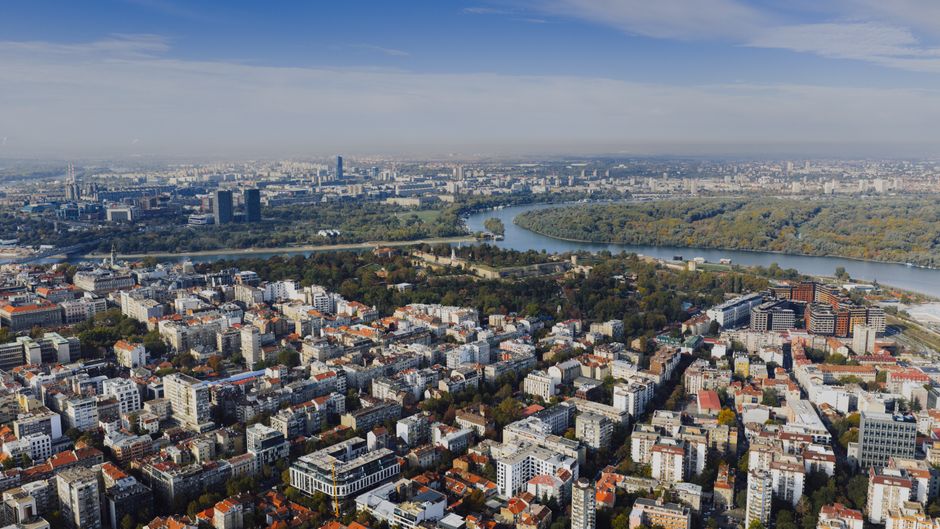
Belgrade is a city with a big, restless personality, built on a ridge where the Sava flows into the Danube. It has been fought over, flattened and rebuilt dozens of times, so it is not a pretty museum piece; its charm lies in its energy. You come to walk the walls of the Belgrade Fortress at sunset, eat grilled meat and drink rakija in the old kafanas of Skadarlija, stand under the golden mosaics of the Temple of Saint Sava, learn about Tito’s Yugoslavia, and stay out late in some of Europe’s liveliest bars and river clubs. Prices are lower than in Western Europe and people are warm and direct. Give it two or three days, four to add Zemun, the river islands and a day trip to Novi Sad.
Right now in Belgrade
- Wed10–25°C51–77°FClear
- Thu12–26°C54–80°FClear
- Fri16–23°C61–74°F6 mm rain
Top tours in Belgrade
See all tours for Belgrade →
From local operators, with prices and reviews; you check availability and book on Viator, our partner. We may earn a commission at no extra cost to you. How we earn money
Belgrade at a glance
- Best for: nightlife, food and kafanas, fortress and river views, 20th-century history, street life and good-value city breaks.
- How long: 2 days for the fortress, the centre and the big sights; 3–4 days to add museums, Zemun and a day trip.
- Best time: April to June and September to October for warm weather without the summer heat; July and August for the river clubs and beaches; December and January for New Year and Orthodox Christmas.
- Getting in: Belgrade Nikola Tesla Airport is about 18 km west of the centre, linked by a free city bus and the A1 minibus; Soko high-speed trains arrive from Novi Sad in about 34 minutes.
- Getting around: city buses, trams, trolleybuses and the BG Voz suburban trains have been free for everyone, visitors included, since 1 January 2025.
- Before you go: Serbia uses the dinar, not the euro, and is not in the EU or Schengen area. Entry rules, police registration and the Kosovo border rule are covered on our Serbia country page.
Belgrade, area by area
Belgrade’s historic centre sits on the ridge between the two rivers; the modern district of New Belgrade (Novi Beograd) and old Zemun lie across the Sava.
Stari Grad: the fortress and the old centre
The old town runs from the Belgrade Fortress and Kalemegdan Park along the pedestrian street Knez Mihailova to Republic Square, with the National Museum, the National Theatre and the Cathedral Church of St Michael nearby. Cobbled Skadarlija, the old bohemian quarter, is just east. Best for: first visits, walking everywhere and evenings out.
Vračar and Savski Venac
South of the centre, leafy Vračar is crowned by the Temple of Saint Sava and has some of the city’s best cafés and restaurants. Savski Venac, sloping down to the Sava, has the government quarter, the Museum of Yugoslavia and the Belgrade Waterfront development. Best for: quieter stays close to the centre.
Dorćol and Savamala
Dorćol, the old quarter running down from the centre to the Danube, mixes Ottoman-era streets, the Bajrakli Mosque, the city’s last remaining mosque, and modern cafés; Savamala, along the Sava, is known for its bars and clubs. Best for: nightlife and riverside walks.
Zemun, New Belgrade and Ada Ciganlija
Zemun, once a separate Austro-Hungarian town, has a riverside promenade lined with fish restaurants and the Gardoš Tower on its hill. New Belgrade is a grid of socialist-era blocks, office towers and the big Ušće park. Ada Ciganlija, a river island turned lake, has kilometres of beaches and sports grounds. Best for: river life, fish dinners and summer swimming.
Top things to see in Belgrade
Prices and hours below were checked on the official sites in October 2026. They change, so check before you go.
Belgrade Fortress and Kalemegdan Park
The Belgrade Fortress stands on the ridge above the meeting of the Sava and the Danube, a spot fortified by Celts, Romans, Byzantines, Serbs, Hungarians, Ottomans and Austrians; most of the walls and gates you see date from the 18th century. The fortress and the park around it, Kalemegdan, are free and open all day. Walk through the Stambol and King’s gates, see the Victor (Pobednik) monument gazing over the rivers, the Clock Tower, and the little Ružica church, whose chandeliers were made by soldiers from bullet casings and swords, with the chapel and spring of St Petka next door. The Military Museum inside the fortress, with tanks and guns lined up in the moat outside, opens Tuesday to Sunday 10:00–17:00 (last tickets at 16:00) as of October 2026. Come at sunset, when half of Belgrade seems to gather on the walls to watch the sun go down over New Belgrade.
The Temple of Saint Sava
One of the largest Orthodox churches in the world, the white, domed Temple of Saint Sava rises on the Vračar plateau, where the Ottomans are said to have burned the relics of Serbia’s patron saint in 1595. Work started in 1935 and was interrupted by wars and communism; the outside was finished in the 2000s, and the interior is now covered in gold mosaics, most spectacularly in the main dome. The crypt below is lavishly decorated too. Entry to the church is free; dress modestly, and be quiet during services. The park in front, with a statue of Karađorđe, is a pleasant place to sit.
The Museum of Yugoslavia and the House of Flowers
Set in a park in the leafy Dedinje district, the Museum of Yugoslavia tells the story of the country that existed from 1918 to the 1990s. Its best-known part is the House of Flowers, the winter garden where Josip Broz Tito, Yugoslavia’s leader from 1945 to 1980, is buried, together with his wife Jovanka; next to it are displays of the relay batons that young people carried across the country for his birthday and the gifts he received from world leaders. As of October 2026, a ticket costs 800 dinars (free for children under 10, on the first Thursday of the month and on public holidays), and the museum opens Tuesday to Sunday 10:00–18:00, closed on Mondays, 1 and 7 January and Orthodox Easter.
The Nikola Tesla Museum
A small museum in a 1920s villa at Krunska 51 is dedicated to the inventor Nikola Tesla, who was born to Serbian parents in what is now Croatia. It holds his personal papers, models of his inventions and the golden sphere containing his ashes, and guides demonstrate high-voltage experiments that make visitors’ hair stand on end. Visits are by guided tour, on the hour and lasting about 45 minutes. As of October 2026, a tour in English costs 800 dinars (400 dinars in Serbian), payable in cash dinars only, and the museum opens Monday 10:00–18:00 and Tuesday to Sunday 10:00–20:00. It is small and popular, so arrive early in summer.
The National Museum of Serbia
Serbia’s largest museum, on Republic Square, reopened in 2018 after a 15-year renovation. Its collections run from the stone sculptures of Lepenski Vir and the clay figures of Vinča, some of Europe’s oldest, through Roman silver and medieval icons and frescoes to Serbian and European painting, including works by Renoir, Monet and Picasso. Its greatest treasure, the 12th-century illuminated Miroslav Gospel, is shown in facsimile and occasionally in the original. As of October 2026, the permanent collection costs 300 dinars (600 dinars with a temporary exhibition, 150 reduced) and is free on Sundays; it opens 10:00–18:00 on Tuesday, Wednesday, Friday and Sunday and 12:00–20:00 on Thursday and Saturday, and closes on Mondays.
Knez Mihailova, Republic Square and Skadarlija
Belgrade’s main pedestrian street, lined with 19th-century buildings, cafés and shops, runs from Kalemegdan to Republic Square, with the equestrian statue of Prince Mihailo in front of the National Museum and the National Theatre. Cobbled Skadarlija, a short walk east, was the haunt of poets and actors around 1900; its kafanas, such as Tri šešira and Dva jelena, still serve grilled meat to the sound of roaming tamburica bands. Free.
Zemun and the Gardoš Tower
Zemun was a separate town on the Austro-Hungarian side of the border until 1934, and it still feels different: low houses, cobbled lanes and a riverside promenade of fish restaurants and floating bars. Climb up through the old streets to the Gardoš Tower, built in 1896 to celebrate a thousand years of Hungary, for a view over the Danube and Belgrade; it opens daily from about 10:00 to 19:00, and a small fee may be charged to climb it. You can walk from the centre across the Branko Bridge and along the Danube through Ušće Park in about an hour, or take a free city bus.
Kafanas, river clubs and Belgrade nights
Belgrade’s nightlife is legendary and starts late, rarely before 23:00. In summer, the action moves to the splavovi, floating bars and clubs moored along the Sava and the Danube, especially on the New Belgrade and Zemun banks. In winter, it shifts to clubs and bars in Savamala, Dorćol and the centre. For a traditional evening, book a table at a kafana, where you eat slowly, drink rakija and wine, and musicians play old songs at your table (tip them if you ask for a song). By day, join locals for coffee on Strahinjića bana street in Dorćol or for a swim at Ada Ciganlija.
Day trips from Belgrade
- Novi Sad and Sremski Karlovci: about 35 minutes on the high-speed train to Novi Sad for its old town and the Petrovaradin Fortress; the baroque town of Sremski Karlovci and the monasteries of Fruška Gora are a short bus or taxi ride further.
- Topola and Oplenac: about 80 km south, the hilltop royal mausoleum of the Karađorđević dynasty, covered inside with mosaics, and wineries in the Šumadija hills.
- Golubac Fortress and the Iron Gates: about two hours east, the restored fortress where the Danube enters the Đerdap gorge, best combined with Lepenski Vir; easiest by car or on a tour.
- Smederevo Fortress: about an hour south-east, a huge 15th-century fortress on the Danube.
- Avala: the TV tower on Mount Avala, 16 km south, with a viewing platform and the Monument to the Unknown Hero.
Nearby destinations
Getting to Belgrade
By air. Belgrade Nikola Tesla Airport (BEG), Air Serbia’s hub, is about 18 km west of the centre. As of October 2026, city bus 72 runs free to Zeleni venac in the centre; the A1 minibus goes via New Belgrade and the area by the old railway station to Slavija in about 30 minutes for 400 dinars, paid in cash to the driver; and taxis work on fixed-price vouchers sold at kiosks in the baggage hall and arrivals, from 2,700 dinars depending on the zone. Avoid drivers who approach you inside the terminal.
By train. Belgrade Centar station (Prokop) is the main station, with Soko high-speed trains to Novi Sad (about 34 minutes) and Subotica (about 1 hour 20 minutes). From Budapest, there is no through train: you change at Szeged and Subotica, about six hours in all. By bus. Long-distance and international buses use the bus station in New Belgrade (Blok 42), opened in 2024. By car. Motorways arrive from Hungary, Croatia and the south; they have toll booths but no vignette. In the centre, street parking is in paid zones, usually paid by text message from a Serbian phone number, so it is easier to use a public car park or garage.
Getting around Belgrade
Since 1 January 2025, Belgrade’s city buses, trams, trolleybuses and the BG Voz suburban trains have been free for everyone, including visitors: just get on. The exceptions are the A1 airport minibus and the small E-line minibuses, which still charge a fare. Night buses run on the main routes. Google Maps and Moovit show routes and times.
- On foot: the old centre, from the fortress to Republic Square, Skadarlija and Dorćol, is compact but hilly; Vračar and the Temple of Saint Sava are about 30 minutes’ walk from Republic Square.
- Taxis: cheap by European standards. Use registered taxis with a roof sign and meter, or order one by phone or app, rather than accepting offers on the street.
- On the water: in the warmer months, sightseeing boats leave from the Sava quay below the fortress for cruises around Great War Island and along the Danube.
- By bike: riverside paths run along the Sava and Danube from the Belgrade Waterfront through Ušće Park to Zemun, and around Ada Ciganlija.
When to go and how long to stay
Belgrade has hot summers and cold winters, with most rain in late spring and early summer, often in short thunderstorms. The table uses the official 1991–2020 averages for the Belgrade station that Serbia’s Republic Hydrometeorological Service (RHMZ) submitted to the World Meteorological Organization.
| Season | Average daily high | Average nightly low | Rain per month | What it’s like |
|---|---|---|---|---|
| Winter (Dec–Feb) | 5.2–7.8 °C | −0.7 to 0.6 °C | 44–55 mm | Cold, grey, sometimes snowy, with the gusty košava wind; New Year and Orthodox Christmas celebrations |
| Spring (Mar–May) | 13.1 °C rising to 23.6 °C | 4.2 °C rising to 13.2 °C | 49–72 mm | Fresh, green and lively, with café terraces filling up |
| Summer (Jun–Aug) | 27.1–29.7 °C | 16.7–18.5 °C | 55–96 mm | Hot, often above 35 °C, with storms; river clubs, Ada Ciganlija and open-air festivals |
| Autumn (Sep–Nov) | 24.3 °C falling to 12.2 °C | 14.1 °C falling to 5.1 °C | 50–59 mm | Warm and golden in September and October, the best time for walking |
Belgrade gets about 700 mm of rain a year and about 2,180 hours of sunshine; August is usually the hottest month.
Belgrade in 2 days
Day 1: the Belgrade Fortress and Kalemegdan in the morning, Knez Mihailova and Republic Square, the National Museum, then dinner in Skadarlija and a drink in Dorćol. Day 2: the Temple of Saint Sava, the Museum of Yugoslavia and Tito’s House of Flowers, then a walk along the Sava to Zemun for sunset at the Gardoš Tower and a fish dinner by the Danube.
Belgrade in 4 days
Add the Nikola Tesla Museum and the Bajrakli Mosque on day 3, with an afternoon at Ada Ciganlija or a river boat trip and a night out on a river club. On day 4, take the train to Novi Sad and Sremski Karlovci, or head south to Topola and Oplenac.
Where to stay in Belgrade
- Stari Grad (around Knez Mihailova and Republic Square): central and walkable, close to the fortress, Skadarlija and the nightlife; the best choice for a first visit.
- Dorćol: characterful, with good cafés and bars, and an easy walk to the fortress and the Danube.
- Vračar: quieter, residential and leafy, with good restaurants, near the Temple of Saint Sava.
- New Belgrade and the Waterfront: modern business hotels and riverside towers, convenient for the airport and the bus station but less atmospheric.
- Zemun: a calm, small-town feel by the Danube, 20–30 minutes from the centre by bus.
Hotels and apartments add a city tourist tax per person per night. Under the national ranges in force from 15 October 2026, Belgrade, in the top category, can charge between 190 and 240 dinars. Prices peak over New Year, during big concerts and congresses, and for the Belgrade Marathon and European Running Championships on 17–18 April 2027.
Practical tips for Belgrade
- Carry some cash: most places take cards, but you need dinars for the A1 minibus, the Tesla Museum, market stalls and some kafanas.
- Pace yourself at night: Belgrade goes out late; clubs and river bars fill after midnight and many have a smart-casual dress code.
- Keep away from protests: large demonstrations have taken place in Belgrade since late 2024 and can disrupt transport; check local news.
- Derby days: avoid the areas around the Red Star and Partizan stadiums when the two teams play each other.
- Smoking: still common in many bars, kafanas and clubs; ask for a non-smoking room or terrace.
- Planning onward travel: if you plan to visit Kosovo, read the border rule on our Serbia country page first.
- Free views: the fortress walls, the Gardoš Tower area and the riverside promenades cost nothing.
What to pack for Belgrade
Comfortable shoes for the hills, cobbles and long walks, light clothes and sunscreen for hot summers, a warm coat, hat and gloves from November to March, and a smart-casual outfit if you plan to go clubbing. Bring a light rain jacket for spring and summer storms, a scarf and long trousers or a skirt for churches, and a type F travel adapter if you come from the UK, North America or Australia.
Belgrade travel FAQ
Is public transport in Belgrade free?
Yes. Since 1 January 2025, city buses, trams, trolleybuses and BG Voz trains have been free for everyone, including tourists. Only the A1 airport minibus and E-line minibuses charge a fare.
How do I get from Belgrade Airport to the city centre?
Take the free bus 72 to Zeleni venac, the A1 minibus to Slavija (400 dinars in cash, about 30 minutes), or a fixed-price taxi with a voucher from the kiosks in arrivals, from 2,700 dinars as of October 2026.
How much is the Nikola Tesla Museum?
As of October 2026, a guided tour in English costs 800 dinars, in cash only. Tours run on the hour and last about 45 minutes; the museum opens daily, until 20:00 from Tuesday to Sunday.
Is the Belgrade Fortress free?
Yes. The fortress and Kalemegdan Park are free and open all day. The Military Museum inside charges a small entry fee and opens Tuesday to Sunday 10:00–17:00.
How much is the Museum of Yugoslavia?
As of October 2026, 800 dinars, including the House of Flowers where Tito is buried; it is free on the first Thursday of the month and on public holidays. It is closed on Mondays.
How many days do you need in Belgrade?
Two days for the fortress, the centre, Skadarlija, the Temple of Saint Sava and the Museum of Yugoslavia; three or four to add Zemun, the Tesla Museum, the river and a day trip to Novi Sad.
Can I pay in euros in Belgrade?
Not usually. Serbia uses the dinar (about 117.5 to the euro in early October 2026). Hotels often quote prices in euros, but you pay in dinars; cards are widely accepted.
Is Belgrade safe at night?
Generally, yes: the centre is lively and busy late into the night. Watch your belongings in crowds, use registered taxis, check bar bills, and keep away from demonstrations and football derbies.
How do I get from Belgrade to Novi Sad?
Take the Soko high-speed train from Belgrade Centar: about 34 minutes to Novi Sad, with frequent departures through the day. Buses from the New Belgrade bus station take about an hour and a half.
Do I have to pay a tourist tax in Belgrade?
Yes, a small tax per person per night, added by your hotel or host. From 15 October 2026, Belgrade can charge between 190 and 240 dinars a night.
Plan your trip
Partner links: TravelerCenter may earn a commission if you book, at no extra cost to you.
🇷🇸 Useful Serbian phrases for Belgrade
All 38 Serbian phrases: restaurant, hotel, emergencies, romance (printable) →
Sources · last reviewed 4 October 2026
Researched and last reviewed on 4 October 2026. Museum of Yugoslavia prices and hours: the museum; Nikola Tesla Museum: the museum; National Museum of Serbia: the museum; Military Museum hours: the Ministry of Defence’s museum site; Soko trains and Budapest connections: Srbijavoz; free public transport: the European Commission’s Urban Mobility Observatory; the Belgrade Marathon: the organisers; climate: the official 1991–2020 normals for Belgrade submitted to the World Meteorological Organization. Airport minibus and taxi fares, the tourist tax range, the Gardoš Tower hours and fee, the bus station details and the 2026 status of free transport come from secondary sources and are flagged for checking. Prices, timetables and rules change, so check the official sites before you go.
Data: Weather: MET Norway (CC BY 4.0) · Air quality: OpenAQ · Rates: ECB · Costs: World Bank ICP and price levels · Wikidata (CC0)