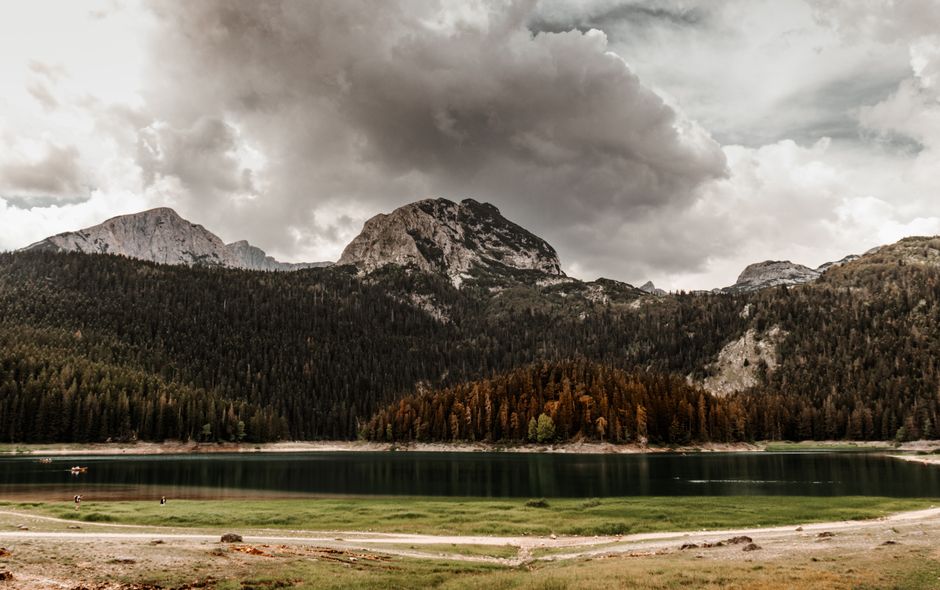
Durmitor National Park is Montenegro’s great mountain wilderness: a high limestone massif in the north of the country with dozens of peaks above 2,000 m, glacial lakes known as “mountain eyes”, forests of black pine and spruce, and the Tara river canyon, one of the deepest in Europe, cutting along its northern edge. The park, founded in 1952, and the Tara canyon together form a UNESCO World Heritage Site. The small mountain town of Žabljak, at about 1,450 m, is the base for everything: the easy walk around the Black Lake, the climb to Bobotov Kuk, the spectacular Durmitor Ring road, the Đurđevića Tara bridge and rafting on the Tara. Summer is for hiking and rafting, winter for skiing on Savin Kuk. Allow two or three days, and pack for mountain weather even in August.
Right now in Durmitor National Park (Žabljak)
- Wed 4–16°C 40–60°F Clear
- Thu 5–14°C 41–56°F 2 mm Cloudy
- Fri 9–14°C 49–58°F 7 mm Light showers
Weather: MET Norway (CC BY 4.0)
Top tours in Durmitor National Park
See all tours for Durmitor National Park →
From local operators, with prices and reviews; you check availability and book on Viator, our partner. We may earn a commission at no extra cost to you. How we earn money
Durmitor National Park at a glance
- Best months: July to September for hiking and the high road; May to October for rafting on the Tara; roughly December to March for skiing. Summer days are mild, with average highs of about 19–22 °C at Žabljak, and nights are cool.
- Time needed: 1 day for the Black Lake and the Tara bridge; 2–3 days to add a summit hike, the Durmitor Ring and rafting.
- Getting there: about 2.5–3 hours by road from Podgorica and 3.5–4 hours from Kotor or Budva; buses run from Podgorica.
- Tickets (as of October 2026): €5 per person per day, including the visitor centre at the Black Lake and the educational trails, according to National Parks of Montenegro. A higher summer price has been proposed.
- Rules: camp only in designated sites, no open fires outside marked places, take your rubbish with you, and stay on marked trails.
How Durmitor works: the massif, the lakes and the canyon
The park covers the central Durmitor massif and the upper canyon of the Tara. The massif is a high karst plateau, carved by ice-age glaciers into cirques, ridges and sinkholes, with Bobotov Kuk (2,523 m) among the highest summits in Montenegro. The glaciers left behind about 18 small lakes, of which the Black Lake (Crno jezero), at about 1,416 m just outside Žabljak, is the largest and most visited; others include Zminje, Jablan, Riblje and the Škrka lakes deep in the mountains. To the north, the Tara river has cut a canyon that is about 80 km long and up to about 1,300 m deep, among the deepest in Europe; it marks the edge of the park and later the border with Bosnia and Herzegovina. Between them, the high meadows around Žabljak, the Jezerska površ plateau, are dotted with farms and the traditional steep-roofed wooden houses of the region.
Durmitor was declared a national park in 1952 and listed by UNESCO as a World Heritage Site in 1980 for its glacial landscape, its old forests and the canyon. It is home to brown bears, wolves, chamois and many endemic plants, though you are far more likely to meet grazing sheep and cows than large animals.
Tickets and fees (as of October 2026)
Prices below are from the official price list of National Parks of Montenegro (Nacionalni parkovi Crne Gore), which manages Durmitor and the country’s other national parks.
| Item | Price |
|---|---|
| Park entry, including the visitor centre and educational trails | €5 per person per day |
| Visitor centre only | €1 |
| Annual ticket valid in all Montenegro’s national parks | €13.50 per person |
| Rowing boat hire on the Black Lake | €10 an hour |
| Kayak hire | €4–6 an hour |
| Bicycle hire | €3 an hour or €8 a day |
| Park guide | €40 for 4 hours, €80 for 8 hours |
| Van or jeep tour, park entry included | €20 or €30 per person |
| Camping in an organised park campsite | €20 a day |
Tickets are sold at the entrance to the Black Lake area and through the park’s electronic ticketing system (ulaznice.nparkovi.me); keep yours with you on the trails. Parking at the Black Lake is charged by the hour. In September 2026 the park’s director announced a proposal to raise the Durmitor ticket to €8 in June, July and August and €6 the rest of the year, to spread visits more evenly; as of early October 2026 the official price list still showed €5. Check before you go. Separate fees apply to rafting on the Tara, which operators include in their prices.
The Black Lake
The Black Lake (Crno jezero) lies about 3 km from the centre of Žabljak, a 40-minute walk or a short drive, at the foot of the pyramid-shaped peak of Međed. It is really two lakes, the Big and Small Lake, joined by a narrow strait that dries up in late summer. A level path of about 3.5 km circles the water through spruce and pine forest, with views of Međed and Savin Kuk; allow an hour or so. You can hire a rowing boat or kayak in summer, swim if you are brave (the water is cold), and visit the national park’s visitor centre on the shore. It is the most visited spot in the park and busy at midday in August, so come early in the morning, when the water is often still and mirror-like.
Hiking in Durmitor
Durmitor has a network of marked trails, from easy lake walks to serious mountain days. Trails are marked with red-and-white waymarks; carry a map or offline app, as signs can be sparse higher up.
- Black Lake loop (easy, about 1 hour): the classic first walk.
- Black Lake to Zminje and Barno lakes (easy to moderate, half a day): through forest to quieter lakes.
- Ćurevac viewpoint (easy, short walk from a road): a lookout over the Tara canyon near Žabljak, about 1,600 m up.
- Savin Kuk (moderate): ride the chairlift in summer when it runs, or walk up for views over the whole massif.
- Ice Cave (Ledena pećina) (moderate to hard, 7–8 hours return from the Black Lake): a cave holding ice all summer, reached by a long climb.
- Bobotov Kuk (hard, about 5–7 hours return from the Sedlo pass on the Durmitor Ring, longer from Žabljak): the classic summit, with a short scrambly final section and enormous views. Only in settled weather, usually July to September.
- Prutaš (moderate, from the Ring road): a striking peak of tilted rock layers with views over the Škrka lakes.
Start long hikes early: afternoon thunderstorms are common in summer, and there is little shelter on the high plateau. Snow can lie on north-facing slopes into June, and the season for the high peaks is short. Carry plenty of water, as there are few springs on the limestone. Mountain guides and the park’s own guides can be booked in Žabljak. See our hiking guide.
The Durmitor Ring road
The Durmitor Ring is a loop of about 80 km from Žabljak through the high mountains via the Sedlo pass, at about 1,900 m, and down to the Piva plateau, returning by the Sušica canyon or Šavnik. The road is narrow, often single-track with passing places, and climbs through bare, lunar karst landscapes with views of Bobotov Kuk, Prutaš and the lakes below. Allow at least half a day with stops; it is also a classic but demanding route for cyclists. The high section is usually open only from about June to October, depending on snow, so check locally. See our cycling guide.
The Tara canyon, the bridge and rafting
Đurđevića Tara bridge
About 20–25 km east of Žabljak on the road to Pljevlja and Mojkovac, the Đurđevića Tara bridge spans the canyon in five concrete arches about 365 m long and around 170 m above the river. Completed in 1940, it was partly blown up in 1942 to stop the advancing Italian army and rebuilt after the war. There are cafés and viewpoints on both ends, and in summer several zipline operators fly visitors across the canyon next to the bridge.
Rafting on the Tara
Rafting on the Tara is one of the great outdoor experiences of the Balkans. The most popular trip runs the last 18 km or so from Brštanovica to Šćepan Polje, near the border with Bosnia and Herzegovina, through a narrow, forested gorge with about twenty rapids: exciting but suitable for fit beginners in summer. The season runs roughly from May to October; in spring, snowmelt makes the water higher, colder and wilder, while by August it is gentler. Trips last 3–4 hours on the water and are offered by camps around Šćepan Polje and Plužine, often with transport from Žabljak, Kotor or Budva, a meal and the park’s rafting fee included; prices reported for 2026 are typically about €40–80 per person depending on what is included. Longer multi-day trips run down the canyon from near the bridge in season.
Choose your operator carefully. Raft only with a registered company whose guides give a safety briefing and provide helmets, life jackets and wetsuits, with no more than about eight guests per raft. Check minimum ages with the operator, especially in spring. Carry your passport: some routes and transfers pass close to, or briefly across, the border with Bosnia and Herzegovina.
Skiing and winter at Žabljak
Žabljak is one of Montenegro’s main winter resorts. The Savin Kuk ski area, a few kilometres from town, has runs for all levels, with the season usually from about December to March depending on snow; the smaller Javorovača slope near the centre suits beginners and children. Day passes have been priced at roughly €15–25 in recent seasons, much cheaper than the Alps, but check the operator’s current price list. Winters are long and cold, with snow on the ground for months; the Black Lake freezes, and snowshoe and cross-country routes open up. Roads to Žabljak are cleared but can need snow chains or winter tyres.
Nearby destinations
Getting there and getting around
By car
From Podgorica, the usual route is via Nikšić and Šavnik (about 170 km, 2.5–3 hours), or via the motorway to Mateševo and then Kolašin, Mojkovac and the Đurđevića Tara bridge (about the same time, with a short toll section). From Kotor or Budva, allow 3.5–4 hours. From the north-west, the road from Plužine climbs past the Piva lake through a string of unlit rock tunnels. Mountain roads are narrow and winding; avoid driving them at night if you can, and expect livestock on the road.
By bus
Buses run several times a day from Podgorica to Žabljak, with connections from the coast, and there are lines to Pljevlja and on to Belgrade. Many day tours from Kotor, Budva and Podgorica combine the Tara bridge, the Black Lake and Ostrog monastery, but it is a long day; staying a night or two is far better.
By train
The Bar–Belgrade railway passes through Kolašin and Mojkovac, about an hour or more by road from Žabljak; taxis or pre-booked transfers are needed from the station.
Around Durmitor: Piva, Biogradska Gora and Ostrog
- Piva lake and canyon: west of the massif, a long turquoise reservoir in a deep canyon near Plužine, with a 16th-century monastery moved stone by stone when the dam was built.
- Biogradska Gora National Park: near Kolašin, about 1.5 hours away, one of the last old-growth forests in Europe, around a glacial lake.
- Ostrog Monastery: the white monastery built into a cliff above the Zeta valley, Montenegro’s most visited pilgrimage site, a good stop on the drive between Podgorica and Žabljak.
- Mountain food: try kačamak (cornmeal and potato with kajmak cream and cheese), lamb roasted under the sač, fresh trout, and local cheeses and honey sold at farms and in Žabljak’s market.
When to go and how long to stay
Žabljak has a mountain climate: short, mild summers with cool nights and frequent afternoon storms, and long, snowy winters. July and August are the warmest and busiest months; September is often the most settled for hiking, with fewer people and the first autumn colours. June is green and full of flowers, but snow may still block the high trails. From November to April, expect snow.
| Season | Average high / low | Days with rain or snow a month | What it’s like |
|---|---|---|---|
| Spring (Mar–May) | 6–15 °C / −4 to 4 °C | 11–13 | Snow melting; high trails closed; high water for rafting from May. |
| Summer (Jun–Aug) | 19–22 °C / 8–9 °C | 8–11 | The main hiking season; warm days, cool nights, afternoon storms. |
| Autumn (Sep–Nov) | 17 °C falling to 8 °C / 6 to −2 °C | 10–12 | Settled September; golden beech forests in October; first snow. |
| Winter (Dec–Feb) | 2–3 °C / −6 to −7 °C | 10–13 | Snowy and cold; skiing at Savin Kuk; frozen Black Lake. |
Figures are the WMO 1991–2020 climate normals for the Žabljak station, at about 1,450 m, from Montenegro’s Institute of Hydrometeorology and Seismology. The area gets about 1,500 mm of rain and snow a year, with the most in October to December. Temperatures fall quickly with height: on Bobotov Kuk it can be 10 °C colder than in Žabljak, so pack a warm layer and a waterproof in any season.
Durmitor in one day
Walk round the Black Lake in the early morning, drive the Durmitor Ring in the middle of the day with a short walk from the Sedlo pass, and finish at the Đurđevića Tara bridge or the Ćurevac viewpoint at sunset.
Two or three days
Day 1: the Black Lake and the Tara bridge. Day 2: a big hike, such as Bobotov Kuk or the Ice Cave. Day 3: rafting from Brštanovica to Šćepan Polje, or the Durmitor Ring and the Piva canyon. Combine with Kotor or Budva on the coast, or with Biogradska Gora and Kolašin.
Where to stay near Durmitor
- Žabljak town: hotels, guesthouses and apartments within walking distance of the Black Lake, restaurants and the bus station.
- Wooden chalets and eco-lodges: on the meadows around Žabljak, many with mountain views and home cooking.
- Camping: campsites in and around Žabljak and the park’s own sites; wild camping is not allowed.
- Rafting camps: riverside camps near Šćepan Polje and Plužine for rafting trips.
As everywhere in Montenegro, your host registers you with the local tourist organisation within 24 hours and adds a small tourist tax per night.
Practical tips for Durmitor
- Cash: card machines are rarer in the mountains; bring euros for tickets, parking and farm food.
- Weather: check the forecast and set off early; turn back if storms build.
- Water: carry plenty; springs are few on the karst.
- Fuel: fill up in Žabljak, Nikšić or Mojkovac before mountain drives.
- Signal: mobile coverage is patchy in the canyons and high mountains; download offline maps.
- Respect the park: no fires outside marked places, no wild camping, no litter.
- Emergencies: call 112 for mountain rescue, police or ambulance.
What to pack for Durmitor
Bring proper hiking shoes with good grip, a rain jacket, a fleece or down layer for cool mornings and evenings, a hat and sunscreen (the sun is strong at altitude), a water bottle, snacks, a map or offline app and a small first-aid kit. Swimwear and a towel are useful for the Black Lake and rafting days; rafting companies provide wetsuits, helmets and life jackets. In winter, bring warm boots, gloves and a hat, and winter tyres or chains for the car.
Durmitor National Park travel FAQ
How much is the Durmitor National Park ticket?
As of October 2026, €5 per person per day, including the visitor centre and educational trails. A rise to €8 in June–August and €6 the rest of the year has been proposed, so check before you go.
Where is the best base for Durmitor?
Žabljak, the small mountain town at about 1,450 m on the edge of the park, 3 km from the Black Lake.
Can you swim in the Black Lake?
Yes, in summer, though the water is cold. You can also hire rowing boats and kayaks.
How hard is the hike to Bobotov Kuk?
A long but non-technical mountain day of about 5–7 hours return from the Sedlo pass, with a short, exposed scramble near the top. Go only in good weather, usually July to September.
When is the rafting season on the Tara?
Roughly May to October. The water is highest and wildest in May and June and gentler in late summer.
How much does Tara rafting cost?
Typically about €40–80 per person for the Brštanovica–Šćepan Polje trip in 2026, depending on transport and meals. Book with a registered operator that provides helmets, life jackets and wetsuits.
Is the Durmitor Ring road open all year?
No. The high section over the Sedlo pass is usually open only from about June to October, depending on snow.
Can you visit Durmitor as a day trip from Kotor or Budva?
Yes, on organised tours, but it means 7–8 hours on the road. Staying one or two nights in Žabljak is much better.
Is there skiing in Durmitor?
Yes. Savin Kuk near Žabljak has runs for all levels, usually from about December to March, with a small beginners’ slope at Javorovača.
How high is the Đurđevića Tara bridge?
About 170 m above the river, with a length of about 365 m. Ziplines cross the canyon beside it in summer.
Can I camp in Durmitor National Park?
Only in designated campsites, including the park’s own sites. Wild camping and open fires outside marked places are not allowed.
Sources and last review
Researched and last reviewed on 4 October 2026. Park ticket and service prices come from the official price list of National Parks of Montenegro; climate from Montenegro’s Institute of Hydrometeorology and Seismology (WMO 1991–2020 normals for Žabljak); the railway from ŽPCG. The proposed ticket rise, rafting prices and season, ski pass prices and road opening months come from published reports and are flagged for checking. Prices, hours and rules change, so check the park’s official site before you travel.
Plan your trip
Partner links: TravelerCenter may earn a commission if you book, at no extra cost to you.
🇷🇸 Useful Serbian phrases for Durmitor National Park
All 38 Serbian phrases: restaurant, hotel, emergencies, romance (printable) →