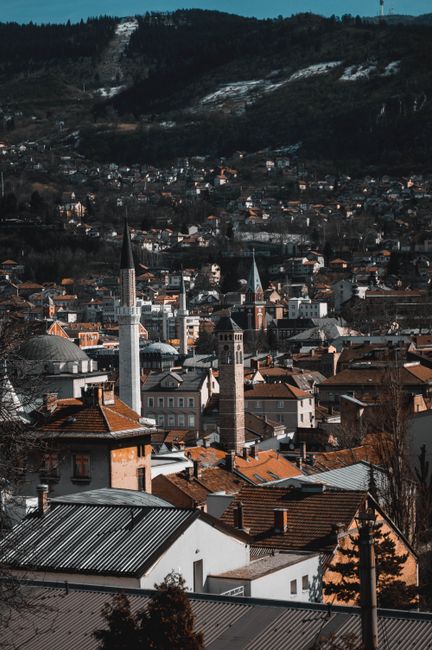
Međugorje (also written Medjugorje) is a village in the vineyards of western Herzegovina that became one of the world’s best-known Catholic pilgrimage sites. On 24 June 1981, six local children said that the Virgin Mary had appeared to them on a rocky hillside above the hamlet of Bijakovići, and some of them say the apparitions have continued since. Pilgrims have come ever since, now in their hundreds of thousands every year, to pray at St James’s Church, climb the stony paths of Apparition Hill and Cross Mountain, go to confession and join the evening prayer programme. In 2024, the Vatican approved devotion at Međugorje without ruling on whether the apparitions are supernatural. Whether you come as a pilgrim or simply out of curiosity, it is a peaceful place, close to Mostar, the Kravica waterfalls and Herzegovina’s wineries. Give it one or two days, or three to five with a pilgrimage group.
Right now in Međugorje
- Wed 12–26°C 54–78°F Mostly clear
- Thu 13–22°C 56–72°F 30 mm Showers
- Fri 16–22°C 60–71°F 49 mm Heavy showers
Weather: MET Norway (CC BY 4.0)
Top tours in Međugorje
See all tours for Međugorje →
From local operators, with prices and reviews; you check availability and book on Viator, our partner. We may earn a commission at no extra cost to you. How we earn money
Međugorje at a glance
- Best for: pilgrimage and prayer, the climbs up Apparition Hill and Cross Mountain, quiet reflection, and Herzegovina’s wine and countryside.
- How long: 1–2 days for the church and both hills; 3–5 days for a full pilgrimage programme or to add Mostar and Kravica.
- Best time: May, June, September and October for pleasant weather; late June for the anniversary and late July or early August for the Youth Festival, when the village is at its busiest.
- Getting in: about 25 km from Mostar, with buses from Mostar, Split and Dubrovnik; most pilgrims travel with organised groups.
- Getting around: the church, the hills and the hotels are all within walking distance, linked by a few village roads.
- Before you go: Bosnia and Herzegovina uses the convertible mark (KM), but euros are accepted almost everywhere in Međugorje. Entry rules and safety are covered on our Bosnia and Herzegovina country page.
Međugorje, area by area
The parish of Međugorje takes in several hamlets on a small plain ringed by stony hills, in the municipality of Čitluk.
St James’s Church and the centre
The twin-towered parish church, completed in 1969, stands in the middle of the village, with the large outdoor altar behind it where the summer evening Mass is held, the Adoration Chapel, confessionals and the bronze statue of the Risen Christ. The main street leading to it is lined with shops selling rosaries and religious souvenirs, cafés and pilgrim hotels. Best for: the prayer programme and staying close to everything.
Bijakovići and Apparition Hill
About 2 km south-east of the church, the hamlet of Bijakovići lies at the foot of Podbrdo, Apparition Hill, with the Blue Cross at the bottom of the path. Best for: quieter guesthouses near the hill.
Cross Mountain (Križevac)
South-west of the church, the higher hill of Križevac is topped by a concrete cross put up by the parishioners in 1933–34. Best for: the Way of the Cross.
Čitluk and the Brotnjo wine country
The municipal town of Čitluk, about 5 km away, is the centre of the Brotnjo plateau, one of Herzegovina’s main wine areas. Best for: wineries and local food.
Top things to see in Međugorje
Entry to the church, the hills and the prayer programme is free. Times below were checked on the parish’s official website in October 2026; they change with the seasons and feast days.
St James’s Church
Dedicated to St James, the patron saint of pilgrims, the church is the heart of the parish. Masses are celebrated in many languages through the day, and dozens of priests hear confessions in different languages, especially in the afternoon and evening. The parish asks visitors to dress modestly (shoulders and knees covered), not to smoke in or around the church, and not to take photos during Mass or Adoration.
The evening prayer programme
The main event of every day. From 1 June to 31 August it runs from 18:00 to 21:00: the rosary at 18:00, then Mass and the blessing of religious objects at 19:00, usually at the outdoor altar. From 1 September to 31 May it starts an hour earlier, with the rosary at 17:00 and Mass at 18:00. Eucharistic Adoration follows on certain evenings (Tuesday, Thursday and Saturday), and on Fridays there is Veneration of the Cross. Each Friday afternoon, the Way of the Cross is prayed on Križevac (16:00 in summer, 14:00 the rest of the year), and on Sunday afternoons the rosary is prayed on Apparition Hill.
Apparition Hill (Podbrdo)
The path up from the Blue Cross climbs about 150 metres over bare, jagged limestone, past bronze reliefs of the mysteries of the rosary, to a white statue of the Virgin, the Queen of Peace, at the spot where the visionaries say they first saw her. It takes about 25–30 minutes up for most people. Many pilgrims pray the rosary on the way, and some climb barefoot. The rocks are polished and slippery, there is no shade, and coming down is harder than going up, so wear sturdy shoes and carry water. The parish asks visitors not to leave candles or objects on the hill.
Cross Mountain (Križevac)
The climb up Križevac (about 520 metres above sea level) follows the 14 bronze Stations of the Cross over rough, rocky ground to the large cross at the top, built in 1933–34 to mark 1,900 years since the death of Christ, with wide views over the vineyards. Allow about 45 minutes to an hour up at a steady pace, or up to two hours praying at each station, and the same care on the way down. Avoid the middle of the day in summer.
The Blue Cross
At the foot of Apparition Hill, a simple blue-painted cross marks the place where one of the visionaries’ prayer groups has met since 1982. It is a quiet spot for prayer before or after the climb.
The Risen Christ statue
Behind the outdoor altar, a large bronze statue of the risen Christ by the Slovenian sculptor Andrej Ajdič is known for a liquid that seeps from its knee; pilgrims queue to touch it with a cloth.
The Church’s position, in brief
The apparitions have been investigated for decades. On 19 September 2024, the Vatican’s Dicastery for the Doctrine of the Faith, with the approval of Pope Francis, published a note, The Queen of Peace, granting a nihil obstat to the spiritual experience of Međugorje. It allows and encourages public devotion and pilgrimages there, and judges most of the messages to be edifying, but it does not declare the apparitions supernatural: Catholics are not obliged to believe in them, and the messages are to be referred to as “alleged messages”. Since 2021, Archbishop Aldo Cavalli has served as the Pope’s Apostolic Visitor to the parish. The parish publishes the full text on its website.
Day trips from Međugorje
- Mostar: 25 km north-east, about 30–45 minutes by bus or car, for the Old Bridge and the Ottoman old town; see our Mostar guide.
- Kravica waterfalls: about 20 km west, a horseshoe of cascades with a swimming lake; as of October 2026, entry costs 20 KM for adults, all year.
- Blagaj and Počitelj: the dervish house at the Buna spring and the Ottoman hill village on the Neretva, both within 30–40 minutes.
- Wineries of Brotnjo: around Čitluk and Međugorje, cellars offer tastings of Žilavka and Blatina; some ask you to book ahead.
- Humac and Ljubuški: the Franciscan monastery at Humac, with one of the oldest museums in the country, and the hilltop fortress of Ljubuški.
Nearby destinations
- Mostar20 km
- Makarska Riviera46 km
- Dubrovnik70 km
- Hvar75 km
- Sarajevo95 km
- Split106 km
- Herceg Novi108 km
- Durmitor National Park110 km
Getting to Međugorje
By bus. Buses run from Mostar (30–45 minutes) and Čitluk, and from Split (about 2 hours 45 minutes to 3 hours 40 minutes, with Globtour departures around 07:30 and 17:30 in the autumn 2026 timetable) and, on some days, from Dubrovnik (about 4 hours). Timetables change by season, so check before you travel. Most pilgrims come on organised trips, which include transfers. By air. The nearest airport is Mostar, about 25 km away, with a few flights; Split (about 160 km) and Dubrovnik (about 145 km) have many more. By car. From Mostar, take the road south-west via Čitluk. From Split or Dubrovnik, you cross the border into Bosnia and Herzegovina; since April 2026, non-EU travellers are registered by the EU’s Entry/Exit System when they return to Croatia, so allow extra time in summer. A section of the A1 motorway runs from Međugorje towards Ljubuški (toll payable). Parking around the church is limited at busy times.
Getting around Međugorje
Everything is within walking distance: from the church it is about 20–30 minutes on foot to the Blue Cross and the start of the path up Apparition Hill, and about 20 minutes to the foot of Cross Mountain. Taxis and minibuses wait near the church, and many hotels offer transfers.
When to go and how long to stay
Međugorje has the sunny, Mediterranean-influenced climate of Herzegovina: hot, dry summers and mild, wet winters. At about 200 metres it is a little cooler than Mostar, which is the nearest official station. The table uses the official 1991–2020 averages for the Mostar station that Bosnia and Herzegovina submitted to the World Meteorological Organization.
| Season | Average daily high | Average nightly low | Rain per month | What it’s like |
|---|---|---|---|---|
| Winter (Dec–Feb) | 9.3–11.6 °C | 2.7–3.9 °C | 125–181 mm | Mild, grey and wet, with cold bura winds; quiet, with few groups |
| Spring (Mar–May) | 15.8 °C rising to 25.1 °C | 6.2 °C rising to 13.5 °C | 93–123 mm | Pleasant for the climbs; Easter brings many pilgrims |
| Summer (Jun–Aug) | 29.8–33.5 °C | 17.4–20.3 °C | 56–71 mm | Hot and dry; the anniversary in June and the Youth Festival make it the busiest season |
| Autumn (Sep–Nov) | 27.2 °C falling to 15.1 °C | 15.8 °C falling to 7.5 °C | 137–189 mm | Warm in September and early October, with the grape harvest; heavy rain later |
Climb the hills early in the morning or in the late afternoon in summer, when the rocks radiate heat.
Important dates and festivals
- 25 June: the anniversary of the first apparitions, with a peace march from the Franciscan monastery at Humac the day before; the next is Friday 25 June 2027.
- 25 July: the feast of St James, the parish’s patron.
- Youth Festival (Mladifest): usually 1–6 August, but in 2027 it is earlier, from Tuesday 27 to Saturday 31 July, because of World Youth Day in Seoul.
- Mid-September: the Feast of the Exaltation of the Cross, with Mass on Križevac.
Međugorje in 1 day
Morning: Mass or a quiet visit to St James’s Church, then the walk to Bijakovići and the climb up Apparition Hill. Afternoon: rest, confession or a visit to the Adoration Chapel. Evening: the rosary and Mass at the outdoor altar.
Međugorje in 3 days
Add an early-morning climb of Cross Mountain on day 2, with the Way of the Cross, and the evening Adoration. On day 3, visit Mostar or the Kravica waterfalls, or a winery near Čitluk, and return for the evening programme.
Where to stay in Međugorje
- Near St James’s Church: the largest choice of pilgrim hotels and guesthouses, many with full board, within a few minutes’ walk of the evening programme.
- Bijakovići: family guesthouses at the foot of Apparition Hill, quieter and often cheaper.
- Čitluk and the countryside: a few hotels and wine estates, for a quieter stay with a car.
Hotels add a tourist tax of about 3 KM per person per night. Book well ahead for Easter, the anniversary in late June, the Youth Festival and the feast days in summer, when the village is full.
Practical tips for Međugorje
- Dress modestly: cover shoulders and knees in the church grounds and on the hills.
- Wear proper shoes: the hill paths are sharp, uneven limestone; trainers or walking shoes with grip are much safer than sandals.
- Go early in summer: both climbs are unshaded and very hot by late morning; carry water.
- Respect the prayer: keep your voice down, and don’t take photos during Mass, Adoration or the rosary.
- Bring cash: euros and marks are accepted almost everywhere, but small shops and guesthouses often prefer cash.
- Beware of unofficial claims: buy religious items from the parish shop or reputable stores, and treat any paid “meetings with visionaries” with caution; the parish publishes the official programme.
What to pack for Međugorje
Sturdy walking shoes with good grip for the rocky hills, a sun hat, sunscreen and a refillable water bottle, light, modest clothes that cover shoulders and knees, and a light jacket for cool evenings at the outdoor Mass. A small torch helps if you climb before dawn. In winter, bring a warm, waterproof jacket or a rain jacket. Hiking shoes are ideal for Cross Mountain, and you need a type F travel adapter if you come from the UK, North America or Australia.
Međugorje travel FAQ
Has the Vatican approved Međugorje?
In September 2024, the Vatican granted a nihil obstat: it allows and encourages devotion and pilgrimages to Međugorje, but it does not declare the apparitions supernatural, and Catholics are not obliged to believe in them.
What time is the evening Mass in Međugorje?
From 1 June to 31 August, the rosary starts at 18:00 and Mass at 19:00. From 1 September to 31 May, the rosary is at 17:00 and Mass at 18:00. Check the parish website for feast days.
How long does it take to climb Apparition Hill and Cross Mountain?
About 25–30 minutes up Apparition Hill and 45 minutes to an hour up Cross Mountain at a steady pace, longer if you pray at each station. Both paths are rocky and unshaded, and coming down takes care.
Is there an entrance fee in Međugorje?
No. The church, the hills and the prayer programme are free. Donations are welcome.
How do I get to Međugorje?
By bus from Mostar in 30–45 minutes, or from Split (about 3 hours) and Dubrovnik (about 4 hours, not every day). The nearest airports are Mostar, Split and Dubrovnik; most pilgrims travel with organised groups.
What should I wear in Međugorje?
Modest clothes that cover your shoulders and knees, and sturdy shoes with good grip for the rocky hill paths.
When is the Youth Festival in 2027?
From Tuesday 27 to Saturday 31 July 2027, earlier than its usual 1–6 August dates because of World Youth Day in Seoul.
How many days do you need in Međugorje?
One or two days for the church, both hills and the evening programme; three to five days for a full pilgrimage or to add Mostar and the Kravica waterfalls.
Can I pay in euros in Međugorje?
Yes, euros are accepted almost everywhere, as well as the local convertible mark (KM). Cards work in hotels and larger shops; carry cash for small purchases.
Sources and last review
Researched and last reviewed on 4 October 2026. The prayer programme, instructions for pilgrims, important dates and the Youth Festival 2027 dates: the official parish website of Međugorje; the Vatican note: the Holy See and Vatican News; Kravica prices: the waterfall’s official site; climate: the official 1991–2020 normals for Mostar submitted to the World Meteorological Organization. The heights and walking times on the hills, bus times, airport distances, the tourist tax and the Risen Christ statue come from secondary sources and are flagged for checking. Times and rules change, so check the parish website before you go.
Plan your trip
Partner links: TravelerCenter may earn a commission if you book, at no extra cost to you.