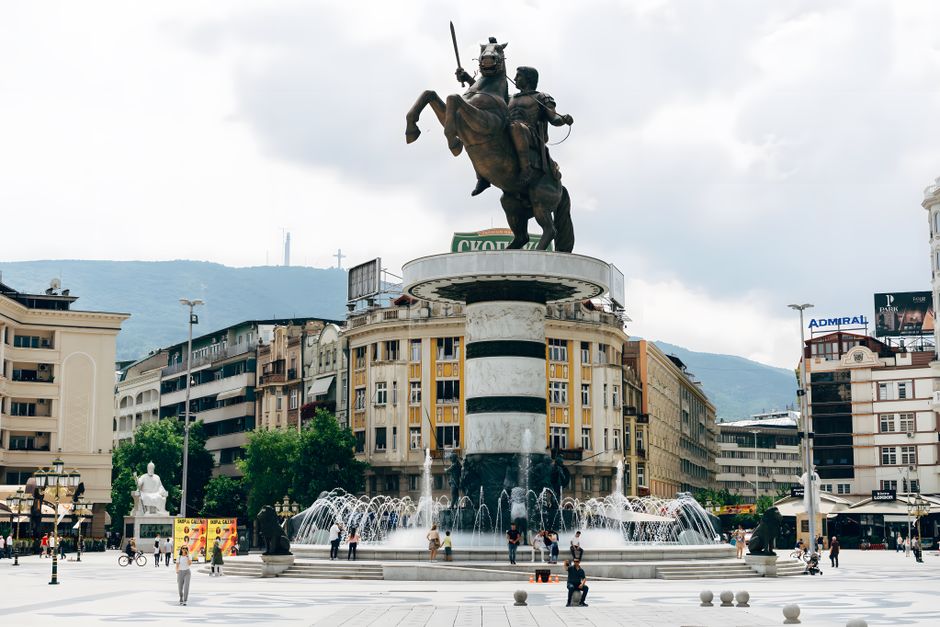
North Macedonia is a small, mountainous country in the southern Balkans that rewards curious travellers. Its star is Lake Ohrid, one of the oldest and deepest lakes in Europe, where the old town of Ohrid climbs a hill of Byzantine churches above clear blue water. Skopje, the capital, is a city of contrasts: one of the largest Ottoman bazaars in the Balkans, a medieval fortress and a riverfront crowded with statues and neoclassical buildings from the 2010s, with the Matka canyon half an hour away. Beyond them you find the Tikveš wine country, the Roman city of Stobi, the national parks of Mavrovo, Pelister and Galičica, Lake Prespa and old Bitola. It is one of the cheapest countries in Europe, and people are kind and curious about visitors. June and September are the sweet spots for the lakes. Give it a week for a first trip, ten days to see the country properly.
Right now in North Macedonia
- Wed 12–23°C 53–73°F Partly cloudy
- Thu 11–23°C 52–73°F Mostly clear
- Fri 14–21°C 58–69°F 3 mm Cloudy
- Sun 11 Oct Revolution Day (Ден на востанието, Den na vostanieto)
Weather: MET Norway (CC BY 4.0) · Holidays: Nager.Date
Multi-day tours of North Macedonia
Multi-day tours from local operators. You check dates and book on Viator, our partner; we may earn a commission at no extra cost to you. How we earn money
North Macedonia at a glance: lakes, mountains and the Vardar valley
North Macedonia covers about 25,700 square kilometres, landlocked between Kosovo and Serbia to the north, Bulgaria to the east, Greece to the south and Albania to the west. The Vardar river runs through the middle of the country, from the mountains near Tetovo past Skopje and the vineyards of Tikveš to Greece and the Aegean. Around it, more than half the country is mountainous: the Šar Mountains and Korab (2,764 m, the highest peak, on the Albanian border) in the west, Pelister above Bitola, and Galičica between the country’s two great lakes, Ohrid and Prespa. Lake Ohrid, shared with Albania, is more than a million years old and nearly 300 metres deep, with many plants and animals found nowhere else.
North Macedonia’s 2021 census counted about 1.84 million residents, and the State Statistical Office estimated about 1.82 million at the end of 2025; around a quarter to a third of them live in and around Skopje. Macedonian, written in the Cyrillic alphabet, is the official language across the country, and Albanian is also official, used widely in the west and north-west, around Tetovo, Gostivar and Struga, and in parts of Skopje. Turkish, Romani and other languages are spoken by smaller communities. Most people are Orthodox Christians or Muslims. English is widely spoken by younger people and in tourism.
The country was called the Republic of Macedonia from independence in 1991 until February 2019, when it took the name North Macedonia under the Prespa Agreement with Greece. It joined NATO in 2020 and is a candidate for EU membership, but it is not in the EU or the Schengen area and uses its own currency, the denar. Time zone: Central European Time (UTC+1, UTC+2 from the last Sunday in March to the last Sunday in October).
North Macedonia’s regions
- Skopje and around: the capital on the Vardar: the Stone Bridge, the Old Bazaar (Čaršija) with its mosques, hammams and caravanserais, the fortress (Kale), the Millennium Cross on Mount Vodno and the Matka canyon with its lake, monasteries and caves.
- Ohrid and the south-west: Ohrid’s old town and churches (UNESCO), Struga at the lake’s outflow, the monastery of St Naum by the springs of the Black Drim, Galičica National Park, and Lake Prespa with its quiet villages and island.
- Pelagonia: the wide southern plain around Bitola, with its elegant pedestrian street, Širok Sokak, the Roman and Hellenistic city of Heraclea Lyncestis and Pelister National Park; and Prilep, home of the tobacco fields and the Treskavec monastery.
- The west: Mavrovo National Park with its lake, ski area and the Bigorski monastery, the stone mountain village of Galičnik, and Tetovo’s Painted Mosque.
- The Vardar valley and Tikveš: the country’s main wine region around Kavadarci and Negotino, the ancient city of Stobi and the gorge at Demir Kapija.
- The east: Kratovo, a town in a volcanic crater with medieval stone bridges and towers, the Kuklica stone pillars, the prehistoric observatory of Kokino, Štip, Strumica and Lake Dojran on the Greek border.
Where to go: Ohrid, Skopje and the mountains
Skopje and Ohrid are about three hours apart by bus or car across the western mountains. Most other sights are within two hours of one or the other.
Ohrid
North Macedonia’s favourite town has a lovely lakeside old town of cobbled lanes, Ottoman-era houses and churches, many with Byzantine frescoes. Walk up to Samuel’s Fortress, the ancient theatre and Plaošnik, where St Clement founded one of the first Slavic universities in the 9th century, and follow the cliff path to the little church of St John at Kaneo, perched above the water. Swim from the beaches south of town, take a boat to the monastery of St Naum and the springs of the Black Drim, and visit the reconstructed Bronze Age pile village in the Bay of Bones. See our Ohrid guide.
Skopje
Skopje is a city that surprises people. Its Old Bazaar is one of the largest and liveliest Ottoman markets left in Europe, full of mosques, tea houses, kebab grills and goldsmiths. Across the 15th-century Stone Bridge, Macedonia Square and the riverbanks are lined with giant statues, fountains and neoclassical buildings put up in the 2010s under the controversial “Skopje 2014” project. Visit the Memorial House of Mother Teresa, who was born in the city, take the cable car up Mount Vodno, and spend half a day kayaking or boating in the Matka canyon. See our Skopje guide.
Bitola and Heraclea
Bitola, the country’s second city, has a long pedestrian street of 19th-century consulates and cafés, an Ottoman bazaar, and, just outside, Heraclea Lyncestis, a city founded by Philip II of Macedon with superb Roman and early Christian floor mosaics. Pelister National Park, with its five-needled Macedonian pines and glacial lakes, rises above the town.
Mavrovo and the Bigorski monastery
Mavrovo National Park, the country’s largest, has a reservoir with a half-submerged church, the ski area of Zare Lazarevski, and beech forests. On the road between Mavrovo and Debar, the Bigorski monastery is famous for its carved wooden iconostasis, and the stone village of Galičnik hosts a traditional wedding festival every July.
Matka canyon
Just outside Skopje, the Treska river runs through a steep limestone canyon. Walk the path along the lake, take a boat or kayak to the Vrelo cave, and visit the small medieval monasteries clinging to the cliffs.
Tikveš and Stobi
The Tikveš region produces most of the country’s wine, especially from the local Vranec (red) and Smederevka (white) grapes; many wineries offer tastings. Nearby, Stobi was a Roman and early Byzantine city on the Vardar, with theatres, basilicas and mosaics.
Lake Prespa and Kratovo
Lake Prespa, higher and wilder than Ohrid, is shared with Albania and Greece and known for its apples, pelicans and the abandoned island of Golem Grad. Kratovo, in the east, sits in an old volcanic crater crossed by medieval stone bridges.
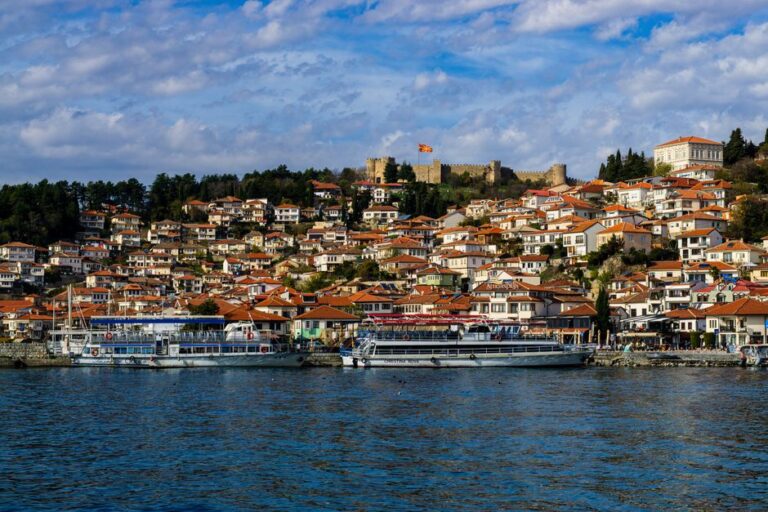
Ohrid Travel Guide
Plan a trip to Ohrid: Samuel's Fortress and the Bay of Bones with 2026 prices and hours, St John at Kaneo, Plaošnik, St Sophia…
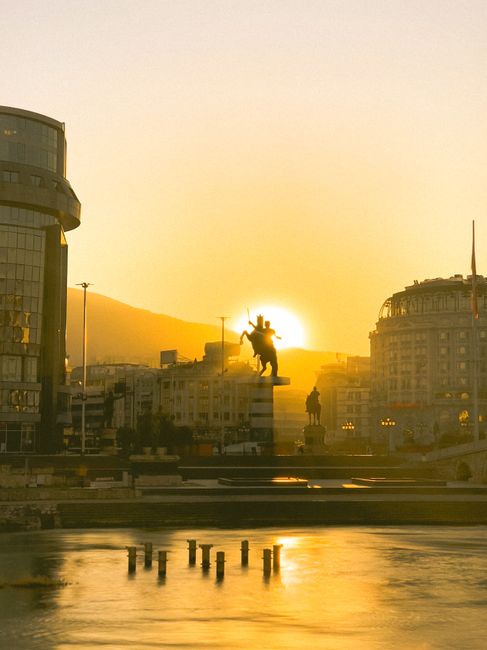
Skopje Travel Guide
Plan a trip to Skopje: the Stone Bridge and Macedonia Square, the Old Bazaar, Daut Pasha Hamam and Church of the Holy Saviour, the…
Best time to visit North Macedonia, region by region
North Macedonia has a mix of continental and Mediterranean climates. The Vardar valley, including Skopje and Tikveš, has hot, dry summers, often above 35 °C in July and August, and cold winters with frequent fog. Ohrid and Prespa, at about 700–850 metres, are milder in summer, cooled by the lakes, but cold in winter. The mountains are snowy from December to March. The table shows rounded average daily highs and lows and yearly rainfall as published by the World Meteorological Organization’s World Weather Information Service, which takes them from North Macedonia’s Hydrometeorological Service (UHMR). The averaging period is not stated (Ohrid’s rainfall covers 1971–2000), and UHMR does not publish 1991–2020 station tables, so treat the figures as a guide.
| Region (station) | Spring highs (Mar–May) | Summer highs (Jun–Aug) | Autumn highs (Sep–Nov) | Winter highs (Dec–Feb) | Winter lows (Dec–Feb) | Rain a year |
|---|---|---|---|---|---|---|
| Skopje and the Vardar valley | 13.5 °C rising to 24 °C | 27.5–30 °C | 26 °C falling to 11 °C | 4–8.5 °C | about −3.5 to −1.5 °C | about 500 mm |
| Ohrid and the lakes (about 700 m) | 11 °C rising to 20.5 °C | 25–27.5 °C | 23.5 °C falling to 11.5 °C | 6–7.5 °C | about −1.5 to 0 °C | about 660 mm |
July and August are the hottest months, with frequent heatwaves above 35 °C in Skopje; January is the coldest. Skopje is one of the drier capitals in Europe, while Ohrid gets most of its rain from October to January. Lake Ohrid’s water is usually warm enough for swimming from about mid-June to mid-September.
Crowds and prices through the year
- May and June: one of the best times to visit: green mountains, warm days and quiet lakeside towns before the summer rush. The lake is usually warm enough for swimming from about mid-June.
- July and August: peak season at Ohrid and Struga, when the beaches, boats and old town are busy, especially with visitors from North Macedonia itself and its neighbours, and room prices rise; the Ohrid Summer Festival fills the evenings with concerts. Skopje is hot.
- September: excellent: warm lake water, fewer crowds and the grape harvest in Tikveš.
- October to April: quiet and cheap. Ohrid is peaceful and many lakeside places close; Skopje has frequent fog and air pollution on still winter days. The ski season at Mavrovo and Popova Šapka runs from about December to March.
Festivals and events: late 2026 and 2027
Dates published so far:
| Event | Dates | Good to know |
|---|---|---|
| Skopje Jazz Festival | 15–18 October 2026 | The 45th edition, at the National Opera and Ballet; one of the region’s best-known jazz festivals |
| Vevčani Carnival | 13–14 January every year | A wild, satirical masked carnival in the village of Vevčani near Struga, held for the Orthodox New Year |
| Ohrid Summer Festival | traditionally 12 July – 20 August | Concerts, opera and theatre in Ohrid’s churches, ancient theatre and squares; the 2027 programme had not been announced |
| Galičnik Wedding | mid-July | A traditional wedding staged in the mountain village of Galičnik in Mavrovo National Park, with folk costumes and music; 2027 dates not yet confirmed |
- Winter: Orthodox Christmas on 7 January, and Epiphany (Vodici) on 19 January, when men dive into Lake Ohrid, the Vardar and other waters to retrieve a wooden cross thrown in by a priest.
- Spring: Orthodox Easter (2 May 2027), with midnight services and red-dyed eggs.
- Summer: Ohrid’s festival season, beach life on the lake and concerts in Skopje’s fortress.
- September: grape harvest festivals in the Tikveš wine country around Kavadarci.
Public holidays
North Macedonia’s public holidays mix national days, Orthodox feasts and the first day of Ramazan Bajram; on these days offices, banks and many shops close. When a holiday falls on a Sunday, the following Monday is usually a day off. The next ones, from October 2026:
| Holiday | Date |
|---|---|
| Day of the People’s Uprising | Sunday 11 October 2026 (Monday 12 October off) |
| Day of the Macedonian Revolutionary Struggle | Friday 23 October 2026 |
| St Clement of Ohrid | Tuesday 8 December 2026 |
| New Year’s Day | Friday 1 January 2027 |
| Orthodox Christmas | Thursday 7 January 2027 |
| Ramazan Bajram (Eid al-Fitr) | about Tuesday 9 March 2027 (depends on the moon) |
| Labour Day | Saturday 1 May 2027 |
| Orthodox Easter Monday | Monday 3 May 2027 |
| Sts Cyril and Methodius Day | Monday 24 May 2027 |
| Ilinden (Republic Day) | Monday 2 August 2027 |
| Independence Day | Wednesday 8 September 2027 |
| Day of the People’s Uprising | Monday 11 October 2027 |
Members of each religious community also have the right to days off on some of their own holidays.
How long to stay: sample itineraries
Buses link Skopje with almost every town, and the country is small enough that you can see the highlights in a week. A car helps for the monasteries, Mavrovo, Prespa and the wineries.
4 days: Skopje and Ohrid
Spend a day and a half in Skopje: the Old Bazaar, the fortress and the city centre, then the Matka canyon. Take the bus to Ohrid for two nights: the old town and churches, St John at Kaneo, and a boat to St Naum.
7 days: the classic loop
Add a day in Galičica National Park and Lake Prespa, a night in Bitola with Heraclea and Pelister, and a stop in the Tikveš wine country and Stobi on the way back to Skopje. Alternatively, return to Skopje via Mavrovo and the Bigorski monastery.
10 days and more: across the borders
North Macedonia sits at a Balkan crossroads: Pristina and Prizren in Kosovo are about one and a half and two hours from Skopje; Tirana in Albania is about three hours from Ohrid; Thessaloniki is about three and a half hours from Skopje by road; and Sofia is about four hours east. If you plan to continue from Kosovo to Serbia, read the border rule on our Kosovo page.
Entry, money and costs
Entry: visas, registration and EES (last reviewed October 2026)
North Macedonia is not in the EU or the Schengen area and sets its own rules. According to its Ministry of Foreign Affairs, citizens of EU and Schengen countries need no visa and can enter with a national ID card. Citizens of the UK, the US, Canada, Australia and many other countries can also visit without a visa for up to 90 days in a 180-day period. Some people who would otherwise need a visa can enter for up to 15 days if they hold a valid multiple-entry Schengen, UK, US or Canadian visa, under a decision valid until 31 December 2026. Days spent in North Macedonia don’t count towards your 90 days in the Schengen area.
- Passports: your passport should be valid for at least 90 days after the date you arrive.
- Registering with the police: all foreign visitors must be registered. Hotels and other paid accommodation register you with the Ministry of Interior within 12 hours of check-in; if you stay privately, your host must register you at the local police station within 48 hours (online registration is also possible). Keep any registration paper until you leave.
- Kosovo stamps: the UK government notes that Serbia has sometimes refused entry to people arriving from North Macedonia with Kosovo stamps in their passports; if your trip includes Kosovo and Serbia, read the border rule on our Serbia country page.
- EES at the EU border: North Macedonia is not part of the EU’s Entry/Exit System, but Greece and Bulgaria are. Since 10 April 2026, non-EU travellers entering Greece or Bulgaria from North Macedonia have their passport details, photo and fingerprints recorded on their first crossing. At Bogorodica–Evzoni on the Greek border, queues of three to five hours were reported on peak summer Saturdays in 2026, so cross early or midweek if you can.
- ETIAS: not needed for North Macedonia. For onward travel into the Schengen area, it is not in operation as of October 2026, and no start date has been published.
- Cash: declare foreign currency worth €10,000 or more when you arrive.
Rules change, so check North Macedonia’s Ministry of Foreign Affairs and your own government’s travel information before you go.
Language
Macedonian is written in Cyrillic, but many signs in tourist areas also use Latin letters. A few words help: zdravo (hello), dobar den (good day), blagodaram or fala (thank you), ve molam (please), na zdravje (cheers), vlez and izlez (entrance and exit). In Albanian-speaking areas, faleminderit is thank you. Shaking your head can mean yes and nodding no among older people, so confirm with words.
Money: the denar, cards and cash
North Macedonia uses the denar (MKD, written ден), which the central bank keeps very stable against the euro. On 2 October 2026, the National Bank’s official middle rate was 61.65 denars to the euro, so 100 denars is about €1.60. Cards and phone payments are accepted in hotels, most restaurants, supermarkets and petrol stations in Skopje and Ohrid, but carry cash for markets, bakeries, small cafés, boats, church entry fees and village guesthouses. ATMs are common in towns. Euros are often accepted by hotels and tourist businesses in Ohrid, usually at a rounded rate. Exchange offices (menuvačnica) give good rates; avoid changing money on the street, and change leftover denars before you leave, as banks abroad rarely take them.
Tipping
Tipping is appreciated: round up or leave about 10% in restaurants if you are happy, round up taxi fares, and tip guides and boatmen a little.
VAT and tax-free shopping
Prices include VAT (DDV): 18% as standard, with reduced rates of 5% and 10% on some goods and services, including accommodation and food. We could not find a VAT refund scheme for ordinary tourists; the official refund scheme covers diplomats and international organisations.
Typical travel costs
North Macedonia is one of the cheapest countries in Europe for travellers. Ohrid in July and August is the most expensive place, but still good value. These estimates, per person per day, are a planning guide as of October 2026:
| Style | Estimated cost per day | What that looks like |
|---|---|---|
| Budget | about 2,000–3,000 MKD (€30–50) | Hostel dorm or simple guesthouse, burek and bakery breakfasts, grill lunches, buses and a museum or church |
| Mid-range | about 5,000–8,000 MKD (€80–130) | Double room in a good hotel shared by two, restaurant dinners with wine, a boat trip or guided tour |
| High-end | about 12,000 MKD+ (€200+) | The best lakeside hotels in Ohrid and boutique hotels in Skopje, private drivers and winery visits |
Hotels and guesthouses add a small tourist tax per person per night. The figures above are our estimates, not official statistics.
Getting there and getting around
Airports
- Skopje International Airport (SKP): the main airport, about 20 km east of the city, with low-cost flights across Europe and connections to hub airports. As of October 2026, the airport shuttle bus to the city costs 199 denars (roughly 08:00–20:00, timed to flights), and the official airport taxis have fixed fares: 1,500 denars (€25) to Skopje, 7,800 denars (€130) to Ohrid or Struga, 4,900 denars (€80) to Pristina and 6,700 denars (€110) to Prizren.
- Ohrid St Paul the Apostle Airport (OHD): about 10 km north of Ohrid, with mostly seasonal flights, including Wizz Air routes to Germany, Switzerland and Poland, Air Serbia to Belgrade, Austrian to Vienna, Turkish Airlines to Istanbul and summer charter flights from the UK and the Netherlands.
Thessaloniki (Greece) and Sofia (Bulgaria) airports are useful alternatives, and Tirana (Albania) is about three hours from Ohrid.
Buses
Buses are the main way to travel. Skopje’s intercity bus station, in the transport centre next to the railway station, has frequent buses to Ohrid (about three to three and a half hours, roughly 850–950 denars), Bitola, Struga, Tetovo and every other town, and international buses to Pristina, Sofia, Belgrade, Thessaloniki, Tirana and Istanbul. Buy tickets at the station or online; Galeb is one of the main operators on the Ohrid route. In summer, book the Skopje–Ohrid buses a day or two ahead.
Trains
Trains, run by MŽ Transport, are few and slow, and they don’t go to Ohrid. Lines run from Skopje to Bitola via Veles and Prilep (a few trains a day, about three and a half hours) and south to Gevgelija on the Greek border, with connections to Thessaloniki that have often been partly by bus. The line from Skopje to Kosovo has been suspended while it is rebuilt. Up-to-date timetables were not available online when we checked, so ask at Skopje station.
Driving and motorway tolls
A car makes it easy to reach monasteries, national parks and wineries. Motorways run north–south along the Vardar valley from the Serbian border via Kumanovo, Skopje and Veles to Gevgelija and Greece, and west from Skopje to Tetovo and Gostivar; from there to Ohrid the road narrows and winds through the mountains via Kičevo, where a new motorway has been under construction for years.
- Tolls: there is no vignette; you pay at toll booths in denars or euros, in cash or by card, or with an electronic tag. As of October 2026, each booth costs a car 30–100 denars; for example, 40 denars at each booth between Skopje and Tetovo and 100 denars at Gevgelija. Tolls from Skopje to Ohrid add up to less than 100 denars.
- Rules: dipped headlights must be on day and night. Speed limits are 130 km/h on motorways, 110 on expressways, 90 on other roads outside towns and 50 in built-up areas. The alcohol limit is 0.5 grams per kilogram, and almost zero (0.09) for new and professional drivers. Using a phone while driving and not wearing seatbelts are fined, and snow chains are needed in winter conditions.
- Licences and insurance: UK visitors driving their own car should carry a 1968 International Driving Permit with their licence; a green card helps show that your insurance covers the country. Rental companies may require two years’ experience and a minimum age.
- Help: call 196 for roadside assistance (AMSM).
Boats and taxis
On Lake Ohrid, small boats and sightseeing cruises run from Ohrid harbour to St Naum and along the coast from spring to autumn, and taxi-boats wait along the quay. Taxis are cheap and metered in Skopje and Ohrid; use registered companies with a roof sign.
Culture, food and everyday etiquette
People in North Macedonia are proud of their history and generous with visitors; you may be offered coffee, rakija or homemade sweets. Greet with a handshake. Dress modestly in churches and mosques (shoulders and knees covered; women cover their hair in mosques), take your shoes off in mosques, and ask before taking photos of services or of people. The country’s name, its history and its relations with Greece, Bulgaria and Albania are sensitive subjects; it is fine to ask, but listen rather than argue.
The food is simple, fresh and seasonal. Try tavče gravče (baked beans in a clay pot, the national dish), ajvar (roasted pepper relish, made in every home in autumn), šopska salata (tomato, cucumber and grated white cheese), pastrmajlija (a boat-shaped bread topped with cured meat from Štip), burek with yoghurt for breakfast, sarma and stuffed peppers, grilled meats and, in Ohrid, lake fish. Note that the famous Ohrid trout is protected and fishing it is banned, so be wary of menus offering it. Wines from Tikveš are excellent value, and mastika (an anise spirit) and rakija are the local spirits.
Safety, health, accessibility and connectivity
Safety
Current conditions (October 2026): North Macedonia is generally a safe destination. Expect longer waits at Schengen borders because of the EU’s Entry/Exit System.
North Macedonia is one of the safest countries in the region for visitors, and attacks on foreigners are extremely rare. Keep these points in mind:
- Petty crime: the UK government reports pickpocketing and bag snatching, sometimes by groups of children, in Skopje’s main shopping and nightlife areas late at night; keep your belongings close.
- Guns and fireworks: people sometimes fire guns into the air at celebrations, especially weddings and New Year.
- Protests: demonstrations occasionally happen in Skopje; avoid them.
- Wildfires: from April to October, wildfires are a risk, and in hot summers the authorities often ban entry to forests; in 2026, Galičica National Park required online pre-registration from 1 July to 31 August. Never light fires outdoors.
- Roads: driving standards vary and accidents are common; take care, especially at night and on mountain roads.
- Earthquakes: the country is seismically active; Skopje was largely destroyed by an earthquake in 1963.
Emergency numbers: 112 for all services, 192 for police, 193 for the fire service, 194 for an ambulance and 196 for roadside assistance.
Health
Travellers should have travel insurance with medical cover; the EHIC is not valid, though some countries have reciprocal agreements. Private hospitals in Skopje are good. Pharmacies (apteka) are common. Tap water is generally safe in Skopje and Ohrid, but many people drink bottled water. Air pollution in Skopje, Tetovo and Bitola is among the worst in Europe on still winter days; people with breathing or heart conditions should check air-quality readings. In summer, protect yourself from the heat in the Vardar valley and from ticks in the mountains.
Accessibility
Accessibility is limited. Skopje’s centre and riverbanks are mostly flat and paved, but the Old Bazaar is cobbled; Ohrid’s old town is steep and cobbled, with many steps up to the fortress and churches. Buses are generally not adapted. Newer hotels are the most accessible.
Connectivity and power
North Macedonia is not part of the EU’s roaming area, so EU and UK plans may charge high roaming fees; an agreement between EU and Western Balkan operators has made data packages cheaper, and in June 2026 EU ministers authorised talks to bring the region into “roam like at home”. A local prepaid SIM or eSIM from Makedonski Telekom or A1 Makedonija is cheap. Coverage is good in towns and along main roads, and Wi-Fi is standard in hotels and cafés. North Macedonia uses 230 V and European two-pin plugs, type C and F. You need an adapter for UK, US and Australian plugs; see our guide to travel adapters.
Things to do: lakes, hiking, wine and old towns
- City sightseeing: Skopje’s Old Bazaar and fortress, Ohrid’s churches and old town, Bitola, Kratovo and the ancient cities of Heraclea and Stobi.
- Beaches: pebble and sand beaches along Lake Ohrid, from Ohrid town south to Lagadin, Peštani, Trpejca and St Naum; the water is clear and usually warm enough from mid-June to mid-September.
- Boat trips: boats from Ohrid to St Naum and the springs of the Black Drim, and boats and kayaks in the Matka canyon.
- Hiking: Galičica National Park between the lakes, Pelister above Bitola, the Šar Mountains and Mavrovo, and the summit of Korab.
- Wine tasting: the wineries of Tikveš around Kavadarci and Negotino, many with tastings and rooms.
What to pack
Pack light, breathable clothes, a sun hat and sunscreen for hot summers in Skopje and the Vardar valley, plus a fleece for cool lake evenings and the mountains. In winter, bring a warm coat, hat and gloves. Bring a swimsuit and water shoes for Lake Ohrid’s pebbly beaches, comfortable shoes with grip for Ohrid’s steep cobbles, hiking shoes for Galičica and Pelister, a light rain jacket for spring and autumn, a scarf for church and mosque visits, and a type F plug adapter if you come from outside continental Europe.
North Macedonia travel FAQ
When is the best time to visit North Macedonia?
June and September are best for Lake Ohrid: warm water, long days and fewer crowds than in July and August. May and October are lovely for Skopje, hiking and the monasteries; December to March is ski season at Mavrovo.
How many days do you need in North Macedonia?
Four days covers Skopje, Matka and Ohrid. A week lets you add Galičica, Prespa, Bitola and the Tikveš wine country, and ten days gives time for Mavrovo, Kratovo or a side trip to Albania or Kosovo.
Does North Macedonia use the euro?
No. It uses the denar (about 61.65 to the euro in early October 2026). Euros are often accepted in Ohrid’s hotels and tourist businesses, but carry denars for daily spending.
Do I need a visa for North Macedonia?
Not if you are a citizen of the EU, the UK, the US, Canada, Australia or many other countries: you can stay up to 90 days in a 180-day period. EU and Schengen citizens can use an ID card.
Is North Macedonia in the EU or the Schengen area?
No. It is an EU candidate and a NATO member, but not in the EU or Schengen, so ETIAS doesn’t apply. When you cross into Greece or Bulgaria, non-EU travellers are registered by the EU’s Entry/Exit System.
Do I have to register with the police in North Macedonia?
Yes, but hotels and other paid accommodation do it for you within 12 hours of check-in. If you stay privately, your host must register you within 48 hours.
Is North Macedonia safe for tourists?
Yes, it is generally a safe destination. Watch your belongings in Skopje’s nightlife areas at night and follow wildfire rules in summer.
How do I get from Skopje to Ohrid?
By bus, about three to three and a half hours, with frequent departures (roughly 850–950 denars); by car, about three hours. There is no train. In summer, Ohrid’s airport also has some direct flights from abroad.
How do I get from Skopje Airport to the city centre?
Take the airport shuttle bus (199 denars as of October 2026) or an official airport taxi at a fixed fare of 1,500 denars (€25).
How much are motorway tolls in North Macedonia?
Tolls are paid at booths, in denars or euros, in cash or by card. As of October 2026, each booth costs a car 30–100 denars; the drive from Skopje to Ohrid costs less than 100 denars in tolls.
Can you swim in Lake Ohrid?
Yes, from about mid-June to mid-September, from pebble and sand beaches around Ohrid, Struga and the eastern shore towards St Naum. The water is clean and clear.
What plug type does North Macedonia use?
Type C and F European two-pin plugs, at 230 V. Visitors from the UK, Ireland, North America and Australia need an adapter.
Can I combine North Macedonia with Albania, Kosovo or Greece?
Easily. Tirana is about three hours from Ohrid, Pristina about one and a half hours from Skopje, and Thessaloniki about three and a half hours from Skopje. If you plan to go on from Kosovo to Serbia, check the border rule first.
Sources and last review
Researched and last reviewed on 4 October 2026. Safety information from GOV.UK foreign travel information and the US State Department’s country information; entry rules from North Macedonia’s Ministry of Foreign Affairs; police registration from the Ministry of Interior; the exchange rate from the National Bank of the Republic of North Macedonia; climate from the WMO World Weather Information Service (data from UHMR); airport bus and taxi fares from Skopje International Airport; motorway tolls and payment methods from the national roads agency; driving rules from the Road Safety Law; the Skopje Jazz Festival dates from the festival; Galičica’s summer access rules from the national park; EU roaming from the European Commission. Population estimates, holiday dates, festival dates other than the Jazz Festival, VAT rates, bus times and fares, Ohrid airport routes, train services and border waiting times come from secondary sources and are flagged for checking. Daily costs are estimates. Prices, timetables and entry rules change, so check the official sites before you travel.
Plugs and power in North Macedonia
North Macedonia uses 230 V, 50 Hz and these plugs (left) and wall sockets (right):
All plug types and voltages by country → · Check what you need to pack →
Plan your trip
Partner links: TravelerCenter may earn a commission if you book, at no extra cost to you.
🇲🇰 Useful Macedonian phrases for North Macedonia
All 38 Macedonian phrases: restaurant, hotel, emergencies, romance (printable) →