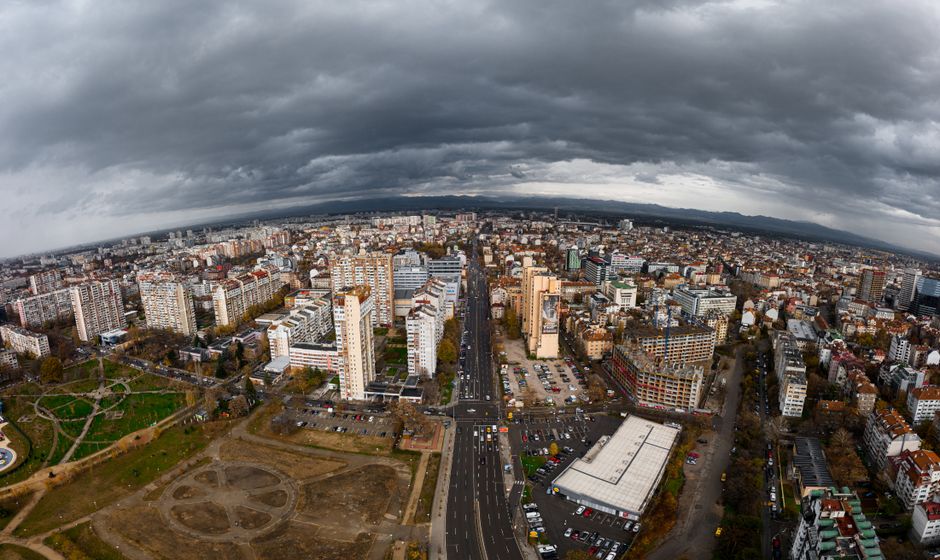
Sofia is a relaxed, green capital at the foot of Vitosha mountain, where 7,000 years of history turn up in unexpected places: Roman streets in the metro passages, a fourth-century brick rotunda in a hotel courtyard, a mosque, a synagogue and Orthodox churches within a few minutes’ walk. You come for the gold domes of the Alexander Nevsky Cathedral, the medieval frescoes of Boyana Church, cheap and excellent food and wine, and the mountain on the doorstep; Sofia is also the base for day trips to Rila Monastery and the Seven Rila Lakes. Give it two days for the city, three or four with day trips.
Right now in Sofia
- Wed 9–24°C 49–74°F Partly cloudy
- Thu 10–25°C 51–77°F Mostly clear
- Fri 14–26°C 56–79°F Cloudy
Weather: MET Norway (CC BY 4.0) · Air quality: OpenAQ · Rates: ECB
Top tours in Sofia
See all tours for Sofia →
From local operators, with prices and reviews; you check availability and book on Viator, our partner. We may earn a commission at no extra cost to you. How we earn money
Sofia at a glance
- Best for: Orthodox churches and Roman ruins, museums, cafés and wine bars, hiking on Vitosha, and day trips to Rila Monastery and the Seven Rila Lakes.
- How long: 2 days for the centre and Boyana Church; 3–4 days to add Rila Monastery, the Seven Rila Lakes or a hike on Vitosha.
- Best time: May, June and September for warm days; July and August for the high mountain lakes; December for Christmas lights; January to March for skiing on Vitosha or in Borovets.
- Getting in: metro line M4 runs from Sofia Airport’s Terminal 2 to the centre in under half an hour (€0.80 a ride as of October 2026); trains and buses arrive at the Central Station north of the centre.
- Getting around: the centre is walkable; four metro lines, trams and buses cover the rest. A day card for all city transport costs €2 as of October 2026.
- Before you go: Bulgaria has used the euro since 1 January 2026 and is a full Schengen member; country-wide entry rules, money, driving and the vignette are covered on our Bulgaria country page.
Sofia, area by area
Sofia’s centre is compact. Most sights lie within the “yellow brick road”, the boulevards paved with yellow ceramic bricks around the old royal palace, between the cathedral in the east, the Serdika metro hub in the middle and Vitosha Boulevard running south towards the mountain.
The historic centre: Serdika and the “square of tolerance”
Around Serdika and Nezavisimost Square are the excavated Roman streets of Serdica, the Rotunda of St George, the former Communist Party House, the Banya Bashi Mosque, the Sofia Synagogue, the Catholic Cathedral of St Joseph and the Orthodox St Nedelya Church, a mix of faiths that locals call the “square of religious tolerance”. The Central Mineral Baths building, now the Museum of Sofia’s history, has free mineral-water taps outside where locals fill bottles. Best for: first visits and short stays.
Around the cathedral and the yellow brick road
The Alexander Nevsky Cathedral, the little St Sofia Church that gave the city its name, the National Gallery in the former royal palace, the Russian Church with its golden onion domes, the Ivan Vazov National Theatre and the City Garden. Best for: sightseeing, smart hotels and cafés.
Vitosha Boulevard, the NDK and Lozenets
Vitosha Boulevard is the pedestrian shopping street, with the mountain at its end. It leads to the National Palace of Culture (NDK), a huge 1980s congress centre in a park, and to the leafy residential areas of Lozenets and Ivan Vazov, with good restaurants and wine bars. Best for: nightlife, food and longer stays.
Boyana, Dragalevtsi and the foot of Vitosha
The southern suburbs climb towards the mountain: Boyana with its UNESCO church and the National Museum of History, Dragalevtsi with its monastery, and Simeonovo. Best for: quiet stays and hiking access, with a car or taxi.
Top things to see in Sofia
Prices and hours below are as of October 2026 and were checked on official sites where they publish them. Since Bulgaria adopted the euro, many prices were converted from leva and rounded, so you will see odd amounts.
Alexander Nevsky Cathedral
Built between 1882 and 1912 in memory of the Russian soldiers who died in the war that freed Bulgaria from Ottoman rule in 1878, the neo-Byzantine Alexander Nevsky Cathedral is one of the largest Orthodox cathedrals in the Balkans and Sofia’s emblem, with gilded domes, a dark, incense-filled interior, murals and a choir that sings on Sunday mornings and feast days. Entry to the cathedral is free; dress modestly, keep quiet during services and buy a candle if you wish. In the crypt, a museum of Orthodox icons run by the National Gallery shows icons from across Bulgaria from the ninth to the 19th century, for a small separate ticket; it is closed on some days, so check before you go. The square around the cathedral has an antiques and souvenir market on most days.
Boyana Church
In the suburb of Boyana, at the foot of Vitosha, this small medieval church holds frescoes painted in 1259 that are among the finest of their age in Eastern Europe: more than 240 lifelike figures, including the donors Sebastocrator Kaloyan and his wife Desislava. It is a UNESCO World Heritage Site, and to protect the paintings, no more than 9 visitors may be inside at one time, for up to 10 minutes. As of October 2026, the official site lists individual tickets at €10 for adults and €3 for students, with guided talks in a foreign language for €10. It opens daily from 9:30 to 18:00 from April to October and from 9:00 to 17:30 from November to March (last entry 30 minutes before closing), and is closed on 1 January, Orthodox Easter Sunday and 24–25 December. Entry is free on the last Monday of each month after 15:00, on 18 May, 17 September and 1 November. Take a taxi, or bus 64 from the Hladilnika area; groups book time slots, so independent visitors may have to wait a few minutes.
The Rotunda of St George and the ruins of Serdica
The red-brick Rotunda of St George, built in the fourth century when Sofia was the Roman city of Serdica, is the oldest building in the city still standing, with layers of medieval frescoes inside and a working church; it stands in the courtyard between the presidency and a hotel, and entry is free. Under the Largo, the Serdica metro station opens onto excavated Roman streets, foundations and the early Christian church of St Petka of the Saddlers, all visible from the passages. A few minutes away, the National Archaeological Museum, in a 15th-century former mosque, has Thracian gold, Roman sculpture and medieval treasures.
St Sofia Church, the Russian Church and the National Gallery
Next to the cathedral, the sixth-century basilica of St Sofia is one of the oldest churches in the city, with an underground museum of tombs and mosaic floors below. On Tsar Osvoboditel Boulevard, the small Russian Church of St Nicholas has five gilded onion domes and green tiles. The former royal palace on Battenberg Square is now the National Gallery, Bulgaria’s main art museum.
The National Museum of History
In a former government residence in Boyana, Bulgaria’s largest history museum displays Thracian gold treasures, medieval church art and costumes from prehistory to the 20th century. Combine it with Boyana Church, about 2 km away. Check opening hours and prices on the museum’s site before you go.
Archaeological sites
- Rotunda of St George
Museums
- Boyana Church
- National Archaeological Museum, Sofia
- National Museum of History
Churches and cathedrals
- Alexander Nevsky Cathedral
- Rila Monastery
- St Sofia Church
Vitosha: the mountain on the doorstep
Vitosha (2,290 m at its highest point, Cherni Vrah) rises immediately south of the city and is a nature park popular with hikers in summer and skiers in winter. Popular walks:
- Aleko to Cherni Vrah: from the Aleko area at about 1,800 m, a marked path climbs to the summit in about two hours, with views over Sofia and the Rila and Pirin mountains on clear days.
- Zlatni Mostove (the Golden Bridges): a river of giant boulders in the forest, a gentle walk with cafés, popular with families.
- Boyana Waterfall: a walk of about two hours from Boyana up a forest trail to the mountain’s highest waterfall, best in spring when the snow melts.
- Dragalevtsi Monastery: a 14th-century monastery in the woods above the suburb of Dragalevtsi.
Getting up the mountain is the hard part. As of October 2026, the operator says the old Simeonovo gondola is not running, and the Dragalevtsi chairlift and the upper lifts open only on some weekends and in the ski season, so check before you go. City bus 66 runs from the Hladilnika and Vitosha metro area up to Aleko, with the full route mainly at weekends and on holidays; a taxi is quicker. Weather on Vitosha is much colder and windier than in town, so take layers. See our guide to hiking.
Activities and best months
- City sightseeingSofia's tourism administration lists the temples of the centre, among them St Alexander Nevsky Cathedral, the St George Rotunda, Saint Sophia Church, the Russian Church, St Nedelya, the Banya Bashi Mosque and the Sofia Synagogue, with Boyana Church at the foot of Vitosha; it also lists the city's museums and archaeological monuments. · source
- HikingVitosha Nature Park rises above the city; its highest peak is Cherni Vrah (2,290 m). The Golden Bridges (1,390 m), reached by buses 61 and 261 from Ovcha Kupel or on foot from Knyazhevo (about 2 h 30 min), is one of the most used starting points for Cherni Vrah; the Aleko area at about 1,800 m has lifts and paths to the summit and the huts. · source
Day trips from Sofia
Rila Monastery
About 120 km south of Sofia, in a forested valley of the Rila mountains, Rila Monastery was founded in the tenth century by the hermit St John of Rila and is Bulgaria’s most important monastery and a UNESCO World Heritage Site. The present buildings date mostly from the 19th century: four storeys of striped arcades and wooden balconies around a courtyard, the Church of the Nativity covered inside and out with vivid frescoes, and the 14th-century Hrelyo’s Tower. Entry to the courtyard and church is free; the museums, with the intricately carved Rafail’s Cross, charge a few euros each, and tickets are sold only at the monastery. Dress modestly and don’t photograph inside the church.
It is about two hours by car. One daily bus leaves Sofia’s Ovcha Kupel (West) bus station in the morning (reported at 10:20) and returns in the afternoon (about 15:00), giving roughly two hours at the monastery; check the time at the bus station. Most visitors take a tour or a car, often combined with Boyana Church.
The Seven Rila Lakes
The Seven Rila Lakes are a staircase of glacial lakes between about 2,100 and 2,500 m in the north-west of the Rila mountains, about 1 hour 30 minutes from Sofia by car via Sapareva Banya. In summer, a chairlift from Panichishte climbs to the Rila Lakes hut at about 2,100 m in about 20 minutes; from there, a marked path climbs past the Fish Lake, the Trefoil, the Twin, the Kidney and the Eye to the viewpoint above the Tear lake, about two to three hours there and back. The chairlift usually runs from late June to September, and the lakes are usually snow-free from July; as reported in summer 2026, a return ticket cost about €16 for adults. Check the chairlift’s hours locally, as it closes in bad weather and for maintenance. Going without a car is hard: there are minibuses and tours from Sofia in summer. Start early, as afternoon storms are common, and the walk is rocky, so wear proper hiking shoes.
Plovdiv and other trips
Plovdiv, Bulgaria’s second city, with its Roman theatre and Old Town, is about two and a half to three hours by train or bus and makes a long day trip, though it deserves a night. Koprivshtitsa, a village of 19th-century painted houses, is about two hours east; Bansko and the Pirin are about three hours south; and the red sandstone pillars of Belogradchik are about three hours north-west.
Nearby destinations
Getting to Sofia and getting around
By air. Sofia Airport (SOF) is about 10 km east of the centre. Most flights use Terminal 2, which has a metro station: line M4 runs to Serdika in the centre in about 25–30 minutes, and a single ride costs €0.80 as of October 2026. A free shuttle bus links Terminal 1 with Terminal 2. Registered taxis wait outside both terminals; use the official taxi desk or an app rather than drivers who approach you.
By train and bus. The Central Railway Station and the Central Bus Station stand next to each other north of the centre, on metro lines M2 and M4. On the October 2026 timetable, the fastest trains take about 2 hours 40 minutes to Plovdiv; buses are often more frequent. International buses run to Istanbul, Thessaloniki, Belgrade, Skopje and Bucharest.
Metro, trams and buses. Sofia’s four metro lines link the airport, the centre, the main stations and the suburbs, and trams, trolleybuses and buses cover the rest. As of October 2026, after the switch to the euro, a single ticket costs €0.80 and a day card for all lines costs €2, according to the Sofia Centre for Urban Mobility. You can buy tickets from machines and ticket offices, and on the metro you can also tap a contactless bank card at the barrier. Validate paper tickets as you board. Taxis are cheap; agree on the meter and use companies with prices displayed on the window.
By car. Driving in the centre is stressful and parking is in paid blue and green zones. You only need a car for the mountains; outside the city, motorways and many roads need the e-vignette (one day €5.30 or one week €10 for a car as of October 2026), bought online at bgtoll.bg.
When to go and how long to stay
Sofia lies at about 550 m in a basin surrounded by mountains, so it is cooler than Plovdiv or the coast, with snowy winters and warm summers broken by afternoon thunderstorms, especially in May and June, the wettest months. The table uses the 1991–2020 climate normals of Bulgaria’s National Institute of Meteorology and Hydrology (NIMH) for the Sofia station for average temperatures and rainfall, and the WMO 1991–2020 normals for the same station for daytime highs.
| Season | Average temperature | Average daytime high | Rain per month | What it’s like |
|---|---|---|---|---|
| Winter (Dec–Feb) | −0.5 to 1.7 °C | 3.5–6.5 °C | 35–40 mm | Cold, often grey, with snow; skiing on Vitosha and in Borovets |
| Spring (Mar–May) | 6 °C rising to 15.5 °C | 11–21 °C | 45–73 mm | Blossom and green parks; thunderstorms start in May |
| Summer (Jun–Aug) | 19–22 °C | 25–28 °C | 55–79 mm | Warm and sunny, with storms; the mountain lakes are open |
| Autumn (Sep–Nov) | 17 °C falling to 6 °C | 23 °C falling to 11 °C | 38–54 mm | Mild and golden in September and October |
Sofia gets about 625 mm of rain a year, on about 84 days, and about 2,260 hours of sunshine. In summer, the mountains are 10 degrees or more cooler than the city.
Sofia in 2 days
Day 1: the Alexander Nevsky Cathedral and St Sofia Church, the Russian Church, the National Gallery, the Rotunda of St George, the Serdica ruins and the square of religious tolerance, and dinner on or near Vitosha Boulevard. Day 2: Boyana Church and the National Museum of History in the morning, a walk to the Boyana Waterfall or up to Aleko on Vitosha in the afternoon.
Sofia in 4 days
Add a full day at Rila Monastery and, in summer, a day at the Seven Rila Lakes; or spend a day in Plovdiv or Koprivshtitsa instead.
Weather month by month
Averages from NIMH normals 1991–2020, Sofia · Last reviewed 4 Oct 2026
Where to stay in Sofia
- The centre (around Serdika, the cathedral and Vitosha Boulevard): walking distance to everything, with hotels for all budgets.
- Lozenets and the NDK area: leafy, with good restaurants and bars, close to the metro.
- Near the Central Station: practical for early trains and buses, but less pleasant in the evening.
- Boyana and Dragalevtsi: quiet hotels at the foot of Vitosha, best with a car.
Prices are lower than in most EU capitals; they rise for big trade fairs, concerts and football matches. A small tourist tax per night is added to most hotel bills.
Practical tips for Sofia
- Mind the head shake: many Bulgarians shake their heads for yes and nod for no.
- Learn the Cyrillic letters: metro names are also in Latin script, but many bus timetables and menus are not.
- Cover up in churches: shoulders and knees covered; women may be asked to cover their hair in some monasteries.
- Taxis: use registered companies or apps, and check the tariff on the window.
- Free tours: free walking tours meet daily by the Palace of Justice; tip the guide.
- Mineral water: fill your bottle at the free hot-spring taps by the Central Mineral Baths.
- Emergencies: call 112.
What to pack for Sofia
Comfortable shoes for uneven pavements and cobbles, a light layer for cool evenings, an umbrella for early-summer storms, and clothes that cover shoulders and knees for churches. For Vitosha or the Rila lakes, bring hiking shoes, a warm fleece and a waterproof jacket, even in July (see our guide to rain jackets). In winter you need a warm coat, gloves and shoes with grip on icy streets. Bulgaria uses type F and C sockets; see our guide to travel adapters.
What to pack
- City walking shoesLisbon and Porto are steep, with polished limestone cobbles that get slippery, so grippy soles matter.
- Day packs and anti-theft bagsA small zipped or anti-theft bag makes crowded trams and viewpoints less stressful.
- Fleeces and warm layersSummits like Pico do Areeiro averaged about 11 °C over 2024, so a fleece is needed even in summer.
- HeadlampsLevada routes such as PR1 and PR9 pass through long, dark, wet tunnels.
- Hiking shoes and bootsMadeira's levadas and the Azores' crater rims are wet, rocky and slippery, so grippy shoes matter more than anywhere else in Portugal.
- Rain jacketsFrom October to April Porto and Lisbon see rain on roughly a third of days.
- Travel adapters and convertersPortugal uses Type C and F sockets at 230 V, so most visitors from outside Europe need an adapter.
- Trekking polesLong stone staircases and steep descents on Madeira's peaks and the Azores' crater rims are easier on the knees with poles.
- Water bottles and hydration packsAlgarve and Alentejo trails are hot and exposed with few refill points.
Sofia travel FAQ
Is the Alexander Nevsky Cathedral free to visit?
Yes. Entry to the cathedral is free. The icon museum in the crypt charges a small separate fee. Dress modestly and keep quiet during services.
How much does Boyana Church cost?
As of October 2026, the official site lists €10 for adults and €3 for students. Only nine people may be inside at once, for up to ten minutes, and it is free on the last Monday of the month after 15:00.
How do I get from Sofia Airport to the city centre?
From Terminal 2, take metro line M4 to Serdika in about 25–30 minutes; a ride costs €0.80 as of October 2026. From Terminal 1, take the free shuttle bus to Terminal 2 or a registered taxi.
How much is a metro ticket in Sofia?
As of October 2026, a single ticket costs €0.80 and a day card for all city transport €2. On the metro you can also tap a contactless bank card at the barrier.
Can you visit Rila Monastery as a day trip from Sofia?
Yes. It is about two hours by car, and one bus a day leaves Ovcha Kupel bus station in the morning and returns in the afternoon. Entry to the monastery and church is free; the museums charge a few euros.
When can you visit the Seven Rila Lakes?
Usually from July to September, when the trails are snow-free and the chairlift from Panichishte runs. Start early to avoid afternoon storms and check the weather.
How do you get up Vitosha?
Take bus 66 from the Hladilnika and Vitosha metro area to Aleko (the full route runs mainly at weekends) or a taxi. As of October 2026, the Simeonovo gondola is not running and the lifts open only on some weekends and in the ski season.
How many days do you need in Sofia?
Two days for the centre and Boyana Church; three or four with Rila Monastery, the Seven Rila Lakes or a hike on Vitosha.
Is Sofia expensive?
No. It is one of the cheapest EU capitals: transport rides cost €0.80, many churches are free and a good dinner with wine often costs €15–25 a person.
Does Sofia use the euro?
Yes. Bulgaria adopted the euro on 1 January 2026. Leva can no longer be used in shops, but the Bulgarian National Bank exchanges them free of charge with no time limit.
Sources
- © OpenStreetMap contributors · ODbL · fetched 4 Oct 2026
- Wikidata · CC0 · fetched 4 Oct 2026
Sources and last review
Researched and last reviewed on 4 October 2026. Boyana Church tickets, hours and visiting rules: the official Boyana Church site, run with the National Museum of History; city transport fares: the Sofia Centre for Urban Mobility, as reported by Bulgarian media; train times: BDZ; climate: the National Institute of Meteorology and Hydrology (NIMH) 1991–2020 normals, with WMO 1991–2020 normals for daytime highs and sunshine; the euro changeover: the Bulgarian National Bank; vignette prices: BG TOLL and Bulgarian National Television. The cathedral crypt museum, Rila Monastery museum prices and bus times, the Seven Rila Lakes chairlift price and season, contactless payment on the metro and the Vitosha lift and bus 66 details come from secondary sources and are flagged for checking. Prices, timetables and rules change, so check the official links before you go.
Plan your trip
Partner links: TravelerCenter may earn a commission if you book, at no extra cost to you.
🇧🇬 Useful Bulgarian phrases for Sofia
All 38 Bulgarian phrases: restaurant, hotel, emergencies, romance (printable) →