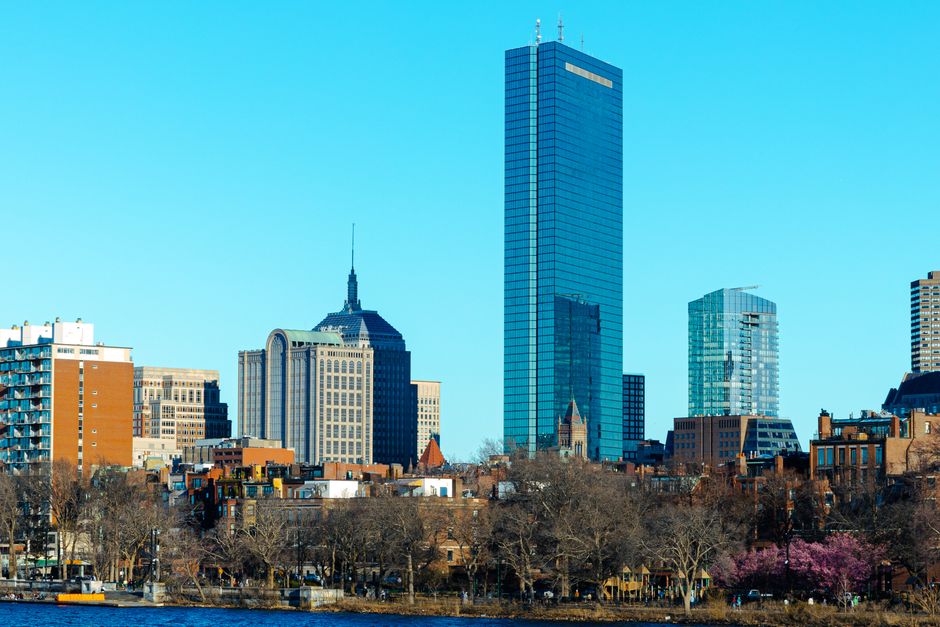
Boston is where the American Revolution began, and the city wears its history lightly: a red line on the sidewalk leads you from the country’s oldest public park past colonial churches, burying grounds and Paul Revere’s house to the warship “Old Ironsides”. Around the old core you find gas-lit Beacon Hill, the Italian cafés of the North End, superb art museums, Fenway Park and, across the Charles River in Cambridge, Harvard and MIT. Compact and walkable, Boston is also the gateway to New England: whale watching in the Atlantic, Salem’s witch history, Cape Cod beaches and some of the best fall color anywhere.
Right now in Boston
- Wed6–17°C42–63°FClear
- Thu12–22°C54–71°FMostly clear
- Fri11–18°C52–65°FClear
- Mon 12 Oct Columbus Day · regional holiday in Massachusetts
Top tours in Boston
See all tours for Boston →
From local operators, with prices and reviews; you check availability and book on Viator, our partner. We may earn a commission at no extra cost to you. How we earn money
Boston at a glance
- Best for: Revolutionary history, art museums, seafood, college towns, baseball and harbor trips.
- How long: 3 days for the Freedom Trail, a museum and Cambridge; 4–5 days to add a whale watch and Salem.
- Best time: May to June and September to October. July averages a high of 82 °F (28 °C); January about 37 °F (3 °C).
- Getting there: Logan International Airport is just across the harbor; the Silver Line SL1 bus from the airport is free.
- Getting around: walk, or take the “T”: $2.40 on the subway and $1.70 on local buses as of October 2026; tap a contactless card or phone.
- Before you go: entry rules and ESTA, money, tipping and driving are in our United States travel guide.
Boston’s neighborhoods
Boston is small for a big city: from the Common to the North End is a 20-minute walk. Its crooked old streets follow colonial cow paths rather than a grid, so carry a map.
Downtown, the Waterfront and the North End
The historic core around Faneuil Hall and the Old State House, with the New England Aquarium and the harbor wharves where cruises leave. The North End, Boston’s oldest neighborhood and its Little Italy, has narrow streets, Paul Revere’s house, the Old North Church and dozens of Italian restaurants and pastry shops.
Beacon Hill and Back Bay
Beacon Hill, above the Common, is a postcard of brick sidewalks, gas lamps and Federal-style row houses, with antique shops on Charles Street and the gold-domed State House at the top. Back Bay, built on filled-in marshland in the 1800s, has elegant brownstones along Commonwealth Avenue, shopping on Newbury Street, Copley Square with Trinity Church and the Boston Public Library, and many hotels.
The Fenway, the Seaport and Cambridge
The Fenway area has Fenway Park, the Museum of Fine Arts and the Isabella Stewart Gardner Museum. The Seaport, on the waterfront south of downtown, is the new district of glass towers, restaurants and the Institute of Contemporary Art. Across the Charles River, Cambridge is a separate city, home to Harvard and MIT, with its own squares full of bookshops and cafés, a short ride on the Red Line.
Top things to see in Boston
Prices and hours below were checked on the official sites in October 2026, unless we say otherwise; check again before you go. Many of the outdoor sights are free, and the busy museums sell timed tickets online.
The Freedom Trail
The Freedom Trail is a 2.5-mile (4 km) line of red brick and paint on the sidewalk linking 16 historic sites, from Boston Common to the Bunker Hill Monument in Charlestown. Walking it is free; several sites charge a small fee. Highlights include the Massachusetts State House, the Granary Burying Ground (graves of Samuel Adams, John Hancock and Paul Revere), the Old South Meeting House, where the Boston Tea Party was planned, the Old State House, where the Declaration of Independence was read to Bostonians, Faneuil Hall, Paul Revere’s House and the Old North Church of “one if by land, two if by sea” fame.
Several sites form Boston National Historical Park, which charges no entrance fee and offers free ranger-led tours. The paid sites are run by non-profit partners and do not accept national park passes. According to the National Park Service, as of October 2026 a joint ticket for the Old State House and Old South Meeting House costs $15 for adults ($13 seniors and students, $8 children 12 and under), Paul Revere’s House $6 ($1 for children 5–17) and the Old North Church $5 ($8 with an audio guide). The Freedom Trail Foundation runs tours with guides in 18th-century costume, leaving daily on the hour from 10 a.m. to 2 p.m. (more departures in summer). Allow at least half a day.
Faneuil Hall and Quincy Market
Faneuil Hall, a market and meeting hall since 1742, was nicknamed the “Cradle of Liberty” for the protest speeches made upstairs. The Great Hall is still used for meetings, and the National Park Service runs a visitor center on the ground floor. Behind it, the long granite Quincy Market building is a food hall with clam chowder, lobster rolls and every kind of snack, and street performers entertain crowds outside.
Boston Common and the Public Garden
Boston Common, set aside in 1634, is the oldest public park in the country, with the Frog Pond (a wading pool in summer and skating rink in winter). Next door, the Public Garden is a Victorian botanical garden with weeping willows, a lagoon and the famous Swan Boats, pedal-powered boats that run in the warmer months. Look for the bronze ducklings from the children’s book Make Way for Ducklings. Both parks are free and open every day.
The Museum of Fine Arts
The MFA on Huntington Avenue is one of the great encyclopedic museums in the country: Egyptian treasures, Japanese art, Monet and the Impressionists, John Singer Sargent and a fine American wing with Paul Revere’s silver. As of October 2026 admission is $30 for adults and $14 for youth 7–17; children 6 and under are free, but everyone needs a ticket. It opens Wednesday to Monday, 10 a.m.–5 p.m., and until 10 p.m. on Thursday and Friday; it is closed on Tuesday and on some holidays. On the third Thursday of each month after 5 p.m., entry is pay-what-you-wish with a $5 minimum, sold at the door.
The Isabella Stewart Gardner Museum
A few minutes’ walk from the MFA, this Venetian-style palace built by a flamboyant collector is one of Boston’s most magical places: three floors of paintings, tapestries and furniture around a flower-filled courtyard, arranged exactly as she left them. Empty frames still mark the works stolen in the unsolved 1990 art heist. As of October 2026 tickets cost $25 for adults, $22 for seniors 65+ and $15 for students; under-18s are free, and so is anyone named Isabella. It opens Wednesday to Monday (11 a.m.–5 p.m. on weekdays, until 9 p.m. on Thursday, and 10 a.m.–5 p.m. at weekends) and is closed on Tuesday. Thursday evenings from 5 to 9 p.m. are free, with tickets released two days before. Timed tickets often sell out, so book ahead; bags and backpacks go in the coat check or lockers.
USS Constitution and Charlestown
Launched in 1797 and nicknamed “Old Ironsides” in the War of 1812, the USS Constitution is the oldest commissioned warship afloat in the world, still crewed by US Navy sailors who give tours on deck. Boarding the ship is free, first come, first served; according to the USS Constitution Museum, its regular hours are Tuesday to Sunday, 10 a.m.–6 p.m., and there is Navy security screening, so adults should carry photo ID. The museum next door is open daily 9:30 a.m.–5 p.m., with suggested admission of $15. From the Navy Yard, it is a short uphill walk to the Bunker Hill Monument, the granite obelisk that ends the Freedom Trail. A harbor ferry links the Navy Yard with Long Wharf.
Harvard and MIT in Cambridge
Take the Red Line to Harvard station for Harvard Yard, the leafy heart of the country’s oldest university (1636), with the John Harvard statue and Widener Library; the campus is free to walk, and student-led tours and the Harvard Art Museums are nearby. Harvard Square has bookshops, cafés and street musicians. Two stops back toward Boston, Kendall/MIT puts you at the Massachusetts Institute of Technology, with its modern buildings and the MIT Museum. See our city sightseeing guide.
Fenway Park
Home of the Boston Red Sox since 1912, Fenway is the oldest ballpark in Major League Baseball, famous for its 37-foot (11 m) left-field wall, the Green Monster. If you cannot get to a game (the regular season runs from about April to September), take the 60-minute guided tour, which runs year-round on the hour: as of October 2026 it costs $30 for adults and $21 for children 3–12. From April to October tours run 9 a.m.–5 p.m., but on game days the last tour leaves three hours before the first pitch. Bags must be small and single-compartment; backpacks are not allowed.
The New England Aquarium
On Central Wharf, the aquarium is built around a four-story ocean tank with sea turtles and sharks, and has a big penguin colony and harbor seals outside. As of October 2026 standard admission is $39.95 for adults, $37.95 for seniors 60+ and $30.95 for children 3–11; under-3s are free and residents of the New England states get $5 off on most days. Fall hours are 9 a.m.–5 p.m. on weekdays and until 6 p.m. at weekends. Weekends often sell out, so book online.
More to see
- The Boston Tea Party Ships and Museum: a lively re-enactment on replica ships in Fort Point Channel.
- Trinity Church and the Boston Public Library: two architectural landmarks facing each other on Copley Square.
- The Institute of Contemporary Art: modern art in a cantilevered building over the harbor in the Seaport.
Other sights
- Faneuil Hall
- Freedom Trail
- Quincy Market
Zoos and aquariums
- New England Aquarium
Parks and gardens
- Boston Common
- Boston Public Garden
Museums
- Isabella Stewart Gardner Museum
- Museum of Fine Arts Boston
- USS Constitution
Fun and family
- Fenway Park
Other things to do in Boston
Whale watching and harbor cruises
Boston is one of the best cities in the world for whale watching. The New England Aquarium Whale Watch, run with Boston Harbor City Cruises, leaves Central Wharf daily in season, which in 2026 runs from May through November, for the Stellwagen Bank National Marine Sanctuary, a feeding ground for humpback, fin and minke whales. Trips last about three to four hours on fast catamarans, with Aquarium naturalists on board. Sightings are most reliable from late spring to early fall; bring a warm layer, as it is always colder at sea. See our boat trips guide.
Eat seafood and cannoli
Boston’s classics are creamy New England clam chowder, lobster rolls (cold with mayonnaise or warm with butter), fried clams and oysters from Cape Cod and Duxbury. In the North End, line up for cannoli on Hanover Street and eat Italian in a tiny trattoria;
Walking and cycling the Charles
The Charles River Esplanade, along the Boston bank, has paths, docks and the Hatch Shell, home of free summer concerts; loop across the river on the bridges for skyline views. Bluebikes, the bike share, has stations across Boston and Cambridge. See our cycling guide.
Day trips from Boston
Salem: about 16 miles (26 km) north, the town of the 1692 witch trials, with the Salem Witch Museum, the Witch Trials Memorial, the Peabody Essex Museum and old sea captains’ houses. In October, Haunted Happenings turns the whole month into a Halloween festival, and Salem gets very crowded, especially at weekends and on Halloween itself: book anything you want to do ahead, and leave the car behind. The organizers recommend the MBTA Commuter Rail from North Station (Newburyport/Rockport Line), about 30 minutes.
Fall foliage: from late September to late October, New England’s maples turn red, orange and gold. Around Boston, color usually peaks in mid- to late October; for the most dramatic scenery, drive north to New Hampshire’s White Mountains and the Kancamagus Highway, or west to the Berkshires, where the peak tends to come earlier. The battlefields of Lexington and Concord, where the Revolution’s first shots were fired in 1775, and Walden Pond make an easy half-day by car. See our hiking guide.
Cape Cod and Provincetown: the Provincetown Fast Ferry from Long Wharf, run by Boston Harbor City Cruises, crosses Cape Cod Bay in about 95 minutes to the artsy town at the tip of the Cape, with beaches, dunes and whale watching. It runs from mid-May to mid-October only, and fares vary by day and demand, so book ahead. See our Cape Cod travel guide and our beaches guide. Further afield: Amtrak trains link Boston with New York City; see our New York City travel guide.
Nearby destinations
- Cape Cod75 km
- Portland (Maine)159 km
Getting there and getting around
From Logan Airport
Boston Logan International Airport is only about 3 miles (5 km) from downtown, across the harbor in East Boston. The easiest ride is the Silver Line SL1 bus, which picks up at every terminal curb and runs through the harbor tunnel to South Station, on the Red Line, in about 20–30 minutes. According to the MBTA, service from the airport is always free, and on the way back to the airport the transfer from the Red Line to the SL1 is free too. For the north side of the city, take Massport’s free shuttle bus from the terminals to Airport station on the Blue Line, which reaches Aquarium and Government Center (for downtown and the North End) in minutes, for the normal subway fare.
Massport’s Logan Express buses link the airport with Back Bay and four suburban park-and-ride lots. As of October 2026, the Back Bay bus costs $3 to the airport, with a free ride back; the suburban routes cost $9 each way online. Taxis wait on the Arrivals level; ride-hail pickups are in the Central Garage.
The T: subway, buses and Commuter Rail
The MBTA, known as the “T”, runs four color-coded subway lines (Red, Orange, Green and Blue), the Silver Line buses, local buses, ferries and the Commuter Rail. As of October 2026 a subway ride (including Silver Line SL1, SL2 and SL3) costs $2.40 and a local bus $1.70. The simplest way to pay is to tap a contactless bank card or phone at the gates and on buses; you can also use a plastic CharlieCard or a paper CharlieTicket. Under a pilot that started on September 1, 2026, you can make unlimited transfers between subway, bus and ferry within two hours and pay only the highest fare, as long as you use the same card or phone. A 1-day pass costs $11 and a 7-day pass $22.50 on a CharlieCard or CharlieTicket. The Commuter Rail to Salem and the suburbs costs $2.40–$13.25 by zone (buy on the mTicket app or at machines), and a weekend pass is $10.
By train and car
Amtrak trains arrive at South Station and Back Bay. The high-speed Acela reaches New York Penn Station in roughly 3 hours 30 minutes to 4 hours, and the Northeast Regional takes a little longer; both continue to Philadelphia and Washington, D.C. (see our Philadelphia and Washington, D.C. travel guides). Intercity buses leave from South Station. You do not need a car in Boston: the streets are confusing, traffic is heavy and parking is costly. Rent one only for the foliage roads, Cape Cod or the Berkshires.
When to go and how long to stay
Boston has four distinct seasons, with cold, snowy winters and warm summers cooled by sea breezes. The table uses NOAA’s 1991–2020 climate normals for the Boston Logan Airport weather station: average daily highs and lows, and days with at least 0.1 inch (2.5 mm) of rain or melted snow.
| Season | Average high / low | Wet days per month | What it’s like | Good for |
|---|---|---|---|---|
| Winter (Dec–Feb) | 37–42 °F (3–6 °C) / 23–29 °F (−5 to −2 °C) | 6–7 | Cold, windy, often snowy | Museums, skating on the Frog Pond, low hotel prices |
| Spring (Mar–May) | 46–67 °F (8–19 °C) / 31–50 °F (−1 to 10 °C) | 7 | Slow to warm; chilly sea breezes in April | Marathon in April, blossoms in May |
| Summer (Jun–Aug) | 76–82 °F (25–28 °C) / 60–66 °F (15–19 °C) | 5.5–6.5 | Warm and sometimes humid, with storms | Whale watching, harbor islands, baseball |
| Fall (Sep–Nov) | 73 °F falling to 52 °F (23–11 °C) / 58 °F falling to 38 °F (15–3 °C) | 6–6.5 | Crisp, sunny and colorful | Fall foliage, Salem, college towns |
Logan gets about 43.6 inches (1,110 mm) of precipitation a year, spread evenly through the months, and an average of about 49 inches (125 cm) of snow, mostly from December to March; a single nor’easter can bring a foot or more.
Events worth planning around
- Patriots’ Day (third Monday in April): the Boston Marathon and re-enactments at Lexington and Concord; hotels fill up and some museums close.
- July 4: the Boston Pops concert and fireworks on the Esplanade.
- September and October: college move-in and graduation weekends push hotel prices up; October brings foliage and Haunted Happenings in Salem.
How long to stay: 3, 4 and 5 days
3 days: day one, the Freedom Trail from Boston Common to the North End, with lunch at Quincy Market and dinner in the North End; day two, Charlestown and the USS Constitution in the morning, then Beacon Hill and Back Bay; day three, the Museum of Fine Arts or the Gardner, and Fenway Park. 4 days: add Harvard and MIT in Cambridge, or a whale watch. 5 days: add a day trip to Salem or Lexington and Concord, or the fast ferry to Provincetown in summer.
Weather month by month
Where to stay in Boston and the hotel taxes
- Downtown and the Waterfront: walk to the Freedom Trail, the North End and the harbor cruises.
- Back Bay: elegant, central and well connected, with the Logan Express bus and Amtrak.
- Beacon Hill: a few small, charming hotels in the most picturesque neighborhood.
- Seaport and Cambridge: modern hotels; Cambridge suits visits to Harvard and MIT.
Boston is one of the more expensive hotel cities in the United States, especially in September and October. Rates are usually quoted before tax. According to the City of Boston, a hotel bill adds Massachusetts’ 5.7% room occupancy excise, Boston’s 6.5% local room occupancy excise and a 2.75% convention center financing fee: 14.95% in total, as of October 2026. Some hotels also charge a nightly “destination” or “urban” fee, and hotel parking can be very expensive; check the full price before booking.
Practical tips for Boston
- Closing days: the MFA and the Gardner both close on Tuesday, and the USS Constitution on Monday.
- Sales tax: prices in shops exclude Massachusetts’ 6.25% sales tax, added at the register; restaurant meals in Boston carry a slightly higher meals tax. Most clothing under $175 is exempt.
- Tipping: 18–22% is usual at sit-down restaurants; more in our United States travel guide.
- Book October early: foliage season, college events and Salem make it the busiest and priciest month.
- Late-night transport: most T lines stop running around 12:30 a.m.; plan a taxi or ride-hail for late nights.
- Emergencies: call 911; for city information, 311.
What to pack for Boston
Comfortable shoes with a good grip come first: the Freedom Trail, Beacon Hill’s brick sidewalks and cobbled lanes are hard on thin soles. Weather changes quickly near the sea, so pack layers in every season and a light waterproof jacket. For whale watching, bring a fleece, hat and sunglasses even in summer. From December to March you will need a properly warm coat, gloves, a hat and waterproof boots. Keep your bag small for Fenway Park, which bans backpacks, and for the museums’ coat-check rules.
Boston travel FAQ
Is the Freedom Trail free?
Yes, walking the 2.5-mile (4 km) trail is free, and so are many of its sites. A few charge small fees: as of October 2026, $15 for the Old State House and Old South Meeting House together, $6 for Paul Revere’s House and $5 for the Old North Church.
Is the Silver Line from Logan Airport free?
Yes. The SL1 from the airport terminals to South Station is always free, according to the MBTA. Going to the airport, it is free if you transfer from the Red Line at South Station.
How much is the T in Boston?
As of October 2026, $2.40 for the subway and $1.70 for a local bus. Tap a contactless card or phone, or use a CharlieCard; transfers within two hours are free if you pay the same way. A 7-day pass costs $22.50.
How much are the Museum of Fine Arts and the Gardner?
As of October 2026 the MFA costs $30 for adults and $14 for youth 7–17; the Gardner costs $25 for adults and is free for under-18s and on Thursday evenings. Both close on Tuesday.
Can I visit the USS Constitution for free?
Yes. Boarding the ship is free, first come, first served, usually Tuesday to Sunday, after a Navy security check; adults should bring photo ID.
When is the best time to see fall foliage near Boston?
Color usually peaks around Boston in mid- to late October, and earlier in northern New England and the Berkshires. It varies with the weather each year.
Is Salem worth visiting in October?
Yes, if you enjoy a festival atmosphere: Haunted Happenings fills the whole month. Expect big crowds at weekends, take the Commuter Rail from North Station and book attractions ahead, or visit on a weekday.
What taxes are added to Boston hotel bills?
14.95% in total as of October 2026: the 5.7% state room occupancy excise, Boston’s 6.5% local excise and a 2.75% convention center fee.
How many days do I need in Boston?
Three days covers the Freedom Trail, the North End, a major museum and Fenway Park. Four or five days adds Cambridge, a whale watch and a day trip to Salem or Lexington and Concord.
Plan your trip
Partner links: TravelerCenter may earn a commission if you book, at no extra cost to you.
Sources · last reviewed 4 October 2026
Researched and last reviewed on 4 October 2026. Freedom Trail site fees: the National Park Service and the Freedom Trail Foundation; the Museum of Fine Arts, the Isabella Stewart Gardner Museum, the USS Constitution Museum, Fenway Park tours and the New England Aquarium: their official sites; the whale watch: the New England Aquarium; the Provincetown ferry: Boston Harbor City Cruises; subway, bus and Commuter Rail fares and the Silver Line: the MBTA; Logan Express and airport transport: Massport; hotel taxes: the City of Boston; Salem in October: Destination Salem’s Haunted Happenings site; climate: NOAA’s 1991–2020 normals for Boston Logan Airport. Amtrak journey times, foliage timing and event dates are general references, flagged for checking. Prices and hours change, so check the official sites before you go. For entry rules, ESTA, tipping and driving, see our United States travel guide.
Also: NOAA NCEI normals 1991–2020, Boston Logan International Airport (climate)
Data: Weather: MET Norway (CC BY 4.0) · Sea temperature: NOAA CoastWatch · Rates: ECB · Holidays: Nager.Date · Costs: World Bank ICP and price levels · © OpenStreetMap contributors (ODBL) · Wikidata (CC0)