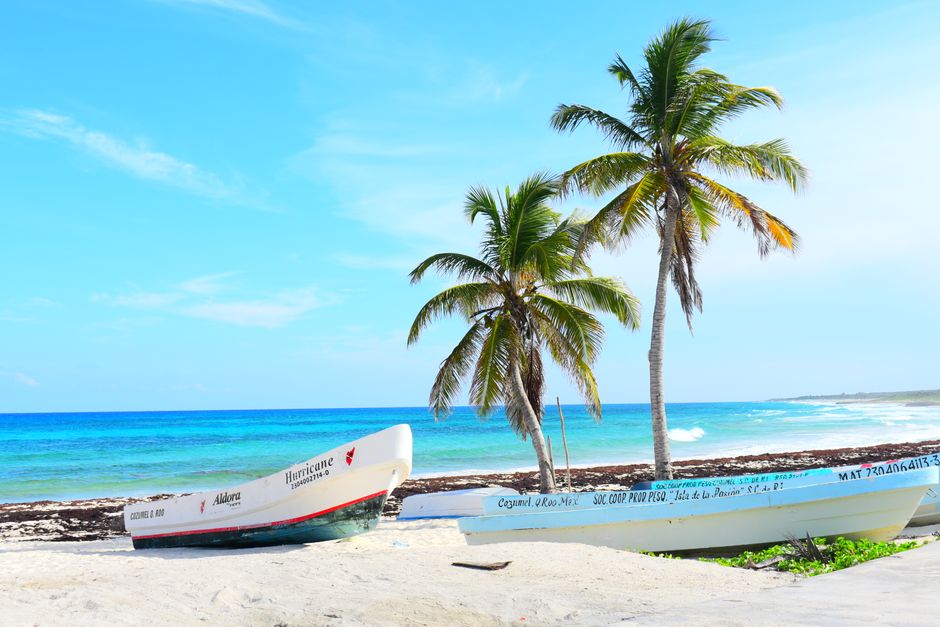
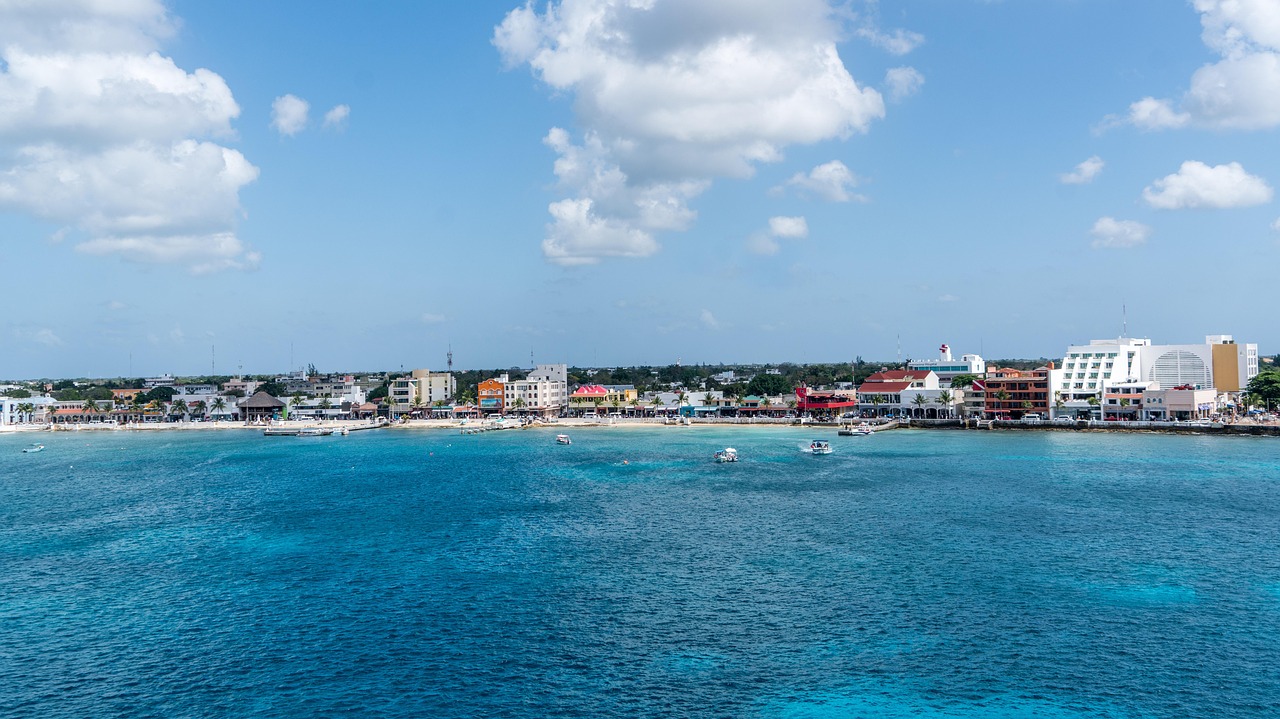
Cozumel is Mexico’s largest island in the Caribbean, a flat, jungle-covered island about 18 km (11 miles) off Playa del Carmen, and one of the world’s great places to dive and snorkel. The reefs along its sheltered west coast, protected as a national park, drop into deep walls swept by gentle currents, with clear water, turtles, rays and huge sponges. The only town, San Miguel de Cozumel, faces the mainland with a seafront promenade, a ferry pier and the docks where many cruise ships call, while the wild east coast has empty beaches pounded by surf. Come for the diving, Chankanaab and Punta Sur parks, the Maya site of San Gervasio and a slower pace than the mainland. The best weather is from December to April; the Atlantic hurricane season runs from June to November.
Right now in Cozumel Island (San Miguel de Cozumel)
- Tue 25–31°C 76–88°F 9 mm Heavy showers
- Wed 26–30°C 78–87°F 3 mm Rain
- Thu 25–30°C 76–86°F 11 mm Heavy rain
Weather: MET Norway (CC BY 4.0) · Sea temperature: NOAA CoastWatch · Rates: ECB
Top tours in Cozumel Island
See all tours for Cozumel Island →
From local operators, with prices and reviews; you check availability and book on Viator, our partner. We may earn a commission at no extra cost to you. How we earn money
Cozumel at a glance
- Best for: scuba diving and snorkeling, calm beach clubs, cycling or scooter trips around the island, cruise stops, and a quieter base than Cancún or Playa del Carmen.
- How long: a day trip from Playa del Carmen for a taste; 4–5 days for diving or a relaxed beach stay; a week for keen divers.
- Best time: December to April, with highs of about 29–32 °C (84–90 °F) and few rainy days. September and October are the wettest months and the peak of hurricane season.
- Getting there: a ferry from Playa del Carmen (about MXN 320, or US$18, one way as of October 2026), direct flights to Cozumel International Airport (CZM), or a cruise ship.
- Getting around: on foot in San Miguel; taxis with fixed fares; rental cars, scooters or bikes for the loop road around the south of the island.
- Before you go: foreign visitors pay the Quintana Roo VISITAX, MXN 293 (about US$16) as of October 2026, and cruise passengers pay their fees through the cruise line; entry rules, money and general safety are in our Mexico travel guide.
Cozumel’s areas: where things are
The island is roughly 48 km (30 miles) long and 16 km (10 miles) wide. Almost everyone lives in San Miguel, in the middle of the west coast. A paved road runs south from town along the west coast past the hotels, dive sites and Chankanaab to Punta Sur, then turns north up the empty east coast and cuts back across the island to San Miguel; the north and most of the interior are wild and protected.
San Miguel de Cozumel
The town is compact and walkable, with a seafront avenue (Avenida Rafael Melgar), the ferry pier, the main square and church, the island museum, and streets of restaurants, dive shops and souvenir stores. Hotels here are the cheapest on the island, and the evening square is where locals gather.
The west coast: hotel zones and cruise piers
North of town, a short hotel strip faces the channel and the mainland. South of town, the main cruise piers, hotels, dive resorts and beach clubs line the coast toward Chankanaab, with easy shore diving and snorkeling over the calm, sheltered water. This is where the national park’s reefs begin.
The east coast
The windward side of the island faces the open Caribbean, with wild beaches, rocky points, small beach bars and strong surf. It is beautiful for a drive and a meal, but most of it is unsafe for swimming because of waves and currents; swim only in the few sheltered coves when the sea is calm, and never alone.
Top things to see in Cozumel
Prices and hours below were checked on the official sites in October 2026, unless we say otherwise; check again before you go. Cozumel’s parks are run by the Fundación de Parques y Museos de Cozumel, a state body, and quote prices in US dollars.
The reefs of the Cozumel National Park
The Arrecifes de Cozumel National Park protects the reefs off the island’s south-west coast, with famous dive sites such as Palancar, Columbia, Santa Rosa Wall and Paradise Reef. The national protected areas agency, CONANP, charges a conservation fee of MXN 225 (about US$12) per person per day, usually collected by dive and snorkel operators as a wristband; the park is open from 6 a.m. to 10 p.m. (to 11 p.m. in summer). The north and east coasts are a separate protected area with the same MXN 225 fee. Dive with operators that follow the park’s rules, keep your fins off the coral, and never touch or feed marine life.
Chankanaab park
Inside the national park, about 9 km (6 miles) south of town, Chankanaab has a sheltered bay for snorkeling and easy shore diving, a beach with loungers, a lagoon connected to the sea through underground channels, botanical gardens and replicas of Maya buildings. As of October 2026, entry costs US$31 for adults and US$22 for children aged 4 to 12, with under-3s free; it opens Monday to Saturday, 8 a.m. to 4 p.m., according to the parks foundation. Swimming with dolphins and sea lions is sold separately by private operators.
Punta Sur Eco Beach Park
At the southern tip of the island, Punta Sur protects beaches, dunes, mangroves and the Colombia lagoon, with the Celarain lighthouse and its small navigation museum, a crocodile lookout tower, a boat ride on the lagoon and snorkeling off quiet beaches. Sea turtles nest here in summer. As of October 2026, it costs US$25 for adults and US$17 for children, and opens Monday to Saturday, 9 a.m. to 5 p.m. Bring cash, water and repellent; there are few services.
San Gervasio archaeological zone
In the middle of the island, San Gervasio was the island’s main Maya center and a pilgrimage site for women devoted to Ixchel, goddess of the moon and fertility, who crossed from the mainland by canoe. Small temples, arches and sacbés (ancient white roads) stand in the forest. The parks foundation lists it as open daily from 8 a.m. to 4 p.m., with a ticket of US$14.50 paid at the booth, but INAH’s page currently lists the site as temporarily closed, so check before you drive there.
More to see
- Museo de la Isla de Cozumel: the island’s history, nature and reefs in a former hotel on the seafront; US$11, Tuesday to Sunday, 9 a.m. to 5 p.m.
- The main square and Avenida Rafael Melgar: the seafront promenade for sunsets over the mainland, cafés and the evening crowds when the ships have left.
- The east coast drive: wild beaches, blowholes and small beach restaurants along the windward shore; stop at the lookouts, not in the surf.
Protected areas
- Arrecifes de Cozumel National Park
Archaeological sites
- San Gervasio
Viewpoints
- Celarain Lighthouse (Punta Sur)
Activities and best months
- Beaches and swimmingPunta Sur Eco Beach Park at the island's south tip has the Celarain lighthouse, a navigation museum, a boat ride on the Colombia lagoon and a crocodile tower (adult US$25, Monday to Saturday 9:00-17:00). · source
- Scuba divingCONANP's Arrecifes de Cozumel National Park charges MXN 225 per person per day and is open 6:00-22:00 (to 23:00 in summer). · source
- SnorkelingChankanaab park, inside the Cozumel reef national park, is run by the island's parks foundation (adult US$31, Monday to Saturday 8:00-16:00). · source
Other things to do in Cozumel
Diving and snorkeling
Cozumel is famous for drift diving: you float along the reef walls on the current while the boat follows your bubbles. Visibility is often excellent, and the walls fall far below recreational depths, so watch your depth and air. Many dive shops offer courses for beginners, and shore dives and snorkeling are easy around the hotels and Chankanaab. Snorkelers can join boat trips to shallow reefs such as Palancar Gardens and El Cielo, a sandbar famous for starfish; the starfish must not be lifted from the water. See our guides to diving and snorkeling.
Beach clubs and beaches
Most swimming is from the west coast’s beach clubs, south of town, where you pay an entry fee or a minimum spend for loungers, showers and calm water. All Mexican beaches are public, but here access is often through private land. On the east coast, enjoy the scenery from the sand and swim only in sheltered spots when the sea is calm.
Cycling, scooters and the loop road
The road around the south of the island, about 65 km (40 miles), makes a good day by rental car, scooter or, for fit riders, bike. Fill up and get cash in town, carry water, and watch for wind and cruise-day traffic. Scooter accidents are common, so wear a helmet and ride carefully.
Food and festivals
Eat fish tacos, ceviche and Yucatecan dishes in town, away from the cruise piers, where prices drop. Cozumel’s carnival, in the days before Lent, is one of the oldest in Mexico, and the El Cedral fair in early May is a local religious festival in the island’s first village.
Day trips from Cozumel
- Playa del Carmen: the busy resort town across the channel, for Quinta Avenida, cenotes and the theme parks. See our Playa del Carmen guide.
- Tulum: the walled Maya port on a cliff, about an hour south of Playa del Carmen. As of October 2026, foreign visitors pay MXN 265 (about US$15) in all, according to the federal decree and INAH. See our Tulum guide.
- Xcaret and Xel-Há: the big theme parks on the mainland coast, with packages that include the ferry. See our Riviera Maya guide.
- Cancún: about an hour north of Playa del Carmen. See our Cancún guide.
- Chichén Itzá: a long day trip on a tour; as of October 2026, foreigners pay MXN 697 (about US$38), INAH and Yucatán state fees together. See our Mérida guide.
Nearby destinations
- Playa del Carmen29 km
- Riviera Maya29 km
- Tulum61 km
- Cancun83 km
- Isla Mujeres95 km
- Holbox132 km
- Bacalar248 km
- Ambergris Caye288 km
Getting there and getting around
By ferry from Playa del Carmen
Ultramar and Winjet sail between Playa del Carmen’s pier and San Miguel’s ferry pier in about 35 to 45 minutes. As of October 2026, Ultramar’s adult fare is MXN 320 one way or MXN 640 round trip, children MXN 240 and Quintana Roo residents MXN 190, with departures every two hours from 7 a.m. to 9 p.m. from Cozumel and from 8 a.m. to 10 p.m. from Playa del Carmen; Winjet charges MXN 320 from Cozumel and MXN 343.46 from Playa del Carmen, the latter including Cozumel’s environmental sanitation fee of MXN 23.46 per tourist crossing. Tickets are non-refundable; arrive 30 minutes early. Crossings can be rough when the wind blows from the north, and ferries may stop in bad weather.
By air
Cozumel International Airport (CZM), run by the ASUR group, is just north of town, with direct flights from some US and Canadian cities, usually seasonal, and connections through Mexico City; check current routes with the airlines. Taxis and shuttles run from the airport to town and the hotels in a few minutes.
By cruise ship
Cozumel is one of the busiest cruise ports in the world, with several piers south of town. Since July 1, 2025, foreign cruise passengers who go ashore in Mexico pay the federal non-resident fee (DNR), cut by a federal decree to the peso equivalent of US$10 per passenger from August 1, 2026 to June 30, 2027; Quintana Roo also charges cruise passengers a state fee of US$5 at the first Quintana Roo port of a voyage, which replaces VISITAX for them. Both are collected by the cruise lines. Many Western Caribbean cruises leave from Florida ports such as Miami and Fort Lauderdale. Be back on board on time: ships do not wait.
Getting around the island
San Miguel is walkable. Taxis are plentiful, with fixed fares by zone posted at stands; agree the price before you get in. Rental cars, jeeps and scooters are easy to find in town; read the insurance terms and inspect the vehicle before you sign. There are few buses for visitors.
When to go and how long to stay
Cozumel is warm all year, with sea temperatures warm enough to dive in a thin wetsuit or rash guard. Mexico’s National Meteorological Service (SMN-Conagua) has not published 1991–2020 normals for the Cozumel station, so the table uses our averages of the station’s daily records from 1994 to 2012, as published by NOAA’s National Centers for Environmental Information: average daily highs and lows, and days with rain.
| Season | Average high / low | Rainy days per month | What it’s like | Good for |
|---|---|---|---|---|
| Winter (Dec–Feb) | 29–30 °C (84–86 °F) / 20–21 °C (68–69 °F) | 6–9 | Warm and sunny; northerly fronts can bring wind, choppy crossings and closed dive sites | Diving, beaches, cruises; peak prices around the holidays |
| Spring (Mar–May) | 31–33 °C (87–91 °F) / 21–24 °C (69–74 °F) | 4–7 | The driest, sunniest months, with calm seas | Diving and snorkeling at their best |
| Summer (Jun–Aug) | 33–34 °C (91–93 °F) / 24 °C (76 °F) | 10–11 | Hot and humid, with short storms; turtle nesting | Warm water, quieter hotels outside July |
| Fall (Sep–Nov) | 34 °C falling to 30 °C (92 to 86 °F) / 24 °C falling to 22 °C (76 to 71 °F) | 15 in September and October, 10 in November | The wettest months and peak hurricane season, then calmer | Low prices; watch the forecast |
On these records, Cozumel gets about 1,330 mm (52 in) of rain a year; October is the wettest month, with about 220 mm (9 in), and March the driest.
Hurricane season: according to NOAA’s National Hurricane Center, the Atlantic hurricane season runs from June 1 to November 30, peaking from mid-August to mid-October. Most days in season are fine, but a storm can close the port, the ferries and the airport, and the island was badly hit by Hurricane Wilma in 2005. If a storm threatens, follow Quintana Roo’s civil protection authorities and your hotel, and check Mexico’s National Meteorological Service (SMN) and the National Hurricane Center; travel insurance that covers weather is wise.
Sargassum: the floating seaweed that affects the mainland coast in some years mostly reaches Cozumel’s exposed east coast; the sheltered west coast, where the hotels and dive sites are, is usually much less affected. The Mexican Navy (SEMAR) includes Cozumel in its daily sargassum bulletin.
Crowds and prices: highest from mid-December to Easter and in July and August. Several cruise ships can call on the same day, which fills the town and the parks; visit them early or on quieter days. Quintana Roo uses UTC−5 all year, an hour ahead of Mexico City.
A day trip to Cozumel
Take an early ferry from Playa del Carmen, join a morning snorkel or dive boat, spend the afternoon at Chankanaab or a beach club, and walk the seafront at sunset before the evening ferry.
4 to 5 days in Cozumel
Two or three days of diving or snorkeling on the national park’s reefs, a day driving the loop road with Punta Sur, the east coast and San Gervasio (if open), and an easy day at a beach club or in town. Don’t dive within 24 hours of flying.
Where to stay in Cozumel and the hotel taxes
- San Miguel: budget and mid-range hotels and guesthouses, walkable to restaurants, the ferry and dive shops.
- The north hotel zone: mid-range and resort hotels close to town, with sunsets over the channel.
- The south hotel zone: all-inclusives and dive resorts nearest the national park’s reefs, with shore diving.
- Rentals: apartments and villas in town and along the coast, popular for longer dive trips.
Rooms carry Mexico’s 16% value-added tax (IVA) plus Quintana Roo’s lodging tax of 5%, or 6% when booked through a platform such as Airbnb, under the state’s lodging tax law. Cozumel’s municipality also charges an environmental sanitation fee of MXN 82.12 (about US$4.50) per room per night, collected by the hotel, under its revenue law as of 2026, and MXN 23.46 per tourist on sea crossings, collected by the ferry companies. VISITAX, MXN 293 per foreign visitor, is paid separately online and applies to Cozumel too, however you leave.
Practical tips for Cozumel
- VISITAX: pay only on the official site, visitax.gob.mx, for every foreign traveler including babies, and keep the QR receipt. Cruise passengers pay the state’s cruise fee through the cruise line instead.
- Money: the parks quote US dollars, but paying in pesos is often cheaper elsewhere; carry cash for taxis, small restaurants and the east coast, where card machines are rare.
- Cruise days: check the port schedule; when several ships are in, book tours ahead and avoid the busiest beach clubs.
- Tipping: about 10–15% in restaurants; tip dive crews and guides too.
- Safety: Cozumel is generally calm and easygoing. The main risks are on the water and the road: dive within your training and with reputable operators, wear a helmet on scooters, and stay out of the surf on the east coast. Use taxis from the official stands, keep valuables in your hotel safe, and don’t buy drugs.
- Emergencies: call 911. The island has a hyperbaric chamber for divers.
What to pack for Cozumel
Pack swimwear, a rash guard or thin wetsuit (3 mm is plenty for most divers), your own mask and dive computer if you have them, and biodegradable, reef-friendly sunscreen. Bring water shoes for rocky entries, a hat and sunglasses, insect repellent for Punta Sur and San Gervasio, seasickness tablets for the ferry and dive boats, a small dry bag, and a light rain jacket from June to November. Bring your certification card and logbook if you plan to dive. Mexico uses 127 V and the same flat-pin plugs as the United States.
What to pack
- Day packs and anti-theft bagsCarries water, towel and sunscreen down the long stairways to Algarve coves.
- Dry bags and phone pouchesProtects phones and cameras from sand and spray on beaches reached by ferry or steep paths.
- Fleeces and warm layersA warm layer or windproof after a dive stops you chilling on the boat ride back.
- Quick-dry beach towelsA sand-shedding quick-dry towel packs small for beach days and lido visits.
- Reef-friendly sunscreenSummer UV is strong on Portuguese beaches and there is little shade below the cliffs.
- Snorkel masks and finsYour own mask fits better than a rental and makes clear-water coves and lava pools more fun.
- Water shoesRocky coves, lava pools and weever fish in shallow sand make water shoes useful.
- WetsuitsOn the west and north coasts the sea stays around 16–18 °C even in summer, so a thin suit helps for long swims.
Cozumel travel FAQ
How do I get to Cozumel from Playa del Carmen?
By ferry, in about 35 to 45 minutes. As of October 2026, Ultramar charges adults MXN 320 one way or MXN 640 round trip, and Winjet MXN 343.46 from Playa del Carmen, including Cozumel’s crossing fee.
Do I have to pay VISITAX in Cozumel?
Yes. Foreign visitors pay VISITAX once per trip to Quintana Roo, Cozumel included: MXN 293 per person as of October 2026, paid online. Cruise passengers pay a US$5 state cruise fee through the cruise line instead.
What fees do cruise passengers pay in Cozumel?
As of October 2026, about US$10 per foreign passenger for Mexico’s federal fee and US$5 for Quintana Roo’s state fee, both collected by the cruise line.
How much is the Cozumel reef park fee?
CONANP charges MXN 225 per person per day for the Arrecifes de Cozumel National Park, usually collected by dive and snorkel operators as a wristband.
How much does Chankanaab cost?
US$31 for adults and US$22 for children aged 4 to 12 as of October 2026; it opens Monday to Saturday, 8 a.m. to 4 p.m.
Is San Gervasio open?
The island’s parks foundation lists it as open daily from 8 a.m. to 4 p.m. for US$14.50, but INAH lists it as temporarily closed, so check locally before you go.
Can you swim on Cozumel’s east coast?
Only in a few sheltered spots when the sea is calm. Most of the east coast has strong waves and currents and no lifeguards; swim on the west coast instead.
When is the best time to dive in Cozumel?
Diving is good all year. March to June usually brings the calmest seas and driest weather; winter fronts can close some sites, and September and October are the wettest months.
What taxes are added to Cozumel hotel bills?
16% IVA, Quintana Roo’s 5% lodging tax (6% through platforms) and Cozumel’s environmental fee of MXN 82.12 per room per night. VISITAX is paid separately.
Sources
- © OpenStreetMap contributors · ODbL · fetched 4 Oct 2026
- Wikidata · CC0 · fetched 4 Oct 2026
Sources and last review
Researched and last reviewed on 4 October 2026. Park prices and hours: the Fundación de Parques y Museos de Cozumel; San Gervasio status, Tulum and Chichén Itzá fees: the National Institute of Anthropology and History (INAH) and the federal decree of July 17, 2026; reef fees and hours: the National Commission of Natural Protected Areas (CONANP); ferries: Ultramar and Winjet; the airport: ASUR; the federal cruise fee: the decree published in the Diario Oficial de la Federación on June 30, 2025; VISITAX, the state cruise fee, the lodging tax and Cozumel’s sanitation fees: Quintana Roo’s state and municipal laws as published by the state congress, and visitax.gob.mx; sargassum: the Mexican Navy (SEMAR); hurricane season: NOAA’s National Hurricane Center; climate: our averages of NOAA’s daily records for the Cozumel station, 1994–2012; exchange rate: the Bank of Mexico. Dive sites, the island’s size and history, the loop road, cruise port rankings, festivals, flights and the crossing time come from secondary sources or general knowledge and are flagged for checking. Prices and timetables change, so check the official sites before you go. For entry rules, money and general safety, see our Mexico travel guide.
Plan your trip
Partner links: TravelerCenter may earn a commission if you book, at no extra cost to you.
🇪🇸 Useful Spanish phrases for Cozumel Island
All 38 Spanish phrases: restaurant, hotel, emergencies, romance (printable) →