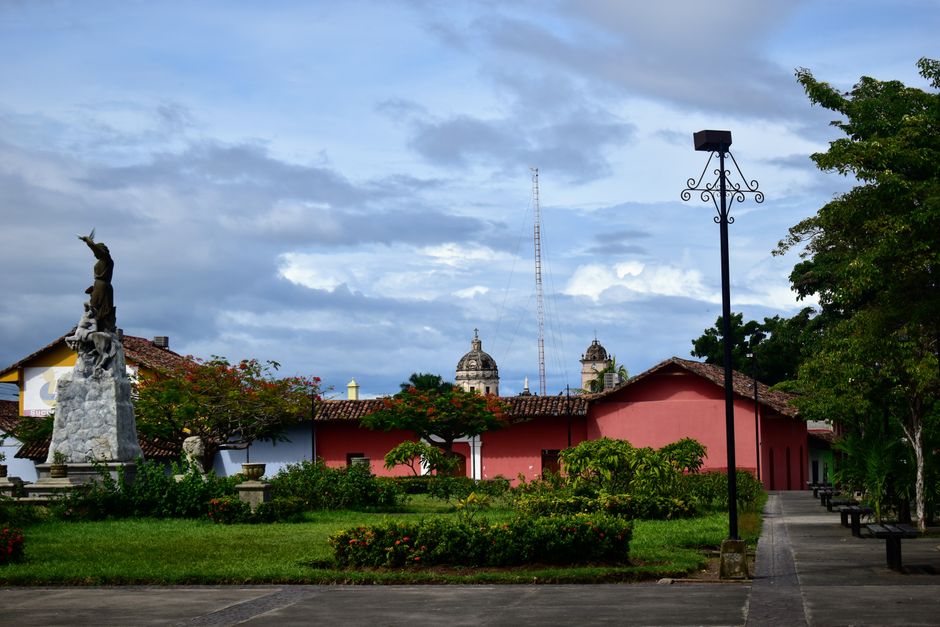
Honduras has two travel worlds. Off its Caribbean coast, the Bay Islands of Roatán, Utila and Guanaja sit on the Mesoamerican Reef, the second-largest barrier reef in the world, with some of the cheapest and best diving in the Caribbean, white-sand beaches and a relaxed, English-speaking island culture. On the mainland, near the Guatemalan border, the Maya city of Copán has the finest sculpture of the ancient Maya world, with carved stelae, altars and a hieroglyphic stairway in a green valley next to a pretty cobbled town. Between them are cloud-forest national parks, Lake Yojoa and the Pulhapanzak waterfall, colonial towns such as Gracias and Comayagua, and Garifuna villages along the north coast. Most visitors fly straight to Roatán, a cruise and resort island with direct flights from the United States, or reach Copán overland from Guatemala. Plan around the seasons, a dry season from about November to April on most of the mainland, and a different rainy pattern on the north coast and islands.
Right now in Honduras
- Tue 19–28°C 66–83°F 4 mm Showers
- Wed 18–28°C 64–83°F 1 mm Showers
- Thu 18–27°C 65–81°F 5 mm Rain
- Mon 12 Oct Columbus Day
Weather: MET Norway (CC BY 4.0) · Holidays: Nager.Date
Multi-day tours of Honduras
Multi-day tours from local operators. You check dates and book on Viator, our partner; we may earn a commission at no extra cost to you. How we earn money
Honduras at a glance: the reef, the Maya and the mountains
Honduras is a republic of about 11 million people, divided into 18 departments, the second-largest country in Central America. It borders Guatemala to the west, El Salvador to the south-west and Nicaragua to the south-east, with a long Caribbean coast in the north and a short Pacific shore on the Gulf of Fonseca. Spanish is the official language; English is the first language of many families in the Bay Islands, and Garifuna and Miskito communities live along the coast. Tegucigalpa is the capital and San Pedro Sula the business center. Honduras uses Central Standard Time (UTC−6) all year with no daylight saving time.
Honduras’s regions
- The Bay Islands: Roatán, the largest and most developed; Utila, a backpacker dive center; and remote, hilly Guanaja.
- The north coast: La Ceiba, the ferry port for the islands and base for rafting and Pico Bonito National Park; Tela’s beaches and Garifuna villages; Trujillo; and the Mosquitia rainforest further east, reached only by air or boat.
- The west: Copán Ruinas and its Maya site, the colonial town of Gracias, Celaque National Park, and the Lenca villages of the highlands.
- The center: Lake Yojoa and the Pulhapanzak waterfall, the colonial city of Comayagua, and Tegucigalpa.
- The south: the Pacific coast on the Gulf of Fonseca, little visited by tourists.
Where to go: Roatán and Copán
Roatán
The largest of the Bay Islands, about 60 km (37 miles) long, with the busiest beaches at West Bay and West End, reef just offshore for snorkeling and diving, cruise-ship ports and resorts. It lies inside the Bay Islands National Marine Park, the largest marine protected area in Honduras. See our Roatán travel guide.
Copán Ruinas
The town next to the Maya site of Copán, a UNESCO World Heritage Site since 1980, according to the Honduran Institute of Anthropology and History (IHAH), famous for its sculpture and for the Hieroglyphic Stairway, the longest known Maya inscription. It is about 12 km (7 miles) from the Guatemalan border at El Florido. See our Copán Ruinas travel guide.
More places worth the trip
- Utila: a small island known for budget dive courses and whale sharks, reached by ferry from La Ceiba.
- Lake Yojoa and Pulhapanzak: the country’s largest lake, with birdwatching, coffee and the 43 m (141 ft) Pulhapanzak waterfall nearby.
- La Ceiba and Pico Bonito: rafting on the Cangrejal River and cloud-forest trails.
- Gracias and Celaque: a colonial town with hot springs and the trailhead to the country’s highest peak.
- Comayagua: a colonial city with one of the oldest clocks in the Americas in its cathedral, close to Palmerola airport.
Copán Ruinas Travel Guide
Plan a trip to Copán Ruinas in Honduras: the Copán archaeological park's 2026 fees from the IHAH, the Hieroglyphic Stairway, the Great Plaza stelae,…
Roatán Travel Guide
Plan a trip to Roatán in Honduras: West Bay, West End and the east end, snorkeling from the beach and diving, the Bay Islands…
Best time to visit Honduras: dry and rainy seasons
The Honduran Institute of Tourism (IHT) describes an average temperature of about 25 °C (77 °F) all year, with a dry season from November to April or May and a rainy season from May to October on most of the mainland, including Copán and Tegucigalpa. The north coast and the Bay Islands follow a Caribbean pattern: their rainiest months are usually October to January, when cold fronts bring wind, rain and rough seas, and their best weather is from about February to August. Highland areas such as Copán, Gracias and Tegucigalpa are cooler, especially at night.
| Region | Best months | Rainiest months | Temperatures |
|---|---|---|---|
| Bay Islands (Roatán, Utila) | February to August | October to January | About 27–31 °C (81–88 °F) by day; sea about 27–29 °C (81–84 °F) |
| Copán and the western highlands | November to April | June to October | Warm days, cool nights |
| North coast (La Ceiba, Tela) | March to August | October to January | Hot and humid |
| Tegucigalpa and the center | November to April | June to October | Mild days, cool nights |
Hurricanes: the Atlantic hurricane season runs from June 1 to November 30 and the eastern Pacific season from May 15 to November 30, according to NOAA’s National Hurricane Center; the UK government notes the Honduran season normally runs from May to November. The north coast and islands are most exposed. Hurricanes Eta and Iota caused severe flooding in 2020, and some roads still show the damage. Drought, forest fires and flash floods also occur. Follow the civil protection agency, COPECO, and buy insurance that covers storm disruption.
Crowds, prices and events through the year
- December to April: the high season on the islands and at Copán, busiest at Christmas, New Year and Holy Week.
- Holy Week: Comayagua’s processions and sawdust carpets are the most famous; Hondurans head to the beaches. In 2027, Easter Sunday is March 28.
- March to April and around September: whale sharks are most often seen off Utila.
- May: the Carnival of La Ceiba (Feria de San Isidro), one of the biggest parties in Central America, in the second half of May.
- October: “Morazán Week”, when three October holidays are grouped into a long break and Hondurans travel.
Public holidays
Banks and offices close on national holidays. The next ones, from October 2026:
| Holiday | Date | Good to know |
|---|---|---|
| Morazán Week (October 3, 12 and 21 holidays) | Early October, dates set each year | Grouped into a holiday week; beaches and buses fill up |
| Christmas Day | Friday, December 25, 2026 | Nationwide |
| New Year’s Day | Friday, January 1, 2027 | Nationwide |
| Holy Thursday to Holy Saturday | March 25–27, 2027 | Peak travel |
| Day of the Americas | Wednesday, April 14, 2027 | Nationwide |
| Labor Day | Saturday, May 1, 2027 | Nationwide |
| Independence Day | Wednesday, September 15, 2027 | Parades nationwide |
How long to stay: sample itineraries
5 days: Roatán
Five nights on Roatán for beaches, snorkeling or a dive course, with a day trip to Utila or a boat to the east end’s mangroves.
7 to 10 days: Copán and the islands
Two nights in Copán Ruinas, a long day by shuttle or bus via San Pedro Sula to La Ceiba, the ferry to Roatán or Utila, and four or five nights on the islands. Many travelers fly Roatán–San Pedro Sula or Roatán–Tegucigalpa (Palmerola) to save time.
2 weeks: Guatemala, Copán and the Bay Islands
Combine Antigua and Lake Atitlán in Guatemala with Copán, Lake Yojoa and Pulhapanzak, and a week on the islands. Belize’s cayes are a short flight from Roatán.
Entry, money and costs
Entry requirements (last reviewed October 2026)
Entry rules depend on your nationality:
- United States and Canada: no visa for a tourist stay of up to 90 days, according to the Canadian government; the officer decides the exact number of days and writes it in your passport.
- European Union: no visa for tourist stays of up to three months, according to the Honduran Institute of Tourism (IHT).
- United Kingdom: British citizens must have a visa to visit Honduras, according to the UK government (updated July 2026); cruise passengers can go ashore on a short pass for the hours the ship is in port.
All visitors need:
- A passport valid for at least six months from arrival, with two blank pages, according to the UK and Canadian governments.
- The online customs declaration, completed before entering or leaving Honduras; you show the QR code to customs on paper or your phone.
- An entry stamp: make sure your passport is stamped with the number of days you are allowed; a missing stamp can mean a fine.
- A yellow fever certificate, only if required for your route; you may need one for onward travel from Honduras to some countries.
Travelers aged 20 and under traveling alone or with one parent need a notarized letter in Spanish from the parent or parents not traveling, according to the UK government.
The CA-4 agreement
Honduras belongs to the Central America-4 (CA-4) Border Control Agreement with Guatemala, El Salvador and Nicaragua. Tourists get one permitted stay of up to 90 days for the four countries combined, starting at the first CA-4 country you enter; it doesn’t restart when you cross between them. You still pass immigration and should get a stamp at each border. According to the Canadian government, you can ask Honduras’s National Migration Institute for an extension of up to 30 days before your stay runs out, up to a maximum of 120 days in Honduras.
Departure tax and border fees
- Flying out: an airport departure tax of US$40 to US$55, depending on the airport, or the same in lempiras, according to the UK government, which says it is normally included in your ticket. The IHT says the airport fee is not included in the airfare, so check with your airline whether you’ll have to pay it at the airport.
- Arriving by land: immigration may charge a US$3 fee in cash; keep the receipt until you leave, according to the UK government.
Money: the lempira
The currency is the lempira (L, HNL). The rate on October 2, 2026, was about L26.89 to US$1, according to the Executive Secretariat of the Central American Monetary Council (SECMCA), which publishes the central banks’ rates. US dollars are widely accepted for payment and exchange, especially on Roatán, where many prices are in dollars; British pounds and Canadian dollars are hard to change. Visa, Mastercard and American Express are accepted in hotels and larger businesses, and ATMs are found nationwide, according to the IHT; choose machines in shopping centers or banks, and carry your passport, which you need for financial transactions, according to the Canadian government.
Taxes and tipping
Most goods and services carry 15% sales tax (ISV), and hotels add a 4% tourism tax, so hotel bills carry about 19% in taxes; check whether quoted rates include them. Some restaurants add a 10% service charge; otherwise tip about 10%. Tip dive masters, guides and boat crews.
Typical travel costs
Mainland Honduras is cheap; Roatán costs about as much as other Caribbean islands, while Utila is a budget favorite. These per-person, per-day estimates are a planning guide as of October 2026:
| Style | Estimated cost per day | What that looks like |
|---|---|---|
| Budget | about L1,300–2,000 (US$50–75) | Hostel bed, local food (baleadas), buses and the ferry, a dive course on Utila spread over several days |
| Mid-range | about L4,000–6,700 (US$150–250) | Beach hotel on Roatán or a boutique hotel in Copán shared by two, restaurant meals, a tour or dives |
| High-end | about L10,800+ (US$400+) | Resorts in West Bay or private islands, domestic flights, private guides |
The figures are our estimates, not official statistics.
Copán and the Bay Islands: park and reef fees
The IHAH sets the fees at the Copán archaeological park. Its tariffs for foreign visitors (outside Central America) are: archaeological park and Las Sepulturas US$20; the tunnels US$15; the Museum of Maya Sculpture US$10; and the regional archaeology museum in town US$5. Central Americans and Hondurans pay less. See our Copán Ruinas guide for details.
The Bay Islands National Marine Park was declared a marine protected area on June 10, 2010, and covers 647,153 ha around Utila, Roatán, Santos Guardiola and Guanaja, according to the Roatán Marine Park, a local nonprofit that helps manage the reef. Divers and snorkelers usually pay a small marine park fee through their dive shop; ask what is included.
Getting there and getting around
Arrival airports
According to the IHT, Honduras’s international airports are:
- Juan Manuel Gálvez International (RTB), Roatán: direct flights from US cities such as Houston, Miami, Atlanta and Dallas, mainly on weekends, and from Canada in winter.
- Ramón Villeda Morales International (SAP), San Pedro Sula: the busiest airport, about 3 hours by road from Copán and 3 hours from La Ceiba.
- Palmerola International (XPL): near Comayagua, the main airport for Tegucigalpa, about 1.5 hours away by road.
- Toncontín (TGU), Tegucigalpa, and Golosón (LCB), La Ceiba: mainly domestic and regional flights.
See our United States travel guide if you are connecting there.
Domestic flights
Small airlines link Roatán, Utila and Guanaja with La Ceiba, San Pedro Sula and Tegucigalpa, and fly to the Mosquitia. Schedules can change at short notice, according to the UK government; check before you travel.
The ferry to the Bay Islands
The Galaxy Wave ferry links La Ceiba with Roatán twice a day. According to the operator, it leaves Roatán at 7 a.m. and 2 p.m. and La Ceiba at 9:30 a.m. and 4:30 p.m.; the La Ceiba terminal is next to the municipal docks east of the city, with free parking. Seas can be rough, especially from October to January. A separate ferry runs between La Ceiba and Utila. There have been criminal attacks on ferry passengers, according to the UK government, so keep bags with you and use official taxis to and from the terminals.
Buses and shuttles
First-class bus companies link San Pedro Sula, Tegucigalpa, La Ceiba, Copán Ruinas and the Guatemalan and Nicaraguan borders, and tourist shuttles run between Copán, Antigua (Guatemala), Lake Yojoa and La Ceiba. Local buses are crowded and have been targeted by criminals, so the UK government suggests using private, luxury bus companies and reputable tour operators for longer trips.
Driving
Main highways are paved, but driving standards are poor, many vehicles travel without lights and animals wander onto the road, according to the UK government; avoid driving at night, keep doors locked and windows closed, and stick to main roads. You can drive on a valid foreign license for up to three months.
Culture, food and everyday etiquette
Honduran culture mixes Spanish, Indigenous Lenca, Maya and Pech, Afro-Caribbean Garifuna and the English-speaking Creole heritage of the Bay Islands. Food to try: the baleada, a flour tortilla filled with beans, cheese and cream, sold everywhere; plato típico of grilled meat, beans, plantain and cheese; sopa de caracol (conch soup in coconut milk) on the coast; tapado, a Garifuna seafood stew; and fresh fish fried whole at the beach. Honduran coffee, much of it grown in the western highlands, is excellent.
Etiquette: greet people politely, dress modestly away from the beach, and ask before taking photos of people. Carry a copy of your passport photo and entry-stamp pages, and leave the original in a safe place, according to the UK government. It is illegal for foreigners to take part in political activities, including demonstrations. Drug penalties are severe.
Safety, health, accessibility and connectivity
Safety
Most visitors to Roatán, Utila and Copán Ruinas have trouble-free trips, but Honduras has high rates of violent crime, and the mainland cities need care. According to the UK government:
- Cities: avoid walking around Tegucigalpa, San Pedro Sula and other big mainland cities; use radio-dispatched or hotel taxis for short trips.
- Bay Islands: generally safer than the mainland, but petty theft happens; ask your hotel which ATMs to use, avoid isolated beaches after dark, and don’t ride scooters on remote side roads at night.
- Roads: travel by day on main roads, with reputable companies for long journeys.
- North coast: take care in and around Tela, La Ceiba, Trujillo and El Progreso, especially on beaches after dark.
- Border areas: cross in the morning, as borders can close in the early evening; there are unmarked minefields in remote areas near the Nicaraguan border, so stay on main roads.
- Protests: demonstrations and roadblocks can disrupt travel at short notice, mainly in Tegucigalpa, San Pedro Sula and La Ceiba.
Carry little cash, keep valuables out of sight, and don’t resist if robbed. For emergencies, call 911.
Health and insurance
Private clinics in the main cities are the best option; public hospitals are underfunded, and facilities on the Bay Islands are very limited, according to the UK government, so buy insurance that covers medical evacuation and diving. Roatán has a hyperbaric chamber and Utila has recompression facilities. Dengue, Zika and malaria occur; use repellent and see a travel clinic. Tap water is not generally safe to drink; bottled water is cheap and widely available.
Accessibility
Sidewalks are uneven or missing in most towns, Copán Ruinas has steep cobbled streets, and boats and beaches have few ramps. Some resorts on Roatán have adapted rooms; ask in advance.
Connectivity and power
Mobile coverage from Tigo and Claro is good in towns and on Roatán, weaker in rural areas. Honduras uses 110 V at 60 Hz, with US-style flat-pin plugs and, increasingly, three-pin outlets, according to the IHT, so visitors from the United States and Canada need no adapter.
Things to do: diving, beaches, Maya ruins and nature
- Diving: the walls and wrecks of Roatán, budget certification courses on Utila, and remote reefs around Guanaja.
- Snorkeling: from the shore at West End and West Bay on Roatán, and on boat trips to the cays.
- Beaches: West Bay on Roatán, the cays off Utila, and Garifuna beaches near Tela.
- Hiking: Pico Bonito, Celaque, Cusuco and La Tigra cloud forests, and the trails around Lake Yojoa.
- Boat trips: island-hopping in the Bay Islands, the Cayos Cochinos marine reserve, and the canals of Roatán’s east end.
- Maya sites and culture: Copán, its museums and Las Sepulturas, and the colonial towns of Gracias and Comayagua.
What to pack
Pack light, quick-dry clothes, swimwear, a rash guard and reef-safe sunscreen, a hat and sunglasses, sandals and water shoes, insect repellent (and something for sandflies on the islands), a light rain jacket, a fleece for Copán’s cool evenings and the cloud forests, sturdy walking shoes, a dry bag, a copy of your passport, and US dollars in small notes. Plugs are the same as in the US.
Honduras travel FAQ
When is the best time to visit Honduras?
November to April for Copán and the mainland; February to August for the Bay Islands, whose rainiest months are October to January.
Do I need a visa for Honduras?
Not if you are from the US or Canada (up to 90 days) or the EU (up to three months). British citizens need a visa, according to the UK government. Your passport should be valid for six months.
Is Honduras part of the CA-4 agreement?
Yes, with Guatemala, El Salvador and Nicaragua. Tourists get one 90-day stay for all four countries combined.
Is there a departure tax in Honduras?
Yes, US$40 to US$55 depending on the airport. The UK government says it is normally in your ticket, but the tourism institute says it isn’t, so check with your airline.
How much does it cost to visit Copán?
US$20 for foreign visitors for the park and Las Sepulturas, plus US$15 for the tunnels and US$10 for the sculpture museum, according to the IHAH.
How do I get to Roatán?
By direct flight from the United States, a domestic flight from San Pedro Sula or Tegucigalpa, or the Galaxy Wave ferry from La Ceiba, which runs twice a day.
Can I use US dollars in Honduras?
Yes, they are widely accepted, especially on Roatán. Change is often given in lempiras, at about L26.89 to US$1 in October 2026.
When is hurricane season in Honduras?
The Atlantic season runs from June 1 to November 30, and the UK government says the Honduran season normally runs from May to November.
Can I drink the tap water in Honduras?
No. Drink bottled or filtered water.
Is Honduras safe for tourists?
Most visits to Roatán, Utila and Copán are trouble-free. Take care in mainland cities, travel by day with reputable companies, and keep valuables out of sight.
How do I get from Guatemala to Copán?
By shuttle from Antigua or Guatemala City, crossing at the El Florido border about 12 km (7 miles) from Copán Ruinas.
Sources and last review
Researched and last reviewed on 4 October 2026. Copán’s UNESCO year and fees for foreign visitors: the Honduran Institute of Anthropology and History (IHAH) and its Copán site; EU visa-free stays, airports, the departure fee not being in the fare, currency, cards, ATMs, average temperature, seasons and power: the Honduran Institute of Tourism (IHT); the Bay Islands National Marine Park: the Roatán Marine Park; the lempira rate: the Executive Secretariat of the Central American Monetary Council (SECMCA); ferry times and the La Ceiba terminal: Galaxy Wave (operator); hurricane seasons: NOAA’s National Hurricane Center; US and Canadian visa-free stays, extensions and the passport for transactions: the Canadian government; the UK visa rule, passport validity, the customs form, the departure tax, the land-border fee, the rule for travelers 20 and under, ID, political activities, safety, ferries, buses, driving, health care, hyperbaric chambers, tap water and emergency numbers: the UK government. Population, regions, Roatán’s size, Pulhapanzak’s height, Bay Islands weather, temperatures, holiday dates, festivals, whale-shark seasons, hotel taxes, US flight routes, road times, SIM providers and daily costs come from secondary sources or general knowledge and are flagged for checking; daily costs are our estimates. Prices and rules change, so check the official sites before you travel. For other trips in the region, see our Mexico, Costa Rica and Panama travel guides.
Plugs and power in Honduras
Honduras uses 120 V, 60 Hz and these plugs (left) and wall sockets (right):
All plug types and voltages by country → · Check what you need to pack →
Plan your trip
Partner links: TravelerCenter may earn a commission if you book, at no extra cost to you.
🇪🇸 Useful Spanish phrases for Honduras
All 38 Spanish phrases: restaurant, hotel, emergencies, romance (printable) →