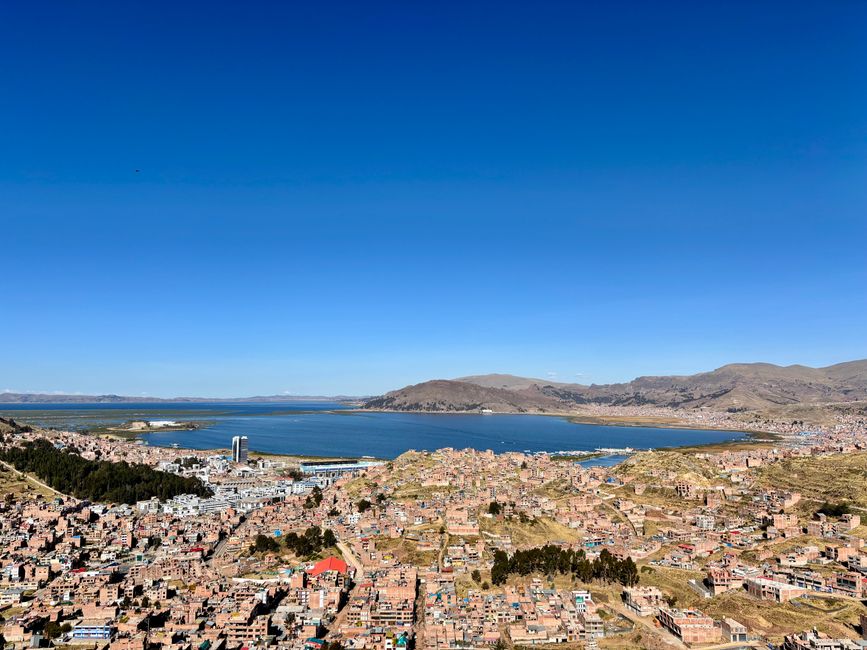
Puno, at about 3,830 m (12,570 ft) on the western shore of Lake Titicaca, is the capital of Peru’s Altiplano, the high, cold plain the country shares with Bolivia. Lake Titicaca, at about 3,812 m (12,507 ft), is the largest lake in South America by volume and is often called the world’s highest navigable lake; its deep-blue water, reed beds and islands are home to Aymara- and Quechua-speaking communities whose way of life is the main reason to come. Boats from Puno’s port visit the Uros, islands built of floating totora reeds, the island of Taquile, famous for its men’s knitting, and Amantaní, where visitors stay with families. Puno is also the folklore capital of Peru, exploding with dance and music during the Fiesta de la Candelaria every February. Plan for the altitude, the strong sun and very cold nights.
Right now in Puno
- Tue 1–17°C 33–62°F Mostly clear
- Wed -0–18°C 32–65°F Clear
- Thu 1–18°C 33–64°F Clear
- Thu 8 Oct Battle of Angamos (Combate de Angamos)
Weather: MET Norway (CC BY 4.0) · Holidays: Nager.Date
Top tours in Puno
See all tours for Puno →
From local operators, with prices and reviews; you check availability and book on Viator, our partner. We may earn a commission at no extra cost to you. How we earn money
Puno at a glance
- Best for: Lake Titicaca’s islands, Andean culture and textiles, homestays, festivals and pre-Inca sites.
- How long: 2 days for the Uros, Taquile and Sillustani; 3–4 days with an Amantaní homestay.
- Best time: May to October, dry and sunny but freezing at night; February for the Candelaria festival.
- Getting there: fly to Juliaca (JUL), about 45 km (28 miles) north, or take PeruRail’s Titicaca train or a bus from Cusco.
- Before you go: entry rules, money and general safety are in our Peru travel guide.
Puno’s areas: where things are
Puno is a busy, unpretentious commercial city climbing the hills above the lake. The center runs from the Plaza de Armas and its stone cathedral down the pedestrian Jirón Lima, with restaurants and agencies, toward the port, where island boats leave. Hotels on the lakeshore north and south of town have water views but are farther from the center.
Areas around the lake
- Puno’s center: the Plaza de Armas, Jirón Lima and the Parque Pino, with most budget and mid-range hotels, restaurants and tour agencies.
- The port and the lakeshore: the boat terminal at the end of Avenida Titicaca, with resort-style hotels along the shore north and south of town.
- The Capachica peninsula: Llachón, Ccotos and Escallani, farming villages offering community homestays, kayaking and quiet beaches, about 1.5 hours by road.
- The south shore: Chucuito, Juli and Pomata, colonial towns on the road to Bolivia.
- Juliaca: the busy commercial city near the airport, not a place to stay for visitors.
Top things to see in Puno and on Lake Titicaca
The Uros floating islands
About 30 minutes by boat from the port, dozens of small islands built from layers of totora reeds, constantly renewed, are home to Uros families who show visitors how the islands and reed boats are built and sell crafts. The visits are touristy but fascinating; a short ride in a reed boat is usually offered for a small extra fee. The islands are inside the Titicaca National Reserve, and communities charge a small entrance fee, collected in cash.
Taquile
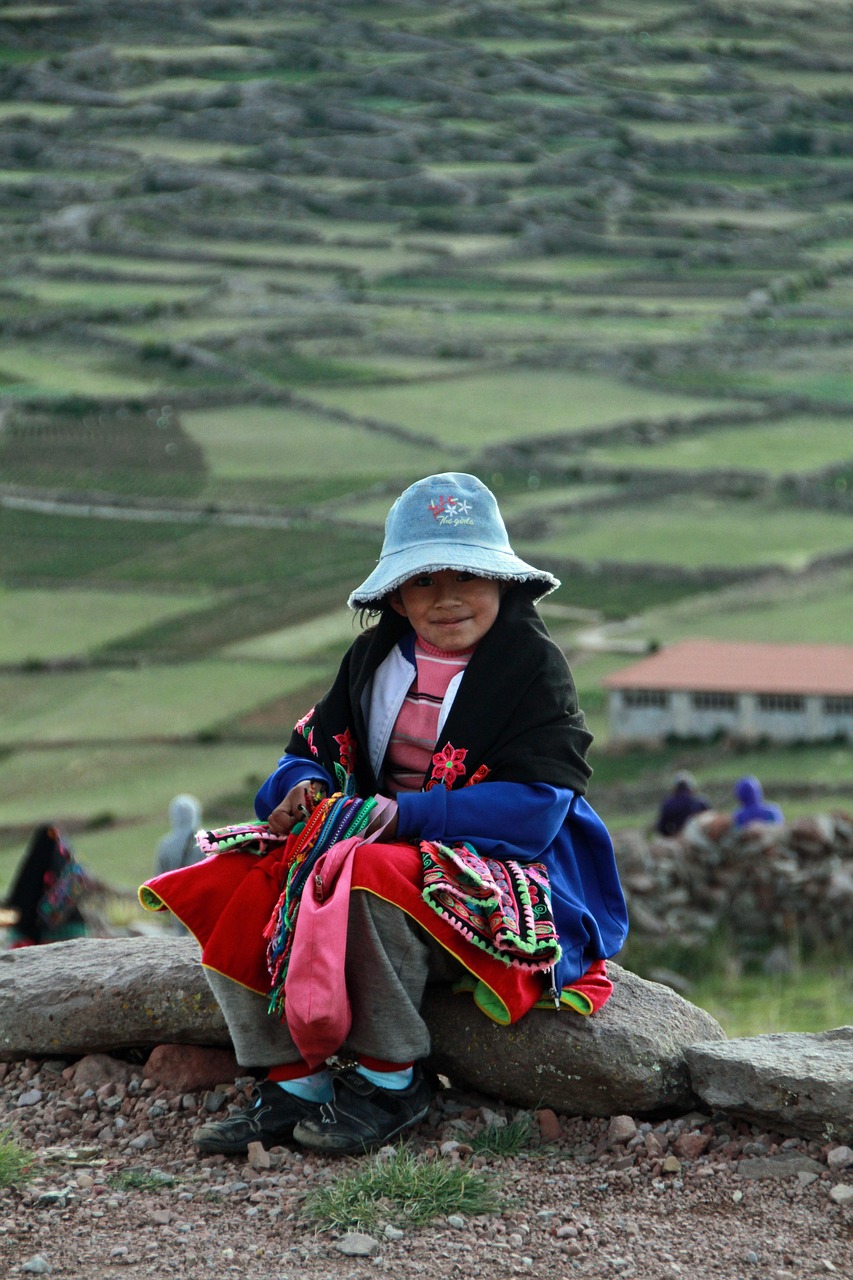
A rocky island about 2.5 to 3 hours from Puno by slow boat, with Inca-style terraces, stone arches and views to Bolivia’s snowy peaks. Its people are known for their textiles, knitted by men and woven by women, recognized by UNESCO as intangible cultural heritage; the cooperative shop on the main square sells them at fixed prices. Expect a steep climb from the dock at this altitude.
Amantaní
A larger, quieter island beyond Taquile, where families host visitors for a night with simple meals and, often, an evening dance in borrowed traditional dress; climb to the Pachatata and Pachamama temples at sunset.
Sillustani
About 35 km (22 miles) north-west of Puno, tall stone funerary towers (chullpas) built by the Colla people and later the Incas stand on a peninsula above Lake Umayo, especially beautiful in the late afternoon light.
More to see
- The Cathedral and Plaza de Armas: an 18th-century baroque cathedral of carved stone.
- The Yavari: a Victorian-era iron steamship carried in pieces over the Andes by mule and assembled on the lake, now a museum.
- The Kuntur Wasi viewpoint: a condor statue on a hill above town with views over the lake; a breathless climb.
Festivals in Puno
- Fiesta de la Virgen de la Candelaria (February): Puno’s great festival, listed by UNESCO as intangible cultural heritage, with weeks of religious and folk celebrations and huge dance competitions involving tens of thousands of dancers in elaborate costumes and masks, peaking around February 2 and the following week. Hotels fill and prices rise.
- Puno Week (early November): celebrations of the city’s founding and the legend of Manco Cápac rising from Lake Titicaca.
Food and drink in Puno
The Altiplano’s cooking is hearty and built around what grows at altitude: quinoa (in soups, stews and even desserts), dozens of varieties of potato, including chuño, the freeze-dried potato of the high plains, and highland grains such as cañihua. Lake trout and the small native fish called pejerrey are served fried or grilled, and alpaca steak is common. Try caldo de cabeza (a lamb’s head broth) if you are brave, and a warming quinoa soup at a market. On Taquile and Amantaní, families serve simple home meals of soup, trout or omelet and potatoes, with muña (Andean mint) tea. In town, restaurants on Jirón Lima serve Peruvian and international food, often with live folk music at night. Coca and muña teas help with the cold and the altitude.
Day trips and onward travel
- Chucuito and Juli: lakeside towns south of Puno with colonial churches and, in Chucuito, a curious Inca fertility temple.
- Llachón and the Capachica peninsula: community tourism, kayaking and homestays on the lake’s quieter shore.
- Bolivia: buses cross the border at Kasani to Copacabana and the Isla del Sol, and continue to La Paz; check Bolivia’s entry rules and bring your passport.
- Cusco: by the PeruRail Titicaca train or by tourist bus with stops at sights; see our Cusco travel guide.
- Arequipa: about 6 hours by bus; see our Arequipa travel guide.
See our guide to boat trips.
Getting there and getting around
By air
Inca Manco Cápac International Airport (JUL) in Juliaca, about 45 km (28 miles) north of Puno, has flights from Lima (about 1 hour 40 minutes) and sometimes Cusco and Arequipa; shuttle buses and taxis run to Puno in about an hour.
By train from Cusco
PeruRail’s Titicaca train is one of South America’s great rail journeys, crossing the high plain and the La Raya pass at about 4,300 m (14,100 ft) in about 10.5 hours, with meals, a bar car and an observation car. After landslides closed part of the line in August 2026, PeruRail resumed regular service on August 25, 2026, according to the operator, leaving Puno’s Lago Titicaca station at 7:50 a.m. on Mondays, Thursdays and Saturdays and arriving at Cusco’s Wanchaq station at 6:20 p.m., and running from Cusco on Wednesdays, Fridays and Sundays. Check the current timetable and book ahead; the luxury Belmond Andean Explorer also uses the line.
By bus
Long-distance buses run to Cusco (about 7 hours direct; tourist buses take about 10 hours with stops), Arequipa (about 6 hours) and La Paz via the border. The bus terminal is south-east of the center.
On the lake
Boats to the Uros, Taquile and Amantaní leave from the port; most visitors join a tour, which includes the boat, guide and sometimes lunch, but community boats also run.
Getting around: practical details
Puno’s center is walkable, though the streets climb steeply away from the lake; tricycle taxis and small taxis are cheap for short hops and for the trip to the port or the bus terminal. Tours to the islands include hotel pickup; if you go independently, community boats leave from the port in the morning and return in the afternoon, so check times the day before. For Sillustani, join an afternoon tour or hire a taxi, as public transport only reaches the turn-off. From Juliaca airport, shared shuttles meet flights and drop passengers at Puno hotels; taxis cost more. Allow extra time for road blockades in times of protest.
When to go and how long to stay
The Altiplano has a cold, sunny highland climate. Days are mild in the sun but nights are cold all year and freezing from May to August; most rain falls from December to March, often as afternoon storms or hail. There is no Puno city station in the WMO normals we use; the table uses SENAMHI’s 1991–2020 normals for the Huaraya Moho station, on the lake’s northern shore at 3,836 m, as published by the World Meteorological Organization, as a guide.
| Season | Average high / low | Rain per month | What it’s like |
|---|---|---|---|
| Rainy (Dec–Mar) | 15–16 °C (58–60 °F) / 4–5 °C (40–41 °F) | about 100–180 mm (4–7 in) | Green, with afternoon storms; the Candelaria festival in February |
| Fall (Apr–May) | 14–15 °C (58 °F) / 0–3 °C (32–37 °F) | about 13–50 mm (0.5–2 in) | Drying out, clear skies |
| Dry and cold (Jun–Aug) | 14–15 °C (57–58 °F) / −2 to −1 °C (29–30 °F) | under 15 mm (0.6 in) | Sunny days, freezing nights, the clearest skies |
| Spring (Sep–Nov) | 16–17 °C (60–62 °F) / 1–4 °C (34–39 °F) | about 30–60 mm (1–2.5 in) | Warming, with the first storms from November |
The Huaraya Moho station records about 810 mm (32 in) of rain a year. In 2026–27, Peru’s El Niño commission expects normal-to-below-normal rain in the southern highlands and below-normal river flows in the Titicaca basin.
Puno month by month
Average daily highs and lows and rain at SENAMHI’s Huaraya Moho station on the lake’s north shore (1991–2020 normals, via the WMO), as a guide for Puno.
| Month | High / low | Rain | What to expect |
|---|---|---|---|
| January | 15 °C (58 °F) / 5 °C (41 °F) | 178 mm (7.0 in) | Wettest month; storms, green shores |
| February | 15 °C (58 °F) / 5 °C (41 °F) | 147 mm (5.8 in) | Fiesta de la Candelaria; crowds and higher prices |
| March | 15 °C (58 °F) / 4 °C (40 °F) | 103 mm (4.0 in) | Rains easing; Easter may fall late in the month |
| April | 15 °C (58 °F) / 3 °C (37 °F) | 50 mm (2.0 in) | Drying out; clear skies |
| May | 15 °C (58 °F) / 0 °C (32 °F) | 13 mm (0.5 in) | Dry season begins; cold nights |
| June | 14 °C (57 °F) / −2 °C (29 °F) | 7 mm (0.3 in) | Freezing nights, clearest skies |
| July | 14 °C (57 °F) / −2 °C (29 °F) | 6 mm (0.2 in) | Coldest month; peak tourist season |
| August | 15 °C (58 °F) / −1 °C (30 °F) | 12 mm (0.5 in) | Dry and windy |
| September | 16 °C (60 °F) / 1 °C (34 °F) | 32 mm (1.2 in) | Warming, still mostly dry |
| October | 16 °C (61 °F) / 3 °C (37 °F) | 59 mm (2.3 in) | Occasional showers; quieter |
| November | 17 °C (62 °F) / 4 °C (39 °F) | 61 mm (2.4 in) | Puno Week festivities in early November |
| December | 16 °C (60 °F) / 5 °C (40 °F) | 138 mm (5.4 in) | Rainy; Christmas celebrations |
Crowds: February (Candelaria) and June to August are the busiest; book hotels and the train ahead.
2 days in Puno
Day one, arrive and rest, then walk gently around the Plaza de Armas and Jirón Lima, and visit Sillustani in the late afternoon. Day two, a full-day boat trip to the Uros and Taquile.
3–4 days
Swap the day trip for a two-day trip with a homestay on Amantaní, add Chucuito and Juli, or continue to Copacabana and the Isla del Sol in Bolivia.
Where to stay in Puno
- The center: hotels and hostels near the Plaza de Armas and Jirón Lima, close to restaurants and agencies.
- The lakeshore: larger hotels with lake views a short taxi ride from town.
- On the lake: homestays on Amantaní and community lodges on the Uros islands and the Capachica peninsula.
Many hotels provide heaters, extra blankets and oxygen. Hotels can sell rooms to foreign tourists without Peru’s 18% IGV sales tax if you show your passport and immigration record; check whether quoted rates include tax.
Choosing where to stay
Stay in the center if you want to walk to restaurants, agencies and Jirón Lima’s evening life; ask for a room with heating and away from street noise. Lakeshore hotels offer views, gardens and quiet, but need taxis to reach town. For a deeper experience, spend a night in a community homestay on Amantaní or the Capachica peninsula, or in one of the lodges on the Uros islands, where solar panels provide electricity. Book Candelaria dates months ahead.
What a trip to Puno costs
These are our estimates for October 2026 at about S/ 3.44 per US dollar.
| Item | Typical price |
|---|---|
| Hostel dorm bed | S/ 25–50 (US$7–15) |
| Mid-range double room with heating | S/ 150–320 (US$44–93) |
| Half-day Uros tour | S/ 40–80 (US$12–23) plus community fee |
| Full-day Uros and Taquile tour | S/ 90–180 (US$26–52) |
| Amantaní homestay tour, two days | S/ 150–300 (US$44–87) |
| Sillustani afternoon tour | S/ 40–80 (US$12–23) plus entry |
| Trout lunch | S/ 25–45 (US$7–13) |
| PeruRail Titicaca train to Cusco | usually more than US$250 one way |
Practical tips for Puno
- Cash: carry soles in small notes for island fees, boat rides, crafts and homestays; there are no ATMs on the islands. On October 4, 2026, SUNAT’s published rate was about S/ 3.44 per US dollar.
- Gifts for homestays: fruit, rice or school supplies are welcome; ask your agency.
- Sun and cold: the UV on the lake is extremely strong, while nights are freezing; dress in layers.
- Water: drink bottled or filtered water.
Safety in Puno
Puno is generally calm. Watch your bags at the bus terminal and in markets, use registered taxis at night, and wear the life jacket offered on boats. The Puno region has been the scene of strikes, protests and road blockades at times, which can close roads, the airport road and the border; follow local news and keep a spare day.
Altitude sickness: at about 3,830 m (12,570 ft), Puno is higher than Cusco, and altitude sickness (soroche) is common, especially if you arrive by air at Juliaca straight from the coast. Symptoms include headache, nausea, breathlessness, fatigue and poor sleep. Arrive from Cusco or Arequipa if you can, rest on the first day, drink plenty of water, avoid alcohol and heavy meals at first, and walk slowly, especially on Taquile’s and Amantaní’s steep paths. Severe symptoms, such as confusion, breathlessness at rest or a worsening cough, are a medical emergency: get help and descend. People with heart or lung conditions and pregnant women should get medical advice before going. For emergencies, call 105 (police) or 106 (ambulance).
What to pack for Puno
A warm down jacket, hat, gloves and thermal layers for nights and early boat rides, a windproof layer, a sun hat, sunglasses, very high-factor sunscreen and lip balm, sturdy shoes, a rain jacket from December to March, a headlamp for homestays, and cash. Peru uses 220 V, with sockets for US and European plugs.
Puno travel FAQ
How high is Puno?
About 3,830 m (12,570 ft), higher than Cusco; Lake Titicaca is at about 3,812 m.
How do I avoid altitude sickness in Puno?
Arrive overland from Cusco or Arequipa if possible, rest on your first day, drink water, avoid alcohol at first and walk slowly; seek help if symptoms are severe.
How do I visit the Uros floating islands?
By boat from Puno’s port, about 30 minutes each way, usually on a half-day or full-day tour; communities charge a small entry fee in cash.
Is the train from Cusco to Puno running?
Yes. PeruRail resumed regular service of its Titicaca train on August 25, 2026, three days a week in each direction; check the current timetable.
When is the Candelaria festival in Puno?
In February, peaking around February 2 and the following week, with huge dance competitions.
Can I stay overnight on Lake Titicaca?
Yes, with families on Amantaní, in community lodges on the Uros islands or on the Capachica peninsula.
Can I go from Puno to Bolivia?
Yes, by bus via the Kasani border to Copacabana and La Paz; check Bolivia’s entry requirements first.
Where should I stay in Puno?
In the center for convenience, on the lakeshore for views, or with a family on Amantaní or the Capachica peninsula for a homestay.
What should I eat in Puno?
Lake trout, quinoa soup, alpaca and Andean potatoes, with muña or coca tea.
How cold does Puno get at night?
From May to August, nights fall below freezing; even in summer they are only about 5 °C (41 °F), so pack warm layers.
Sources and last review
Researched and last reviewed on 4 October 2026. The PeruRail Titicaca train’s resumption and timetable: PeruRail’s notices of August 8 and August 24, 2026; climate: SENAMHI’s 1991–2020 normals for the Huaraya Moho station, as published by the World Meteorological Organization; El Niño outlook: ENFEN’s statement of September 28, 2026; exchange rate: SUNAT; altitude of the city: Wikidata. Lake facts, island details and fees, Sillustani, festival dates and UNESCO listings, flight and bus times, distances, hotel tax practice, safety tips and altitude advice come from secondary sources or general medical knowledge and are flagged for checking. Prices and timetables change, so check before you go. For entry rules and money, see our Peru travel guide.
Plan your trip
Partner links: TravelerCenter may earn a commission if you book, at no extra cost to you.
🇪🇸 Useful Spanish phrases for Puno
All 38 Spanish phrases: restaurant, hotel, emergencies, romance (printable) →