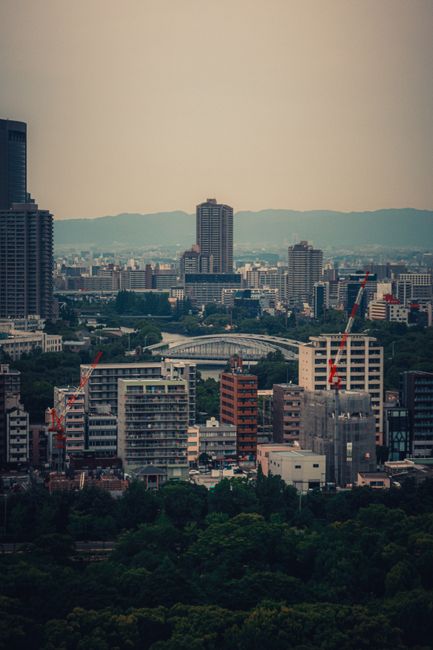
Osaka is Japan’s third-largest city and its liveliest: a merchant city famous for street food, neon, comedy and friendly locals, where people say “kuidaore”, eat until you drop. Come for takoyaki and okonomiyaki in Dotonbori, the castle and its moats, the retro streets of Shinsekai, Universal Studios Japan and some of the country’s best nightlife, and use it as a cheaper, central base for Kyoto, Nara, Kobe and Himeji, all within an hour by train. The best seasons are spring (late March to May) and fall (October and November); June and early July bring the rainy season, July and August are very hot, and typhoons are most likely from August to October.
Right now in Osaka
- Wed15–23°C60–73°FClear
- Thu13–25°C55–77°FMostly clear
- Fri17–27°C63–81°FClear
- Mon 12 Oct Sports Day (スポーツの日)
Top tours in Osaka
See all tours for Osaka →
From local operators, with prices and reviews; you check availability and book on Viator, our partner. We may earn a commission at no extra cost to you. How we earn money
Osaka at a glance
- Best for: street food and casual dining, nightlife, shopping, Universal Studios Japan, and day trips across the Kansai region.
- How long: 2–3 days for the city; a week as a base for Kyoto, Nara, Kobe and Himeji.
- Best time: late March to May and October to November, with highs of about 18–25 °C (64–77 °F).
- Getting there: Kansai International Airport (KIX) is about 35 to 50 minutes away by train; Shin-Osaka station is about 2 hours 30 minutes from Tokyo by Nozomi shinkansen.
- Getting around: Osaka Metro, JR loop and private lines, paid with an IC card such as ICOCA.
- Fees to know: Osaka Prefecture’s accommodation tax is ¥200 to ¥500 per person per night on rooms from ¥5,000, as of October 2026.
- Before you go: entry rules, the JR Pass, money and general safety are in our Japan travel guide; see also our Kyoto and Nara guides.
Osaka’s areas and where to stay
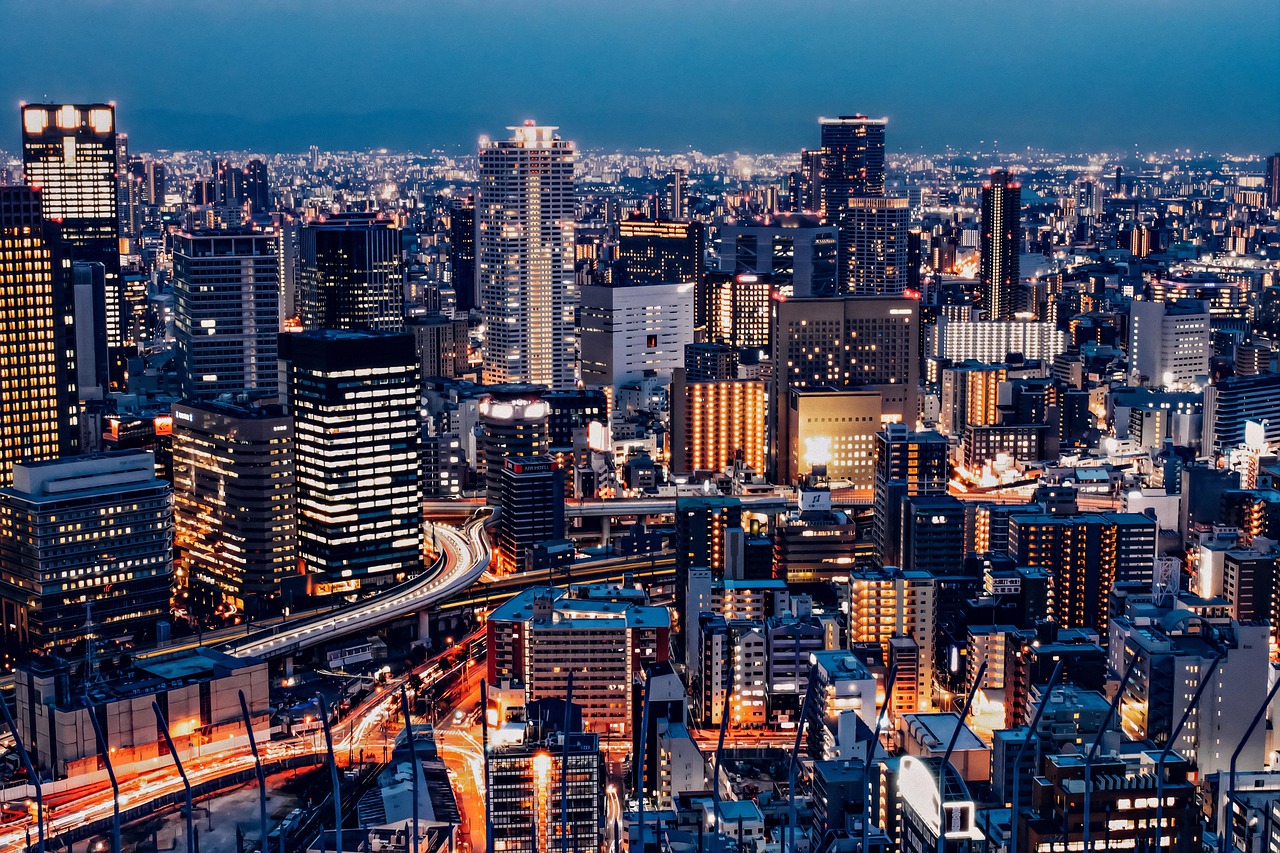
Osaka has two centers, Kita (north) around Osaka and Umeda stations, and Minami (south) around Namba, linked by the Midosuji subway line in about 10 minutes.
Kita: Umeda and Osaka Station
Skyscrapers, department stores, underground shopping streets and the transport hub for JR, the Hankyu and Hanshin lines and trains to Kyoto and Kobe. The newly developed Grand Green Osaka park sits next to the station. A practical base with many hotels, calmer at night than Minami.
Minami: Namba, Dotonbori and Shinsaibashi
The neon heart of Osaka: the Dotonbori canal with its giant signs and the Glico running man, the Shinsaibashi shopping arcade, Amerikamura’s youth fashion, Kuromon Market and the Nankai trains to Kansai Airport. The best base for food and nightlife, though noisy late.
Tennoji and Shinsekai
South of Minami, with Abeno Harukas, one of Japan’s tallest skyscrapers, the ancient Shitenno-ji temple, Tennoji Park and zoo, and the retro neighborhood of Shinsekai below Tsutenkaku tower. Cheaper hotels and the JR Haruka from Kansai Airport.
Osaka Castle and the Bay Area
The castle park lies east of the center; the Bay Area to the west has the Osaka Aquarium Kaiyukan, the Tempozan Ferris wheel and Universal Studios Japan, with its own hotels.
Top things to see in Osaka
Osaka Castle
Toyotomi Hideyoshi built the first castle here in the 1580s to rule a newly unified Japan. Today’s main tower is a 1931 concrete reconstruction housing a museum of the Toyotomi era, with a viewing deck at the top, but the real treat is the park: huge stone walls and moats, plum and cherry trees, and boat rides around the inner moat. The park is free; the tower charges an admission fee.
Dotonbori and Namba
Walk the canal at night when the signs are lit, snack on takoyaki from street stands, take a short boat cruise, and explore the side lanes of Hozenji Yokocho, a stone alley of small restaurants around a moss-covered statue. Nearby, Namba Yasaka Shrine has a giant lion head stage.
Shinsekai and Tsutenkaku
Built in 1912 and modeled on Paris and New York, Shinsekai is now a nostalgic, slightly scruffy neighborhood of kushikatsu (deep-fried skewer) restaurants and old game parlors under the Tsutenkaku tower. Remember the local rule: no double-dipping in the shared sauce.
Kuromon Market
A covered market of fish, wagyu skewers, fruit and street snacks, about 600 m (0.4 miles) long, near Namba. Go in the morning; prices are higher than at ordinary markets, and stalls ask you to eat on the spot rather than while walking.
Umeda Sky Building and the views
Two towers joined at the top by a floating garden observatory with an open-air deck, near Osaka Station. Abeno Harukas has a higher, glassed-in observatory in Tennoji, and the HEP Five Ferris wheel spins above Umeda’s shops.
More classic sights
- Sumiyoshi Taisha: one of Japan’s oldest shrines, with a steep red arched bridge and a unique early architectural style, a short ride south on the Nankai line.
- Shitenno-ji: founded in 593, one of Japan’s oldest Buddhist temples, with a big flea market on the 21st and 22nd of each month.
- Osaka Aquarium Kaiyukan: one of the world’s largest aquariums, built around a central tank with a whale shark.
- Universal Studios Japan: the theme park with Super Nintendo World and the Wizarding World of Harry Potter; buy tickets and Express Passes ahead, especially at weekends and holidays.
- Expo ’70 Commemorative Park: Taro Okamoto’s Tower of the Sun, gardens and the National Museum of Ethnology in the northern suburbs.
- Nakanoshima: an island between two rivers with museums of art and science, a rose garden and old brick buildings.
Viewpoints
- Tsūtenkaku
- Umeda Sky Building
Monuments
- Osaka Castle
Historic centres
- Dōtonbori
Other sights
- Kuromon Market
Churches and cathedrals
- Shitennō-ji Temple
- Sumiyoshi Taisha
Theme parks
- Universal Studios Japan
Zoos and aquariums
- Osaka Aquarium Kaiyukan
Other things to do in Osaka
Food and drink
Osaka’s comfort foods are takoyaki (octopus dumplings), okonomiyaki (savory pancakes cooked on a griddle at your table), kushikatsu, kitsune udon and the pressed sushi called battera. Eat at standing bars and small counters in Ura-Namba, Tenma and Fukushima, where locals go after work, and in the food halls of Umeda’s department stores. Tenjinbashi-suji, Japan’s longest shopping street at about 2.6 km (1.6 miles), is good for cheap snacks. Tipping is not expected.
Shopping and entertainment
Shinsaibashi and Namba for fashion and drugstores, Den Den Town for electronics and anime, and Umeda for department stores. Many shops offer tax-free shopping on purchases of ¥5,000 or more; from November 1, 2026 you pay the full price and get the tax back after a customs check at the airport (see our Japan travel guide). Osaka is also the home of manzai comedy and bunraku puppet theater, at the National Bunraku Theatre.
Festivals
The Tenjin Matsuri on July 24 and 25, one of Japan’s three great festivals, ends with a river procession of boats and fireworks; the Kishiwada Danjiri festival in September sees heavy wooden floats raced around corners. In winter, the Osaka Hikari-Renaissance lights up Nakanoshima.
Day trips from Osaka
- Kyoto: Japan’s old capital, 15 minutes by shinkansen or about 30 to 45 minutes by JR, Hankyu or Keihan trains. See our Kyoto guide.
- Nara: Todai-ji, the deer park and Kasuga Taisha, about 40 minutes by Kintetsu from Namba. See our Nara guide.
- Kobe: a port city famous for its beef, with the Kitano district and Mount Rokko, 20 to 30 minutes west.
- Himeji Castle: the finest original castle in Japan, about 30 minutes by shinkansen from Shin-Osaka.
- Mount Koya (Koyasan): a mountaintop monastery town where you can stay overnight in a temple, about two hours by Nankai train and cable car.
- Hiroshima and Miyajima: about 1 hour 20 minutes by shinkansen. See our Hiroshima guide.
Nearby destinations
Getting there and getting around
From Kansai Airport and Itami
Kansai International Airport (KIX), on an island in Osaka Bay, handles most international flights. The Nankai railway’s rapi:t limited express reaches Namba in about 35 to 40 minutes; JR’s Haruka runs to Tennoji and Shin-Osaka (and on to Kyoto), and JR Kansai Airport Rapid trains go to Osaka Station. Airport limousine buses serve hotels and Umeda. Osaka International Airport (Itami), for domestic flights, is about 30 minutes from Umeda by bus or monorail.
Shinkansen and rail passes
Shin-Osaka, north of Umeda, is the stop for the Tokaido and Sanyo shinkansen: about 2 hours 30 minutes from Tokyo by Nozomi and 1 hour 20 minutes to Hiroshima. The 7-day Japan Rail Pass costs ¥50,000 (about US$315) on the official site as of October 2026; Nozomi trains need an extra ticket (¥4,960 (about US$31) from Tokyo). For Kansai alone, JR West’s Kansai Mini Pass (¥3,000 (about US$19) for 3 days on rapid and local trains around Osaka, Kyoto, Kobe and Nara) or Kansai WIDE Area Pass (¥12,000 (about US$76) for 5 days, including the Haruka and the shinkansen to Okayama) is much cheaper; the older Kansai Area Pass stopped selling on September 30, 2026. The Kansai-Hiroshima Area Pass, ¥17,000 (about US$110) for 5 days, adds the shinkansen to Hiroshima.
Metro, trains and IC cards
Osaka Metro’s Midosuji Line is the spine of the city, linking Shin-Osaka, Umeda, Shinsaibashi, Namba and Tennoji. The JR Osaka Loop Line circles the center, and private railways (Hankyu, Hanshin, Keihan, Kintetsu, Nankai) run to Kyoto, Kobe, Nara and the airport. Pay with an ICOCA card (JR West’s IC card) or any other Japanese IC card or phone. Note that in Osaka people stand on the right side of escalators, the opposite of Tokyo.
When to go and how long to stay
The table uses the Japan Meteorological Agency’s (JMA) 1991–2020 normals for its Osaka station: average daily highs and lows, total rain and days with at least 1 mm of rain.
| Month | Average high / low | Rain (days with 1 mm or more) | What to expect |
|---|---|---|---|
| January | 10 °C (49 °F) / 3 °C (37 °F) | 47 mm (1.9 in), 6 days | Mild for winter, dry and sunny; New Year shrine visits |
| February | 10 °C (51 °F) / 3 °C (38 °F) | 60 mm (2.4 in), 6 days | Cool and dry; plum blossoms at Osaka Castle |
| March | 14 °C (58 °F) / 6 °C (43 °F) | 103 mm (4.1 in), 9 days | Cherry blossoms usually open around Mar 27 (JMA normal) |
| April | 20 °C (68 °F) / 11 °C (52 °F) | 102 mm (4.0 in), 9 days | Full bloom around early April; then fresh and pleasant |
| May | 25 °C (77 °F) / 16 °C (61 °F) | 136 mm (5.4 in), 10 days | Warm, sunny and comfortable; Golden Week crowds early in the month |
| June | 28 °C (82 °F) / 20 °C (69 °F) | 185 mm (7.3 in), 11 days | Rainy season usually from about June 6 (JMA normal for Kinki) |
| July | 32 °C (89 °F) / 25 °C (76 °F) | 174 mm (6.9 in), 10 days | Rainy season usually ends around July 19; Tenjin Matsuri July 24–25 |
| August | 34 °C (93 °F) / 26 °C (78 °F) | 113 mm (4.4 in), 7 days | The hottest month, with highs near 34 °C (93 °F) |
| September | 30 °C (85 °F) / 22 °C (71 °F) | 153 mm (6.0 in), 10 days | Still hot; typhoons possible; Kishiwada Danjiri |
| October | 24 °C (75 °F) / 16 °C (61 °F) | 136 mm (5.4 in), 8 days | Pleasant and dry; good for walking |
| November | 18 °C (64 °F) / 10 °C (50 °F) | 72 mm (2.9 in), 6 days | Mild; fall colors at the castle and Minoo late in the month |
| December | 12 °C (54 °F) / 5 °C (42 °F) | 56 mm (2.2 in), 6 days | Cool and clear; winter illuminations |
Osaka gets about 1,340 mm (53 in) of rain a year, less than Tokyo or Kyoto. The JMA’s normal rainy season for the Kinki region runs from about June 6 to July 19 (in 2026, about June 2 to July 9). August highs average 34 °C (93 °F), among the hottest of any big Japanese city, and nights stay above 25 °C (77 °F).
Weather month by month
Cherry blossoms and fall colors: the JMA’s normal date for the first cherry blossoms in Osaka is March 27, with full bloom around April 4; in 2026 they opened on March 26. The maples at the JMA’s Osaka station normally turn around December 1; in the parks and the Minoo hills, late November to early December is usually best.
Crowds: hotels fill during the cherry blossom weeks, Golden Week, the Obon holidays in mid-August, New Year, and big concerts or events. Universal Studios Japan is busiest at weekends and in school holidays.
2 days in Osaka
Day one, Osaka Castle in the morning, then lunch in Tenjinbashi-suji, the Umeda Sky Building at sunset and dinner in Fukushima. Day two, Kuromon Market, Shinsekai and Tsutenkaku, Abeno Harukas or Shitenno-ji, then Dotonbori after dark.
A week based in Osaka
Add a day at Universal Studios Japan, two days in Kyoto, a day in Nara, and a day split between Kobe and Himeji Castle, or a night in a temple on Mount Koya.
Where to stay in Osaka and the accommodation tax
- Namba and Shinsaibashi: the liveliest base, close to Dotonbori and direct trains to Kansai Airport and Nara.
- Umeda: big hotels and easy trains to Kyoto, Kobe and the shinkansen.
- Shin-Osaka: business hotels right on the shinkansen line.
- Tennoji: good value, with the Haruka from the airport.
- Bay Area: the official hotels of Universal Studios Japan.
Osaka Prefecture charges an accommodation tax per person per night, collected by the hotel. According to Osaka Prefecture, for stays since September 1, 2025 the rates are:
| Room rate per person per night | Tax per person per night |
|---|---|
| under ¥5,000 | none |
| ¥5,000 to ¥14,999 | ¥200 (about US$1.3) |
| ¥15,000 to ¥19,999 | ¥400 (about US$2.5) |
| ¥20,000 or more | ¥500 (about US$3.2) |
The rate includes bedding and bathing charges and cleaning fees for private rentals, but not meals or consumption tax. Hotels with hot springs add a separate small bathing tax.
What a trip to Osaka costs
Prices are approximate, for October 2026, converted at about ¥158 to the US dollar.
| Item | Typical cost |
|---|---|
| Takoyaki (6–8 pieces) | ¥500–800 (about US$3.2–5.1) |
| Okonomiyaki or kushikatsu dinner | ¥1,500–3,000 (about US$9.5–19) |
| Standing-bar drink | ¥400–700 (about US$2.5–4.4) |
| Osaka Metro ride | ¥190–390 (about US$1.2–2.5) |
| Nankai rapi:t from Kansai Airport to Namba | ¥1,500 (about US$9.5) |
| Business hotel double, per night | ¥10,000–20,000 (about US$63–125) |
| Mid-range hotel, per night | ¥20,000–40,000 (about US$125–255) |
| Accommodation tax (room ¥5,000–14,999 per person) | ¥200 (about US$1.3) per person per night |
Practical tips for Osaka
- Escalators: stand on the right in Osaka and Kansai, walk on the left.
- Late nights: trains stop around midnight; Minami is walkable from many hotels.
- Cash: most places take cards and IC cards, but some street stalls and small bars are cash-only.
- Luggage: use lockers at Namba and Osaka stations, or send bags ahead between cities.
- Visitor hotline: the JNTO’s Japan Visitor Hotline, 050-3816-2787, answers in English 24 hours a day.
Safety
Osaka is safe for a big city. Watch for pickpockets in crowded Dotonbori and avoid touts who pull people into bars, where bills can be inflated; agree prices before you order. Heat is the main risk in July and August, so drink water and take breaks indoors. Typhoons can stop trains and close Kansai Airport for a day or more, as in 2018, so keep flexible plans from August to October. Japan is earthquake country: if strong shaking starts, take cover and follow staff instructions, and keep the JNTO’s Safety Tips app on your phone. In an emergency, call 110 for the police or 119 for an ambulance or fire.
What to pack for Osaka
Light, breathable clothes and a hat for summer, a folding umbrella for June to October, layers for spring and fall, a warm jacket for December to February, and comfortable shoes for long walks. Japan uses 100 V and two-pin type A plugs like the US.
Osaka travel FAQ
How many days do I need in Osaka?
Two to three days for the city itself; a week if you use Osaka as a base for Kyoto, Nara, Kobe and Himeji.
Is it better to stay in Osaka or Kyoto?
Osaka is livelier, often cheaper and better for nightlife, with fast trains to Kyoto; Kyoto is better if you want early mornings at temples and quiet evenings.
How do I get from Kansai Airport to Osaka?
Take the Nankai rapi:t to Namba (about 35–40 minutes), JR’s Haruka to Tennoji or Shin-Osaka, or a JR rapid train to Osaka Station.
How much is Osaka’s accommodation tax?
As of October 2026, ¥200 per person per night for rooms of ¥5,000 to ¥14,999, ¥400 from ¥15,000 and ¥500 from ¥20,000; rooms under ¥5,000 are exempt.
What food is Osaka famous for?
Takoyaki, okonomiyaki, kushikatsu, kitsune udon and battera sushi. Dotonbori, Shinsekai and Ura-Namba are the best places to try them.
Which rail pass is best for Osaka?
For Kansai only, the Kansai Mini Pass (¥3,000 for 3 days) or the Kansai WIDE Area Pass (¥12,000 for 5 days); add Hiroshima with the Kansai-Hiroshima Area Pass (¥17,000 for 5 days).
Can I visit Nara and Kyoto from Osaka?
Yes, easily: Kyoto is 15 to 45 minutes away and Nara about 40 minutes by Kintetsu from Namba.
When are the cherry blossoms in Osaka?
The JMA’s normal date for the first blossoms is March 27, with full bloom around April 4; Osaka Castle Park and the Mint Bureau’s spring opening are favorites.
Do I need to book Universal Studios Japan?
Yes, buy dated tickets in advance, and an Express Pass if you want shorter lines for the most popular rides, especially at weekends and holidays.
Is Osaka safe at night?
Yes. Ordinary caution is enough; avoid bar touts in Minami and agree prices before ordering.
Plan your trip
Partner links: TravelerCenter may earn a commission if you book, at no extra cost to you.
🇯🇵 Useful Japanese phrases for Osaka
All 38 Japanese phrases: restaurant, hotel, emergencies, romance (printable) →
Sources · last reviewed 4 October 2026
Researched and last reviewed on 4 October 2026. Accommodation tax: Osaka Prefecture; climate normals, rainy season and cherry blossom and maple dates: the Japan Meteorological Agency (JMA); JR Pass and Nozomi ticket: the official Japan Rail Pass website; Kansai passes: JR West; tax-free shopping: the Japan Tourism Agency; visitor hotline: JNTO; exchange rate: the US Federal Reserve. Journey times, sight descriptions, festival dates, the rapi:t fare and typical prices are general references or estimates, flagged for checking. Prices and hours change, so check the official sites before you go. For entry rules, money and general safety, see our Japan travel guide.
Also: JMA normals 1991–2020, Osaka (climate)
Data: Weather: MET Norway (CC BY 4.0) · Sea temperature: NOAA CoastWatch · Rates: ECB · Holidays: Nager.Date · Costs: World Bank ICP and price levels · © OpenStreetMap contributors (ODBL) · Wikidata (CC0)