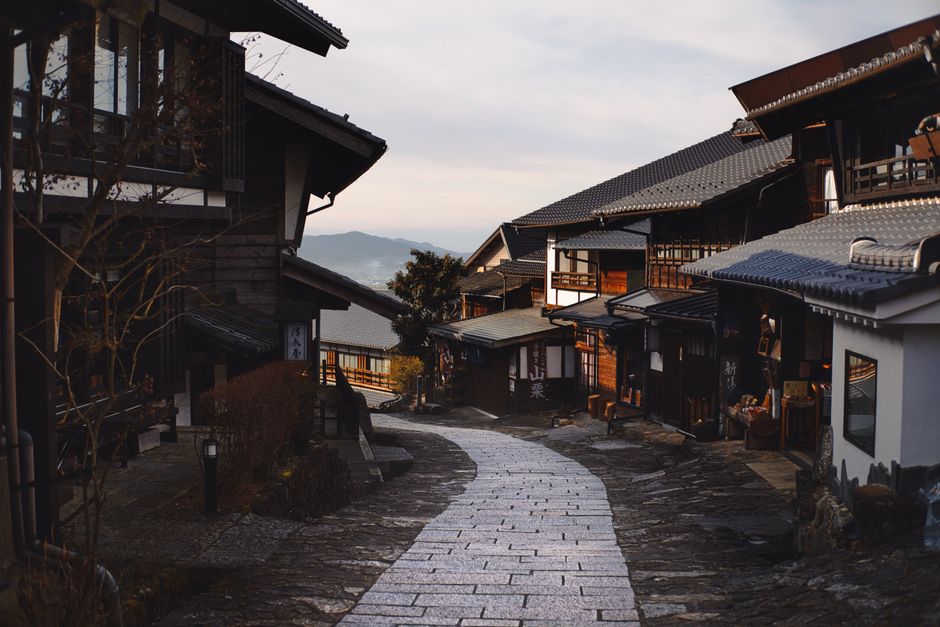
Takayama is a mountain town of about 80,000 people in the Hida region of Gifu Prefecture, set in a high basin surrounded by the Japan Alps, about 560 m (1,840 ft) above sea level. Its isolation helped it keep one of Japan’s best-preserved old merchant quarters: dark wooden townhouses, sake breweries marked by balls of cedar, and morning markets along the river. Takayama is famous for the Takayama Festival, held twice a year with ornate floats that are a UNESCO Intangible Cultural Heritage, for Hida beef, and as the gateway to the thatched village of Shirakawa-go, the hot springs of Okuhida and the Northern Alps. The best seasons are April to May and October to early November; winter is cold and snowy, but beautiful and quiet, and the town is busiest during the festivals in April and October.
Right now in Takayama
- Wed9–17°C48–63°FClear
- Thu5–22°C41–71°FClear
- Fri10–23°C51–73°FMostly clear
- Mon 12 Oct Sports Day (スポーツの日)
Top tours in Takayama
See all tours for Takayama →
From local operators, with prices and reviews; you check availability and book on Viator, our partner. We may earn a commission at no extra cost to you. How we earn money
Takayama at a glance
- Best for: old streets and sake breweries, festivals and crafts, Hida beef, mountain scenery, onsen, and Shirakawa-go.
- How long: 1–2 days in town; 3–4 days with Shirakawa-go, Okuhida or Kamikochi.
- Best time: April to May and October to early November, with highs of about 17–23 °C (63–73 °F); the festivals on April 14–15 and October 9–10.
- Getting there: about 2.5 hours from Nagoya by the JR Hida limited express; about 2.5 hours from Kanazawa by highway bus via Shirakawa-go.
- Getting around: on foot in the old town; local buses and Nohi Bus services to the mountains.
- Fees to know: Takayama’s accommodation tax is ¥100 to ¥300 per person per night since October 2025; Takayama Jinya costs ¥500 as of October 2026.
- Before you go: entry rules, rail passes, money and general safety are in our Japan travel guide; see also our Shirakawa-go, Kanazawa and Nagoya guides.
Takayama’s areas and where to stay
Takayama is the largest municipality in Japan by area, stretching from the town to the peaks of the Northern Alps, but the old town is compact: everything is within 15 minutes’ walk of the JR station.
Sanmachi Suji, the old town
Three parallel streets of merchant houses from the Edo period (1603–1868), east of the Miyagawa River, with sake breweries, craft shops, cafés and small museums. Crowded by day and silent at night, it has a few ryokan and guesthouses in old buildings.
Around the station
Business hotels, guesthouses, the Nohi Bus Center and restaurants, about 10 minutes’ walk from the old town. The most practical base, especially for day trips to Shirakawa-go.
Higashiyama and the temples
The wooded hills east of the old town, with a walking trail linking more than a dozen temples and shrines, and the ruins of Takayama Castle in Shiroyama Park. Quiet ryokan with hot spring baths stand on the slopes.
The north town and Sakurayama Hachimangu
The streets north of the old town, around the shrine of the autumn festival and the Yatai Kaikan float museum, with old storehouses and fewer crowds.
Okuhida Onsen
A cluster of hot spring villages in the mountains about an hour east by bus, with outdoor baths facing the Alps; a separate place to stay for a night.
Top things to see in Takayama
Sanmachi Suji
Walk the old streets early or late in the day, when they are calmest. Look for the sugidama, balls of cedar leaves hung outside the breweries, which turn from green to brown as the new sake matures; several breweries offer tastings. Visit a merchant house such as the Kusakabe or Yoshijima residences, with dark beams, an open hearth and a soaring atrium of beams.
Takayama Jinya
The only surviving government office of the Tokugawa shogunate, used from 1692 to 1969: tatami offices, an interrogation room, a rice storehouse and a garden. According to the Gifu Prefecture–run site, entry costs ¥500 (about US$3.2) for adults as of October 2026; it opens from 8:45 a.m. to 5 p.m. from April to October and to 4:30 p.m. from November to March.
The morning markets
Two markets open every morning from about 7 a.m. until noon: the long Miyagawa Morning Market along the river and the smaller Jinya-mae Morning Market in front of the Jinya. Farmers sell vegetables, pickles, flowers, crafts and snacks such as mitarashi dango.
Hida Folk Village
An open-air museum of about 30 farmhouses moved from around Hida, including gassho-zukuri houses with steep thatched roofs like those in Shirakawa-go, set around a pond on a hillside about 10 minutes by bus from the station. A good introduction to rural life and crafts if you can’t reach Shirakawa-go.
Takayama Festival floats
If you can’t come for a festival, see the floats at the Takayama Festival Floats Exhibition Hall (Yatai Kaikan) at Sakurayama Hachimangu, which shows some of the autumn festival’s floats in rotation, or at the Takayama Showcase Museum of the festival. The tall storehouses where each neighborhood keeps its float stand around the old town.
More classic sights
- Higashiyama walking trail: a 3.5 km (2.2 mile) path past temples, shrines and Shiroyama Park.
- Hida Kokubunji: a temple with a three-story pagoda and a ginkgo said to be over 1,200 years old.
- Nakabashi Bridge: the red bridge over the Miyagawa, beautiful in cherry blossom season.
- Takayama Museum of History and Art: the town’s history in old storehouses, free to enter.
- Hida Takayama Museum of Art: Art Nouveau glass and furniture.
- Hida Takayama Crafts Experience Center: try making sarubobo dolls or carving.
Churches and cathedrals
- Hida Kokubun-ji Temple
- Sakurayama Hachimangū
Other sights
- Miyagawa Morning Market
- Nakabashi Bridge
Museums
- Hida Folk Village
- Takayama Festival Float Exhibition Hall
- Takayama Jin'ya
Other things to do in Takayama
The Takayama Festival
Held twice a year, the Takayama Festival is ranked among Japan’s three most beautiful festivals. Ornate floats (yatai) decorated with carving, lacquer and metalwork are paraded through the streets, mechanical puppets perform on some of them, and at night the floats are hung with about 100 lanterns each.
- Spring Takayama Festival (Sanno Matsuri): April 14–15 every year, for Hie Shrine, south of Yasugawa-dori, with 12 floats, three of them with puppet shows.
- Autumn Takayama Festival (Hachiman Matsuri): October 9–10 every year, for Sakurayama Hachimangu, north of Yasugawa-dori, with 11 floats; the night procession is on October 9, and a parade of four floats through town runs on the afternoon of the 9th only.
According to the City of Takayama’s official tourism site, in October 2026 only 10 floats will be displayed at the autumn festival because one, the Gyojintai, is being repaired. Processions and puppet shows are canceled in rain. Rooms sell out months ahead, so book early or stay in a nearby town.
Food and drink
Hida beef, from black-haired cattle raised in Gifu Prefecture, is one of Japan’s best wagyu: try it grilled on a magnolia leaf with miso (hoba miso), as sushi on a rice cracker from street stalls in Sanmachi, or as a steak. Takayama ramen is a thin noodle in a light soy broth, called chuka soba locally. Snack on mitarashi dango, rice dumplings glazed with soy, and gohei mochi with sweet walnut miso. Takayama has several historic sake breweries, most of them in the old town, and Hida’s cold winters and pure water make clean, crisp sake.
Crafts
Hida’s carpenters were famous across Japan for over a thousand years. Look for ichii ittobori, carvings in yew wood; Hida shunkei lacquerware, which shows the grain of the wood; and sarubobo, faceless red dolls given as charms for safe childbirth and good marriages.
Onsen and mountains
Okuhida’s hot springs have some of Japan’s best outdoor baths, and the Shin-Hotaka Ropeway climbs to about 2,150 m (7,050 ft) for views of the Northern Alps. In summer and fall, hike in Kamikochi, a high valley of rivers, larches and peaks; private cars are banned, so take a bus. For more ideas, see our guide to hiking.
Activities and best months
- City sightseeingTakayama Jinya, the old government house run by Gifu Prefecture, opens 8:45-17:00 from April to October (to 16:30 in winter); entry ¥500, about 30 minutes.
Day trips from Takayama
- Shirakawa-go: the World Heritage village of thatched farmhouses, about 50 minutes by Nohi Bus. See our Shirakawa-go guide.
- Hida-Furukawa: a quieter old town with white-walled storehouses and carp in its canal, about 15 minutes by JR.
- Okuhida Onsen and the Shin-Hotaka Ropeway: hot springs and Alpine views, about 1.5 hours by bus.
- Kamikochi: a mountain valley in the Northern Alps, open from mid-April to mid-November, about 1.5 hours by bus with a change at Hirayu.
- Gero Onsen: one of Japan’s most famous hot spring towns, about 45 minutes south by JR.
- Kanazawa: about 2.5 hours by bus via Shirakawa-go. See our Kanazawa guide.
Nearby destinations
- Shirakawa-go35 km
- Kanazawa71 km
- Nagoya112 km
- Fuji Five Lakes167 km
- Kyoto184 km
- Hakone196 km
- Nara209 km
- Tokyo225 km
Getting there and getting around
By train
The JR Hida limited express runs from Nagoya to Takayama in about 2.5 hours along the Hida River gorge, with a few trains from Osaka and Kyoto. The nationwide Japan Rail Pass (¥50,000 (about US$315) for 7 days on the official site, as of October 2026) covers the Hida. From Tokyo, take the shinkansen to Nagoya (about 1 hour 35 minutes by Nozomi, which needs an extra ¥4,180 ticket for pass holders) and change. To the north, a slower line continues to Toyama, on the Hokuriku Shinkansen.
By bus
Nohi Bus links Takayama with Shirakawa-go and Kanazawa, Toyama and Takaoka. According to Nohi Bus, as of October 2026 the one-way fare is ¥2,800 (about US$18) to Shirakawa-go, about 50 minutes, and ¥4,200 (about US$27) to Kanazawa; there are 16 round trips a day to Shirakawa-go, and some services require reservations. Highway buses also run from Shinjuku in Tokyo (about 5.5 hours) and from Matsumoto via Hirayu Onsen (about 2.5 hours). Buses leave from the Nohi Bus Center next to the JR station.
Around town
Walk: the old town is about 10 minutes from the station. Local “Sarubobo” buses circle the center, and rental bikes are handy in summer. For Okuhida, Kamikochi and the Folk Village, use Nohi Bus; IC cards are accepted on many buses, but carry cash.
When to go and how long to stay
Takayama has a mountain climate: warm summers with cool nights, cold, snowy winters and big swings between day and night. The table uses the Japan Meteorological Agency’s (JMA) 1991–2020 normals for its Takayama station, at 560 m (1,837 ft): average daily highs and lows, total precipitation and days with at least 1 mm.
| Month | Average high / low | Precipitation (days with 1 mm or more) | What to expect |
|---|---|---|---|
| January | 3 °C (38 °F) / −5 °C (23 °F) | 102 mm (4.0 in), 15 days | The coldest month; snow on the ground; quiet and beautiful |
| February | 5 °C (40 °F) / −5 °C (23 °F) | 94 mm (3.7 in), 12 days | Cold and snowy; deepest snow of the year |
| March | 10 °C (50 °F) / −2 °C (29 °F) | 123 mm (4.8 in), 13 days | Snow melting; cold mornings |
| April | 17 °C (63 °F) / 3 °C (38 °F) | 124 mm (4.9 in), 11 days | Cherry blossoms in mid- to late April; Spring Festival on April 14–15 |
| May | 23 °C (73 °F) / 9 °C (49 °F) | 125 mm (4.9 in), 11 days | Fresh green; pleasant days, cool nights; Golden Week crowds |
| June | 26 °C (79 °F) / 15 °C (59 °F) | 170 mm (6.7 in), 12 days | Rainy season usually from about June 6 (JMA normal for Tokai) |
| July | 30 °C (85 °F) / 19 °C (67 °F) | 261 mm (10.3 in), 14 days | Warm days and cool nights; rainy season usually ends around July 19; Kamikochi in full summer |
| August | 31 °C (88 °F) / 20 °C (68 °F) | 198 mm (7.8 in), 12 days | Warm and sunny, cooler than the cities; summer holiday crowds |
| September | 26 °C (79 °F) / 16 °C (61 °F) | 226 mm (8.9 in), 12 days | Typhoons and heavy rain possible |
| October | 20 °C (68 °F) / 9 °C (49 °F) | 156 mm (6.1 in), 10 days | Crisp and clear; Autumn Festival on October 9–10; fall colors in the mountains |
| November | 13 °C (56 °F) / 3 °C (37 °F) | 94 mm (3.7 in), 10 days | Maples in town early in the month; first frosts and snow |
| December | 6 °C (43 °F) / −2 °C (29 °F) | 104 mm (4.1 in), 13 days | Cold; snow begins; quiet |
Takayama gets about 1,780 mm (70 in) of precipitation a year. Winters are cold, with average lows of about −5 °C (23 °F) in January and February, and the JMA’s normal for the deepest snow of the winter in town is about 55 cm (22 in); the hills and Okuhida get much more. The JMA’s normal rainy season for the Tokai region, which includes Gifu, runs from about June 6 to July 19; in 2026 it ran from about June 2 to July 9.
Weather month by month
Cherry blossoms and fall colors: the JMA does not observe cherry blossoms in Takayama; the trees usually bloom in mid- to late April, about three weeks after Nagoya, along the Miyagawa and at Shiroyama Park. Fall colors reach the Alps in early October, Okuhida in mid- to late October and the town in late October to early November.
Crowds: the old town is busiest from late morning to mid-afternoon, and the whole region fills up during the two festivals, Golden Week, the summer holidays and the fall colors. Book festival rooms months ahead.
Two days in Takayama
Day one, the morning market, Takayama Jinya, Sanmachi Suji and a brewery tasting, with Hida beef for dinner. Day two, the Hida Folk Village, the Yatai Kaikan, and the Higashiyama walking trail at sunset.
Four days with Shirakawa-go and the Alps
Add a day in Shirakawa-go (or stop there on the way to Kanazawa) and a night in Okuhida with the Shin-Hotaka Ropeway, or a day in Kamikochi between mid-April and mid-November.
Where to stay in Takayama and the accommodation tax
- Around the station: business hotels and guesthouses, best for bus trips.
- The old town: ryokan and guesthouses in historic buildings, quiet at night.
- Higashiyama and the hills: ryokan with hot spring baths and views.
- Okuhida Onsen: mountain hot spring inns with outdoor baths.
Since October 1, 2025, the City of Takayama has charged an accommodation tax, based on the room-only rate per person per night (meals and consumption tax excluded). According to the City of Takayama, the rates are:
| Room rate per person per night | Tax per person per night |
|---|---|
| under ¥10,000 | ¥100 (about US$0.63) |
| ¥10,000 to ¥29,999 | ¥200 (about US$1.3) |
| ¥30,000 or more | ¥300 (about US$1.9) |
Children of elementary school age and younger are exempt. Hotels collect the tax at check-in or with an advance payment. Hot spring hotels, including in Okuhida, also add a small bathing tax.
What a trip to Takayama costs
Prices are approximate, for October 2026, converted at about ¥158 to the US dollar.
| Item | Typical cost |
|---|---|
| Nohi Bus Takayama–Shirakawa-go, one way | ¥2,800 (about US$18) |
| Takayama Jinya | ¥500 (about US$3.2) |
| Hida Folk Village | about ¥700 (about US$4.4) |
| Sake tasting | ¥300–1,000 (about US$1.9–6.3) |
| Hida beef sushi from a street stall | ¥600–1,200 (about US$3.8–7.6) |
| Takayama ramen | ¥800–1,200 (about US$5.1–7.6) |
| Hida beef dinner | ¥5,000–15,000 (about US$32–95) |
| Business hotel double, per night | ¥10,000–20,000 (about US$63–125) |
| Ryokan with dinner and breakfast, per person | ¥18,000–45,000 (about US$115–285) |
Practical tips for Takayama
- Book the bus: reserve seats to Shirakawa-go and Kanazawa in advance, especially in peak seasons.
- Go early or late: Sanmachi Suji is calm before 9 a.m. and after 5 p.m., when most shops close.
- Cash: small shops, stalls and some buses take cash only.
- Winter driving: snow tires are essential from December to March; buses are easier.
- Visitor hotline: the JNTO’s Japan Visitor Hotline, 050-3816-2787, answers in English 24 hours a day.
Safety
Takayama is very safe. Its hazards are natural: snow and ice in winter, which make streets slippery and can close mountain roads; heavy rain in the rainy season and typhoons in late summer, which can cause landslides and suspend the JR Hida line; and the Alps’ fast-changing mountain weather, so carry layers and rain gear when hiking and check conditions. Bears live in the forests of Hida; on trails, carry a bell and don’t leave food out. Japan is earthquake country: take cover in strong shaking, follow staff instructions and keep the JNTO’s Safety Tips app on your phone. In an emergency, call 110 for the police or 119 for an ambulance or fire.
What to pack for Takayama
Warm layers even in summer for cool evenings, a down jacket, hat, gloves and boots with good grip in winter, comfortable walking shoes, a rain jacket, and hiking gear if you plan to go into the Alps. Japan uses 100 V and two-pin type A plugs like the US.
What to pack
- City walking shoesLisbon and Porto are steep, with polished limestone cobbles that get slippery, so grippy soles matter.
- Day packs and anti-theft bagsA small zipped or anti-theft bag makes crowded trams and viewpoints less stressful.
- Rain jacketsFrom October to April Porto and Lisbon see rain on roughly a third of days.
- Travel adapters and convertersPortugal uses Type C and F sockets at 230 V, so most visitors from outside Europe need an adapter.
Takayama travel FAQ
When is the Takayama Festival?
Twice a year: the Spring Festival on April 14–15 and the Autumn Festival on October 9–10, every year.
How many floats are in the 2026 Autumn Takayama Festival?
According to the city’s tourism site, 10 of the usual 11 floats, because the Gyojintai float is being repaired.
How do I get from Takayama to Shirakawa-go?
Take a Nohi Bus from the bus center next to the station, about 50 minutes, for ¥2,800 each way as of October 2026; reserve ahead.
How do I get to Takayama from Tokyo?
Take the shinkansen to Nagoya and the JR Hida limited express, about 4–4.5 hours in total, or a highway bus from Shinjuku, about 5.5 hours.
How much is Takayama’s accommodation tax?
¥100 under ¥10,000, ¥200 from ¥10,000 to ¥29,999, and ¥300 from ¥30,000 per person per night, since October 1, 2025.
How many days do I need in Takayama?
One or two days for the town; three or four to add Shirakawa-go, Okuhida or Kamikochi.
Is the JR Pass valid to Takayama?
Yes, the Japan Rail Pass covers the JR Hida limited express from Nagoya, Osaka and Toyama.
What is Takayama famous for?
Its old merchant streets, sake breweries, morning markets, the Takayama Festival and Hida beef.
Does Takayama get a lot of snow?
Yes, it is snowy from December to March; the town usually has some snow on the ground, and the mountains much more.
When are the cherry blossoms in Takayama?
Usually in mid- to late April, about three weeks later than in Nagoya or Tokyo.
Plan your trip
Partner links: TravelerCenter may earn a commission if you book, at no extra cost to you.
🇯🇵 Useful Japanese phrases for Takayama
All 38 Japanese phrases: restaurant, hotel, emergencies, romance (printable) →
Sources · last reviewed 4 October 2026
Researched and last reviewed on 4 October 2026. Festival dates and the 2026 float display: the City of Takayama’s official tourism site (hida.jp); accommodation tax: the City of Takayama; Takayama Jinya hours and fee: Gifu Prefecture’s Takayama Jinya; bus fares and routes: Nohi Bus; JR Pass and Nozomi ticket: the official Japan Rail Pass website; climate normals and rainy season: the Japan Meteorological Agency (JMA); visitor hotline: JNTO; exchange rate: the US Federal Reserve. Population, history, sight descriptions, journey times, seasonal timing, other admission prices and typical prices are general references or estimates, flagged for checking. Prices and hours change, so check the official sites before you go. For entry rules, money and general safety, see our Japan travel guide.
Also: jinya.gifu.jp · JMA normals 1991–2020, Takayama (climate)
Data: Weather: MET Norway (CC BY 4.0) · Air quality: OpenAQ · Rates: ECB · Holidays: Nager.Date · Costs: World Bank ICP and price levels · © OpenStreetMap contributors (ODBL) · Wikidata (CC0)