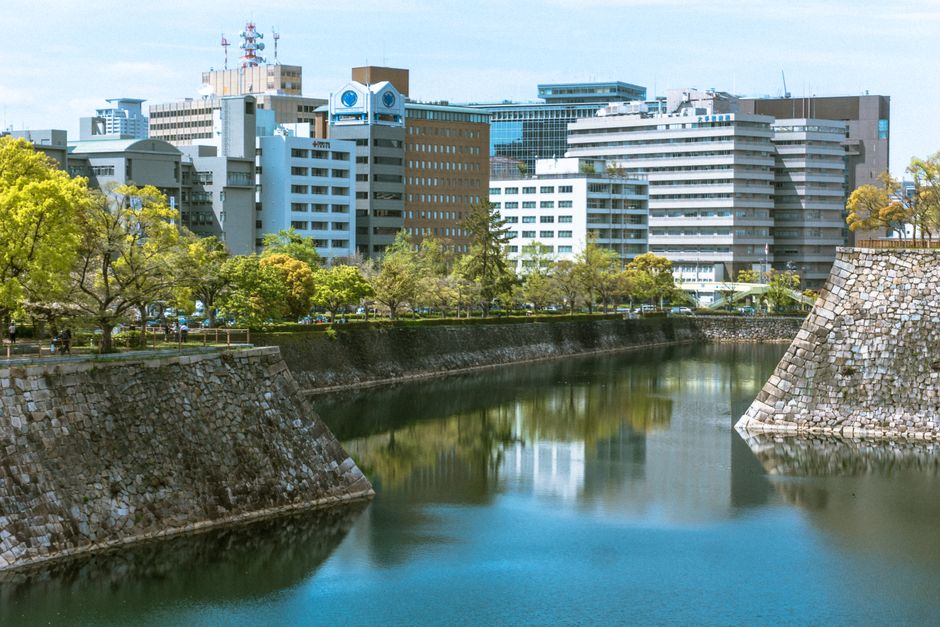
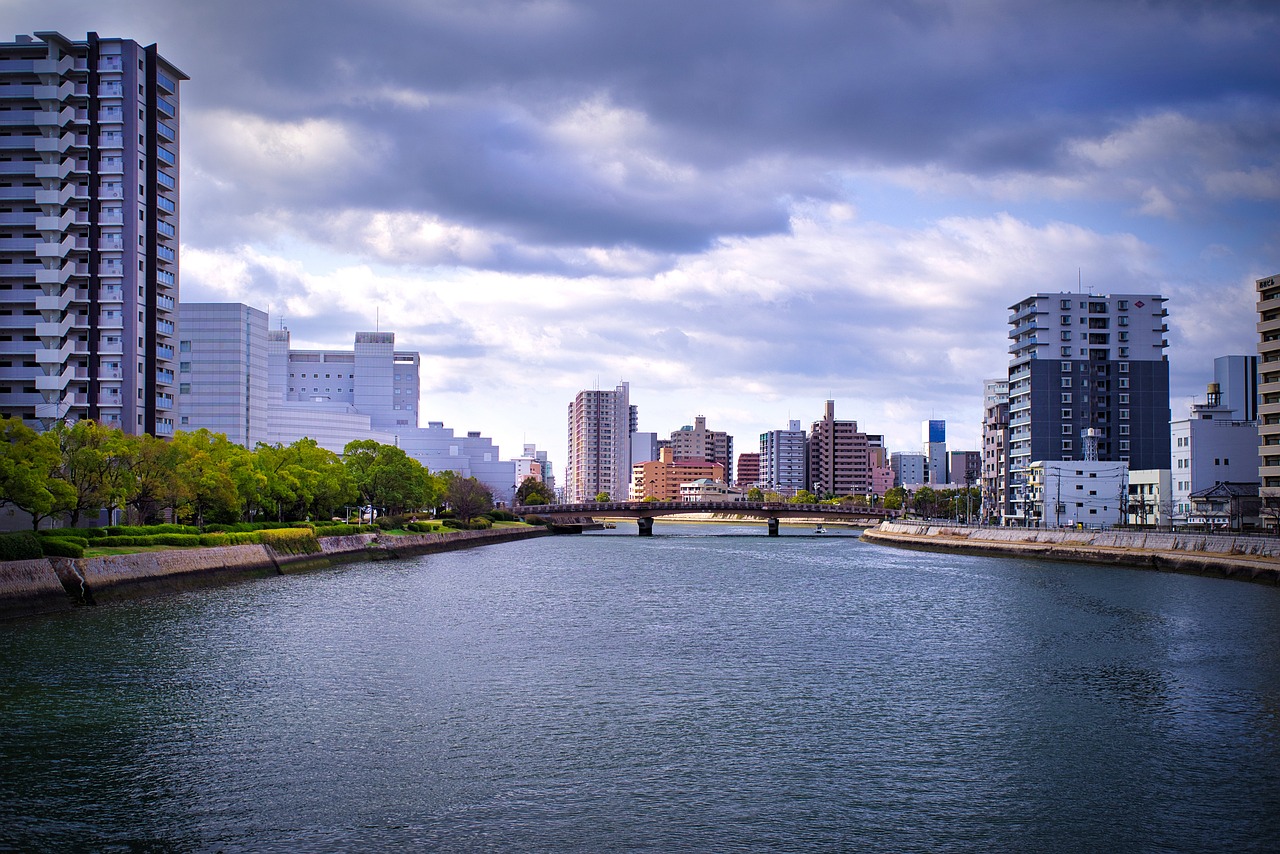
Hiroshima is a green, friendly city on the delta of the Ota River, rebuilt after the atomic bomb of August 6, 1945 into a place of parks, wide boulevards and streetcars. Most visitors come for the Peace Memorial Park and Museum and the ruined A-Bomb Dome, which tell the story of that day with great dignity, and for Miyajima, the sacred island across the bay whose vermilion torii gate seems to float on the sea at high tide. Stay for Hiroshima-style okonomiyaki, oysters from the Seto Inland Sea, the garden of Shukkeien, and day trips to Kure, Onomichi and the island-hopping cycling route of the Shimanami Kaido. The best months are late March to May and October to November; the rainy season peaks in late June and July, and typhoons are possible from August to October.
Right now in Hiroshima
- Wed 14–23°C 58–73°F 1 mm Light showers
- Thu 12–24°C 53–76°F Clear
- Fri 14–28°C 58–82°F Clear
- Mon 12 Oct Sports Day (スポーツの日)
Weather: MET Norway (CC BY 4.0) · Sea temperature: NOAA CoastWatch · Air quality: OpenAQ · Rates: ECB · Holidays: Nager.Date
Top tours in Hiroshima
See all tours for Hiroshima →
From local operators, with prices and reviews; you check availability and book on Viator, our partner. We may earn a commission at no extra cost to you. How we earn money
Hiroshima at a glance
- Best for: history and peace education, Miyajima and Itsukushima Shrine, food, gardens, and trips around the Seto Inland Sea.
- How long: 2 days for the city and Miyajima; 3–4 days to add Kure, Onomichi or the islands.
- Best time: late March to May and October to November, with highs of about 18–24 °C (64–75 °F).
- Getting there: by shinkansen, about 1 hour 20 minutes from Shin-Osaka and about 4 hours from Tokyo by Nozomi; or Hiroshima Airport, about 50 minutes by bus.
- Getting around: streetcars (Hiroden), buses, and the JR train and ferry to Miyajima.
- Fees to know: the Peace Memorial Museum costs ¥200, and every visitor to Miyajima pays a ¥100 visitor tax, added to the ferry fare.
- Before you go: entry rules, rail passes, money and general safety are in our Japan travel guide; see also our Osaka and Fukuoka guides.
Hiroshima in brief
Founded as a castle town by the warlord Mori Terumoto in 1589, Hiroshima grew into a major military and industrial city by the early 20th century. At 8:15 a.m. on August 6, 1945, the first atomic bomb used in war exploded above the city center, destroying most of it and killing tens of thousands of people that day, with many more dying of injuries and radiation by the end of the year. In 1949 Japan’s parliament passed a law to rebuild Hiroshima as a Peace Memorial City, and today it is a busy regional capital of about 1.2 million people, home to the Mazda carmaker and the Carp baseball team.
Hiroshima’s areas and where to stay
The center sits on a flat delta between river channels, so it is easy to walk or ride the streetcars.
Peace Memorial Park and Hondori
The park lies on a river island at the heart of the old city. East of it, the covered Hondori shopping arcade and the Hatchobori and Kamiyacho areas have hotels, department stores and restaurants. The best base for walking to the sights.
Around Hiroshima Station
The shinkansen and JR hub, with modern hotels, a new station building where the streetcars now run straight into the second floor, and okonomiyaki restaurants in the station itself. Convenient for day trips and late arrivals.
Nagarekawa and Yagenbori
Hiroshima’s nightlife district, east of Hondori, packed with bars, izakaya and late-night ramen; lively but noisy.
Miyajima
Spending a night on the island, in a ryokan near the shrine, lets you see the torii lit up after dark and walk the streets after the day visitors leave.
Top things to see in Hiroshima
Peace Memorial Park and the A-Bomb Dome
The park was laid out near the hypocenter of the bomb. Walk from the A-Bomb Dome, the skeleton of the former Industrial Promotion Hall, left as it stood after the blast and listed by UNESCO in 1996, across the Aioi Bridge to the Children’s Peace Monument, decorated with paper cranes from around the world, and on to the Cenotaph, which frames the Flame of Peace and the Dome in a single line. The park is free and open at all times. Free volunteer guides offer tours in English; ask at the visitor center.
Hiroshima Peace Memorial Museum
A moving museum of the bombing, its victims and survivors, and the city’s call for the abolition of nuclear weapons. According to the museum, adult admission is ¥200 (about US$1.3) as of October 2026; it opens at 7:30 a.m. and closes between about 6 and 7 p.m., depending on the season, and is closed December 30 and 31. Allow at least two hours, and expect queues for tickets in busy periods. The nearby Hiroshima National Peace Memorial Hall for the Atomic Bomb Victims, with survivors’ testimonies, is free.
Shukkeien Garden
A 17th-century strolling garden around a pond with tiny islands, bridges and teahouses, modeled in miniature on famous landscapes. It is lovely for cherry blossoms in spring and maples in November.
Hiroshima Castle
The castle keep, a 1958 concrete reconstruction of the original destroyed in 1945, closed to visitors in March 2026 because of the deterioration of its concrete and equipment; you can still see it from outside and walk the moats and grounds. According to the castle, the reconstructed Ninomaru buildings remain open, and a new history museum in the Sannomaru area is due to open on June 1, 2027.
More sights in the city
- Hondori and Okonomimura: the main shopping arcade, and a building with about two dozen okonomiyaki stalls on three floors.
- Mazda Museum: factory tours at the carmaker’s headquarters, by reservation.
- Hiroshima Orizuru Tower: a modern tower beside the A-Bomb Dome with a rooftop deck and a paper crane wall.
- Hijiyama Park: a hill with the Hiroshima City Museum of Contemporary Art and views over the city.
Museums
- Hiroshima Peace Memorial Museum
- Mazda Museum
Parks and gardens
- Hiroshima Castle
- Hiroshima Peace Memorial Park
- Shukkei-en
Monuments
- Hiroshima Peace Memorial
Viewpoints
- Hiroshima Orizuru Tower
Miyajima (Itsukushima)
Miyajima, officially Itsukushima, is a mountainous island about 45 minutes from central Hiroshima, considered sacred for centuries. Itsukushima Shrine and Mount Misen’s forest are a UNESCO World Heritage site.
Itsukushima Shrine and the Great Torii
The shrine’s halls and corridors are built on piers over the tidal flats, and its Great Torii stands about 200 m (660 ft) offshore. At high tide the gate appears to float; at low tide you can walk out to its base. Check the tide times before you go if you want both views. According to the shrine, as of October 2026 admission is ¥300 (about US$1.9) for adults, ¥300 for the Treasure Hall, or ¥500 (about US$3.2) for both; payment is in cash only.
Mount Misen and the island
Ride the Miyajima Ropeway, or hike one of three trails of about 1.5 to 2 hours, to the summit of Mount Misen, 535 m (1,755 ft), for views over the islands of the Inland Sea. Daisho-in, a temple at the foot of the mountain with prayer wheels and hundreds of small statues, is one of the island’s highlights. Omotesando shopping street sells grilled oysters and momiji manju, maple-leaf cakes. Deer roam the island too; feeding them is not allowed here.
The Miyajima visitor tax
Since October 1, 2023, Hatsukaichi City has charged a Miyajima visitor tax of ¥100 (about US$0.63) per person per visit, collected with your ferry fare, or ¥500 for a year if paid in advance at the city office. Preschool children and school groups on school trips are exempt, and residents and commuters are outside the tax. The JR West Miyajima Ferry is covered by the Japan Rail Pass and JR West passes, but the tax is still charged when you board.
Other things to do in Hiroshima
Food and drink
Hiroshima-style okonomiyaki is layered rather than mixed, with cabbage, noodles, pork and a fried egg; try it at Okonomimura or the stalls in the station. Oysters from Hiroshima Bay, best from about November to March, are served grilled, fried or raw, and anago-meshi (grilled eel on rice) is Miyajima’s specialty. Saijo, a short train ride east, is one of Japan’s great sake towns, with brewery tastings and a sake festival in October.
Cycling and islands
The Shimanami Kaido cycling route crosses six islands on bridges from Onomichi to Imabari in Shikoku, about 70 km (43 miles); rent a bike in Onomichi and ride part of it. See our cycling guide.
Activities and best months
- City sightseeingThe Hiroshima Peace Memorial Museum costs ¥200 for adults and opens from 7:30, closing between about 18:00 and 19:00 by season (closed 30-31 December). · source
Day trips from Hiroshima
- Miyajima: see above; plan at least half a day.
- Kure: a naval port with the Yamato Museum, about 35–50 minutes by JR.
- Onomichi: a hillside town of temples, cats and the start of the Shimanami Kaido, about 1 hour 15 minutes by shinkansen and local train.
- Iwakuni: the five-arched wooden Kintaikyo Bridge, about 50 minutes by JR.
- Okunoshima: a small island full of tame rabbits, with a sobering former poison gas factory, about 1.5 hours by train and ferry.
- Fukuoka: about 1 hour by shinkansen, for food stalls and Kyushu. See our Fukuoka guide.
Nearby destinations
Getting there and getting around
Shinkansen and airport
Hiroshima Station is on the Sanyo Shinkansen: about 1 hour 20 minutes to 1 hour 30 minutes from Shin-Osaka, 1 hour from Hakata (Fukuoka) and about 4 hours from Tokyo by Nozomi. As of October 2026, Japan Rail Pass holders need an extra ticket to ride the Nozomi, ¥6,500 (about US$41) from Tokyo; the pass’s 7-day price is ¥50,000 (about US$315) on the official site. JR West’s Kansai-Hiroshima Area Pass costs ¥17,000 (about US$110) for 5 days and covers the shinkansen between Shin-Osaka and Hiroshima, the Haruka from Kansai Airport and the JR Miyajima Ferry. Hiroshima Airport, with domestic and some Asian flights, is about 50 minutes from the station by limousine bus.
Streetcars and buses
Hiroden streetcars cover the city and run all the way to Miyajimaguchi; pay with an IC card when you get off. The Meipuru-pu sightseeing loop bus links the station, the Peace Park and Shukkeien, and JR Pass holders can ride the routes run by JR’s bus company. Taxis are plentiful and fairly cheap for short hops.
To Miyajima
Take a JR train to Miyajimaguchi (about 25–30 minutes from Hiroshima Station) or the Hiroden streetcar (about 70 minutes), then the JR or Matsudai ferry, about 10 minutes across. Direct high-speed boats also run from Peace Memorial Park. All ferries add the ¥100 visitor tax.
When to go and how long to stay
The table uses the Japan Meteorological Agency’s (JMA) 1991–2020 normals for its Hiroshima station: average daily highs and lows, total rain and days with at least 1 mm of rain.
| Month | Average high / low | Rain (days with 1 mm or more) | What to expect |
|---|---|---|---|
| January | 10 °C (50 °F) / 2 °C (36 °F) | 46 mm (1.8 in), 6 days | Cold and dry; oyster season; quiet |
| February | 11 °C (52 °F) / 2 °C (36 °F) | 64 mm (2.5 in), 7 days | Cool; oyster festival on Miyajima early in the month |
| March | 14 °C (58 °F) / 5 °C (41 °F) | 118 mm (4.7 in), 9 days | Cherry blossoms usually open around Mar 25 (JMA normal) |
| April | 20 °C (68 °F) / 10 °C (50 °F) | 141 mm (5.6 in), 9 days | Full bloom around early April; flower festival in early May |
| May | 24 °C (76 °F) / 15 °C (59 °F) | 170 mm (6.7 in), 9 days | Warm, sunny and the driest spring month for sightseeing |
| June | 27 °C (81 °F) / 20 °C (68 °F) | 226 mm (8.9 in), 11 days | Rainy season usually from about June 6 (JMA normal for Chugoku) |
| July | 31 °C (88 °F) / 24 °C (75 °F) | 280 mm (11.0 in), 11 days | Rainy season usually ends around July 19; heavy rain possible |
| August | 33 °C (91 °F) / 25 °C (77 °F) | 131 mm (5.2 in), 8 days | Hot; Peace Memorial Ceremony and lanterns on Aug 6 |
| September | 29 °C (84 °F) / 21 °C (70 °F) | 163 mm (6.4 in), 8 days | Hot early in the month; typhoons possible |
| October | 24 °C (75 °F) / 15 °C (59 °F) | 109 mm (4.3 in), 6 days | Clear and comfortable; Saijo sake festival |
| November | 18 °C (64 °F) / 9 °C (48 °F) | 69 mm (2.7 in), 6 days | Maples on Miyajima’s Momijidani and in Shukkeien |
| December | 12 °C (54 °F) / 4 °C (39 °F) | 54 mm (2.1 in), 6 days | Cool and clear; winter illuminations |
Hiroshima gets about 1,570 mm (62 in) of rain a year, much of it in June and July, when the JMA’s normal rainy season for the Chugoku region runs from about June 6 to July 19 (in 2026, about June 2 to July 9). Heavy rain at this time has caused landslides in the hills around the city, so follow local warnings. August highs average 33 °C (91 °F).
Weather month by month
Averages from JMA normals 1991–2020, Hiroshima · Last reviewed 5 Oct 2026
Cherry blossoms and fall colors: the JMA’s normal date for the first cherry blossoms in Hiroshima is March 25, with full bloom around April 3; in 2026 they opened on March 19. The maples at the JMA’s Hiroshima station normally turn around November 22; Miyajima’s Momijidani valley is at its best in mid- to late November.
August 6: the Peace Memorial Ceremony is held in the park every year on the morning of August 6, and lanterns are floated on the river in the evening. Visitors are welcome, but the park is crowded and some areas are reserved.
2 days in Hiroshima and Miyajima
Day one, Peace Memorial Park and the museum in the morning, Shukkeien and the castle grounds in the afternoon, and okonomiyaki in the evening. Day two, an early ferry to Miyajima, the shrine at high tide, Mount Misen and Daisho-in, and the torii at low tide or lit up after dark.
Where to stay in Hiroshima and taxes
- Hondori and Hatchobori: walking distance of the Peace Park, shops and restaurants.
- Hiroshima Station: modern hotels for train travelers.
- Miyajima: ryokan on the island for evenings at the shrine.
As of October 2026, the City of Hiroshima does not list an accommodation tax among its city taxes, so the Miyajima visitor tax is the only local tourist charge; hot spring hotels add a small bathing tax.
What a trip to Hiroshima costs
Prices are approximate, for October 2026, converted at about ¥158 to the US dollar.
| Item | Typical cost |
|---|---|
| Peace Memorial Museum | ¥200 (about US$1.3) |
| Itsukushima Shrine and Treasure Hall | ¥500 (about US$3.2) |
| Miyajima visitor tax, per visit | ¥100 (about US$0.63) |
| Okonomiyaki | ¥1,000–1,800 (about US$6.3–11) |
| Grilled oysters on Miyajima | ¥500–1,000 (about US$3.2–6.3) |
| Streetcar ride in the city | ¥220–240 (about US$1.4–1.5) |
| Business hotel double, per night | ¥9,000–18,000 (about US$57–115) |
| Miyajima ryokan with dinner and breakfast, per person | ¥25,000–50,000 (about US$160–315) |
Practical tips for Hiroshima
- Respect at the memorials: speak quietly, don’t climb on monuments, and ask before photographing people praying.
- Tide times: published by the Miyajima tourist association; go at high tide for the “floating” torii.
- Cash: Itsukushima Shrine takes cash only.
- Luggage: use lockers at Hiroshima Station or Miyajimaguchi, or the luggage service on the island.
- Visitor hotline: the JNTO’s Japan Visitor Hotline, 050-3816-2787, answers in English 24 hours a day.
Safety
Hiroshima is very safe, and radiation levels are the same as anywhere else in Japan. The main risks are natural: heavy rain in the rainy season, which has caused deadly landslides in the region, typhoons from August to October, and heat in July and August. Japan is earthquake country: take cover in strong shaking and follow staff instructions, and install the JNTO’s Safety Tips app. On Miyajima’s mountain trails, carry water and leave before dark. In an emergency, call 110 for the police or 119 for an ambulance or fire.
What to pack for Hiroshima
Comfortable shoes for the park and Mount Misen, a hat, sunscreen and water bottle in summer, a folding umbrella from June to October, and layers for spring and fall. Japan uses 100 V and two-pin type A plugs like the US.
What to pack
- City walking shoesLisbon and Porto are steep, with polished limestone cobbles that get slippery, so grippy soles matter.
- Day packs and anti-theft bagsA small zipped or anti-theft bag makes crowded trams and viewpoints less stressful.
- Rain jacketsFrom October to April Porto and Lisbon see rain on roughly a third of days.
- Travel adapters and convertersPortugal uses Type C and F sockets at 230 V, so most visitors from outside Europe need an adapter.
Hiroshima travel FAQ
How many days do I need in Hiroshima?
Two days covers the Peace Memorial Park and museum, the city and Miyajima; add a day or two for Kure, Onomichi or the islands.
How much is the Hiroshima Peace Memorial Museum?
¥200 for adults as of October 2026. It opens at 7:30 a.m.; allow at least two hours.
What is the Miyajima visitor tax?
A ¥100 tax per person per visit, added to your ferry fare since October 1, 2023, or ¥500 a year if paid in advance. Preschool children are exempt.
How do I get to Miyajima from Hiroshima?
JR train to Miyajimaguchi (about 25–30 minutes), then a 10-minute ferry; or a direct boat from Peace Memorial Park.
Does the JR Pass cover the Miyajima ferry?
Yes, the JR ferry is covered, but you still pay the ¥100 visitor tax when you board.
When is the torii gate “floating”?
At high tide. Check the tide tables before you go; at low tide you can walk to its base.
Can I visit Hiroshima as a day trip from Osaka or Kyoto?
Yes, it is about 1 hour 20 minutes from Shin-Osaka by shinkansen, but an overnight stay is much better to include Miyajima.
Is Hiroshima Castle open?
The keep closed in March 2026; the grounds and the Ninomaru buildings remain open, and a Sannomaru history museum is due on June 1, 2027.
What should I eat in Hiroshima?
Layered Hiroshima-style okonomiyaki, oysters in winter, anago-meshi on Miyajima and momiji manju cakes.
Is it respectful to visit the Peace Memorial Park as a tourist?
Yes, visitors from all over the world are welcome. Be quiet and respectful at the memorials, and consider leaving paper cranes at the Children’s Peace Monument.
Sources
- © OpenStreetMap contributors · ODbL · fetched 5 Oct 2026
- Wikidata · CC0 · fetched 5 Oct 2026
Sources and last review
Researched and last reviewed on 4 October 2026. Museum fee and hours: the Hiroshima Peace Memorial Museum; shrine fees: Itsukushima Shrine; Miyajima visitor tax: Hatsukaichi City; castle status: Hiroshima Castle; climate normals, rainy season and cherry blossom and maple dates: the Japan Meteorological Agency (JMA); JR Pass and Nozomi ticket: the official Japan Rail Pass website; Kansai-Hiroshima Area Pass: JR West; visitor hotline: JNTO; exchange rate: the US Federal Reserve. Journey times, sight descriptions, festival dates, fares and typical prices are general references or estimates, flagged for checking. Prices and hours change, so check the official sites before you go. For entry rules, money and general safety, see our Japan travel guide.
Plan your trip
Partner links: TravelerCenter may earn a commission if you book, at no extra cost to you.
🇯🇵 Useful Japanese phrases for Hiroshima
All 38 Japanese phrases: restaurant, hotel, emergencies, romance (printable) →