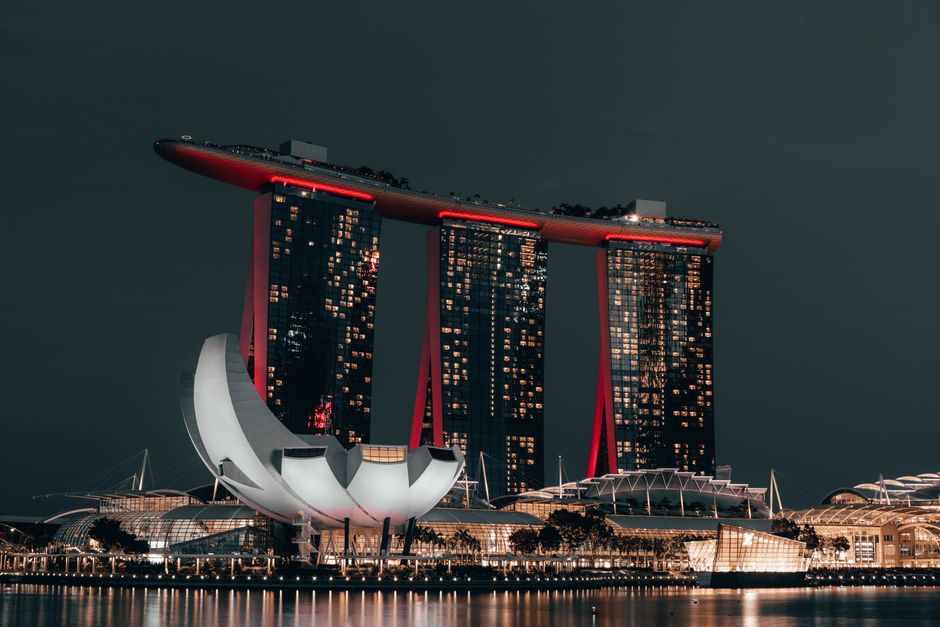
Singapore is a city, an island and a country all at once: a small, green, spotless tropical metropolis at the tip of the Malay Peninsula, one degree north of the equator, where futuristic skyscrapers and giant garden structures rise above Chinese shophouses, Hindu temples and old mosques. You can walk the waterfront of Marina Bay and the Supertrees of Gardens by the Bay, eat world-class street food in hawker centers for a few dollars, wander the colorful streets of Chinatown, Little India and Kampong Glam, see orangutans at the zoo, spend a day at the beaches and theme parks of Sentosa, and finish at the world’s tallest indoor waterfall inside Changi Airport. Getting around is effortless: the MRT is fast, air-conditioned and accepts contactless bank cards, English is spoken everywhere, and the city is famously safe. It is not cheap, and it is hot, humid and rainy all year, but there is no bad season to come. Before you fly, file the free SG Arrival Card, know the strict rules on vapes, chewing gum and drugs, and note that a new aviation-fuel levy applies to flights departing from January 1, 2027.
Right now in Singapore
- Wed 26–33°C 78–91°F 1 mm Light showers
- Thu 25–33°C 76–91°F Mostly clear
- Fri 26–32°C 79–89°F 1 mm Mostly clear
Weather: MET Norway (CC BY 4.0)
Multi-day tours of Singapore
Multi-day tours from local operators. You check dates and book on Viator, our partner; we may earn a commission at no extra cost to you. How we earn money
Singapore at a glance
Singapore is an independent city-state of about 735 km² (284 sq miles), made up of one main island and more than 60 smaller ones, separated from Malaysia by the narrow Straits of Johor and from Indonesia’s Riau Islands by the Singapore Strait. About 6 million people live here, so the city is dense, but around half of it is green: nature reserves, parks, reservoirs and tree-lined streets. Modern Singapore began as a British trading post in 1819, joined Malaysia in 1963 and became an independent republic in 1965.
Singapore has four official languages, English, Malay, Mandarin and Tamil, reflecting its Chinese, Malay and Indian communities; English is the language of business, signs and government, and everyone you deal with will speak it, often as “Singlish”, the local blend. The time zone is Singapore Standard Time (UTC+8) all year, with no daylight saving time. Electricity is 230 V with British-style three-pin (type G) sockets. The currency is the Singapore dollar (S$).
Singapore’s districts
- Marina Bay and the CBD: the skyline, Marina Bay Sands, Gardens by the Bay, the Merlion, the Esplanade and the financial district around Raffles Place.
- The Civic District and the river: the colonial core, with the National Gallery, the Asian Civilisations Museum, Raffles Hotel and Fort Canning, plus the riverside bars of Boat Quay, Clarke Quay and Robertson Quay.
- Chinatown and Tanjong Pagar: temples, shophouses, hawker centers and some of the city’s best small restaurants and cocktail bars.
- Little India and Kampong Glam: Hindu temples, spice shops and curry houses, and the golden-domed Sultan Mosque, Arab Street and Haji Lane.
- Orchard Road and the Botanic Gardens: the shopping boulevard, and the UNESCO-listed gardens and restaurants of Dempsey Hill nearby.
- The East: Katong and Joo Chiat with their pastel Peranakan houses, East Coast Park on the sea, and Changi, with the airport, Jewel and the ferry to Pulau Ubin.
- The North and West: the rainforest reserves and reservoirs of the center, the zoo, Night Safari and Bird Paradise at Mandai, and Jurong.
- The South: Sentosa island, the Southern Ridges trail, Mount Faber and the Southern Islands.
Where to go: Singapore’s neighborhoods and highlights
Singapore is a city-state, so this guide covers the city itself; the resort island of Sentosa has its own page. Most first-time visitors spend three or four days here, often as a stopover between Europe or the Americas and Australia or the rest of Southeast Asia.
Marina Bay and Gardens by the Bay
The postcard view: the three towers and rooftop “ship” of Marina Bay Sands, the lotus-shaped ArtScience Museum, the spiky domes of the Esplanade theaters and the Merlion spouting water into the bay. A 3.5 km (2-mile) promenade loops around the water, over the Helix Bridge, and is at its best at dusk. Behind the hotel, Gardens by the Bay has the Supertree Grove, 16-story vertical gardens that are free to walk among, with a free light-and-music show, Garden Rhapsody, every evening at 7:45 and 8:45 p.m. Its two glass conservatories, the Flower Dome and the misty Cloud Forest, are open from 9 a.m. to 9 p.m.; as of October 2026, a combined ticket costs S$46 (about US$36) for non-resident adults. Marina Bay Sands’ rooftop observation deck and the Singapore Flyer wheel add the views from above.
The Civic District and the Singapore River
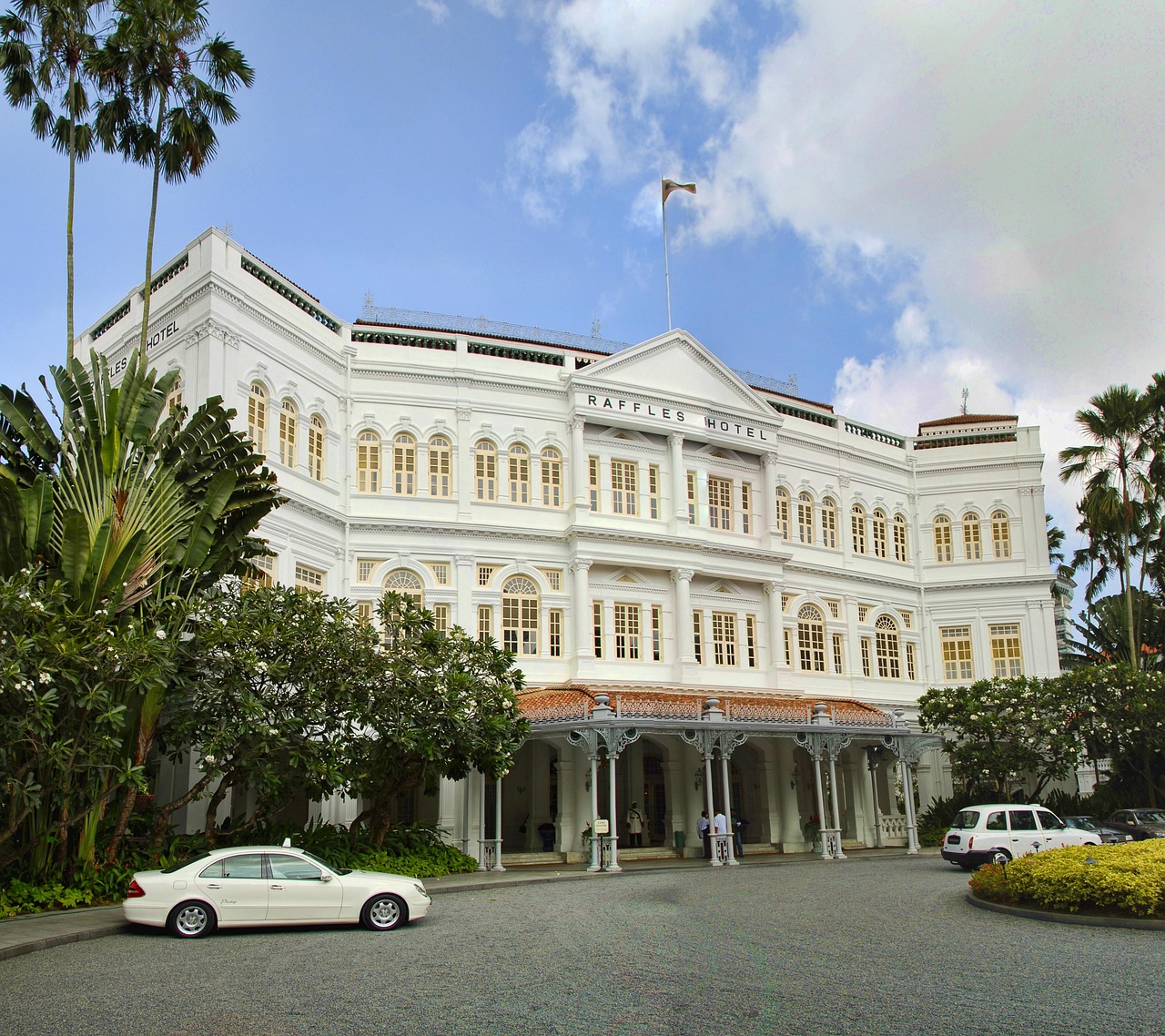
Singapore’s colonial heart sits on the north bank of the river: the white columns of the old Supreme Court and City Hall, now the National Gallery Singapore with the world’s largest public collection of Southeast Asian art; St Andrew’s Cathedral; the Victoria Theatre; the Asian Civilisations Museum by the river; and the Raffles Hotel, home of the Singapore Sling. Along the river, the old warehouses of Boat Quay, Clarke Quay and Robertson Quay are now restaurants and bars, linked by bumboat cruises.
Chinatown
Restored shophouses, lanterns and markets around Pagoda Street and Smith Street, the five-story Buddha Tooth Relic Temple, the city’s oldest Hindu temple, Sri Mariamman, and the Fujian-style Thian Hock Keng Temple. Maxwell Food Centre and Chinatown Complex are two of the best hawker centers in town. Next door, Tanjong Pagar, Keong Saik Road and Ann Siang Hill are lined with restaurants and cocktail bars.
Little India and Kampong Glam
Little India is loud, colorful and fragrant: flower-garland stalls, the ornate Sri Veeramakaliamman Temple, the Tekka Centre’s food stalls, and banana-leaf curry houses along Race Course Road. It is at its brightest around Deepavali, the festival of lights, which falls on November 8 in 2026. A short walk east, Kampong Glam is the old Malay and Arab quarter, centered on the golden domes of the Sultan Mosque, with textile shops on Arab Street, Middle Eastern restaurants, and the murals and indie boutiques of Haji Lane.
Orchard Road and the Botanic Gardens
Orchard Road is 2 km (1.5 miles) of malls linked by air-conditioned underpasses. At its western end, the Singapore Botanic Gardens, a UNESCO World Heritage site, are free to enter and open from early morning to midnight; the National Orchid Garden inside charges a small fee.
Katong, Joo Chiat and the East Coast
The east is where to see the pastel, tile-fronted terrace houses of the Peranakans, the Straits Chinese, especially on Koon Seng Road, and to try Katong laksa and Peranakan dishes. East Coast Park runs along the sea, with cycle paths and seafood restaurants.
Mandai: the zoo, Night Safari and Bird Paradise
In the green north of the island, the Mandai wildlife parks are among the best in Asia: the open-concept Singapore Zoo, the Night Safari, the world’s first nocturnal zoo, River Wonders with its giant pandas, and Bird Paradise. Combined tickets save money; pair an afternoon at the zoo with an evening at the Night Safari.
Sentosa
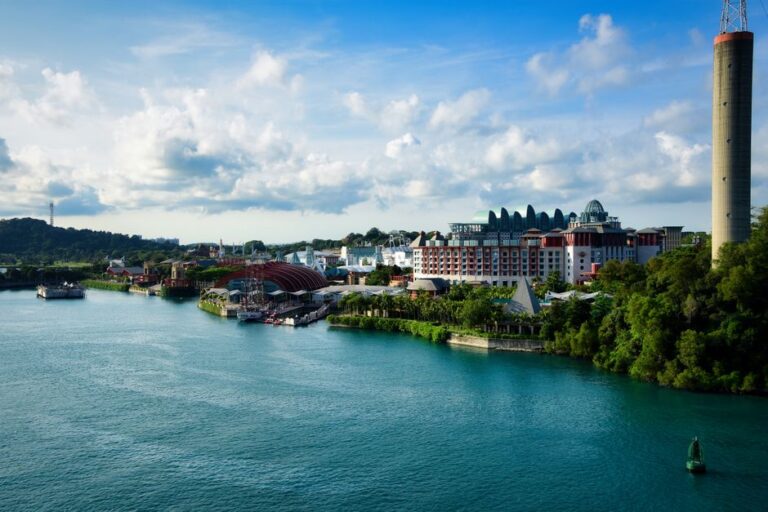
Singapore’s playground island, just south of the city, has three man-made beaches, Universal Studios Singapore, the Singapore Oceanarium, the Singapore Cable Car, the Skyline Luge and the WWII Fort Siloso. It is a short monorail ride from HarbourFront MRT. See our Sentosa travel guide.
A few more worth your time
- Jewel Changi Airport: a glass dome with a 40 m (130 ft) indoor waterfall and a terraced forest, open to everyone, not just passengers.
- The Southern Ridges: a 10 km (6-mile) chain of parks and walkways from Mount Faber to Kent Ridge, including the wave-shaped Henderson Waves bridge.
- MacRitchie Reservoir and the TreeTop Walk: rainforest trails and a suspension bridge in the canopy, with long-tailed macaques; Bukit Timah Hill is the island’s highest point at 163 m (535 ft).
- Tiong Bahru: 1930s Art Deco public housing, cafés, bakeries and a classic market and hawker center.
Sentosa Travel Guide
Plan a trip to Sentosa, Singapore's resort island: Siloso, Palawan and Tanjong beaches, the Southernmost Point bridge, Universal Studios Singapore and Minion Land, the…
Where to stay in Singapore
- Marina Bay and the CBD: skyline views, rooftop pools and the big international hotels; the most expensive area, and quiet on weekend evenings away from the bay.
- The Civic District and Clarke Quay: central, walkable and close to museums, the river and nightlife.
- Chinatown and Tanjong Pagar: boutique hotels in converted shophouses, great food, and good MRT links; a favorite for first-timers.
- Bugis, Kampong Glam and Little India: characterful and better value, with hostels, capsule hotels and mid-range hotels.
- Orchard Road: large hotels near the malls and the Botanic Gardens.
- Sentosa: beach and resort hotels, best for families and theme-park trips.
- Changi: airport hotels, including one inside Jewel, for very short stopovers.
Singapore’s hotels are among the most expensive in Asia. Room rates are often quoted “++”, meaning a 10% service charge and 9% GST are added to the bill. Book well ahead for the Formula 1 race weekend and big concerts, when prices jump.
Best time to visit Singapore
Singapore is hot, humid and wet all year, so there is no bad time to visit; plan around festivals, school holidays and your tolerance for rain rather than temperature. According to the Meteorological Service Singapore (MSS), the year has two monsoon seasons separated by inter-monsoon periods. The Northeast Monsoon, from December to early March, starts with a wet phase, usually from December to early January, when “monsoon surges” can bring widespread, continuous rain, followed by a windy, relatively dry phase from late January to early March; February is the driest month. The inter-monsoon periods, from late March to May and in October and November, bring afternoon and evening thunderstorms, at times severe. The Southwest Monsoon, from June to September, brings occasional pre-dawn “Sumatra squalls” with strong gusts, short afternoon showers and, in some years, smoke haze from fires in the region.
The table shows MSS’s 1991–2020 climate normals for the Changi climate station, as submitted to the World Meteorological Organization (WMO). Rain days are days with at least 1 mm of rain; by MSS’s own measure (0.2 mm or more), it rains on about 171 days a year, mostly in short, heavy afternoon downpours.
| Month | Average high / low | Rain (days with 1 mm or more) | What to expect |
|---|---|---|---|
| January | 31 °C (87 °F) / 24 °C (76 °F) | 222 mm (8.7 in), 11 days | End of the wet phase; drier and breezy later in the month |
| February | 32 °C (89 °F) / 25 °C (76 °F) | 105 mm (4.1 in), 6 days | The driest and sunniest month; Chinese New Year falls on February 6–7 in 2027 |
| March | 32 °C (90 °F) / 25 °C (77 °F) | 151 mm (5.9 in), 9 days | Mostly dry early; thunderstorms return late in the month |
| April | 32 °C (90 °F) / 25 °C (78 °F) | 164 mm (6.4 in), 11 days | Hot afternoons and thunderstorms |
| May | 32 °C (90 °F) / 26 °C (78 °F) | 164 mm (6.4 in), 11 days | The warmest month on average; humid |
| June | 32 °C (89 °F) / 26 °C (78 °F) | 137 mm (5.4 in), 10 days | Southwest Monsoon begins; school holidays |
| July | 31 °C (89 °F) / 25 °C (78 °F) | 145 mm (5.7 in), 10 days | Occasional pre-dawn and morning squalls |
| August | 31 °C (89 °F) / 25 °C (78 °F) | 149 mm (5.9 in), 11 days | National Day on August 9, with parades and fireworks; haze possible |
| September | 32 °C (89 °F) / 25 °C (77 °F) | 125 mm (4.9 in), 10 days | Haze possible in some years; the Formula 1 night race in some years |
| October | 32 °C (89 °F) / 25 °C (77 °F) | 166 mm (6.6 in), 12 days | Inter-monsoon thunderstorms in the afternoon |
| November | 31 °C (88 °F) / 25 °C (76 °F) | 254 mm (10.0 in), 15 days | Wet; Deepavali lights in Little India (November 8, 2026) |
| December | 30 °C (87 °F) / 24 °C (76 °F) | 332 mm (13.1 in), 16 days | The wettest month; Christmas lights on Orchard Road; year-end school holidays |
Changi averages about 2,113 mm (83 in) of rain a year. Temperatures barely change: MSS notes that nights rarely fall below 23–25 °C (73–77 °F) and days rarely rise above 31–33 °C (88–91 °F), with humidity around 82% on average and above 90% in the early morning. Rain is usually heavier in the center and west of the island than in the east, and most falls in the afternoon.
Festivals and public holidays
- Chinese New Year: street light-ups and markets in Chinatown, the River Hongbao festival at Marina Bay and the Chingay parade. According to the Ministry of Manpower, the public holidays are February 6–7, 2027.
- Deepavali: the Hindu festival of lights, with Little India lit up for weeks; November 8, 2026.
- Hari Raya Puasa and Hari Raya Haji: the Muslim festivals, with a Ramadan bazaar around Kampong Glam and Geylang Serai before Hari Raya Puasa.
- National Day (August 9): the parade, air displays and fireworks over Marina Bay; rehearsals on several weekends before.
- Christmas and New Year’s Eve: the Orchard Road light-up from mid-November and fireworks over Marina Bay.
- Formula 1: the Singapore Grand Prix, a night race around Marina Bay.
How long to stay: sample itineraries
- A 24-hour stopover: Marina Bay and Gardens by the Bay in the evening, dinner at Lau Pa Sat or Satay by the Bay, then Chinatown and Kampong Glam in the morning and Jewel on the way back to the airport.
- 3 days: Day 1, Marina Bay, the Civic District and the river; day 2, Chinatown, Tiong Bahru and the Botanic Gardens, then Orchard Road; day 3, Little India, Kampong Glam and an evening at the Night Safari.
- 5 days: add a full day on Sentosa, the zoo or Bird Paradise, and a morning on the Southern Ridges or at MacRitchie, with an evening in Katong.
- 7 days: add Pulau Ubin by bumboat, a day across the border in Johor Bahru, or two nights at a beach resort on Bintan in Indonesia.
Entry, laws, money and costs
Entry and the SG Arrival Card (last reviewed October 2026)
Most visitors from North America, Europe, Australia, New Zealand, Japan and South Korea don’t need a visa for a short visit; the Immigration & Checkpoints Authority (ICA) publishes the list of countries whose citizens do. According to ICA, your passport must be valid for at least six months, you should have enough money and proof of onward travel, and you must give your biometrics (fingerprints, face and iris) at immigration. Your permitted stay is decided by the officer at the checkpoint and recorded in an electronic visit pass (e-Pass), not by any visa; it is commonly 30 days, and up to 90 days for some nationalities. You can retrieve your e-Pass and check its validity online after you arrive, and apply online if you need an extension. Visitors may not work, and overstaying is an offence. If you have recently been in a country with yellow fever risk, you need a vaccination certificate.
Every traveler, of any age and nationality, must submit the SG Arrival Card (SGAC), with an electronic health declaration, within three days before arrival, counting the day you arrive, according to ICA. Submission is free on ICA’s SGAC e-Service or in the MyICA app; ICA warns that it does not endorse commercial websites that charge a fee. The SGAC is not a visa, and travelers who fail to submit it may be denied entry. Only passengers transiting without passing immigration, and residents crossing at the land checkpoints, are exempt. If you carry more than S$20,000 in cash or equivalent, you must declare it.
The new Sustainable Aviation Fuel levy
Singapore has no separate departure tax to pay at the airport; airport charges are included in your ticket. A new charge is coming, though. According to the Civil Aviation Authority of Singapore (CAAS), a Sustainable Aviation Fuel (SAF) levy applies to air tickets sold from October 1, 2026, for flights departing Singapore from January 1, 2027; it was originally due to start in October 2026 but was deferred in March 2026. It applies to passengers whose journey starts or ends in Singapore, not to transit passengers, and airlines must show it as a separate line in the fare. As announced in November 2025, it depends on the first destination after Singapore and the cabin: in economy, S$1 (about US$0.80) to Southeast Asia, S$2.80 to Northeast Asia, South Asia and Australia, S$6.40 to Europe, Africa, the Middle East and New Zealand, and S$10.40 (about US$8) to the Americas; business and first class pay four times as much.
Laws to know: vapes, chewing gum, drugs and smoking
Singapore’s laws are strict and enforced, including for visitors, and fines are issued on the spot. The rules most likely to affect travelers are:
- E-cigarettes and vapes: they are illegal. According to the Health Sciences Authority (HSA), possessing, using or buying a vape is an offence, and importing or selling them carries heavier penalties. Since September 1, 2025, penalties are higher: offenders are fined on the spot, and those caught a third time are prosecuted in court with fines of up to S$2,000. Etomidate, an anesthetic found in some vape pods, became a controlled drug the same day, with rehabilitation and prison for users and caning for importers. Leave vapes at home; if you arrive with one, declare it at the Red Channel at customs and hand it over.
- Chewing gum: Singapore Customs lists chewing gum as a prohibited import, except dental and medicinal gum approved by HSA; you won’t find it on sale. Chewing tobacco and shisha tobacco are also banned.
- Drugs: the Misuse of Drugs Act is among the strictest in the world. According to the Central Narcotics Bureau, consuming cannabis carries 1 to 10 years in prison and a fine of up to S$20,000; trafficking, importing or exporting more than 500 g (1.1 lb) of cannabis carries the death penalty, with similar thresholds for other drugs. Police can require urine tests.
- Smoking: under the National Environment Agency’s rules, smoking is banned in almost all indoor public places, at bus stops and taxi queues, in parks, on recreational beaches and in the Orchard Road No Smoking Zone, except in marked smoking corners. Cigarettes brought in are taxed: there is no duty-free allowance for tobacco, and packs must have Singapore’s standardized packaging.
- Littering and everyday rules: littering, spitting, jaywalking near crossings, and eating or drinking on the MRT and buses are all fined, and repeat litterers can be given Corrective Work Orders to clean public areas. Durians aren’t allowed on trains.
- Alcohol: drinking in public places is not allowed between 10:30 p.m. and 7 a.m., and shops stop selling alcohol at 10:30 p.m.
Money, cards and tipping
The currency is the Singapore dollar (S$, SGD); in late September 2026 the US Federal Reserve’s rate was about S$1.28 to the US dollar. Cards, including contactless payment by phone, are accepted almost everywhere, from taxis to most hawker centers, many of which also take QR payments; carry some cash for smaller stalls and markets. ATMs are everywhere. Tipping is not expected: restaurants and hotels add a 10% service charge, and taxi drivers and hawkers don’t expect a tip.
GST and the tourist refund
Singapore’s goods and services tax (GST) is 9%, included in shop prices. According to the Inland Revenue Authority of Singapore (IRAS), tourists aged 16 and over can claim it back through the electronic Tourist Refund Scheme (eTRS) at participating shops: spend at least S$100 including GST, adding up to three same-day receipts from the same shop if needed; show your original passport in person when you pay so the shop can record it; then apply at the eTRS self-help kiosk at Changi Airport (or Seletar Airport) before checking in your bags. You must leave by air with the goods within two months of purchase. Services, such as hotel rooms and meals, don’t qualify, and the refund agent deducts a handling fee, so you get back a little less than the full 9%.
What a trip costs
Prices are approximate, for October 2026, converted at about S$1.28 to the US dollar.
| Item | Typical cost |
|---|---|
| Hawker centre meal | S$5–8 (about US$4–6) |
| Kopi (local coffee) and kaya toast set | S$4–7 (about US$3–5.50) |
| Mid-range restaurant meal for one | S$30–60 (about US$23–47) |
| Beer in a bar | S$12–18 (about US$9–14) |
| MRT ride, adult | about S$1.20–2.50 (about US$0.95–2) |
| Flower Dome and Cloud Forest, non-resident adult | S$46 (about US$36) |
| Sentosa Express from VivoCity | S$4 (about US$3) |
| Taxi or Grab from Changi to the city | S$25–40 (about US$20–31) |
| Hostel or capsule bed, per night | S$40–80 (about US$31–62) |
| Mid-range hotel double, per night | S$250–450 (about US$195–350) |
A comfortable mid-range trip costs roughly S$300–500 (about US$235–390) per person per day including a shared hotel room; budget travelers who eat at hawker centers and stay in hostels can manage on about S$100–150 (about US$80–120).
Getting there and getting around
Changi Airport and Jewel
Almost all visitors arrive at Changi Airport (SIN), the home of Singapore Airlines and Scoot, with four terminals linked by a free Skytrain and nonstop flights to every continent. The MRT, taxis and ride-hailing cars reach the city center in 25 to 45 minutes. Linked to Terminals 1, 2 and 3 stands Jewel, a glass-domed complex of shops, restaurants and gardens open to the public. Its centerpiece, the Rain Vortex, is billed as the world’s tallest indoor waterfall, falling 40 m (130 ft) from the roof; it is free to see from 10 a.m. to 10 p.m., with a light-and-music show at 8 and 9 p.m. (plus 10 p.m. from Friday to Sunday and on public holidays). Canopy Park on the top floor is ticketed. On a long layover you can leave the airport, as long as you meet the entry rules and file an SG Arrival Card.
The MRT and buses
According to the Land Transport Authority (LTA), Singapore’s MRT has six lines, more than 140 stations and about 200 km (125 miles) of track, plus two light-rail lines; trains run every 2 to 3 minutes at peak times and every 5 to 7 minutes otherwise, from about 5:30 a.m. to midnight. Fares are charged by distance. Single-trip paper tickets were phased out in 2022: if you pay adult fares, you simply tap a contactless Visa, Mastercard or American Express card, or a phone or watch with Apple Pay, Google Pay or Samsung Pay, at the gates, through the account-based SimplyGo system; the same card works on public buses. Use the same card or device each time, and check your bank’s foreign-transaction fees. Alternatively, buy a stored-value EZ-Link card at stations and convenience stores, or the Singapore Tourist Pass for unlimited rides. Note that eating and drinking are not allowed on trains and buses.
From the airport, the MRT’s Changi Airport branch connects to the East-West Line at Tanah Merah; the Thomson-East Coast Line, which is being extended east in 2026, is a useful line for Marina Bay, Orchard and Gardens by the Bay.
Taxis, Grab and walking
Metered taxis are plentiful and honest, with surcharges at peak hours, late at night and from the airport, and ride-hailing apps such as Grab, Gojek and TADA are widely used. Walking is pleasant in the morning and evening, helped by covered walkways and underground passages, but distances feel longer in the heat.
To and from Malaysia and Indonesia
Two land crossings link Singapore with Johor in Malaysia: the Causeway at Woodlands, with frequent buses to Johor Bahru, and the Second Link at Tuas. The Johor Bahru–Singapore RTS Link, a 4 km (2.5-mile) shuttle train from Woodlands North, where it connects with the Thomson-East Coast Line, to Bukit Chagar in Johor Bahru, is under construction; passengers will clear both countries’ immigration at departure. Ferries sail from HarbourFront to Batam and from Tanah Merah Ferry Terminal to Batam and Bintan in Indonesia. Buses also run to Kuala Lumpur. Check the entry rules for Malaysia and Indonesia before you cross.
Day trips from Singapore
- Sentosa: beaches, theme parks and Fort Siloso, 15 minutes from the city by MRT and monorail. See our Sentosa guide.
- Pulau Ubin: a rural island of old kampong (village) houses, mangroves and bike trails, a 10-minute bumboat ride from Changi Point Ferry Terminal; rent a bike and visit the Chek Jawa wetlands.
- The Southern Islands: ferries from Marina South Pier go to St John’s, Lazarus and Kusu islands for quiet beaches, lagoons and a Taoist temple.
- Johor Bahru, Malaysia: food, malls and Legoland Malaysia, across the Causeway; queues at the border can be very long on weekends and holidays.
- Batam and Bintan, Indonesia: ferry trips of about 1 to 1.5 hours for spas, golf and beach resorts, best with at least one night.
Food, drink and culture
Food is Singapore’s national obsession, and the best of it is found in hawker centers, open-air food courts of small stalls that were added to UNESCO’s list of intangible cultural heritage in 2020. A few stalls even have Michelin recognition. Try Hainanese chicken rice, laksa (spicy coconut noodle soup), char kway teow (fried flat noodles), satay, nasi lemak (coconut rice), roti prata with curry, Hokkien mee, bak kut teh (pork rib soup), and, for a splurge, chili crab or black pepper crab. Breakfast is kaya toast with soft-boiled eggs and strong local coffee. Good hawker centers include Maxwell, Lau Pa Sat, Old Airport Road, Tiong Bahru Market, Chinatown Complex, Tekka Centre and Newton. Peranakan, or Nyonya, cuisine mixes Chinese and Malay cooking. A packet of tissues on a table means it’s taken, and you must return your tray after eating.
Tap water is safe to drink everywhere. Alcohol is heavily taxed, so beer and wine are expensive; happy hours help. Singapore is multi-religious and relaxed about dress, but cover shoulders and knees and remove your shoes in temples and mosques, where loose robes are often provided.
Things to do: gardens, museums, wildlife and the water
- City sightseeing: Marina Bay, the Civic District museums, Chinatown, Little India and Kampong Glam. See our guide to city sightseeing.
- Gardens and nature walks: Gardens by the Bay, the Botanic Gardens, the Southern Ridges, MacRitchie and Bukit Timah. See our hiking guide.
- Cycling: East Coast Park, the park connector network and Pulau Ubin. See our cycling guide.
- Beaches and boat trips: Sentosa’s beaches, bumboat cruises on the Singapore River and ferries to the Southern Islands. See our guides to beaches and boat trips.
- Wildlife: the zoo, Night Safari, River Wonders and Bird Paradise at Mandai, and the wetlands of Sungei Buloh.
- Theme parks and family fun: Universal Studios Singapore, the Singapore Oceanarium and Adventure Cove on Sentosa, and the Science Centre and children’s gardens.
- Shopping and nightlife: Orchard Road’s malls, rooftop bars around Marina Bay and the cocktail bars of Tanjong Pagar.
Safety, health and connectivity
Safety
Singapore has one of the lowest crime rates in the world, and walking around at night is normal. Petty theft is rare but not unknown in crowded places, so keep an eye on your phone in hawker centers. The main risks are the laws described above, scam phone calls and messages, and the weather: lightning is common in afternoon storms, so leave open spaces, golf courses and the sea when thunder starts; flash floods occasionally hit low-lying roads during intense downpours; and in some years, usually between June and October, smoke haze from regional fires raises air pollution, so check the National Environment Agency’s haze readings if you have breathing problems. In an emergency, call 999 for the police and 995 for an ambulance or fire.
Heat and health
The heat and humidity are tiring: plan outdoor sightseeing for the morning and evening, use the air-conditioned malls and underpasses at midday, drink plenty of water and wear sunscreen even on cloudy days. Dengue fever, spread by day-biting mosquitoes, occurs all year, so use repellent, especially in parks and gardens. Healthcare is excellent but expensive for visitors; buy travel insurance with medical cover.
Accessibility and connectivity
MRT stations, buses, malls, museums and most hotels have lifts and step-free access, though hawker centers and old shophouse streets can be crowded and uneven. Free Wi-Fi is widespread, and tourist SIM cards and eSIMs are sold at the airport; you register a SIM with your passport.
What to pack
Light, breathable clothes, a compact umbrella (more useful than a rain jacket in this heat), a light layer for the air-conditioning, comfortable walking shoes, sunscreen, insect repellent and modest clothing for temples and mosques. Leave vapes and chewing gum at home, and bring a three-pin type G adapter if your devices use other plugs.
Singapore travel FAQ
Do I need a visa to visit Singapore?
Not if you hold a passport from the US, Canada, the UK, the EU, Australia, New Zealand, Japan or many other countries. Your passport needs six months’ validity, and the length of your stay is set on arrival in your e-Pass.
What is the SG Arrival Card?
A free online arrival form with a health declaration that every traveler must submit within three days before arriving, on ICA’s website or the MyICA app. It is not a visa; ignore sites that charge for it.
Is there a departure tax or new levy in Singapore?
There is no tax to pay at the airport, but a Sustainable Aviation Fuel levy is added to tickets sold from October 1, 2026, for flights departing from January 1, 2027: from S$1 to S$10.40 in economy, depending on the destination.
Can I chew gum in Singapore?
Chewing gum is a prohibited import, apart from approved dental and medicinal gum, and it isn’t sold in shops. Don’t bring any, and never stick gum anywhere.
Is vaping legal in Singapore?
No. Possessing, using or buying a vape is illegal, and penalties were raised on September 1, 2025; vapes containing etomidate are treated as drugs. Declare any vape at customs on arrival.
How do I pay for the MRT in Singapore?
Tap a contactless Visa, Mastercard or American Express card, or a phone wallet, at the gates; fares are charged by distance through SimplyGo. An EZ-Link card or the Singapore Tourist Pass also works.
How does the GST tourist refund work?
Spend at least S$100 in one participating shop, show your passport when you pay, and claim the 9% GST at an eTRS kiosk at Changi before check-in, leaving with the goods within two months. A handling fee is deducted.
When is the best time to visit Singapore?
Any time: it is hot all year. February to April is usually driest; November to January is wettest, but rain mostly comes in short afternoon storms.
How many days do you need in Singapore?
Three days covers the main neighborhoods and Gardens by the Bay; allow four or five to add Sentosa, the zoo or Night Safari, and a nature walk.
Is Singapore expensive?
Hotels and alcohol are expensive, but hawker meals cost about S$5–8, the MRT is cheap, and many top sights, including the Supertrees, Botanic Gardens and Jewel’s waterfall, are free.
Can you drink the tap water in Singapore?
Yes. Tap water is safe to drink throughout Singapore, and refilling a bottle saves money in the heat.
Is Jewel Changi worth visiting?
Yes, even on a layover. The 40 m (130 ft) Rain Vortex waterfall and forest valley are free from 10 a.m. to 10 p.m., with light shows every evening.
Is Singapore safe for tourists?
Yes, it is one of the safest cities in the world. Respect the strict laws on drugs, vapes and littering, and take care in thunderstorms and the heat.
Sources and last review
Researched and last reviewed on 4 October 2026. Entry rules, the SG Arrival Card, biometrics, e-Pass and cash declaration: the Immigration & Checkpoints Authority (ICA); the Sustainable Aviation Fuel levy and its deferral: the Civil Aviation Authority of Singapore (CAAS); vape penalties and etomidate: the Health Sciences Authority and the Ministry of Health; chewing gum, tobacco and duty-free rules: Singapore Customs; drug laws: the Central Narcotics Bureau; smoking rules: the National Environment Agency; GST rate and the tourist refund: the Inland Revenue Authority of Singapore (IRAS); MRT network and payment: the Land Transport Authority (LTA); the RTS Link: LTA; public holidays: the Ministry of Manpower; climate normals and seasons: the Meteorological Service Singapore via the World Meteorological Organization’s 1991–2020 normals; Jewel hours and shows: Jewel Changi Airport; Gardens by the Bay prices and show times: Gardens by the Bay; Sentosa Express fare: Sentosa Development Corporation; exchange rate: the US Federal Reserve. Area, population, lengths of stay by nationality, MRT fares and hours, littering, eating and alcohol rules, taxis and apps, ferry and bus routes, journey times, emergency numbers and typical prices are general references or estimates, flagged for checking. Rules and prices change, so check the official sites before you go.
Plugs and power in Singapore
Singapore uses 230 V, 50 Hz and these plugs (left) and wall sockets (right):
All plug types and voltages by country → · Check what you need to pack →
Plan your trip
Partner links: TravelerCenter may earn a commission if you book, at no extra cost to you.
🇨🇳 Useful Mandarin Chinese phrases for Singapore
All 38 Mandarin Chinese phrases: restaurant, hotel, emergencies, romance (printable) →