Short answer: the best time to visit Singapore is February to April, when it is usually driest and sunniest, with February the driest month of all. Singapore is hot and humid every day of the year, at about 31–32 °C (88–90 °F), so there is no bad time to go; the main trade-off is that November to January brings the heaviest rain, but also the Christmas lights and year-end holidays, and big events such as Chinese New Year and the Formula 1 night race push hotel prices up.
This page goes through Singapore month by month as of October 2026: the two monsoons and the rain they bring, haze, school holidays, crowds and hotel prices, and the festivals of its Chinese, Malay and Indian communities. For neighborhoods, entry rules, laws and costs, see our Singapore travel guide, and plan your days with our AI trip planner.
Best time to visit Singapore at a glance
| Goal | Best months | Why |
|---|---|---|
| Driest, sunniest weather | February to April | February averages 105 mm (4.1 in) of rain on about 6 days, the least of the year |
| Fewest crowds | April and September (outside school breaks) | No big holidays or festivals, and the F1 weekend is in October |
| Lowest hotel prices | Ordinary weeks with no big event or concert | Rates jump for the F1 race weekend, major concerts and Chinese New Year |
| Sentosa beaches | February to April and June to September | Fewer long rainy spells than in the northeast monsoon |
| Gardens, parks and nature walks | February and March | Drier, breezier days; go early in the morning in any month |
| Festivals and street light-ups | Late January to February, and October to December | Chinese New Year, Chingay, Deepavali in Little India, Christmas on Orchard Road |
| Formula 1 | The race weekend (9–11 October 2026) | The Singapore Grand Prix night race around Marina Bay |
Singapore weather month by month
Weather month by month
The climate table shows average daily highs and lows, monthly rain and rainy days. The figures on this page are the Meteorological Service Singapore (MSS) 1991–2020 climate normals for the Changi climate station, as submitted to the World Meteorological Organization (WMO), with rainy days counted as days with at least 1 mm (0.04 in) of rain. Changi averages about 2,113 mm (83 in) of rain a year. Temperatures barely change: MSS notes that nights rarely fall below 23–25 °C (73–77 °F) and days rarely rise above 31–33 °C (88–91 °F), with humidity around 82% on average. Most rain falls in short, heavy afternoon storms, and the center and west of the island are usually wetter than the east.
Singapore month by month
January
Highs about 31 °C (87 °F), lows about 24 °C (76 °F) and 222 mm (8.7 in) of rain on about 11 days. The wet phase of the Northeast Monsoon usually ends in early January, and the second half of the month turns drier and breezy. Chinatown fills with Chinese New Year lanterns and markets in the weeks before the festival, and hotels are busy with travelers on regional holidays.
February
The driest and sunniest month: highs about 32 °C (89 °F) and only about 105 mm (4.1 in) of rain on 6 days. Chinese New Year falls on 6–7 February 2027, according to the Ministry of Manpower; many small shops and hawker stalls close for a day or two, while the River Hongbao festival at Marina Bay and the Chingay street parade, usually held around Chinese New Year (27–28 February in 2026), bring big crowds. Ramadan starts in early February 2027, with an evening bazaar at Geylang Serai.
March
Highs about 32 °C (90 °F) and 151 mm (5.9 in) of rain on about 9 days: mostly dry early, with thunderstorms returning late in the month as the inter-monsoon begins. Hari Raya Puasa, the end of Ramadan, is a public holiday on 10 March 2027, and Kampong Glam and Geylang Serai are lit up for it. Good Friday is on 26 March 2027. School holidays run from 13 to 21 March 2027, according to the Ministry of Education (MOE).
April
Hot, with highs about 32 °C (90 °F), lows about 25 °C (78 °F) and 164 mm (6.4 in) of rain on about 11 days. Mornings are often clear and afternoons stormy. It is a good, ordinary month with no big holidays, a sensible time to book Universal Studios or Gardens by the Bay on a weekday.
May
The warmest month on average, and humid, with highs about 32 °C (90 °F), lows about 26 °C (78 °F) and 164 mm (6.4 in) of rain on 11 days. Hari Raya Haji falls on 17 May 2027 and Vesak Day, when Buddhist temples hold processions and candle-lit ceremonies, on 20 May 2027. The long June school break starts on 29 May 2027.
June
The Southwest Monsoon begins: highs about 32 °C (89 °F) and 137 mm (5.4 in) of rain on about 10 days, with occasional pre-dawn “Sumatra squalls” bringing strong gusts and short, heavy rain. School holidays run until 27 June 2027, so Sentosa, the zoo and the Mandai parks are busy, especially on weekdays that would normally be quiet.
July
Highs about 31 °C (89 °F), lows about 25 °C (78 °F) and 145 mm (5.7 in) of rain on about 10 days. A good month for city sightseeing, with mostly short showers. Rehearsals for the National Day Parade start on several weekends, with fly-pasts and fireworks over Marina Bay.
August
Highs about 31 °C (89 °F) and 149 mm (5.9 in) of rain on 11 days. National Day on 9 August brings the parade, air displays and fireworks, and flags across the city. In some years, smoke haze from fires in the region drifts in between about June and October; check the National Environment Agency’s readings if you have breathing problems.
September
Highs about 32 °C (89 °F) and 125 mm (4.9 in) of rain on about 10 days, the second-driest month by volume. Schools take a short break from 4 to 12 September 2027. The Mid-Autumn Festival (15 September 2027) brings lanterns to Chinatown and Gardens by the Bay. Ordinary weeks are quiet and often good value.
October
The inter-monsoon brings afternoon thunderstorms, at times severe: highs about 32 °C (89 °F) and 166 mm (6.6 in) of rain on about 12 days. The Formula 1 Singapore Grand Prix runs on 9–11 October 2026, the city’s priciest weekend, with roads around the Marina Centre and the Padang closed from 7 to 13 October, according to the Land Transport Authority. Deepavali falls on 28 October 2027.
November
Wet: highs about 31 °C (88 °F) and 254 mm (10.0 in) of rain on 15 days. Little India is lit up for weeks around Deepavali (8 November 2026), and the Orchard Road Christmas light-up starts in mid-November. Year-end school holidays begin in late November, so attractions fill up again.
December
The wettest month, with 332 mm (13.1 in) of rain on about 16 days and highs about 30 °C (87 °F). Monsoon surges can bring a day or two of continuous rain, but there are plenty of covered walkways, malls and museums. Christmas lights on Orchard Road and New Year’s Eve fireworks over Marina Bay make it a festive, busy time.
Best time to visit by area
Marina Bay and the city center
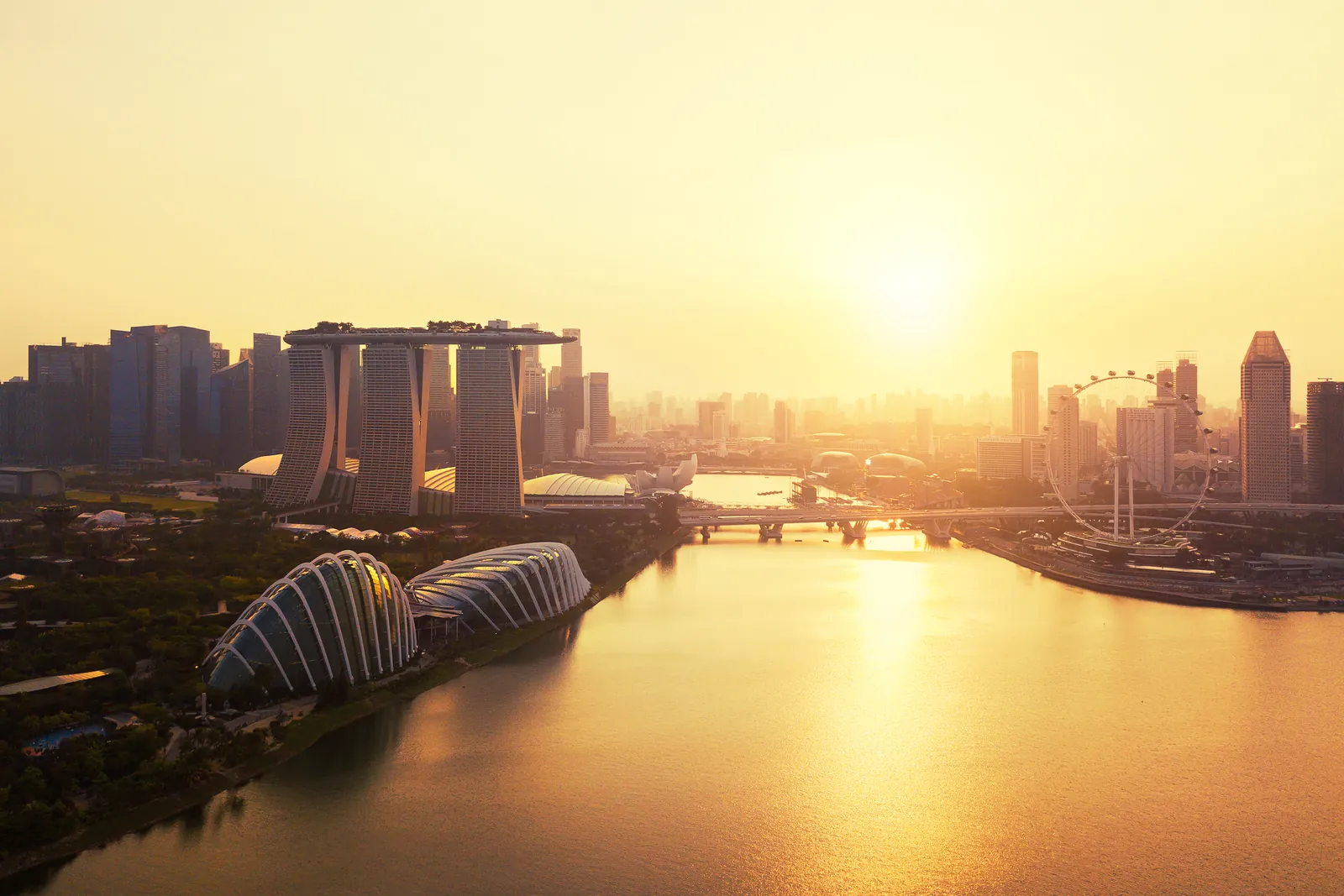
Any month. Walk the bay promenade and see the Supertree Grove light show at dusk, when the heat eases; the Garden Rhapsody show runs every evening at 7:45 and 8:45 p.m. During the F1 race weekend in October, parts of the bay are closed to non-ticket holders and hotels are at their most expensive.
Chinatown, Little India and Kampong Glam
Visit at festival time: Chinatown in the weeks before Chinese New Year and around the Mid-Autumn Festival, Little India around Deepavali in October or November, and Kampong Glam during Ramadan and Hari Raya Puasa (February and March in 2027).
Sentosa
February to April for the most sunshine, or the Southwest Monsoon months of June to September, when rain comes in short bursts. Weekends, school holidays and public holidays are crowded; weekday mornings are calmest. See our Sentosa travel guide.
Mandai, the Botanic Gardens and the nature reserves
February and March are the most comfortable for the Southern Ridges, MacRitchie and Bukit Timah. In any month, start early and head for cover when thunder starts; the Night Safari is cooler and good year-round.
Best time for festivals, nature walks, Sentosa’s beaches and the F1 night race
Festivals
Chinese New Year (6–7 February 2027), Hari Raya Puasa (10 March 2027), Vesak Day (20 May 2027), National Day (9 August), the Mid-Autumn Festival (15 September 2027) and Deepavali (8 November 2026 and 28 October 2027). Christmas and New Year’s Eve close the year with lights and fireworks.
Outdoor walks and parks
February to April for drier days. Rain mostly comes in the afternoon, so walk the Southern Ridges or the TreeTop Walk early and keep the afternoon for museums.
Sentosa’s beaches
February to April and June to September. The sea is warm all year, but it is not a resort-style beach destination; see our beaches guide for more ideas in the region.
Formula 1
The Singapore Grand Prix is held on 9–11 October 2026. Book rooms and race tickets early, or avoid the weekend if you are not going to the race.
Seasons to plan around
- Northeast Monsoon, wet phase (December to early January): monsoon surges can bring widespread, continuous rain for a day or more. Plan indoor sights for those days.
- Inter-monsoon periods (late March to May, October to November): afternoon and evening thunderstorms, at times severe. Lightning is common; leave open spaces and the sea when thunder starts.
- Southwest Monsoon (June to September): occasional pre-dawn squalls; in some years, smoke haze from regional fires, usually between June and October.
- Chinese New Year: many small shops and hawker stalls close for a day or two, and flights in the region are busy.
- School holidays: 13–21 March, 29 May–27 June and 4–12 September 2027, plus the year-end break from late November; family attractions are busiest then.
- The F1 weekend: 9–11 October 2026, with road closures around the bay from 7 to 13 October.
How long to stay
Three days covers Marina Bay, the old neighborhoods and Gardens by the Bay; four or five days adds Sentosa, the zoo or Night Safari and a nature walk. A 24-hour stopover works well too. See the sample itineraries in our Singapore travel guide.
Best time to visit Singapore: FAQ
What is the best month to visit Singapore?
February: it is the driest and sunniest month, with about 6 rainy days. March and April are close behind.
What is the rainiest month in Singapore?
December, with about 332 mm (13.1 in) of rain on 16 days at Changi, followed by November. Most rain falls in short afternoon downpours, with occasional days of continuous rain.
What is the cheapest time to visit Singapore?
There is no real low season, but rooms are usually cheapest in ordinary weeks with no big event, school holiday or public holiday. Avoid the F1 race weekend and major concert dates, when rates jump.
Is December a good time to visit Singapore?
Yes, if you don’t mind rain. It is the wettest month, but showers rarely last all day, and the Christmas lights, year-end sales and New Year’s Eve fireworks make it festive.
Does Singapore have a monsoon season?
Two: the Northeast Monsoon from December to early March, wet at first and then dry and breezy, and the Southwest Monsoon from June to September, with morning squalls. The inter-monsoon months bring afternoon thunderstorms.
When is the haze season in Singapore?
Haze is not an every-year event. In some years, smoke from fires in the region raises pollution, usually between June and October; the National Environment Agency publishes daily readings.
Sources · last reviewed 9 Oct 2026
Researched and last reviewed by TravelerCenter on 8 October 2026. Monthly temperatures, rainfall and rainy days are the WMO 1991–2020 climate normals for Changi, submitted by the Meteorological Service Singapore, and the seasons and monsoons come from MSS; public holidays for 2026 and 2027 from the Ministry of Manpower; school terms from the Ministry of Education; the 2026 Formula 1 dates and road closures from the Land Transport Authority; Gardens by the Bay show times from Gardens by the Bay; haze information from the National Environment Agency. Chingay, River Hongbao, Ramadan bazaar and light-up timing and the Mid-Autumn Festival date are from general reference and flagged for checking, and seasonal price patterns are general guidance, not official figures. Check with your hotel and airline before you travel.
Also: MSS normals 1991–2020, Changi Airport (climate)
Data: Wikidata (CC0)