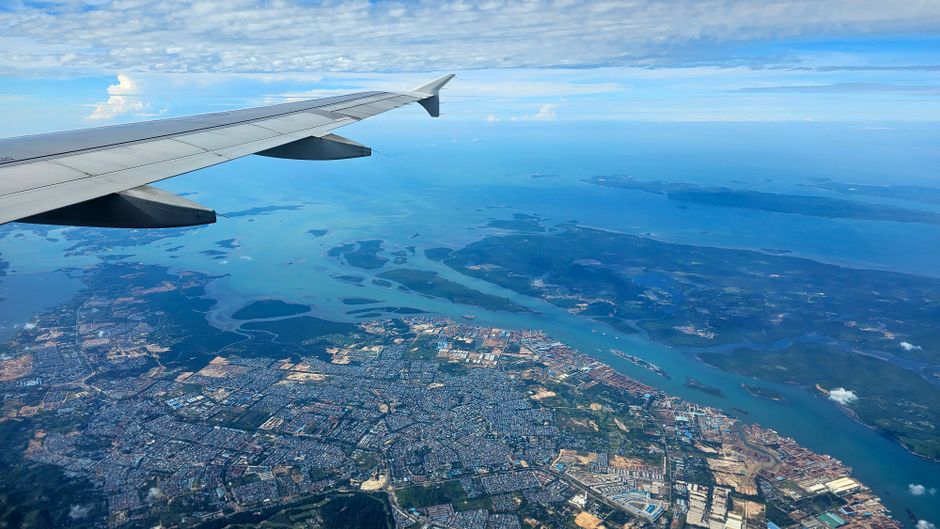
Batam, an island of about 415 km² (160 sq miles) in Indonesia’s Riau Islands, lies just 20 km (12 miles) south of Singapore across the Singapore Strait, and for millions of visitors it is the quickest taste of Indonesia: an hour by ferry from Singapore’s HarbourFront or Tanah Merah terminals. Once a sleepy fishing island, Batam was developed from the 1970s as a free trade zone and industrial hub, and today it is a fast-growing city of more than a million people. Visitors come for weekend breaks of seafood dinners, spa treatments, shopping, golf and resorts on the north coast at Nongsa, and for the drive south over the six Barelang bridges, which link Batam with the islands of Rempang and Galang, where the remains of a camp that housed Vietnamese refugees are now a memorial park. Batam is also a jumping-off point for Bintan and the other Riau Islands. It is warm and humid all year, with rain in every month and the heaviest downpours from November to January. Most visitors can use Indonesia’s visa on arrival or e-VOA at Batam’s ferry terminals.
Right now in Batam (Batam Centre)
- Wed25–33°C77–91°FMostly clear
- Thu24–32°C76–89°F5 mm rain
- Fri26–31°C79–89°F5 mm rain
Top tours in Batam
See all tours for Batam →
From local operators, with prices and reviews; you check availability and book on Viator, our partner. We may earn a commission at no extra cost to you. How we earn money
Batam at a glance
- Best for: short breaks from Singapore, seafood, spas, golf, shopping and resort stays.
- How long: 1–2 nights; 3–4 with the Barelang islands, Galang and a trip to Bintan.
- Best time: February to October, the less rainy months; avoid Singapore and Indonesian holiday weekends if you want quiet.
- Getting there: ferries from Singapore in about 40–60 minutes to five terminals, or domestic and some international flights to Hang Nadim International Airport (BTH).
- Getting around: Grab and Gojek, metered taxis or a car with driver; there is no rail.
- Good to know: Batam is on Western Indonesia Time (UTC+7), one hour behind Singapore.
- Before you go: visas, the arrival card, money and general safety are in our Indonesia travel guide.
Batam’s areas: where things are
The city spreads across most of the island, with the ferry terminals on the coasts and the main districts linked by wide roads.
Nagoya and Jodoh
The old commercial center in the north, a busy grid of malls, markets, hotels, massage parlors, karaoke bars and restaurants around Nagoya Hill shopping mall and the Jodoh area. Convenient and lively, though not pretty.
Batam Centre
The planned administrative center, around the Batam Centre ferry terminal, with the Mega Mall, the Great Mosque, the city’s government offices and mid-range hotels.
Harbour Bay
A waterfront district near Nagoya with its own ferry terminal, seafood restaurants and spas, and hotels popular with Singaporean weekenders.
Nongsa
The resort coast in the northeast, facing Singapore across the strait, with beach resorts, golf courses, a marina and the Nongsa Pura ferry terminal. Quiet and green.
Sekupang and Waterfront City
The west coast, with the Sekupang ferry terminal, the Waterfront City area and its hotel, and views back to Singapore’s skyline.
Barelang
South of the city, the Barelang road crosses six bridges to the islands of Setokok, Rempang, Galang and Galang Baru, a rural landscape of fishing villages, mangroves and seafood restaurants on stilts.
Top things to see on Batam
The Barelang Bridges
The six bridges of the Barelang road, completed in the 1990s, link Batam with Rempang and Galang. The first and longest, the cable-stayed Tengku Fisabilillah Bridge (Bridge 1), is the island’s best-known landmark, with viewpoints and food stalls at its northern end, and it is especially popular at sunset.
The Galang refugee camp
From 1979 to 1996, Galang Island housed tens of thousands of Vietnamese and other Indochinese refugees awaiting resettlement. The site, now a memorial park, preserves a church, a pagoda, barracks, boats and a cemetery, plus a small museum; it is a moving, quiet place, about an hour’s drive from Nagoya.
Masjid Agung Batam and the Great Mosque area
Batam’s grand mosque, with its pyramid-shaped roof, stands by the Engku Putri square and the “Welcome to Batam” sign in Batam Centre. Visitors are welcome outside prayer times if they dress modestly.
Maha Vihara Duta Maitreya
One of the largest Buddhist temple complexes in Indonesia, in the Sei Panas area, with ornate halls, gardens and a vegetarian restaurant, reflecting Batam’s large Chinese-Indonesian community.
Nongsa’s beaches and coast
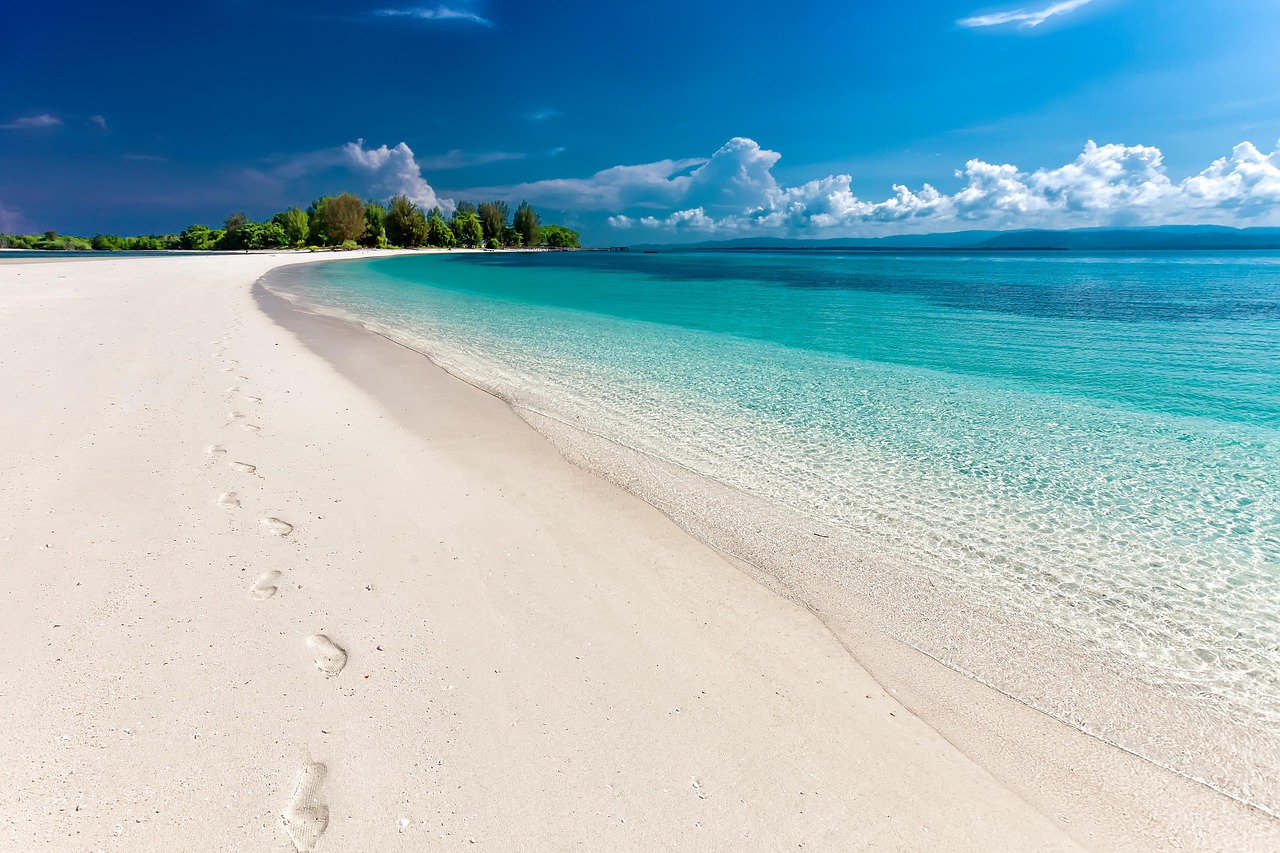
Nongsa’s resorts have private beaches and water sports, while public beaches such as Pantai Melur on Galang and Pantai Viovio on Rempang offer simpler sand and seafood shacks; the water is calmer than open-ocean beaches but not crystal clear.
More classic sights
- Ocarina Park and Coastarina: a seafront park with lawns and food stalls in Batam Centre.
- Vihara Budhi Bhakti and Nagoya’s Chinese temples: colorful temples in the old town.
- Kampung Vietnam and the Galang memorials: remnants of the refugee era.
- Pulau Abang: islands south of Galang with coral reefs, reached by boat.
- Batam’s viewpoints of Singapore: from Nongsa and Sekupang, the Singapore skyline is clearly visible across the strait.
Beaches, golf and water sports
Batam’s best beaches are on resort land in Nongsa and on the southern islands, where you can swim, kayak and try jet skis and banana boats. Pulau Abang, south of Galang, has the area’s best snorkeling and diving, on reefs reached by boat with local operators. Nongsa and the north coast have several international-standard golf courses, a major reason for Singaporean weekend trips. See our guides to beaches, snorkeling and boat trips.
Other things to do on Batam
Food and drink
Seafood is the highlight: chili crab, black-pepper crab, steamed fish, prawns and clams at the big kelong (stilt) restaurants of Barelang, Harbour Bay and Nagoya. Try the local gonggong, a sea snail served with chili sauce and a Riau Islands specialty; mie tarempa, spicy noodles from the Anambas Islands; otak-otak, grilled fish cakes in leaves; and nasi lemak and Malay curries. Batam’s large Chinese-Indonesian community means excellent dim sum, noodle shops and coffee shops. Alcohol is widely available in Nagoya, Harbour Bay and the resorts.
Spas and wellness
Massage and spa treatments are a big draw, at prices well below Singapore’s, from simple foot reflexology to luxury resort spas. Choose licensed, reputable spas.
Shopping
Malls such as Nagoya Hill, Grand Batam, BCS Mall and Mega Mall sell clothes, electronics and snacks. Batam is a free trade zone, but Indonesian and Singapore customs limits still apply when you leave.
Culture
Batam’s population is a mix of Malay, Javanese, Chinese, Batak, Minangkabau and other communities who came for work. Malay culture is strongest on the smaller islands, with stilt villages and mosques; Chinese temples and festivals such as Chinese New Year are celebrated widely.
Day trips from Batam
- Bintan: the larger island to the east, with resorts at Lagoi, beaches at Trikora and the old town of Tanjung Pinang; ferries cross from Telaga Punggur in about an hour. See our Bintan guide.
- Penyengat Island: the former seat of the Riau-Lingga sultanate, with a yellow mosque and royal tombs, reached by boat from Tanjung Pinang.
- Galang and Pulau Abang: the refugee camp, beaches and reefs in the south.
- Singapore: the city-state is less than an hour away by ferry. See our Singapore travel guide.
Nearby destinations
- Sentosa28 km
- Johor Bahru49 km
- Bintan49 km
- Malacca City232 km
Getting there and getting around
Ferries from Singapore
Ferries cross from HarbourFront Centre and Tanah Merah Ferry Terminal in Singapore to Batam’s international terminals at Batam Centre, Harbour Bay, Sekupang, Waterfront City and Nongsa Pura, with crossings of about 40–60 minutes and many departures a day; several companies operate, and fares and schedules vary by terminal. Book ahead for Friday evenings, weekends and public holidays in either country. Remember that Batam is one hour behind Singapore, and that you go through emigration in Singapore and immigration and customs in Batam.
Visas and the arrival card at Batam’s ports
Batam’s seaports and airport are official entry points for Indonesia’s visa on arrival. According to the Directorate General of Immigration’s e-Visa website, the e-VOA can be used at Batam Centre, Harbour Bay (Citra Tri Tunas), Sekupang, Nongsa Terminal Bahari, Marina Teluk Senimba, Batu Ampar and Kabil seaports and at Hang Nadim airport. The visa costs 500,000 rupiah (about US$28) for a 30-day stay, extendable once for another 30 days; buy it in advance at evisa.imigrasi.go.id, the official site, to save time at the counter. Citizens of Singapore, Malaysia and other ASEAN countries are visa-exempt for up to 30 days. Every traveler must also submit the All Indonesia arrival card at allindonesia.imigrasi.go.id within three days before arrival. Your passport needs at least six months’ validity.
By air
Hang Nadim International Airport (BTH), in the east of the island, has flights from Jakarta, Medan, Surabaya, Bali and other Indonesian cities, often cheaper than flights from Singapore, plus some international routes. Taxis and Grab take about 20–30 minutes to Batam Centre or Nagoya.
Getting around the island
Grab and Gojek are the easiest way to get around, with fixed prices; metered taxis wait at the ferry terminals, though some drivers prefer to negotiate. For Barelang and Galang, hire a car with a driver for half a day or a day. Buses (Trans Batam) run along the main roads but are slow for visitors. Traffic drives on the left.
When to go and how long to stay
Batam lies just north of the equator, so it is hot and humid all year, with no real dry season: rain falls in every month, usually in short, heavy afternoon or evening storms. The wettest months are November to January, during the northeast monsoon; February is the driest. From about June to September, early-morning squalls (locally “Sumatras”) can sweep across the strait. BMKG’s published WMO normals for Batam’s Hang Nadim station include night lows but not daily highs or rainfall, so the table combines three official datasets: average lows are BMKG’s 1991–2020 normals for Hang Nadim, average highs are 1991–2020 averages of BMKG’s observations there from NOAA’s global daily records, and rainfall and rain days (days with at least 1 mm) are the 1991–2020 normals of Singapore’s Changi station, 25 km (16 miles) away across the strait.
| Month | Average high / low | Rain (rain days) | What to expect |
|---|---|---|---|
| January | 30 °C (87 °F) / 23 °C (74 °F) | 222 mm (8.7 in), 11 days | Wet; monsoon showers and breezes |
| February | 31 °C (88 °F) / 24 °C (74 °F) | 105 mm (4.1 in), 6 days | Driest month; Chinese New Year crowds |
| March | 31 °C (89 °F) / 24 °C (74 °F) | 151 mm (5.9 in), 9 days | Hot, with afternoon storms |
| April | 32 °C (90 °F) / 24 °C (75 °F) | 164 mm (6.4 in), 11 days | Hottest weeks; thunderstorms |
| May | 32 °C (90 °F) / 24 °C (75 °F) | 164 mm (6.4 in), 11 days | Hot and humid |
| June | 32 °C (89 °F) / 24 °C (75 °F) | 137 mm (5.4 in), 10 days | Southwest monsoon; occasional haze |
| July | 31 °C (88 °F) / 24 °C (74 °F) | 145 mm (5.7 in), 10 days | Early-morning squalls |
| August | 31 °C (88 °F) / 24 °C (75 °F) | 149 mm (5.9 in), 11 days | Indonesian Independence Day on August 17 |
| September | 31 °C (88 °F) / 24 °C (74 °F) | 125 mm (4.9 in), 10 days | Haze possible in El Niño years |
| October | 32 °C (89 °F) / 23 °C (74 °F) | 166 mm (6.6 in), 12 days | Inter-monsoon storms |
| November | 31 °C (87 °F) / 23 °C (74 °F) | 254 mm (10.0 in), 15 days | Northeast monsoon begins; heavy rain |
| December | 30 °C (87 °F) / 23 °C (74 °F) | 332 mm (13.1 in), 16 days | Wettest month; holiday crowds |
The figures add up to about 2,110 mm (83 in) of rain a year. In years with a strong El Niño, like 2026, the dry southwest monsoon months can bring smoke haze from fires on Sumatra and Borneo; check air-quality reports.
2 days on Batam
Day one, arrive by morning ferry, lunch on seafood at Harbour Bay, a massage in the afternoon, and dinner and shopping in Nagoya. Day two, drive south over the Barelang bridges to the Galang refugee camp and a beach on Rempang or Galang, with a kelong lunch, returning for an evening ferry.
4 days with Bintan
Add a night at a Nongsa resort with golf or water sports, then take the ferry to Bintan for two nights at Lagoi or Trikora, returning to Singapore from Bintan.
Where to stay on Batam
- Nagoya and Jodoh: the most hotels and nightlife, at every price.
- Harbour Bay: waterfront hotels near spas and seafood, popular for short breaks.
- Batam Centre: mid-range hotels near the main ferry terminal and malls.
- Nongsa: beach and golf resorts, quiet and close to Nongsa Pura terminal.
- Sekupang and Waterfront City: resort-style hotels on the west coast.
Hotels fill up on Singapore public holidays and long weekends, and around Chinese New Year.
What a trip to Batam costs
Prices are approximate, for October 2026, converted at about 17,900 rupiah to the US dollar.
| Item | Typical cost |
|---|---|
| Visa on arrival or e-VOA, 30 days | 500,000 rupiah (about US$28) |
| Ferry, Singapore to Batam, one way | about 350,000–600,000 rupiah (about US$20–34), often priced in Singapore dollars |
| Grab ride, ferry terminal to Nagoya | 30,000–60,000 rupiah (about US$1.70–3.40) |
| Car with driver to Barelang and Galang, half day | 400,000–700,000 rupiah (about US$22–39) |
| Seafood dinner for two at a kelong restaurant | 400,000–900,000 rupiah (about US$22–50) |
| Plate of gonggong | 50,000–100,000 rupiah (about US$2.80–5.60) |
| One-hour massage | 150,000–400,000 rupiah (about US$8.40–22) |
| Round of golf, weekday | 1,000,000–2,000,000 rupiah (about US$56–110) |
| Mid-range hotel double in Nagoya, per night | 500,000–1,000,000 rupiah (about US$28–56) |
| Nongsa beach resort double, per night | 1,500,000 rupiah and up (about US$84 and up) |
Practical tips for Batam
- Time difference: set your watch back an hour from Singapore time so you don’t miss your ferry back.
- Money: rupiah is the currency; some shops and ferry counters take Singapore dollars, but at poor rates. ATMs are plentiful in malls and terminals.
- e-VOA: buy it before you travel to skip the queue at the visa counter.
- Customs: check the duty-free allowances for alcohol and tobacco for both Indonesia and Singapore; Singapore has strict limits on goods brought back.
- Dress: Batam is relaxed, but cover shoulders and knees at mosques and in Malay villages.
Safety
Batam is generally safe for visitors. Petty crime: keep an eye on bags and phones in Nagoya’s busy streets and at night, and use app-based or official taxis. Scams: avoid touts at ferry terminals and unlicensed money changers. Roads: traffic is fast and chaotic; ride a motorbike only if licensed, with a helmet. The sea: the strait has strong currents and heavy shipping; swim only at resort beaches and use licensed boats with life jackets. Weather: sudden storms and squalls can disrupt ferries; check before you travel. Haze: during dry spells, smoke from fires on Sumatra can affect air quality. Health: dengue fever is present all year, so use insect repellent; drink bottled water. Drugs: Indonesia’s penalties are extremely severe. In an emergency, call 112.
What to pack for Batam
Light, breathable clothes, a light rain jacket or umbrella, swimwear and sandals, sunscreen and a hat, insect repellent, modest clothes for mosques and temples, and your passport for the ferry. Indonesia uses 230 V and round two-pin plugs.
Batam travel FAQ
How do I get from Singapore to Batam?
By ferry from HarbourFront or Tanah Merah to Batam Centre, Harbour Bay, Sekupang, Waterfront City or Nongsa Pura, in about 40–60 minutes. Book ahead for weekends and holidays.
Do I need a visa for Batam?
Most visitors need Indonesia’s visa on arrival, which costs 500,000 rupiah for 30 days and can be bought in advance as an e-VOA; citizens of Singapore, Malaysia and other ASEAN countries are visa-exempt for 30 days.
Can I use the e-VOA at Batam’s ferry terminals?
Yes. The Immigration e-Visa website lists Batam Centre, Harbour Bay, Sekupang, Nongsa Terminal Bahari and other Batam seaports, plus Hang Nadim airport, as entry points for the e-VOA.
Do I need to fill in the All Indonesia arrival card for Batam?
Yes. Every traveler must submit it online at allindonesia.imigrasi.go.id within three days before arrival, including by ferry.
What is the time difference between Batam and Singapore?
Batam is on Western Indonesia Time (UTC+7), one hour behind Singapore.
How many days do I need in Batam?
One or two nights is enough for seafood, spas and shopping; three or four with Barelang, Galang and a side trip to Bintan.
What is Batam famous for?
Seafood, spas and massages, golf, shopping and the Barelang bridges, plus easy weekend trips from Singapore.
Is Batam or Bintan better?
Batam is a busy city with shopping, nightlife and seafood; Bintan has better beaches and quieter resorts. Many visitors combine them.
Is Batam safe for tourists?
Yes, with normal care: watch your belongings in busy areas, use app-based taxis and avoid unlicensed money changers. Call 112 in an emergency.
When is the rainy season in Batam?
It rains all year, but most heavily from November to January; February is usually the driest month.
Plan your trip
Partner links: TravelerCenter may earn a commission if you book, at no extra cost to you.
🇮🇩 Useful Indonesian phrases for Batam
All 38 Indonesian phrases: restaurant, hotel, emergencies, romance (printable) →
Sources · last reviewed 4 October 2026
Researched and last reviewed on 4 October 2026. Visa on arrival and e-VOA rules, fees and Batam’s e-VOA entry points: the Directorate General of Immigration’s official e-Visa website; the arrival card: the All Indonesia platform; climate: BMKG’s 1991–2020 WMO normals for Hang Nadim (lows), BMKG observations at Hang Nadim via NOAA GHCN-Daily (1991–2020 average highs) and the Meteorological Service Singapore’s 1991–2020 WMO normals for Changi (rainfall); the 2026–27 seasonal outlook: BMKG; exchange rate: Bank Indonesia. Island area, population, ferry terminals, times and fares, attraction and history details and typical prices are general references or estimates, flagged for checking. Rules change, so check the official sites before you go. For entry rules, money and general safety, see our Indonesia travel guide.
Data: Weather: MET Norway (CC BY 4.0) · Sea temperature: NOAA CoastWatch · Air quality: OpenAQ · Rates: ECB · Costs: World Bank ICP and price levels · Wikidata (CC0)