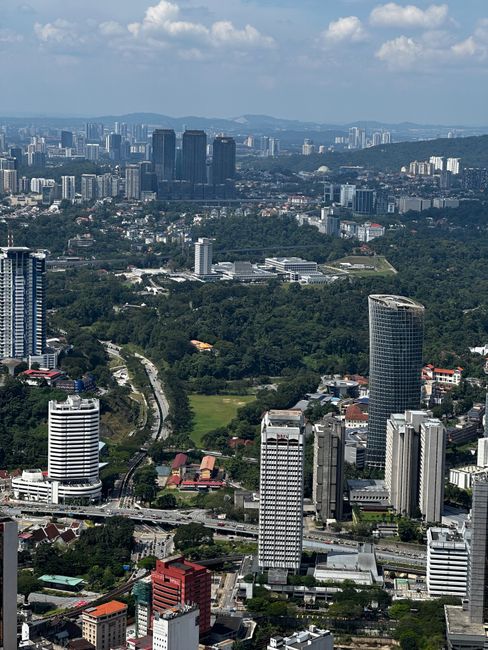
Kuala Lumpur, Malaysia’s capital and biggest city, is a skyline of record-breaking towers rising over colonial arcades, Chinese shophouses, Hindu temples and green hills, all held together by some of the best and cheapest street food in Asia. Most visitors come for the Petronas Twin Towers, the limestone shrine of Batu Caves, the old heart around Merdeka Square and Chinatown, the shopping and nightlife of Bukit Bintang, and the night markets and hawker stalls where Malay, Chinese and Indian cooking meet. KL, as everyone calls it, is easy to reach and easy to use: the KLIA Ekspres train links the airport with the city in under half an hour, and a growing network of LRT, MRT and monorail lines connects most sights. It is hot and humid all year, with frequent afternoon thunderstorms, so plan outdoor sightseeing for the morning and evening.
Right now in Kuala Lumpur
- Wed 24–31°C 74–88°F 6 mm Heavy showers
- Thu 24–32°C 75–90°F 2 mm Showers
- Fri 25–32°C 76–89°F 6 mm Heavy rain
Weather: MET Norway (CC BY 4.0) · Air quality: OpenAQ
Top tours in Kuala Lumpur
See all tours for Kuala Lumpur →
From local operators, with prices and reviews; you check availability and book on Viator, our partner. We may earn a commission at no extra cost to you. How we earn money
Kuala Lumpur at a glance
- Best for: skyscrapers and city views, food from hawker stalls to rooftop bars, temples and mosques, shopping, museums, and a first taste of Malaysia’s mix of cultures.
- How long: 3 days for the city; 4 to 5 with day trips to Batu Caves, Putrajaya, Genting Highlands or Malacca.
- Best time: any time of year; June to August and January to February are slightly drier, while April and October to December bring the most thunderstorms. Highs are about 32–34 °C (90–93 °F) in every month.
- Getting there: Kuala Lumpur International Airport (KLIA), about 50 km (30 miles) south, is linked to KL Sentral by the KLIA Ekspres in 28 minutes; ETS electric trains run north to Penang and south to Johor Bahru.
- Getting around: LRT, MRT, monorail and KTM Komuter trains, Grab ride-hailing and walking; pay with a Touch ‘n Go card.
- Good to know: foreign visitors pay a tourism tax of RM10 per room per night on top of the hotel rate, and the KLIA Ekspres fare rises from RM55 to RM65 on January 1, 2027.
- Before you go: the Malaysia Digital Arrival Card (MDAC), visa-free stays, money and general safety are in our Malaysia travel guide.
Kuala Lumpur’s areas and where to stay
KL sprawls across the Klang Valley, but the areas most visitors use lie close together: the Golden Triangle, with the twin towers and Bukit Bintang, is the modern core, and the old town lies along the rivers to the west.
KLCC and the Golden Triangle
The area around the Petronas Twin Towers (Kuala Lumpur City Centre, or KLCC) has the big international hotels, the Suria KLCC mall, KLCC Park and the convention center. An air-conditioned elevated walkway leads to Bukit Bintang.
Bukit Bintang
KL’s shopping and entertainment street, lined with malls such as Pavilion, massage parlors, bars and the food stalls of Jalan Alor. It has the widest range of hotels at every price and is busy until late; side streets such as Changkat Bukit Bintang are the nightlife hub.
Chinatown, Merdeka Square and the old town
The historic center around Petaling Street, Central Market and Merdeka Square, with shophouse hostels and boutique hotels, temples, museums and the river confluence where the city began. It is lively, atmospheric and noisy.
KL Sentral and Brickfields
KL Sentral is the main rail hub, with the KLIA Ekspres terminal, the ETS and Komuter trains, and hotels on top of the station. Next door, Brickfields is KL’s Little India, with banana-leaf restaurants, sari shops and temples. It is the most convenient base for early flights and train trips.
Bangsar, Kampung Baru and beyond
Bangsar, southwest of the center, is a leafy area of cafés, restaurants and weekend brunches. Kampung Baru, a traditional Malay village of wooden houses in the shadow of the twin towers, is the place for Malay food.
Top things to see in Kuala Lumpur
Petronas Twin Towers
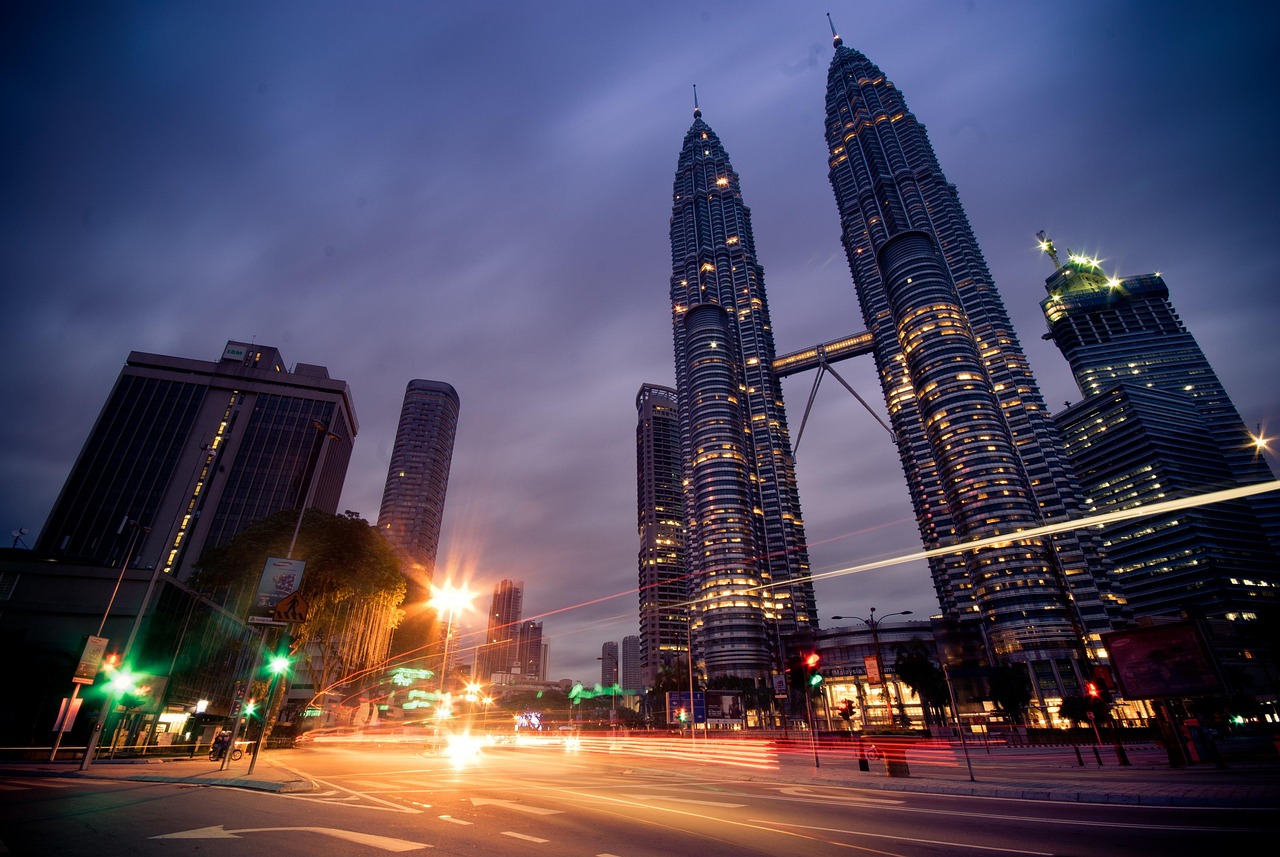
The 88-story steel towers, the tallest twin towers in the world, are the symbol of modern Malaysia. Tours start at the base, cross the Skybridge between the towers and continue to the observation deck on the 86th floor. According to the towers’ official website, visiting hours are 9 a.m. to 10:30 p.m. (last admission 9:30 p.m.) from Tuesday to Sunday and on public holidays; on Mondays the towers open only on the second, fourth and fifth Monday of the month, from 9 a.m. to 8 p.m. A normal general-admission adult ticket costs RM127 on weekdays and RM137 on weekends (Malaysians pay less), with pricier evening and premium options. Tickets are timed and sell out on busy days, so book online. Below the towers, KLCC Park has a lake with an evening fountain show.
Batu Caves
On the northern edge of the city, a giant golden statue of the Hindu god Murugan stands at the foot of 272 rainbow-painted steps leading up to a vast limestone cave with a temple inside. Entry to the main cave is free; long-tailed macaques roam the stairs, so keep food and loose items out of sight. Dress modestly, with knees and shoulders covered (sarongs can be rented). Go early, before the heat. Batu Caves is the end of the KTM Komuter line from KL Sentral, about 30 minutes away. During the Thaipusam festival, in January or February, hundreds of thousands of devotees climb the steps in procession.
Merdeka Square and the colonial core
Malaysia declared independence at Merdeka Square on August 31, 1957, and the huge lawn is still the setting for the national day parade. It is framed by the Moorish-style Sultan Abdul Samad Building with its copper domes, the mock-Tudor Royal Selangor Club and the National Textile Museum. A short walk away, Masjid Jamek, one of KL’s oldest mosques, stands at the confluence of the Klang and Gombak rivers, the “muddy confluence” that gave the city its name; the riverbank here is the River of Life promenade, lit up blue in the evening.
Chinatown and Central Market
Petaling Street’s covered market sells everything from fake watches to fresh fruit, and the surrounding lanes hide Taoist temples, kopitiam coffee shops and the restored mural alley of Kwai Chai Hong. Sri Mahamariamman Temple, KL’s oldest Hindu temple, faces the Guan Di Temple across the road. Central Market (Pasar Seni), a 1930s Art Deco market hall, is now a crafts center selling batik, songket and souvenirs.
Museums, mosques and the Lake Gardens
The Islamic Arts Museum Malaysia has one of the finest collections of its kind in the world, from Qurans and textiles to architectural models; next door, the modernist National Mosque (Masjid Negara) welcomes non-Muslim visitors outside prayer times, with robes provided. Both border the Perdana Botanical Gardens, a large park with the KL Bird Park, a walk-in aviary, and the National Museum nearby.
KL Tower and the city views
The KL Tower (Menara Kuala Lumpur), on a forested hill, has an observation deck and an open-air Sky Deck with glass-floored boxes; at its foot, the KL Forest Eco Park is a patch of old rainforest with a canopy walkway in the middle of the city. Merdeka 118, completed in 2023, is now the tallest building in Malaysia and the second tallest in the world.
More classic sights
- Thean Hou Temple: a six-tiered Chinese temple on a hill south of the center, with views over the city and red lanterns at festival time.
- Putrajaya: the government capital, 25 km (16 miles) south, with pink-domed Putra Mosque and lakeside boulevards.
Other things to do in Kuala Lumpur
Food and drink
Eating is the main event in KL. Start the day with nasi lemak (coconut rice with sambal, peanuts, anchovies and egg) or roti canai with dhal curry at a mamak (Indian Muslim) restaurant, many of which are open around the clock. In the evening, head for Jalan Alor in Bukit Bintang, a street of grilled seafood, satay, char kway teow and chicken wings, or for the hawker centers and night markets across the city. KL is famous for its dark, soy-braised Hokkien mee and for bak kut teh, a herbal pork-rib soup from nearby Klang. In Brickfields, eat curries off a banana leaf; in Kampung Baru, try nasi kerabu and Malay kuih (cakes). Alcohol is sold in bars, Chinese restaurants and hotels, though it is heavily taxed.
Shopping
Malls are KL’s air-conditioned town squares: Pavilion in Bukit Bintang, Suria KLCC under the towers, the Exchange TRX and the vast Mid Valley Megamall. For crafts, try Central Market; for bargains, Petaling Street and the neighborhood night markets (pasar malam).
Nightlife and evenings
Changkat Bukit Bintang has bars and clubs, and sky bars around KLCC are good for sunset; the River of Life lights, the KLCC fountains and night markets are free. See our city sightseeing guide for more ideas.
Day trips from Kuala Lumpur
- Batu Caves: 30 minutes by KTM Komuter; combine with the nearby Hindu temples or a cooking class.
- Putrajaya: Malaysia’s administrative capital, with grand mosques and bridges, 20 minutes from KL Sentral on the KLIA Transit train.
- Genting Highlands: a cool mountain resort with a casino, theme parks and cable cars, about an hour’s drive or bus ride away. See our Genting Highlands guide.
- Malacca (Melaka): the UNESCO-listed old port, about two hours by express bus from TBS bus terminal; better as an overnight trip. See our Malacca City guide.
- Kuala Selangor: fireflies along the river at night, about 1.5 hours northwest by car.
- Ipoh and the Cameron Highlands: Ipoh, with its cave temples and white coffee, is about 2.5 hours by ETS train; the Cameron Highlands tea hills are about 3.5 hours by road. See our Cameron Highlands guide.
Nearby destinations
- Genting Highlands33 km
- Malacca City123 km
- Cameron Highlands159 km
- George Town (Penang)294 km
- Johor Bahru297 km
Getting there and getting around
By air
Kuala Lumpur International Airport (KLIA, code KUL) has two terminals: Terminal 1 for Malaysia Airlines and most full-service airlines, and Terminal 2 (formerly klia2) for AirAsia and other low-cost carriers. According to Express Rail Link, the operator, the KLIA Ekspres nonstop train takes 28 minutes from KL Sentral to Terminal 1 and 3 minutes more to Terminal 2; it currently runs every 20 minutes, with all trains stopping at all stations after 11 p.m. and service until 1 a.m. from the airport. The adult one-way fare is RM55 (10% less when booked on the website or app), and ERL has announced that it rises to RM65 from January 1, 2027. Payment is cashless only: cards, e-wallets or the app. The slower KLIA Transit stops at Salak Tinggi, Putrajaya and Bandar Tasik Selatan. Grab and taxis take 45 to 60 minutes to the center, longer at rush hour. Some Firefly and Batik Air flights use the smaller Subang Airport (SZB), closer to the city.
By train and bus
KL Sentral is the hub for KTMB’s ETS electric trains: north to Ipoh, Butterworth (for Penang) and Padang Besar on the Thai border, and, since December 12, 2025, south to JB Sentral in Johor Bahru, a trip of about 4 hours 20 minutes with fares from RM82, according to KTMB. Book on KTMB’s website or KITS Style app; weekend and holiday trains sell out. Long-distance buses leave from the Terminal Bersepadu Selatan (TBS), on the LRT and KLIA Transit lines south of the center.
LRT, MRT, monorail and Komuter
Prasarana’s Rapid KL network includes the Kelana Jaya, Ampang and Sri Petaling LRT lines, the KL Monorail, the Kajang and Putrajaya MRT lines and, since July 2026, the LRT3 Shah Alam Line toward Klang. KTM Komuter trains run to Batu Caves, Port Klang and the suburbs. Trains are clean, air-conditioned and cheap, usually a few ringgit per ride. Pay with a Touch ‘n Go card, sold at stations and convenience stores and topped up with cash or the Touch ‘n Go eWallet app; it also works on buses, highways, car parks and some shops. Use the MyRapid PULSE app to plan journeys.
Grab, taxis and walking
Grab, Southeast Asia’s ride-hailing app, is the easiest way to get around: fares are fixed in advance and cheap, though prices rise in rain and rush hour. Metered taxis also exist; insist on the meter. KL is not built for walking, with heat and busy roads, but the old town is compact, and traffic jams are severe at rush hour, so take the train when you can.
When to go and how long to stay
Kuala Lumpur is hot, humid and wet all year, with no real cool season. The table uses the 1991–2020 climate normals for the Malaysian Meteorological Department (MetMalaysia) station at Subang, on the western edge of the city, as submitted to the World Meteorological Organization (WMO): average daily highs and lows, total rain and days with at least 1 mm of rain.
| Month | Average high / low | Rain (days with 1 mm or more) | What to expect |
|---|---|---|---|
| January | 33 °C (91 °F) / 24 °C (75 °F) | 227 mm (8.9 in), 14 days | Hot with storms; Chinese New Year or Thaipusam may fall this month |
| February | 33 °C (92 °F) / 24 °C (75 °F) | 193 mm (7.6 in), 12 days | One of the drier months; festive season |
| March | 34 °C (93 °F) / 24 °C (76 °F) | 270 mm (10.6 in), 15 days | Hot; afternoon thunderstorms increase |
| April | 34 °C (93 °F) / 25 °C (76 °F) | 302 mm (11.9 in), 17 days | Inter-monsoon thunderstorms, often violent |
| May | 34 °C (92 °F) / 25 °C (77 °F) | 230 mm (9.1 in), 13 days | Hot and humid |
| June | 33 °C (92 °F) / 25 °C (77 °F) | 146 mm (5.7 in), 10 days | The driest month; haze possible |
| July | 33 °C (91 °F) / 24 °C (76 °F) | 165 mm (6.5 in), 11 days | Dry spell continues; good sightseeing weather |
| August | 33 °C (91 °F) / 24 °C (76 °F) | 174 mm (6.9 in), 11 days | National Day on August 31; haze possible |
| September | 33 °C (91 °F) / 24 °C (76 °F) | 220 mm (8.7 in), 13 days | Storms return; Malaysia Day on September 16 |
| October | 33 °C (91 °F) / 24 °C (76 °F) | 284 mm (11.2 in), 16 days | Inter-monsoon thunderstorms; Deepavali in October or November |
| November | 32 °C (90 °F) / 24 °C (75 °F) | 356 mm (14.0 in), 20 days | The wettest month; flash floods possible |
| December | 32 °C (90 °F) / 24 °C (75 °F) | 281 mm (11.0 in), 16 days | Wet; Christmas lights in the malls; year-end holidays |
KL gets about 2,850 mm (112 in) of rain a year. According to MetMalaysia, thunderstorms are most frequent in the inter-monsoon periods of April to May and October to November, usually in the late afternoon and evening, and Subang records the highest number of thunderstorms in Malaysia. Storms are short but intense and can flood underpasses and low-lying roads. From about June to September, smoke from forest fires in the region can cause haze.
3 days in Kuala Lumpur
Day one, Batu Caves at opening time, then lunch in Brickfields and the Islamic Arts Museum and National Mosque in the afternoon; dinner on Jalan Alor. Day two, Merdeka Square, Masjid Jamek, Central Market and Chinatown in the morning, KL Tower and the Forest Eco Park in the afternoon, and the River of Life lights after dark. Day three, the Petronas Twin Towers (book a morning slot), KLCC Park and the malls of Bukit Bintang, ending at a rooftop bar.
5 days with day trips
Add a day in Putrajaya or Genting Highlands and an overnight trip to Malacca, or continue north by ETS to Ipoh and Penang.
Where to stay in Kuala Lumpur
- KLCC: international hotels with tower views; best for a first visit and for business.
- Bukit Bintang: the most choice at every budget, with food and nightlife on the doorstep.
- Chinatown: boutique hotels and hostels in historic shophouses; best for budget travelers.
- KL Sentral and Brickfields: convenient for the airport train and ETS trips.
- Bangsar: quieter, residential and good for food, a short ride from the center.
Foreign guests pay a tourism tax of RM10 per room per night, collected by the hotel, and hotel bills also carry 8% service tax and often a service charge. Prices rise during Chinese New Year, Hari Raya and major events such as the MotoGP weekend at the Sepang circuit and big concerts.
What a trip to Kuala Lumpur costs
Prices are approximate, for October 2026, converted at about RM4.08 to the US dollar.
| Item | Typical cost |
|---|---|
| LRT, MRT or monorail ride | RM1.50–6 (about US$0.40–1.50) |
| KLIA Ekspres, airport to KL Sentral | RM55 (about US$13.50); RM65 (about US$16) from January 1, 2027 |
| Grab ride across the center | RM12–30 (about US$3–7.50) |
| Nasi lemak or roti canai breakfast | RM5–12 (about US$1.20–3) |
| Hawker dinner on Jalan Alor | RM25–50 (about US$6–12) |
| Petronas Twin Towers, adult, weekday | RM127 (about US$31) |
| Batu Caves main cave | free |
| Mid-range hotel double, per night | RM250–450 (about US$61–110) |
| Luxury hotel near KLCC, per night | RM700 and up (about US$170 and up) |
| Tourism tax, per room per night | RM10 (about US$2.45) |
Practical tips for Kuala Lumpur
- Book the towers ahead: Petronas tickets are timed, and the towers close on the first and third Monday of each month.
- Dress for temples and mosques: cover shoulders and knees, and remove shoes before entering.
- Carry a Touch ‘n Go card: it saves queuing for tokens and works on buses and some shops.
- Plan around the rain: sightsee in the morning, and keep an umbrella and a backup indoor plan for the afternoon.
- Use Grab rather than street taxis for fixed, transparent fares.
Safety
Kuala Lumpur is generally safe, and violent crime against visitors is rare. The most common problems are petty: bag snatching by thieves on motorcycles, who target bags carried on the roadside shoulder, and pickpocketing in crowded markets and trains, so carry bags on the side away from traffic. Traffic is heavy and fast and drivers do not always stop at crossings; use footbridges where you can. Heavy thunderstorms can cause flash floods in underpasses and on low roads within minutes; avoid them during downpours, and stay indoors during lightning. In haze episodes, check the Department of Environment’s Air Pollutant Index (API) and limit time outdoors if it is unhealthy. Protect yourself against mosquitoes, as dengue fever occurs in the Klang Valley. In an emergency, call 999.
What to pack for Kuala Lumpur
Light, breathable clothing, a compact umbrella or rain jacket for the afternoon storms, comfortable sandals, a light layer for heavily air-conditioned malls and trains, and clothes that cover shoulders and knees for temples and mosques. Malaysia uses 240 V and British-style three-pin plugs (type G). See our rain jackets and travel adapters guides.
Kuala Lumpur travel FAQ
How many days do I need in Kuala Lumpur?
Three days cover the main sights; four or five allow day trips to Batu Caves, Putrajaya, Genting Highlands or Malacca.
How do I get from KLIA to the city center?
Take the KLIA Ekspres to KL Sentral (28 minutes from Terminal 1, RM55, rising to RM65 from January 1, 2027), then the LRT, monorail or a Grab to your hotel. A Grab from the airport takes 45 to 60 minutes.
When are the Petronas Twin Towers open?
From Tuesday to Sunday and on public holidays, 9 a.m. to 10:30 p.m. (last entry 9:30 p.m.), and on the second, fourth and fifth Mondays of the month, 9 a.m. to 8 p.m. They are closed on the first and third Mondays.
How much does it cost to go up the Petronas Twin Towers?
A normal adult ticket for foreign visitors costs RM127 on weekdays and RM137 on weekends, according to the official website; evening and premium tickets cost more.
Is Batu Caves free?
Yes, the main Temple Cave is free. Some smaller caves and attractions at the site charge a fee, and you must dress modestly.
What is the best area to stay in Kuala Lumpur?
Bukit Bintang for food, shopping and nightlife; KLCC for upscale hotels near the towers; Chinatown for budget stays and history; KL Sentral for transport connections.
What is the best time to visit Kuala Lumpur?
KL can be visited all year. June to August and January to February are slightly drier; April and October to December have the most thunderstorms.
Do I need cash in Kuala Lumpur?
Cards and e-wallets are widely accepted, and the KLIA Ekspres is cashless, but carry some ringgit for hawker stalls, night markets and small shops.
Is Grab available in Kuala Lumpur?
Yes. Grab is widely used for rides and food delivery and is usually cheaper and more transparent than street taxis.
Is Kuala Lumpur safe for tourists?
Yes, generally. Watch for bag snatchers and pickpockets, take care crossing roads, and avoid flooded underpasses during heavy storms.
Sources and last review
Researched and last reviewed on 4 October 2026. Petronas Twin Towers hours and admission: the towers’ official website; KLIA Ekspres times, frequency, current fare and the fare change on January 1, 2027: Express Rail Link (ERL); ETS service to JB Sentral and fares: Keretapi Tanah Melayu Berhad (KTMB); Rapid KL lines and the LRT3 Shah Alam Line: Prasarana Malaysia; climate normals, monsoon and thunderstorm patterns: the Malaysian Meteorological Department (MetMalaysia), via the World Meteorological Organization; exchange rate: the US Federal Reserve. The tourism tax rate, Batu Caves details, Merdeka 118, travel times by road and typical prices are general references or estimates, flagged for checking. Prices and hours change, so check the official sites before you go. For entry rules, money and general safety, see our Malaysia travel guide.
Plan your trip
Partner links: TravelerCenter may earn a commission if you book, at no extra cost to you.
🇲🇾 Useful Malay phrases for Kuala Lumpur
All 38 Malay phrases: restaurant, hotel, emergencies, romance (printable) →