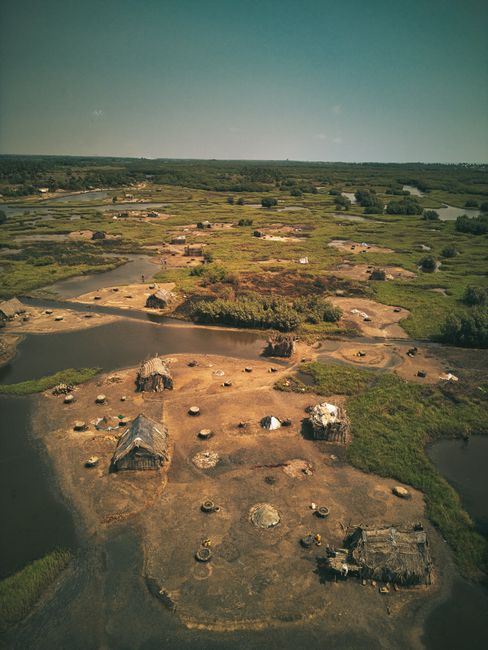
Benin is a long, narrow country on West Africa’s Bight of Benin, stretching some 700 km (435 miles) from palm-fringed lagoons on the Atlantic to the savanna and wildlife parks of the north. It is the birthplace of Vodun (voodoo), the heartland of the old Kingdom of Dahomey and one of the most important places for remembering the Atlantic slave trade, and it has a fast-growing contemporary art scene. Most visitors arrive in Cotonou, the economic capital, with its oceanfront Esplanade de l’Amazone, huge markets and beach restaurants, and use it as a base for Ouidah, where the Route des Captifs leads to the Door of No Return on the beach and the Vodun Days festival fills the town each January; Ganvié, a town of stilt houses on Lake Nokoué; Porto-Novo, the official capital, with its museums and Afro-Brazilian architecture; and the Royal Palaces of Abomey, a UNESCO World Heritage site. Further north lie the tata somba tower houses of the Atacora and the savanna of Pendjari National Park. French is the official language. Citizens of African countries can visit without a visa; most other visitors need an e-visa obtained online before travel. The best months are November to March.
Right now in Benin
- Sat26–32°C78–90°F4 mm rain
- Sun26–31°C78–88°F5 mm rain
- Mon26–31°C79–87°F3 mm rain
Weather, sun and air quality here are for one point near the centre of Benin, not the whole country; conditions elsewhere can differ. Readings refresh through the day.
Benin: quick answers
- Best time to visit Benin
- Benin is hot all year. Benin’s official tourism site notes that Cotonou is worth visiting in any season, and Ouidah’s sites are open all year. More
- Things to do in Benin
- History, Vodun, lakes and art. More
- Entry rules for Benin
- According to Benin’s official e-visa platform (evisa.bj), citizens of African countries can visit Benin without a visa for up to 90 days. More
Benin at a glance
Benin covers about 114,800 km² (44,300 sq miles), a little smaller than Pennsylvania, between Togo to the west, Nigeria to the east and Burkina Faso and Niger to the north. Its short Atlantic coast is a strip of sandy beaches and coconut palms backed by lagoons and lakes, among them Lake Nokoué and the Porto-Novo lagoon. Inland, the land rises gently through farmland and forest to the hills of the center, and in the northwest the Atacora range brings green hills and waterfalls. The far north is savanna, home to the national parks of Pendjari and W.
Porto-Novo is the official capital, while Cotonou is the economic capital and the seat of most government offices, the main port and the international airport. French is the official language; Fon is widely spoken in the south, along with Yoruba, Goun, Mina and many other languages, and Bariba and Dendi in the north. Benin is a meeting point of religions: Christianity and Islam are widespread, and Vodun is practiced openly and celebrated each January. The country uses West Africa Time (UTC+1) all year, with no daylight saving time, one hour ahead of Togo and the same as Nigeria. Sockets are the European two-pin types C and E, at 220 V.
Benin’s regions
- Littoral: the department of Cotonou itself, with its boulevards, markets, monuments, beaches and cultural events.
- Atlantique: the coast west and north of Cotonou, with Ouidah, the lake town of Ganvié and Allada, and famous for its pineapples.
- Ouémé and Plateau: the southeast, with Porto-Novo and its museums, and Kétou, home of the Gèlèdè mask tradition listed by UNESCO.
- Mono and Couffo: the southwest, with the beaches and lagoon of Grand-Popo and green river country inland.
- Zou and Collines: the center, with Abomey and its royal palaces, and the hills and villages around Dassa-Zoumè.
- Atacora and Donga: the hilly northwest around Natitingou and Djougou, with waterfalls, tata somba houses and the gateway to Pendjari.
- Borgou and Alibori: the north and northeast, with the city of Parakou, the market of Malanville and W National Park.
Videos of Benin
Hand-picked travel videos from YouTube creators to help you picture the trip. They play from YouTube; the facts in this guide come from our own research.
Where to go: Cotonou, the coast and the old kingdoms
The main sights of the south are all within about three hours of Cotonou, so most visitors base themselves there and make day trips or short loops. Our guide to Benin’s main destination:
- Cotonou: the Esplanade de l’Amazone and its giant statue of a Dahomey woman warrior, the murals of the port’s graffiti wall, the modern Ganhi market and the vast Dantokpa market, Fidjrossè’s beach restaurants, contemporary art, and the base for Ouidah, Ganvié and Porto-Novo. See our Cotonou travel guide.
Other highlights include Ouidah, with the Route des Captifs, the Door of No Return, the Temple of the Pythons and the sacred forest of Kpassè; Ganvié, the stilt village on Lake Nokoué; Porto-Novo, the official capital; the Royal Palaces of Abomey; the beaches and lagoon of Grand-Popo; and, in the north, the tata somba houses and waterfalls of the Atacora and the savanna of Pendjari National Park.
Cotonou Travel Guide
Plan a trip to Cotonou: the Esplanade de l'Amazone, the port graffiti wall, the Ganhi and Dantokpa markets, Fidjrossè beach restaurants, food, zémidjan moto-taxis,…
Beyond Cotonou
Benin’s World Heritage sites
UNESCO lists three World Heritage sites in Benin: the Royal Palaces of Abomey (inscribed in 1985); the W-Arly-Pendjari Complex, a vast cross-border network of savanna parks shared with Niger and Burkina Faso, which includes Pendjari and Benin’s part of W National Park; and the Koutammakou, the Land of the Batammariba, first inscribed in Togo in 2004 and extended to Benin’s side of the border, around Boukombé, Natitingou and Toucountouna, in 2023.
Ouidah
About 40 km (25 miles) west of Cotonou, roughly an hour by road, Ouidah is a quiet town of low buildings, Afro-Brazilian façades and shady courtyards, and the spiritual home of Vodun. Benin’s official tourism site suggests three essential visits that fit into a day on foot. The Route des Captifs, the 4 km (2.5 mile) road the enslaved were marched along from the town to the sea, is lined with memorials and statues and ends at the Door of No Return, a monumental arch on the beach. In the town center, the Temple of the Pythons faces the Basilica of the Immaculate Conception across a square; visitors enter barefoot, and keepers may place one of the sacred royal pythons on your shoulders. The Sacred Forest of Kpassè, a grove of old iroko trees dotted with Vodun sculptures, is named after the town’s founding king. An International Museum of Memory and Slavery is planned for the town. Accredited local guides are strongly recommended for context and for the rules in sacred places.
Ganvié and Lake Nokoué
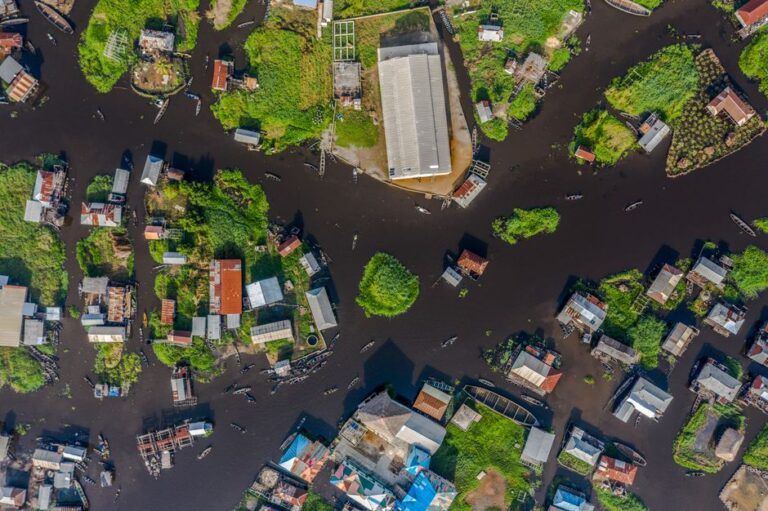
On Lake Nokoué north of Cotonou, about an hour away, Ganvié is a town built entirely on stilts, where homes, schools, churches and markets stand above the water and life moves by pirogue. Boats leave from the landing at Abomey-Calavi for a tour through the channels and the floating market; agree on the price and the length of the trip before you set off, and ask before photographing people.
Porto-Novo
Benin’s official capital, about 50 minutes east of Cotonou on the Porto-Novo lagoon, has a relaxed, historic center with Afro-Brazilian houses, a Brazilian-style Great Mosque, royal sites and several museums, including an ethnographic museum known for its masks and the former royal palace of King Toffa. Its Festival of Masks brings Zangbéto, Egungun and Gèlèdè masquerades, a grand procession on the lagoon boulevard and concerts to the city; the third edition was held on 25 and 26 July 2026.
Abomey and the Kingdom of Dahomey
Abomey, about 140 km (87 miles) north of Cotonou, was the capital of the powerful Kingdom of Dahomey, whose kings built a succession of palaces here from the 17th to the 19th century. The Royal Palaces of Abomey, a UNESCO World Heritage site, are known for their earthen walls decorated with bas-reliefs that tell the kingdom’s history, and for the memory of its women soldiers, the Agojie (Agodjié), honored today by Cotonou’s Amazon statue. Visits are guided; allow half a day, and combine with the nearby town of Bohicon.
Grand-Popo and the west coast
Close to the Togo border, Grand-Popo is a laid-back beach town with golden sand, palm groves and a lagoon and river mouth that can be explored by pirogue. It is a popular weekend escape from Cotonou and a natural stop on the coast road between Ouidah and Lomé. As elsewhere on this coast, the ocean is powerful, so swim only in calm, supervised spots.
The Atacora and Pendjari
In the hilly northwest around Natitingou, the Atacora is known for its green landscapes, waterfalls and the tata somba, two-story fortified earth houses of the Batammariba people, part of the Koutammakou World Heritage site that continues into Togo. Beyond lies Pendjari National Park, part of the W-Arly-Pendjari complex and one of West Africa’s most important savanna reserves, known for elephants, buffalo, hippos and antelope. The north is a long drive from Cotonou, so visits need several days; park visits are organized through the park’s own reception and approved operators.
Best time to visit Benin
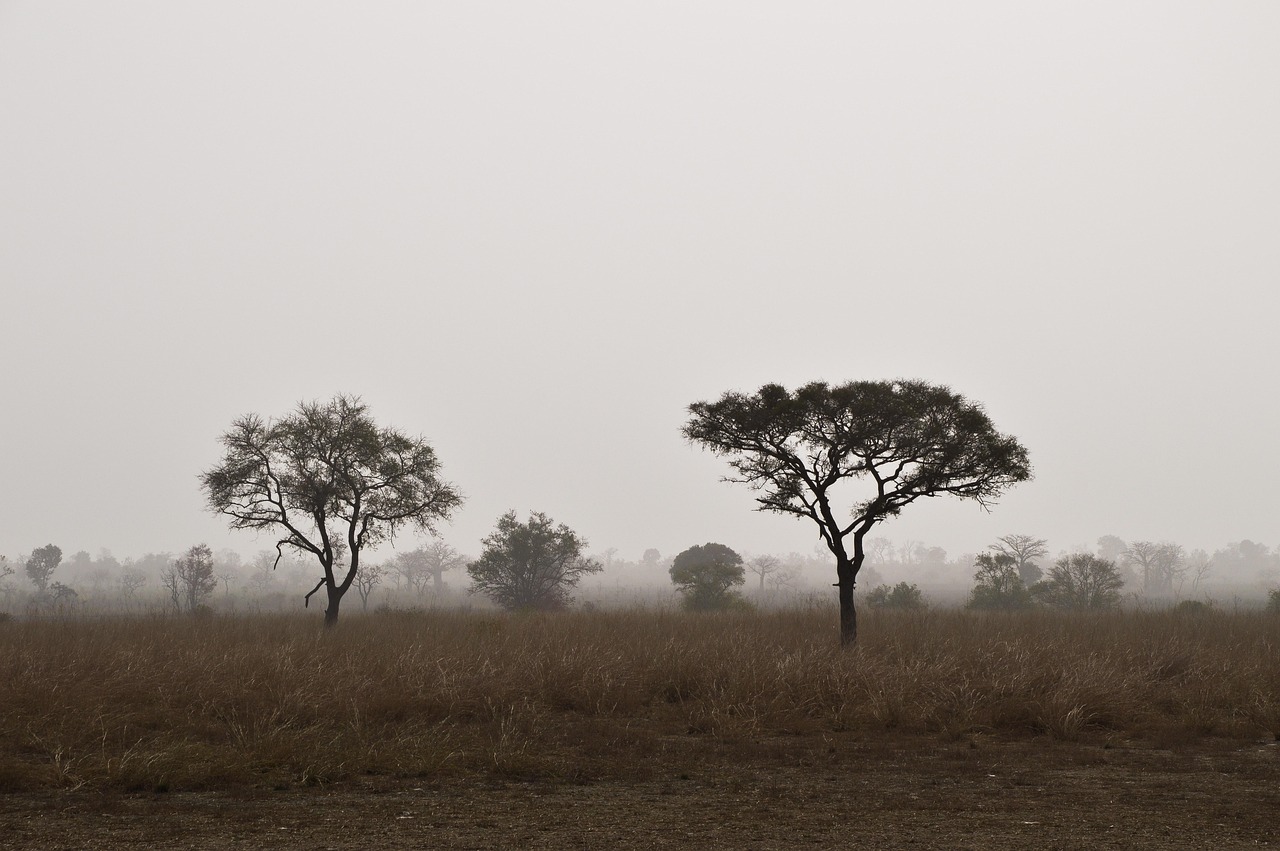
Benin is hot all year. Benin’s official tourism site notes that Cotonou is worth visiting in any season, and Ouidah’s sites are open all year. For touring the whole country, the dry season from November to March is the most comfortable, with sunny days and dry roads; the harmattan, a dusty wind from the Sahara, brings hazy skies, especially in the north, from about December to February. January is the month of the Vodun Days in Ouidah. In the south there are two rainy seasons, from about April to July, with the heaviest rain in June, and from September to October, with a drier break in August. The north has a single rainy season, from about May to October.
The table shows average monthly temperatures and rainfall at Cotonou for 1991–2020, from the climate normals Benin’s national meteorological service submitted to the World Meteorological Organization (WMO). Cotonou receives about 1,340 mm (53 in) of rain a year.
Benin month by month
| Month | Cotonou high / low | Rain at Cotonou | Weather and highlights |
|---|---|---|---|
| January | 32 / 24 °C (89 / 76 °F) | 19 mm (0.8 in) | Dry, with harmattan haze; Vodun Days in Ouidah |
| February | 32 / 26 °C (90 / 79 °F) | 38 mm (1.5 in) | Hot and dry; good for the north and Pendjari |
| March | 32 / 27 °C (90 / 80 °F) | 81 mm (3.2 in) | Hottest and most humid; first storms |
| April | 32 / 26 °C (90 / 79 °F) | 126 mm (5.0 in) | First rainy season begins |
| May | 31 / 25 °C (88 / 78 °F) | 213 mm (8.4 in) | Heavy showers |
| June | 30 / 25 °C (85 / 76 °F) | 333 mm (13.1 in) | Wettest month |
| July | 29 / 24 °C (83 / 76 °F) | 135 mm (5.3 in) | Cooler; rains easing; Porto-Novo Festival of Masks (2026) |
| August | 28 / 24 °C (83 / 75 °F) | 39 mm (1.5 in) | Coolest month; short dry spell on the coast |
| September | 29 / 24 °C (84 / 76 °F) | 135 mm (5.3 in) | Second rainy season begins |
| October | 30 / 25 °C (86 / 76 °F) | 165 mm (6.5 in) | Second wet peak |
| November | 32 / 25 °C (89 / 78 °F) | 44 mm (1.7 in) | Dry season returns; very good month to visit |
| December | 32 / 25 °C (89 / 77 °F) | 12 mm (0.5 in) | Dry and sunny; festive season |
Festivals worth planning around
- Vodun Days, Ouidah: held every January; the fourth edition runs from 2 to 9 January 2027, with Vodun dances, Zangbéto and Egungun masquerades, processions and concerts, some at the Ouidah Arena by the sea. Accommodation and tickets sell out early; the official site is vodundays.bj.
- Festival of Masks, Porto-Novo: a weekend of masquerades, a grand procession and concerts; the 2026 edition was on 25–26 July.
- Christmas and New Year: a busy, festive time on the coast.
- Independence Day: 1 August, marking independence in 1960.
- Ramadan and Eid: Eid al-Fitr and Eid al-Adha are public holidays; their dates move about 11 days earlier each year.
How long to stay: sample itineraries
- 3–4 days: Cotonou (3 nights), with day trips to Ouidah and to Ganvié, and a morning in Porto-Novo.
- One week: Cotonou (2 nights), Ouidah (2) with a day at Grand-Popo, Abomey (1), and Cotonou again (2) with Ganvié and Porto-Novo.
- 10 days to two weeks: add the north, via Dassa-Zoumè and Parakou or Djougou to Natitingou (2–3 nights) for the Atacora and its tata somba, and two or three days in Pendjari National Park.
- Combining countries: continue west along the coast from Grand-Popo into Togo for Aného, Lake Togo and Lomé, about 150 km (95 miles) from Cotonou.
Entry, money and costs
Visas
According to Benin’s official e-visa platform (evisa.bj), citizens of African countries can visit Benin without a visa for up to 90 days. Most other visitors, including citizens of the United States, Canada, the United Kingdom, the European Union and Australia, need an e-visa, applied for and paid online before travel. Benin also has reciprocal visa-exemption agreements with some countries, listed by its Ministry of Foreign Affairs.
| e-Visa | Fee online | Fee through an embassy |
|---|---|---|
| 30 days, single entry | €50 (about US$56) | €60 |
| 30 days, multiple entry | €75 (about US$84) | €85 |
| 90 days, multiple entry | €100 (about US$112) | €110 |
The platform recommends applying at least seven days before you arrive, and not more than 90 days ahead. Processing takes from one hour to 96 hours. Payment is by Visa or Mastercard with 3D Secure, or by mobile money from several West African operators. The visa is valid from the entry date you give, cannot be changed once issued and is not refundable, so check every detail before paying. To extend a stay, contact the Directorate of Emigration and Immigration in Benin. Your passport must be valid for the length of your stay.
Yellow fever
In September 2026, Benin’s Ministry of Health announced that vaccination cards, including yellow fever certificates, are no longer checked at the airport, port or land borders. The ministry still recommends yellow fever vaccination for all travelers and may bring checks back in a health emergency. Neighboring countries, including Togo, do require the certificate, so if your trip continues overland, get vaccinated and carry your yellow card.
Money and cards
The currency is the West African CFA franc (XOF, written FCFA locally), issued by the Central Bank of West African States (BCEAO) and shared with Togo and six other countries. It is pegged to the euro at a fixed rate of XOF 655.957 to €1; on 10 November 2026 the BCEAO’s rate for the US dollar was about XOF 580–587, so prices on this page use about XOF 585 to the dollar. Euros are the easiest currency to exchange. Cash is used for most everyday spending, including markets, street food, zémidjans and taxis, so carry small notes. Cards are accepted at larger hotels, some restaurants and supermarkets in Cotonou, and ATMs are found in Cotonou and the main towns. Mobile money from MTN and Moov is widely used.
Tipping
Tipping is not compulsory but is appreciated: about 5–10% in sit-down restaurants, small change in bars, and a tip for guides, drivers and pirogue crews at the end of a good day. Agree on fares for zémidjans, taxis and boats before setting off.
What a trip costs
Prices are approximate, for November 2026, with dollar amounts rounded. Site and museum entry fees are set locally and change, so check them on arrival.
| Item | Typical cost |
|---|---|
| Street food (akassa, beignets, a plate of atassi) | XOF 500–2,000 (US$1–3) |
| Grilled fish with moyo in a beach maquis | XOF 4,000–8,000 (US$7–14) |
| Meal in a mid-range restaurant in Cotonou | XOF 8,000–15,000 (US$14–26) |
| Short zémidjan ride in Cotonou | XOF 300–1,000 (under US$2) |
| Shared taxi Cotonou–Ouidah | XOF 1,000–2,000 (US$2–3) |
| Pirogue tour of Ganvié | XOF 10,000–20,000 (US$17–34) per boat |
| Simple guesthouse double, per night | XOF 15,000–25,000 (US$26–43) |
| Mid-range hotel double in Cotonou, per night | XOF 40,000–80,000 (US$68–137) |
| Car with driver, per day | XOF 35,000–60,000 (US$60–100) plus fuel |
A comfortable trip with a mid-range hotel, restaurant meals, taxis and guided visits costs roughly US$80–130 per person per day for two people sharing; touring the north with a car and driver costs more.
Getting there and getting around
Airport and flights
Almost all international visitors arrive at Cotonou’s Bernardin Gantin International Airport (COO), inside the city near the coast in the Cadjehoun district, only a short drive from the center and the main hotels. It is served by European, North African, Ethiopian and West African airlines, with connections through Paris, Brussels, Casablanca, Addis Ababa and regional hubs such as Lomé and Abidjan. Taxis wait outside arrivals; agree on the fare first, use a ride-hailing app, or book a hotel transfer.
Overland from Togo and Nigeria
The coastal highway links Cotonou with Lomé in Togo, about 150 km (95 miles) west via Ouidah and Grand-Popo, crossing the border at Hilacondji, and with Lagos in Nigeria to the east via the Sèmè-Kraké crossing. Buses and shared taxis run both routes. Check the visa and health rules of each country before crossing.
Getting around
Benin has no regular passenger trains, and travel is by road. The main highways, along the coast and north from Cotonou to Parakou and Malanville, are paved.
- Zémidjans (moto-taxis): the quickest way through city traffic, with drivers in numbered yellow shirts; agree the fare before you get on, and take a taxi or ride-hailing car if you have luggage.
- Taxis and ride-hailing: available in Cotonou and the main towns; ride-hailing apps work in Cotonou.
- Shared taxis and minibuses: link towns across the south and leave when full; cheap but crowded.
- Buses: private companies run long-distance coaches from Cotonou to Parakou, Natitingou and the north.
- Car with driver: the most comfortable way to tour, arranged through hotels and agencies.
- Self-drive: possible with a rental car; traffic drives on the right, motorbikes are everywhere, and roads are unlit outside towns, so avoid driving after dark.
As a rough guide to driving times from Cotonou: Ouidah and the Ganvié boat landing take about an hour each, Porto-Novo about 50 minutes, Grand-Popo about 1.5 hours, Abomey about 2.5 to 3 hours, Lomé about 3 hours plus the border crossing, and Natitingou a long day of 8 to 10 hours.
Lagoons, beaches and savanna
Benin’s outdoor highlights range from pirogue trips on Lake Nokoué, the Porto-Novo lagoon and the river mouth at Grand-Popo, to walks among the hills and waterfalls of the Atacora and game drives in Pendjari National Park. The Atlantic beaches of Cotonou, Ouidah and Grand-Popo are beautiful for walking, sunsets and seafood, but the surf, sandbar and currents are strong: Benin’s tourism site advises against swimming outside areas supervised by hotels. See our boat trips, beaches and hiking guides.
Culture, food and everyday etiquette
Food
Beninese food is hearty and full of flavor. On the coast, the classic meal is grilled fish, sea bream, sea bass or captain fish depending on the catch, served with moyo, a fresh sauce of tomato, onion and chili, and fried plantain or sweet potato. Other favorites include amiwo, a red maize paste cooked in tomato sauce and often served with chicken; atassi, rice and beans; akassa, fermented maize paste wrapped in leaves, eaten with peanut, okra or vegetable sauces; pâte with sauce; and, from the north, wagasi, a Fulani cheese often eaten grilled. Ask for chili on the side. Drinks include local beers, palm wine, sodabi (palm spirit), fresh pineapple juice from the Atlantique region and bissap (hibiscus).
Vodun and respect
Vodun is a living religion in Benin, not a show. Temples, sacred forests and shrines are active places of worship: follow your guide’s lead, remove shoes where asked, do not touch altars or objects, and ask before taking photos, which may be forbidden or require a fee. Some ceremonies and masquerades, especially those of the Zangbéto and Egungun, have rules for onlookers. More generally, greet people before asking anything (a simple “bonjour” goes a long way), use your right hand to give and receive, dress modestly away from the beach, and keep bargaining friendly.
Art, crafts and shopping
Benin has an active contemporary art scene, with galleries and foundations in Cotonou, Ouidah and Porto-Novo, and the murals of Cotonou’s port wall. Look for wax-print cloth, appliqué hangings from Abomey that echo the palace bas-reliefs, wood carvings, Gèlèdè masks, bronze and brass figures, woven baskets and pottery.
Health, practical tips and connectivity
Practical points for a smooth trip:
- Vaccinations: yellow fever vaccination is recommended by Benin’s Ministry of Health and required by neighboring Togo; see a travel health clinic about other vaccines and about malaria prevention, which is advised throughout the country.
- Mosquitoes: use repellent, cover up in the evening and sleep under a net where rooms are not screened or air-conditioned.
- Heat and sun: carry water, a hat and sunscreen, and sightsee in the morning and late afternoon.
- Water: drink bottled or filtered water.
- The sea: the Atlantic sandbar and currents are dangerous; swim only in supervised hotel areas or pools.
- Road travel: traffic and motorbikes are the main everyday risk; wear a helmet on zémidjans and avoid road travel after dark.
- Health care: Cotonou has the best hospitals and private clinics; have travel insurance that covers medical treatment and evacuation.
- Emergencies: call 117 for the police and 118 for the fire brigade, which also handles ambulance calls.
The main mobile networks, including MTN, Moov Africa and Celtiis, sell prepaid SIM cards with your passport, and coverage is good in Cotonou and the southern towns. Hotels and many cafés in Cotonou have Wi-Fi.
Things to do: history, Vodun, lakes and art
Watch the sunset from the Esplanade de l’Amazone in Cotonou; eat grilled fish under a thatched roof in Fidjrossè; walk the Route des Captifs to the Door of No Return in Ouidah; visit the Temple of the Pythons and the Sacred Forest of Kpassè; glide through the stilt town of Ganvié by pirogue; explore the museums and old houses of Porto-Novo; see the bas-reliefs of the Royal Palaces of Abomey; relax on the beach at Grand-Popo; and time your trip for the Vodun Days in January. See our city sightseeing, boat trips and beaches guides, and our rain jackets, water shoes and travel adapters guides.
Benin travel FAQ
Do I need a visa for Benin?
Citizens of African countries can visit without a visa for up to 90 days. Most other visitors, including Americans, Canadians, Britons, Europeans and Australians, need an e-visa from the official platform evisa.bj before travel.
How much is a Benin e-visa?
Online, €50 for 30 days with a single entry, €75 for 30 days with multiple entries and €100 for 90 days with multiple entries; through an embassy, €60, €85 and €110.
Do I need a yellow fever vaccination for Benin?
Since September 2026, Benin no longer checks yellow fever certificates at its borders, but its Ministry of Health still recommends the vaccine for all travelers, and neighboring Togo requires the certificate.
What is the capital of Benin?
Porto-Novo is the official capital; Cotonou is the economic capital, the largest city and home to the international airport and most government offices.
What currency is used in Benin?
The West African CFA franc (XOF), fixed at XOF 655.957 to the euro; in November 2026 a US dollar was worth about XOF 580–587.
When are the Vodun Days?
Every January in Ouidah; the next edition runs from 2 to 9 January 2027. Book accommodation early.
What is the best time to visit Benin?
November to March, the dry season, which also includes the Vodun Days in January. The south is wettest from April to July, especially in June.
How many days do I need in Benin?
Three or four days for Cotonou, Ouidah, Ganvié and Porto-Novo; a week to add Abomey and Grand-Popo; ten days to two weeks to include the Atacora and Pendjari.
Can I combine Benin with Togo or Nigeria?
Yes. Lomé in Togo is about 150 km west along the coast road, and Lagos in Nigeria is to the east. Check each country’s visa and health rules. See our Nigeria travel guide; Togo has its own guide on TravelerCenter.
What are the emergency numbers in Benin?
117 for the police and 118 for the fire brigade, which also handles ambulance calls.
What plugs are used in Benin?
European two-pin types C and E, at 220 V and 50 Hz. Bring an adapter if your plugs are a different type.
What is the time difference in Benin?
Benin is on UTC+1 all year, with no daylight saving time: one hour ahead of Togo and Ghana, and the same as Nigeria.
Plugs and power in Benin
Benin uses 220 V, 50 Hz and these plugs (left) and wall sockets (right):
European two-pin sockets; a type C plug fits both.
All plug types and voltages by country → · Check what you need to pack →
Plan your trip
Partner links: TravelerCenter may earn a commission if you book, at no extra cost to you.
🇫🇷 Useful French phrases for Benin
All 38 French phrases: restaurant, hotel, emergencies, romance (printable) →
Before you go: guidebooks and travel gear
Affiliate links: we may earn a commission at no extra cost to you. As an Amazon Associate we earn from qualifying purchases. We pick items for the place, not for the commission. How we earn money
Sources · last reviewed 10 November 2026
Researched and last reviewed on 10 November 2026. Visa exemption for African citizens, e-visa types, fees, timing, processing, payment and extensions, and the September 2026 yellow fever notice from the Ministry of Health: Benin’s official e-visa platform (evisa.bj); passport validity: the UK government’s entry requirements page for Benin; Cotonou, Ouidah, Porto-Novo, Abomey and regional descriptions, travel times from Cotonou, the Festival of Masks, swimming advice, food and zémidjans: Bénin Tourisme, the official tourism site (benin.bj); Vodun Days dates: the official festival site (vodundays.bj); temperatures and rainfall at Cotonou, 1991–2020: Benin’s meteorological service via the World Meteorological Organization’s climate normals; emergency numbers: the UK government’s Benin page; exchange rates: the Central Bank of West African States (BCEAO); airport name: Bernardin Gantin International Airport (aeroport-cotonou.com); World Heritage sites: UNESCO; area and coordinates: Wikidata; time zone: the IANA time zone database. Geography, languages, history, Ganvié, Grand-Popo, the Atacora and Pendjari, airlines, transport, driving times, plugs, mobile networks, etiquette, prices and daily budgets are general references or estimates, flagged for checking. Rules and fees change, so check the official sites before you go.
Data: Weather: MET Norway (CC BY 4.0) · Rates: ECB · Wikidata (CC0)