Bonaire is the quiet, nature-first member of the Dutch “ABC islands” in the southern Caribbean, and one of the world’s great places to dive and snorkel. Its entire coastline, from the high-tide line down to 60 m (200 feet), has been a protected marine park since 1979, and the reef starts just a few steps from the shore, so you can simply park beside a yellow-painted stone, wade in and find yourself among corals, turtles and clouds of fish. On land, Bonaire is dry, flat in the south and hilly in the north, with pink salt pans, flamingos, wild donkeys, cactus forests and a single small capital, Kralendijk. Since 2010 the island has been a special municipality of the Netherlands, and it uses the US dollar. It sits south of the main hurricane belt, the water is calm and clear on the west coast all year, and life moves slowly. Plan a week, or more if you dive.
Right now in Bonaire
- Tue 28–30°C 82–86°F 3 mm Light showers
- Wed 26–30°C 78–85°F 2 mm Light showers
- Thu 28–29°C 82–85°F 4 mm Cloudy
Weather: MET Norway (CC BY 4.0)
Multi-day tours of Bonaire
Multi-day tours from local operators. You check dates and book on Viator, our partner; we may earn a commission at no extra cost to you. How we earn money
Bonaire at a glance: overview and geography
Bonaire is a boomerang-shaped island about 38 km (24 miles) long and 5–11 km (3–7 miles) wide, covering roughly 288 km² (111 square miles), about 80 km (50 miles) north of Venezuela and 40 km (25 miles) east of Curaçao. The sheltered west coast faces the calm Caribbean, with the capital, Kralendijk, and most hotels and dive sites; directly opposite town lies Klein Bonaire, a small, flat, uninhabited island ringed by reef. The north is hilly and green after rain, rising to Brandaris at 241 m (791 feet) inside Washington Slagbaai National Park; the south is flat and taken up by salt pans, the flamingo sanctuary and the shallow, mangrove-fringed Lac Bay on the windward east coast. Only about 25,000 people live here.
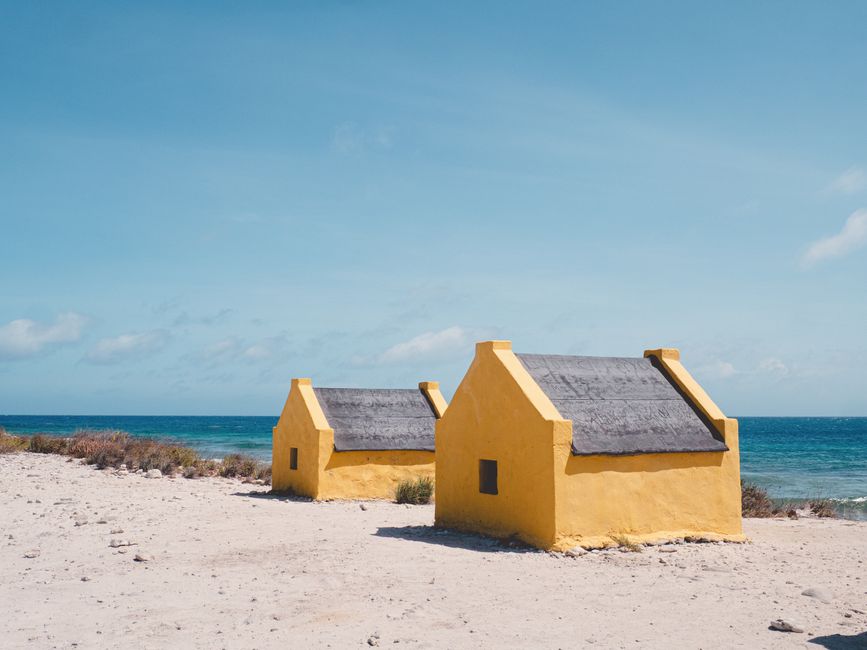
Like Aruba and Curaçao, Bonaire was home to the Caquetío before the Spanish arrived in 1499; the Dutch took it in 1636 and used it for salt, dyewood, livestock and enslaved labor. The small stone slave huts beside the salt pans, built around 1850, are a stark reminder of that history. Bonaire was part of the Netherlands Antilles until 10 October 2010, when it became a “special municipality” of the Netherlands, together with Sint Eustatius and Saba, the so-called Caribbean Netherlands. Dutch law and the Dutch national government apply, but Bonaire keeps its own island government, its own tax system and its own entry rules, and it is not part of the European Union’s Schengen area. The island switched from the Antillean guilder to the US dollar in 2011.
Time zone: Bonaire is on Atlantic Standard Time (UTC−4) all year, with no daylight saving.
The areas of the island
- Kralendijk: the small capital on the west coast, with its waterfront promenade, restaurants, dive shops, Fort Oranje and the cruise pier.
- The hotel coast: north and south of town, where most resorts, apartments and dive operators line the shore, with house reefs right in front.
- Klein Bonaire: the uninhabited islet off Kralendijk, reached by water taxi or kayak, with No Name Beach and some of the island’s best reefs.
- The north: the old village of Rincon, the flamingo lake of Gotomeer, the cliffs and caves of the hilly interior, and Washington Slagbaai National Park.
- The south: the salt pans and slave huts, the Pekelmeer flamingo sanctuary, the Willemstoren lighthouse and the dive sites along the southern reef.
- Lac Bay and the east: the windsurfing beach of Sorobon, the mangroves and the wild windward coast.
Where to go: reefs, parks, salt and flamingos
Bonaire is small enough that you can stay anywhere along the west coast and reach everything by car within 45 minutes. Divers usually pick a resort or apartment with a dive shop and a house reef; non-divers often prefer Kralendijk itself, for the restaurants, or a villa near Lac Bay for the trade-wind breeze.
Bonaire National Marine Park and the shore dives
The Bonaire National Marine Park covers all the water around Bonaire and Klein Bonaire from the high-tide line down to 60 m (200 feet), about 27 km² (10 square miles) of reefs, seagrass and mangroves, managed by the nonprofit STINAPA. More than 80 marked dive sites are signposted along the coast road with painted yellow stones; you park, gear up and walk in. Favorites include 1000 Steps (really just a few dozen steps down a cliff), the Hilma Hooker wreck, the Salt Pier, with its pillars covered in sponges and coral, Andrea I and II, Bari Reef near town, and Oil Slick Leap, where you jump off a low cliff. The water is usually calm, clear and warm, and the reef slopes gently before dropping away, so it suits beginners and experienced divers alike. Snorkelers see almost as much as divers.
Klein Bonaire
Klein Bonaire is the flat, low island across the water from Kralendijk, about 6 km² (2.3 square miles) of scrub with no buildings, no shade and a reef all around. Water taxis run several times a day from town to No Name Beach, a white-sand beach with superb snorkeling, and many dive boats visit the sites around its edge. Sea turtles nest here. Take water, sunscreen and shade, and everything you bring back with you.
Washington Slagbaai National Park
Founded in 1969 and covering about 17% of the island’s land, Washington Slagbaai National Park protects the rugged north: cactus forests, salt lakes with flamingos, parrots and iguanas, the blowhole at Boka Kokolishi, the beach at Boka Slagbaai with its old plantation buildings, and the climb up Brandaris. Some 50 km (31 miles) of unpaved roads loop through the park, best done in a high-clearance vehicle; there is a small natural history museum at the entrance, and two marked hiking trails are open in the morning. Entry is covered by the STINAPA nature fee (see below). Start early: the park closes in the afternoon and there are few facilities inside.
The salt pans, slave huts and flamingos
The south of Bonaire is a strange, beautiful landscape of pink and violet salt pans, white salt mountains and tall stone obelisks that once guided ships to load salt. Along the coast stand the tiny slave huts, rows of low stone shelters where enslaved salt workers slept during the week. Bonaire is one of the few places in the Caribbean where Caribbean flamingos breed, in the protected Pekelmeer sanctuary; you can’t enter it, but flamingos feed in the salt pans along the road, at Gotomeer in the north and in the lakes of Washington Slagbaai. Keep your distance and don’t stop on the road to photograph them.
Lac Bay and Sorobon
Lac Bay, on the east coast, is a large, shallow lagoon protected by a reef, with steady trade winds and waist-deep water: one of the best places in the world to learn windsurfing. Sorobon beach has windsurf schools, beach bars and loungers. The northern part of the bay is lined with mangroves, which you can explore by kayak or on a guided paddle and snorkel tour; Lac Cai, at the end of the road, has a simple beach and fresh fish on weekends.
Kralendijk and Rincon
Kralendijk is a relaxed, low-rise town of pastel buildings along the water, good for a sunset drink, dinner and shopping. See Fort Oranje, the waterfront promenade and the Terramar museum of island history. Rincon, inland in the north, is Bonaire’s oldest village, founded by the Spanish and later home to enslaved workers, with colorful houses, a weekly market and small bars; it holds the island’s harvest festival, Simadan, every spring.
A few more worth your time
The Donkey Sanctuary near the airport, home to hundreds of rescued donkeys you can drive through; Te Amo Beach, a local favorite next to the runway; the Willemstoren lighthouse at the southern tip; Bonaire’s ancient Arawak rock drawings at Onima; the caves and limestone terraces near Rincon; the Mangrove Information Center at Lac Bay; and the cliff-top viewpoint of Seru Largu over Kralendijk.
Best time to visit Bonaire
Bonaire is warm, sunny and breezy all year, with very little rain. As on Aruba and Curaçao, the dry season runs from about February to May and the short rainy season from October to January, when showers are brief and the island turns briefly green. The table shows the official averages for Flamingo Airport, 1971–2000, from the Meteorological Department of Curaçao, which then provided Bonaire’s weather service.
| Season (Flamingo Airport, 1971–2000) | Average afternoon high | Average night low | Rain a month | Days with rain a month | What it’s like |
|---|---|---|---|---|---|
| Jan–Mar | 29.5–30 °C (85–86 °F) | 24–25 °C (76–77 °F) | 13–44 mm (0.5–1.7 in) | 2.5–9 | Peak season; dry and breezy after January; sea at its coolest, about 25.5 °C (78 °F). |
| Apr–Jun | 30.5–31 °C (87–88 °F) | 25.5–26.5 °C (78–80 °F) | 13–15 mm (0.5–0.6 in) | 2–3 | The driest months; strongest trade winds for windsurfing. |
| Jul–Sep | 31–32 °C (88–89 °F) | 26–26.5 °C (79–80 °F) | 35–37 mm (1.4–1.5 in) | 4.5–5.5 | Hot, with lighter winds and very calm, clear water: prime diving. |
| Oct–Dec | 30–31.5 °C (86–89 °F) | 25–26 °C (77–79 °F) | 67–96 mm (2.6–3.8 in) | 7.5–11.5 | The rainy season: short showers and occasional storms; warmest sea, about 28 °C (82 °F). |
Bonaire gets only about 460 mm (18 inches) of rain a year. Water temperatures range from about 25.5 °C (78 °F) in February to 28 °C (83 °F) in September and October, and visibility underwater is often 30 m (100 feet) or more.
Hurricanes, swell and sargassum
The Atlantic hurricane season runs from 1 June to 30 November, peaking from August to October, but Bonaire sits on the southern fringe of the hurricane region and direct hits are rare. When storms do pass to the north, they can send big waves onto the usually calm west coast, which can close dive sites and damage the shore, as Hurricane Lenny’s swell did in 1999 and Hurricane Ivan’s in 2004. In June 2022 Tropical Storm Bonnie brought warnings and heavy rain to all three ABC islands. The 2026 season had been quiet through early October, with no Atlantic hurricanes and no warnings for Bonaire. Sargassum seaweed sometimes piles up on the windward east coast, including parts of Lac Bay, but rarely affects the west-coast dive sites.
Crowds and prices through the year
Bonaire never feels crowded, but December to April is high season, with more Americans and Canadians, and Dutch visitors arrive in large numbers during school holidays, especially in summer and the October and Christmas breaks. Cruise ships call mostly from October to April and can fill Kralendijk and popular snorkel spots for a day. Diving is excellent all year; May, June and September to November are often the best value.
Festivals and public holidays
Carnival fills Kralendijk with parades in February or March. Simadan, the harvest festival, is celebrated in Rincon around Easter with traditional music and the wapa dance. Bonaire Day (Dia di Boneiru) on 6 September celebrates the island’s identity, and Rincon Day on 30 April coincides with King’s Day (27 April) celebrations. Other holidays include New Year’s Day, Good Friday, Easter Monday, Labor Day (1 May), Ascension Day, Emancipation Day (1 July) and Christmas. The Bonaire International Sailing Regatta, usually in October, is the island’s oldest sporting event.
How long to stay: sample itineraries
Bonaire is about the water, so give it time. A pickup truck and a cooler are the island’s unofficial uniform.
4 days: the island’s highlights
Day 1: Kralendijk and a snorkel at Bari Reef or your house reef. Day 2: a water taxi to Klein Bonaire’s No Name Beach. Day 3: the south loop: salt pans, slave huts, flamingos, Willemstoren lighthouse and Lac Bay. Day 4: Washington Slagbaai National Park, Gotomeer and Rincon.
7–10 days: a dive or snorkel holiday
Rent a truck, take the dive orientation, and work your way along the coast: two or three shore dives or snorkels a day, plus boat dives at Klein Bonaire and the protected north. Add a windsurf lesson or mangrove kayak at Lac Bay, the Donkey Sanctuary and a sunset at Te Amo Beach.
Two weeks: the ABC islands
Pair Bonaire with Willemstad and the coves of Curaçao, 20–30 minutes away by plane, or Aruba’s beaches. See our Curaçao guide and our Aruba guide.
Entry, money, fees and costs
Entry rules (last reviewed October 2026)
Although Bonaire is part of the Netherlands, it is outside the Schengen area and the EU’s customs area, so the EU’s Entry/Exit System and ETIAS do not apply, and it has its own entry rules for the Caribbean Netherlands. Bring a passport valid for your whole stay; Dutch visitors also need a passport. Citizens of the United States, Canada, the UK, the EU and many other countries can visit without a visa, generally for up to 90 days in any 180-day period; you may be asked for a return ticket and proof of accommodation. Bonaire does not use an online ED card like Aruba’s or Curaçao’s; instead, everyone handles the entry tax below.
Visitor Entry Tax
Bonaire charges a Visitor Entry Tax of US$75 for visitors aged 13 and older. A reduced rate of US$10 applies to children aged 12 and under and to residents of the other islands of the former Netherlands Antilles, and cruise passengers pay a reduced rate through their cruise line. Pay online on the island government’s official site, tourismtax.bonairegov.com, from seven days before travel, by credit card or iDEAL, and show the QR code you receive at the airport’s e-gates; you can also pay by card at self-service kiosks on arrival, but cash is not accepted. Since 1 July 2024 the QR code is valid for 30 days from your first arrival, so a side trip to Curaçao or Aruba within that month doesn’t mean paying again. The island government warns that look-alike websites charge more: use only the official address. There is no separate nightly room tax.
STINAPA nature fee and tag
Anyone who dives, snorkels, swims, kayaks, windsurfs or otherwise uses the water of the Bonaire National Marine Park, or visits Washington Slagbaai National Park, must pay the STINAPA nature fee of US$40, valid for the calendar year (January to December). Buy it online at STINAPA’s official portal, bonairenaturefee.org, or through your dive shop or hotel; residents of Bonaire and the other ABC and Caribbean Netherlands islands are exempt. Keep the receipt or tag with you, and divers usually attach the tag to their gear, because park rangers check. The fee funds the rangers, mooring buoys and research that keep the reef healthy.
Languages and a few useful words
Papiamentu is the main language on the street, Dutch is the official language of government and schools, and English and Spanish are widely spoken, especially in tourism. Try bon dia (good morning), bon tardi (good afternoon), danki (thank you), por fabor (please) and ayó (goodbye).
Money, cards and tipping
Bonaire’s currency is the US dollar, so there is nothing to exchange for American visitors. Cards are widely accepted in hotels, restaurants, supermarkets and dive shops; carry some cash for snack stands, water taxis and roadside fruit sellers. ATMs dispense dollars. Many restaurants add a service charge of about 10–15%; if not, tip around 10–15% for good service, and tip dive guides and boat crews.
Typical travel costs
Bonaire is not cheap: almost everything is imported, and eating out costs about as much as in a US resort town. Apartments with kitchens and supermarket shopping keep costs down. These estimates, per person per day, are a planning guide as of October 2026:
| Style | Estimated cost per day | What that looks like |
|---|---|---|
| Budget | about US$100–160 | Simple apartment shared by two, self-catering, shore snorkeling, a small car or pickup shared by two |
| Mid-range | about US$200–320 | Dive resort or good apartment shared by two, unlimited shore-diving package, some restaurant meals, a boat dive or Klein Bonaire trip |
| High-end | about US$450+ | Boutique resort or villa with a pool, private guides, boat charters and fine dining |
Add the US$75 Visitor Entry Tax and the US$40 nature fee per person. Shore-diving packages are typically sold per day or week with truck and tanks included. The figures are our estimates, not official statistics.
Getting there and getting around
Flights and cruises
Flamingo International Airport (BON) lies just south of Kralendijk, about 5 minutes by car from town. KLM flies from Amsterdam, and there are nonstop flights from several US hubs, including Houston, Newark, Atlanta, Miami and Charlotte, some seasonal; check current schedules. Small regional airlines connect Bonaire with Curaçao in about 20–30 minutes, and with Aruba. There is no scheduled passenger ferry to Curaçao. Airport charges are included in airline tickets. Cruise ships dock at the pier in central Kralendijk.
Driving and getting around
There is almost no public transport, so you need a vehicle. Divers rent pickup trucks to carry tanks and gear to the shore sites; scooters, e-bikes and small cars are fine for non-divers. Bonaire drives on the right, roads are quiet, and your home license is accepted. Watch for donkeys and goats, especially at night, and for roundabouts. A golden rule: never leave anything of value in your vehicle at a dive site. Locals advise leaving windows down and the truck empty so nobody breaks a window to check. Taxis wait at the airport and can be booked by phone, at fixed fares.
Beaches, the sea and reef rules
Bonaire isn’t a classic sandy-beach island: most of the west coast is rocky shore with coral rubble, and the best sand is on Klein Bonaire (No Name Beach), at Sorobon and Lac Cai on Lac Bay, Te Amo Beach, Pink Beach in the south and Boka Slagbaai in the national park. The sea itself is the star. See our snorkeling guide, diving, beaches and boat trips.
- Don’t touch: don’t touch, stand on or kick coral, don’t wear gloves, and don’t feed fish or chase turtles. Keep your fins off the bottom.
- No anchoring: boats must use the park’s mooring buoys; spearfishing and taking anything, living or dead, is forbidden.
- Dive orientation: scuba divers attend a short orientation and make a check-out dive with a local operator before diving on their own.
- Entries: wear water shoes or boots on the rocky shore entries, and look out for urchins.
- Swell: after storms to the north, waves can make west-coast entries dangerous; check conditions with dive shops.
- East coast: the windward side has strong currents and waves; swim only inside Lac Bay.
Safety, health and connectivity
Safety
Bonaire is calm and has little serious crime. The main issue is theft from vehicles parked at dive and snorkel sites, and occasionally from apartments: leave valuables locked away at your accommodation, and take only what you need to the shore. Roads are unlit outside town, so drive slowly at night. Divers should respect their limits, dive with a buddy and follow the depth and time rules; the island has a recompression chamber at the hospital. Emergency number: 911. The hospital is Fundashon Mariadal in Kralendijk.
Sun and health
Shade is scarce and the breeze hides the sun’s strength: wear a rash guard and hat, use reef-safe sunscreen, and drink plenty of water, especially in Washington Slagbaai. Tap water is desalinated and safe to drink. Mosquitoes can carry dengue in the region, so use repellent after rain. Make sure your travel insurance covers diving and medical evacuation.
Accessibility
Bonaire has a reputation for adaptive diving, and several dive centers offer programs for divers with disabilities. Kralendijk’s waterfront is flat, but shore entries are rocky and the national park’s roads are rough.
Connectivity and power
Mobile coverage is good along the west coast and in town, patchier in the north; local providers sell prepaid SIM and eSIM plans, and Dutch visitors should check whether their home plan includes the Caribbean Netherlands (EU roaming rules don’t apply). Wi-Fi is standard in hotels. Electricity is about 127 V at 50 Hz with US-style type A and B sockets; Europeans need a travel adapter.
Food, drink and culture
Bonaire’s local food is hearty and home-style: goat stew (stoba di kabritu), fish soup, funchi, fried plantains, pastechi pastries and johnny cake, plus very fresh fish such as wahoo and snapper. Look for local lunch spots called snèks and weekend barbecues; Lac Cai’s fish shacks are a Sunday tradition. Kralendijk’s waterfront has an international mix of restaurants, from Dutch to Peruvian to sushi. Try cactus soup (sopi di kadushi) if you see it, and local liqueur made from cactus. Bonaire’s culture blends African, Dutch and Latin influences, and its music, including the simadan harvest songs and the bari drum, is proud and alive.
Things to do: diving, windsurfing and nature
- Shore and boat diving: 80+ marked sites, night dives, the Hilma Hooker wreck, the Salt Pier, and Klein Bonaire.
- Snorkeling: almost every dive site doubles as a snorkel site; guided snorkel trails start from Kralendijk and Klein Bonaire.
- Windsurfing and kitesurfing: Lac Bay for windsurfing; kitesurfing at Atlantis beach in the south.
- Kayaking: the mangroves of Lac Bay and the crossing to Klein Bonaire.
- Hiking and birding: Brandaris and the trails of Washington Slagbaai, flamingos and parrots. See our hiking guide.
- Cycling: mountain-bike trails in the hills; see our cycling guide.
What to pack
Your own mask, snorkel and fins (or full dive gear), dive boots or water shoes for rocky entries, a rash guard, reef-safe sunscreen, a hat and sunglasses, a refillable water bottle, a dry bag, insect repellent, and closed shoes for hiking in the park. Light clothes are all you need; bring a light jacket for boat trips in the wind. Europeans need a US-style plug adapter.
Bonaire travel FAQ
How much is the Bonaire Visitor Entry Tax?
US$75 per person aged 13 and older, and US$10 for children 12 and under. Pay only on tourismtax.bonairegov.com, from seven days before travel, or by card on arrival. It is valid for 30 days from your first arrival.
What is the STINAPA nature fee?
A US$40 fee, valid for the calendar year, for anyone who uses the water of the Bonaire National Marine Park or visits Washington Slagbaai National Park. It pays for park management.
Do I need a passport for Bonaire?
Yes. US, Canadian, UK and EU citizens need a passport but no visa for a tourist stay, usually up to 90 days in 180.
What currency is used on Bonaire?
The US dollar, since 2011. Cards are widely accepted.
When is the best time to visit Bonaire?
Any time. February to May is driest; July to October has the calmest, warmest water for diving; May, June and September to November are good value.
Is Bonaire good for snorkeling if I don’t dive?
Absolutely. The reef starts a few meters from shore all along the west coast, and Klein Bonaire is one of the best snorkel spots in the Caribbean.
Does Bonaire get hurricanes?
Rarely. It lies south of the main hurricane belt, but passing storms can send large waves onto the west coast and bring heavy rain.
Do I need a car on Bonaire?
Yes. There is almost no public transport. Divers rent pickup trucks; others use small cars, scooters or e-bikes.
Where can I see flamingos on Bonaire?
In the salt pans along the southern coast road, at Gotomeer in the north and in the salt lakes of Washington Slagbaai. The breeding sanctuary at Pekelmeer is closed to visitors.
Does Bonaire have good beaches?
A few: No Name Beach on Klein Bonaire, Sorobon and Lac Cai on Lac Bay, Te Amo and Pink Beach. Most of the coast is rocky, made for snorkeling rather than lying on sand.
Is Bonaire safe?
Yes, it is very relaxed. Don’t leave valuables in vehicles at dive sites, drive carefully at night, and call 911 in an emergency.
Is Bonaire in the EU or Schengen?
No. Bonaire is part of the Netherlands but outside the Schengen area and the EU’s customs territory, so Schengen visas, the EES and ETIAS don’t apply. See our Netherlands guide for the European part of the country.
Sources and last review
Researched and last reviewed on 4 October 2026. The Visitor Entry Tax comes from the Public Entity Bonaire’s official payment site and Tourism Corporation Bonaire’s statement; the nature fee and park facts from STINAPA; the climate averages (Flamingo Airport, 1971–2000), sea temperatures and hurricane background from the Meteorological Department of Curaçao; the 2026 hurricane season from the US National Hurricane Center. Visa-free stay lengths, the end of the nightly room tax, flight routes, the dive orientation rule, population, electricity and some festival dates come from secondary sources and are flagged for checking. Daily costs are estimates. Prices and rules change, so check the official sites before you travel.
Plan your trip
Partner links: TravelerCenter may earn a commission if you book, at no extra cost to you.
🇳🇱 Useful Dutch phrases for Bonaire
All 38 Dutch phrases: restaurant, hotel, emergencies, romance (printable) →