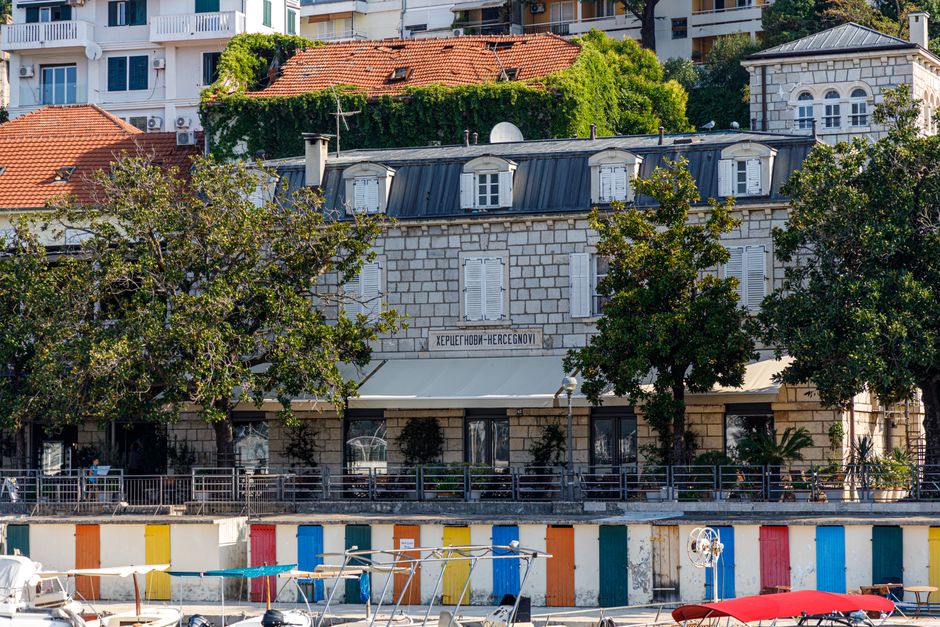
Herceg Novi is the first Montenegrin town you meet coming from Dubrovnik: a green, sunny town tumbling down the hillside at the mouth of the Bay of Kotor, so full of steps that locals call it the city of stairs. Its old town is ringed by fortresses from every era of its past, from the Ottoman Kanli Kula to the Venetian Forte Mare and the hilltop Spanish fortress, and its gardens of mimosa, palms and bougainvillea earned it the nickname “the botanical garden of the Adriatic”. A 7 km seaside promenade runs past swimming platforms to the spa resort of Igalo, and boats leave for the Blue Cave, the fortress island of Mamula and the quiet beaches of the Luštica peninsula. Herceg Novi is calmer and more local than Budva, and the easiest Montenegrin base for Dubrovnik. Two to four days suits most people.
Right now in Herceg Novi
- Wed17–22°C62–72°F2 mm rain
- Thu17–20°C63–68°F54 mm rain
- Fri18–21°C65–70°F44 mm rain
Top tours in Herceg Novi
See all tours for Herceg Novi →
From local operators, with prices and reviews; you check availability and book on Viator, our partner. We may earn a commission at no extra cost to you. How we earn money
Herceg Novi at a glance
- Best months: May–June and September–October. Average highs run from about 24 °C in May to 31–32 °C in July and August (WMO 1991–2020 normals for the Herceg Novi station). February brings the Mimosa Festival; winters are mild but wet.
- Days needed: 1 for the old town and fortresses; 2–4 with boat trips, the promenade and day trips to Kotor or Dubrovnik.
- Getting there: Dubrovnik airport (DBV) in Croatia is about 30–40 minutes plus the border; Tivat (TIV) is about 30–40 minutes via the Kamenari–Lepetane ferry.
- Getting around: on foot, with many steps; local buses and taxis along the shore; boats in summer.
- Budget level: generally cheaper and calmer than Budva or Kotor’s old town. See our Montenegro guide (coming soon) for entry rules, money and costs.
Herceg Novi’s areas and who each one suits
- The old town (Stari grad): stone lanes, squares and stairways between the clock tower and the sea fortress. Atmospheric, central and steep.
- Škver and the waterfront: the little harbour below the old town, with the promenade, cafés, the bus to the beaches and the boat departures. Convenient for everything.
- Topla: just west of the centre, a residential district of gardens and family-run apartments with easy access to the promenade.
- Igalo: 3 km west, a flat spa resort with a sandy-mud beach, a big health institute and hotels; good for families, older travellers and anyone who prefers fewer steps.
- Savina, Meljine and Zelenika: east along the bay, quieter, with the Savina monastery and calm water for swimming.
- Luštica and Rose: across the strait, a peninsula of olive groves, coves and the tiny fishing village of Rose, best reached by boat from Herceg Novi.
Top things to see in Herceg Novi
Details below are as of October 2026. The town’s fortresses are managed by the municipal cultural institution and charge a small entry fee of a few euros; check current prices and hours locally, as published figures vary.
The old town and the clock tower
Herceg Novi was founded in 1382 by the Bosnian king Tvrtko I and takes its name from the 15th-century Herzog (duke) Stjepan Vukčić Kosača. It then passed to the Ottomans for two centuries, to Venice in 1687, and later to Austria, and each ruler left something behind. Enter the old town under the Ottoman-era clock tower (Sahat kula) on Nikola Đurković square, then wander to the small Belavista square, with the white Orthodox church of St Michael the Archangel, and down the stairways towards the sea. Look out for the Ottoman fountain (Karača), the Catholic church of St Jerome and the many small galleries.
Forte Mare and Kanli Kula
Forte Mare, the sea fortress, rises straight from the rocks above the harbour. Its present walls are mostly Venetian, built on Bosnian and Ottoman foundations, and its battlements give a lovely view along the coast and across to Luštica; it is also a summer open-air cinema and concert venue. Up the hill, Kanli Kula (“the bloody tower”), built by the Ottomans in the 16th century and once a notorious prison, is now an open-air stage with room for about a thousand people and wide views over the town and the bay. Both are open daily in season, usually from morning to early evening, for a small fee.
The Spanish fortress (Španjola)
Above the town on the slopes towards Mount Orjen, the Spanish fortress was begun during a brief Spanish occupation in 1538 and completed by the Ottomans. It is a stiff uphill walk or a short drive from the centre, and largely unrestored, but the view over the entrance to the Bay of Kotor, Mamula and the open Adriatic is one of the best in the area, especially at sunset.
Savina Monastery
A 20-minute walk east along the shore, among cypresses and pines on a hill above the bay, Savina Monastery is a peaceful Orthodox complex of three churches, the oldest from the 15th century, with a treasury of icons and manuscripts. Dress modestly, covering shoulders and knees, and keep your voice down: it is a working monastery.
The Pet Danica promenade
The Šetalište Pet Danica, a seaside promenade built on the line of an old railway, runs for about 7 km from Igalo through Herceg Novi to Meljine, past concrete swimming platforms, small beaches, cafés and restaurants. Walk it in the early morning or at sunset, and stop for a swim whenever you like. It passes through old railway tunnels near the town centre.
Beaches and swimming
Herceg Novi’s own shoreline is mostly concrete platforms, jetties and small pebble beaches along the promenade, with ladders into clean, deep water; many have beach bars with loungers. Igalo has a longer beach of sand and mud, known for its healing mud. The best beaches are across the water on the Luštica peninsula: Žanjice and Mirište, pebble coves with very clear water and beach bars, and the village of Rose, with a few fish restaurants on the quay. Taxi boats and excursion boats go there from Herceg Novi’s harbour in summer; you can also drive, but it takes much longer. See our beaches guide. Bring water shoes for the rocks and urchins.
Boat trips, diving and day trips
- The Blue Cave (Plava špilja): a sea cave on Luštica where sunlight turns the water a glowing blue; boats from Herceg Novi stop so you can swim inside. Combine with Žanjice beach.
- Mamula: the round Austro-Hungarian fortress on an islet at the mouth of the bay, used as a prison camp in the Second World War, has been a luxury hotel since 2021; most visitors see it from the boat on the way to the Blue Cave.
- Diving and snorkelling: wrecks and walls around the mouth of the bay and Luštica. See diving and snorkeling.
- Kotor and Perast: about 45–60 minutes by road round the bay; boat excursions also go there. See our boat trips guide.
- Dubrovnik: about an hour’s drive plus the border at Debeli Brijeg–Karasovići. Take your passport. See our Dubrovnik guide.
- Mount Orjen: the limestone mountain behind the town, at almost 1,900 m, has hiking trails and wide views. See our hiking guide.
- Trebinje: a relaxed riverside town in Bosnia and Herzegovina, about 40 minutes inland, with an old town, plane trees and wineries; another border, so carry your passport.
Igalo and the spa
Igalo grew up around its sea mud and mineral springs, and its large health institute offers rehabilitation and wellness treatments, popular with visitors from across the former Yugoslavia. It has a flat promenade, a long beach and plenty of hotels, which make it easier for anyone who struggles with Herceg Novi’s stairs. The promenade connects it to the old town on foot in about 40 minutes.
Eating and drinking in Herceg Novi
Eat by the water: the promenade and Škver harbour have plenty of konobas serving grilled fish, mussels and oysters from the bay, black risotto and octopus. Up in the old town, look for lamb or veal cooked under the sač bell, Njeguši ham and cheese, and local figs and pomegranates in late summer. Rose, on Luštica, is the place for a long fish lunch on the quay. Ask for Vranac, Montenegro’s red wine, or Krstač, its white. Prices are generally lower than in Budva or Kotor’s old town.
Nearby destinations
- Kotor19 km
- Budva31 km
- Dubrovnik41 km
- Durmitor National Park88 km
- Međugorje108 km
- Mostar116 km
- Makarska Riviera143 km
- Durrës147 km
Getting there and getting around
From Dubrovnik and Croatia
Herceg Novi is only about 10 km from the Croatian border at Debeli Brijeg (Karasovići on the Croatian side). Dubrovnik airport (DBV) is about 30–40 minutes away and Dubrovnik city about an hour, plus border time: in summer the wait can be an hour or more, especially on Saturdays and when tour coaches arrive. Because the border is an external Schengen frontier, there are two passport checks, and non-EU travellers are registered in the EU’s Entry/Exit System when entering Croatia. Buses run several times a day between Dubrovnik and Herceg Novi, and taxis and transfers can be booked in advance.
From Tivat and Kotor
Tivat airport (TIV) is across the strait. The quickest route is the small car ferry between Kamenari (about 15 km east of Herceg Novi) and Lepetane (near Tivat): the crossing takes a few minutes and runs around the clock, and is reported to cost about €5 per car, with foot passengers free; in summer, expect queues. The alternative is the road round the bay through Risan and Kotor, about an hour to Kotor. Buses run frequently to Kotor, Budva and Podgorica from Herceg Novi’s bus station on the main road above the old town.
In town
The centre is best on foot, but be ready for steps: the old town and many apartments are reached by long stairways. Local buses run along the main road between Igalo, the centre and Meljine, and taxis are reasonably priced. Parking in the centre is limited and paid.
When to go and how long to stay
Herceg Novi has hot, sunny summers and mild, very wet winters. In February, when the mimosa blooms yellow all over town, the Mimosa Festival brings parades, music and food. Summer is hot and busy with film and music events at Kanli Kula and Forte Mare. May, June, September and October are the best months for walking the stairways and swimming. November and December are the wettest months.
| Season | Average high / low | Days with rain a month | What it’s like |
|---|---|---|---|
| Spring (Mar–May) | 16–24 °C / 7–14 °C | 8–10 | Flowers everywhere; pleasant for walking; sea cool until late May. |
| Summer (Jun–Aug) | 28–32 °C / 18–21 °C | 3–5 | Hot and sunny; open-air festivals; warm sea. |
| Autumn (Sep–Nov) | 27 °C falling to 18 °C / 17–10 °C | 7–11 | September and October are lovely; heavy rain from late October. |
| Winter (Dec–Feb) | 13–14 °C / 5–6 °C | 10–12 | Mild and wet; Mimosa Festival in February. |
Figures are the WMO 1991–2020 climate normals for the Herceg Novi station, from Montenegro’s Institute of Hydrometeorology and Seismology. Herceg Novi gets about 1,800 mm of rain a year, more than most of the Adriatic coast, but almost all of it falls between October and April; July averages only three days with rain.
2 days in Herceg Novi
Day 1: the old town, the clock tower and Belavista square in the morning, Forte Mare and a swim from the promenade, and sunset from Kanli Kula or the Spanish fortress. Day 2: a boat to the Blue Cave and Žanjice, then an evening walk to Savina Monastery.
3–4 days in Herceg Novi
Add a day in Kotor and Perast, a lunch in Rose on Luštica, and a day trip to Dubrovnik or Trebinje. With more time, continue to Kotor for a few nights and on to Budva.
Where to stay in Herceg Novi
- Atmosphere and sights: the old town or Škver, near the harbour.
- Families and fewer steps: Igalo, on the flat promenade.
- Quiet and views: Topla, Savina or Meljine.
- Escape: Rose or the Luštica coves, reached by boat.
Your host registers you with the local tourist organisation within 24 hours and adds a small tourist tax per adult per night, around €1 in most coastal towns; children under 12 are exempt. Keep the registration slip.
Practical tips for Herceg Novi
- Stairs: ask how many steps lead to your accommodation, and pack light.
- Border: cross early in the morning or late in the evening in summer to avoid long waits.
- Ferry: the Kamenari–Lepetane ferry saves an hour to Tivat; expect a queue on summer afternoons.
- Cash: useful for boats, fortress tickets and beach bars on Luštica.
- Fire: never light fires on the dry hillsides in summer.
- Emergencies: call 112 (police 122, fire 123, ambulance 124).
What to pack for Herceg Novi
Bring comfortable shoes with grip for the stairways, light clothes, a sun hat and sunscreen, swimwear, a quick-dry towel and water shoes for the platforms and pebbly coves, a snorkel mask for the Blue Cave, and a scarf for Savina Monastery. Add a light jacket for boat trips and evenings, and a rain jacket from October to April. Keep your passport handy for the border.
Herceg Novi travel FAQ
Is Herceg Novi worth visiting?
Yes, especially if you want a calmer, greener and more local base than Budva or Kotor, with fortresses, a long seaside promenade and boat trips to the best beaches in the bay.
How far is Herceg Novi from Dubrovnik?
About an hour by road to Dubrovnik city and 30–40 minutes to Dubrovnik airport, plus time at the Debeli Brijeg–Karasovići border, which can be an hour or more in summer.
Do I need a passport to go from Herceg Novi to Dubrovnik?
Yes. Montenegro is outside the EU and Schengen, so there are passport checks on both sides, and non-EU travellers are registered by the EU’s Entry/Exit System on entering Croatia.
How do I get from Herceg Novi to Kotor?
By bus or car round the bay, about 45–60 minutes. Buses run often through the day.
How much is the Kamenari–Lepetane ferry?
It is reported to cost about €5 per car, with foot passengers free, and runs day and night. The crossing takes only a few minutes; queues are longest on summer afternoons.
What are the best beaches near Herceg Novi?
Žanjice and Mirište on the Luštica peninsula, reached by boat, plus the platforms along the promenade and Igalo’s long beach.
How do I visit the Blue Cave from Herceg Novi?
Join a boat trip from the harbour in summer. Most stop at the cave for a swim and continue past Mamula to Žanjice or Rose.
When is the Mimosa Festival in Herceg Novi?
Every February, when the mimosa blooms. Check the local tourist organisation for the 2027 programme.
Can you visit Mamula island?
Mamula’s fortress has been a luxury hotel since 2021, so most people see it from the water on boat trips to the Blue Cave. Ask the hotel about visits.
Is Herceg Novi good for families?
Yes, especially Igalo, which is flat with a long beach and hotels. The old town has many steps, which is hard work with a pushchair.
Plan your trip
Partner links: TravelerCenter may earn a commission if you book, at no extra cost to you.
🇷🇸 Useful Serbian phrases for Herceg Novi
All 38 Serbian phrases: restaurant, hotel, emergencies, romance (printable) →
Sources · last reviewed 4 October 2026
Researched and last reviewed on 4 October 2026. Registration rules come from the Tivat Tourist Organisation; climate from Montenegro’s Institute of Hydrometeorology and Seismology (WMO 1991–2020 normals for Herceg Novi); entry and EES rules from the European Commission. Fortress ticket prices and hours and the Kamenari–Lepetane ferry fare come from published reports and are flagged for checking. Prices, timetables and rules change, so check the official sites before you travel.
Data: Weather: MET Norway (CC BY 4.0) · Sea temperature: NOAA CoastWatch · Air quality: OpenAQ · Rates: ECB · Costs: World Bank ICP and price levels · Wikidata (CC0)