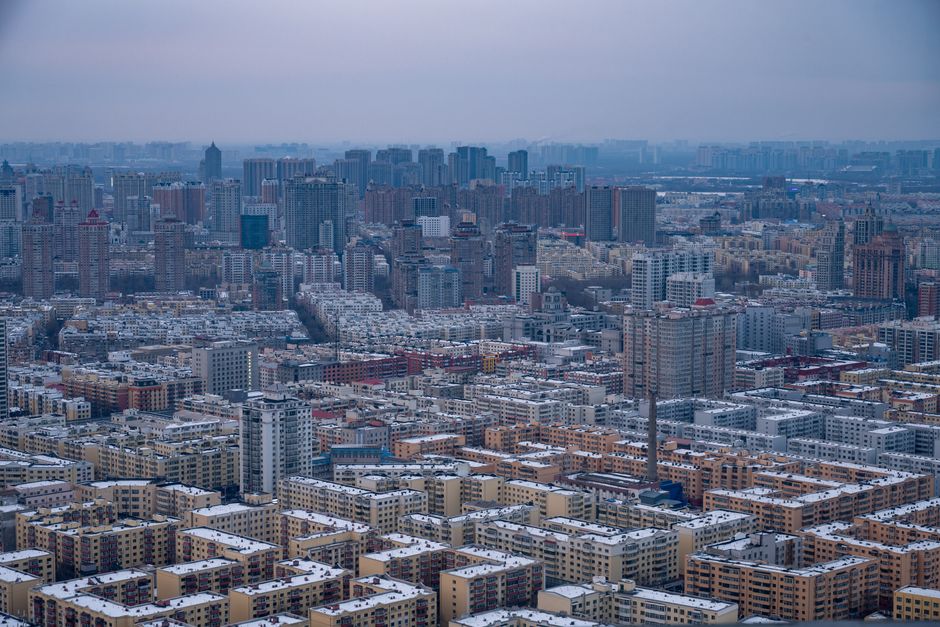
Harbin, the capital of Heilongjiang province in the far northeast of China, is the country’s winter city. Every December a small town of ice rises on the north bank of the Songhua River: the Harbin Ice and Snow World, with palaces, towers, slides and sculptures cut from river ice and lit in color after dark, the centerpiece of a winter season that also brings the Sun Island snow sculptures, ice lanterns, skating and sledding on the frozen river, and some of the coldest city air you will ever breathe, with average January lows around −22 °C (−8 °F). Harbin grew up around the Chinese Eastern Railway at the end of the 19th century, when Russian engineers, merchants and refugees made it a cosmopolitan railway town, and that history still shows in the cobbled Central Street, the green onion dome of St. Sophia Cathedral and the bakeries selling dense Russian-style bread. In summer the mood changes completely: mild sunny days, riverside beaches, beer gardens pouring Harbin’s own lager and a music festival. Harbin is a big, busy city of about 10 million, linked by high-speed train to Beijing, Shenyang and Dalian. Come from late December to February for ice and snow, or from June to August for river life.
Right now in Harbin
- Wed 6–13°C 42–56°F Partly cloudy
- Thu 6–19°C 42–66°F Partly cloudy
- Fri 6–17°C 43–62°F Cloudy
Weather: MET Norway (CC BY 4.0)
Top tours in Harbin
See all tours for Harbin →
From local operators, with prices and reviews; you check availability and book on Viator, our partner. We may earn a commission at no extra cost to you. How we earn money
Harbin at a glance
- Best for: ice and snow sculptures, winter festivals, Russian-era architecture, Central Street, the Songhua River, hearty northeastern food and beer.
- How long: 2–3 days in winter; 2 days in summer.
- Best time: late December to February for the Ice and Snow World and winter activities; June to August for warm, green, sunny days.
- Getting there: by air to Harbin Taiping (HRB), or by high-speed train to Harbin West from Beijing (about 5–6 hours), Shenyang (about 2 hours) and Dalian.
- Getting around: by metro, bus, taxi and DiDi; Central Street and the riverside are best on foot.
- Good to know: winter temperatures stay well below freezing for weeks, so dress seriously warmly; Ice and Snow World dates and prices are announced each autumn or early winter.
- Before you go: visa-free entry, the 240-hour transit, the arrival card, payments and general safety are in our China travel guide.
Harbin’s areas and where to stay
Harbin spreads along both banks of the Songhua River. The historic center, the main stations and most hotels are on the south bank; Sun Island and the Ice and Snow World are on the north bank.
Daoli and Central Street
Daoli is the old commercial heart of Harbin, built when the city was a Russian railway concession. Its spine is Central Street (Zhongyang Dajie), a pedestrian avenue of granite cobbles about 1.4 km (0.9 miles) long, lined with Art Nouveau, Baroque and Renaissance-style facades, cafés, bakeries and shops, ending at the Flood Control Monument and the river promenade of Stalin Park. This is the most convenient and atmospheric place to stay, with everything from hostels to international hotels.
Nangang
Nangang, south of the railway, is the administrative and university district, with Harbin Station, big hotels, malls, the Heilongjiang Provincial Museum and metro lines 1 and 3. It is practical and well connected rather than charming.
Daowai and Laodaowai
East of Daoli, Daowai was historically the Chinese part of town. Its restored Laodaowai quarter, known for “Chinese Baroque” buildings with European facades around traditional courtyards, has old restaurants, snack streets and lantern-lit evenings.
Sun Island and Songbei
Across the river, Sun Island (Taiyang Dao) is a large park island of lakes and woods, with the Snow Sculpture Art Expo in winter. Further north, the new Songbei district has the Ice and Snow World, the Harbin Grand Theater and large resort hotels; staying here puts you close to the winter sights but far from the old town.
Where to stay in Harbin
- Central Street and Daoli: walkable, historic and close to the river; the best base for most visitors.
- Nangang: central station, museums and business hotels.
- Laodaowai: old courtyards and local food.
- Songbei and Sun Island: close to the Ice and Snow World; resort-style hotels.
Rooms fill and prices rise sharply from late December to mid-February, so book early.
Harbin Ice and Snow World
The Harbin Ice and Snow World (Bingxue Dashijie), in Songbei on the north bank of the Songhua, is the world-famous centerpiece of Harbin’s winter. Each year builders cut hundreds of thousands of cubic meters of ice and snow, much of it from the river and from ice stored the previous winter, to build a park of full-size castles, temples, towers and replicas of world landmarks, giant ice slides and stages for shows. By day the ice glows blue and white; after dark the whole park is lit from within in shifting colors.
The 27th edition, for the 2025–2026 season, opened on 17 December 2025 under the theme “Ice and Snow Land, Fairy Tale World,” the largest so far. Tickets were sold on the park’s official WeChat account and on Ctrip, Douyin, Meituan and Alipay; the standard adult ticket was 298 yuan in the opening week (17–23 December) and 328 yuan from 24 December. As the weather warmed, the park reopened briefly with a reduced price of 228 yuan, then closed for the season on 21 February 2026, while its indoor ice park, the Dreamland Ice and Snow Hall, opened on 22 February.
For the 2026–2027 season, the 28th edition, ice collection began in January 2026, but the opening date and ticket prices had not been announced as of early October 2026. Based on recent seasons, expect an opening in mid- to late December and a season running to late February, depending on the weather. Prices and dates for each season are usually announced between October and December by the park and the Heilongjiang tourism authorities; check the park’s official channels before you book.
Tips for the Ice and Snow World: book online ahead for weekends and holidays; arrive in the late afternoon to see the park by daylight and at sunset, then stay for the lights; expect long queues for the big slides; and dress for standing in −20 °C (−4 °F) or colder air for hours.
Top things to see in Harbin
Central Street
Central Street is Harbin’s most famous walk, a cobbled pedestrian street laid out in the early 1900s, with more than 70 historic buildings in European styles. Stop for a stick of the street’s famous ice cream, which locals eat outdoors even in deep winter, and continue to the river. In winter the street is lined with ice sculptures and lights.
St. Sophia Cathedral
The St. Sophia Cathedral, a Russian Orthodox church with a great green onion dome and red-brick walls, completed in 1932, is Harbin’s best-known landmark. It no longer serves as a church and houses an exhibition on the city’s architectural history; the square around it is beautiful at night, when the building is floodlit.
Songhua River and Stalin Park
The Songhua River promenade runs through Stalin Park, past the Flood Control Monument built in 1958 after major floods. In summer people swim, sunbathe and take boat trips; in winter, when the river freezes solid, an area on the ice becomes a playground of snow sculptures, sled rides, ice slides, skating and horse-drawn sleighs. A cable car crosses the river to Sun Island.
Sun Island and the Snow Sculpture Art Expo
Sun Island is a large park on the north bank, with lakes, woods, a Russian-style village and gardens. In winter it hosts the Sun Island International Snow Sculpture Art Expo, a gallery of huge, finely carved white sculptures and an international carving competition, quieter and more artistic than the Ice and Snow World.
Harbin Ice Lantern Fair at Zhaolin Park
The ice lantern tradition began in Zhaolin Park, near Central Street, where each winter colorful ice lanterns and smaller ice sculptures light up the park’s paths in the evening; it is a good, compact alternative if you are short of time.
More classic sights
- Siberian Tiger Park: a breeding center for Amur tigers on the north bank, toured by bus, with large enclosures.
- Harbin Grand Theater: a sweeping white concert and opera house in the wetlands of Songbei, admired for its architecture.
- Heilongjiang Provincial Museum: natural history and the history of the northeast, in a Russian-era building.
- Exhibition Hall of Evidences of Crime Committed by Unit 731: a memorial museum on the site of the Japanese army’s biological warfare unit of the 1930s and 1940s.
- Volga Manor: a Russian-style park with replica churches and wooden houses, southeast of the city.
Other things to do in Harbin
Winter activities
Harbin’s winter season runs from about December to February. Besides the main parks, you can skate and sled on the frozen Songhua, ride a snowmobile or horse-drawn sleigh, try ice-swimming displays by local enthusiasts, and watch ice-cutting on the river in December. The Harbin International Ice and Snow Festival traditionally opens on 5 January with events across the city. Ski resorts are a short trip away. See our city sightseeing guide.
Summer in Harbin
In summer, Harbin is cool compared with most of China, with highs around 28 °C (82 °F). Stroll Central Street in the long evenings, take a boat on the Songhua, cycle on Sun Island, and join the beer gardens during the summer beer festival. The Harbin Summer Music Concert, held since the 1960s, fills the city with music. See our cycling and boat trips guides.
Food and drink
Northeastern (Dongbei) cooking is generous, warming and good value. Try guobaorou, crisp slices of pork in a sweet-and-sour glaze invented in Harbin; red sausage (hong chang), smoked in the Russian style; dalieba, huge round loaves of sourdough bread; iron pot stews with goose or fish; pork and sauerkraut dumplings; and madie’er ice cream on Central Street. Russian restaurants serve borscht and beef stew. Harbin Beer, brewed here since 1900, is one of China’s oldest beers, and summer brings outdoor beer halls.
Day trips from Harbin
- Yabuli: China’s best-known ski resort, about 200 km (125 miles) southeast, around 2.5–3 hours by road or rail; the season runs from about December to March.
- China Snow Town (Xuexiang): a village famous for deep, pillowy snow on its roofs, about 280 km (175 miles) southeast; best visited on a two-day tour in winter.
- Volga Manor: Russian-style architecture and winter activities, about 30 km (19 miles) from the center.
- Jingpo Lake: a lava-dammed lake with a waterfall near Mudanjiang, a summer favorite, about 2 hours by high-speed train to Mudanjiang and then by road.
Getting there and getting around
By air
Harbin Taiping International Airport (HRB), about 35 km (22 miles) southwest of the center, has flights across China and international routes, especially to Russia, Japan, South Korea and Southeast Asia. It is a designated port for the 240-hour visa-free transit, but the permitted area in Heilongjiang is Harbin city only, so the transit does not cover other parts of the province. Airport buses and taxis reach the center in about 45–60 minutes.
By train
Harbin West is the main high-speed station, on the line south to Changchun, Shenyang, Dalian and Beijing; the fastest trains reach Beijing in about 5–6 hours and Shenyang in about 2 hours. Harbin Station, in Nangang, handles high-speed trains to Mudanjiang and other cities, and conventional trains, including overnight sleepers. Book on the 12306 website or app with your passport. For journeys onward to Russia, trains and flights leave from Harbin, but check border rules carefully.
Around town
Harbin’s metro connects Harbin Station, Harbin West, the center and the north bank. Buses, taxis and DiDi fill the gaps; in winter, allow extra time, as roads are icy and taxis are in demand. The cable car over the Songhua links Stalin Park with Sun Island.
When to go and how long to stay
Harbin has a cold, monsoon-influenced continental climate with long, dry, very cold winters and short, warm, wetter summers. Winter (December–February) is the ice season: January averages a high of about −12 °C (11 °F) and a low of about −22 °C (−8 °F), with bright sunshine and little snow, and the ice parks are at their best from late December to early February. Spring (April–May) warms fast, with dust and wind. Summer (June–August) is pleasant, with highs of 26–28 °C (79–83 °F) and most of the year’s rain, mainly as showers. Autumn (September–October) is short, clear and colorful, with frost by October. The table uses the 1991–2020 climate normals for the Harbin station of the China Meteorological Administration (CMA), as submitted to the World Meteorological Organization (WMO): average daily highs and lows, total precipitation, and days with at least 1 mm of rain or snow.
| Month | Average high / low | Rain (days with 1 mm or more) | What to expect |
|---|---|---|---|
| January | −12 °C (11 °F) / −22 °C (−8 °F) | 4 mm (0.1 in), 1 day | Severe cold, dry and sunny; ice festival season |
| February | −6 °C (21 °F) / −18 °C (0 °F) | 5 mm (0.2 in), 1 day | Very cold; Chinese New Year; ice parks close late in the month |
| March | 3 °C (38 °F) / −8 °C (17 °F) | 12 mm (0.5 in), 3 days | Cold; thaw begins late |
| April | 14 °C (57 °F) / 2 °C (35 °F) | 19 mm (0.8 in), 4 days | Cool and windy; ice melts on the river |
| May | 22 °C (71 °F) / 10 °C (49 °F) | 51 mm (2.0 in), 8 days | Mild; trees in leaf |
| June | 27 °C (80 °F) / 16 °C (61 °F) | 100 mm (4.0 in), 11 days | Warm and green |
| July | 28 °C (83 °F) / 19 °C (67 °F) | 137 mm (5.4 in), 11 days | Warm; the wettest month; beer and music season |
| August | 27 °C (80 °F) / 17 °C (63 °F) | 113 mm (4.4 in), 9 days | Warm with showers |
| September | 22 °C (71 °F) / 10 °C (50 °F) | 52 mm (2.1 in), 7 days | Clear and cool; autumn colors |
| October | 13 °C (55 °F) / 2 °C (35 °F) | 25 mm (1.0 in), 4 days | Cold nights; first frosts |
| November | 0 °C (32 °F) / −9 °C (16 °F) | 14 mm (0.6 in), 3 days | Freezing; first lasting snow |
| December | −10 °C (14 °F) / −19 °C (−2 °F) | 8 mm (0.3 in), 2 days | Severe cold; ice building and parks opening |
Harbin receives about 540 mm (21 in) of precipitation a year, two-thirds of it from June to August; winters are dry.
Two days in Harbin in winter
Day one: Central Street, St. Sophia Cathedral, the Flood Control Monument and the frozen Songhua, with lunch of guobaorou; then the Ice and Snow World from late afternoon into the evening. Day two: the Sun Island snow sculptures and the Siberian Tiger Park, then Laodaowai or the Zhaolin Park ice lanterns at night.
Three to four days
Add the Harbin Grand Theater, the Heilongjiang Provincial Museum and Volga Manor, ski a day at Yabuli, or take a two-day trip to Snow Town. In summer, combine Harbin with Jingpo Lake or continue south by high-speed train to Beijing; see our Beijing guide.
What a trip to Harbin costs
Prices are approximate, for October 2026, converted at about 6.74 yuan to the US dollar. Ice and Snow World prices are those of the 2025–2026 season; the 2026–2027 prices had not been announced.
| Item | Typical cost |
|---|---|
| Ice and Snow World, standard adult (2025–2026 season) | 328 CNY (about US$49); 298 CNY (about US$44) in the opening week |
| St. Sophia Cathedral exhibition | about 20 CNY (about US$3) |
| Sun Island Snow Sculpture Expo | about 200–250 CNY (about US$30–37) |
| Guobaorou, one plate | 40–60 CNY (about US$6–9) |
| Metro ride | 2–5 CNY (about US$0.30–0.75) |
| High-speed train, Beijing–Harbin West | about 520–620 CNY (about US$77–92) second class |
| Mid-range hotel double, per night | 250–500 CNY (about US$37–74); 2–3 times more in peak winter weeks |
Practical tips for Harbin
- Dress for extreme cold: thermal base layers, a down coat, insulated waterproof boots with good grip, a hat covering the ears, a face mask or scarf and two pairs of gloves; hand warmers are sold everywhere.
- Book early for winter: hotels, trains and Ice and Snow World tickets sell out around New Year and Chinese New Year.
- Protect your electronics: keep phones and camera batteries warm inside your coat.
- Pace yourself: take warm breaks indoors every hour or so; malls, cafés and heated halls are never far away.
- Check official channels: each season’s ice park dates, prices and opening hours are announced late in the year and can change with the weather.
- Carry your passport: for hotels, trains, bookings and checks.
Safety
Harbin is a safe city; the main hazard is winter cold. From December to February temperatures commonly fall below −20 °C (−4 °F) at night and on windy days the wind chill is lower still, so frostbite can affect exposed fingers, ears and noses in minutes, and hypothermia is a risk if you get wet or stay out too long; dress in layers, cover all skin and go indoors if you start to shiver or lose feeling. Sidewalks and steps are often icy, so wear boots with good grip and walk carefully, especially on Central Street’s polished cobbles. Only go onto the frozen Songhua in the official, managed areas: ice can be thin near the banks, bridges and outflows early and late in the season. Ice slides and sled rides cause injuries every year; follow staff instructions. In summer, swim only in designated areas of the river, where currents can be strong. The Ice and Snow World, Central Street and the stations are extremely busy over New Year and Chinese New Year; watch your belongings in crowds and use official taxis or DiDi. In an emergency, call 110 for police, 120 for an ambulance and 119 for fire.
What to pack for Harbin
In winter: thermal underwear, fleece, a long down coat, waterproof insulated boots with deep treads, wool socks, a hat, a face covering, ski gloves and liner gloves, lip balm and a power bank. In summer: light layers, a rain jacket for showers, sunscreen and walking shoes. China uses 220 V, with flat two-pin, round two-pin and angled three-pin sockets. See our hiking shoes, rain jackets and travel adapters guides.
Harbin travel FAQ
When does the Harbin Ice and Snow World open in 2026?
The dates of the 2026–2027 season had not been announced as of early October 2026. In recent seasons the park has opened in mid- to late December (on 17 December in 2025) and closed in late February, depending on the weather.
How much is the Harbin Ice and Snow World ticket?
In the 2025–2026 season, the standard adult ticket was 328 yuan, with a 298-yuan rate in the opening week. Prices for the next season are announced before it opens.
How cold is Harbin in winter?
Very cold. In January the average high is about −12 °C (11 °F) and the average low about −22 °C (−8 °F), and colder spells are common.
What is the best time to visit Harbin?
Late December to early February for the ice and snow sculptures, or June to August for warm, sunny weather and the beer and music festivals.
How many days do I need in Harbin?
Two to three days in winter for the Ice and Snow World, Sun Island, Central Street and the river; add a day for skiing or Snow Town.
When is the Harbin Ice Festival?
The Harbin International Ice and Snow Festival traditionally opens on 5 January, but the ice parks open earlier, usually in December, and run until late February.
Can I use the 240-hour visa-free transit in Harbin?
Yes, through Harbin Taiping International Airport, but the permitted area is Harbin city only.
How do I get from Beijing to Harbin?
By high-speed train to Harbin West in about 5–6 hours, by overnight train, or by air in about 2 hours.
What should I eat in Harbin?
Guobaorou (sweet-and-sour crispy pork), red sausage, dalieba bread, iron pot stews, dumplings, Central Street ice cream and Harbin Beer.
Why does Harbin have Russian buildings?
Harbin grew as a hub of the Chinese Eastern Railway, built by Russia from 1898, and many Russians lived here in the early 20th century, leaving churches and European-style streets such as Central Street.
Sources and last review
Researched and last reviewed on 5 October 2026. The 27th Harbin Ice and Snow World’s opening on 17 December 2025, its ticket prices and sales channels: the Heilongjiang Provincial Department of Culture and Tourism, republishing Harbin culture and tourism and Heilongjiang Daily notices; the February 2026 price change and season closure on 21 February 2026: Heilongjiang Daily and Xinhua; the start of ice storage for the 28th edition: People’s Daily Heilongjiang; visa-free transit and Harbin Taiping airport as a designated port with Harbin city as the permitted area: the National Immigration Administration; train booking with a passport: China Railway’s official 12306 site; climate normals: the China Meteorological Administration via the World Meteorological Organization’s 1991–2020 normals; the exchange rate: the CFETS central parity rate. Building dates, the festival opening date, sight details, distances, travel times, population and typical prices are general references or estimates, flagged for checking. Prices and rules change, so check locally before you go. For entry rules, money and general safety, see our China travel guide.
Plan your trip
Partner links: TravelerCenter may earn a commission if you book, at no extra cost to you.
🇨🇳 Useful Mandarin Chinese phrases for Harbin
All 38 Mandarin Chinese phrases: restaurant, hotel, emergencies, romance (printable) →