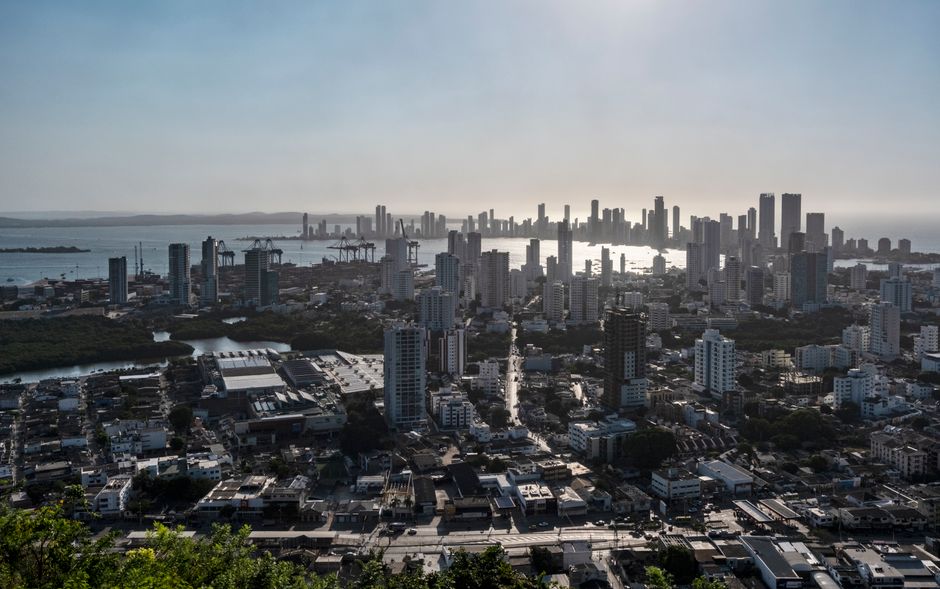
Cartagena de Indias is the jewel of Colombia’s Caribbean coast: a walled colonial port where wooden balconies spill bougainvillea over narrow streets, church domes rise above pastel houses, and the breeze off the sea cools the evening as horse-drawn carriages clatter past the old city gates. Founded in 1533, it grew rich as the Spanish Empire’s main port on the Caribbean, and was ringed with walls and fortresses to fend off pirates; today the historic center is a UNESCO World Heritage Site, and one of the best-preserved colonial cities in the Americas, according to ProColombia, the country’s official tourism promoter. Beyond the walls are the bohemian Getsemaní neighborhood, the towering Castillo de San Felipe, the high-rise beach strip of Bocagrande, and boat trips to the coral islands of the Rosario archipelago. The average temperature is about 27 °C (81 °F) all year.
Right now in Cartagena
- Tue 25–29°C 77–84°F 8 mm Rain
- Wed 26–29°C 78–84°F 6 mm Light showers
- Thu 25–28°C 78–83°F 6 mm Cloudy
- Mon 12 Oct Columbus Day (Día de la Raza)
Weather: MET Norway (CC BY 4.0) · Sea temperature: NOAA CoastWatch · Holidays: Nager.Date
Top tours in Cartagena
See all tours for Cartagena →
From local operators, with prices and reviews; you check availability and book on Viator, our partner. We may earn a commission at no extra cost to you. How we earn money
Cartagena at a glance
- Best for: colonial architecture, food and nightlife, romantic stays, island day trips, history and photography.
- How long: three days for the walled city, Getsemaní and San Felipe; four or five with a Rosario Islands boat trip and a beach day.
- Best time: December to April, the dry season; late December and January are the busiest and most expensive weeks.
- Getting there: Rafael Núñez International Airport (CTG) is about 3 km (2 miles) from the walled city, with flights from Bogotá, Medellín and US cities.
- Before you go: entry rules, the Check-Mig form and money are in our Colombia travel guide.
Cartagena’s layout: where things are
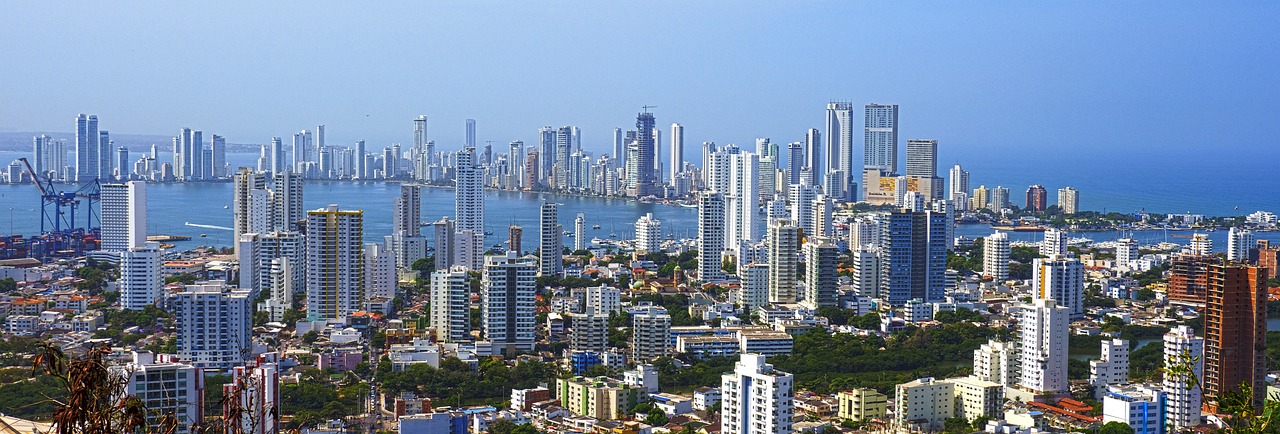
The walled city (Ciudad Amurallada) sits on the sea, enclosed by about 8 km (5 miles) of walls built between 1586 and 1796, according to ProColombia. Inside, the Centro holds the main churches, palaces and plazas, and the quieter San Diego district has boutique hotels and small squares. The main entrance is the Clock Tower (Torre del Reloj), facing the waterfront. Just outside the walls to the south is Getsemaní, once a working-class district and now the liveliest neighborhood, with hostels, bars and street art. Further east, the Castillo de San Felipe guards the city from a hill, with La Popa convent above it. South of the old city, the narrow peninsula of Bocagrande has modern hotels and the city beaches.
Top things to see in Cartagena
Walking is the best way to see the old city, but the midday heat is intense: explore early in the morning and from late afternoon, and rest at lunchtime. ProColombia suggests at least two hours for a first look at the historic center, though most visitors spend days there.
The Clock Tower, Plaza de los Coches and the walls
The yellow Clock Tower is the old city’s main gate, opening onto the Plaza de los Coches, once the slave market and now lined with sweet stalls. Climb onto the walls at sunset: the broad ramparts and bastions such as Santo Domingo and Santa Catalina make a promenade with views of the sea and the skyline of Bocagrande.
Plaza de Bolívar, the Cathedral and the Palace of the Inquisition
The shady Plaza de Bolívar, with an equestrian statue of Simón Bolívar, is surrounded by landmarks: the Cathedral, begun in 1577; the baroque Palace of the Inquisition, now a history museum; and the Gold Museum (Museo del Oro Zenú), with pre-Columbian gold and ceramics, according to ProColombia. Nearby, the church of San Pedro Claver honors the Jesuit who ministered to enslaved Africans arriving in the port.
Getsemaní
Once the neighborhood of artisans and laborers, Getsemaní is now Cartagena’s most colorful district, with murals, umbrellas strung over the streets, and the Plaza de la Trinidad, where locals and travelers gather in the evening. ProColombia recommends a graffiti tour here. It is also the place for live music and salsa bars.
Castillo de San Felipe de Barajas
The largest Spanish fortress in the Americas, built from the 17th century on San Lázaro hill, is a maze of ramps, batteries and tunnels designed to hold off attackers. Go early or late, take water and a hat, and consider an audio guide or a local guide for the stories of the 1741 siege.
La Popa
The convent of La Popa, on the city’s highest hill at about 150 m (490 ft), has a cloister and the best panoramic view over Cartagena. Go by taxi and with a guide or group, not on foot.
Other things to do in Cartagena
- Food: fried fish with coconut rice and patacones, ceviche, arepas de huevo and fresh fruit from the palenqueras, women from San Basilio de Palenque in bright dresses who sell fruit in the old city (they may ask for a tip for photos).
- Museums: the Naval Museum, the Museum of Modern Art and the Gold Museum, according to ProColombia.
- Carriage rides: a horse-drawn carriage tour of the old city at night.
- Walking and street-art tours: see our city sightseeing guide.
- Beaches: Bocagrande is the closest but busy and plain; most visitors take a boat to the islands or Playa Blanca on Barú. See our beaches guide.
Food and nightlife in Cartagena
Cartagena is one of Colombia’s best places to eat, mixing Caribbean, Afro-Colombian and Spanish traditions with a modern restaurant scene in the walled city and Getsemaní. ProColombia highlights its “excellent gastronomic offering” and the local rhythms that play in the streets after dark.
- Seafood: whole fried fish (mojarra or pargo) with coconut rice, patacones and salad is the classic Caribbean lunch; ceviche in the Cartagena style is served with tomato sauce and saltine crackers.
- Street food: arepas de huevo (corn arepas fried with an egg inside), carimañolas (stuffed yuca fritters), empanadas and buñuelos sold from carts around the Clock Tower and Plaza de los Coches.
- Sweets: the Portal de los Dulces, under the arcades of the Plaza de los Coches, sells cocadas (coconut sweets), tamarind balls and milk sweets from big glass jars.
- Fruit and juices: mango, guava, lulo, corozo and tamarind juices, and fruit cups from the palenqueras.
- Drinks: Colombian aguardiente and Caribbean rum, cold beer in Plaza de la Trinidad, and rooftop cocktail bars in the walled city at sunset.
- Nightlife: salsa and champeta bars in Getsemaní, live music on weekends, and late-night clubs; most bars get busy after 10 p.m.
Set lunches (“menú del día”) in local restaurants outside the tourist core are much cheaper than à la carte dining in the old city. Book ahead for the best-known restaurants from December to April.
Day trips from Cartagena
The Rosario Islands and Barú
The Rosario Islands, a coral archipelago about an hour by speedboat from the city, lie within the Corales del Rosario y San Bernardo National Natural Park, with clear water for swimming and snorkeling. Since 2026, the national parks service has been verifying a mandatory accident insurance for tourists entering the park, and park entrance fees apply; check that your operator includes both. Boats leave from the La Bodeguita pier in the morning and return mid-afternoon; the sea can be rough, especially from December to April when the trade winds blow, so wear a life jacket and keep valuables in a dry bag. Playa Blanca on Barú is also reachable by road. See our boat trips and snorkeling guides.
San Basilio de Palenque
About an hour and a half inland, Palenque was founded by people who escaped slavery and is known as the first free town in the Americas, with its own language and music; visit with a local guide.
The Totumo mud volcano and more
The small El Totumo mud volcano, about an hour northeast, is a popular half-day trip, as is the mangrove-lined Ciénaga de la Virgen. For more beaches, Santa Marta and Tayrona are about four to five hours by road; see our Santa Marta travel guide.
Nearby destinations
- Santa Marta170 km
- Tayrona National Natural Park194 km
Getting there and getting around
By air
Rafael Núñez International Airport (CTG) is in the Crespo neighborhood, about 3 km (2 miles) from the walled city, a 10–15 minute taxi ride. There are frequent flights from Bogotá (about an hour and a half) and Medellín, and nonstop flights from Miami, Fort Lauderdale and New York. Use the official taxi line at arrivals, where fares are fixed by zone.
By road
Air-conditioned buses and shared shuttles connect Cartagena with Barranquilla (about two hours) and Santa Marta (about four to five hours). The bus terminal is on the city’s outskirts, about 45 minutes from the old city.
By sea from Panama
There is no road to Panama. Some travelers arrive on multi-day sailing trips from Panama’s San Blas Islands; choose an established operator with safety equipment, and make sure your passport is stamped by Colombian immigration on arrival. See our Panama travel guide.
Getting around Cartagena
The walled city and Getsemaní are best explored on foot. For longer trips, use taxis called by your hotel or app-based services; agree the fare before you get in if the taxi has no meter, as is common in Cartagena. Bicycle tours are a good way to cover more ground early in the day.
Taxis, boats and tours in detail
- Taxis: most Cartagena taxis have no meters, so agree on the fare before getting in or ask your hotel what a trip should cost; fares rise at night. A short hop between the walled city, Getsemaní and Bocagrande is a few minutes’ ride.
- Ride-hailing apps: available in the city; confirm the car and plate before getting in.
- Buses: the TransCaribe bus system runs along the main avenues, useful for Bocagrande and the bus terminal, though rarely needed by visitors.
- Boats: island tours leave from the La Bodeguita pier, next to the walled city, in the morning; private boats can be chartered from marinas such as Club de Pesca in Manga.
- Walking and cycling: the walled city, San Diego and Getsemaní are close together; guided bike tours start early to avoid the heat.
When to go and how long to stay
Cartagena is hot all year, with an average of about 27 °C (81 °F), according to ProColombia, and afternoons often above 31 °C (88 °F). The dry season, from about December to April, brings breezes and blue skies; the rest of the year is more humid, with short, heavy showers, and the wettest months are September to November. The Atlantic hurricane season runs from June 1 to November 30, according to NOAA’s National Hurricane Center; direct hits on Cartagena are rare, but storms can bring rough seas and cancel island boats.
| Season | What it’s like | Good for |
|---|---|---|
| December–January | Dry and breezy; peak season and prices | Festive atmosphere, island trips on calm days |
| February–April | Dry, sunny, windy; Holy Week crowds | Walking the old city, beach days |
| May–August | Hotter, humid, some showers | Fewer crowds, lower hotel prices |
| September–November | Wettest months; storms possible | Quiet streets, the November 11 independence festivities |
Cartagena month by month
- January: dry, breezy and busy until about mid-month with Colombian vacations; the city’s cultural festivals often fill the calendar.
- February: dry, sunny and windy; good for walking; Barranquilla’s carnival, two hours away, falls in February in 2027.
- March: dry and hot; Holy Week (March 21–28, 2027) brings Colombian families and higher prices.
- April: the end of the dry season, with calmer winds; a good month for island trips.
- May: hotter and more humid, with the first showers; fewer visitors.
- June: warm and humid; Colombian school vacations begin late in the month.
- July: often a short drier spell; busy with domestic travelers.
- August: hot and humid, with occasional storms; quieter in the old city.
- September: one of the wetter months; low season prices.
- October: usually the wettest month, with heavy downpours that pass quickly; the peak of the hurricane season.
- November: rainy early, drying later; the November 11 independence festivities fill the streets with parades.
- December: the dry season returns; the busiest and most expensive month, especially from mid-December.
3 days in Cartagena
Day one, the walled city: the Clock Tower, Plaza de Bolívar, the Cathedral, San Pedro Claver and sunset on the walls. Day two, the Castillo de San Felipe in the morning, then Getsemaní, with dinner around Plaza de la Trinidad. Day three, a boat trip to the Rosario Islands.
5 days in Cartagena
Add La Popa and the museums, a day at Playa Blanca or a quieter island hotel, a cooking class, and a trip to San Basilio de Palenque or the mud volcano.
Where to stay in Cartagena and the hotel taxes
- The walled city (Centro and San Diego): colonial mansions turned boutique hotels, many with rooftop pools; the most atmospheric and most expensive area.
- Getsemaní: hostels, guesthouses and small hotels, close to the nightlife; can be noisy.
- Bocagrande and Castillogrande: high-rise hotels and apartments on the beach, about 10 minutes by taxi from the old city.
- The islands: eco-lodges on the Rosario Islands and Barú for a night or two away from the city.
Prices include Colombia’s 19% value-added tax, but foreign tourists are generally exempt from it on hotel rooms if they show their passport entry stamp or migration record; ask when you book. Prices rise sharply from mid-December to mid-January and at Holy Week.
Choosing your area
If it is your first visit and your budget allows, stay inside the walls, in the Centro or San Diego, so you can walk everywhere and see the old city at its quietest in the early morning. Getsemaní suits travelers who want nightlife and lower prices, and Bocagrande suits beach lovers, families and longer stays, with supermarkets and apartments, but you will need taxis to reach the old city. Manga, a residential island next to Getsemaní, has some apartment rentals and marinas. If you want quiet beaches, add one or two nights on the Rosario Islands or Barú at the end of your trip.
Costs in Cartagena
Cartagena is Colombia’s most expensive city for visitors. These estimates, per person, are a planning guide as of October 2026, at about COP 3,273 to US$1:
| Item | Typical price |
|---|---|
| Hostel dorm bed in Getsemaní | about COP 60,000–120,000 (US$18–37) |
| Mid-range hotel double room in the walled city | about COP 400,000–800,000 (US$120–245) |
| Luxury hotel in a colonial mansion | about COP 1,500,000+ (US$460+) |
| Street snack (arepa de huevo, empanada) | about COP 4,000–8,000 (US$1–2.50) |
| Set lunch in a local restaurant | about COP 20,000–35,000 (US$6–11) |
| Dinner for two in an old-city restaurant | about COP 250,000–500,000 (US$75–150) |
| Taxi within the center and Bocagrande | about COP 10,000–20,000 (US$3–6) |
| Rosario Islands day tour by speedboat | about COP 200,000–400,000 (US$60–120), plus park fees |
The figures are our estimates, not official statistics; prices rise from mid-December to mid-January and at Holy Week.
Practical tips for Cartagena
- Heat: walk early and late, drink plenty of water, and use strong sunscreen and a hat.
- Money: ATMs are plentiful in the old city and Bocagrande; use machines inside banks or malls. Cards are widely accepted, but carry small notes for street food and tips.
- Vendors: street vendors and touts are persistent; a polite “no, gracias” is enough. Agree prices for photos with palenqueras and for boat trips before you start.
- Safety: the old city and Getsemaní are busy and patrolled, but pickpocketing and robberies happen. Don’t carry much cash, keep your phone out of sight at night, never accept drinks from strangers, and use called taxis. Police and ambulance: 123.
- Water: drink bottled or filtered water; tap water is considered safe only in Bogotá, according to the UK government.
What to pack for Cartagena
Bring light, breathable clothes, sandals and comfortable walking shoes, a swimsuit, a wide-brimmed hat, sunglasses, reef-safe sunscreen and insect repellent. A small dry bag protects your phone on boat trips, and a light layer helps in air-conditioned restaurants. Smart-casual clothes are useful for the old city’s restaurants and rooftop bars. Plugs are the US type.
Cartagena travel FAQ
How far is Cartagena airport from the old city?
About 3 km (2 miles), or 10–15 minutes by taxi. Use the official taxi line at arrivals.
How many days do I need in Cartagena?
Three days for the walled city, Getsemaní and the fortress; four or five to add an island trip and a beach day.
When is the best time to visit Cartagena?
December to April, the dry season. Late December, January and Holy Week are the busiest and most expensive weeks.
Is Cartagena’s old city a UNESCO World Heritage Site?
Yes. The port, fortresses and group of monuments were listed in 1984, according to ProColombia.
How do I get to the Rosario Islands?
By speedboat from the La Bodeguita pier, about an hour each way, usually on an organized day tour. Park fees and a mandatory accident insurance apply in the national park.
Is Cartagena safe?
The tourist areas are busy and patrolled, and most visits pass without trouble. Watch for pickpockets, use called taxis, and never accept drinks from strangers.
Can I swim in Cartagena?
The city beaches in Bocagrande are swimmable but crowded. For clear water, take a boat to the Rosario Islands or go to Playa Blanca on Barú.
Do I need to tip in Cartagena?
Restaurants usually add a suggested 10% tip to the bill. It is voluntary, but customary for good service.
Where should I stay in Cartagena?
The walled city (Centro and San Diego) for atmosphere and walking, Getsemaní for nightlife and lower prices, and Bocagrande for beaches and apartments.
How much does a day in Cartagena cost?
Roughly COP 250,000 (about US$75) a day on a budget, and COP 600,000–1,000,000 (US$185–305) for a mid-range trip, by our estimates. Island tours and old-city dinners add up quickly.
Sources and last review
Researched and last reviewed on 4 October 2026. The walls and their dates, the UNESCO listing, the average temperature, the Cathedral, the Gold Museum and the graffiti tour suggestion: ProColombia; the mandatory accident insurance in the Corales del Rosario y San Bernardo park: Parques Nacionales Naturales de Colombia; tap water and emergency number: the UK government; the hurricane season: NOAA’s National Hurricane Center. The founding date, the fortress history, La Popa’s height, airport distance, travel times, boat departure details, beaches, the hotel tax exemption and the 10% tip come from secondary sources or general knowledge and are flagged for checking. The food, neighborhood, getting-around, month-by-month and cost sections draw on secondary sources, general knowledge and our own estimates, except where an official source is named, and are flagged for checking. Prices and rules change, so check before you go. For entry rules and money, see our Colombia travel guide.
Plan your trip
Partner links: TravelerCenter may earn a commission if you book, at no extra cost to you.
🇪🇸 Useful Spanish phrases for Cartagena
All 38 Spanish phrases: restaurant, hotel, emergencies, romance (printable) →