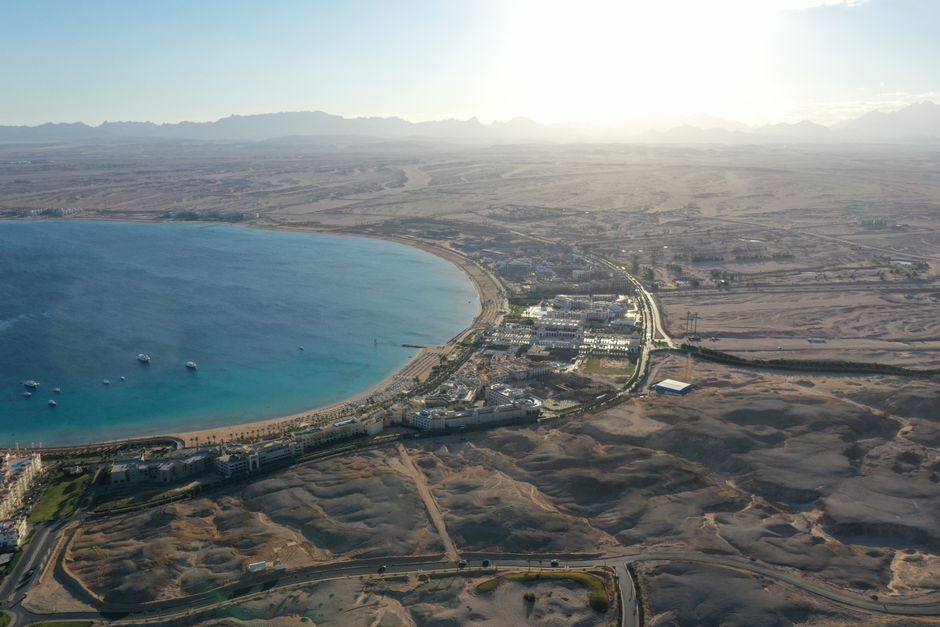
Hurghada (El Ghardaqa in Arabic), on the African shore of the Red Sea about 450 km (280 miles) southeast of Cairo, grew from a small fishing village into Egypt’s biggest beach resort, a long ribbon of hotels, marinas and dive centers stretching some 40 km (25 miles) along the coast. Its draw is the sea: clear, warm water all year, coral reefs and island beaches a short boat ride offshore, and some of the most affordable snorkeling and diving in the world. Day boats leave the marina every morning for the white sand of the Giftun Islands, reefs where dolphins are often seen, and wrecks for divers, while the town itself has the old quarter of El Dahar with its souk, the yacht-lined Hurghada Marina and the long Sheraton Road strip of shops and restaurants. Most visitors stay in all-inclusive resorts with private beaches and house reefs, either in town or in the quieter bays to the south, such as Sahl Hasheesh, Makadi Bay and Soma Bay; the lagoon town of El Gouna is just to the north. Hurghada is also the Red Sea’s main gateway for excursions to Luxor, about 4 hours away by road, and to the desert. Winter brings sunshine with cool evenings, summer is hot but breezy, and the sea is warmest from August to October.
Right now in Hurghada
- Wed 23–30°C 73–85°F Partly cloudy
- Thu 23–31°C 73–88°F Clear
- Fri 24–31°C 76–88°F Mostly clear
- Today Armed Forces Day (عيد القوات المسلحة)
Weather: MET Norway (CC BY 4.0) · Sea temperature: NOAA CoastWatch · Holidays: Nager.Date
Top tours in Hurghada
See all tours for Hurghada →
From local operators, with prices and reviews; you check availability and book on Viator, our partner. We may earn a commission at no extra cost to you. How we earn money
Hurghada at a glance
- Best for: snorkeling and diving, island boat trips, all-inclusive beach holidays, kitesurfing and excursions to Luxor.
- How long: 4–7 days, or a week with a Luxor trip.
- Best time: March to May and September to November; winter is sunny but cool on the water, and July and August are very hot.
- Getting there: direct and charter flights to Hurghada International (HRG), or buses from Cairo and Luxor.
- Getting around: hotel shuttles, taxis, Uber and Careem, minibuses and boat trips from the marina.
- Good to know: islands and reefs are protected areas, with fees often included in boat trips; bring water shoes and reef-safe sunscreen.
- Before you go: visas, money and general safety are in our Egypt travel guide.
Hurghada’s areas and where to stay
The resort is long and thin, running from El Dahar in the north to the bays south of the airport. Choose your area by what you want: town life and restaurants, or a self-contained resort beach.
El Dahar
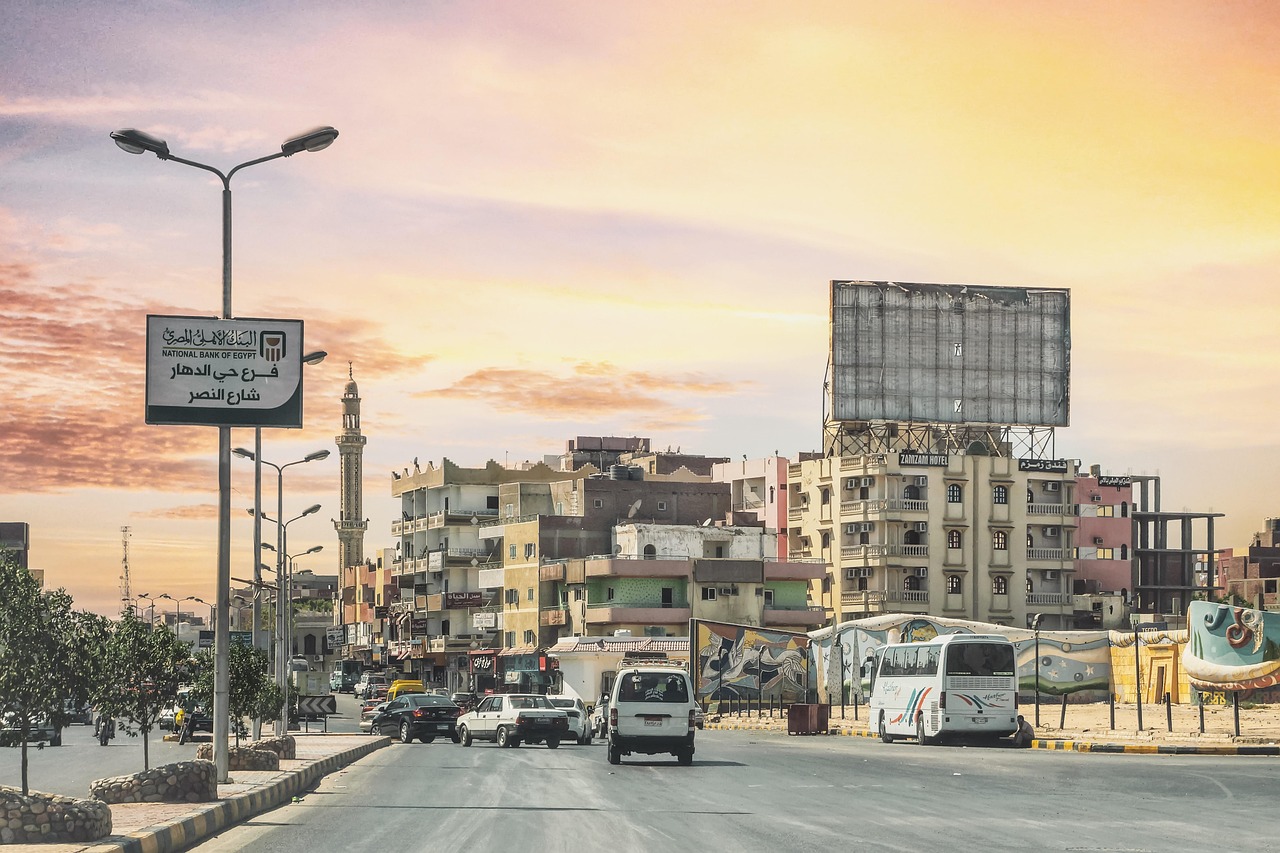
The old town, at the north end, is the most Egyptian part of Hurghada, with the souk, the Al Mina Mosque, the fishing port, cheap guesthouses and local restaurants. There are few beaches here.
Sakkala and Hurghada Marina
The center, around Sakkala and the Marina, has dive centers, bars, cafés and restaurants along the waterfront promenade, mid-range hotels and the departure point for most boat trips. It is lively in the evening.
Sheraton Road and Village Road
South of the center, Sheraton Road and the parallel Village Road, with the pedestrian Mamsha promenade, are lined with beach hotels, shopping malls, restaurants and the Hurghada Grand Aquarium, close to the airport.
The southern bays: Sahl Hasheesh, Makadi and Soma Bay
About 20–45 km (12–28 miles) south, Sahl Hasheesh, Makadi Bay and Soma Bay are purpose-built resort areas with large all-inclusive hotels, long sandy beaches, house reefs, golf courses and kitesurfing centers. They are quieter and better for families, but far from town.
Where to stay in Hurghada
- Sakkala and the Marina: for restaurants, nightlife and easy boat trips.
- Village Road and the Mamsha: beach hotels with town on the doorstep.
- Sahl Hasheesh, Makadi Bay and Soma Bay: quiet all-inclusive resorts and house reefs.
- El Gouna: a lagoon town 25 km (16 miles) north; see our El Gouna guide.
Top things to see and do in Hurghada
The Giftun Islands
The Giftun Islands, about 30–45 minutes by boat from the marina, are part of a protected area. Giftun Kabir has the beach of Orange Bay, with powdery sand and turquoise shallows, and the smaller island has Mahmya, a beach camp with sunshades and a restaurant, reached on its own boats. Day trips usually include two or three snorkeling stops on the surrounding reefs, lunch on board and time on the beach. Protected-area fees are charged per person and are usually collected by the boat operator; check whether they are included in the price.
Snorkeling
Hurghada’s reefs are full of life: parrotfish, butterflyfish, clownfish in anemones, Napoleon wrasse, rays and sometimes turtles. Good snorkeling stops reached by boat include Abu Ramada, Gota Abu Ramada (the “aquarium”), Erg Somaya and the reefs around Giftun. Many resorts in Makadi Bay, Sahl Hasheesh and Soma Bay have house reefs you can reach from a jetty. See our snorkeling guide.
Dolphin trips
Boat trips to the horseshoe-shaped reef of Shaab El Erg, north of Hurghada, often find spinner dolphins resting in the lagoon. Snorkelers may get in the water with them, but sightings are never guaranteed, and responsible operators keep their distance and don’t chase the animals.
Diving
Hurghada has dozens of dive sites within an hour by boat, suitable for all levels, from shallow coral gardens to drift dives at Carless Reef and the wreck of the El Mina minesweeper. Longer day trips and liveaboards reach the famous wrecks of the northern Red Sea, including the SS Thistlegorm, a British cargo ship sunk in 1941 with its load of motorbikes, trucks and locomotives, and the reefs of Abu Nuhas, the “ship’s graveyard”. Beginners can learn to dive with any of the many PADI and SSI centers. See our diving guide.
Hurghada Marina and El Dahar
The Marina is the place for an evening stroll among the yachts, with cafés, restaurants and bars. In El Dahar, the souk sells spices, cotton, perfume and souvenirs, and the big Al Mina Mosque overlooks the harbor.
The Hurghada Museum
The Hurghada Museum, opened in 2020 on Village Road, displays about 2,000 pharaonic, Coptic and Islamic objects, including items from the royal family’s collections. According to the Ministry of Tourism and Antiquities, the ticket costs EGP 300 (about US$5.70) for foreign adults, and the museum opens in the morning and again in the evening.
Kitesurfing and water sports
Steady northerly winds make the coast between El Gouna and Soma Bay one of the best kitesurfing areas in the world, with schools, flat-water lagoons and IKO-certified instructors; windsurfing, stand-up paddling and glass-bottom boats are also popular. See our beaches guide.
Protected reefs and reef rules
The Giftun Islands and many of Hurghada’s offshore reefs lie inside the Red Sea protected areas managed by Egypt’s environmental authorities, and the Red Sea Governorate also charges small environmental fees for divers and snorkelers. Boats moor on fixed buoys instead of dropping anchor on the coral, a system pioneered in Hurghada by local conservation groups in the 1990s. Some rules apply everywhere: don’t touch, stand on or break coral; don’t collect shells, coral or animals, which is illegal and checked at the airport; don’t feed fish; keep at least a few meters from turtles and dolphins; and wear a rash guard or reef-safe sunscreen. Rangers check boats at popular sites, and operators can be fined for breaking the rules.
Hurghada with children
Hurghada is one of the easiest winter-sun family beach destinations within a short flight of Europe. Resorts in Makadi Bay, Sahl Hasheesh and Soma Bay have shallow sandy lagoons, kids’ clubs, water slides and aqua parks, and glass-bottom boats and semi-submarines let young children see fish without swimming. The Hurghada Grand Aquarium on Village Road shows sharks, rays and reef fish behind glass. Choose a hotel with a sandy entry rather than a reef shelf if your children are young.
Desert safaris
Afternoon trips by jeep, buggy or quad bike head into the Eastern Desert to a Bedouin camp for tea, camel rides, stargazing and dinner. Choose operators that provide helmets and keep groups small.
Other things to do in Hurghada
Food and drink
All-inclusive resorts offer buffets, but it is worth eating out: fresh fish and seafood by weight at the fish market restaurants of El Dahar and the Marina, koshari and grills in town, and international restaurants along the Mamsha and Sheraton Road. Alcohol is available in hotels, bars and many tourist restaurants.
Boat trips and submarines
Glass-bottom boats and semi-submarines show the reef to non-swimmers, and sunset cruises leave from the Marina. See our boat trips guide.
Day trips from Hurghada
- Luxor: the most popular excursion, about 300 km (186 miles) and 4 hours each way by road, for Karnak, the Valley of the Kings and Hatshepsut’s temple; a very long day, so consider an overnight. See our Luxor guide.
- El Gouna: lagoons, Abu Tig Marina and the old town, 30 minutes north; see our El Gouna guide.
- Cairo and Giza: by air in about an hour or by road in about 6 hours; long but possible as an overnight trip.
- El Quseir: an old Ottoman port town with a fortress and coral-stone houses, about 140 km (87 miles) south.
- The Red Sea Mountains: jeep trips into the mountains and the monasteries of St Anthony and St Paul, among the oldest in the world, about 3 hours north.
Nearby destinations
- El Gouna19 km
- Sharm El Sheikh82 km
- Dahab153 km
- Luxor209 km
- Marsa Alam267 km
- Eilat278 km
- Aqaba279 km
Getting there and getting around
By air
Hurghada International Airport (HRG) is about 5 km (3 miles) south of Sakkala and 15–20 minutes from most hotels in town; transfers to Makadi Bay or Soma Bay take 30–45 minutes. Charter and scheduled flights arrive from all over Europe, plus domestic flights to Cairo. Most nationalities can buy a visa on arrival in the arrivals hall before immigration or use the e-visa; see our Egypt travel guide.
By road
Comfortable buses run to Cairo in about 6 hours, to Luxor in about 4 hours, and along the coast to El Gouna, Safaga, El Quseir and Marsa Alam.
By sea
A fast ferry to Sharm El Sheikh has run on some days of the week in recent seasons, taking about 2–3 hours; schedules change and crossings are cancelled in strong winds, so check with the operator.
Getting around
Hotels run shuttles to town, and taxis, Uber and Careem are cheap; agree taxi fares before you get in. Local minibuses run along the main roads for a few pounds. Most boat trips include hotel pickup.
When to go and how long to stay
Hurghada is sunny almost every day of the year, and the wind off the sea keeps the heat bearable. Winter (December to February) has warm days around 22–24 °C (72–75 °F) but chilly evenings and a cool sea, about 22 °C (72 °F), so many divers wear 5–7 mm wetsuits. Spring and autumn are ideal, with highs of 26–32 °C (79–90 °F). Summer (June to September) is hot, with highs around 36–37 °C (97–99 °F), and the sea reaches about 28 °C (82 °F) in August and September. The wind is often strong, especially in the afternoons, which suits kitesurfers but can make boat trips rough. The table uses the 1991–2020 climate normals for the Hurghada airport station of the Egyptian Meteorological Authority (EMA), as published by the World Meteorological Organization (WMO): average daily highs and lows, total precipitation, and days with at least 1 mm of rain.
| Month | Average high / low | Rain (days with 1 mm or more) | What to expect |
|---|---|---|---|
| January | 22 °C (72 °F) / 12 °C (53 °F) | 1 mm (under 0.1 in), 0 days | Sunny; cool evenings and sea |
| February | 23 °C (74 °F) / 12 °C (54 °F) | 1 mm (under 0.1 in), 0 days | Sunny; coolest sea; windy |
| March | 26 °C (79 °F) / 15 °C (59 °F) | 1 mm (under 0.1 in), 0 days | Warming; good for diving |
| April | 30 °C (86 °F) / 19 °C (66 °F) | under 1 mm, 0 days | Warm; excellent |
| May | 34 °C (93 °F) / 23 °C (74 °F) | under 1 mm, 0 days | Hot and sunny |
| June | 36 °C (97 °F) / 26 °C (79 °F) | under 1 mm, 0 days | Hot; breezy |
| July | 37 °C (99 °F) / 28 °C (82 °F) | under 1 mm, 0 days | Very hot; busy |
| August | 37 °C (99 °F) / 28 °C (82 °F) | under 1 mm, 0 days | Very hot; warmest sea |
| September | 35 °C (95 °F) / 26 °C (78 °F) | under 1 mm, 0 days | Hot; warm sea |
| October | 32 °C (90 °F) / 22 °C (72 °F) | 2 mm (under 0.1 in), 0 days | Warm; excellent; rare showers |
| November | 28 °C (82 °F) / 18 °C (64 °F) | 2 mm (under 0.1 in), 0 days | Warm days; very good |
| December | 24 °C (75 °F) / 13 °C (56 °F) | 1 mm (under 0.1 in), 0 days | Mild; Christmas crowds |
Hurghada averages about 8 mm (0.3 in) of rain a year, falling on a day or two, usually in autumn or winter; rare heavy storms can cause flash floods.
How long to stay
Four days gives you a Giftun trip, a snorkeling or dive day, a desert safari and time at the beach; a week allows a day or overnight trip to Luxor and a couple of rest days. Divers on a course need 3–4 days for an open-water certification.
What a trip to Hurghada costs
Prices are approximate, for October 2026, converted at about EGP 52.3 to the US dollar.
| Item | Typical cost |
|---|---|
| Giftun or Orange Bay boat trip with lunch | about US$25–50 per person |
| Two boat dives with equipment | about US$60–100 |
| Open-water diving course | about US$350–500 |
| Desert quad and Bedouin dinner trip | about US$25–50 |
| Day trip to Luxor with guide and tickets | about US$70–130 |
| Hurghada Museum ticket | EGP 300 (about US$5.70) |
| Fish dinner in El Dahar or the Marina | EGP 600–1,500 (about US$11.50–29) |
| All-inclusive 4-star hotel double, per night | about US$70–160 |
Practical tips for Hurghada
- Book trips with reputable operators: check reviews, safety equipment, the boat’s license and what is included, including protected-area fees.
- Pick the right area: stay near the Marina for town life, or in the southern bays for quiet beaches and house reefs.
- Mind the wind: morning boat trips are calmer than afternoons.
- Wear water shoes: many beaches have coral, rocks and sea urchins near the shore.
- Carry cash for small things: tips for boat crews and drivers, and small purchases in El Dahar.
- Protect the reef: don’t stand on coral or feed fish, and use reef-safe sunscreen.
Safety
Hurghada is a busy resort with a strong security presence at the airport and hotels. Most problems come from the sea and the sun. Boat and dive safety standards vary: choose licensed operators with good reviews, check that the boat carries life jackets and oxygen, ask for a full safety briefing, dive within your training and insurance depth limits, and use a surface marker buoy at sites with boat traffic. Currents can be strong at offshore reefs, and the wind often picks up in the afternoon. Sharks rarely approach swimmers, but there have been fatal attacks in the Hurghada area in recent years; follow beach closures and lifeguard instructions, don’t swim far out alone, at dusk or at night, and never feed fish. Watch for sea urchins, lionfish and stonefish, and wear water shoes. The sun is strong all year, so use high-factor sunscreen and drink plenty of water. Quad bikes and buggies cause accidents: wear a helmet and choose operators that keep speeds down. Road travel to Luxor and Cairo is long; travel in daylight with licensed companies. Touts and souvenir sellers in El Dahar and on the Mamsha can be persistent, and taxi drivers may overcharge, so agree prices first. In an emergency, call 122 for the police, 123 for an ambulance and 126 for the tourist police.
What to pack for Hurghada
Swimwear and a rash guard, reef-safe high-factor sunscreen, a hat and sunglasses, water shoes, your own mask and snorkel if you prefer, a light windproof jacket and a sweater for winter evenings and boat trips, a dry bag, and modest clothes for Luxor or the old town. See our water shoes, wetsuits and travel adapters guides.
Hurghada travel FAQ
What is the best time to visit Hurghada?
March to May and September to November, when it is warm but not too hot; the sea is warmest from August to October, and winter is sunny but cool in the evenings.
Is the sea warm in Hurghada in winter?
It is cool rather than cold, about 22 °C (72 °F) in January and February; most people snorkel in a rash guard or a shorty and dive in a 5–7 mm wetsuit.
What are the best snorkeling spots in Hurghada?
The Giftun Islands, Orange Bay, Abu Ramada and Gota Abu Ramada by boat, and the house reefs of resorts in Makadi Bay, Sahl Hasheesh and Soma Bay.
Can I see dolphins in Hurghada?
Often, on trips to the reef of Shaab El Erg, but sightings are not guaranteed, and good operators don’t chase them.
How far is Luxor from Hurghada?
About 300 km (186 miles), or 4 hours each way by road; day trips leave very early, and an overnight stay is more relaxing.
Do I need a visa for Hurghada?
Most nationalities do: buy a visa on arrival at the airport or an e-visa online before you travel. The free Sinai-only stamp does not apply to Hurghada.
Are there sharks in Hurghada?
Sharks live in the Red Sea, and divers sometimes see them offshore. Attacks are rare, but fatal incidents have occurred; follow local beach closures and instructions.
Is Hurghada good for families?
Yes, especially the resorts of Makadi Bay, Sahl Hasheesh and Soma Bay, with sandy beaches, pools, shallow lagoons and kids’ clubs.
How do I get from Hurghada airport to my hotel?
By hotel transfer, taxi, Uber or Careem; town hotels are 15–20 minutes away, and the southern bays 30–45 minutes.
Is Hurghada good for kitesurfing?
Yes. Steady wind and flat-water lagoons between El Gouna and Soma Bay make it one of the world’s best kitesurfing areas, with many schools.
Sources and last review
Researched and last reviewed on 5 October 2026. The Hurghada Museum ticket and hours: the Ministry of Tourism and Antiquities (egymonuments.com); visa on arrival: the Egypt e-Visa Portal and the official visa-on-arrival portal; climate normals: the Egyptian Meteorological Authority via the World Meteorological Organization’s 1991–2020 normals (Hurghada airport station); the exchange rate: the Central Bank of Egypt. Protected-area fees, sea temperatures, dive sites, the ferry to Sharm El Sheikh, shark incidents, transport times and typical trip prices are general references or estimates, flagged for checking. Prices and rules change, so check locally before you go. For visas, money and general safety, see our Egypt travel guide.
Plan your trip
Partner links: TravelerCenter may earn a commission if you book, at no extra cost to you.
🇪🇬 Useful Arabic phrases for Hurghada
All 38 Arabic phrases: restaurant, hotel, emergencies, romance (printable) →