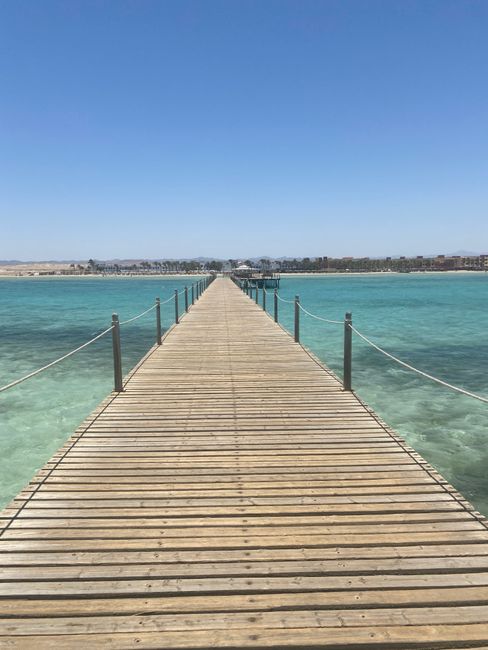
Marsa Alam is a small port town on Egypt’s southern Red Sea coast, about 270 km (168 miles) south of Hurghada, and the name of the long, quiet stretch of shore around it, where desert mountains meet some of the healthiest coral reefs in the Red Sea. Until the early 2000s, there was little here but a fishing harbor, a phosphate road to the Nile and the camps of Ababda Bedouin; the opening of Marsa Alam International Airport in 2003 brought a scattering of resorts and eco-lodges along about 150 km (93 miles) of coast. The reason to come is the sea. Many hotels have house reefs reached from the beach or a jetty; at Abu Dabbab and Marsa Mubarak, green turtles graze on seagrass in shallow bays, and the rare dugong has been seen; at the offshore reef of Elphinstone, divers meet oceanic whitetip and hammerhead sharks; and at Samadai, the “Dolphin House”, spinner dolphins rest in a protected lagoon. Inland, Wadi el Gemal National Park protects desert valleys, mangroves and islands. Marsa Alam is quieter, more remote and more nature-focused than Hurghada, with fewer shops and nightlife, and it is warm enough for swimming for most of the year.
Right now in Marsa Alam
- Wed 25–30°C 76–86°F Partly cloudy
- Thu 25–31°C 78–88°F Mostly clear
- Fri 27–31°C 81–87°F Clear
- Today Armed Forces Day (عيد القوات المسلحة)
Weather: MET Norway (CC BY 4.0) · Sea temperature: NOAA CoastWatch · Holidays: Nager.Date
Top tours in Marsa Alam
See all tours for Marsa Alam →
From local operators, with prices and reviews; you check availability and book on Viator, our partner. We may earn a commission at no extra cost to you. How we earn money
Marsa Alam at a glance
- Best for: snorkeling with turtles, diving with sharks and dolphins, house reefs, eco-lodges and quiet beaches.
- How long: 5–7 days, or longer on a dive trip or liveaboard.
- Best time: March to May and September to November; winter is sunny with cool evenings, and July and August are very hot.
- Getting there: fly into Marsa Alam International (RMF) from Europe or Cairo, or into Hurghada (HRG), about 3.5–4 hours north by road.
- Getting around: hotel transfers, taxis and dive center pickups; distances between resorts are long.
- Good to know: many reefs are protected areas with fees and visitor limits; choose your hotel by its reef.
- Before you go: visas, money and general safety are in our Egypt travel guide.
Marsa Alam areas and who each one suits
“Marsa Alam” covers a coast of about 150 km (93 miles). Where you stay decides how far you are from the airport, the reefs you want and the few restaurants outside the hotels.
Port Ghalib and the airport coast
Around the airport, about 60–70 km (37–43 miles) north of Marsa Alam town, Port Ghalib is a purpose-built marina with hotels, restaurants and liveaboard departures, and resort hotels line the coast nearby. It is the most developed part of the region.
Abu Dabbab and the coast north of town
Between Port Ghalib and the town, resorts and eco-lodges cluster around famous bays such as Abu Dabbab, Marsa Mubarak and Marsa Egla, with turtles, seagrass and house reefs. This is the best area for snorkelers.
Marsa Alam town
The town itself is small and practical: a harbor, a mosque, a market, cafés, a few local restaurants and simple hotels. It is a place to stock up and see daily life rather than a resort.
The south: Wadi el Gemal and Hamata
South of town, the coast becomes wilder, with eco-lodges and dive camps near Wadi el Gemal National Park and Hamata, gateways to the offshore reefs of the deep south.
Where to stay in Marsa Alam
- Port Ghalib: near the airport, with a marina and restaurants.
- Abu Dabbab and Marsa Mubarak: turtles, seagrass and house reefs.
- Eco-lodges and dive camps: simple, low-impact stays on the beach.
- The south: remote lodges near Wadi el Gemal and Hamata.
Most hotels are all-inclusive, because there are few restaurants outside them. Check the hotel’s house reef, the beach entry (sand or jetty) and the distance to the airport before you book.
Top things to see and do in Marsa Alam
Abu Dabbab and the turtles
Abu Dabbab Bay, about 30 km (19 miles) north of town, is a sandy bay with seagrass beds where green turtles come to feed, often a few meters from snorkelers, along with guitar sharks, rays and reef fish. A dugong, a rare sea cow, lived here for years and is still occasionally seen along this coast. The bay has a dive center and rules for visitors: keep your distance from the animals, don’t touch or chase them, and stay in the marked areas. Marsa Mubarak, farther north, is another good turtle bay. See our snorkeling guide.
Samadai Reef: the Dolphin House
Samadai Reef, a horseshoe-shaped reef south of town, shelters a resident pod of spinner dolphins that rest in its lagoon by day. To protect them, the reef is managed by Egypt’s environmental authorities, with zones, a daily limit on visitors and an entry fee; part of the lagoon is closed to swimmers, and boats must follow strict rules. Trips leave from the nearby harbor of Marsa Alam. Sightings are common but not guaranteed.
Elphinstone Reef
Elphinstone, a long, narrow reef rising from the deep about 12 km (7 miles) north of town, is one of the Red Sea’s most famous dive sites, with steep walls of soft coral, strong currents and plateaus where oceanic whitetip sharks often appear from about October to December, and hammerhead sharks in the summer. It is for experienced divers, reached by day boat in about 30 minutes.
Diving the deep south
From Marsa Alam and Port Ghalib, day boats and liveaboards reach the offshore reefs of the deep south: the Fury Shoals and Sataya reef, where dolphins are often seen; St John’s; and the remote marine parks of the Brothers Islands and Daedalus Reef, famous for sharks. See our diving guide.
House reefs
Many hotels sit on fringing reefs that you can explore from the beach or a jetty, with coral gardens a few meters from shore. Snorkeling at dawn or late afternoon, when the light is soft and the fish are active, is a highlight of a stay.
Wadi el Gemal National Park
Wadi el Gemal, the “Valley of the Camels”, protected since 2003, covers a vast area of desert valleys, mountains, mangroves and offshore islands south of Marsa Alam, including the Hamata Islands and the reefs of Qulan. Ababda Bedouin guides lead jeep and walking trips to see acacia trees, gazelles, ibex, birds and Roman-era mining sites, with tea and coffee prepared in the traditional way. Boats from Hamata visit the islands’ white beaches and turquoise water.
Desert trips
Afternoon trips by jeep, quad bike or camel visit Bedouin camps, with stargazing and dinner; the night sky away from the resorts is exceptional.
El Quseir
About 130 km (81 miles) north of Marsa Alam town, El Quseir is an old port where pilgrims once sailed to Mecca, with an Ottoman fortress, coral-stone houses with wooden balconies and a quiet waterfront.
Other things to do in Marsa Alam
Food and drink
Most visitors eat in their hotels. Port Ghalib’s marina has a few restaurants, and Marsa Alam town has simple places for fish, grills and Egyptian dishes. Bedouin dinners in the desert serve slow-cooked meat, bread baked in the embers and spiced coffee called jebena, the Ababda’s traditional brew.
Boat trips
Day boats leave from Port Ghalib, Marsa Alam harbor and Hamata for Samadai, Sataya, the Hamata Islands and offshore reefs; glass-bottom boats show the coral to non-swimmers. See our boat trips guide.
Day trips from Marsa Alam
Luxor
Luxor is about 4–5 hours away by road via Edfu; long day trips leave before dawn for Karnak and the Valley of the Kings. An overnight stay is much better. See our Luxor guide.
Edfu
The Temple of Horus at Edfu, the most complete temple in Egypt, is about 3–3.5 hours away by the desert road across the mountains.
Hurghada and El Gouna
Hurghada is about 3.5–4 hours north; see our Hurghada and El Gouna guides.
Getting there and getting around
Flights
Marsa Alam International Airport (RMF) is about 60–70 km (37–43 miles) north of Marsa Alam town, near Port Ghalib, with charter and scheduled flights from Europe, mainly in winter, and domestic flights from Cairo. Transfers to the hotels take from a few minutes to more than an hour, depending on where you stay. Many visitors fly into Hurghada instead, with more flights, and transfer south in about 3.5–4 hours. Most nationalities buy a visa on arrival in the arrivals hall or an e-visa online; the free Sinai stamp does not apply here. See our Egypt travel guide.
By road
Buses connect Marsa Alam with Hurghada and Cairo, and along the coast to El Quseir; services are infrequent. The road west to the Nile at Edfu crosses the Eastern Desert mountains.
Getting around
There is no public transport between the resorts. Hotels arrange transfers and excursions, dive centers pick up divers, and taxis can be booked through hotels; agree fares first. Renting a car is possible, but distances are long, and the unlit desert roads with trucks are risky at night.
When to go and how long to stay
Weather for your datesSunrise and sunset
Marsa Alam is dry and sunny all year, and a little warmer in winter than Hurghada because it lies farther south. Winter (December to February) has warm days around 23–25 °C (73–77 °F) and cool evenings, with a sea of about 23 °C (73 °F). Spring (March to May) and autumn (September to November) are the best seasons, with warm sea and calm weather. Summer (June to August) is hot, with highs around 35–37 °C (95–99 °F), but sea breezes help, and the water reaches about 28–29 °C (82–84 °F). Oceanic whitetip sharks are most often seen from about October to December. Marsa Alam has no long-term climate station with published WMO normals, so the table uses the 1991–2020 climate normals for the Hurghada airport station of the Egyptian Meteorological Authority (EMA), about 270 km (168 miles) to the north, as published by the World Meteorological Organization (WMO): average daily highs and lows, total precipitation, and days with at least 1 mm of rain. Expect Marsa Alam to be slightly warmer, especially in winter.
| Month | Average high / low | Rain (days with 1 mm or more) | What to expect |
|---|---|---|---|
| January | 22 °C (72 °F) / 12 °C (53 °F) | 1 mm (under 0.1 in), 0 days | Sunny; cool evenings; peak season |
| February | 23 °C (74 °F) / 12 °C (54 °F) | 1 mm (under 0.1 in), 0 days | Sunny; coolest sea |
| March | 26 °C (79 °F) / 15 °C (59 °F) | 1 mm (under 0.1 in), 0 days | Warming; calm days |
| April | 30 °C (86 °F) / 19 °C (66 °F) | under 1 mm, 0 days | Warm; excellent snorkeling |
| May | 34 °C (93 °F) / 23 °C (74 °F) | under 1 mm, 0 days | Hot; good visibility |
| June | 36 °C (97 °F) / 26 °C (79 °F) | under 1 mm, 0 days | Hot; hammerheads at Elphinstone |
| July | 37 °C (99 °F) / 28 °C (82 °F) | under 1 mm, 0 days | Very hot; busy |
| August | 37 °C (99 °F) / 28 °C (82 °F) | under 1 mm, 0 days | Very hot; warmest sea |
| September | 35 °C (95 °F) / 26 °C (78 °F) | under 1 mm, 0 days | Hot; warm sea |
| October | 32 °C (90 °F) / 22 °C (72 °F) | 2 mm (under 0.1 in), 0 days | Warm; oceanic whitetips arrive |
| November | 28 °C (82 °F) / 18 °C (64 °F) | 2 mm (under 0.1 in), 0 days | Warm; very good diving |
| December | 24 °C (75 °F) / 13 °C (56 °F) | 1 mm (under 0.1 in), 0 days | Mild; holiday crowds |
Rain is rare, under 10 mm (0.4 in) a year; occasional autumn storms can cause flash floods in the wadis.
Events worth planning around
Christmas, New Year and Easter are the busiest times for European visitors, and Egyptian holidays fill hotels near Port Ghalib. The oceanic whitetip season from about October to December draws divers to Elphinstone and the Brothers.
How long to stay: 4, 7 and 10 days
- 4 days: your house reef, Abu Dabbab’s turtles and a Samadai dolphin trip.
- 7 days: add Elphinstone or another dive day, Wadi el Gemal and a desert evening.
- 10 days: add a Luxor overnight trip, or a liveaboard to the deep south.
Typical costs in Marsa Alam
Money exchange (EGP)Tip calculator
Prices are approximate, for October 2026, converted at about EGP 52.3 to the US dollar.
| Item | Typical cost |
|---|---|
| Samadai dolphin trip with lunch and fee | about US$40–70 per person |
| Two boat dives with equipment | about US$70–120 |
| Guided snorkel at Abu Dabbab | about US$20–40 |
| Wadi el Gemal jeep and Hamata islands trip | about US$40–80 |
| Day trip to Luxor with guide and tickets | about US$90–150 |
| Airport transfer to an Abu Dabbab hotel | about US$15–40 |
| Dinner in Port Ghalib | EGP 800–2,000 (about US$15–38) |
| All-inclusive 4-star hotel double, per night | about US$70–180 |
Safety in Marsa Alam
Marsa Alam is quiet and safe, with security checkpoints on the coast road and at hotels. The main risks are in the water. Boat and dive safety standards vary: choose licensed operators with good reviews, ask for a full safety briefing, especially on liveaboards, dive within your training and insurance depth limits, and carry a surface marker buoy; currents at Elphinstone and other offshore reefs can be strong, and there have been fatal accidents on dive boats in this region. Sharks are part of the attraction for divers offshore, but they have also caused rare fatal attacks on swimmers along this coast, including near Marsa Alam; follow beach and reef closures, don’t swim far from shore alone, at dusk or at night, and never feed fish. Keep your distance from turtles, dolphins and dugongs, as required by park rules. Watch for sea urchins, lionfish and stonefish, and wear water shoes. The sun is intense all year. Medical facilities are limited and far apart, so make sure your insurance covers diving and evacuation; there are hyperbaric chambers for diving accidents at Port Ghalib and in the region. Road trips to Luxor and Hurghada are long; travel in daylight with licensed companies. In an emergency, call 122 for the police, 123 for an ambulance and 126 for the tourist police.
Practical tips for Marsa Alam
- Pick your reef: the house reef matters more here than anywhere else in Egypt.
- Fly direct if you can: Marsa Alam airport saves hours compared with Hurghada.
- Book protected-area trips early: Samadai has a daily visitor limit.
- Bring snorkel gear: having your own mask and fins means you can snorkel the house reef any time.
- Respect the wildlife: don’t touch, chase or feed turtles, dolphins or fish.
- Carry cash for tips and small purchases: ATMs are few outside the hotels and Port Ghalib.
What to pack for Marsa Alam
A mask, snorkel and fins, a rash guard, reef-safe high-factor sunscreen, water shoes or reef booties, a hat and sunglasses, a windproof jacket and warm layer for winter evenings and boat trips, a 3–5 mm wetsuit for winter diving, and modest clothes for trips to Luxor or the town. See our water shoes, wetsuits and travel adapters guides.
Marsa Alam travel FAQ
Where is Marsa Alam?
On Egypt’s southern Red Sea coast, about 270 km (168 miles) south of Hurghada. Its international airport is about 60–70 km (37–43 miles) north of the town.
Can you swim with turtles in Marsa Alam?
Yes. Green turtles feed on the seagrass in bays such as Abu Dabbab and Marsa Mubarak, often close to snorkelers; keep your distance and don’t touch them.
Can you see dugongs in Marsa Alam?
Rarely. Dugongs live along this coast, and one was famous at Abu Dabbab for years, but sightings are now uncommon.
What is Samadai Reef?
A protected horseshoe reef south of town, the “Dolphin House”, where spinner dolphins rest; visits are limited each day and some zones are closed to swimmers.
Is Elphinstone Reef suitable for beginners?
No. Its walls, depth and currents suit experienced divers; beginners are better at house reefs and sheltered bays.
How do I get to Marsa Alam?
Fly to Marsa Alam International Airport from Europe or Cairo, or to Hurghada and transfer about 3.5–4 hours by road.
What is the best time to visit Marsa Alam?
March to May and September to November; winter is sunny with cool evenings, and summer is very hot.
Is Marsa Alam good for families?
Yes, especially hotels with sandy beaches and calm bays; check that the hotel has a sandy entry rather than a reef shelf if you have small children.
Can I visit Luxor from Marsa Alam?
Yes, on a long day trip of about 4–5 hours each way by road via Edfu, or better with an overnight stay.
Is Marsa Alam quieter than Hurghada?
Much quieter: the resorts are spread out along the coast, with little nightlife, and the focus is on the reefs and nature.
Plan your trip
Partner links: TravelerCenter may earn a commission if you book, at no extra cost to you.
🇪🇬 Useful Arabic phrases for Marsa Alam
All 38 Arabic phrases: restaurant, hotel, emergencies, romance (printable) →
Sources · last reviewed 5 October 2026
Researched and last reviewed on 5 October 2026. Visas and the e-visa: the Egypt e-Visa Portal; climate normals: the Egyptian Meteorological Authority via the World Meteorological Organization’s 1991–2020 normals (Hurghada airport station, the nearest station with published normals); the exchange rate: the Central Bank of Egypt. Samadai rules and fees, Wadi el Gemal, dugong sightings, shark seasons and incidents, the airport’s opening year and distances, hyperbaric facilities, sea temperatures and typical prices are general references or estimates, flagged for checking. Prices and rules change, so check locally before you go. For visas, money and general safety, see our Egypt travel guide.
Place data: Wikidata (CC0)